THE THREE GREAT ERAS
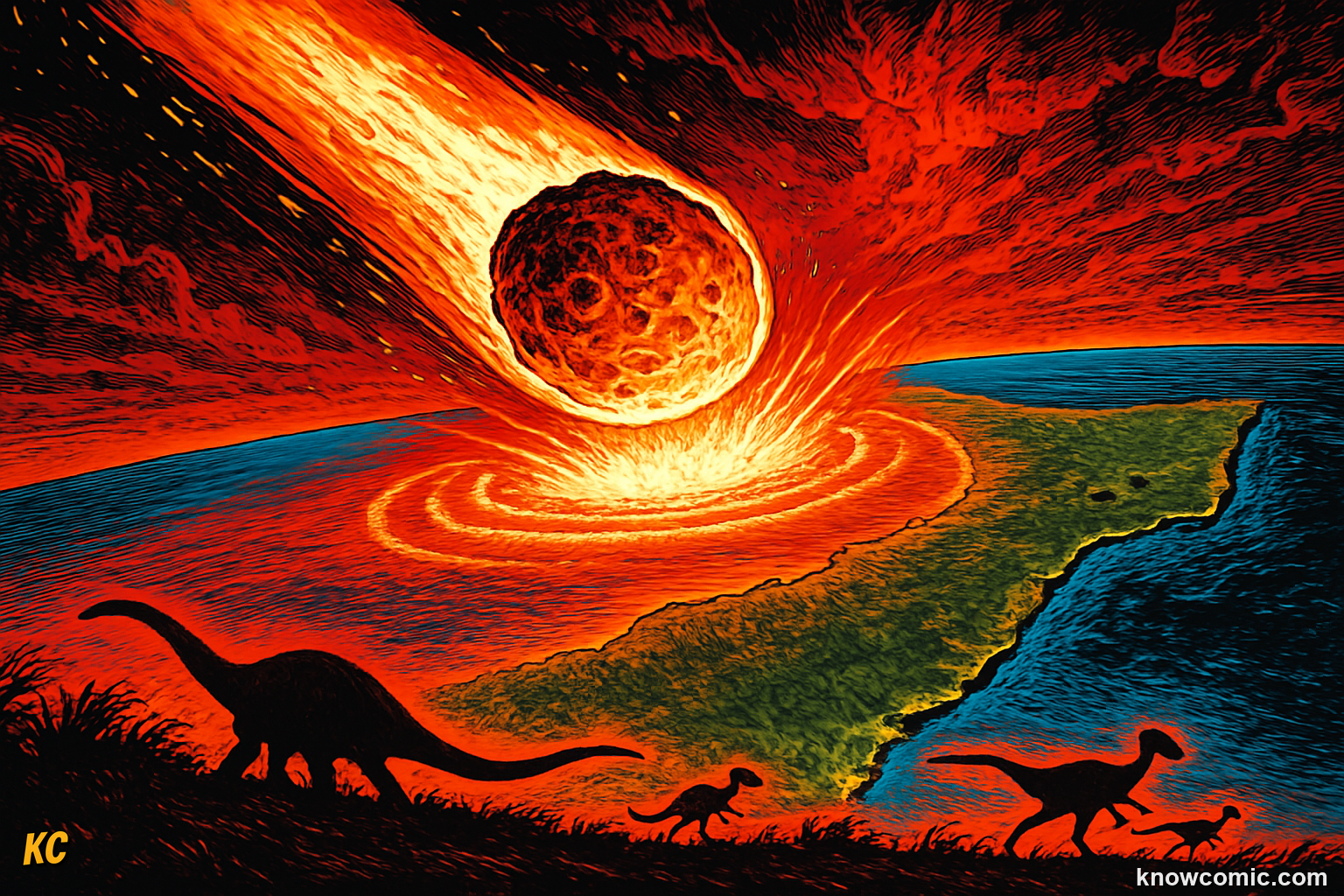
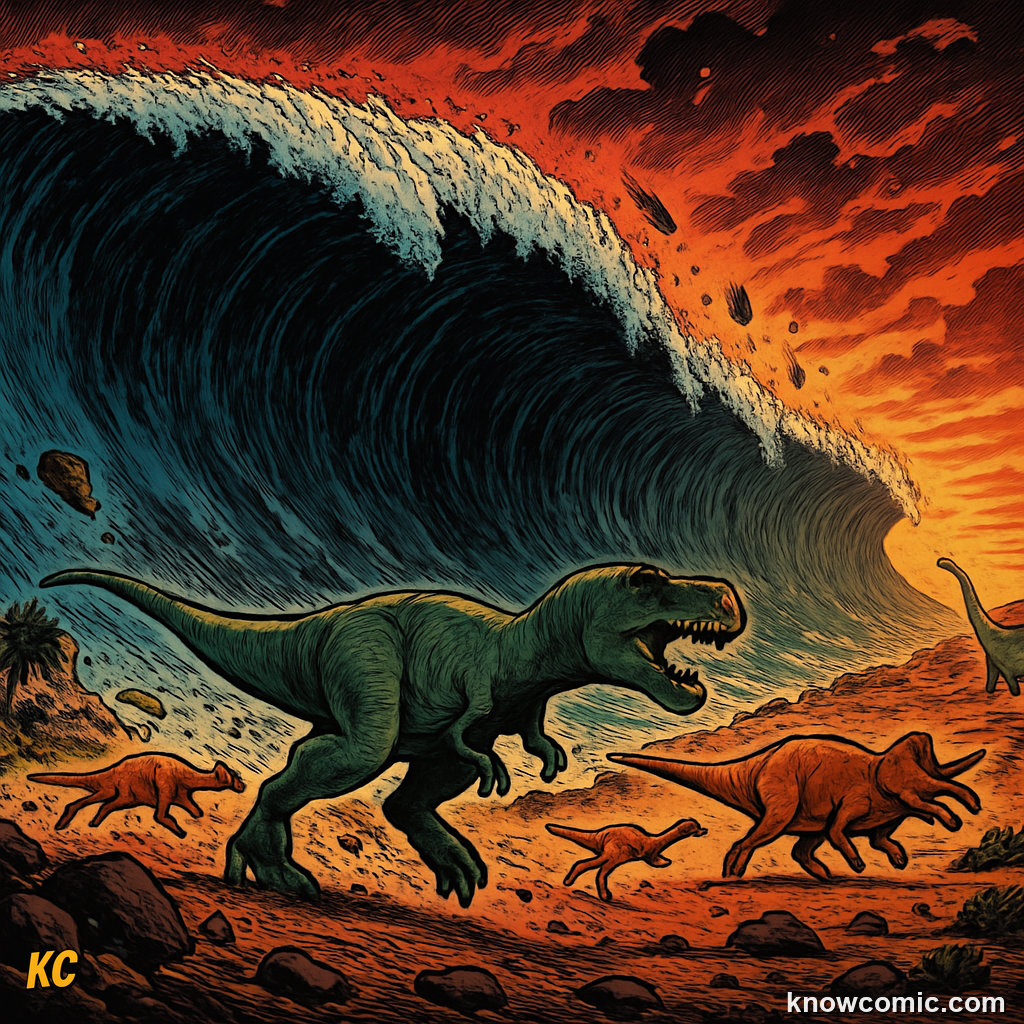
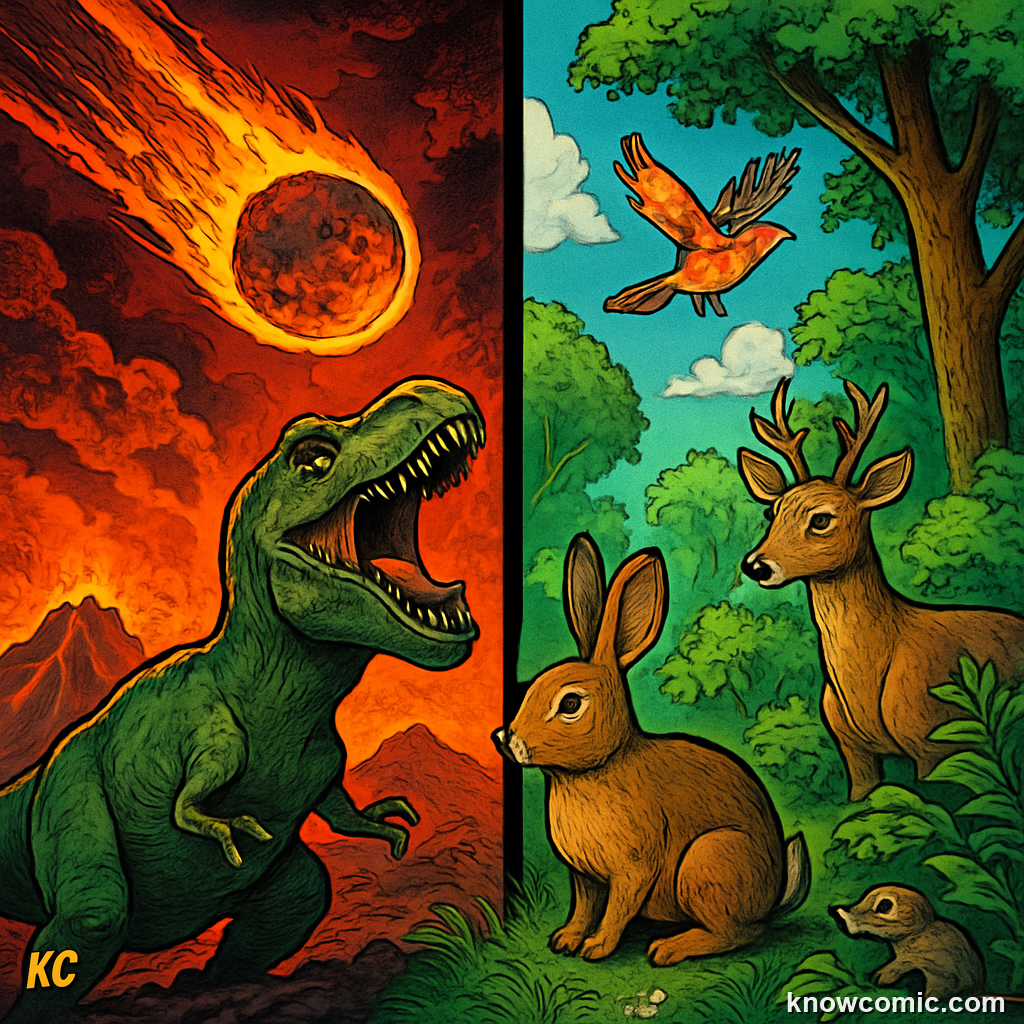
An asteroid 10km wide ends the reign of the dinosaurs. One of the most dramatic days in Earth's history — told in comic panels.
The world after the Great Dying — small, scrappy dinosaurs take their first steps on a supercontinent called Pangaea.
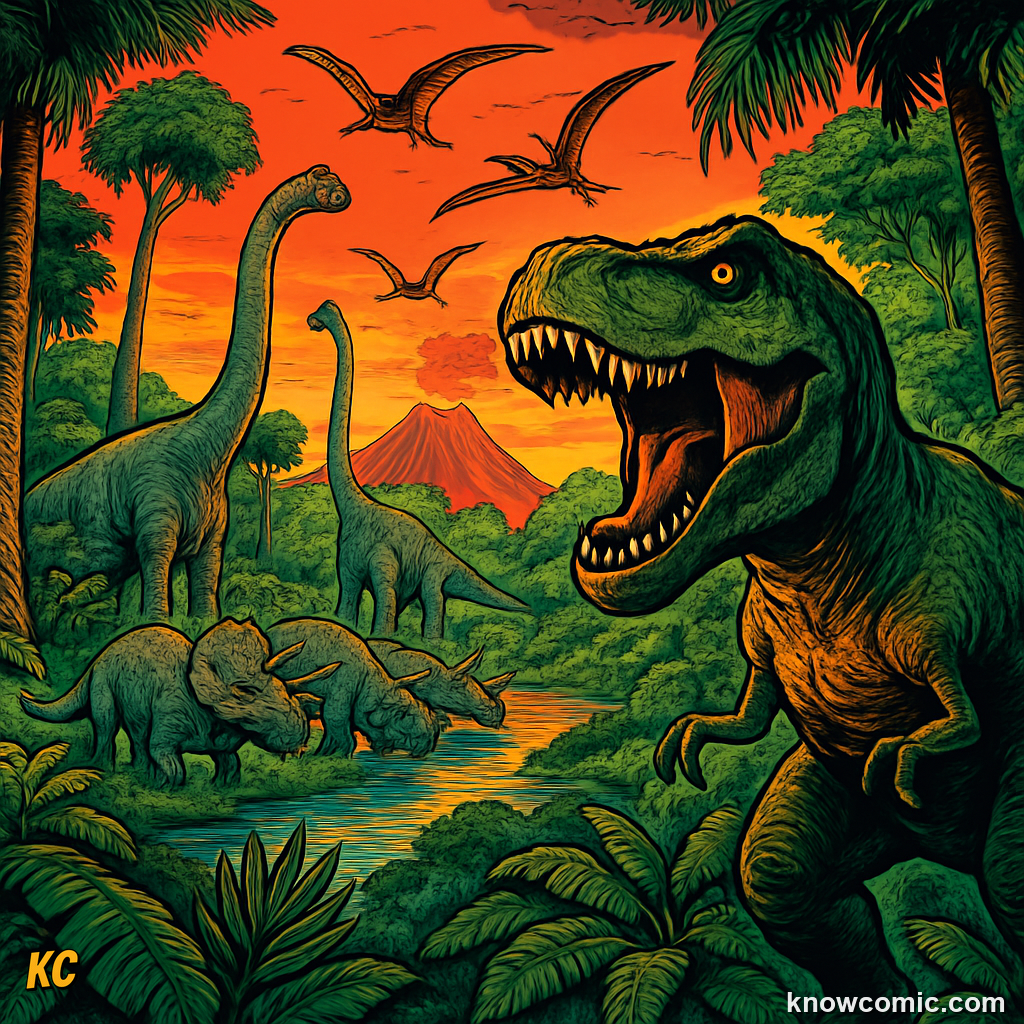
Giants walk the Earth. The seas teem with monsters. The sky fills with pterosaurs. This was the greatest era of prehistoric life.
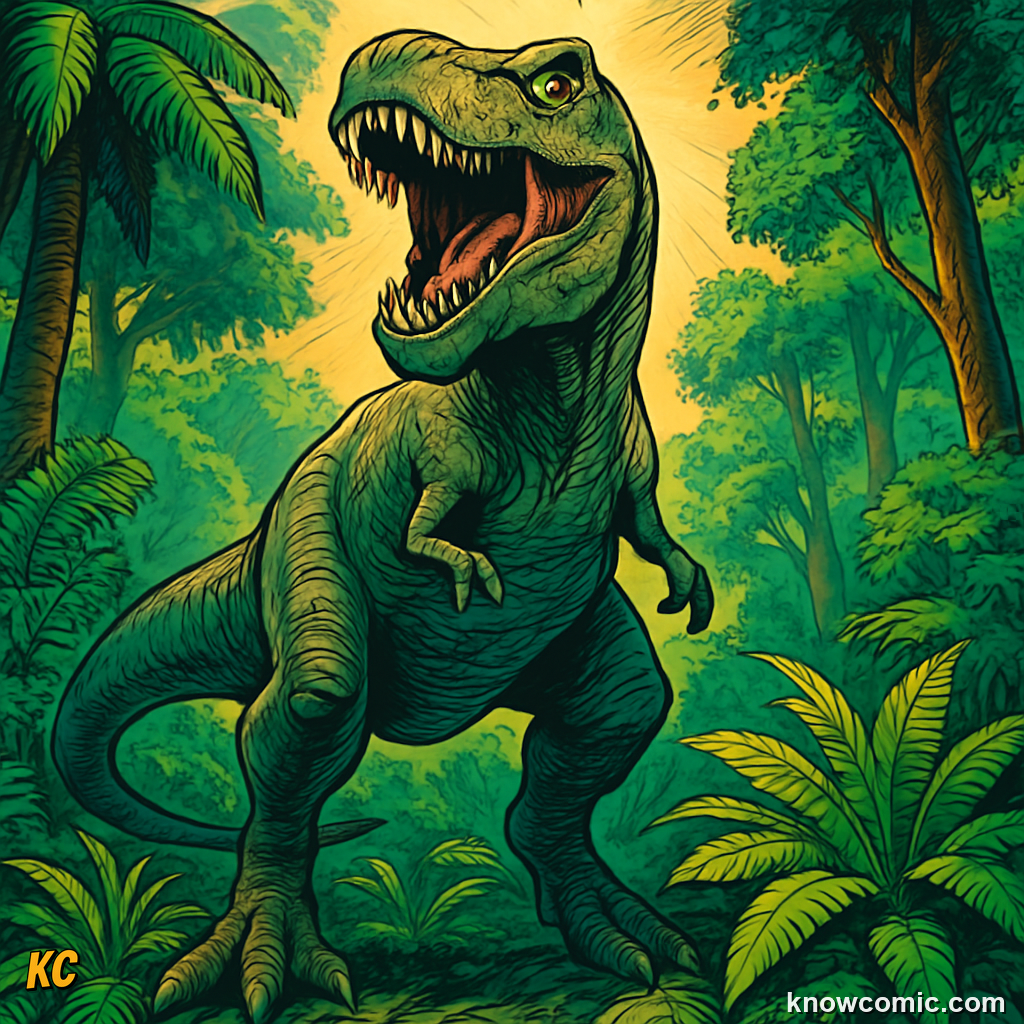
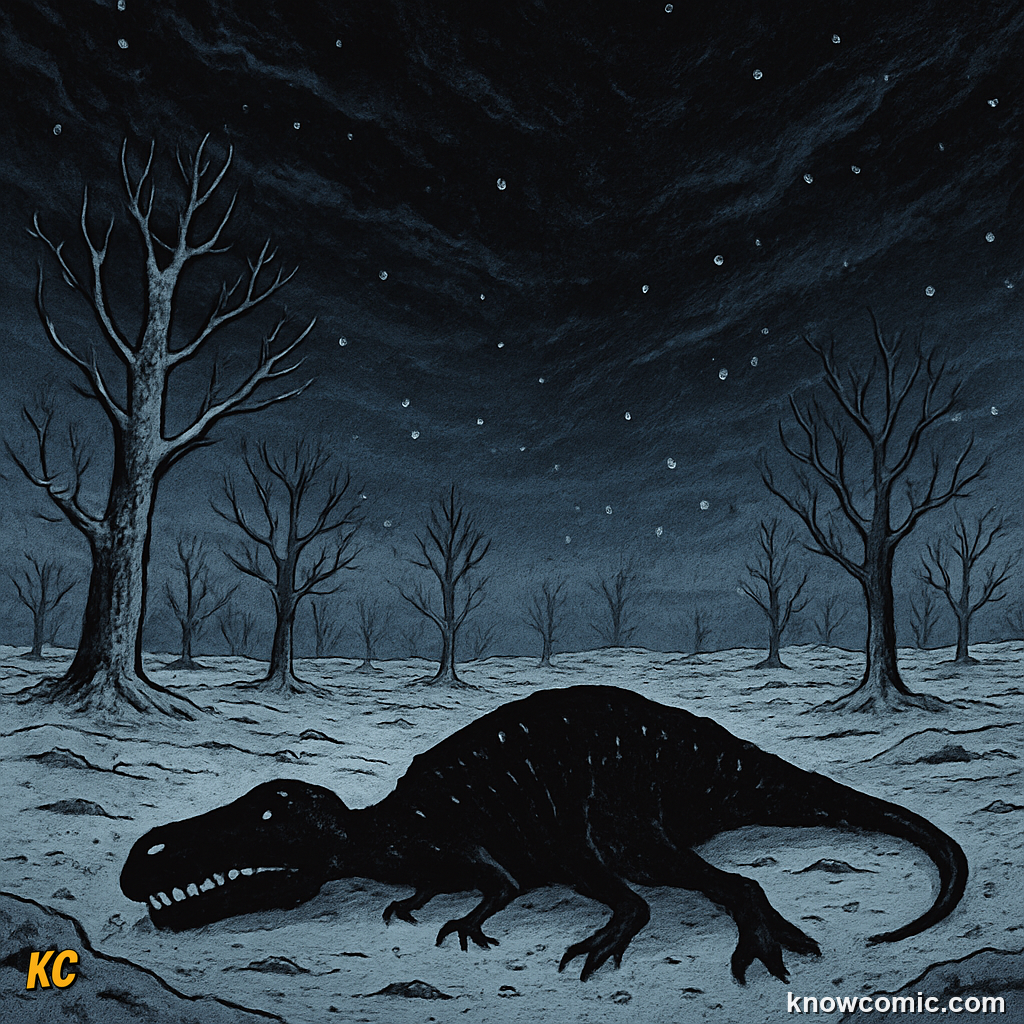
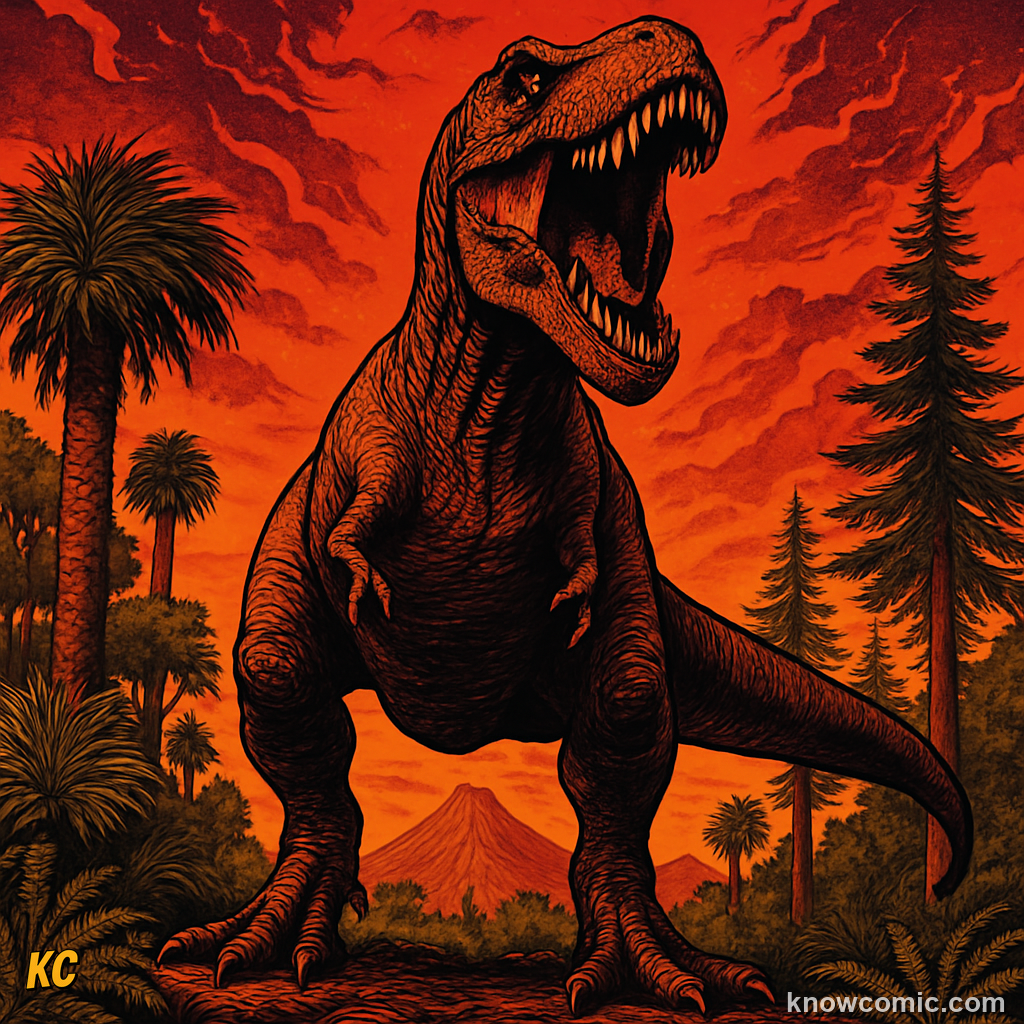
T-Rex rules. Flowering plants appear. The dinosaurs reach their peak — before everything ends in a flash of fire and ash.
All Earth's land was once one massive supercontinent. How it split apart — and why dinosaurs on different continents look so similar.
96% of all life wiped out — the deadliest event in Earth's history. Without it, dinosaurs might never have risen to power.
Continents aren't fixed. They drift — and when Pangaea split, isolated populations evolved in completely different directions.
The ancestors of dinosaurs were a group of reptiles called archosaurs — and they also gave rise to crocodilians and eventually birds.
During the dinosaur age, there were no polar ice caps. The planet was 10°C warmer — and jungle stretched all the way to the poles.
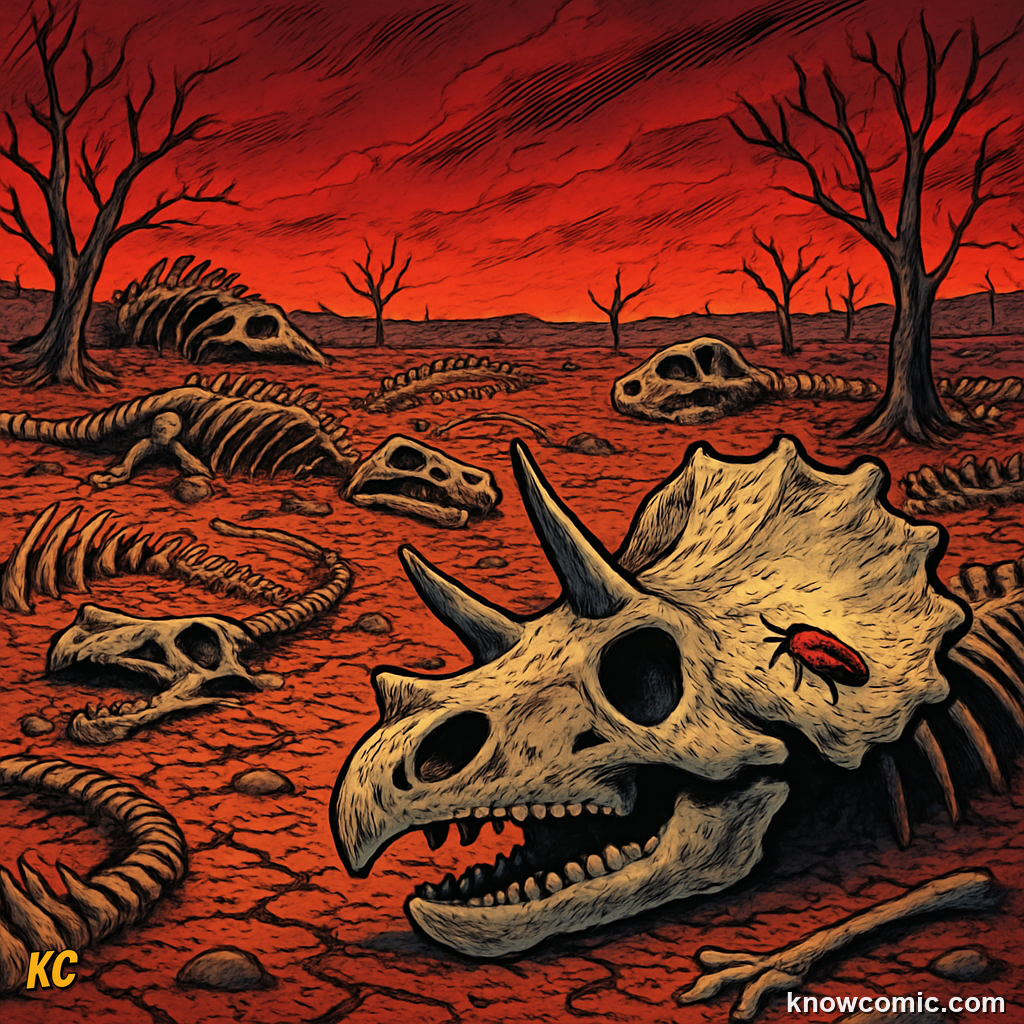
A thin grey line of iridium in rock layers worldwide. Below it: dinosaurs. Above it: none. A global murder scene frozen in stone.
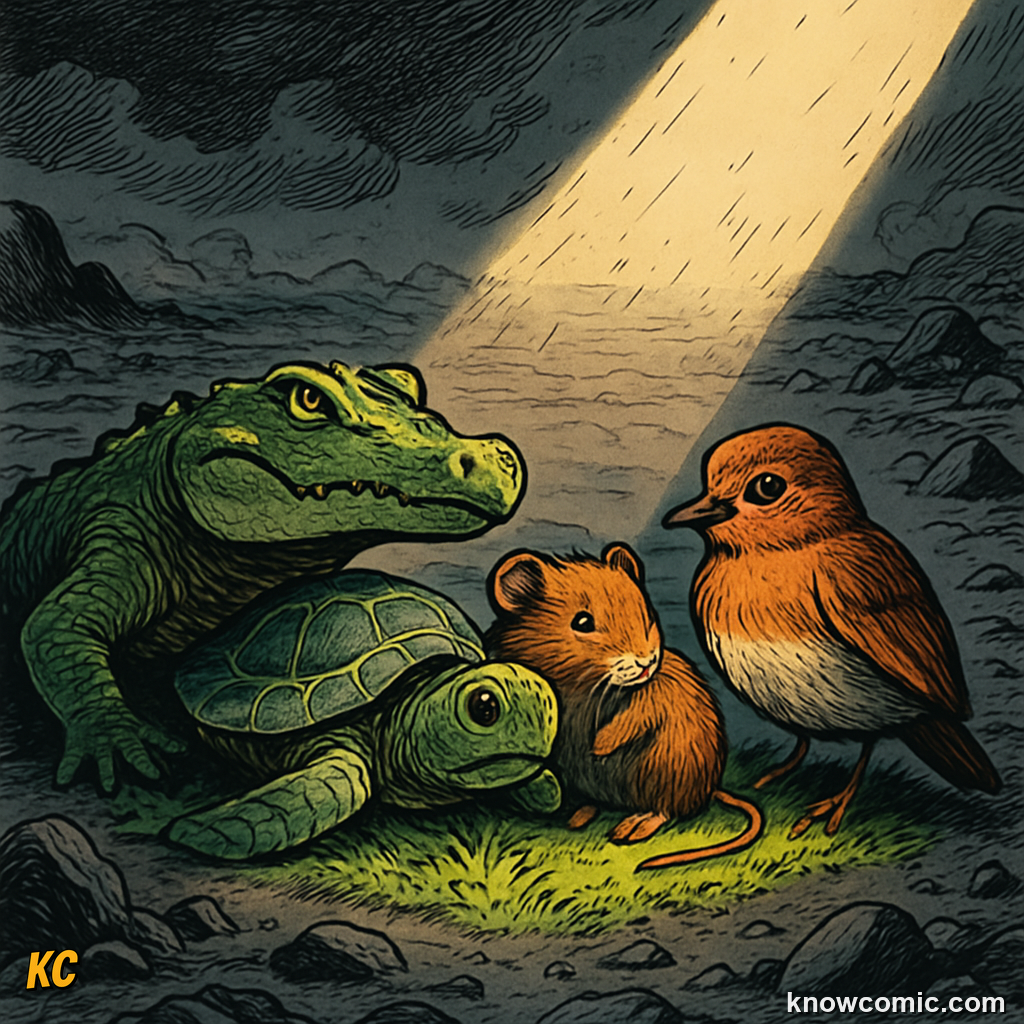
Some creatures made it through. Why did small mammals survive when giants didn't? The rules of survival during Earth's worst day.
Life on Earth has been nearly wiped out five times. Dinosaurs only lived through one — and didn't survive another.
The human brain can't truly grasp geological time. If Earth's history were 24 hours, humans appear in the final 2 seconds.
The very first dinosaurs were small, bipedal, and unimpressive. Meet Eoraptor — the dawn thief — ancestor of every dinosaur ever.
Dinosaurs split into two great groups — the bird-hipped and the lizard-hipped. Confusingly, birds evolved from the lizard-hipped side.
CARNIVORES
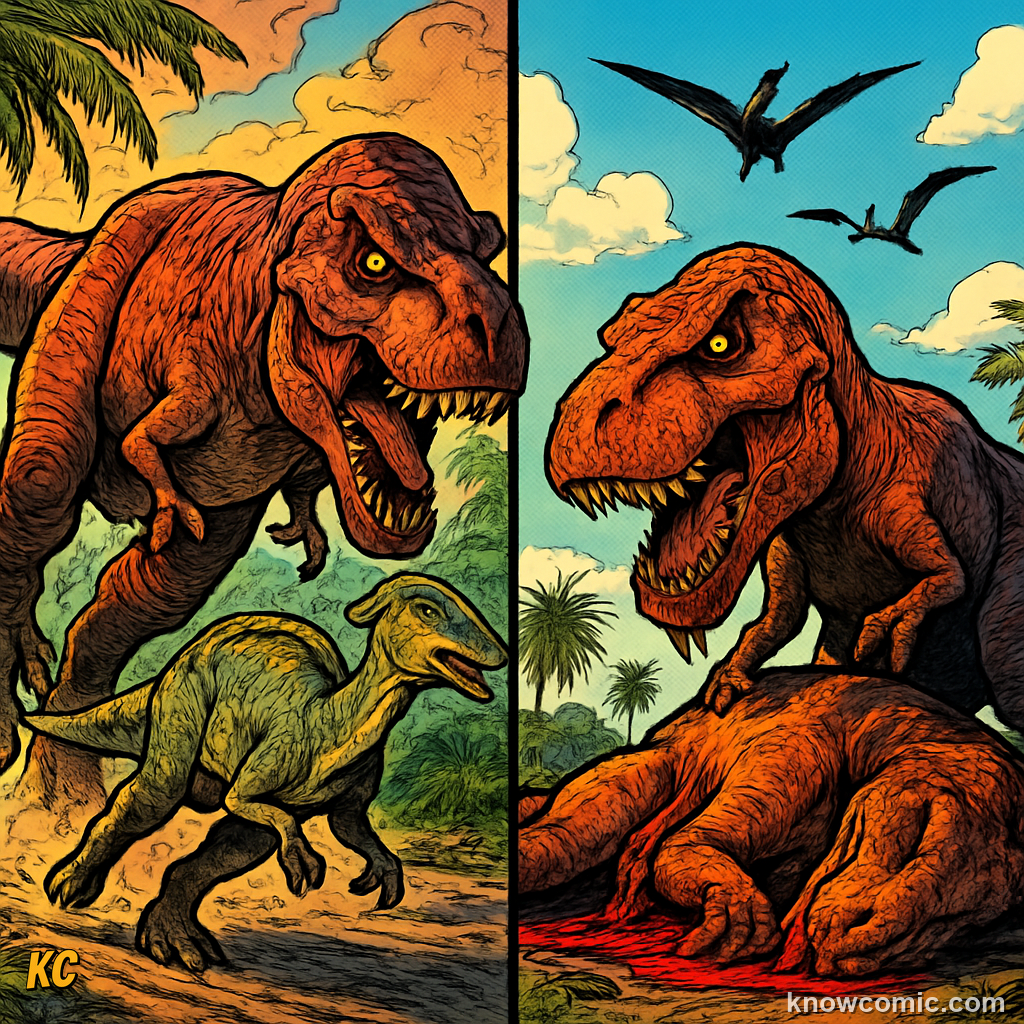
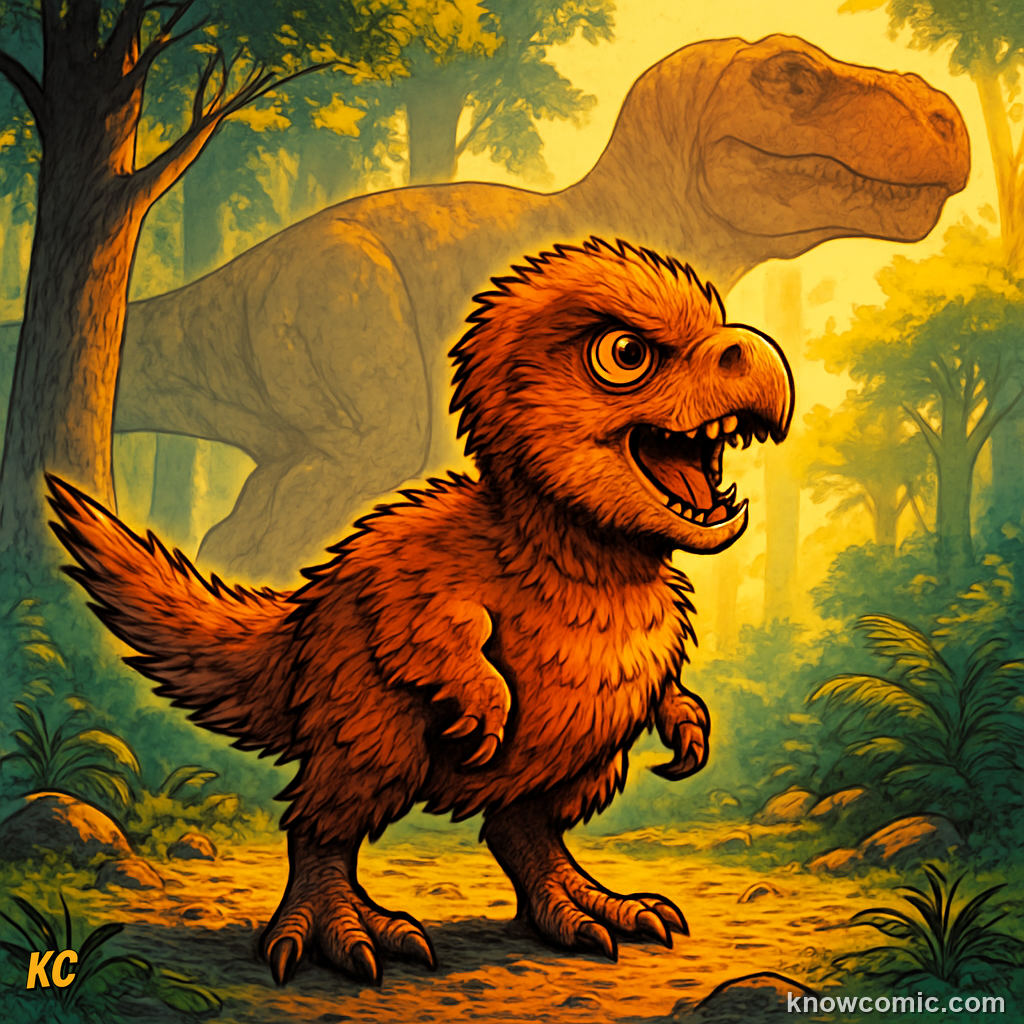
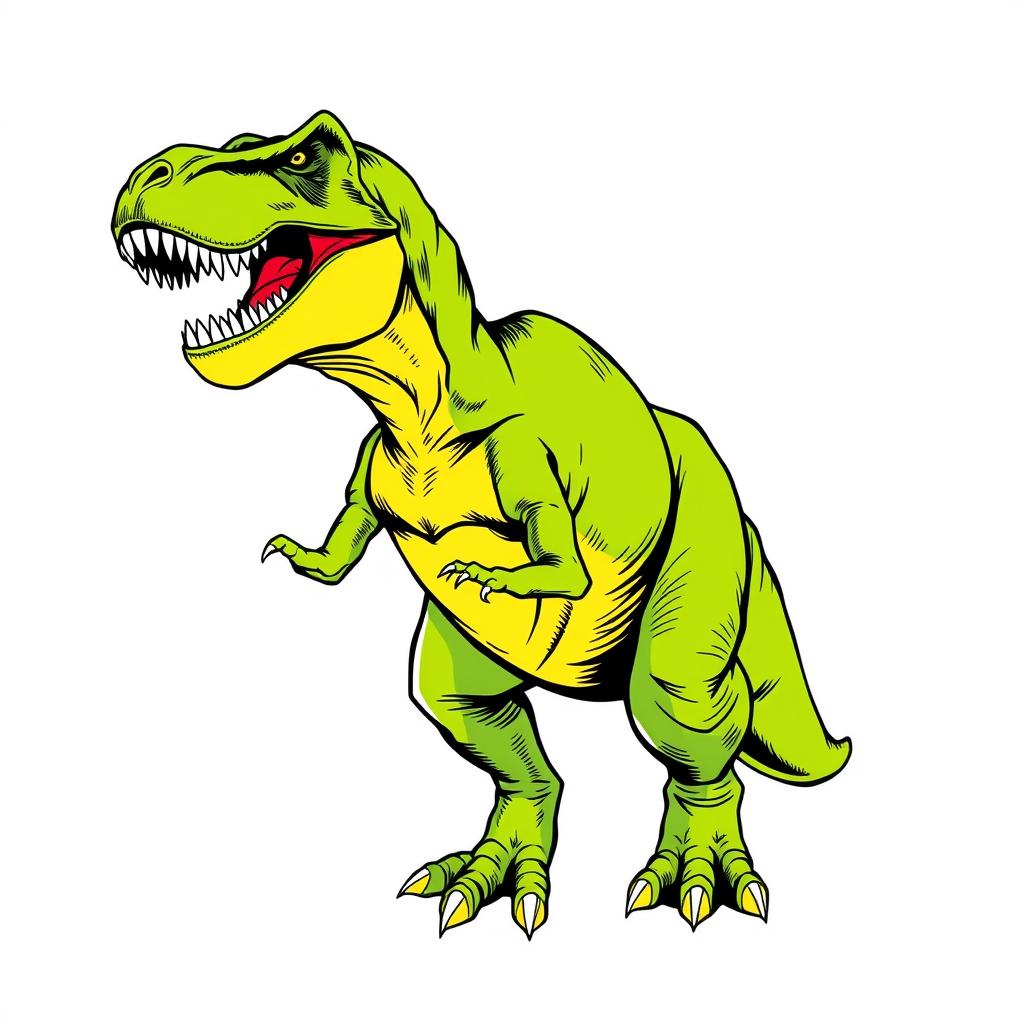
12 metres long, 8 tonnes heavy, bite force that could crush a car. Meet the king — and discover why its tiny arms are one of science's biggest mysteries.
Hollywood got it COMPLETELY wrong. The real Velociraptor was turkey-sized, feathered, and hunted lizards — not humans. The myth-busting comic.
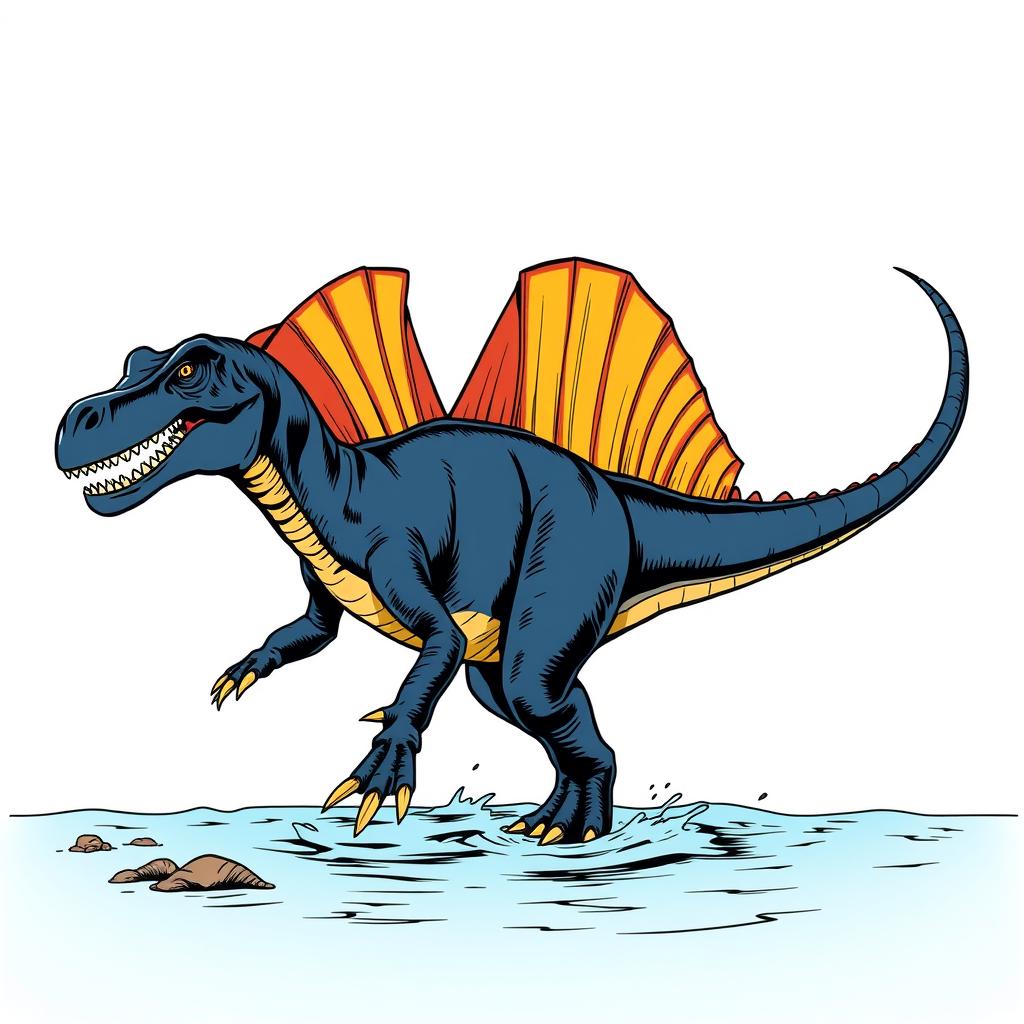
Bigger than T-Rex but it ate FISH. Spinosaurus is the largest carnivorous dinosaur ever — and a semi-aquatic river predator that rewrote science.
Before T-Rex, Allosaurus was the apex predator — with a hatchet-like skull that struck prey like an axe. The Jurassic's top killer.
Two horns on its head like a bull, arms so tiny they were almost useless, and possibly the fastest large predator that ever lived.
Bigger than T-Rex by almost a metre — and it hunted the largest dinosaurs that ever lived. The Southern Hemisphere's ultimate apex predator.
Jurassic Park made it a venom-spitter. The truth: a 6-metre predator with a bizarre double crest nobody can explain.
Named after the great white shark for its serrated teeth. One of the largest carnivores ever — a contemporary of Spinosaurus in North Africa.
A horn on its snout, skin-fused bones like armour, and blood-red crests above the eyes. The Jurassic's most theatrical predator.
Found with fish scales inside its ribcage. Baryonyx had crocodile-like jaws and hooked claws — a dinosaur that fished like a bear.
Fossil bones show tooth marks from its own species. Majungasaurus is the only dinosaur with direct proof of cannibalism.
Bones of 22 individuals found together suggest Albertosaurus hunted in packs — T-Rex's smaller, faster, potentially social cousin.
7 metres long, 500kg, with a 30cm sickle claw. The real "Jurassic Park" raptor — 3x bigger than what was shown in the film.
For years scientists thought the huge claw was a foot spike. Then they found the arm — a metre-long forearm built for seizing prey.
The evolutionary step just before T-Rex. Studies reveal exactly how the king's lineage grew larger, faster, and deadlier.
A dwarf T-Rex adapted for polar darkness. Proof that tyrannosaurids pushed into every environment on Earth.
7 metres long, a 1-metre thumb claw, and a skull shaped exactly like a modern crocodile. Spinosaurus's African cousin.
Named "Irritator" because the fossil was badly altered by poachers. A cautionary tale about the black market in dinosaur bones.
A triangular hump nobody can explain, plus arm bumps that may be feather quill knobs. Europe's strangest predatory dinosaur.
T-Rex vs Spinosaurus. Allosaurus vs Carnotaurus. Scientists use biomechanics and bite force to work out prehistoric outcomes.
GIANTS & LONG-NECKS
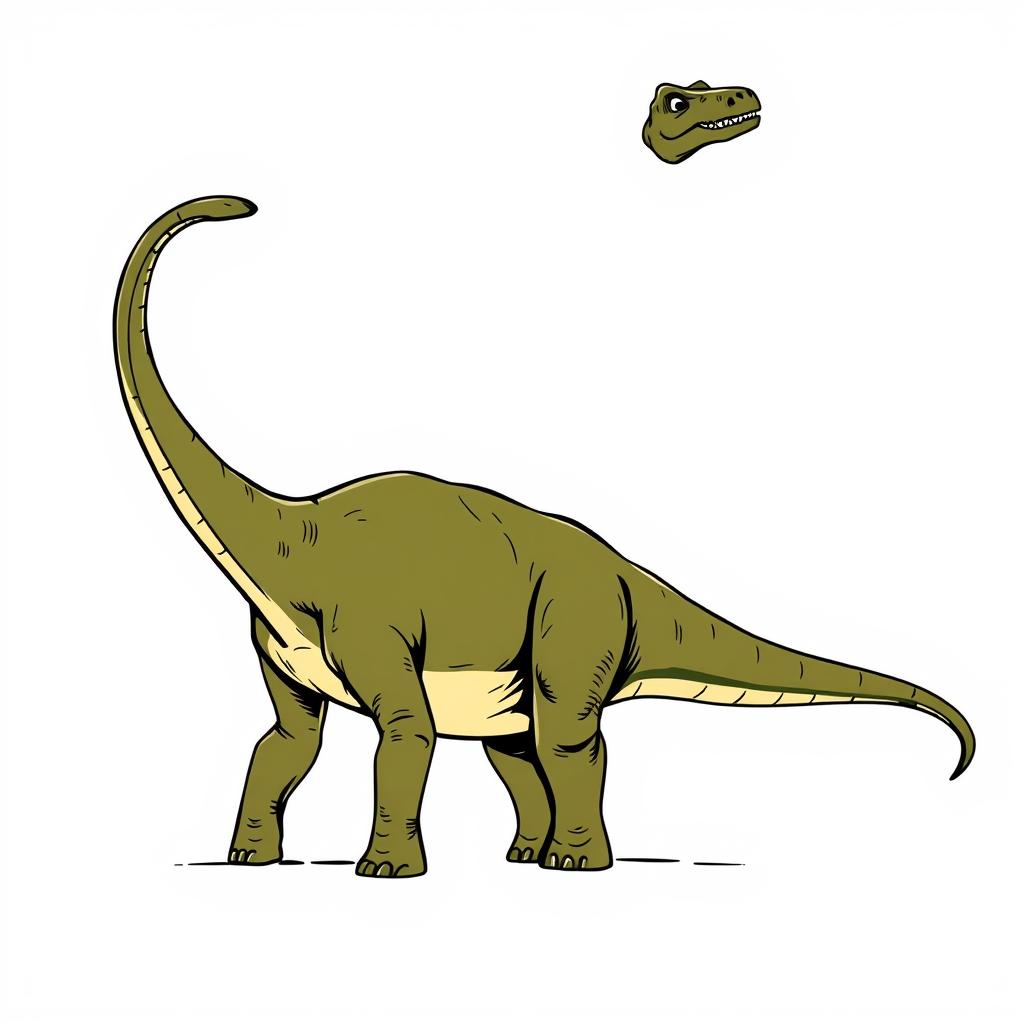
Taller than a 4-storey building. Heavier than 10 elephants. It could eat from trees no other creature could reach.
27 metres long with a tail it could crack faster than the speed of sound. The longest dinosaur with the most surprising weapon.
70 tonnes. 37 metres. A single leg bone as tall as a human. The heaviest animal confirmed to have ever walked on Earth.
Each vertebra the size of a person. A herd of these could shake the ground for miles. The most massive creature to ever breathe.
Possibly 33+ metres long — the longest dinosaur ever. Discovered in a Colorado quarry that took years to fully excavate.
For 100 years "Brontosaurus" was declared a mistake. Then in 2015, scientists confirmed it was a real, distinct genus after all.
The most abundant large dinosaur fossil in North America. Its spoon teeth tell us it ate tough vegetation no other dinosaur could.
Its neck was 15 metres — more than half its total body length. The longest neck of any animal, supported by 19 lightweight vertebrae.
Once considered the same as Brachiosaurus, Giraffatitan is a distinct African giant — the tallest dinosaur skeleton ever mounted.
Over 500 teeth arranged in straight rows like a lawnmower blade. It grazed low plants with its oddly wide, flat snout.
So enormous it feared nothing. Its shoulder blade alone was 1.7 metres tall. Named after the battleship — the ultimate unstoppable force.
Sauropod eggs were only 30cm wide. The babies had to grow from 5kg to 70 tonnes in under 40 years — the fastest growth rate ever recorded.
Hollow bones, bird-like air sacs, and four pillar legs. The engineering marvel that let 70-tonne animals walk on land without collapsing.
No other land animal came close to sauropod size. Their bird-like respiratory system may be the key — it let them grow without limit.
Fossilised trackways show multiple sauropods moving together. Evidence is building that these giants moved in protective family groups.
ARMOURED & HORNED
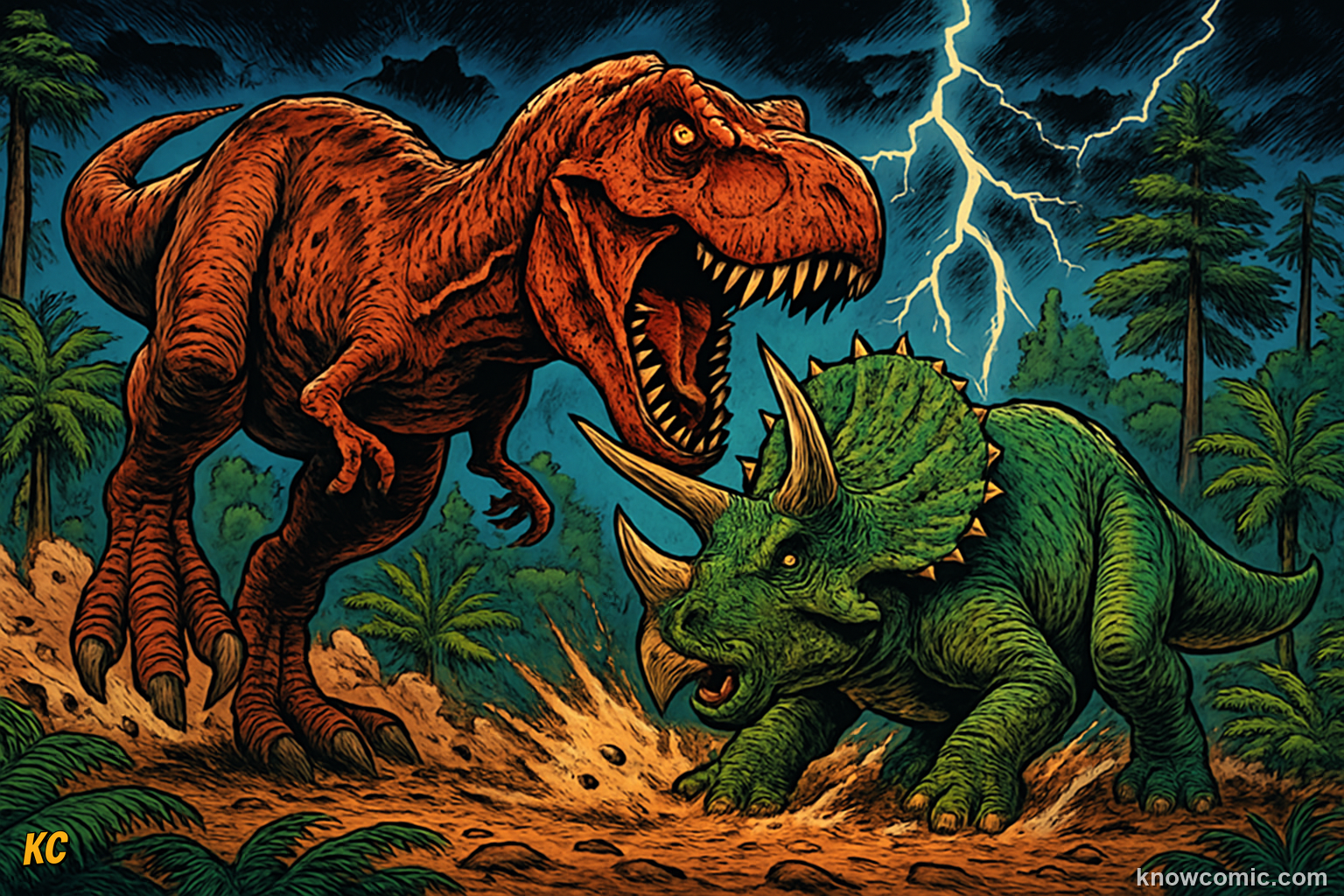
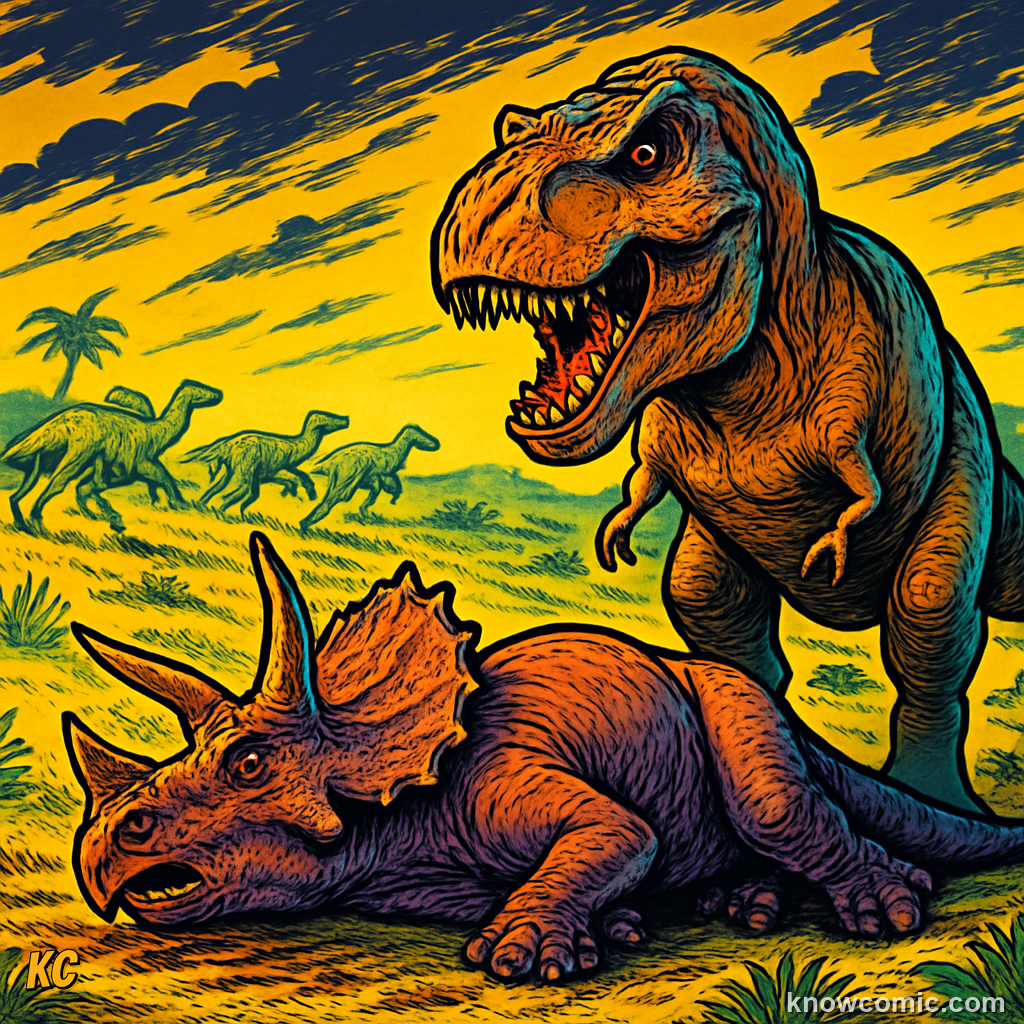
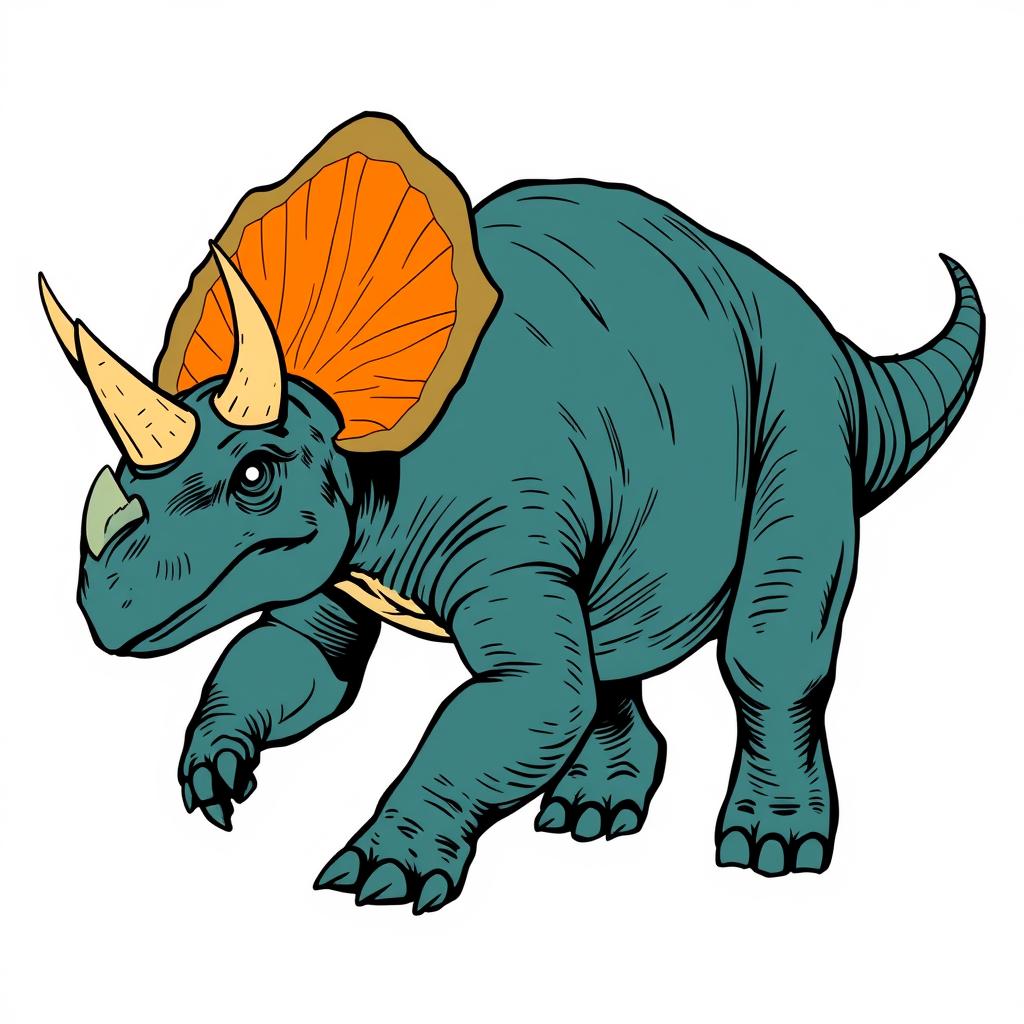
Three horns, a massive frill, and a bite like garden shears. The gentle giant that went toe-to-toe with T-Rex — and sometimes won.
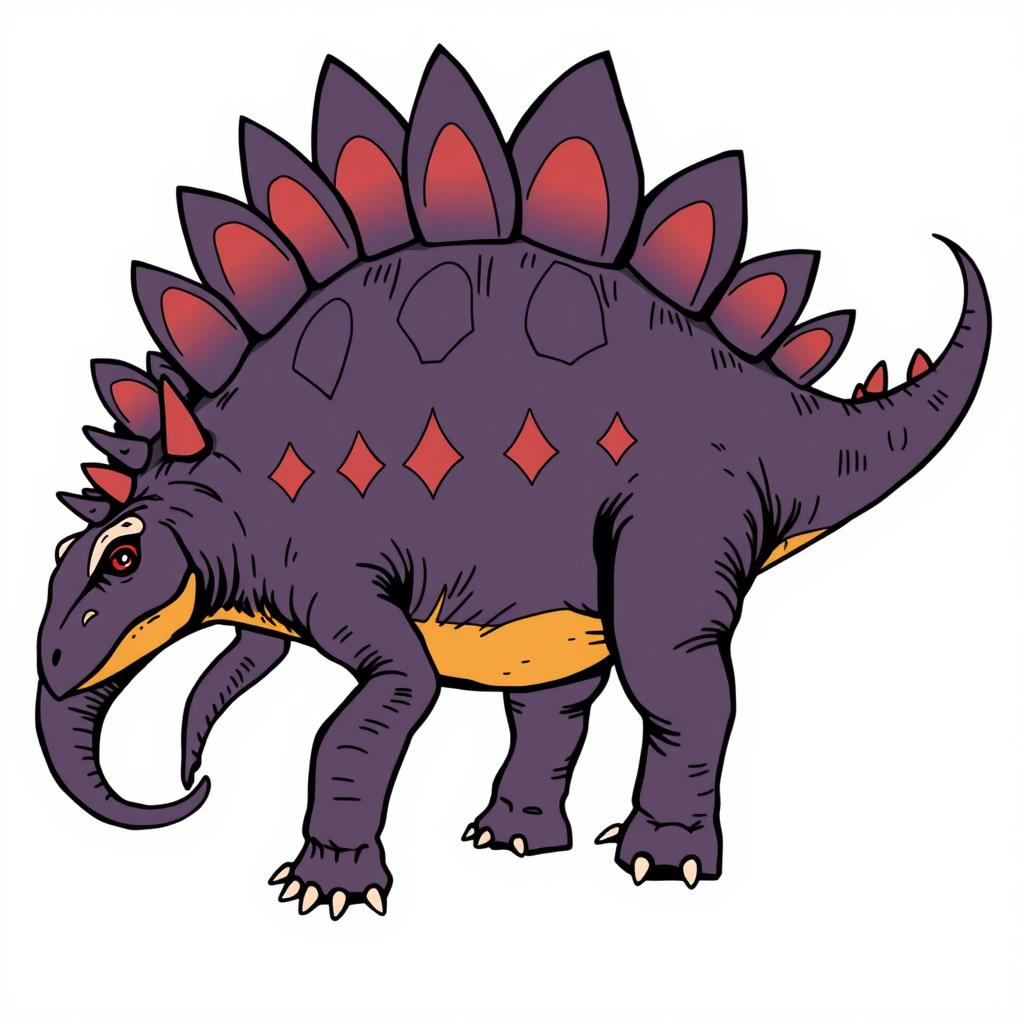
A brain the size of a walnut. Plates as big as a TV screen. A tail that could kill. What were those plates FOR? Scientists still argue.
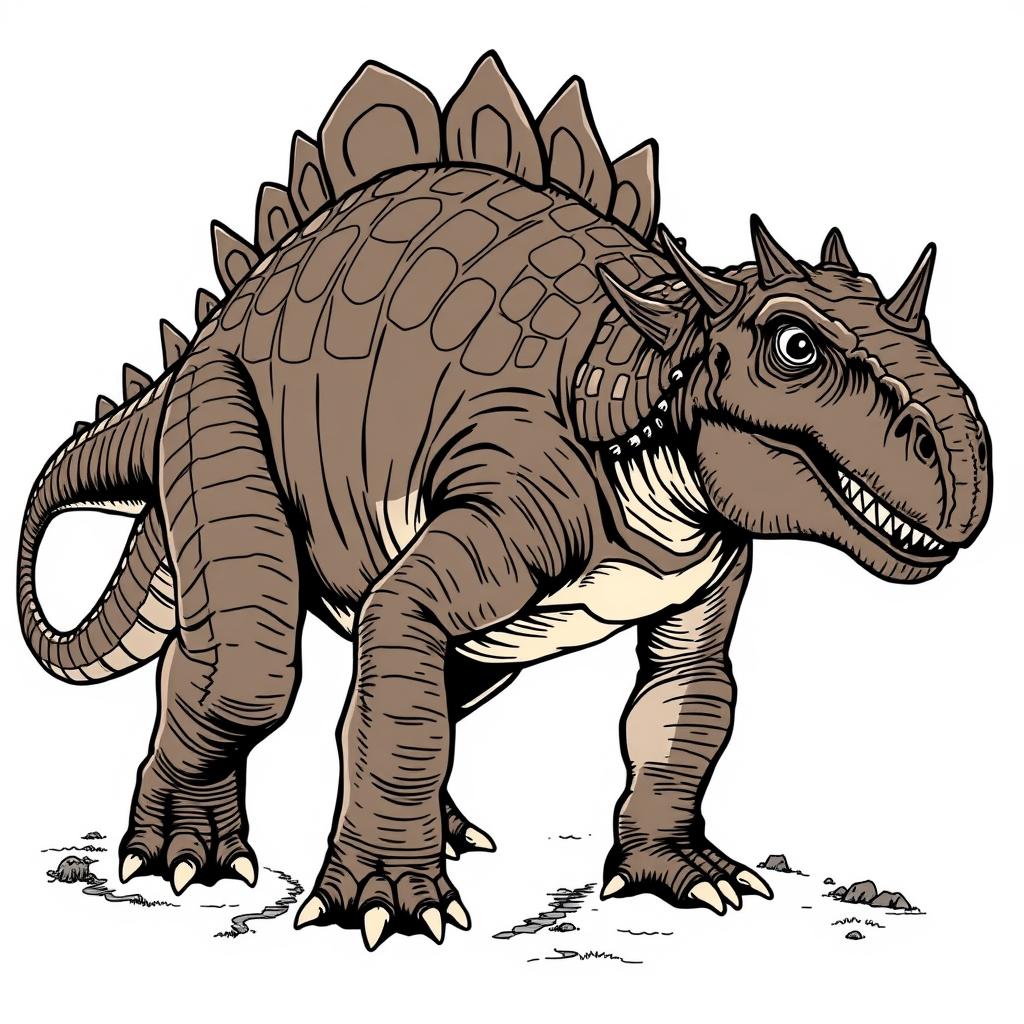
Armoured from head to tail, with a bone club that could shatter T-Rex's leg. The most heavily armoured land animal in history.
A skull 25cm thick built for head-on collisions at full speed. Did they really headbutt? Scientists are still arguing.
The ancestor of Triceratops — sheep-sized, frill-faced, and famous for a fossil caught mid-fight with a Velociraptor.
Six long spikes radiating from its neck frill like a crown. One of the most spectacular horned dinosaurs — and nobody knows why.
A hollow crest acted like a trombone — producing deep resonating calls. We can now simulate what it sounded like. It's haunting.
The second dinosaur formally described. Scientists originally placed its thumb spike on its nose — a mistake that stood for 50 years.
Up to 1,000 teeth constantly replacing each other. This hadrosaur was T-Rex's most common prey item in North America.
Africa's answer to Stegosaurus — sharp spikes on its back half and shoulder spines that could gore any attacker.
Even its eyelids were armoured with bone. The most complete body armour of any dinosaur — and a tail club that weighed 30kg.
Its skull was nearly 3 metres — the largest head of any land animal ever. But is it just an old Triceratops? Scientists are divided.
Three proper horns plus two cheek bones that look like extras. Pentaceratops had the second largest skull of any land animal ever.
No tail club — just pure passive armour. Rows of bony nodes fused to the skin, making it essentially impossible to bite through.
From small, frilled Psittacosaurus to three-horned Triceratops — how did ceratopsians evolve their extraordinary headgear?
SMALL & FAST
Chicken-sized, lightning-fast, and vicious in packs. The smallest predatory dinosaur ever found — and the most underestimated.
Hollow bones, ostrich-like legs, clocked at 70 km/h. The fastest dinosaur that ever lived — and it barely had any teeth.
Four wings, iridescent feathers, and the ability to glide between trees. The missing link that helped explain how flight evolved.
Largest brain-to-body ratio of any dinosaur. Forward-facing eyes for depth perception. If any could have evolved intelligence — this.
Half a metre tall but terrifyingly fast in coordinated packs. The actual inspiration for the raptor hunting scenes in Jurassic Park.
Claws nearly 1 metre long — the longest of any animal ever. Despite looking like a killing machine, it ate only plants.
A toothless beak, long legs, and feathered wings it couldn't fly with. It looked so much like a modern ostrich it's uncanny.
Named "egg thief" when found near eggs — but they were its own eggs. Oviraptor was a devoted parent. Science owes it an apology.
The 1996 discovery that changed everything. The first dinosaur fossil with clear feathers — proof that birds and dinosaurs are one family.
Named after the Disney deer because it was small and delicate. But its brain-to-body ratio rivalled modern birds — a tiny genius.
DINOSAUR SCIENCE
A dinosaur dies. Millions of years pass. A scientist finds a bone. How does that actually happen? The full story of fossilisation.
Which dinosaur was fastest? How do scientists calculate speed from fossilised footprints? Gallimimus hit 70 km/h — faster than a horse!
Some dinosaurs were devoted parents who built nests, sat on eggs, and raised their young — just like birds today.
What did they actually eat? From T-Rex crushing bone to Gallimimus filtering water — the complete guide to dinosaur feeding.
For 150 years we guessed grey. Then scientists found melanosomes in fossils — discovering some dinosaurs were iridescent.
The debate that split palaeontology for decades. New evidence suggests most were endothermic — more like mammals than lizards.
They couldn't roar — no vocal cords. So how did they communicate? Crests as resonators, visual displays, infrasound.
Fossilised footprints reveal stride, weight, and speed. One set in Texas shows a sauropod being ambushed mid-step.
Troodon at top, Stegosaurus at bottom. How do scientists measure intelligence from a 70-million-year-old skull? Brain casts.
Some had scales. Some had feathers. Some had both. Preserved skin impressions tell us more than bones about real appearance.
Modern CT scanners look inside bones without cutting — revealing air sacs, growth rings, and brain structures invisible to the eye.
Like tree rings, dinosaur bones show annual growth layers. T-Rex gained 2kg per day during its teenage growth spurt.
DNA degrades completely in 6 million years. Jurassic Park is impossible — but ancient proteins reveal evolutionary secrets instead.
From desert bluff to museum display — the full journey of a dinosaur fossil takes years of fieldwork, preparation, and research.
Why "Tyrannosaurus rex"? Who names a new dinosaur? The strange, political, and sometimes petty world of dinosaur taxonomy.
Sue the T-Rex. The Fighting Dinosaurs. Archaeopteryx. The five finds that completely changed our understanding of prehistoric life.
Ancient Chinese called them dragon bones. In 1824 William Buckland formally named the first: Megalosaurus. The history of discovery.
57,000 Newtons — enough to crush a car roof. How do you measure bite force from an animal dead 66 million years? The method.
In the 1990s, quarries in Liaoning Province produced dinosaur fossils with unmistakeable feather impressions. Textbooks rewrote overnight.
A tick full of dinosaur blood. A feathered tail. A lizard mid-leap. What amber has preserved from the Cretaceous world staggers scientists.
PREHISTORIC WORLD
Not dinosaurs — but just as terrifying. The Mesozoic seas were patrolled by creatures that make great white sharks look tiny.
Wingspan wider than a fighter jet. Quetzalcoatlus stood as tall as a giraffe on the ground. The flying giants that owned the sky.
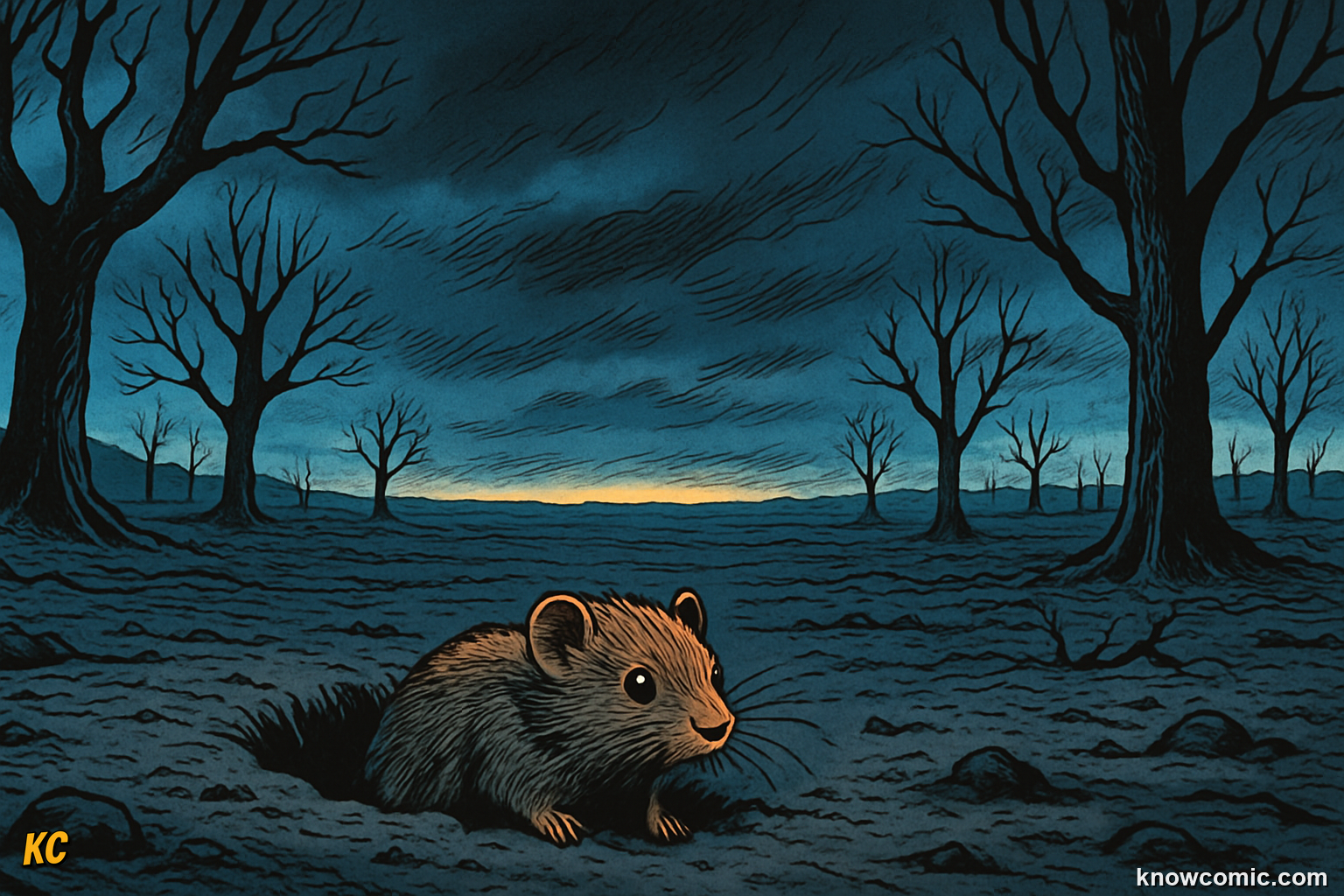
While dinosaurs ruled, tiny mammals hid in burrows and emerged at night. For 160 million years they waited — then inherited Earth.
No grass, no flowers — just ferns, cycads, and towering conifers. The prehistoric world was green but utterly alien.
Wingspan of 10–11 metres. Stood 5 metres tall on the ground. The largest flying animal that ever lived.
A marine reptile that evolved to look exactly like a dolphin — the most perfect convergent evolution in prehistoric history.
A short-necked plesiosaur with a 3-metre skull and teeth the size of bananas. Apex predator of the Cretaceous Australian sea.
Before dinosaurs, dragonflies with 70cm wingspans patrolled the sky. Higher oxygen let insects grow to terrifying sizes.
Ammonites spiralling past plesiosaur necks. Mosasaurs ambushing from below. The Cretaceous ocean was more dangerous than any modern sea.
Ancient croc relatives ran upright, had herbivore teeth, and reached 12 metres. Modern crocs are the modest survivors.
Flowers appeared during the Cretaceous and co-evolved with dinosaurs and insects — triggering an explosion of new species.
Pterosaurs first, then birds from the Late Jurassic. They shared the sky for 80 million years before pterosaurs finally vanished.
A pliosaur with jaws that could swallow a crocodile. The BBC's Walking with Dinosaurs made it famous — but also 10x too big.
12 metres long, 8 tonnes — a crocodilian that ambushed hadrosaurs at river crossings. Bite marks on dinosaur bones confirm it.
The Mesozoic had CO₂ levels 4× higher than today, no ice caps, seas 100m higher. What it tells us about our current trajectory.
MODERN CONNECTIONS
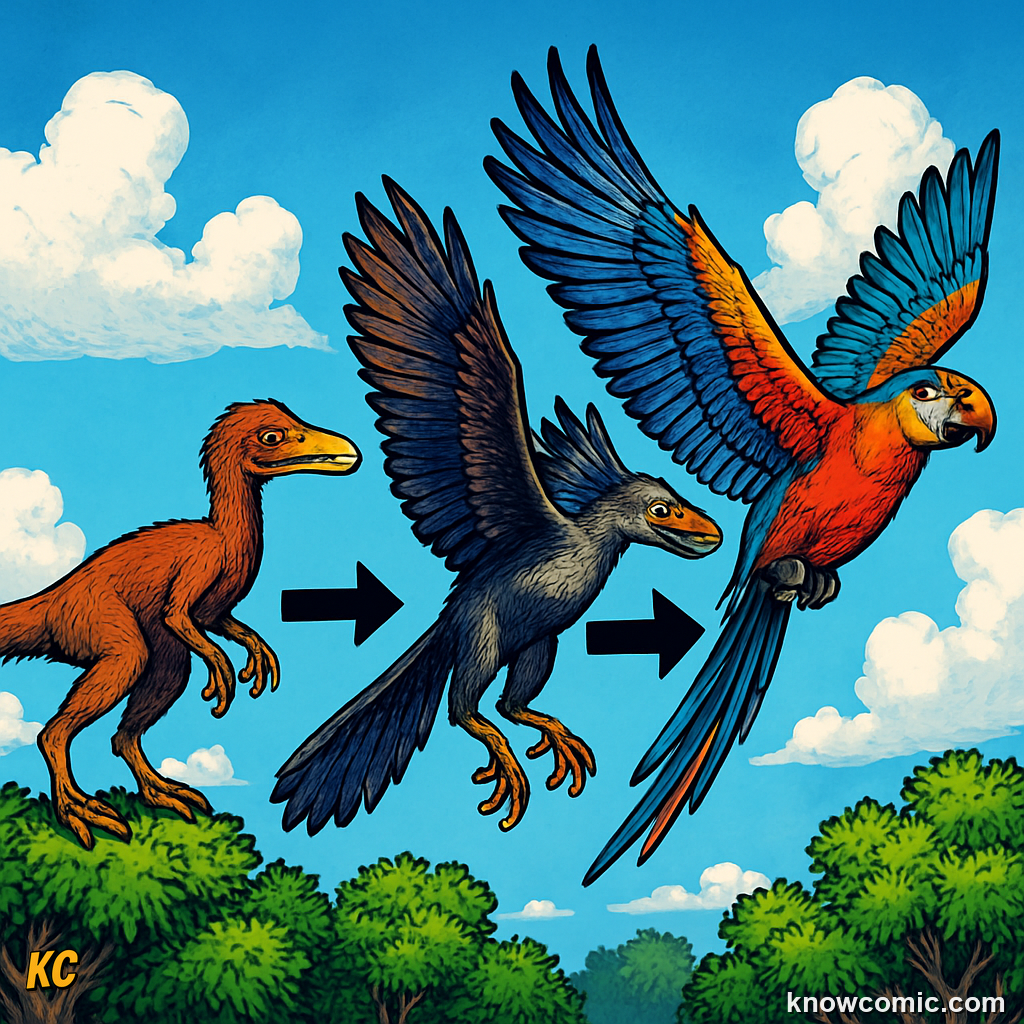
The chicken in your kitchen is more closely related to T-Rex than T-Rex is to a Stegosaurus. How feathered dinosaurs became birds.
They survived the asteroid that killed the dinosaurs. Unchanged in 80 million years. The ultimate survivor — and why.
3 metres long, venomous saliva, skull that can dislocate to swallow prey. The closest thing alive today to a small predatory dinosaur.
Feathers first for warmth, then display, then gliding, then powered flight. The 50-million-year journey from Velociraptor to sparrow.
DNA lasts 6 million years max. Jurassic Park is impossible — but scientists are editing chicken embryos to grow dinosaur traits.
From 1854's Crystal Palace monsters to Jurassic World — how public understanding of dinosaurs changed with each new discovery.
Mary Anning found Ichthyosaurus aged 12. Roy Chapman Andrews discovered Velociraptor. The adventurers who built palaeontology.
T-Rex didn't have green scaly skin. Brontosaurus wasn't fake. The 10 biggest dinosaur myths — corrected by modern science.
Scientists estimate we've found only 30% of all dinosaur species. New ones are announced almost weekly. The golden age is now.
Every major dinosaur — size, weight, speed, diet badge, what it ate, and one jaw-dropping fact. Your complete prehistoric field guide.
In 1854, Queen Victoria unveiled the first dinosaur models. They were inaccurate but changed the world.
Two scientists spent decades fighting to find more fossils than the other. They discovered 142 species!
The explorer who found the first dinosaur eggs in the Gobi Desert. He was the real Indiana Jones.
A 12-year-old girl who found the first complete Ichthyosaur. Male scientists took the credit.
The man who found the very first T-Rex skeleton in 1902. He changed the face of museums forever.
THE REVOLUTION
Fascinating details about how modern technology is unlocking ancient secrets of the dinosaur world.
Fascinating details about how modern technology is unlocking ancient secrets of the dinosaur world.
Fascinating details about how modern technology is unlocking ancient secrets of the dinosaur world.
Fascinating details about how modern technology is unlocking ancient secrets of the dinosaur world.
Fascinating details about how modern technology is unlocking ancient secrets of the dinosaur world.
Fascinating details about how modern technology is unlocking ancient secrets of the dinosaur world.
Fascinating details about how modern technology is unlocking ancient secrets of the dinosaur world.
Fascinating details about how modern technology is unlocking ancient secrets of the dinosaur world.
Fascinating details about how modern technology is unlocking ancient secrets of the dinosaur world.
Fascinating details about how modern technology is unlocking ancient secrets of the dinosaur world.
Fascinating details about how modern technology is unlocking ancient secrets of the dinosaur world.
Fascinating details about how modern technology is unlocking ancient secrets of the dinosaur world.
Fascinating details about how modern technology is unlocking ancient secrets of the dinosaur world.
Fascinating details about how modern technology is unlocking ancient secrets of the dinosaur world.
Fascinating details about how modern technology is unlocking ancient secrets of the dinosaur world.
Fascinating details about how modern technology is unlocking ancient secrets of the dinosaur world.
Fascinating details about how modern technology is unlocking ancient secrets of the dinosaur world.
Fascinating details about how modern technology is unlocking ancient secrets of the dinosaur world.
Fascinating details about how modern technology is unlocking ancient secrets of the dinosaur world.
Fascinating details about how modern technology is unlocking ancient secrets of the dinosaur world.
Fascinating details about how modern technology is unlocking ancient secrets of the dinosaur world.
Fascinating details about how modern technology is unlocking ancient secrets of the dinosaur world.
Fascinating details about how modern technology is unlocking ancient secrets of the dinosaur world.
Fascinating details about how modern technology is unlocking ancient secrets of the dinosaur world.
Fascinating details about how modern technology is unlocking ancient secrets of the dinosaur world.
THE GLOBAL SEARCH
Exploring the frontiers of paleontology from the frozen Arctic to the deep Sahara desert.
Exploring the frontiers of paleontology from the frozen Arctic to the deep Sahara desert.
Exploring the frontiers of paleontology from the frozen Arctic to the deep Sahara desert.
Exploring the frontiers of paleontology from the frozen Arctic to the deep Sahara desert.
Exploring the frontiers of paleontology from the frozen Arctic to the deep Sahara desert.
Exploring the frontiers of paleontology from the frozen Arctic to the deep Sahara desert.
Exploring the frontiers of paleontology from the frozen Arctic to the deep Sahara desert.
Exploring the frontiers of paleontology from the frozen Arctic to the deep Sahara desert.
Exploring the frontiers of paleontology from the frozen Arctic to the deep Sahara desert.
Exploring the frontiers of paleontology from the frozen Arctic to the deep Sahara desert.
Exploring the frontiers of paleontology from the frozen Arctic to the deep Sahara desert.
Exploring the frontiers of paleontology from the frozen Arctic to the deep Sahara desert.
Exploring the frontiers of paleontology from the frozen Arctic to the deep Sahara desert.
Exploring the frontiers of paleontology from the frozen Arctic to the deep Sahara desert.
Exploring the frontiers of paleontology from the frozen Arctic to the deep Sahara desert.
Exploring the frontiers of paleontology from the frozen Arctic to the deep Sahara desert.
Exploring the frontiers of paleontology from the frozen Arctic to the deep Sahara desert.
Exploring the frontiers of paleontology from the frozen Arctic to the deep Sahara desert.
Exploring the frontiers of paleontology from the frozen Arctic to the deep Sahara desert.
Exploring the frontiers of paleontology from the frozen Arctic to the deep Sahara desert.
Exploring the frontiers of paleontology from the frozen Arctic to the deep Sahara desert.
Exploring the frontiers of paleontology from the frozen Arctic to the deep Sahara desert.
Exploring the frontiers of paleontology from the frozen Arctic to the deep Sahara desert.
Exploring the frontiers of paleontology from the frozen Arctic to the deep Sahara desert.
Exploring the frontiers of paleontology from the frozen Arctic to the deep Sahara desert.
DINOSAURS IN CULTURE
How dinosaurs became the ultimate symbols of deep time, power, and mystery in our modern world.
How dinosaurs became the ultimate symbols of deep time, power, and mystery in our modern world.
How dinosaurs became the ultimate symbols of deep time, power, and mystery in our modern world.
How dinosaurs became the ultimate symbols of deep time, power, and mystery in our modern world.
How dinosaurs became the ultimate symbols of deep time, power, and mystery in our modern world.
How dinosaurs became the ultimate symbols of deep time, power, and mystery in our modern world.
How dinosaurs became the ultimate symbols of deep time, power, and mystery in our modern world.
How dinosaurs became the ultimate symbols of deep time, power, and mystery in our modern world.
How dinosaurs became the ultimate symbols of deep time, power, and mystery in our modern world.
How dinosaurs became the ultimate symbols of deep time, power, and mystery in our modern world.
How dinosaurs became the ultimate symbols of deep time, power, and mystery in our modern world.
How dinosaurs became the ultimate symbols of deep time, power, and mystery in our modern world.
How dinosaurs became the ultimate symbols of deep time, power, and mystery in our modern world.
How dinosaurs became the ultimate symbols of deep time, power, and mystery in our modern world.
How dinosaurs became the ultimate symbols of deep time, power, and mystery in our modern world.
How dinosaurs became the ultimate symbols of deep time, power, and mystery in our modern world.
How dinosaurs became the ultimate symbols of deep time, power, and mystery in our modern world.
How dinosaurs became the ultimate symbols of deep time, power, and mystery in our modern world.
How dinosaurs became the ultimate symbols of deep time, power, and mystery in our modern world.
How dinosaurs became the ultimate symbols of deep time, power, and mystery in our modern world.
How dinosaurs became the ultimate symbols of deep time, power, and mystery in our modern world.
How dinosaurs became the ultimate symbols of deep time, power, and mystery in our modern world.
How dinosaurs became the ultimate symbols of deep time, power, and mystery in our modern world.
How dinosaurs became the ultimate symbols of deep time, power, and mystery in our modern world.
THE FUTURE
The final topic explores our eternal fascination with the giants that once ruled our planet.