🌍 CONTINENTAL DRIFT: PANGAEA BREAKING APART
PAGE 1 OF 5 — ONE WORLD: PANGAEA AT 200 MILLION YEARS AGO
200 MILLION YEARS AGO
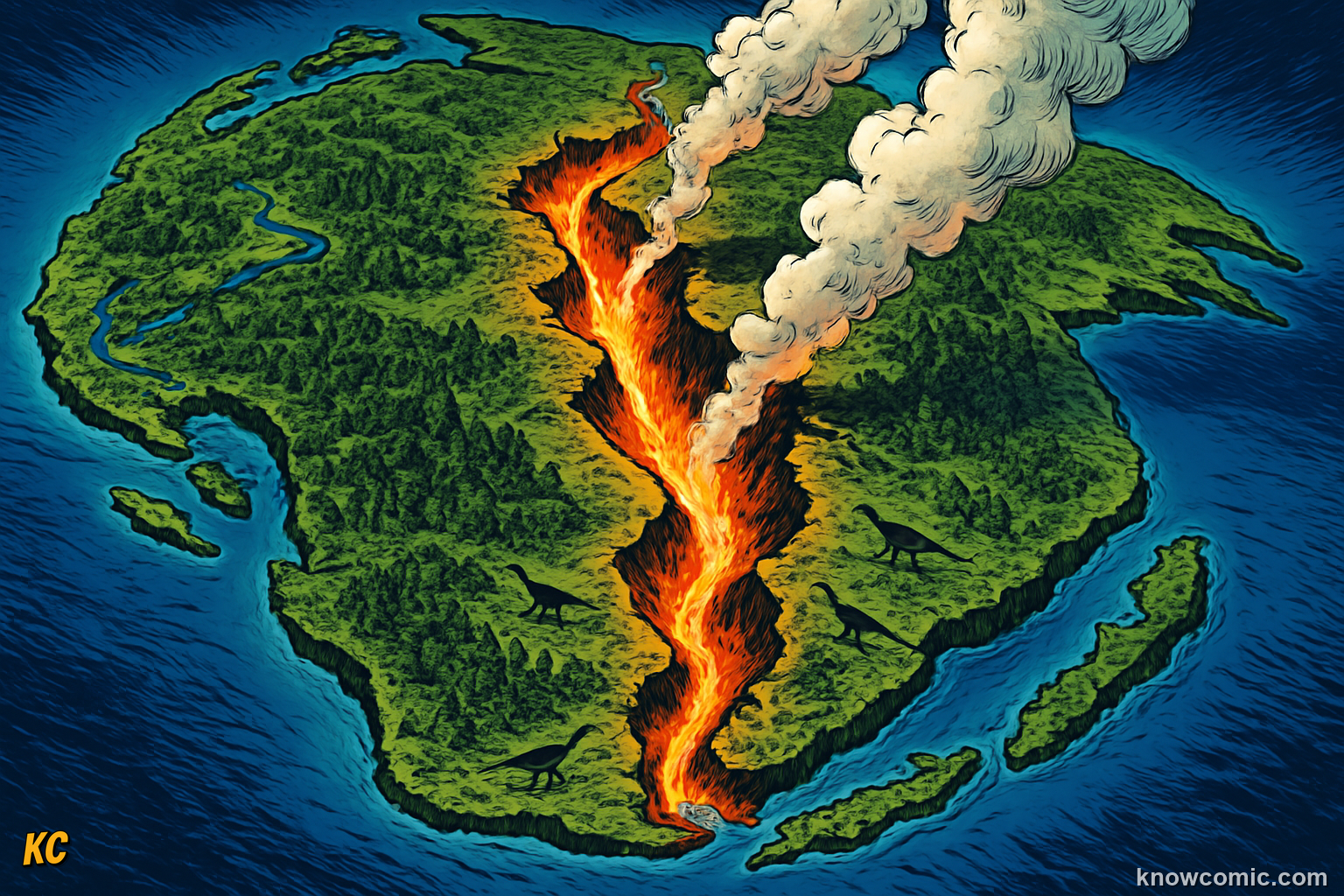
The Supercontinent
200 million years ago, every continent on Earth was fused into a single giant landmass called Pangaea. Dinosaurs could walk from what is now North America all the way to Antarctica without ever crossing an ocean. The world was one enormous connected habitat — and the same dinosaur species roamed across all of it.
ONE!
THE CRACK BEGINS
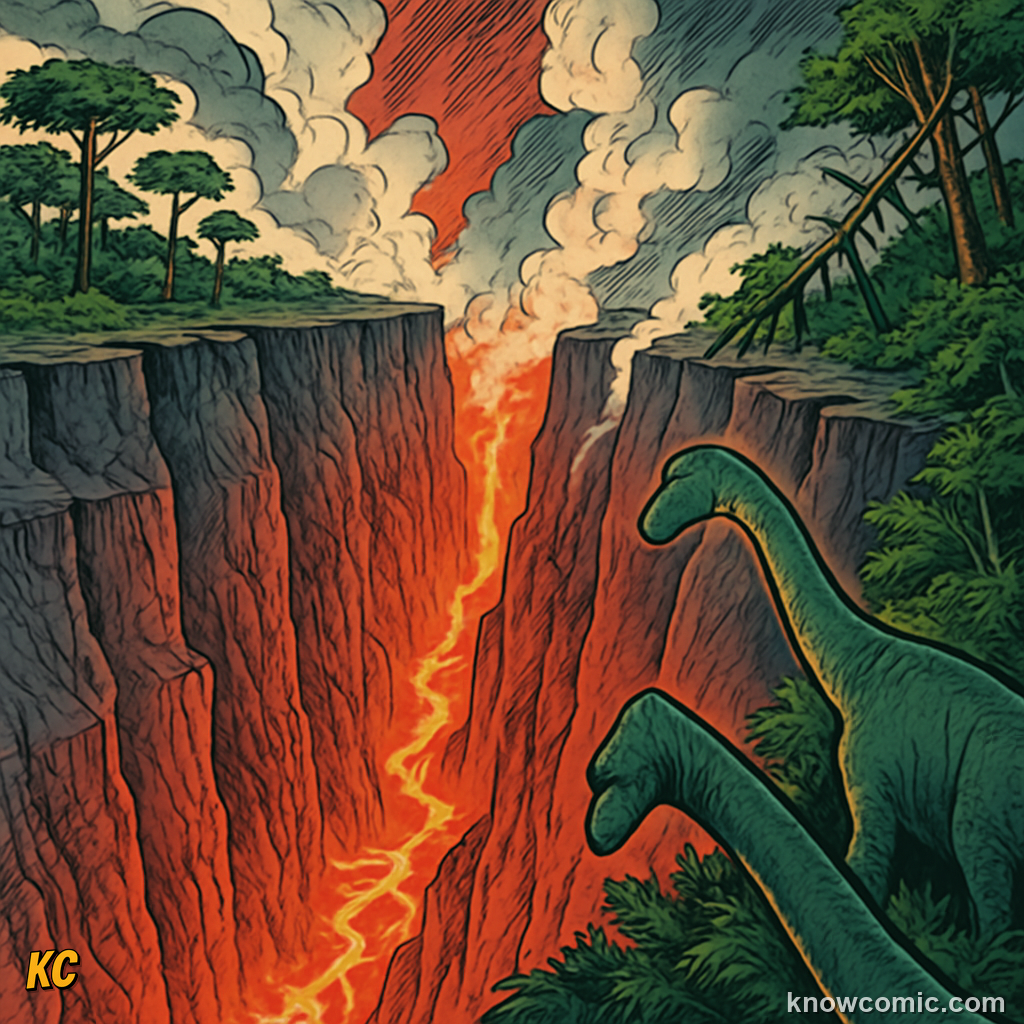
Heat From Below
Deep inside Earth, convection currents in the molten mantle slowly pulled Pangaea apart. First came the rift valleys — enormous cracks splitting the land, filling with lava, then seawater.
TETHYS SEA
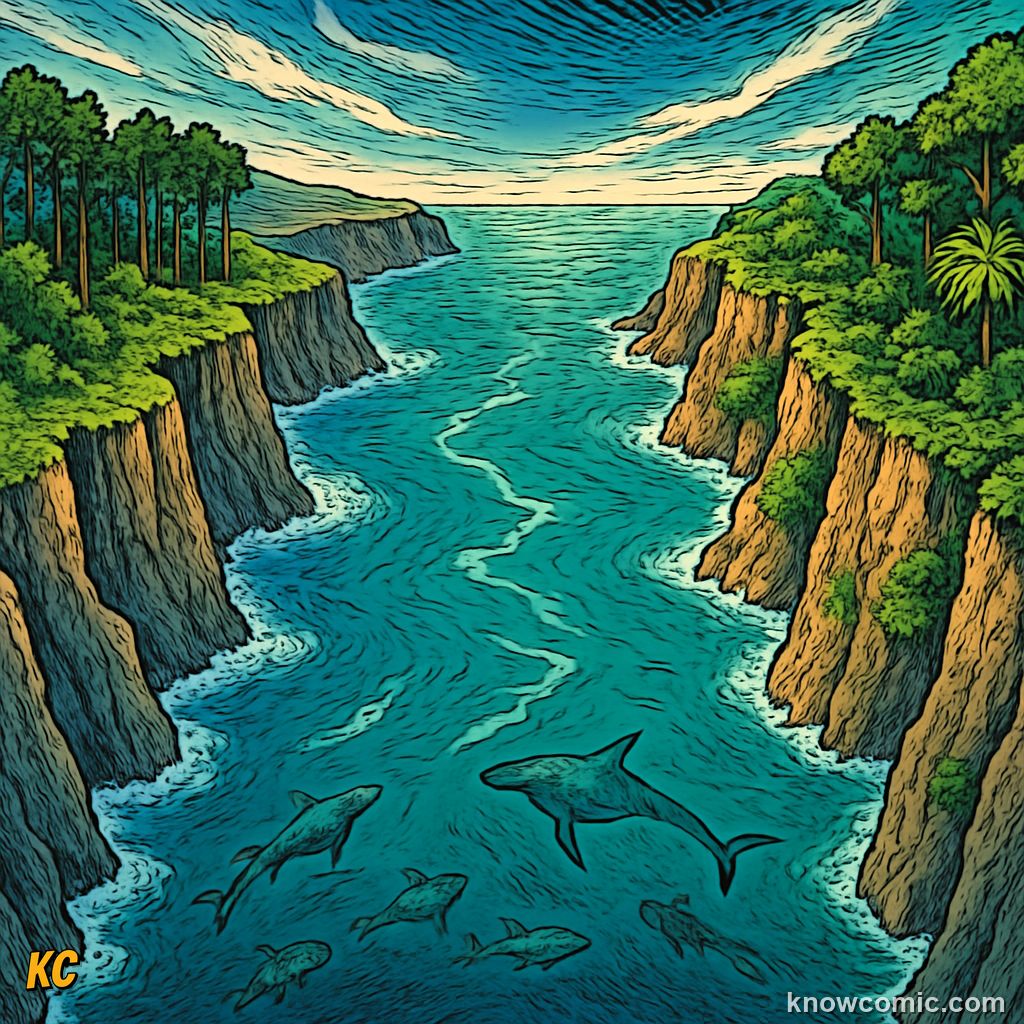
A New Ocean Is Born
As the rift widened, the Tethys Sea flooded in between. What started as a crack became a channel, then a sea, then a vast ocean — cutting off dinosaur populations forever.
PAGE 2 OF 5 — THE GREAT SPLIT: LAURASIA AND GONDWANA
LAURASIA — NORTH
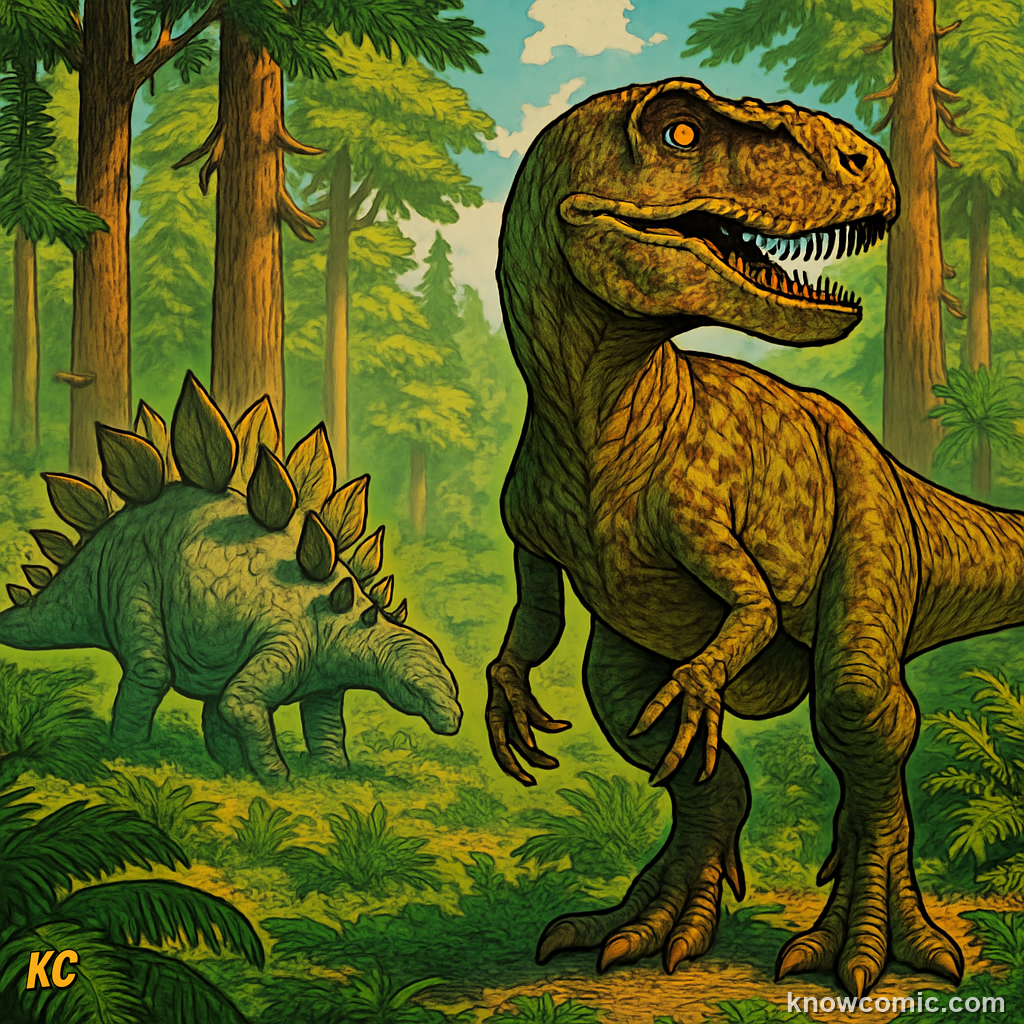
The Northern World
Laurasia contained North America, Europe, and Asia. Here, Allosaurus and Stegosaurus roamed vast conifer forests. These lineages would eventually give rise to T. rex.
GONDWANA — SOUTH
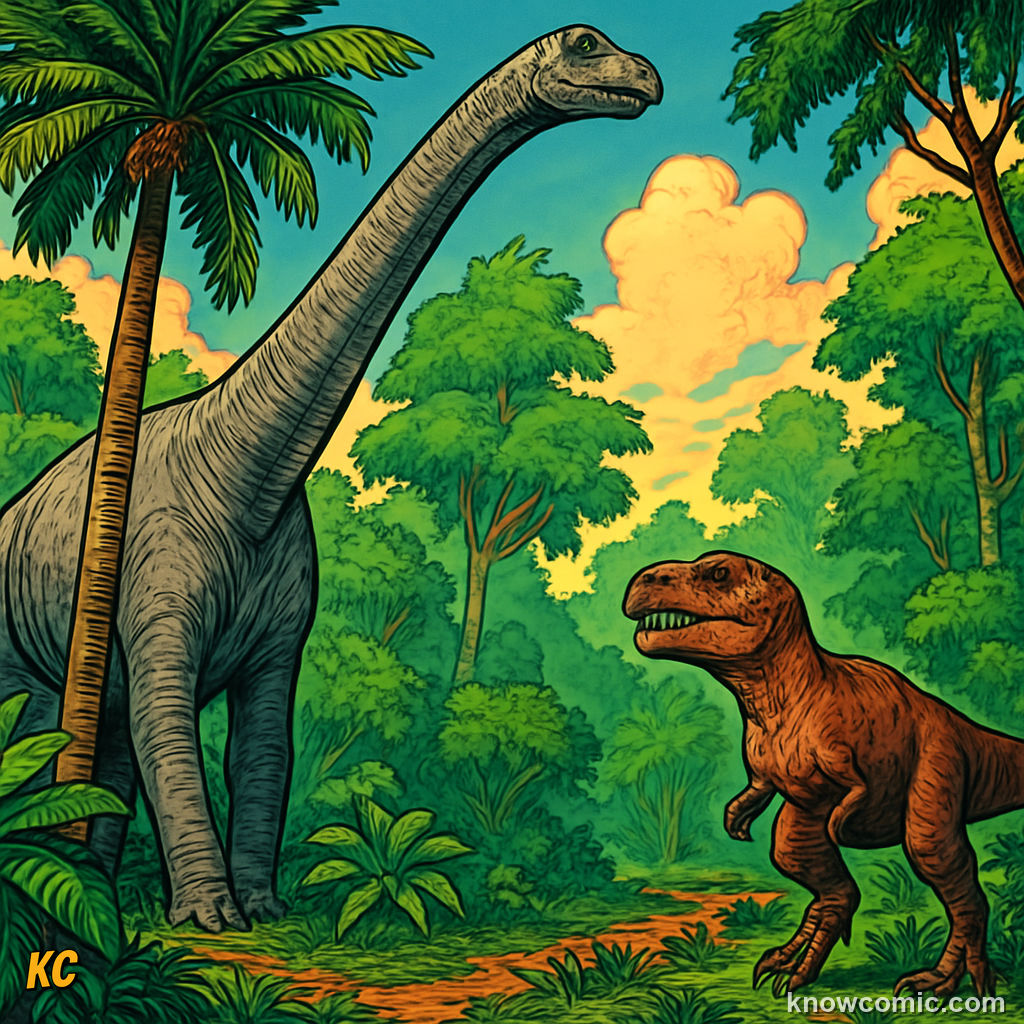
The Southern World
Gondwana held South America, Africa, India, Antarctica and Australia. Giant sauropods like Argentinosaurus evolved here — the largest land animals ever to walk the Earth.
150 MILLION YEARS AGO
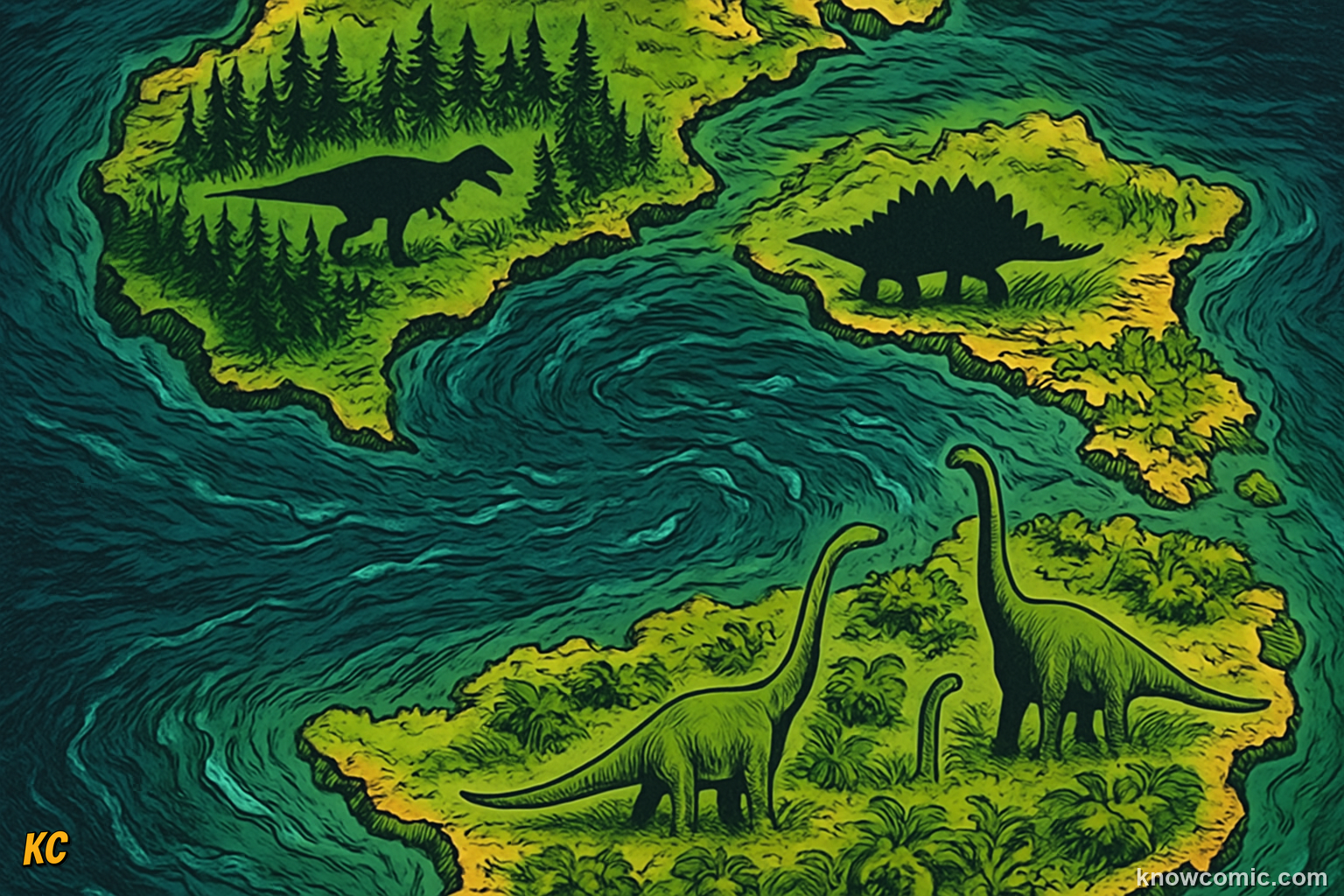
Two Worlds
By 150 million years ago, Pangaea had fully split into two giant landmasses separated by an expanding ocean. Laurasia drifted north. Gondwana drifted south. The dinosaurs on each landmass were now completely isolated from each other — and evolution took over, pushing each group in a different direction.
SPLIT!
🗺️ THE TWO SUPERCONTINENTS
🌎 Laurasia: North America + Europe + Asia
🌍 Gondwana: South America + Africa + India + Antarctica + Australia
🌊 Separated by: the growing Tethys Ocean
⏱️ Split complete by: ~150 million years ago
🌍 Gondwana: South America + Africa + India + Antarctica + Australia
🌊 Separated by: the growing Tethys Ocean
⏱️ Split complete by: ~150 million years ago
PAGE 3 OF 5 — SEPARATED: DINOSAURS EVOLVE APART
100 MILLION YEARS AGO
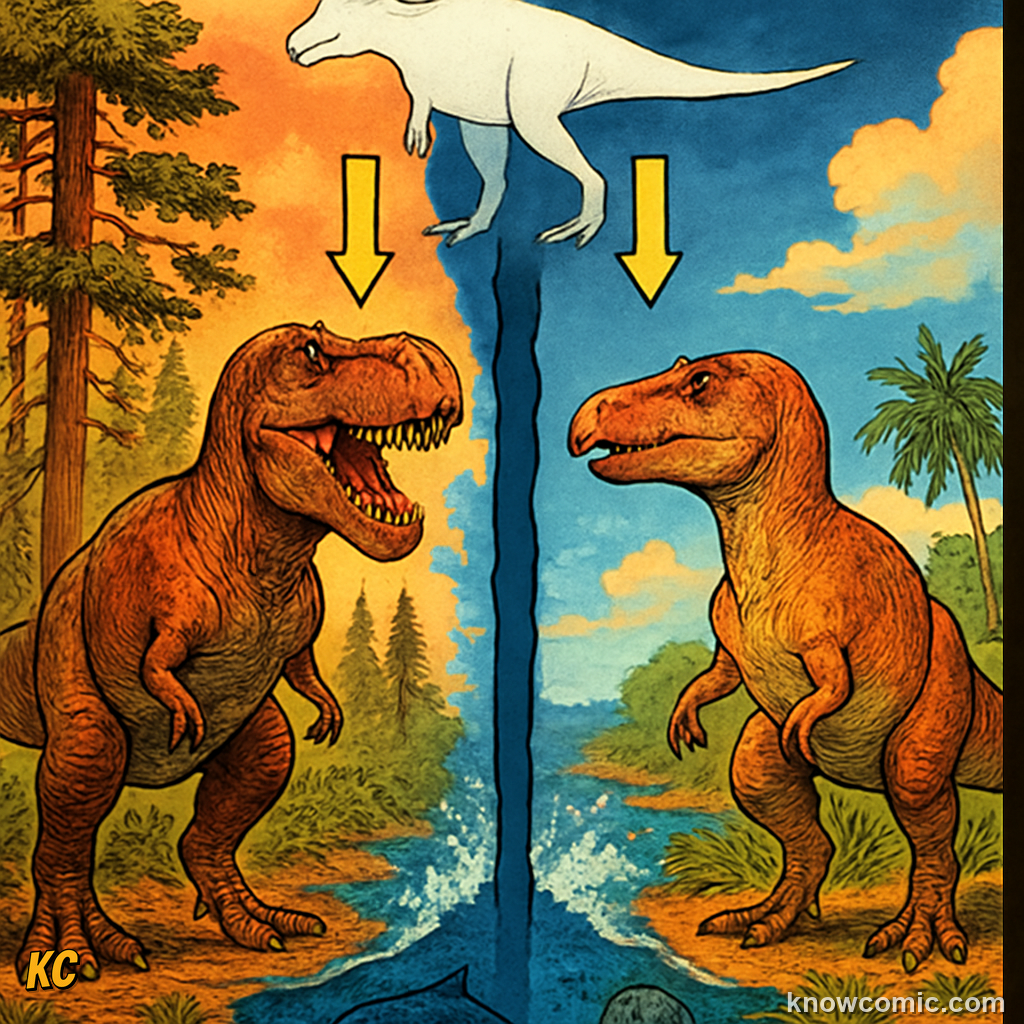
The Same Ancestor, Different Paths
When the continents split, dinosaur populations that had been identical were now cut off by thousands of kilometres of ocean. Over millions of years, the same evolutionary pressures produced completely different animals. In North America, the tyrannosaurid family produced T. rex. In South America, the abelisaurids filled the same predator role — but evolved a completely different body plan. Same ecological niche, different solution.
EVOLVE!
HOW IT WORKS
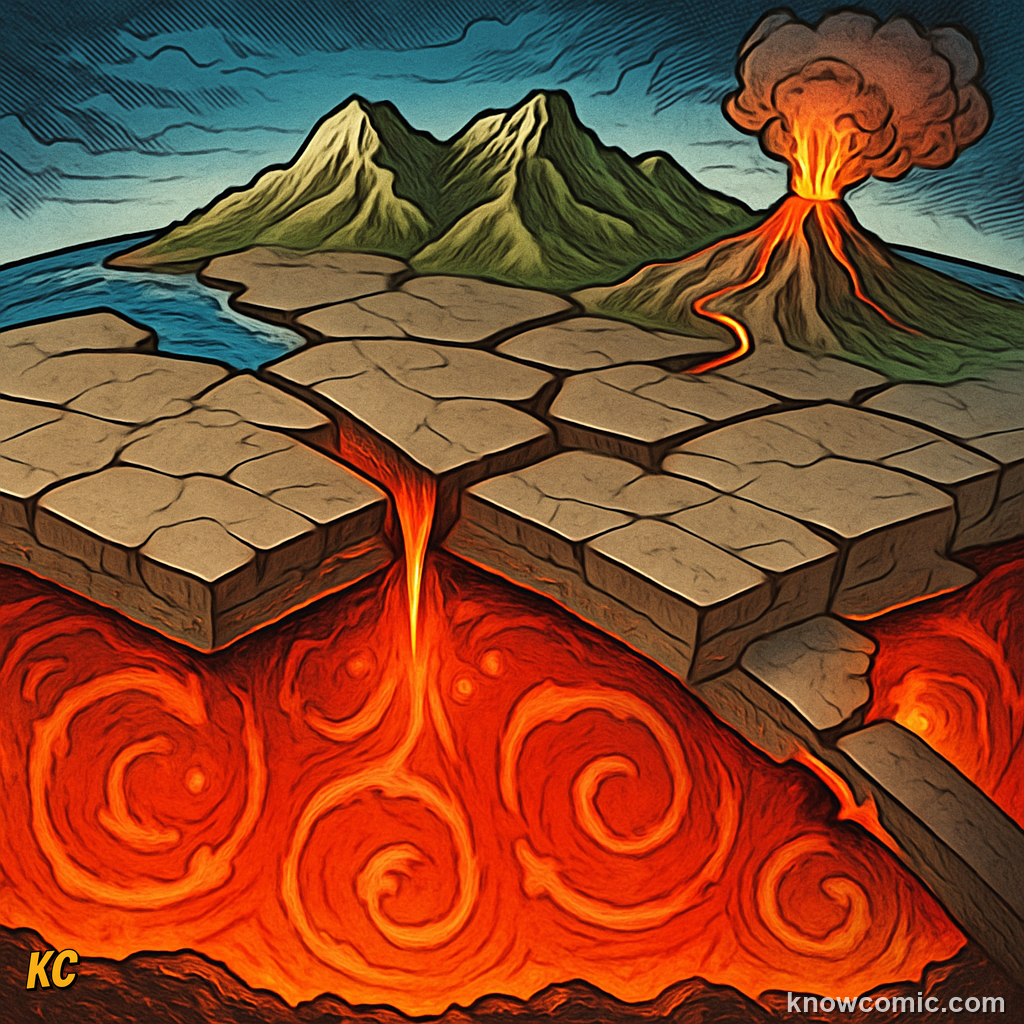
Plate Tectonics
Earth's crust is broken into giant slabs called tectonic plates. They float on the molten mantle and move about 2–5 cm per year — roughly as fast as your fingernails grow. Over millions of years, this adds up to entire continents crossing the globe.
SEAFLOOR SPREADING
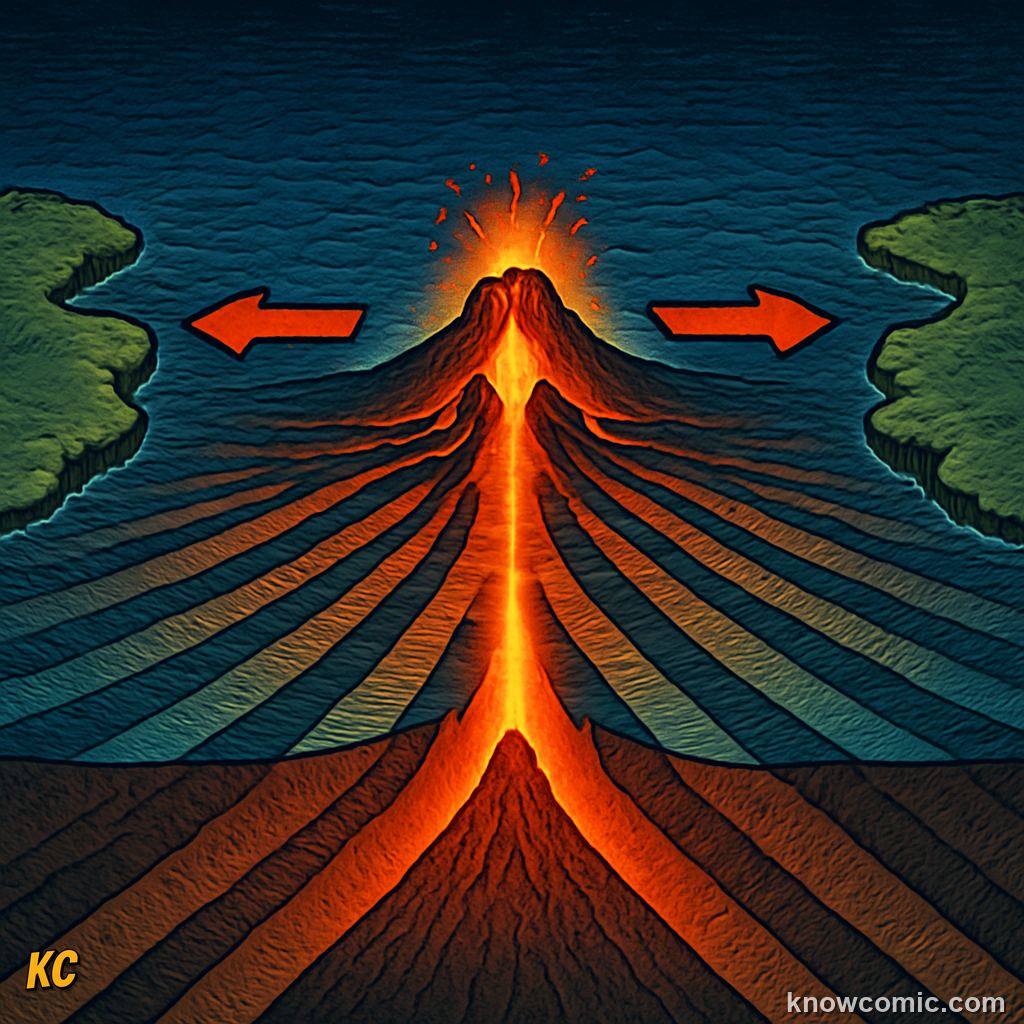
New Ocean Floor
As continents pull apart, molten rock wells up from below and hardens — creating new ocean floor. The Atlantic Ocean grows about 2.5 cm wider every year even today.
PAGE 4 OF 5 — THE EVIDENCE: FOSSILS TELL THE STORY
IDENTICAL SPECIES
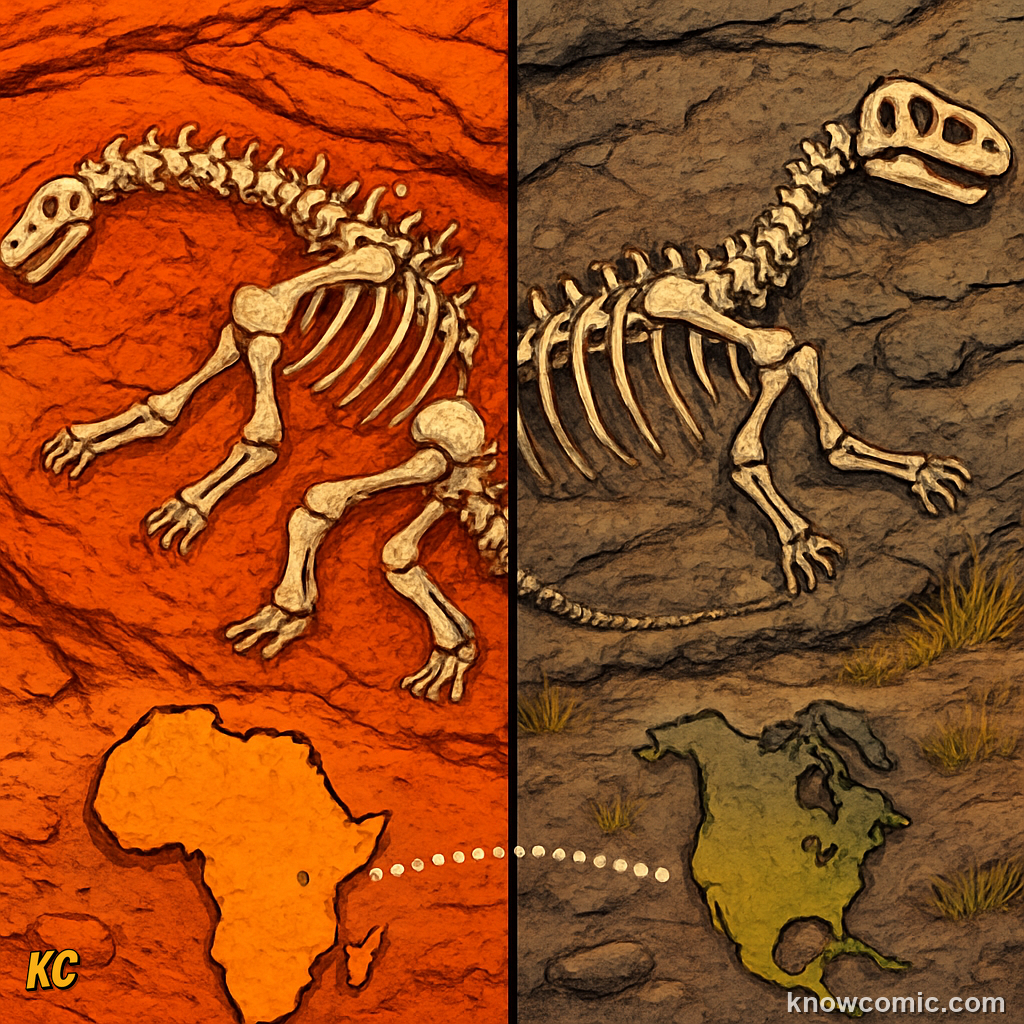
One Fossil, Two Continents
The same brachiosaurid sauropod fossils appear in both North America and Africa. The same Lystrosaurus (from Topic 6) appears in Africa, India and Antarctica. Identical species on continents now separated by 10,000 km of ocean — proof they were once joined.
MAGNETIC EVIDENCE
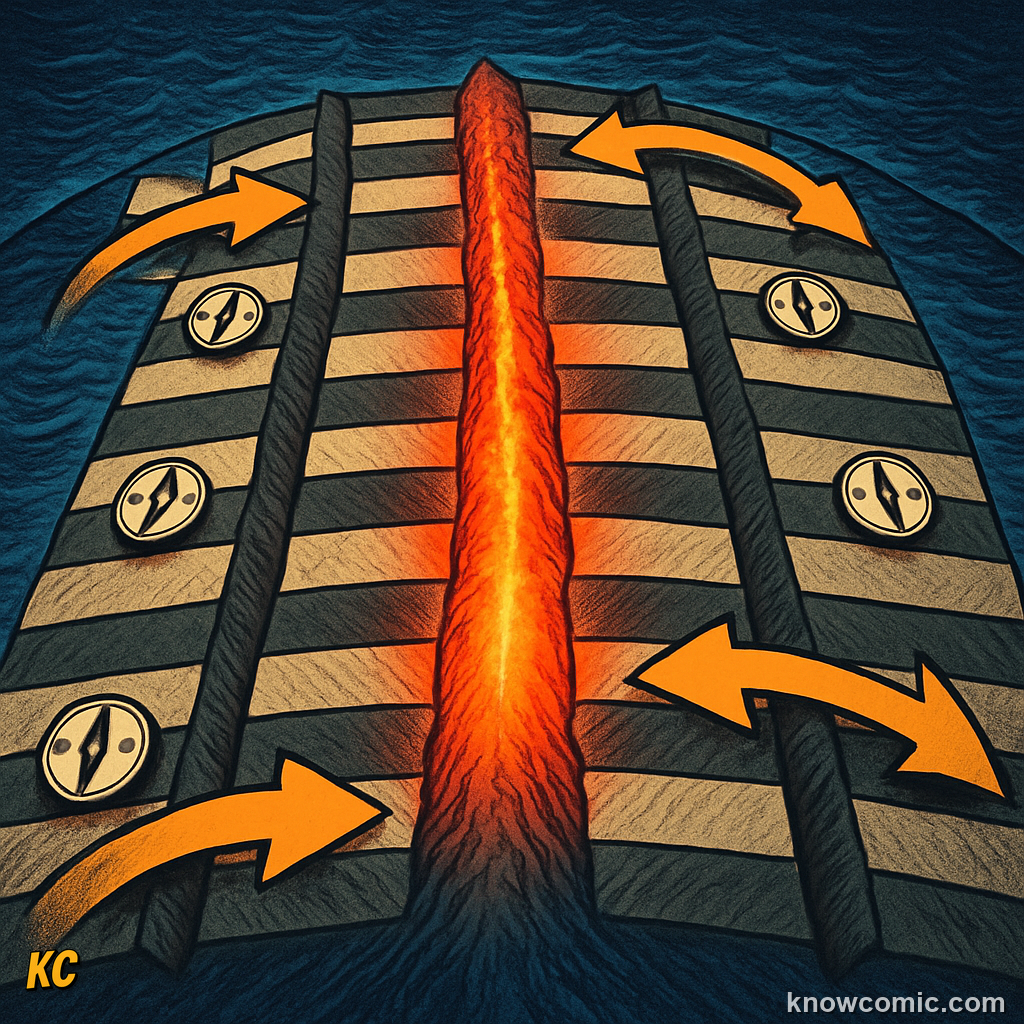
Stripes in the Rock
The ocean floor records Earth's magnetic field as new rock forms. These magnetic stripes mirror each other on both sides of mid-ocean ridges — undeniable proof that seafloor is spreading and continents are moving.
THE PROOF
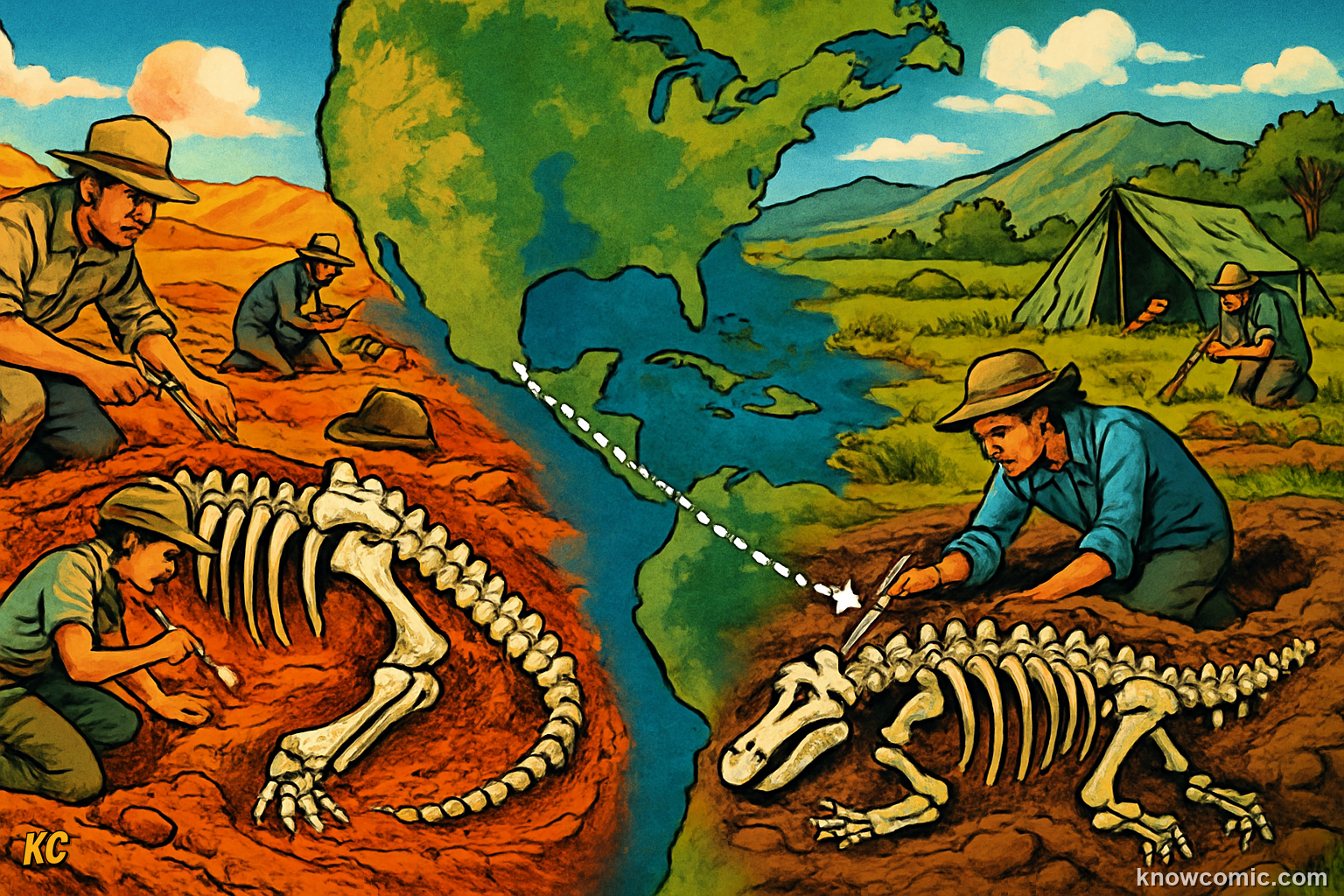
The Jigsaw Puzzle
Look at a map: the eastern coast of South America fits almost perfectly into the western coast of Africa — like two jigsaw pieces. Alfred Wegener noticed this in 1912. Geologists laughed at him. But then identical fossils, identical rock formations, and matching mountain ranges on both continents proved he was right. Continents drift.
PROOF!
🔬 EVIDENCE FOR DRIFT
🧩 Matching coastline shapes
🦴 Same fossils on separate continents
🪨 Identical rock formations across oceans
⛰️ Matching ancient mountain chains
🧲 Symmetric magnetic stripes on ocean floors
🦴 Same fossils on separate continents
🪨 Identical rock formations across oceans
⛰️ Matching ancient mountain chains
🧲 Symmetric magnetic stripes on ocean floors
PAGE 5 OF 5 — DRIFT'S LEGACY: THE WORLD IT MADE
50 MILLION YEARS AGO → TODAY
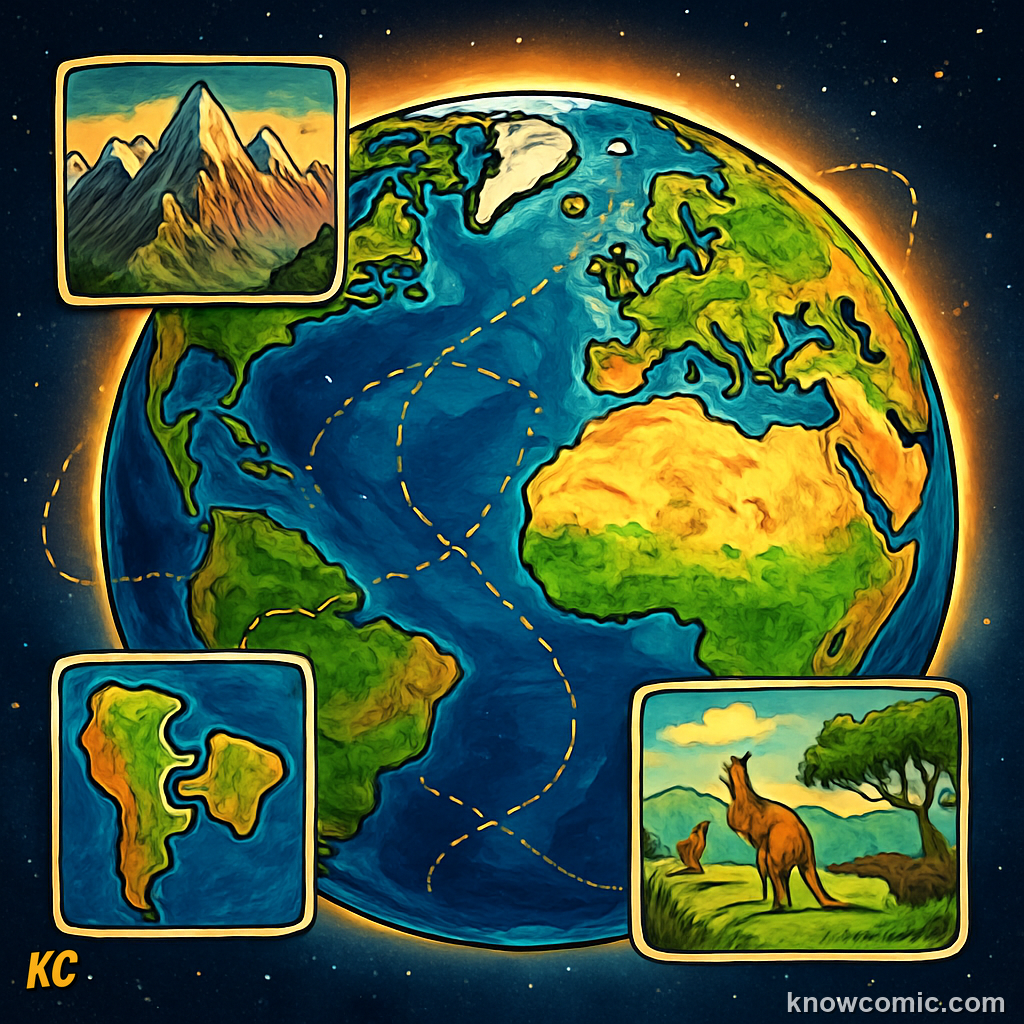
The World Drift Built
Continental drift didn't stop when dinosaurs went extinct. It kept going — and shaped everything we know. India broke from Gondwana and crashed into Asia 50 million years ago, crumpling the crust upward to form the Himalayas. Australia split off and became an island continent — its animals (marsupials and monotremes) evolved in total isolation. Without drift, all life on Earth would look completely different.
DRIFT...
INDIA CRASHES
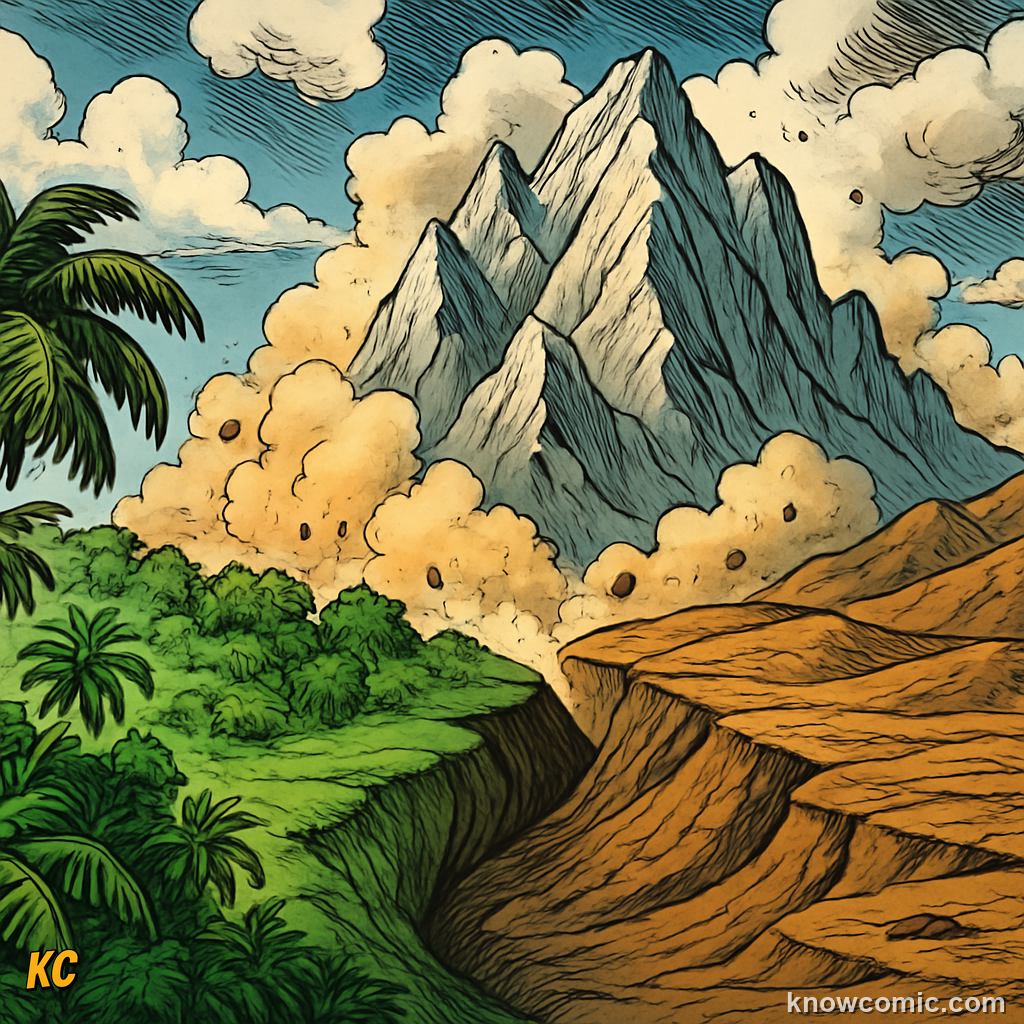
The Himalayas Are Born
India once sat next to Antarctica. It rifted off and drifted north for 70 million years — then slammed into Asia at full tectonic speed. The collision crumpled the crust upward, creating the highest mountain range on Earth. Mt. Everest is still growing 5 mm per year.
STILL MOVING
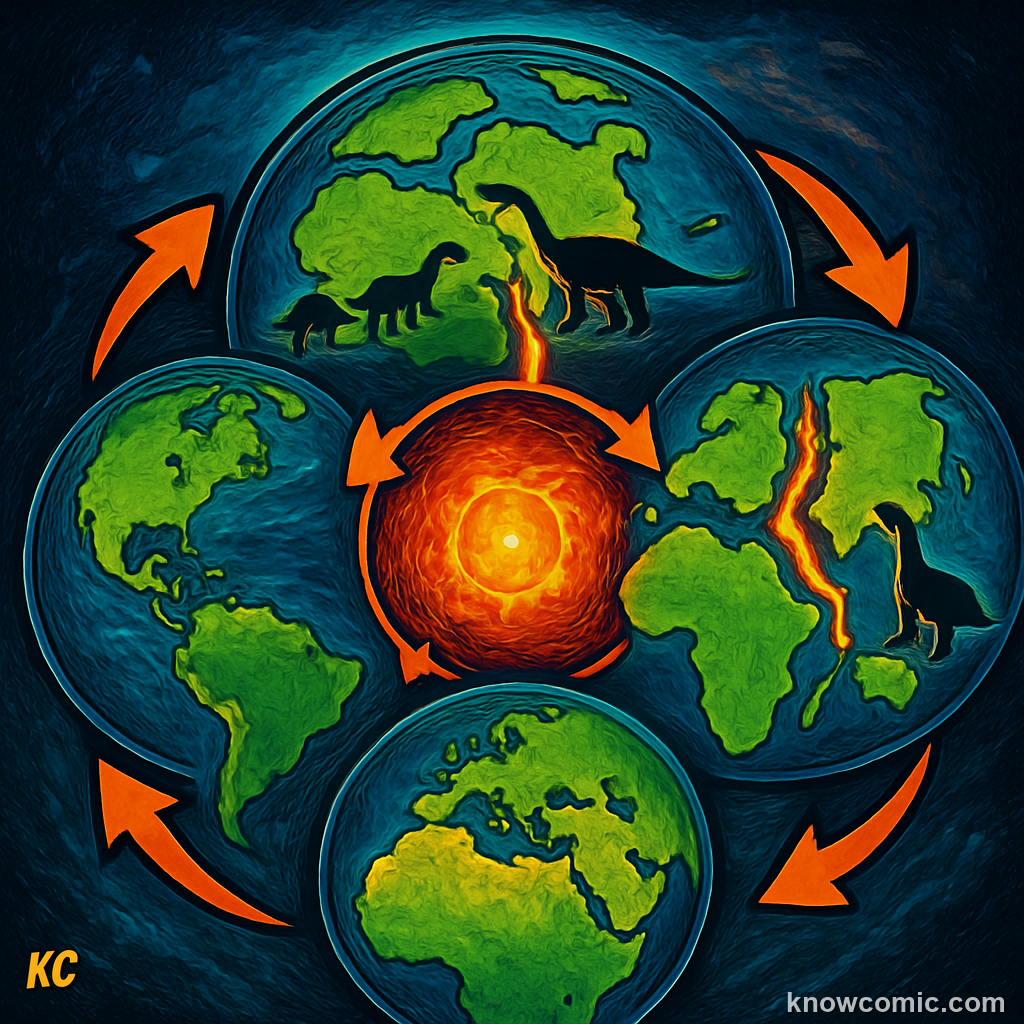
It Never Stopped
The continents are moving right now. Los Angeles is drifting toward San Francisco at 6 cm per year. In 250 million years, geologists predict the continents will merge again into a new supercontinent — already nicknamed Pangaea Ultima.
🧠 QUIZ TIME!
CONTINENTAL DRIFT: PANGAEA BREAKING APART · 5 QUESTIONS
QUESTION 01
What was the name of the single supercontinent that existed 200 million years ago, before it began to break apart?
QUESTION 02
Approximately when did Pangaea begin breaking apart — splitting the world of the dinosaurs in two?
QUESTION 03
What were the two major landmasses that Pangaea first split into?
QUESTION 04
Why did dinosaurs on different continents evolve into completely different species after the split?
QUESTION 05
Which mountain range was created when India — which had drifted north from Gondwana — collided with Asia?
0/5
LOADING...