💧 THE WATER CYCLE
PAGE 1 OF 5, ONE PLANET, ONE WATER SUPPLY
CLOSED LOOP
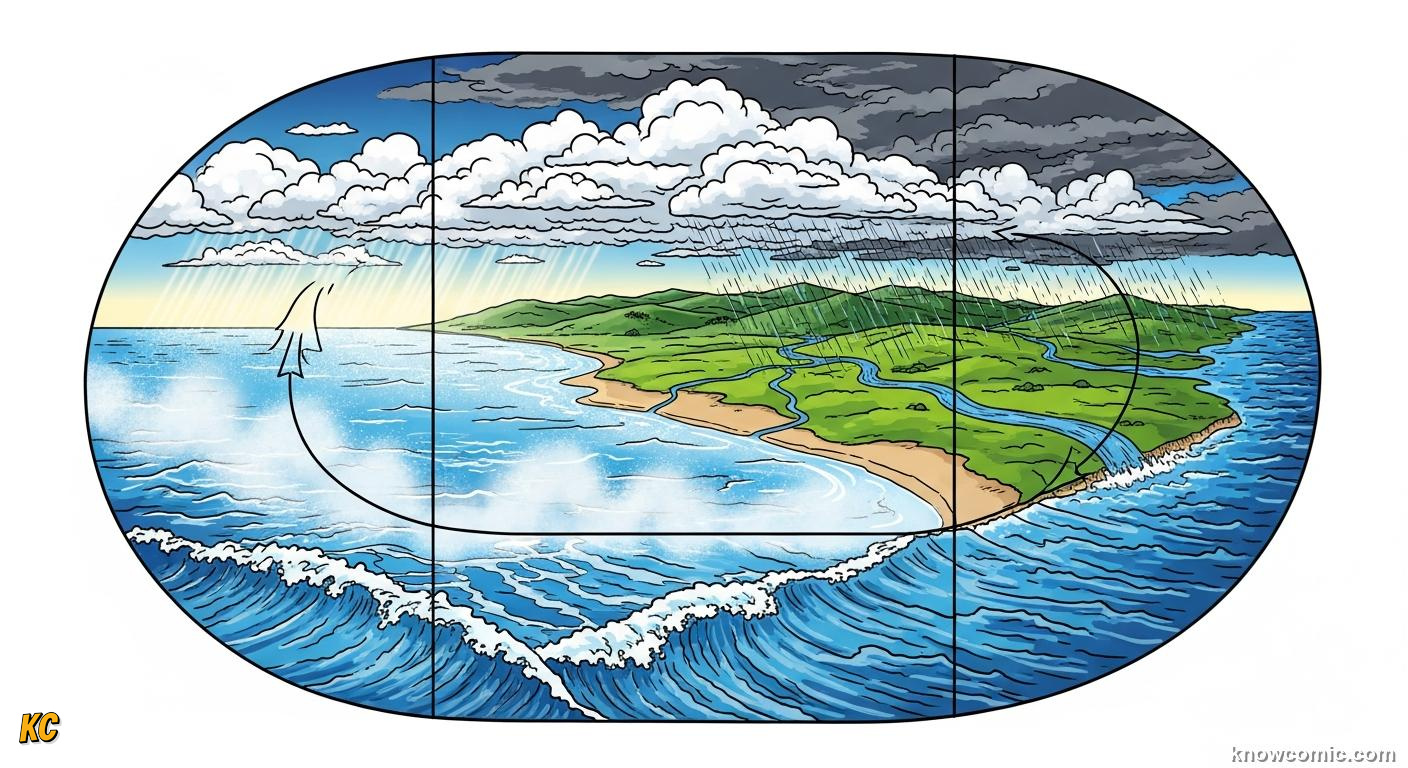
NOT NEW WATER — RECYCLED WATER
Earth is a closed system for water (at least on human timescales): almost every drop you drink has been ocean, cloud, ice, or inside a living thing before. The hydrologic (water) cycle moves H₂O between reservoirs — ocean, air, land ice, soil, plants, and groundwater. The same molecules change phase and location: liquid → invisible vapour → droplets or crystals → back to the surface. Nothing is created from scratch; it is rearranged by Sun and gravity.
🦕 FUN PERSPECTIVE
A sip of water might have been inside a fern, a T. rex, or a storm cloud 200 million years ago — same atoms, new ride.
RECYCLE!
MASS BALANCE
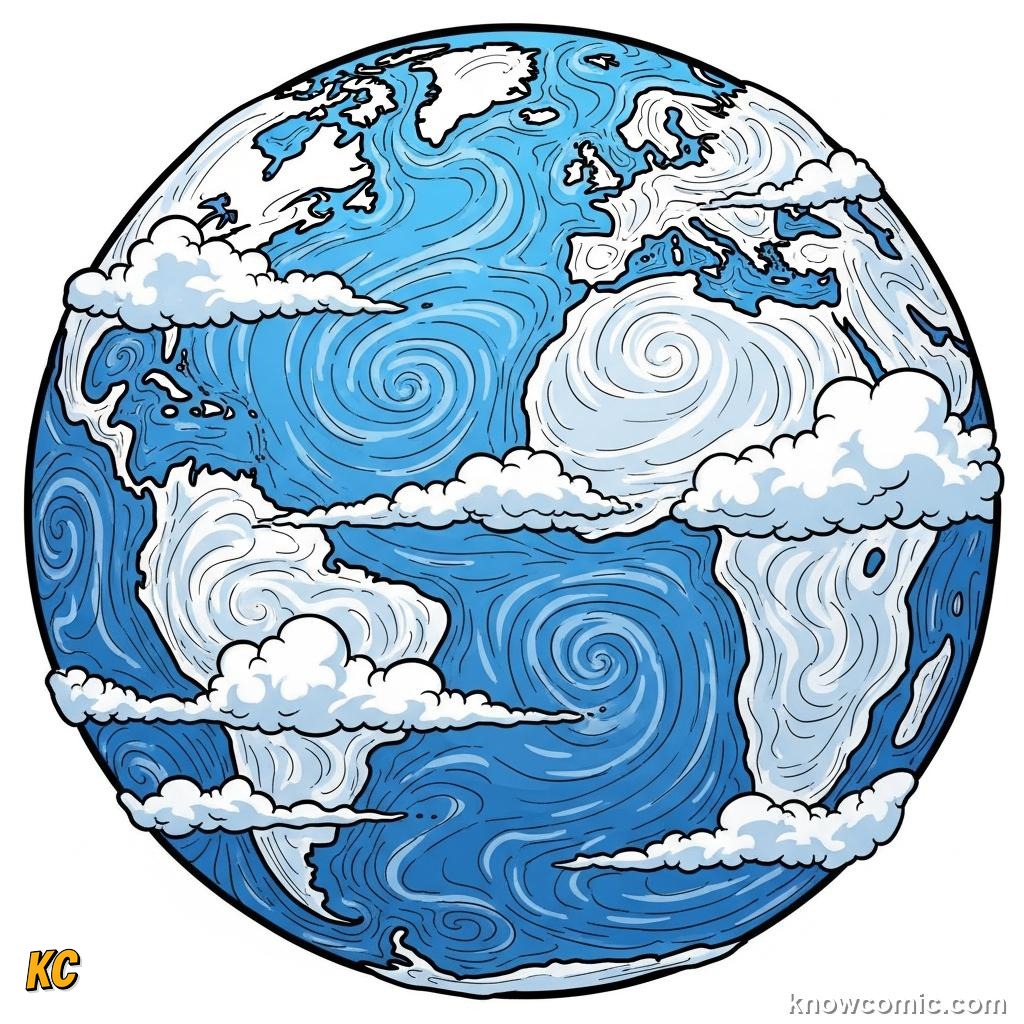
Total water on Earth stays roughly the same; only the form and place change
SALT VS FRESH
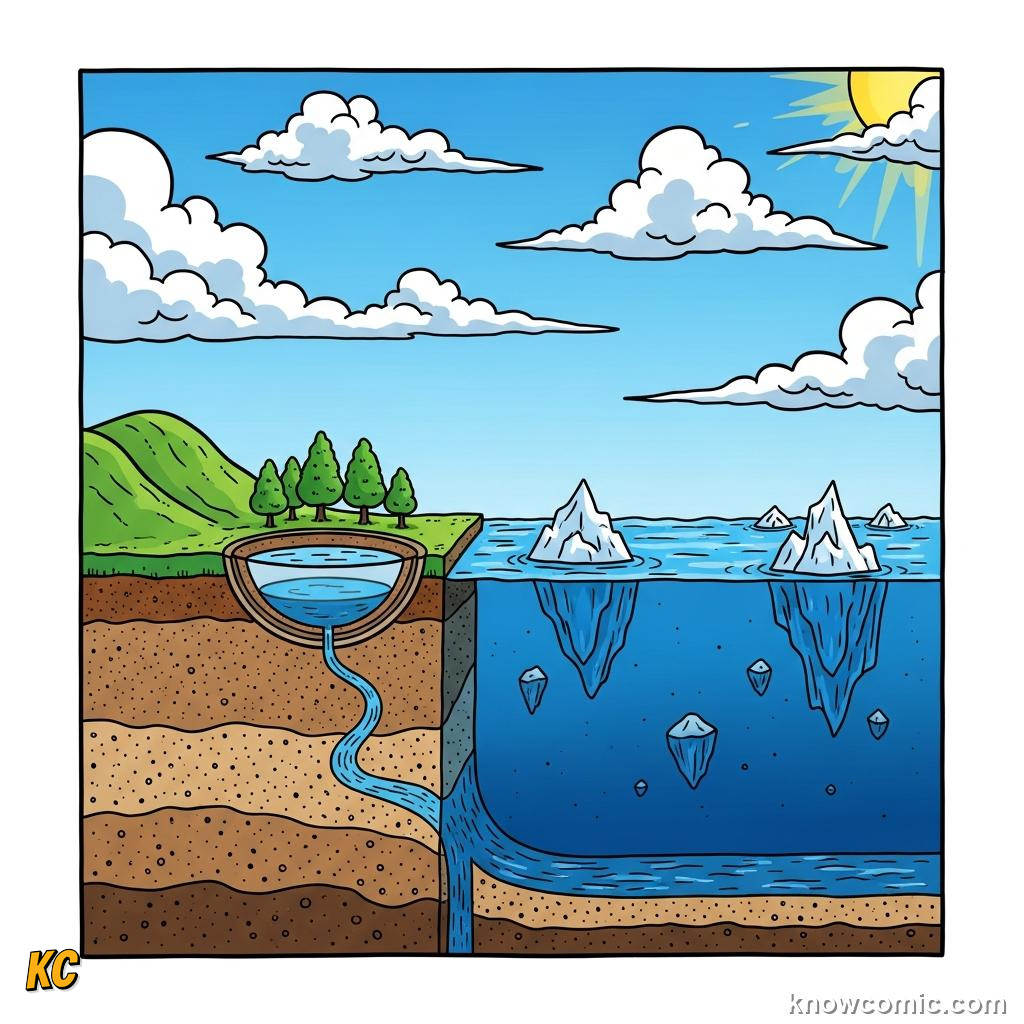
~97% ocean · ~2% ice · <1% liquid fresh where we live
PAGE 2 OF 5, THE SUN PULLS WATER SKYWARD
EVAPORATION & TRANSPIRATION
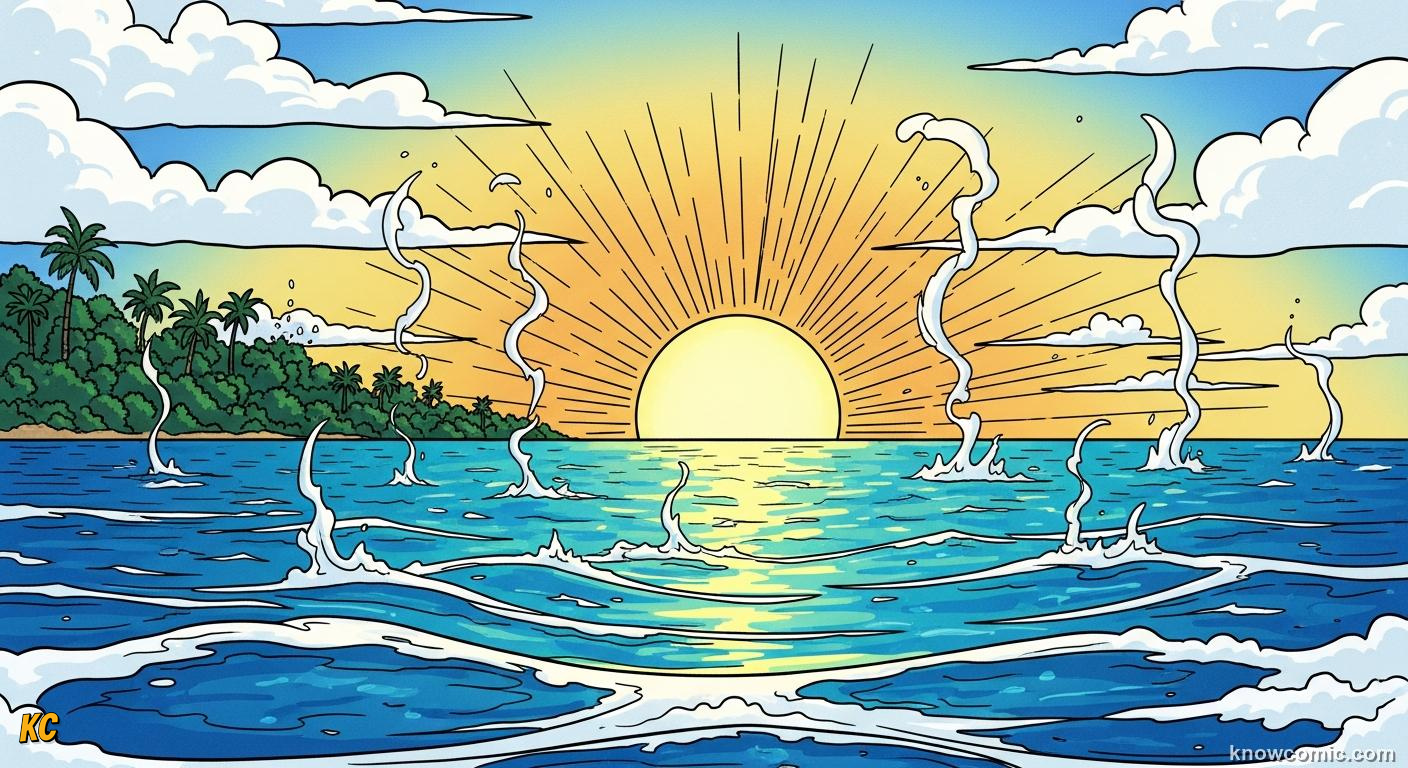
FROM SURFACE TO VAPOUR
Evaporation = liquid water becomes water vapour when fast-moving molecules escape (faster when it is warm and windy). The ocean is the main pump — most atmospheric moisture starts there. Transpiration is the same idea from plants: water pulled from soil moves through roots and leaves and exits as vapour. Together, evapotranspiration feeds the sky. Ice and snow can sublimate straight to vapour without melting first, especially in cold dry air.
RISE!
SEA MIST
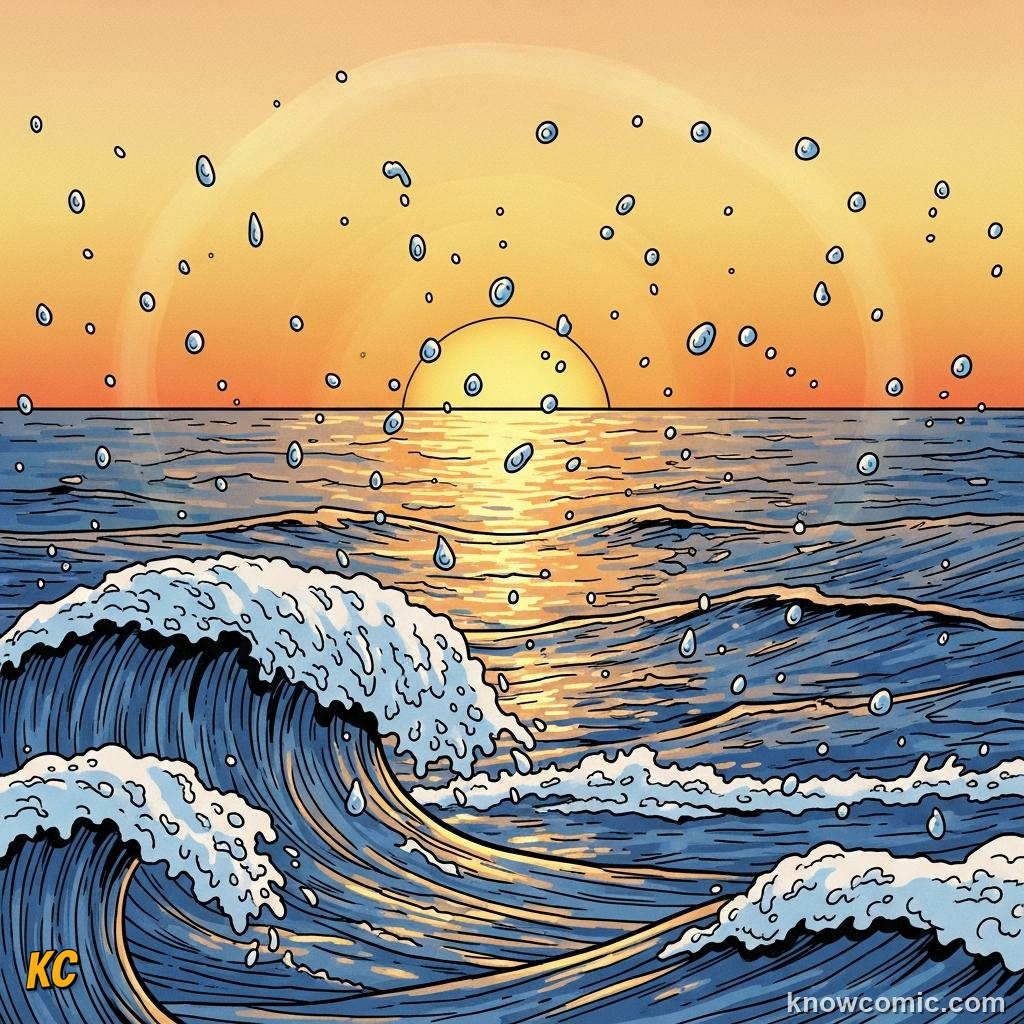
Sun-warmed swells = invisible freight of H₂O
LEAVES
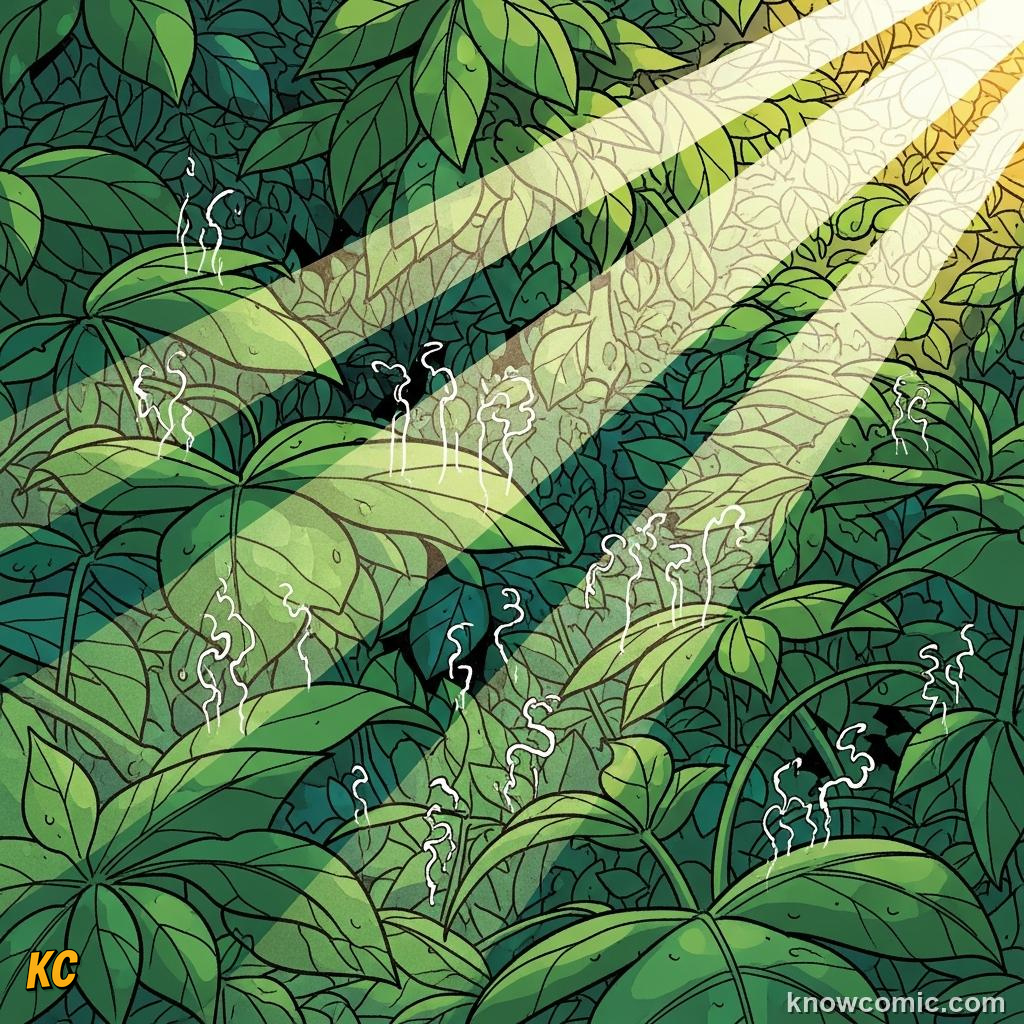
A single tree can "sweat" hundreds of litres a day in summer
COLD SMOKE
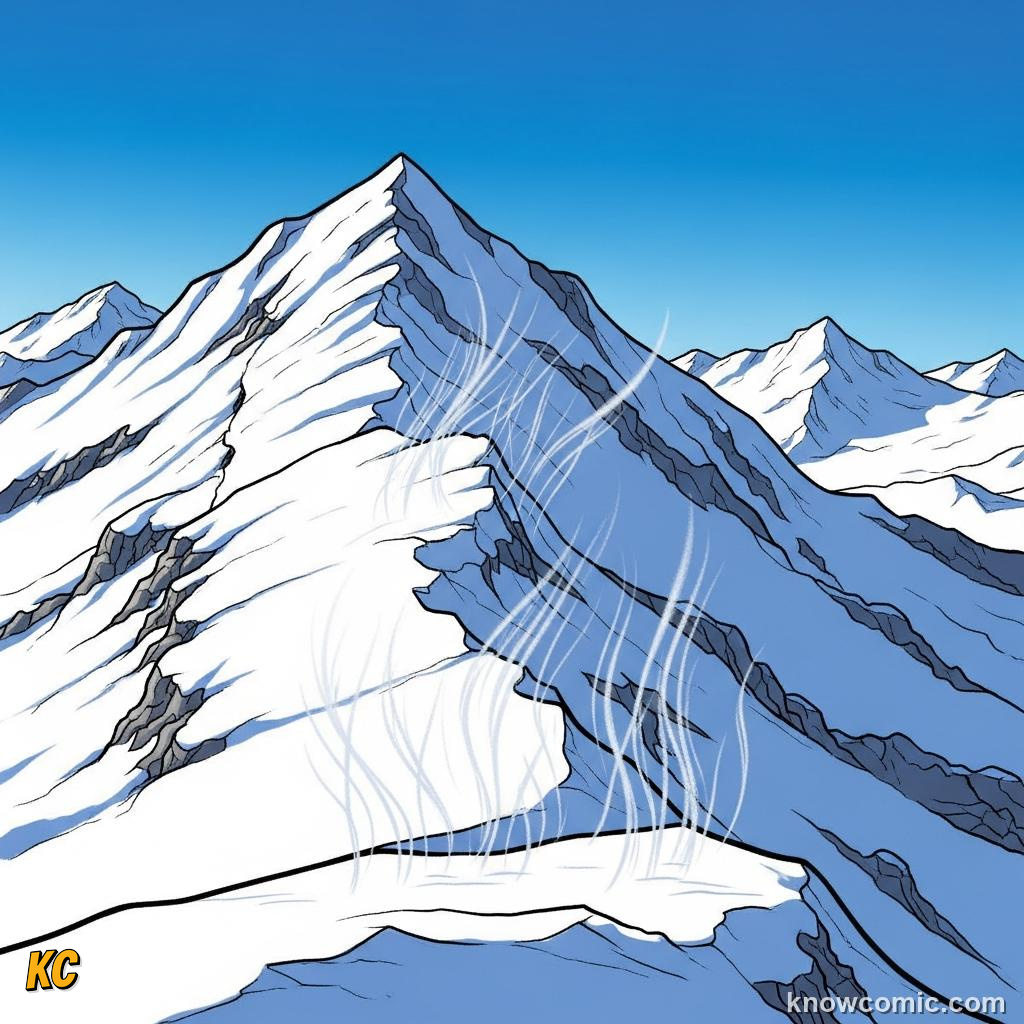
Dry air + sunlight can steal ice as vapour — sublimation
PAGE 3 OF 5, WHERE CLOUDS GET THEIR WATER
COOLING
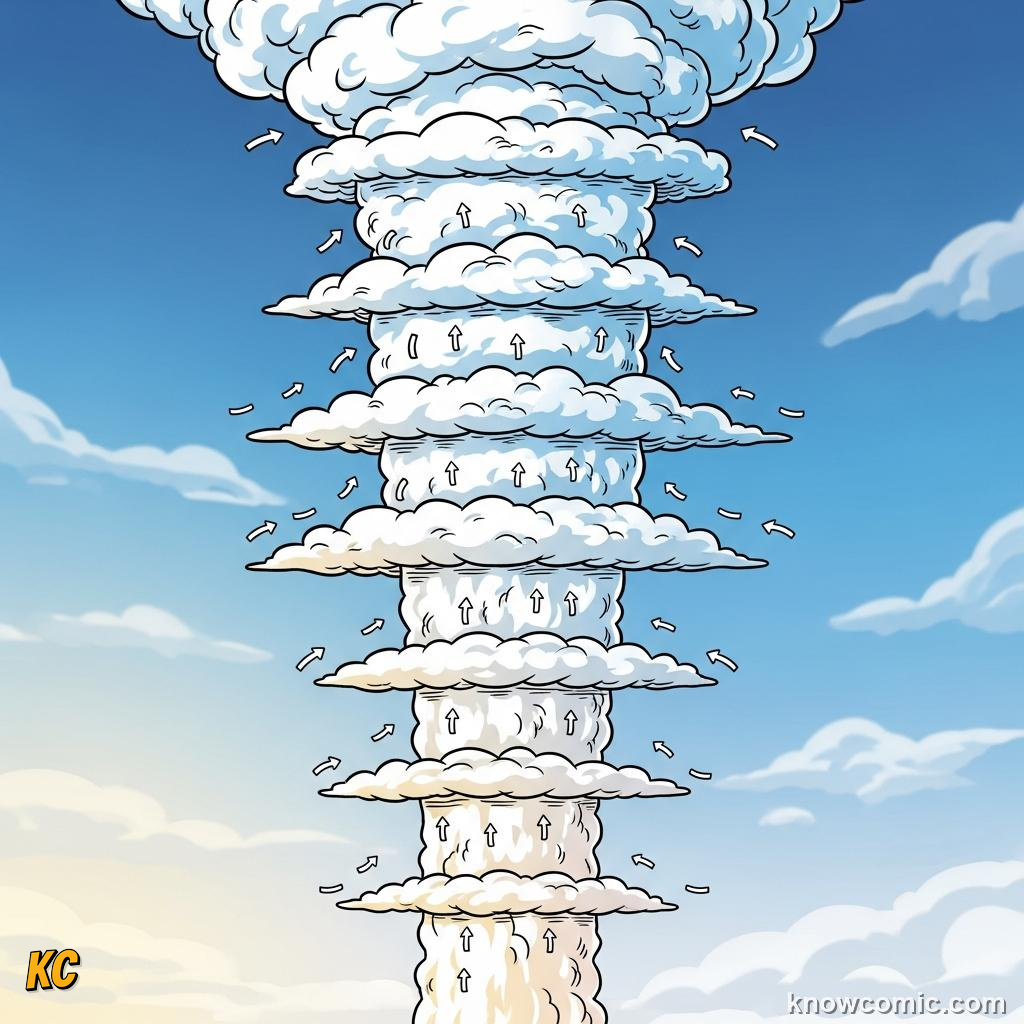
Rising (or cooling) air can hold less vapour — surplus must become droplets or ice
SEEDS
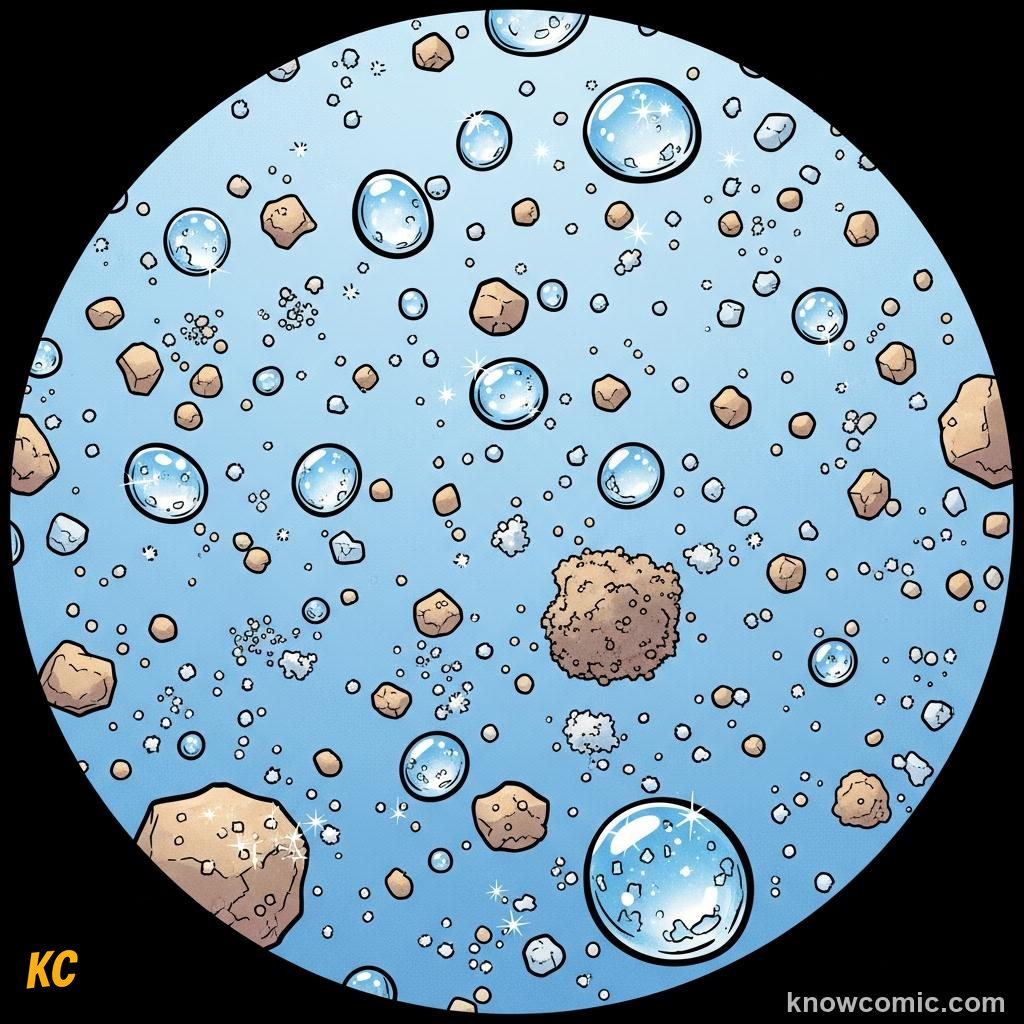
Dust, salt, smoke = nuclei for droplets to grow on
CONDENSE
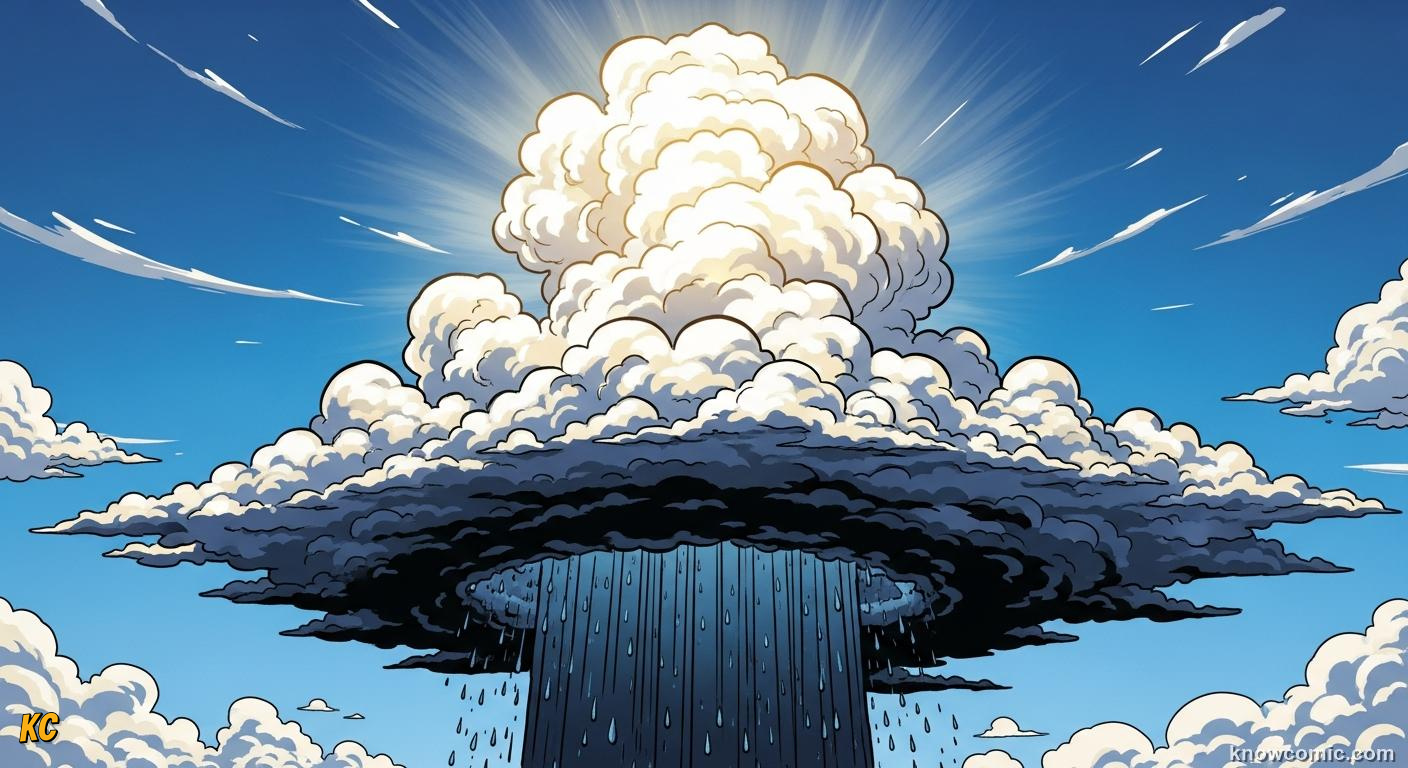
INVISIBLE → VISIBLE
When air cools to the dew point, water vapour condenses onto condensation nuclei — billions of micro-droplets (or ice crystals in cold tops) = cloud. The water was already in the air; you just made it see-through → white. Without particles, air could in theory be supersaturated, but in the real world there is always enough dust, pollen, and sea-salt. Next topic: cloud types and what they signal.
CLUMP!
PAGE 4 OF 5, GRAVITY WINS THE RETURN TRIP
PRECIPITATION
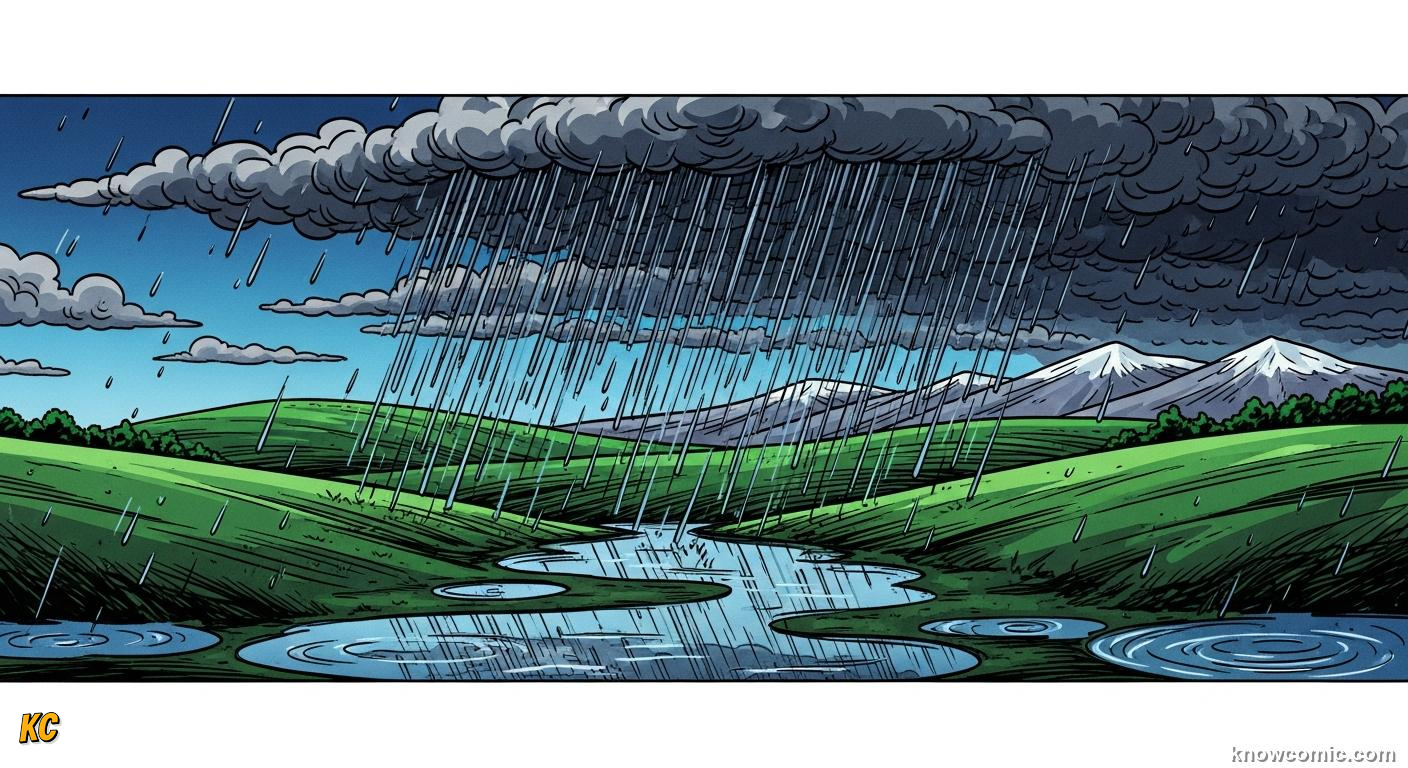
WHEN DROPS OR FLAKES FALL
Precipitation is any water (liquid or solid) that falls from a cloud: rain, drizzle, snow, sleet, graupel, hail. Inside the cloud, droplets collide and merge (or ice grows by attaching vapour) until gravity + drag balance can no longer hold them up. Warmer air below can melt snow into rain. Extreme updrafts in storms loop ice up and down, building hail layers. What reaches the ground depends on the temperature profile all the way down — not just the surface.
DOWN!
SURFACE
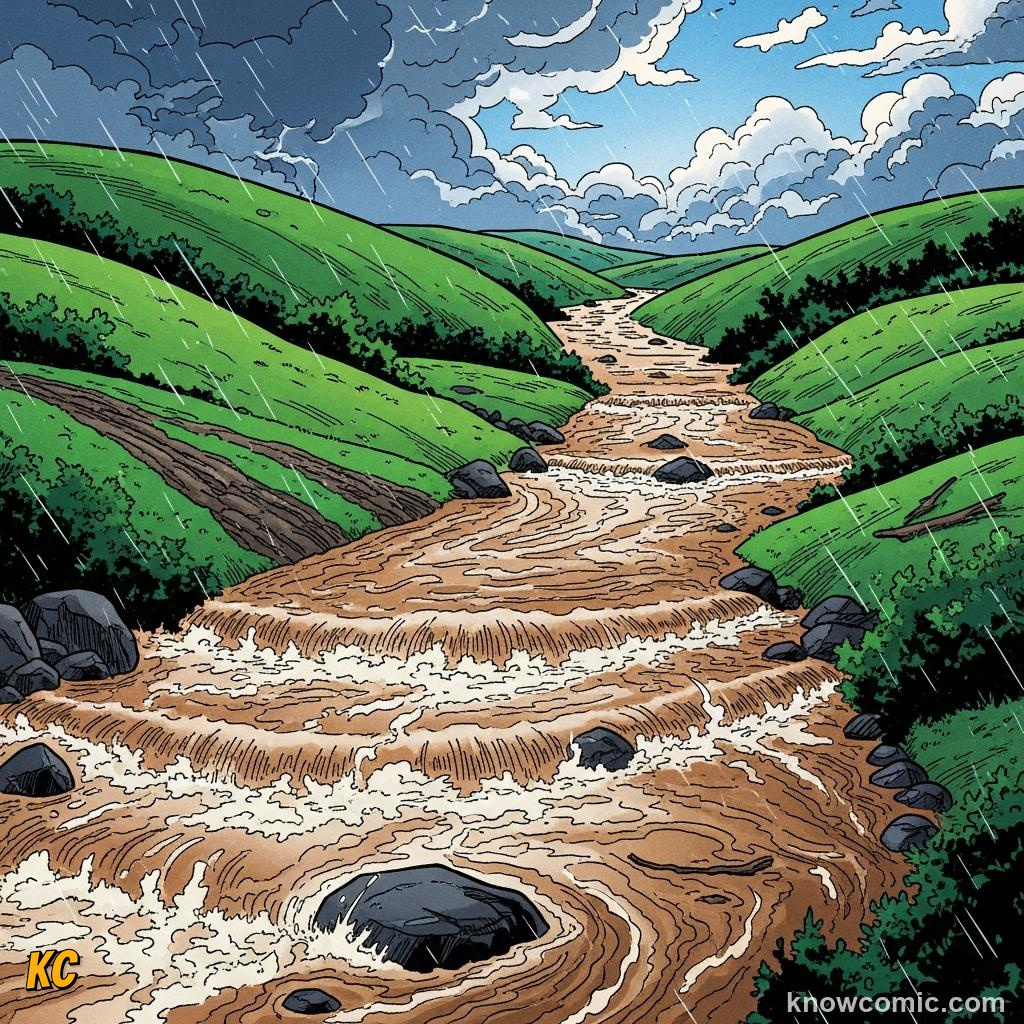
Runoff: rain races to streams on the "skin" of the land
UNDER
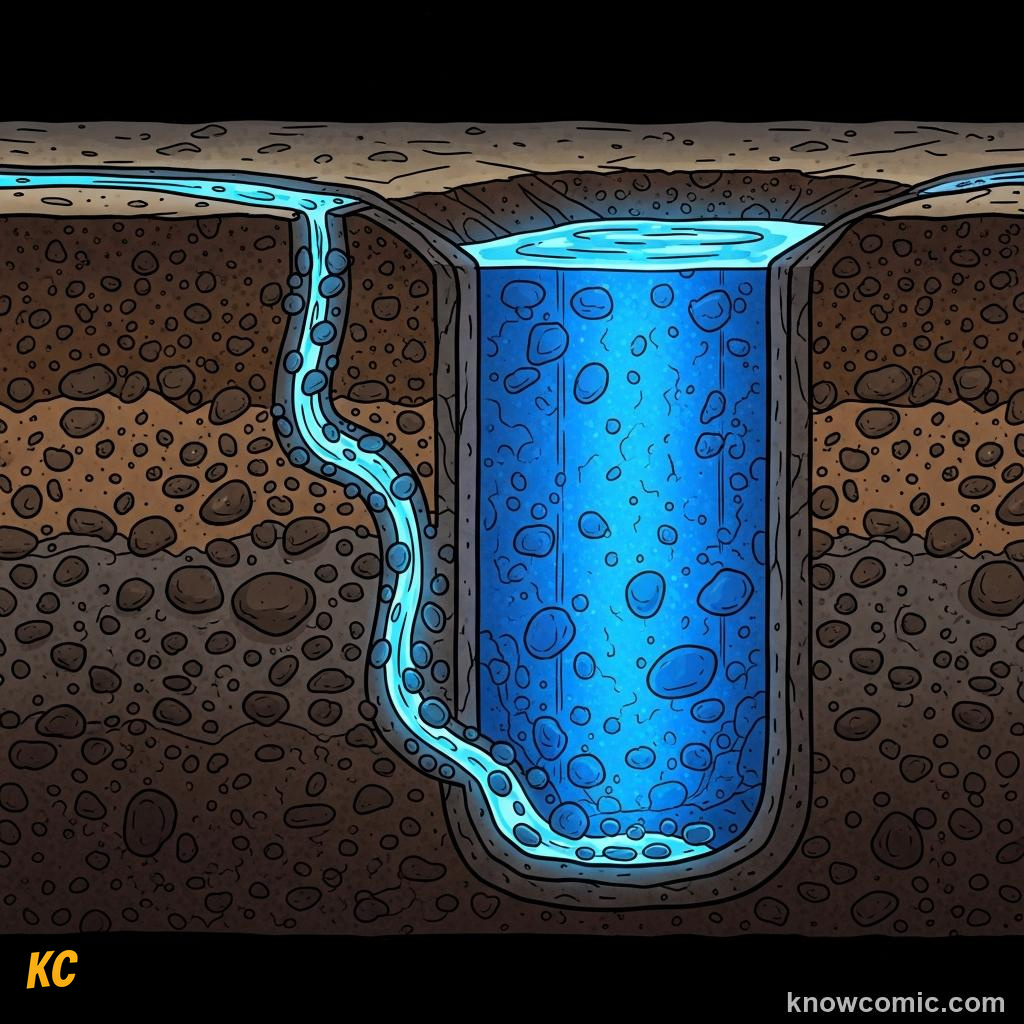
Some soaks in — groundwater recharges slowly through rock pores
ICE BANK
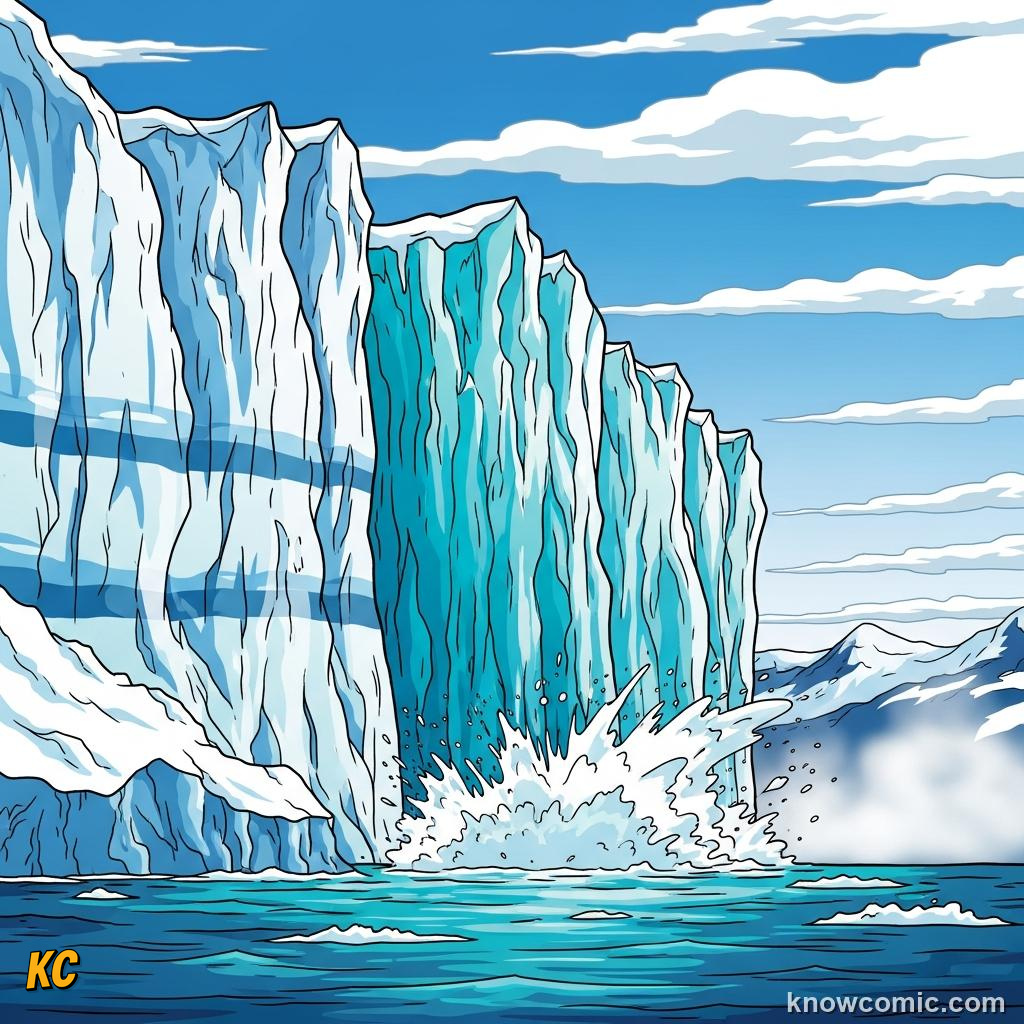
Glaciers lock fresh water for centuries — still part of the cycle
PAGE 5 OF 5, BACK TO THE OCEAN, ROUND AGAIN
Rivers END AT SEA (OR EVAP. AGAIN)
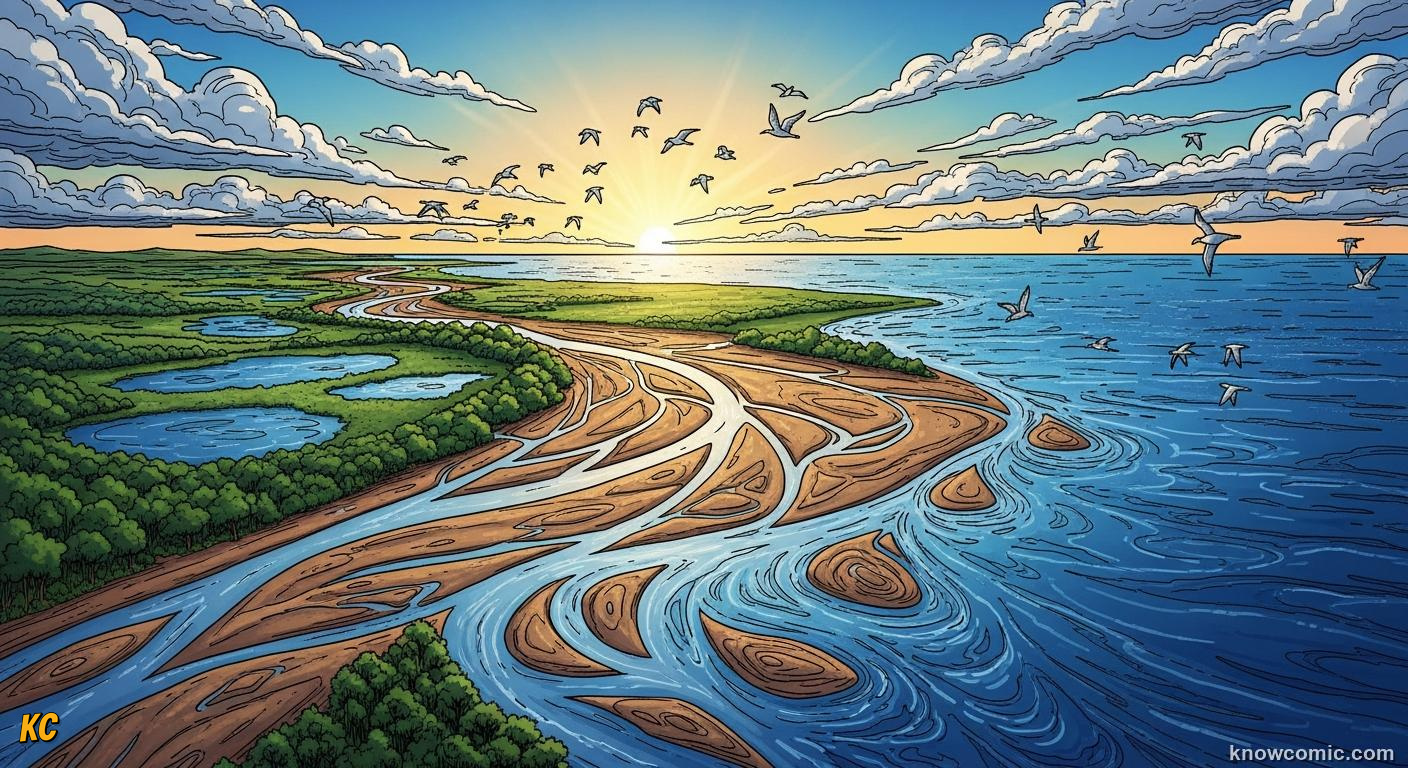
ONE CYCLE, MANY STORYLINES
Rivers and groundwater eventually return water to the ocean (or to lakes that evaporate). Estuaries mix fresh and salt. Humans pull water for farms and cities; most irrigation returns to the air or to rivers, still in the budget. Understanding the water cycle is understanding weather — every cloud, flood, and drought is a stage of this same churn. Topic 3 looks up at the shapes in the sky to read the next act.
🔄 REMEMBER
Evaporation/transpiration → condensation (cloud) → precipitation → collection/runoff/groundwater → repeat.
FLOW!
DELTA
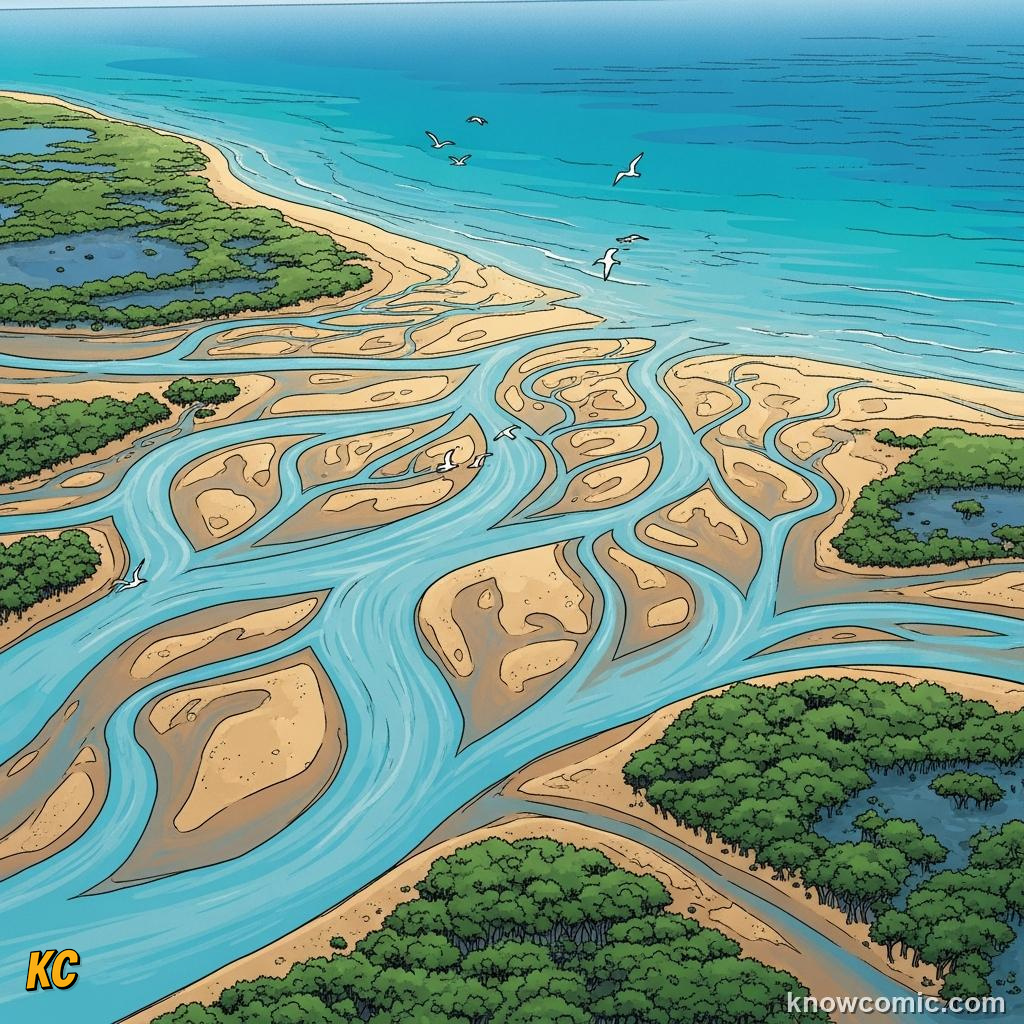
Mud and sand where river meets the sea = nature's water junction
KEY FACTS
💧 CYCLE
Sun + gravity drive the loop. No step works alone. Same water, endless journey.
🌊 Ocean · ☁️ Sky · 🌧️ Return · 🏔️ Store
🧠 QUIZ TIME!
THE WATER CYCLE: EARTH'S RECYCLING SYSTEM · 5 QUESTIONS
QUESTION 01
The global water cycle is best thought of as —
QUESTION 02
The largest long-term source of water vapour in the atmosphere is —
QUESTION 03
"Transpiration" most specifically means —
QUESTION 04
In science class, "precipitation" usually means —
QUESTION 05
Groundwater is —
0/5
LOADING...