💨 AIR RESISTANCE: WHY PARACHUTES WORK
PAGE 1 OF 5 · AIR IS NOT NOTHING
HIDDEN STUFF YOU RUN THROUGH
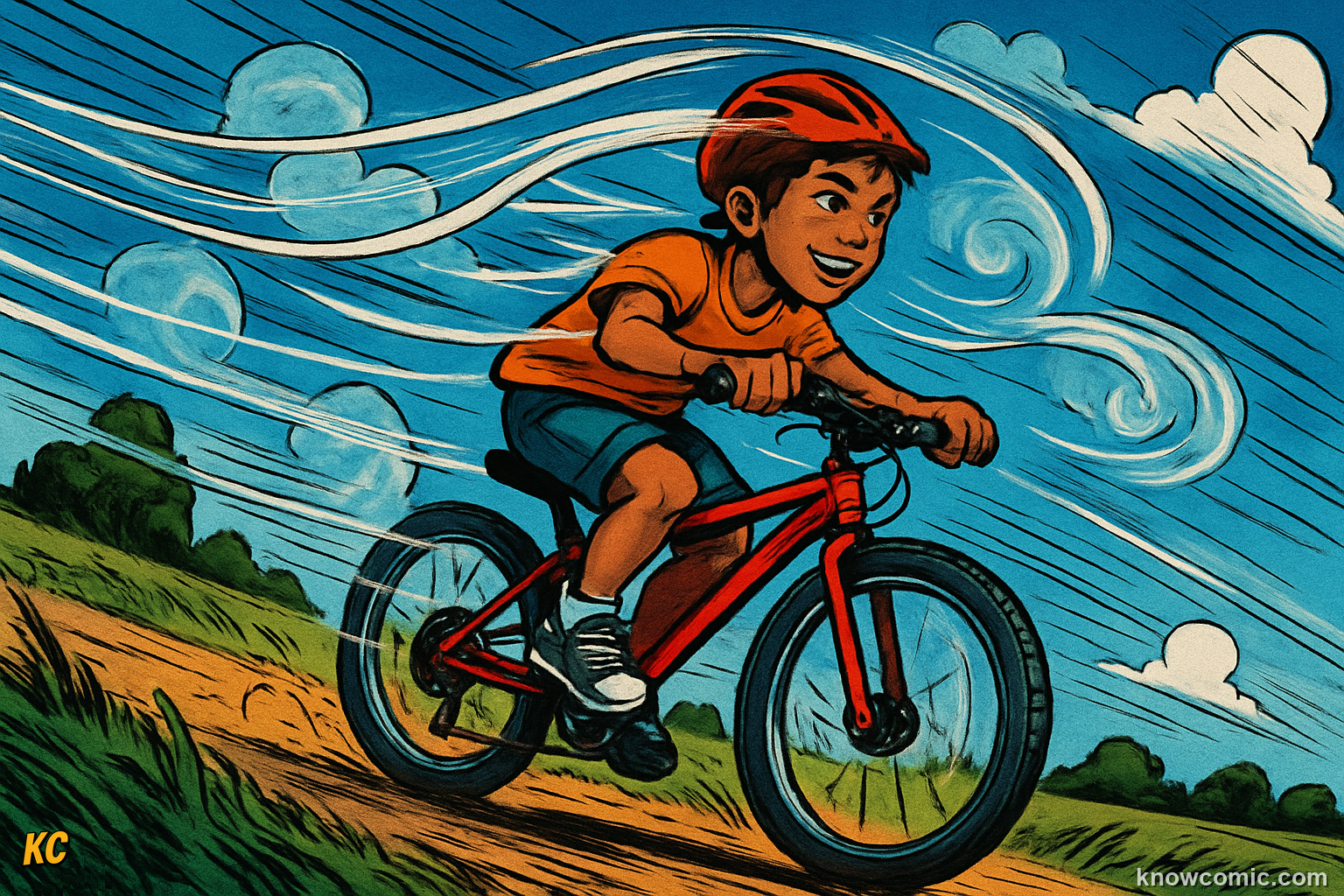
THE AIR BUMPS BACK
Picture air like a crowd of tiny invisible friends. When you run or bike, you push them out of the way, and they push you back a little. Grown ups call that push drag or air resistance. It is a real force, not a made up feeling.
When you go faster, you meet more air in the same second, so the bump can get bigger. Thick, sea level air is heavier to shove than thin air on a high mountain, if other things are the same. And water does the same kind of “slow you” job, only stronger, when you swim.
When you go faster, you meet more air in the same second, so the bump can get bigger. Thick, sea level air is heavier to shove than thin air on a high mountain, if other things are the same. And water does the same kind of “slow you” job, only stronger, when you swim.
🔬 HOW BIG IS THAT AIR BUMP?
Think: “How thick is the air, how fast am I, how big is my front like a target, and how smooth is my shape?” Grown-up physics rolls those four into one guess for how strong drag can get:
Fd ≈ ½ ρ v² Cd A
ρ = how packed the air or water is, v = your speed through it, A = the area you shove in front of you, Cd = a shape score (a slippery teardrop can beat a brick). The v² is the sneaky part: in this simple model, double the speed is about four times the shove—not twice. Real flow can be messier, but the big idea is right.
Fd ≈ ½ ρ v² Cd A
ρ = how packed the air or water is, v = your speed through it, A = the area you shove in front of you, Cd = a shape score (a slippery teardrop can beat a brick). The v² is the sneaky part: in this simple model, double the speed is about four times the shove—not twice. Real flow can be messier, but the big idea is right.
SWISH!
MORE SPEED, MORE BUMPS
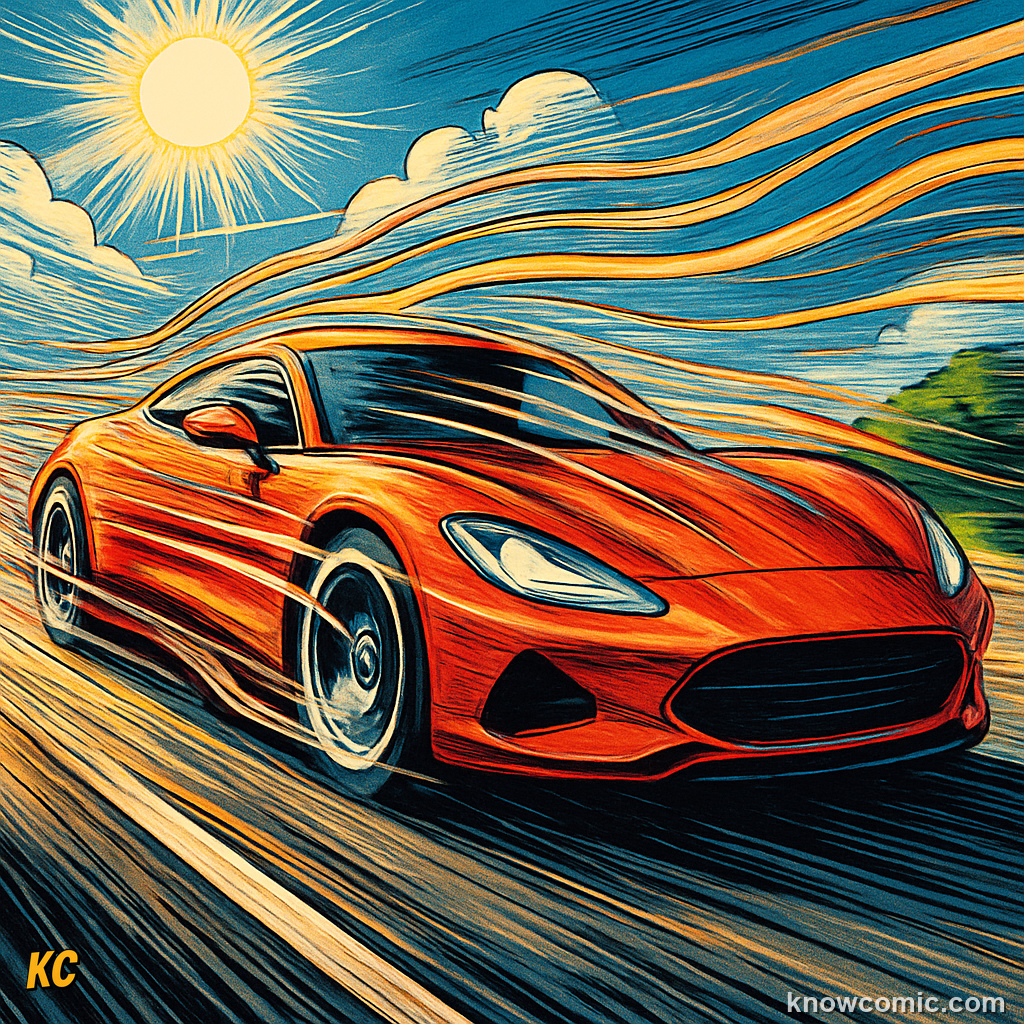
🏎️ Fast cars meet a lot of air per second, so drag can matter a lot for fuel. That is the same v² idea from the box next door.
💨 A headwind adds an extra slap to your walk.
✈️ A neat paper plane is a friendlier shape to air than a wadded ball of the same paper.
💨 A headwind adds an extra slap to your walk.
✈️ A neat paper plane is a friendlier shape to air than a wadded ball of the same paper.
FALLING STILL COUNTS
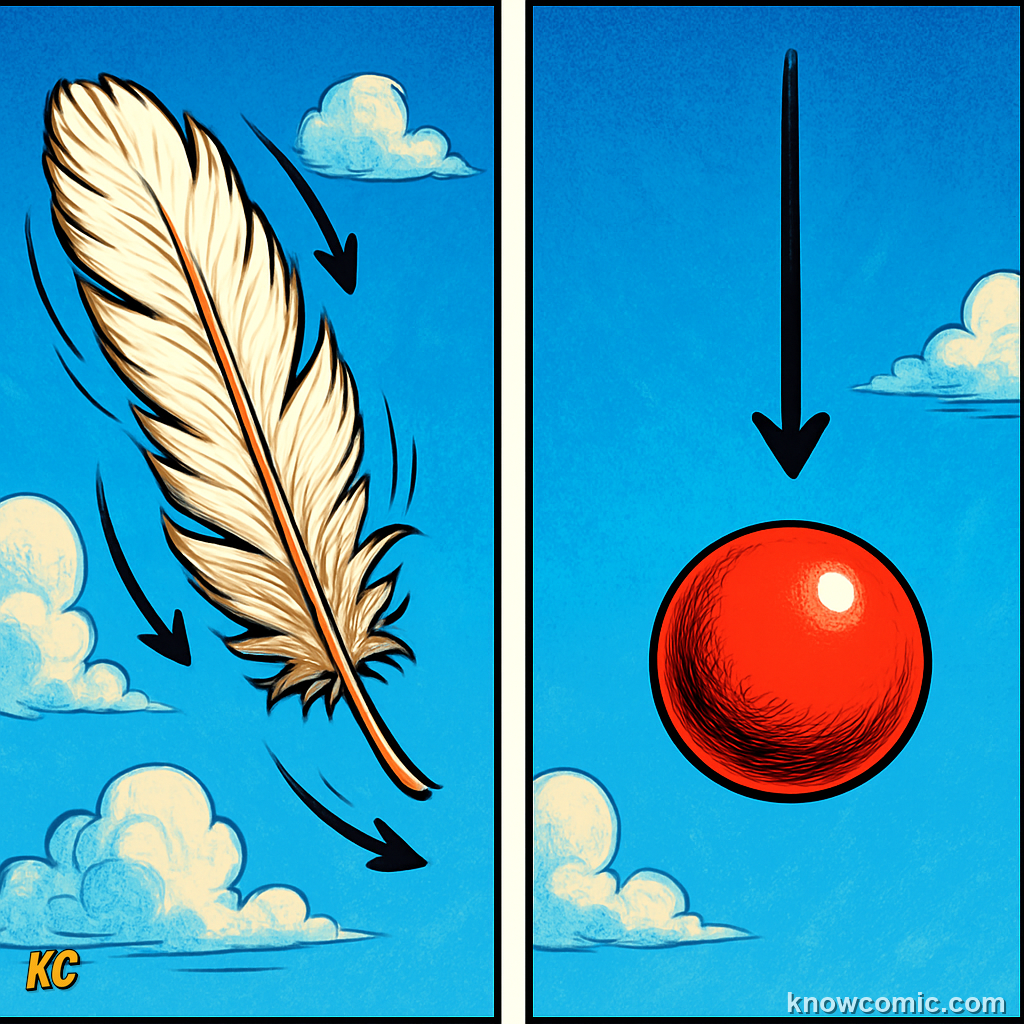
🪶 A feather drifts. A ball looks “straight” but air is still in the game.
⬇️ Gravity pulls down with weight mg. Drag shoves the way the air is moving relative to you. The two tell the story of how fast you fall or glide.
For little kids: heavier pull, bigger air bump, what happens next? Keep reading 🌟
⬇️ Gravity pulls down with weight mg. Drag shoves the way the air is moving relative to you. The two tell the story of how fast you fall or glide.
For little kids: heavier pull, bigger air bump, what happens next? Keep reading 🌟
PAGE 2 OF 5 · BIG SHEET, BIG SLOW
WHY A PARACHUTE IS WIDE
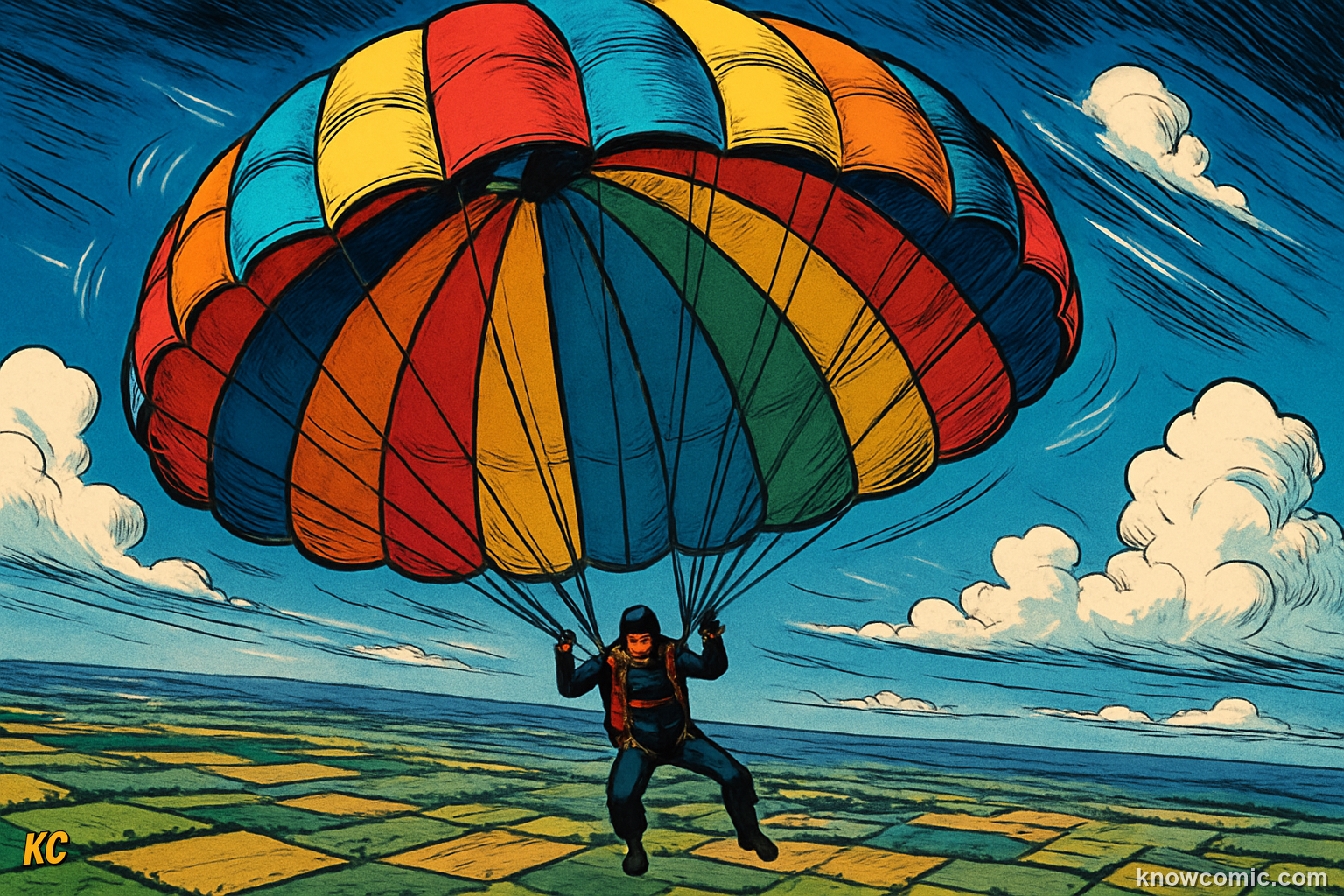
A CANOPY CATCHES A TON OF AIR
A parachute is not magic floaty cloth. It opens so the front of you and the chute make a huge A in the same “air bump” picture you met at the start, so the upward air push Fd can get very big while the person’s weight mg is the same. If drag grows past mg, the jumper can slow a lot before the ground. That is a happy place for a landing.
Kid read aloud: “I open a big umbrella in the wind, and the wind shoves up hard. Same main idea, different sport.”
Kid read aloud: “I open a big umbrella in the wind, and the wind shoves up hard. Same main idea, different sport.”
REMEMBER THE SYMBOLS
ρ is how packed the air is. v is how fast you move through the air. Bigger A and Cd (wide chute) usually mean a stronger drag for the same v, so you can brake the fall hard.
OPEN!
NO CHUTE YET
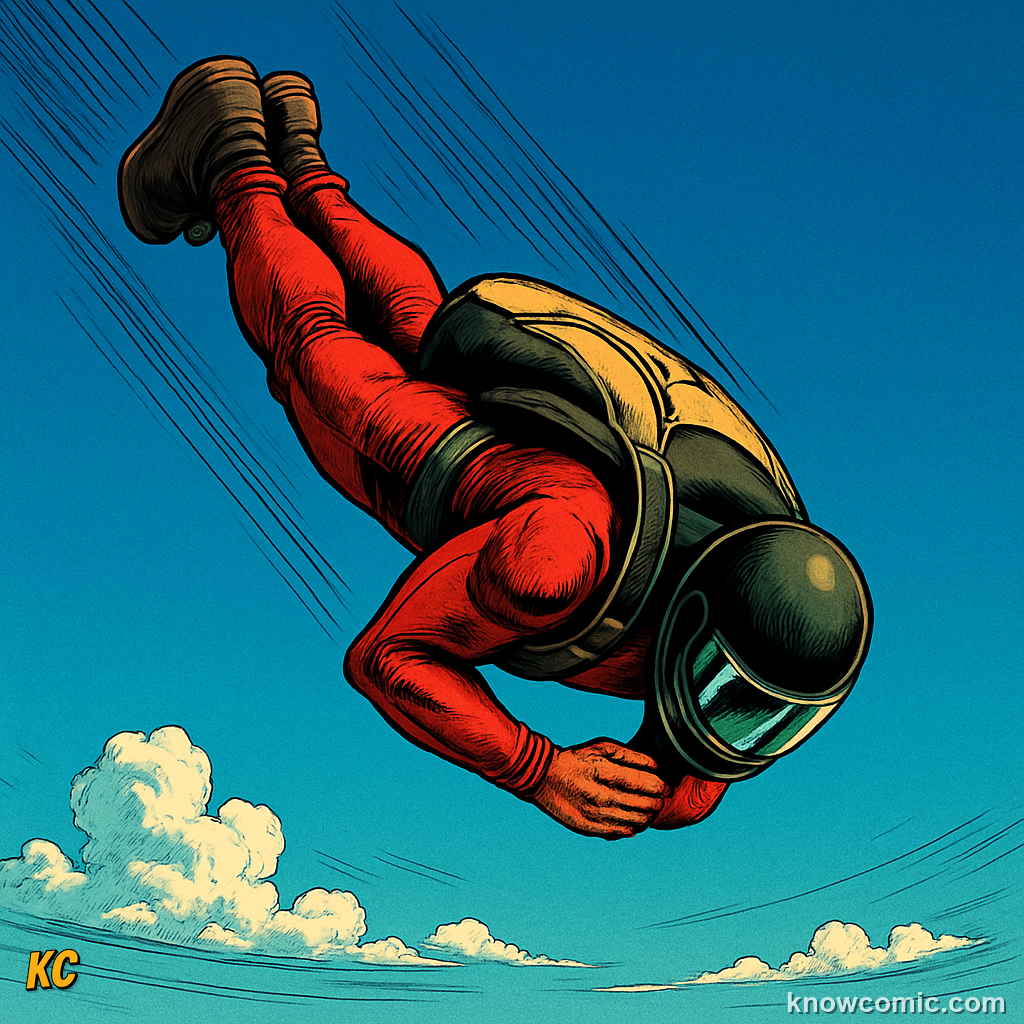
🪂 Tucked body, smaller A, so less drag at the same v than a wide angel pose. Chute opens → A jumps → you slow fast, good.
⏱️ Free fall is still a fight between mg and drag the whole way.
⏱️ Free fall is still a fight between mg and drag the whole way.
SHAPES MATTER
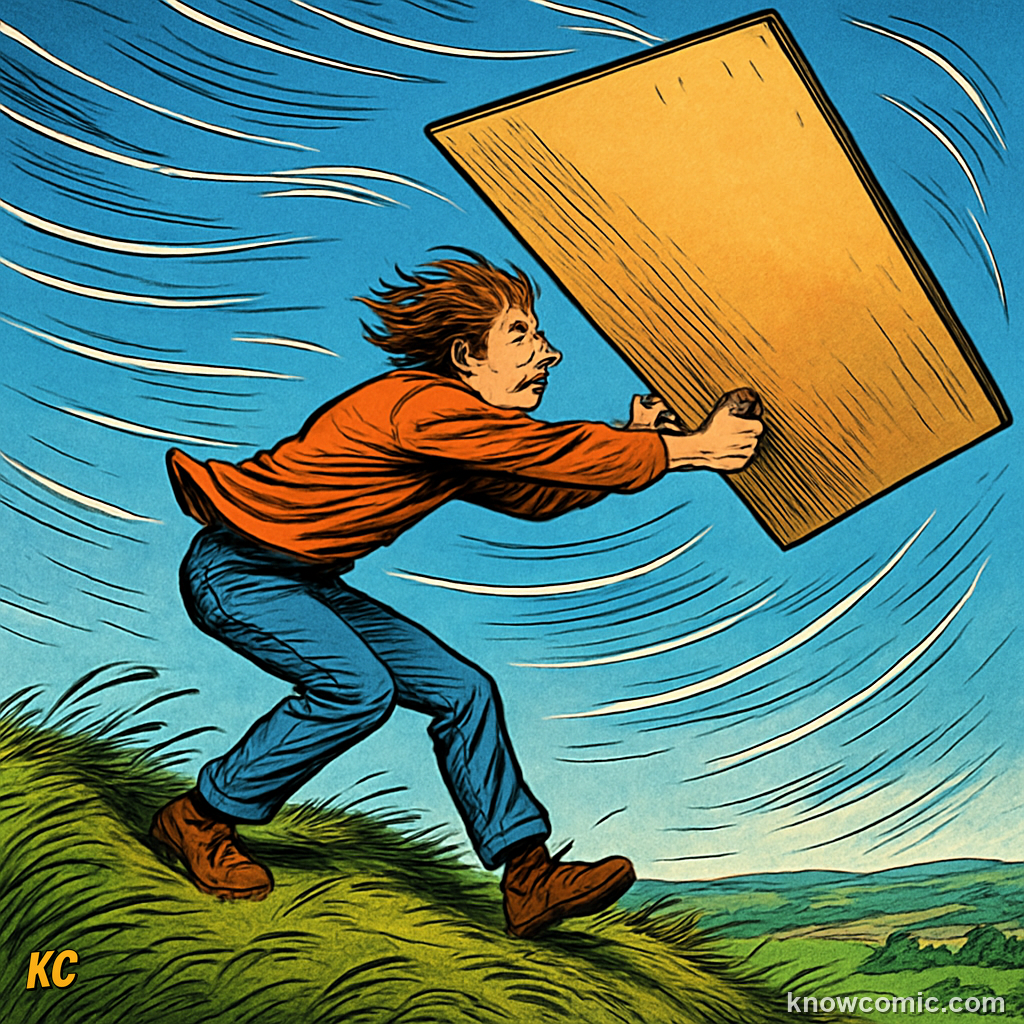
📐 A flat board in the wind has a mean Cd and A for “wall mode”. A teardrop car is meant to be low Cd.
For kids: smooth helps. Box in the wind wiggles a lot of air. Same idea as chute shape design.
For kids: smooth helps. Box in the wind wiggles a lot of air. Same idea as chute shape design.
HEADWIND VS CALM
🌬️ Same ground speed plus a headwind can mean a larger v in the air, so drag jumps up hard—here that often tracks speed × speed, not a straight line.
It feels the same as riding a faster bike: more “wind face.”
It feels the same as riding a faster bike: more “wind face.”
PAGE 3 OF 5 · SMOOTH BUILDS
AERO TUCK
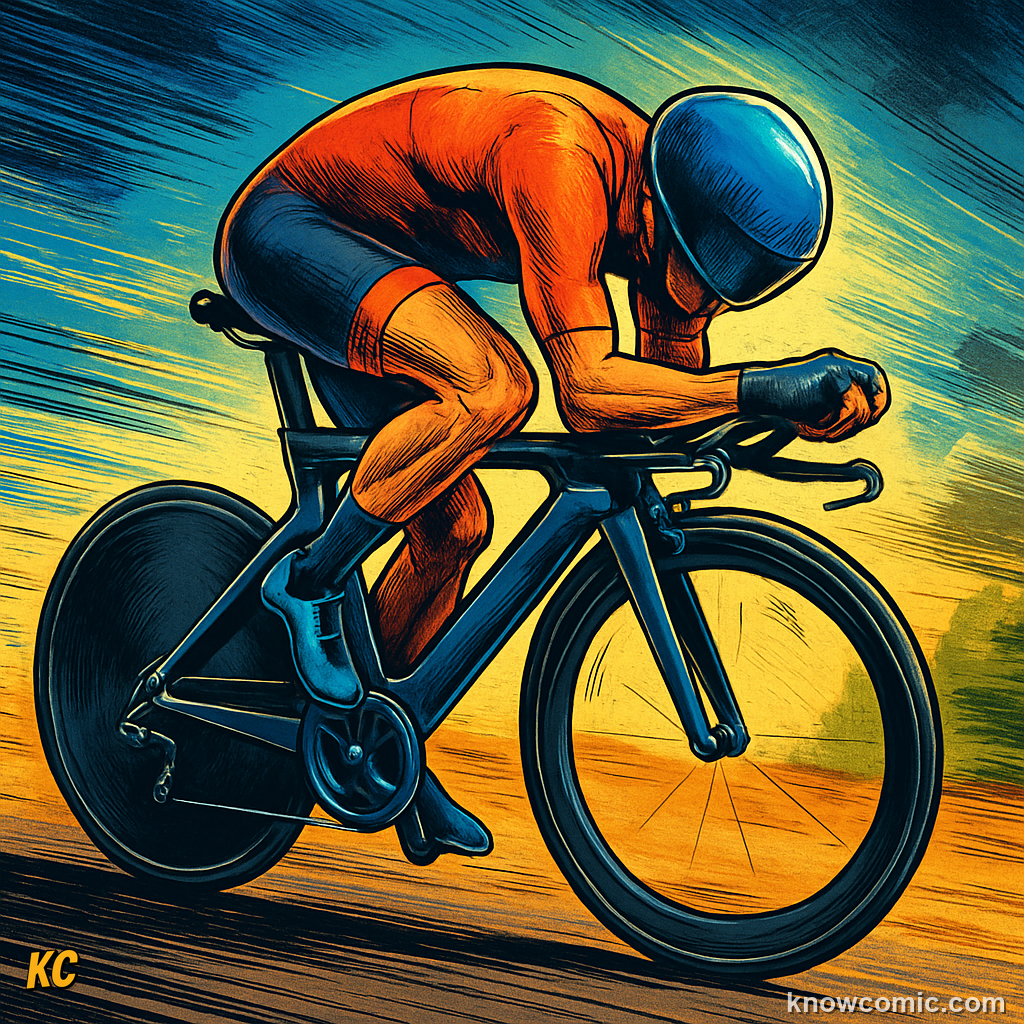
🚴 Aero tuck = a racing crouch on the bike: you get low (bent elbows, chest closer to the bars), so the wind from the front sees a slimmer you—smaller A, less drag at the same road speed, so less power lost to the air. (The word “tuck” is like ducking out of a harsh wind, but in a fast spot on a bike.)
Little-kid line: “Hide your big outline from the wind, then you are not a sail.”
Little-kid line: “Hide your big outline from the wind, then you are not a sail.”
PAPER FOLD

✈️ A clean fold and calm edges change Cd a lot, even if A is small.
A crumpled ball has messy flow, often more drag for how it tumbles. Same paper sheet, different shape story.
A crumpled ball has messy flow, often more drag for how it tumbles. Same paper sheet, different shape story.
CARS, TRAINS, BIRDS
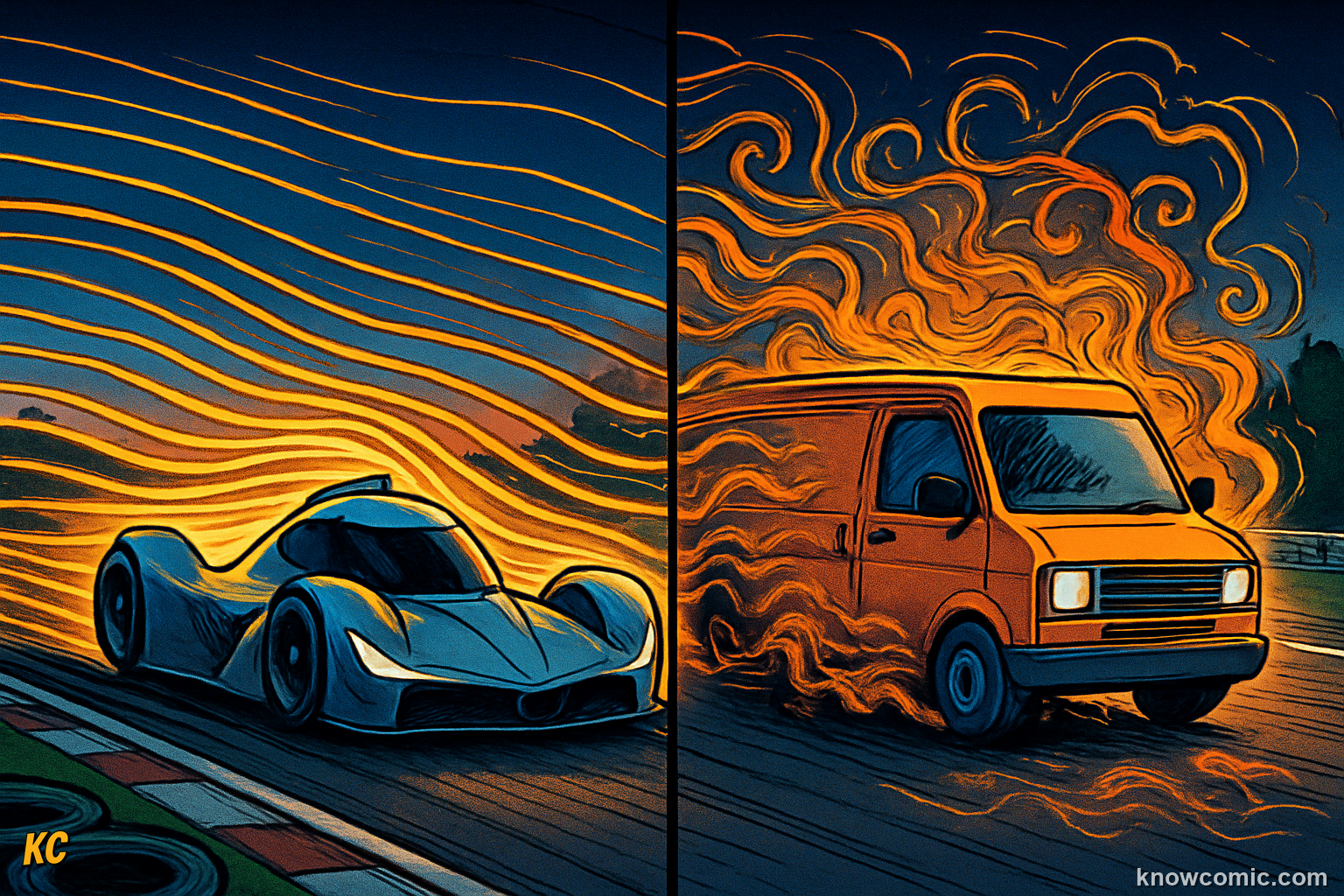
TEARDROP vs BOX
Wheels on the road care about air drag at road v—same v² scaling and ρ, Cd*,* A story as the page 1 box, just with a car-sized shape. A teardrop look tries to shrink Cd and keep flow smooth. A blunt van with wide corners can wake up swirls behind, which costs extra energy as heat in the air.
Planes and birds add lift (another set of ideas). Still, a wheel hanging out in the open adds a parasite drag piece you count in the same Fd “budget.”
Planes and birds add lift (another set of ideas). Still, a wheel hanging out in the open adds a parasite drag piece you count in the same Fd “budget.”
MATHY CORNER: WHAT YOU OPTIMIZE
Engineers compare CdA (drag area) for a whole car, because the v² term from the page‑1 model multiplies that product to set how big the force is (fluid details hide inside Cd when v changes a lot—that is the next class). Bigger v still grows drag about like v² in many road speed bands.
SLIP!
PAGE 4 OF 5 · WHEN THE FALL HITS A STEADY SPEED
TERMINAL VELOCITY (PLAIN SPEAK + NET FORCE)
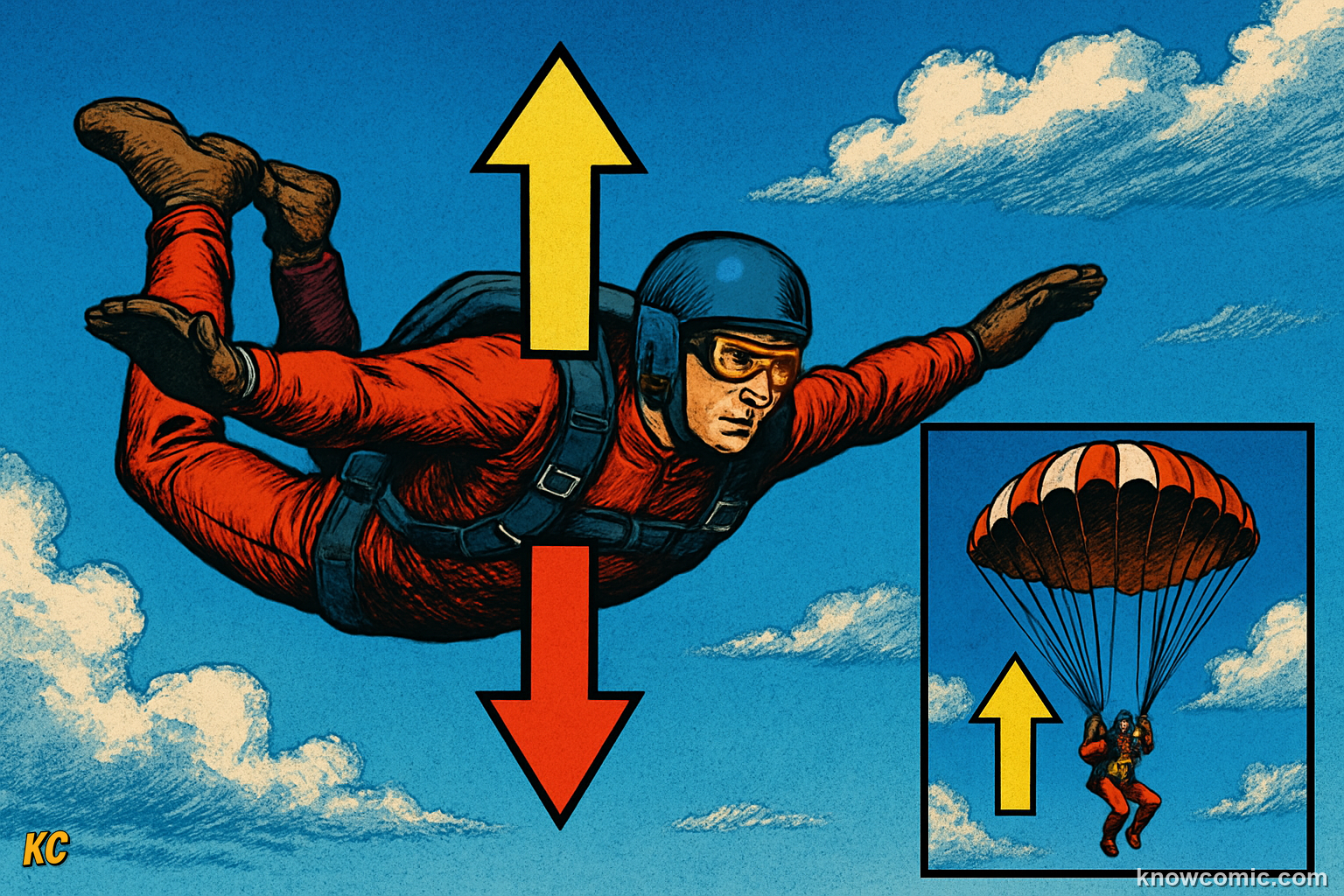
BALANCE, NOT A PAUSE
In one dimension along the fall, the net force is about mg down minus drag (we draw drag opposite the motion of the object through the air). While mg is greater than drag, the fall speeds up. As v grows, drag in the usual v²-style model grows, often until
Parachute open = new huge A and Cd story, so the same mg can match a way smaller v. Good for ankles.
drag ≈ mg ⇒ no more speeding up for a while
That steady fall speed in that shape is the thing people call terminal speed (a popular name, not a horror movie, kid).Parachute open = new huge A and Cd story, so the same mg can match a way smaller v. Good for ankles.
BALANCE FORM (CONSTANT v, STRAIGHT DOWN)
If drag is about ½ρv²CdA and you want it to match weight mg on a straight fall, a first guess for terminal speed is: vt ≈ √(2mg / (ρ Cd A)). That is a model, not a magic spell, real chutes and bodies are messier, but the shape of the result is right: heavier for the same A is often faster in free fall, bigger A (open chute) is often slower, as you see.
STEADY!
KID TALK
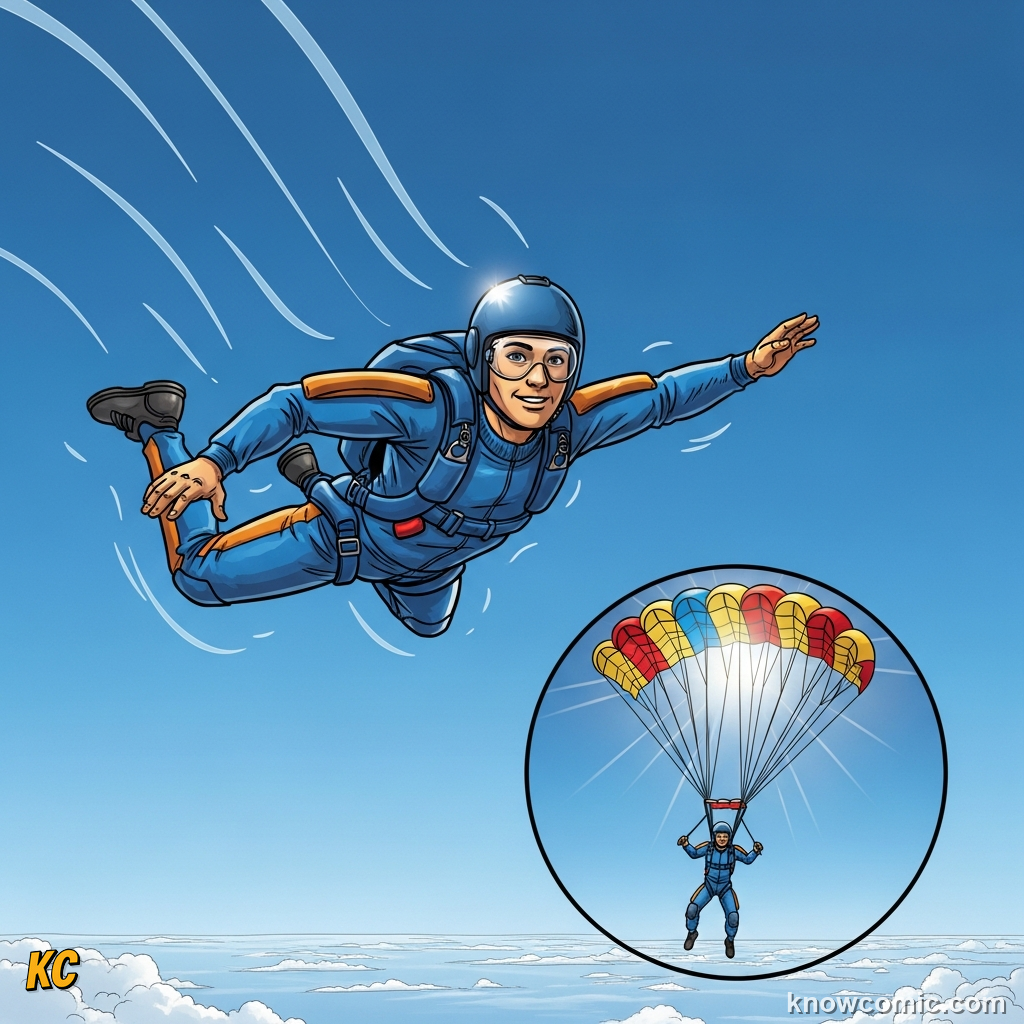
🪶 “Terminal” here means: faster, faster… then the air push catches up to your weight so you do not keep picking up more speed every second. You still move, you just do not accelerate the same way for that moment. Open the chute, new story.
SYMBOLS

g ≈ 9.8 m/s² (Earth surface) goes into mg. ρ and v must match the same gas or water as your problem, SI or other as your teacher says. Keep units honest.
NOT THIS TOPIC
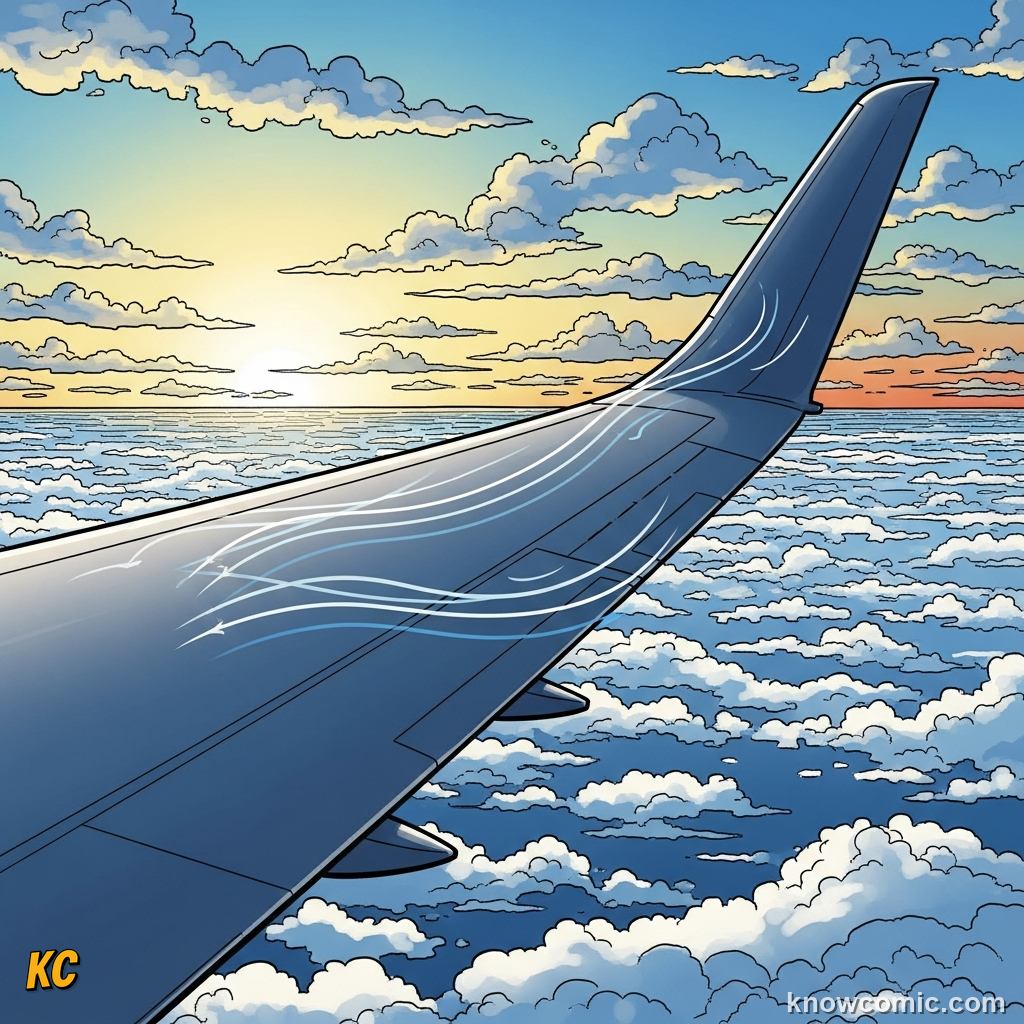
🛫 Lift on a wing is a rotated pressure story with its own v²‑style lift models. We only touched drag here, so the wing comic comes later.
PAGE 5 OF 5 · TAKE IT WITH YOU
FOUR PICTURES, ONE STORY
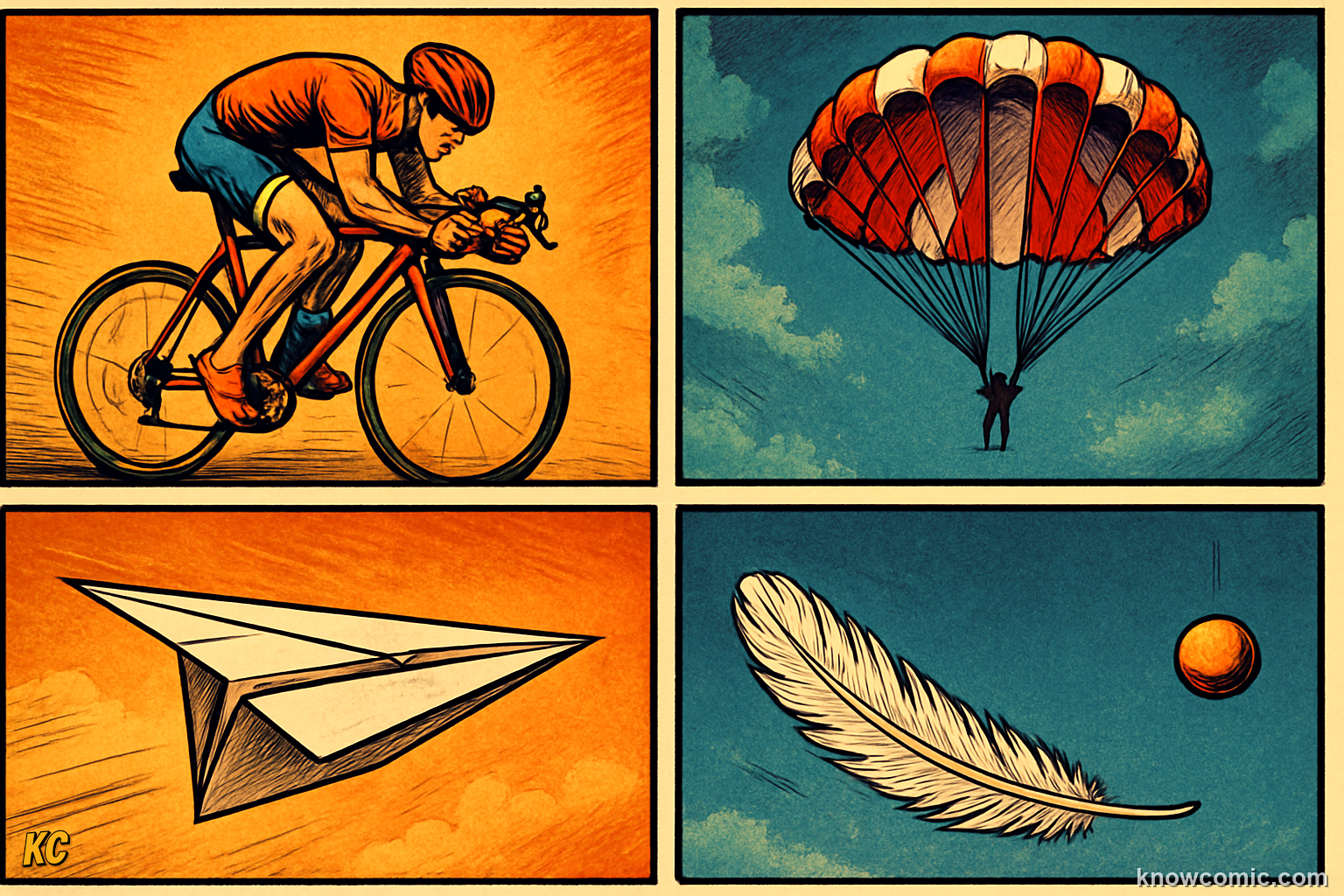
DRAG FOLLOWS YOU
Wind on your face, water when you swim, a ball in the air, all are drag or drag’s water cousin. Bigger ½ρv²CdA often means a stronger shove, good when you want to stop a fall, tricky when you race a clock on a bike. Keep the free body picture: mg and drag are not the only things in the world, but for “why does my speed stop climbing,” they are the headline pair. Ask what changes v, ρ, A, Cd? and you are doing real physics.
WHOOSH!
REMEMBER
🔑 KEY FACTS (NOT CHEATING)
Drag (one line to remember): Fd ≈ ½ ρ v² Cd A. Weight: mg. Terminal (straight fall, simple model): drag can grow until it balances mg, and vt ≈ √(2mg / (ρ Cd A)) is one first pass. Parachute: huge A (and chute Cd) → much larger drag for the same v → you can land at a smaller v. Ask your teacher for the next level when v is huge or the shape wiggles (compressibility, stall, and more).
READ ALOUD
“Air is a thing. Move through it, it pushes back. Go faster and the shove can jump up a lot, not a little at a time. Get wider in the wind, same story. In a fall, when the air shove and your weight meet, your speed can level off for a bit, until you open a chute and change the shape. Parachutes are on purpose.”
High five! ✋
High five! ✋
🧠 QUIZ TIME!
AIR RESISTANCE · 5 QUESTIONS
QUESTION 01
What is air resistance (drag) in one plain sentence?
QUESTION 02
Why does a big open parachute slow a person down a lot more than a small tucked body?
QUESTION 03
In simple words, “terminal velocity” for a falling object means what?
QUESTION 04
A racing car is shaped like a teardrop instead of a box. The main point for drag is what?
QUESTION 05
If everything else is the same, when do you usually feel more air drag on your face?
0/5
LOADING...