🌊 FLOATING & SINKING: BUOYANCY
PAGE 1 OF 5 · WHY STEEL CAN SINK OR FLOAT
WATER GIVES A LIFT
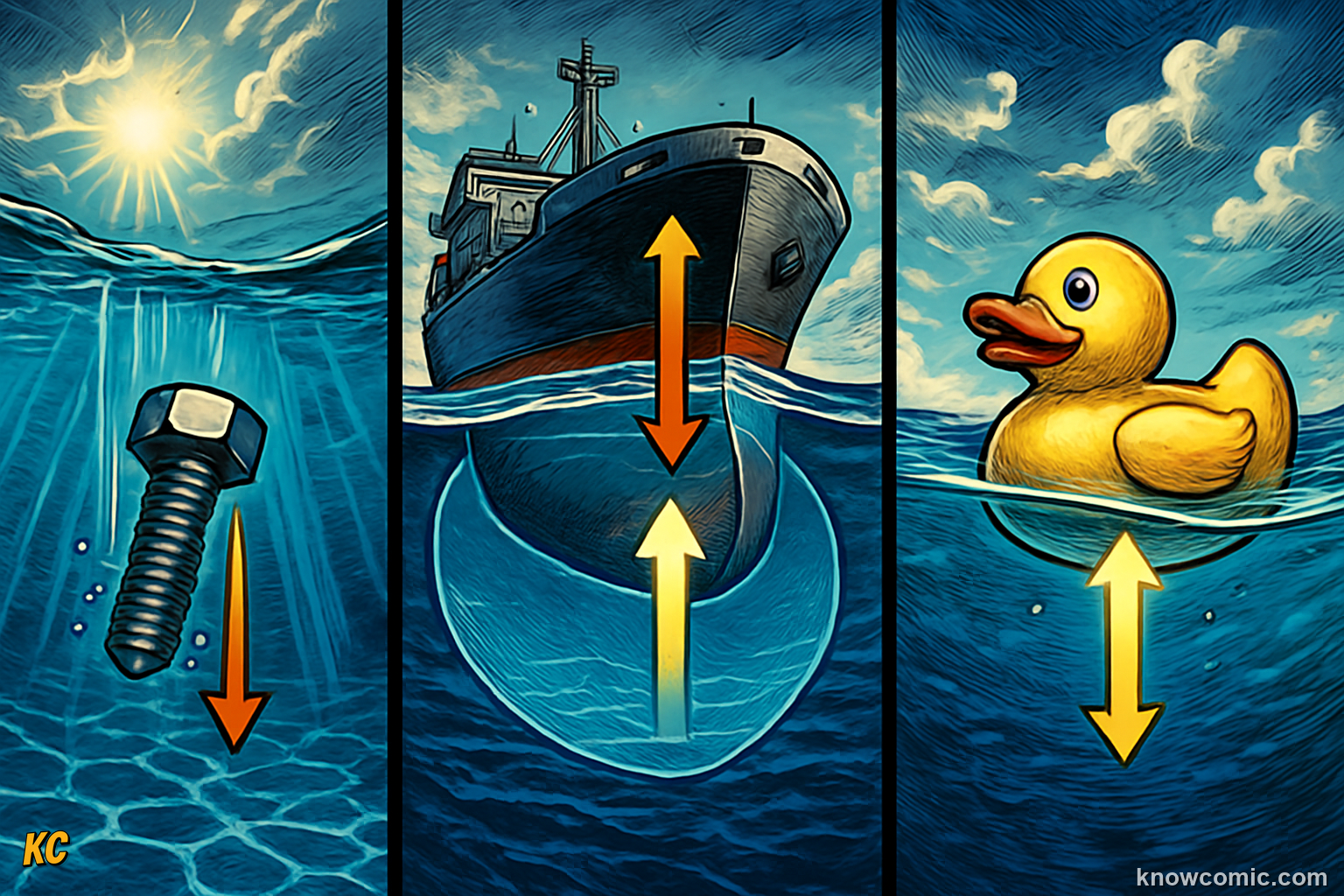
WATER AND AIR ARE ALWAYS PUSHING
Here is a puzzle. A tiny bit of steel goes plink and drops to the bottom. The same kind of steel is used to make a big ship, and the ship stays up! The steel is still steel. What changed? The shape changed. A wide hull shoves a lot of water out of the way. A little bolt shoves out only a tiny bit.
When you put something in water (or in air, because air works too), the water pushes on every part it touches. A little deeper, the water squeeze is a bit stronger. So the bottom of the object gets a bigger upward push than the top gets a downward push. All that together makes an upward push we call buoyancy (some people say upthrust too). If the upward push and the weight match, the thing floats. If the weight wins, the thing sinks. If the push and weight match just right, the thing can hang in the water without going up or down.
When you put something in water (or in air, because air works too), the water pushes on every part it touches. A little deeper, the water squeeze is a bit stronger. So the bottom of the object gets a bigger upward push than the top gets a downward push. All that together makes an upward push we call buoyancy (some people say upthrust too). If the upward push and the weight match, the thing floats. If the weight wins, the thing sinks. If the push and weight match just right, the thing can hang in the water without going up or down.
Think of it like a friendly game. The water cannot push on you if you are not in the water, but when you are in, it always has something to say.
LIFT!
SMALL BIT VS BIG SHIP
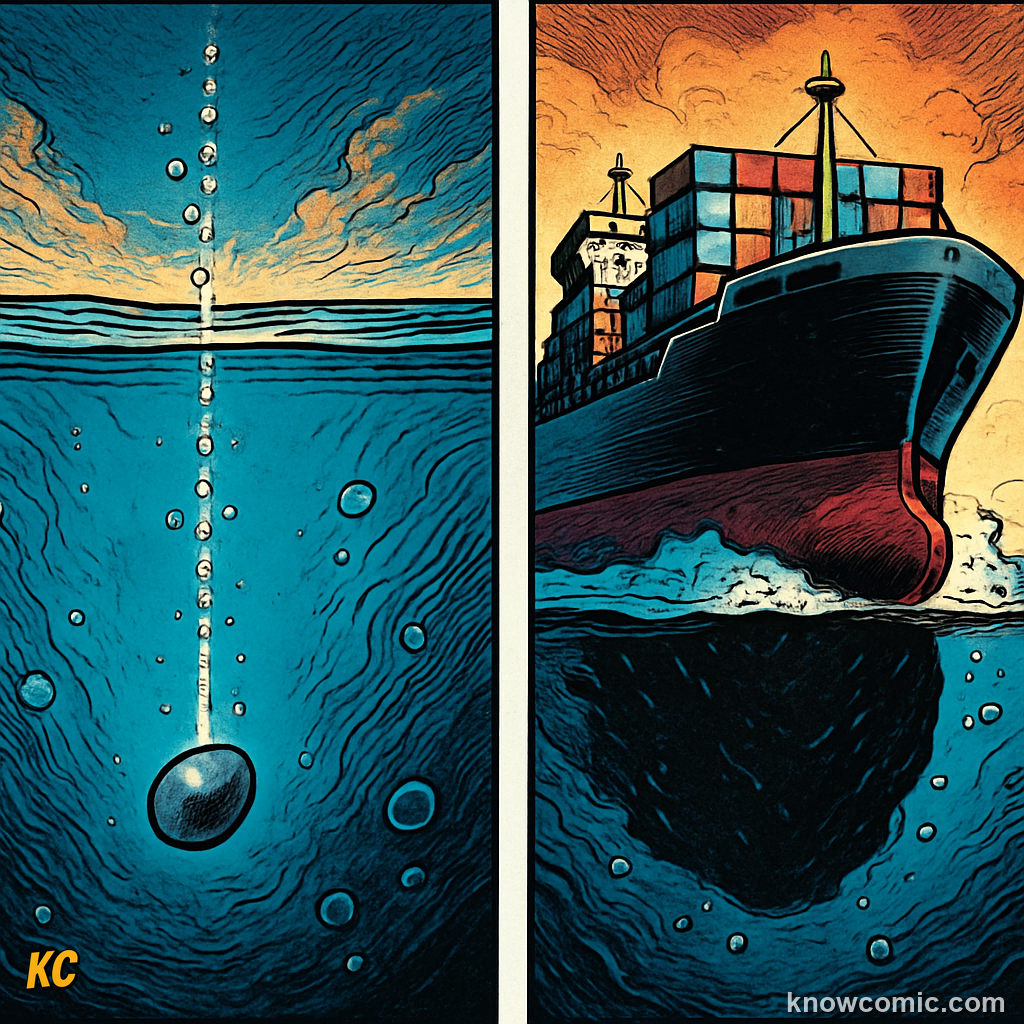
🪨 A little lump is heavy for its size, so the water it moves is small
🚐 A wide ship moves a big part of the ocean out of the way
📈 Gravity pulls you down, buoyancy pokes you up
✅ The question is: does the weight of the moved water help enough?
🚐 A wide ship moves a big part of the ocean out of the way
📈 Gravity pulls you down, buoyancy pokes you up
✅ The question is: does the weight of the moved water help enough?
BALLOONS IN THE SKY

🎈 A helium balloon floats up in the sky
💨 Air acts like a fluid too, not just water
📈 The balloon moves air out of the way, just like a boat moves water
🌈 If the upward push from the air beats the weight, you go up, up, up
💨 Air acts like a fluid too, not just water
📈 The balloon moves air out of the way, just like a boat moves water
🌈 If the upward push from the air beats the weight, you go up, up, up
PAGE 2 OF 5 · DENSITY: HOW PACKED IS THE STUFF?
SAME BOX, DIFFERENT WEIGHT

WHAT IS DENSITY?
Density means: for the same amount of space, how heavy is the stuff? Picture two blocks the same size. One is squishy foam, light as a snack. One is solid metal, heavy like a stack of books. Same space, very different weight. That is what we mean by packed or not packed.
Water has a middle kind of density that we use as a ruler. Many kinds of wood are less packed than water, so they float. Most solid metal is more packed than water, so a small block sinks. A ship is different because it is not a solid block. It has a big empty middle and lots of air, so the whole ship counts, not just the steel skin.
Water has a middle kind of density that we use as a ruler. Many kinds of wood are less packed than water, so they float. Most solid metal is more packed than water, so a small block sinks. A ship is different because it is not a solid block. It has a big empty middle and lots of air, so the whole ship counts, not just the steel skin.
PACK!
OIL ON WATER

💧 Oil is lighter for the same space than water
🌊 So the oil blob floats on top like a thin blanket
⭐ The heavier water stays underneath
🌊 So the oil blob floats on top like a thin blanket
⭐ The heavier water stays underneath
ICE ON A LAKE

❄️ Ice is less packed than the water it came from, so it floats
🐟 That is weird and lucky. A lid of ice on a pond protects the water below
🌢 Fish and tiny creatures can survive a cold winter
🐟 That is weird and lucky. A lid of ice on a pond protects the water below
🌢 Fish and tiny creatures can survive a cold winter
MATHY CORNER (OPTIONAL)

📈 Big kids write density as mass divided by volume
📈 A short name for density is the Greek letter rho (ρ)
📈 A simple test: is the object more packed or less packed than the fluid around it?
📈 A short name for density is the Greek letter rho (ρ)
📈 A simple test: is the object more packed or less packed than the fluid around it?
PAGE 3 OF 5 · MOVING WATER OUT OF THE WAY
BATH TUB STORY
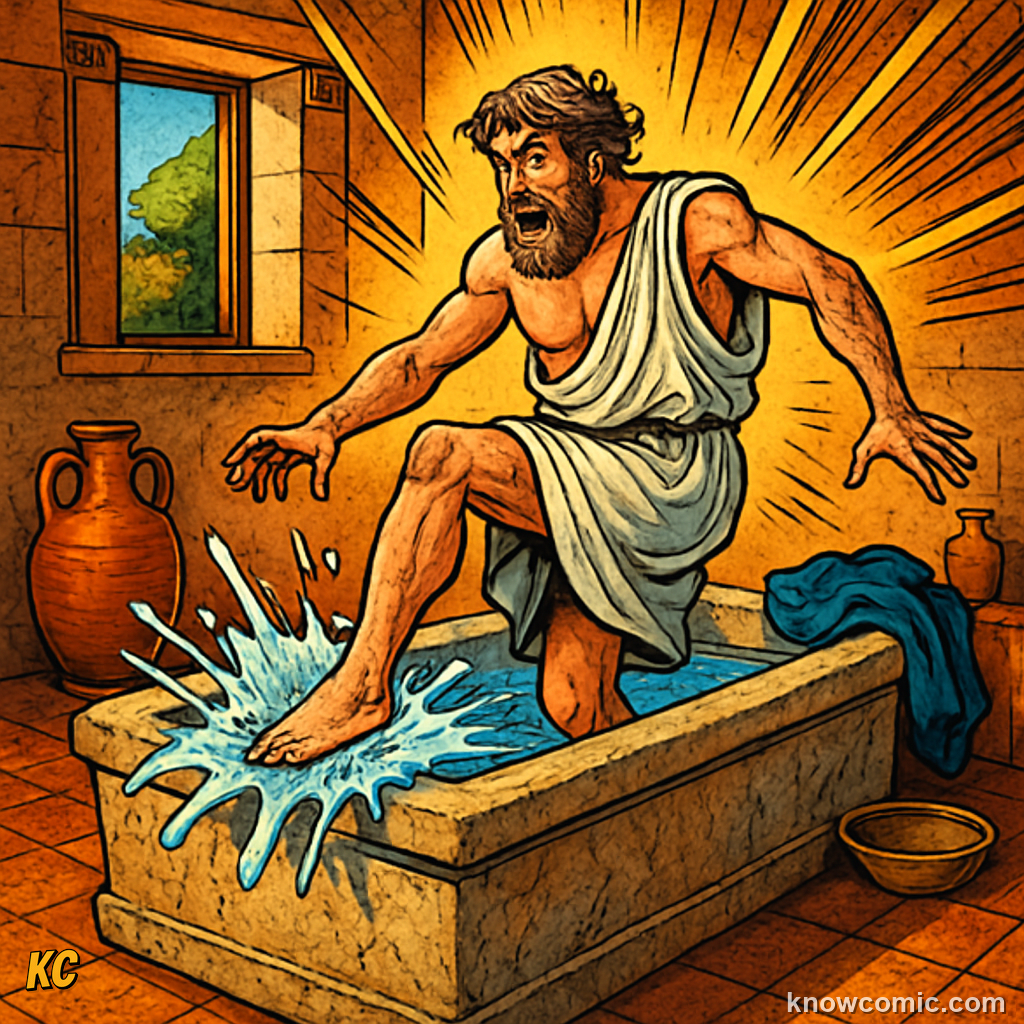
🚾 Old story: a king asked, is this crown real gold?
🍻 If you dunk the crown, it moves water equal to its own size
🚀 The story says Archimedes jumped out of the bath and yelled Eureka when he got the idea
🍻 If you dunk the crown, it moves water equal to its own size
🚀 The story says Archimedes jumped out of the bath and yelled Eureka when he got the idea
WATER LEVEL GOES UP
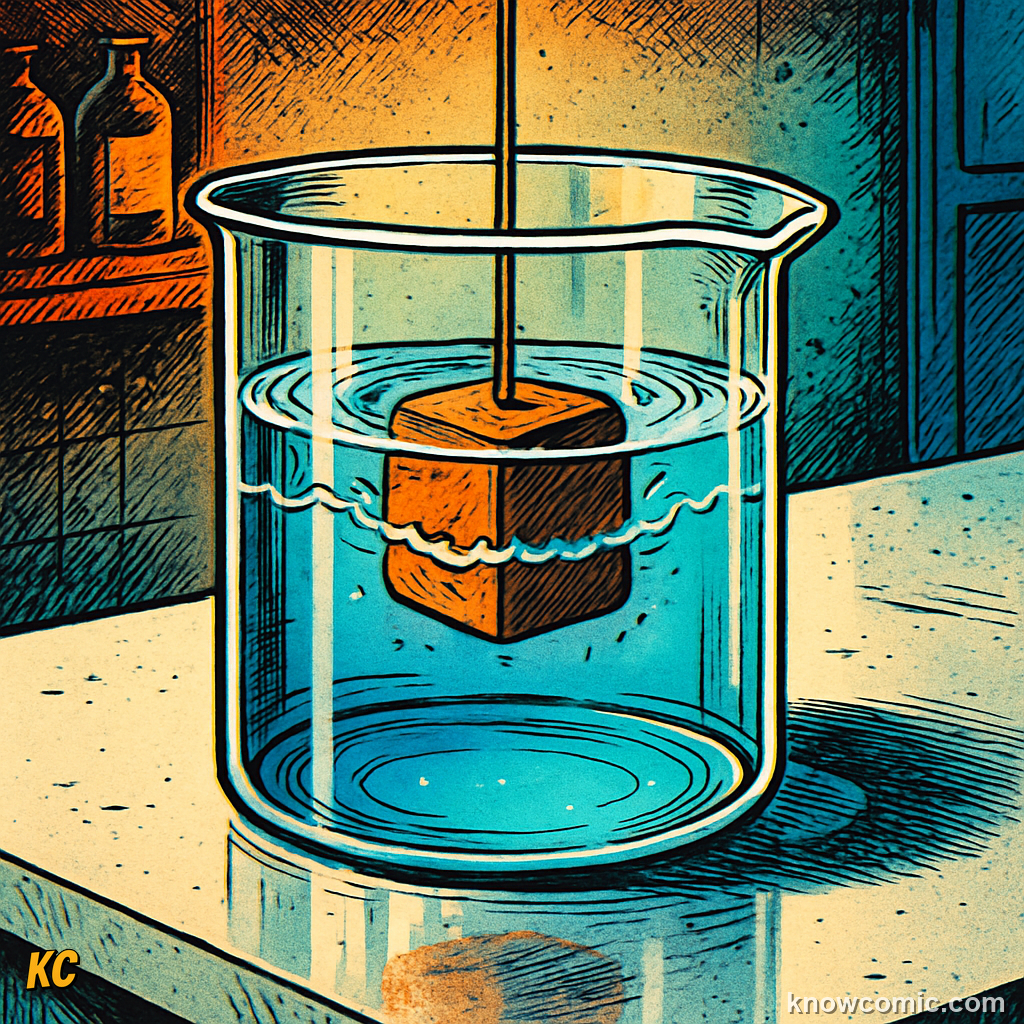
📈 Drop an object in a full glass: the water that spills matches the wet part of the object
💧 Scientists call that moved water the displaced water
✅ This is how you can measure funny shapes without a ruler
💧 Scientists call that moved water the displaced water
✅ This is how you can measure funny shapes without a ruler
THINK OF A WATER “FOOTPRINT”
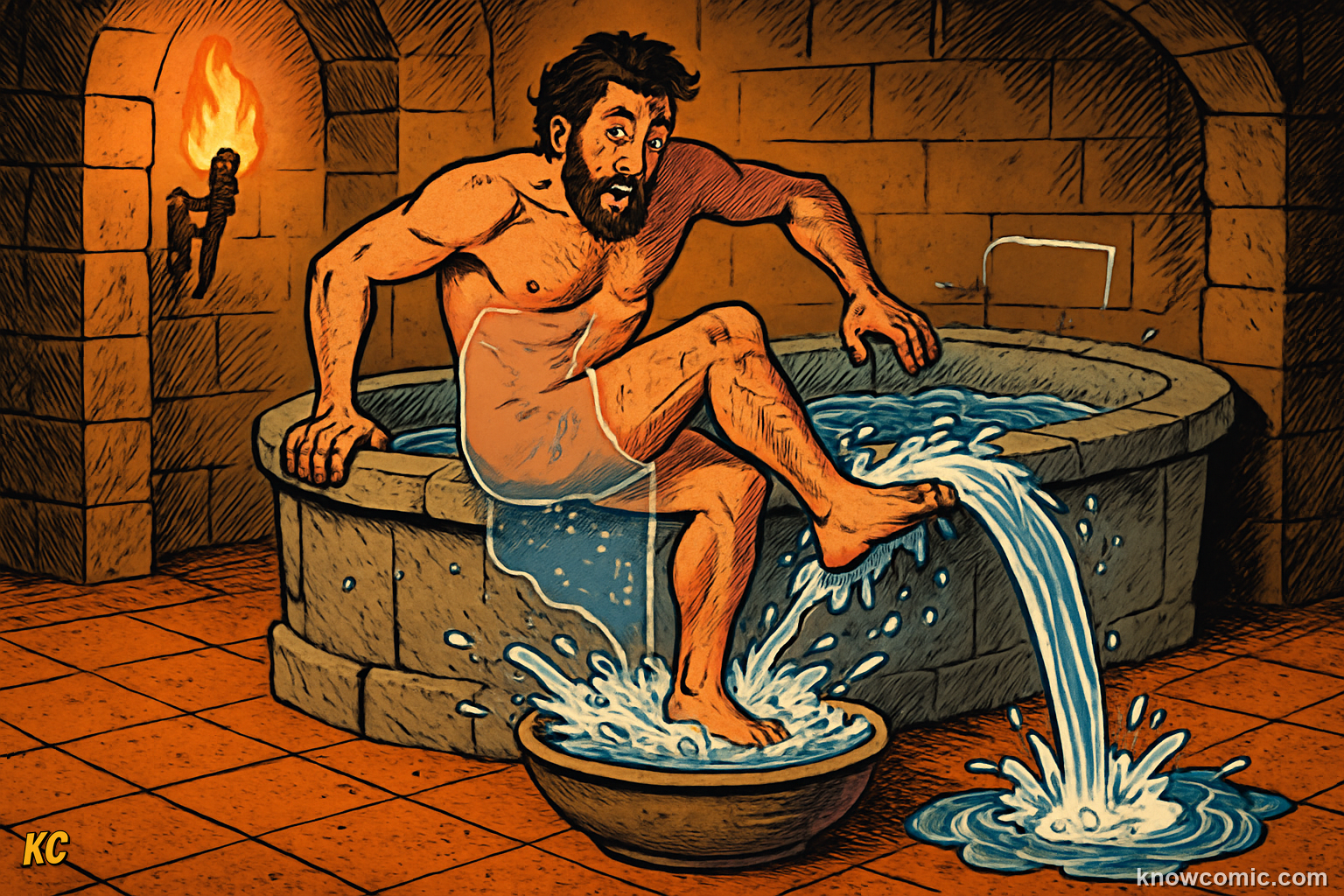
THE MOVED WATER HAS A WEIGHT TOO
Try pushing a ball under the bath water. The water pushes back at your hand. You are making the ball take the place of some water. That moved water had a weight of its own. The upward water push is tied to how much water you moved out of the way. If you know how much water that is, you are very close to knowing the upward push.
On the next page we give that idea a big name: Archimedes’ rule. For now, just remember: move more water, get a bigger push.
On the next page we give that idea a big name: Archimedes’ rule. For now, just remember: move more water, get a bigger push.
Kid shortcut: if you know how much water was shoved aside, you know a lot about the lift you get.
SPLASH!
PAGE 4 OF 5 · ARCHIMEDES’ BIG RULE
THE RULE IN PLAIN SPEAK
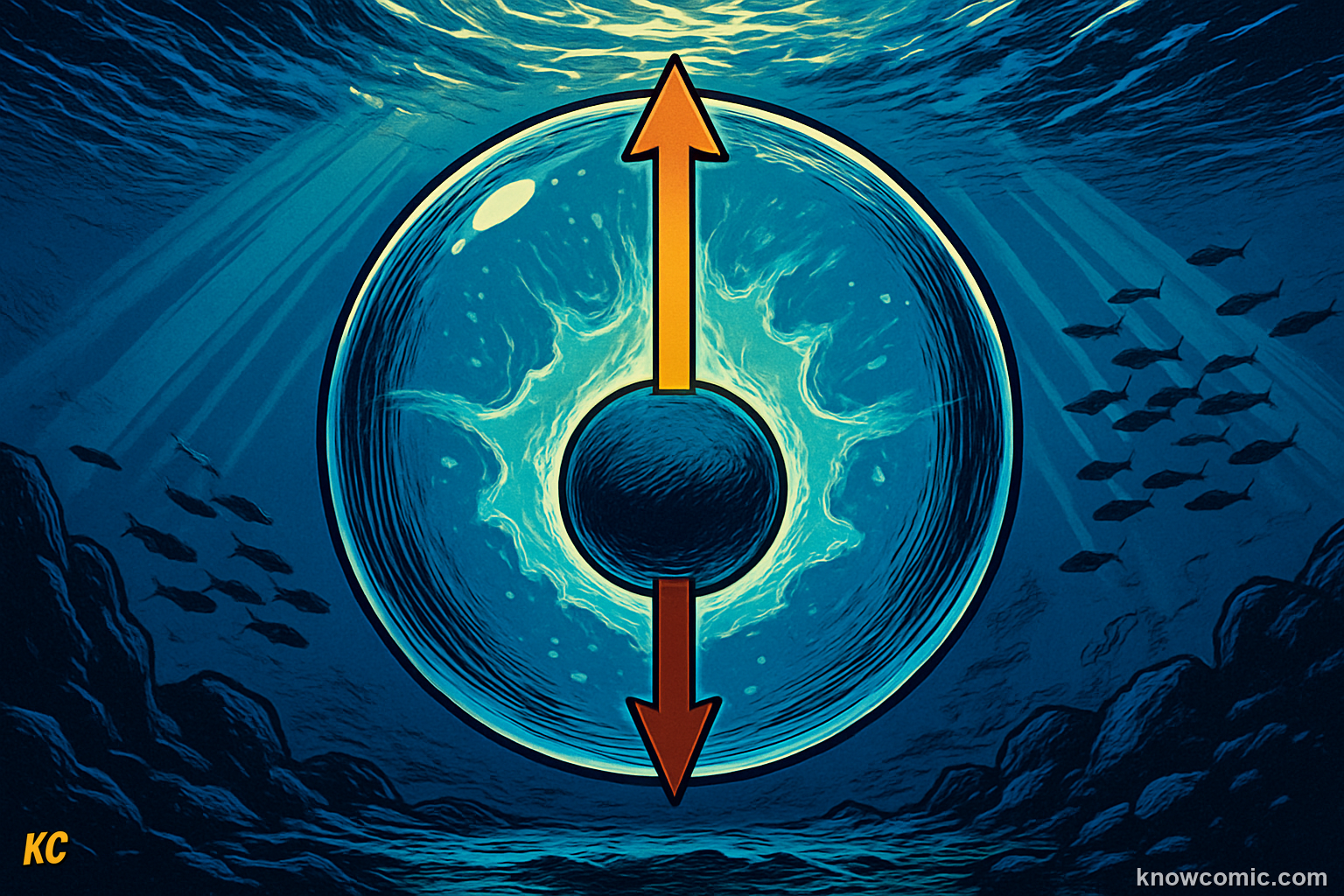
THE UPWARD PUSH MATCHES THE MOVED FLUID
Here is the big idea in one breath. Look at the wet part of the object. Picture the chunk of fluid that had to move so that part could be there. The weight of that chunk matches the upward push from the fluid, in the simple cases we start with. If the upward push is bigger than the object’s weight, the object zooms up (or pops to the surface). If the upward push is smaller, the object drops. If they are exactly equal, the object can hover in the water like a happy fish or a careful diver.
A ship does not float because steel is lighter than water. Steel is heavy. The ship floats because the whole package, hull, air pockets, cargo, and all, moves enough water that the upward push can hold the whole weight up.
A ship does not float because steel is lighter than water. Steel is heavy. The ship floats because the whole package, hull, air pockets, cargo, and all, moves enough water that the upward push can hold the whole weight up.
BALANCE!
SUBMARINE
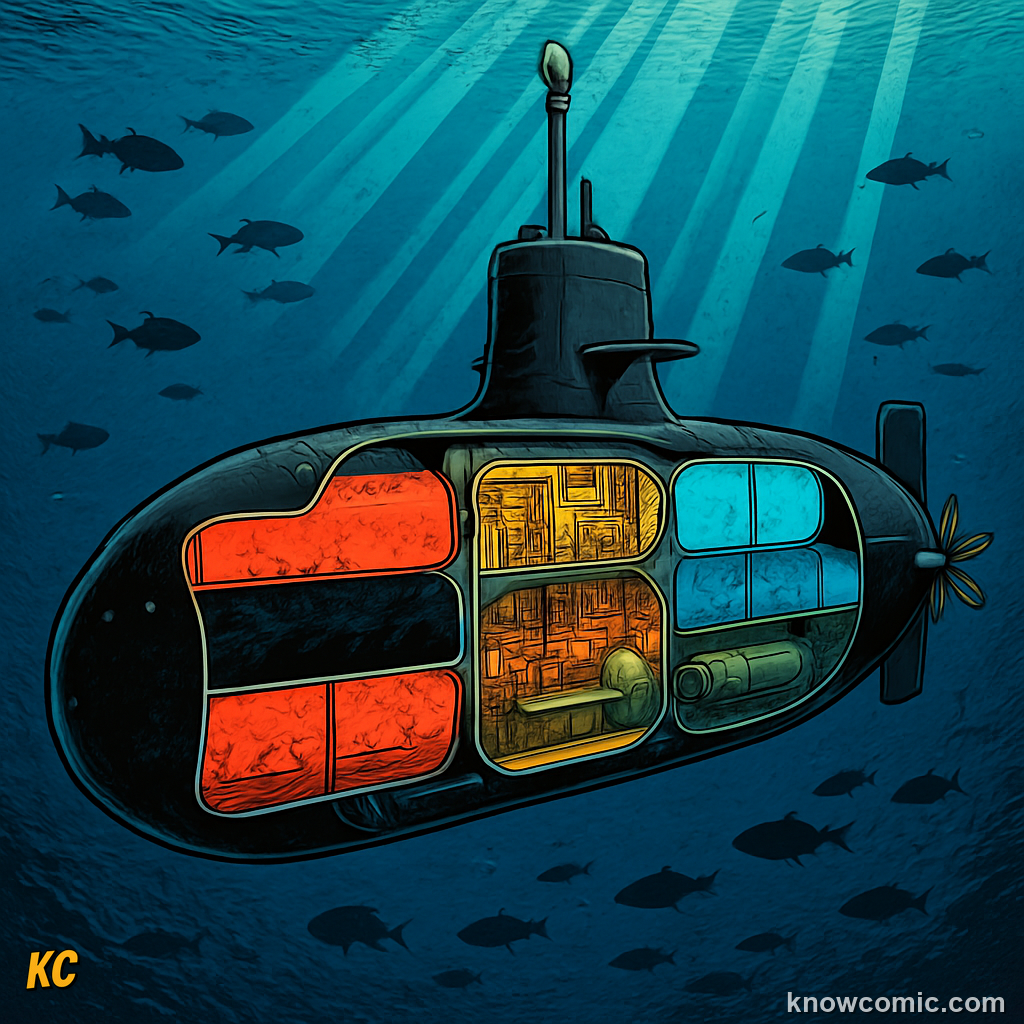
The crew lets extra water into big tanks inside. The whole sub gets heavier, so it goes down. Pump that water out and let air take its place. The whole sub gets lighter, so it goes up. The metal skin is the same. The mix of water and air inside changed.
WHY A RAFT WORKS

Logs tied together make a wide footprint on the water with air between them. The raft is not one solid heavy block. Big picture: you need a big enough water shove to hold the load. Little rafts and huge ships play the same game.
PAGE 5 OF 5 · WHERE YOU SEE THIS IN REAL LIFE
LIFE JACKET
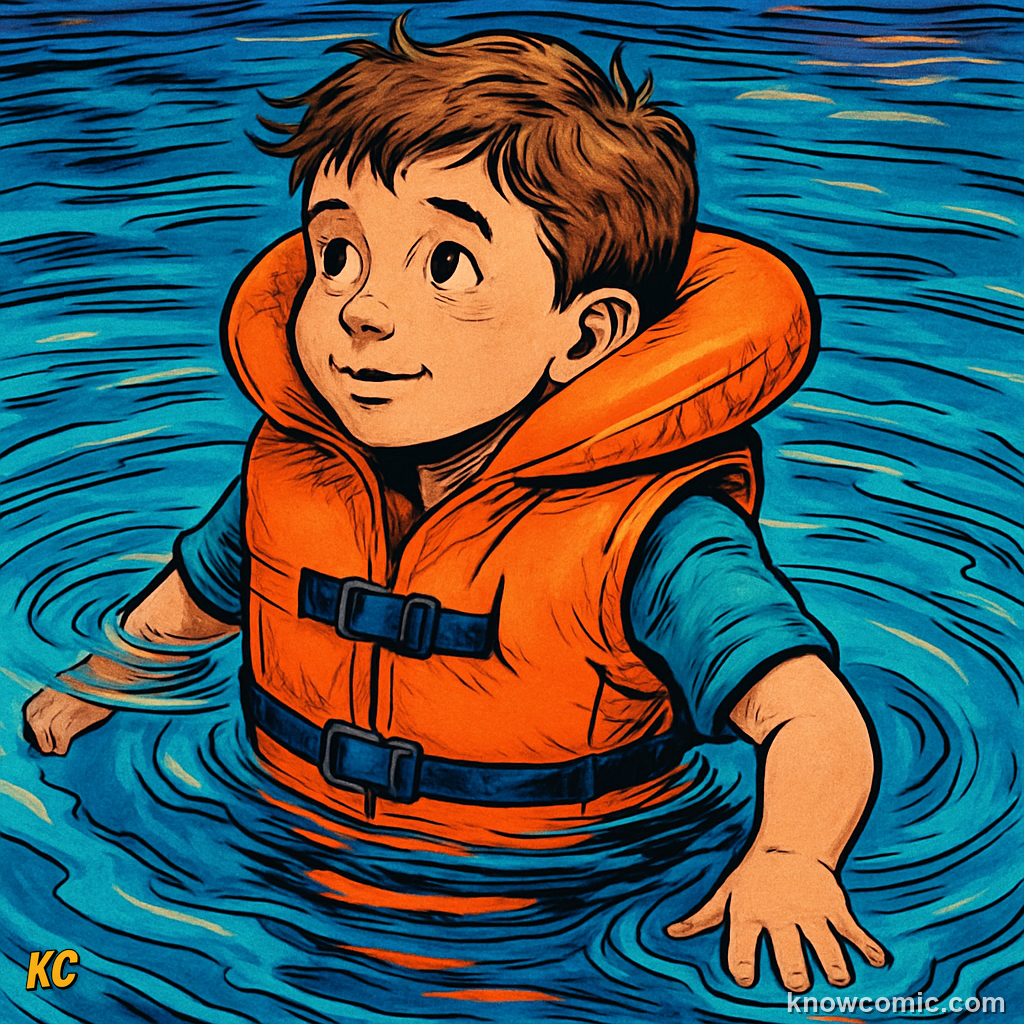
Foam adds big space without adding much weight. You and the jacket together move more water, so the water can hold you up better.
FISH & SWIM BLADDER
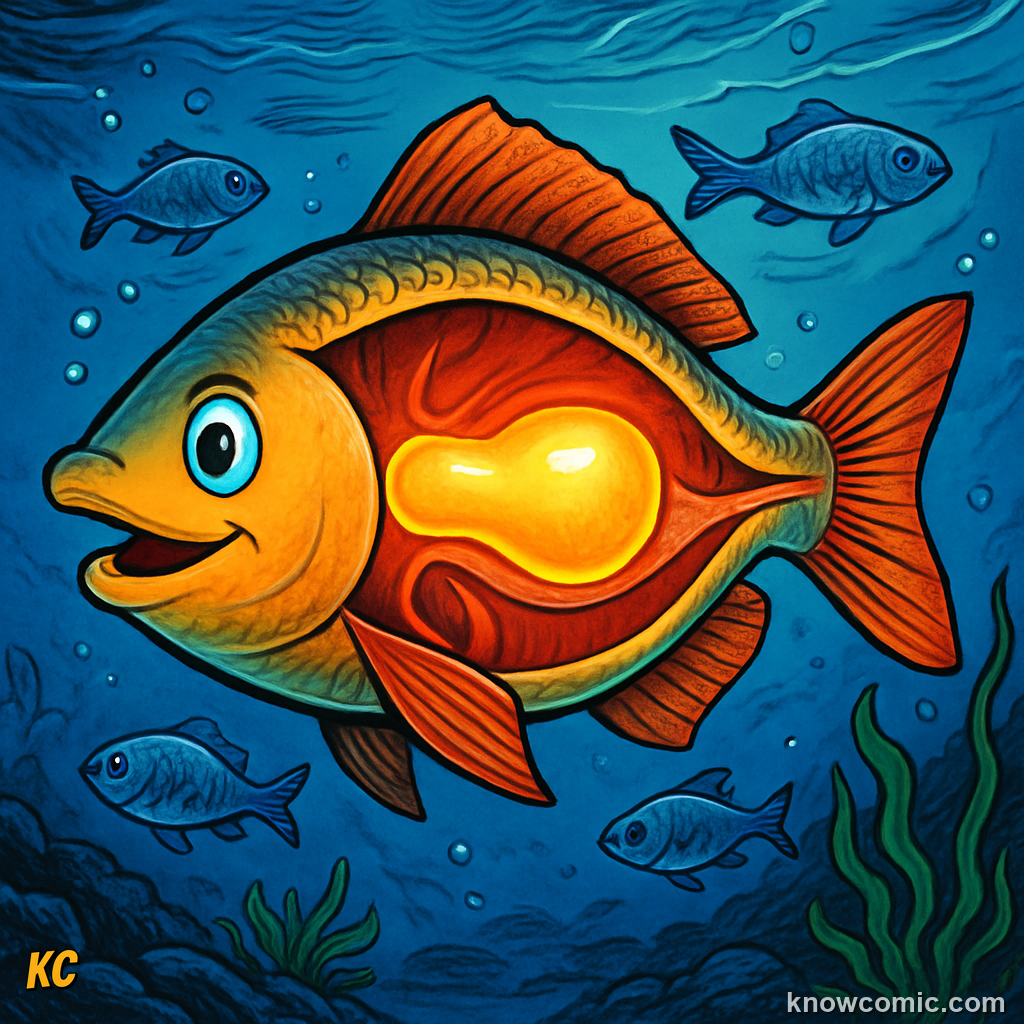
Many fish have a little gas bag inside. They squeeze it a bit to go a little up or a little down without flapping all day.
HOT AIR BALLOON
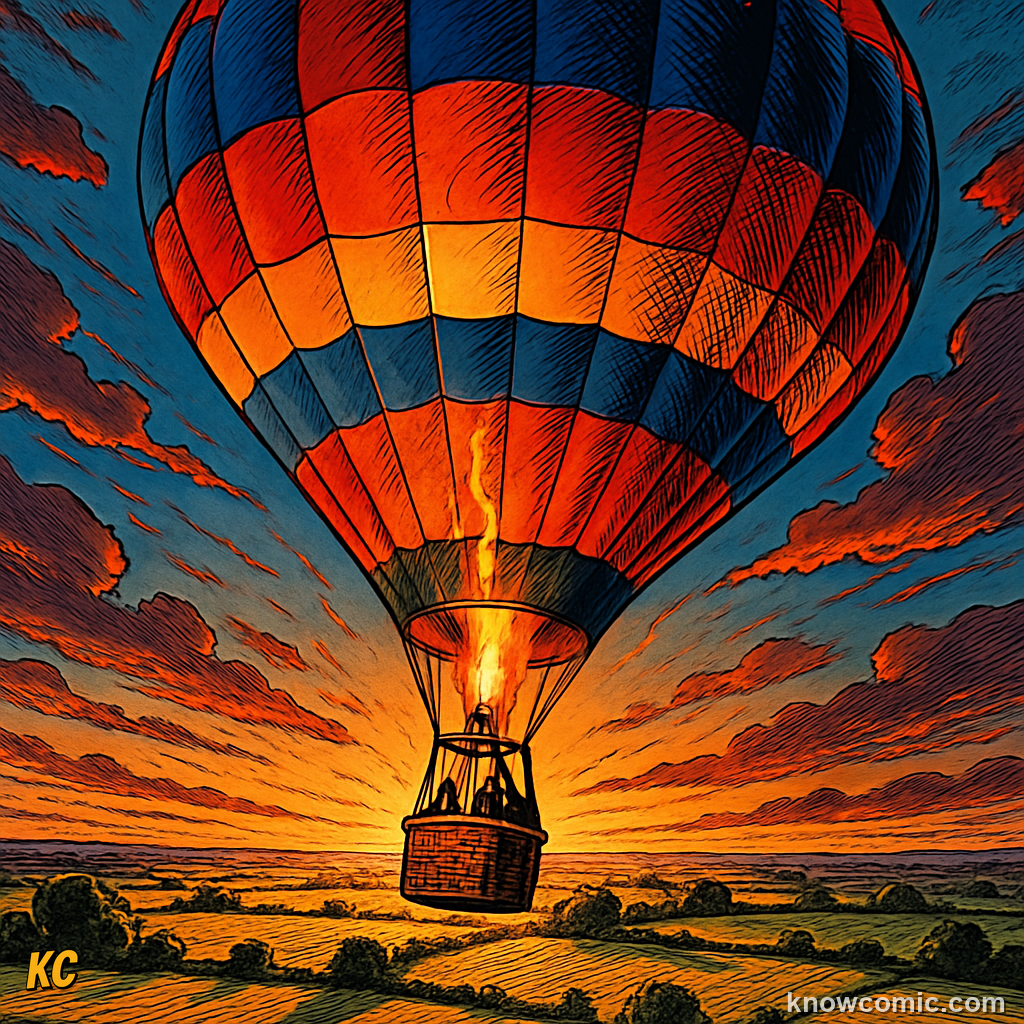
The burner warms the air in the balloon. Warm air spreads out and gets lighter for the space it takes. The cooler air around it is heavier for the same space. So the balloon can climb.
A FLOATY STICK THAT TELLS A STORY

THIS GADGET FLOATS ON PURPOSE
A hydrometer is a tiny glass float, heavy on the bottom so it stands straight in the cup. You set it in a cup of stuff. The stuff pushes up on the float, the same way water pushes on a boat. The float stops when up-push matches weight. A mark on the glass then sits on the top line of the liquid. Thick liquid (syrup) shoves harder, so the float rides high. Thin liquid (mostly water) shoves softer, so the same float sits deeper. A grown up reads the mark to name how packed the mix is. Same lift story, in a one-hand tool.
TEST!
KEY TAKEAWAYS
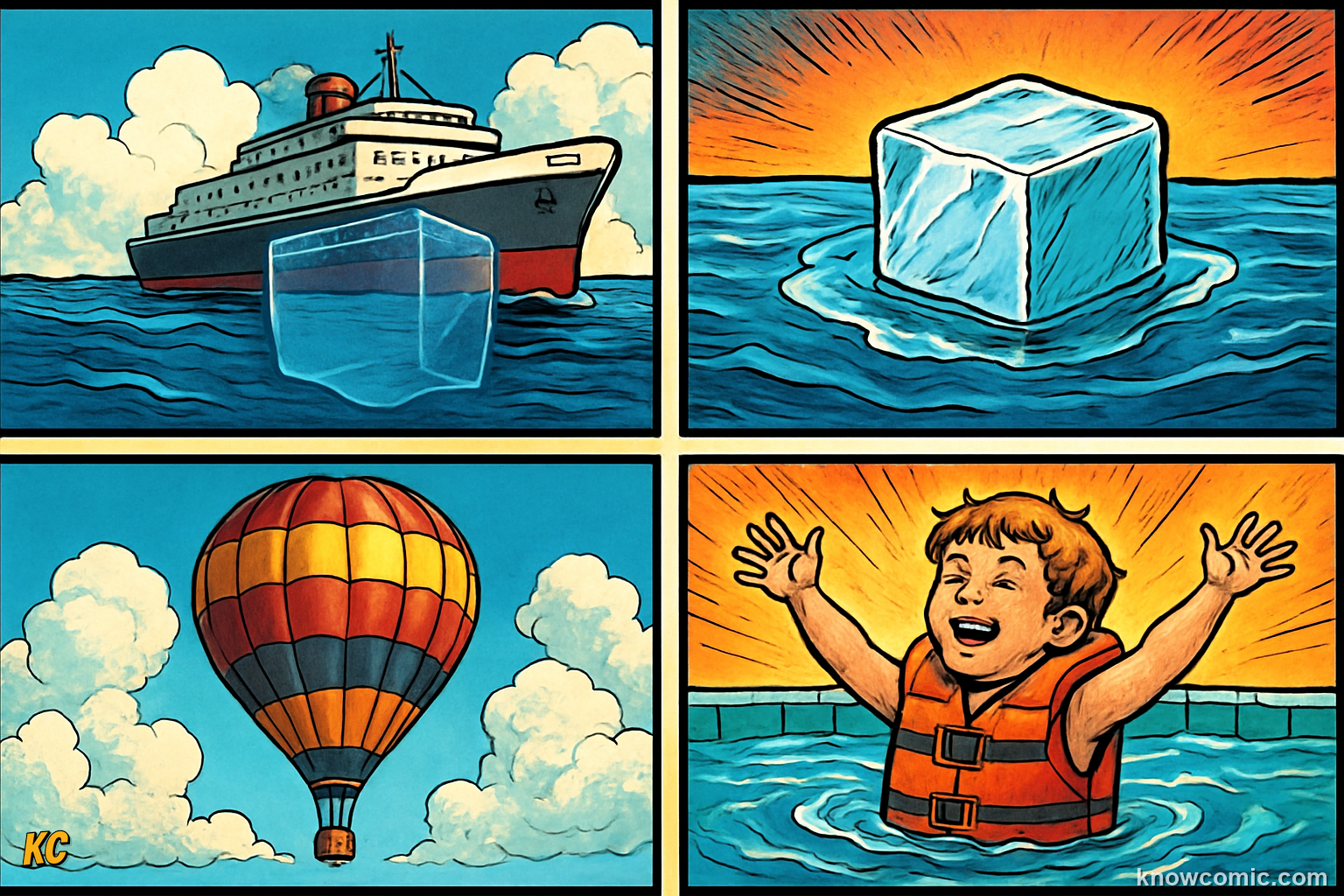
BEFORE YOU GO
📌 REMEMBER
✦ Buoyancy is the upward push you get from a fluid around you
✦ You shove fluid out of the way when you sit in it. That matters
✦ Archimedes’ rule: the upward push matches the weight of the fluid you moved
✦ To guess float or sink, look at the whole thing, shape, air pockets, and all, not only one tiny piece
✦ You shove fluid out of the way when you sit in it. That matters
✦ Archimedes’ rule: the upward push matches the weight of the fluid you moved
✦ To guess float or sink, look at the whole thing, shape, air pockets, and all, not only one tiny piece
FLOAT!
🧠 QUIZ TIME!
BUOYANCY · 5 QUESTIONS
QUESTION 01
Archimedes’ simple rule says the upward push on something in a fluid equals what?
QUESTION 02
Why does a tiny steel bolt sink, but a giant steel ship can float?
QUESTION 03
You have a solid lump that is more packed than the liquid around it. You let go under the surface. What happens?
QUESTION 04
An ice cube floats in a glass of water. Why?
QUESTION 05
A submarine is hanging steady under the water. The crew pumps water out of the tanks and lets air take that space instead. What happens next?
0/5
LOADING...