🌍 GRAVITY: WHY THINGS FALL DOWN
PAGE 1 OF 5 · A HUG YOU CANNOT SEE
THE FORCE BEHIND EVERYTHING
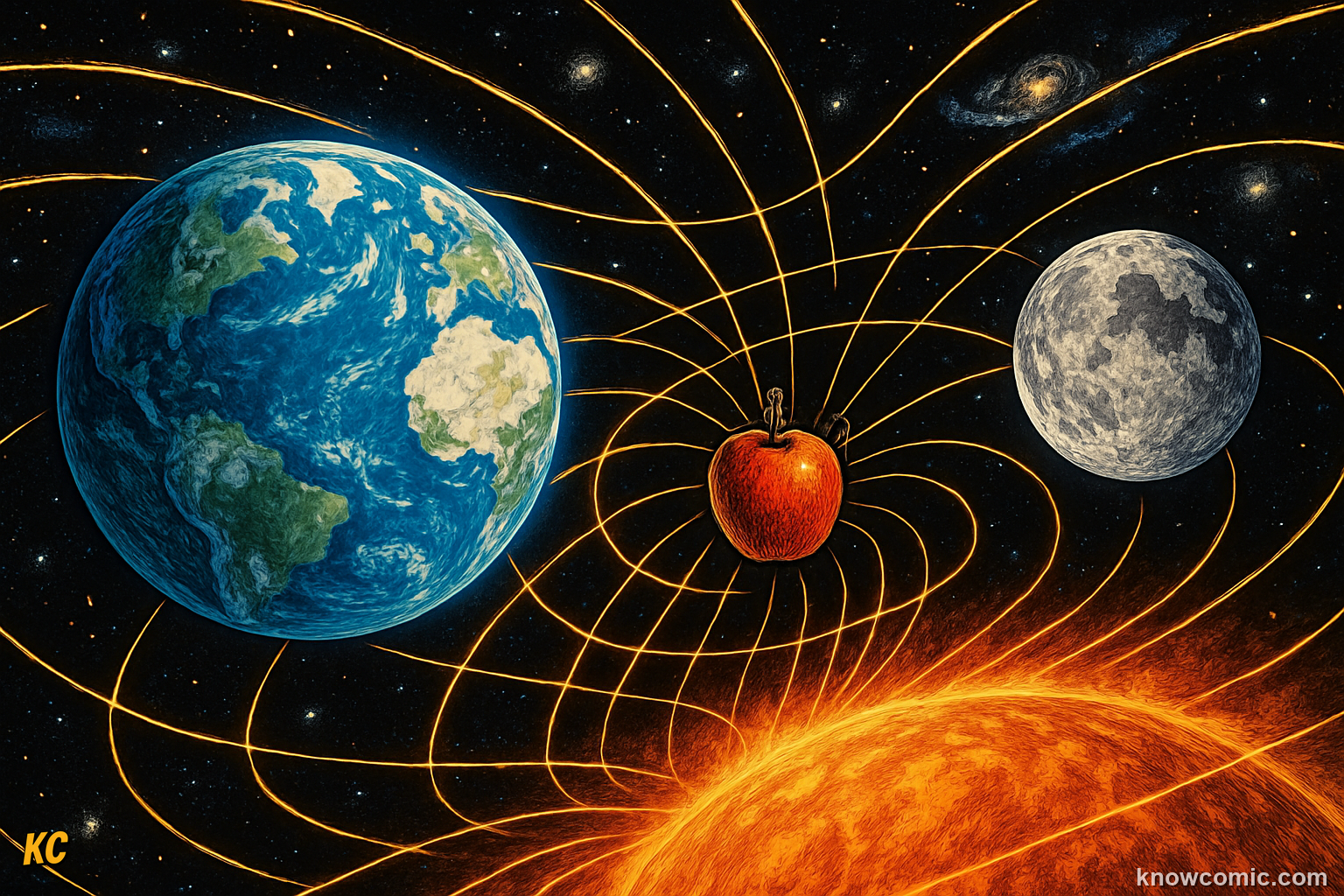
EVERY OBJECT PULLS EVERY OTHER OBJECT
Toss a ball, it goes down. It always does, unless something else nudges it. That steady downward tug has a name: gravity. Every bit of stuff pulls a little on every other bit, even you and the floor, you and a star far away, though most pulls are tiny next to the Earth under your feet.
Newton said the same kind of idea that tugs an apple can also curve the path of the Moon, if you think big and long range. One big story of pulls ties falling apples to wheels and worlds.
Newton said the same kind of idea that tugs an apple can also curve the path of the Moon, if you think big and long range. One big story of pulls ties falling apples to wheels and worlds.
"Farther apart, a softer tug; big masses, a stronger pull." (Newton, plain words.)
PULL!
WHAT IS GRAVITY?
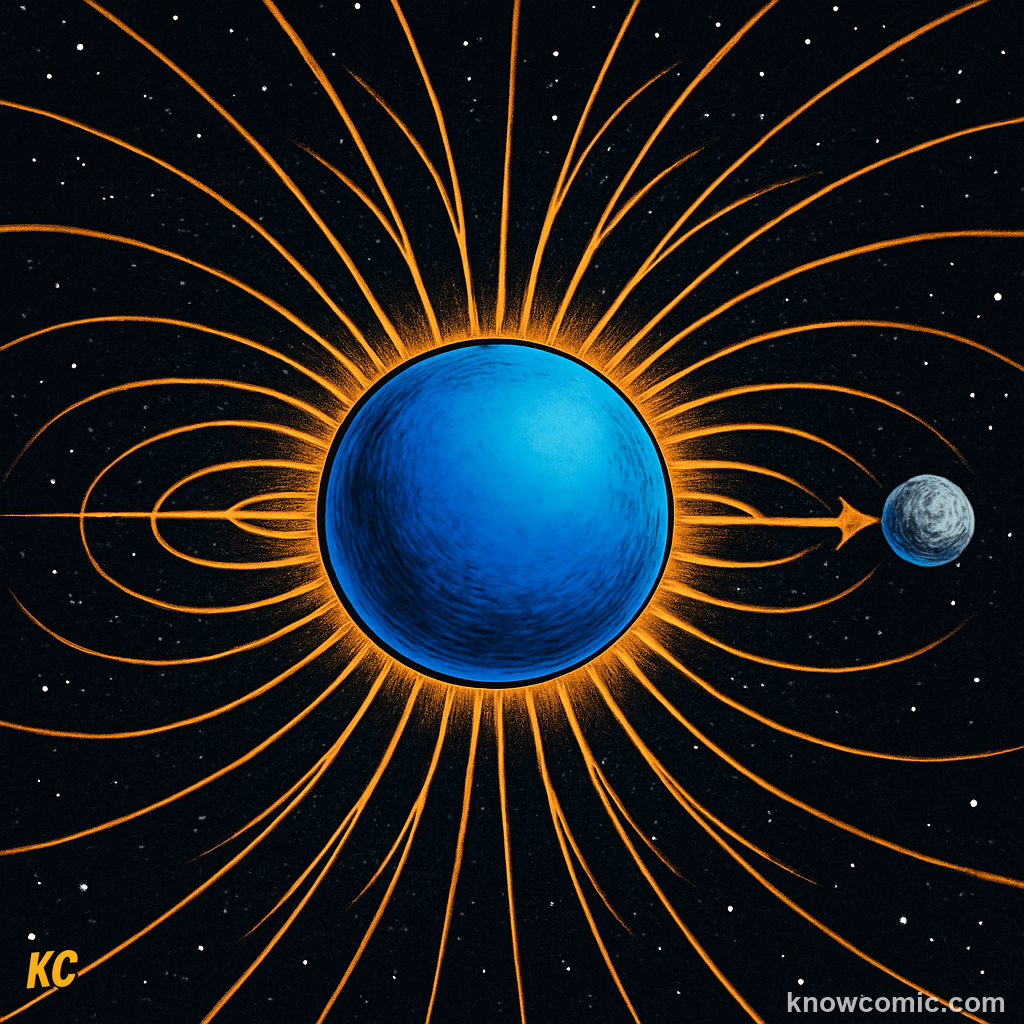
🏠 Gravity is a force of attraction
⚔️ Every mass pulls every other mass
🔴 Bigger mass = stronger gravity
📈 Farther apart = weaker gravity
⚔️ Every mass pulls every other mass
🔴 Bigger mass = stronger gravity
📈 Farther apart = weaker gravity
NEWTON'S FORMULA
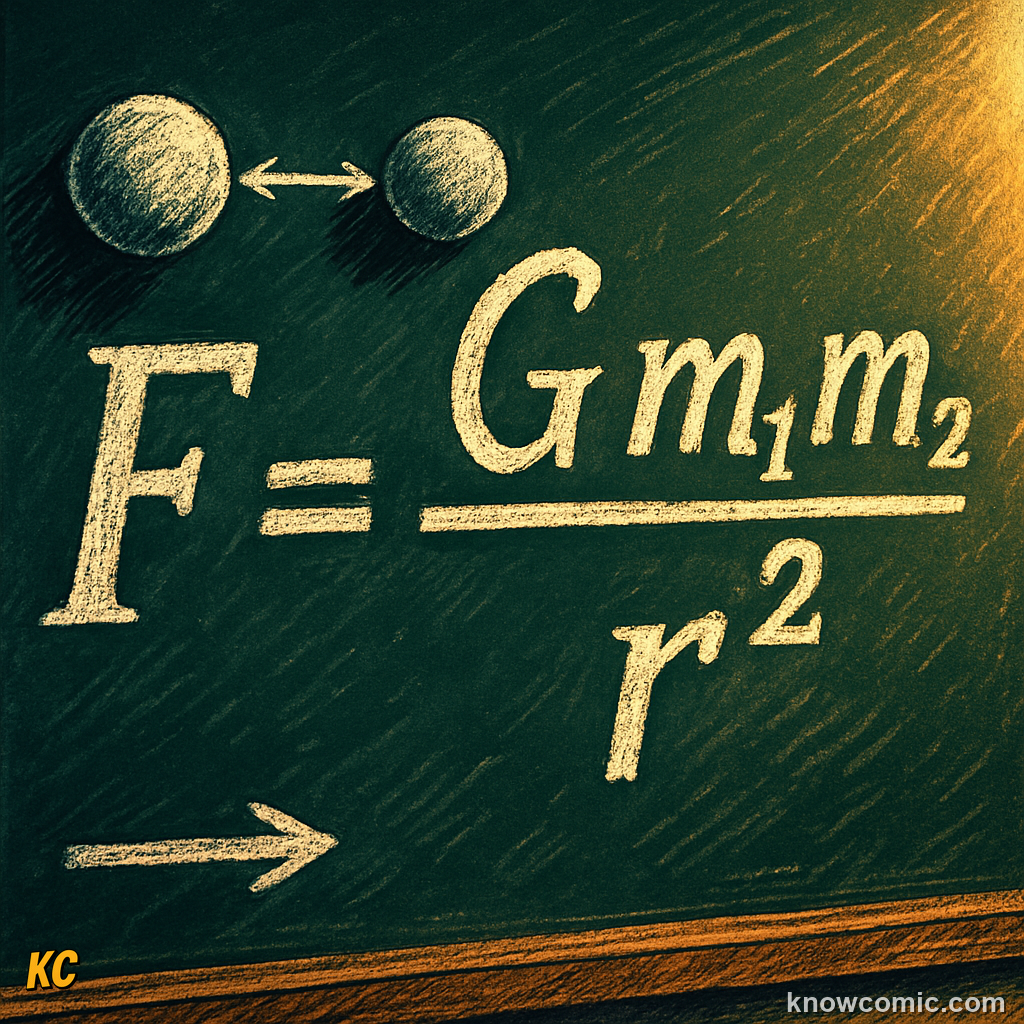
🧩 F = G × m₁ × m₂ ÷ r²
🔺 G = gravitational constant
🔺 m₁, m₂ = the two masses
🔺 r = distance between them
🔺 G = gravitational constant
🔺 m₁, m₂ = the two masses
🔺 r = distance between them
PAGE 2 OF 5 · HEAVY IN YOUR BELLY VS STUFF IN YOUR BODY
ON EARTH
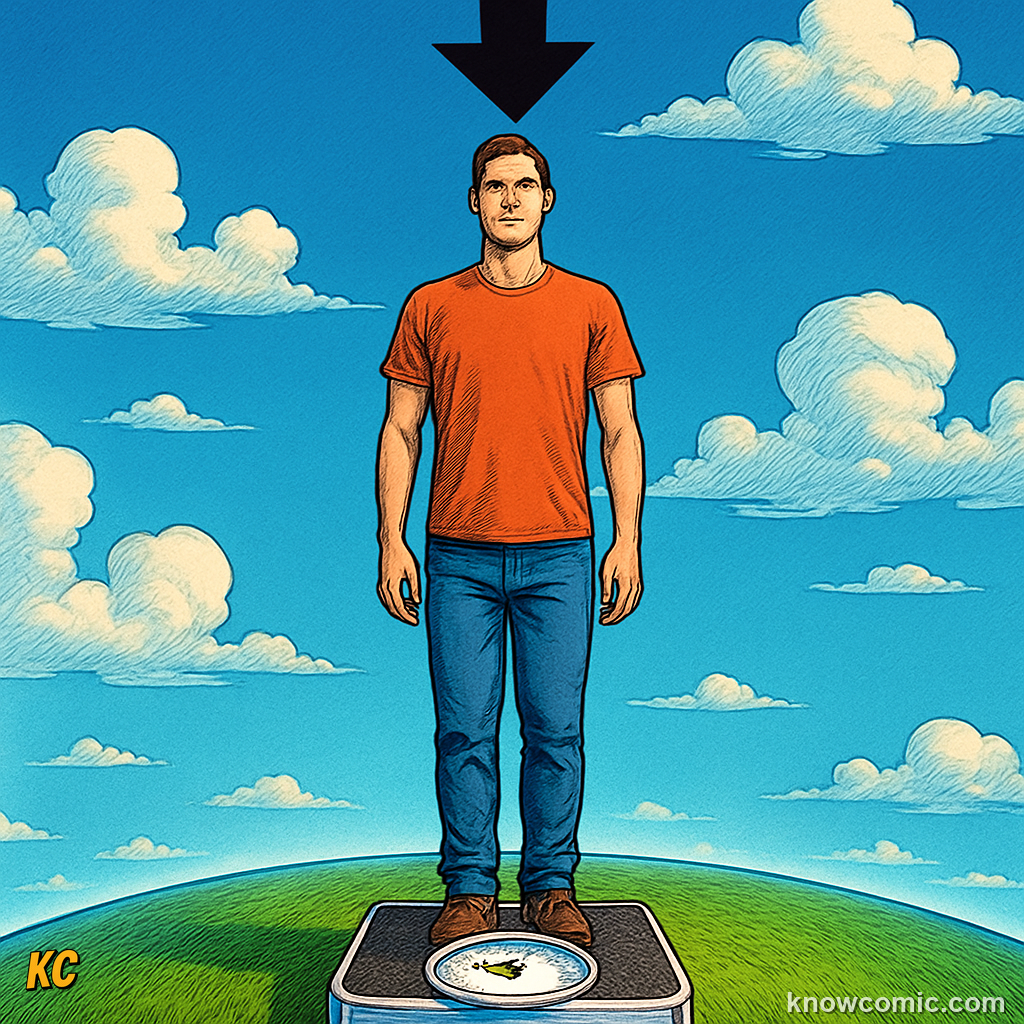
⚖️ Mass: 70 kg (never changes)
💪 Weight on Earth: 686 Newtons
🌎 Gravity pulls at 9.8 m/s² here
🔹 Weight = mass × gravity
💪 Weight on Earth: 686 Newtons
🌎 Gravity pulls at 9.8 m/s² here
🔹 Weight = mass × gravity
ON THE MOON
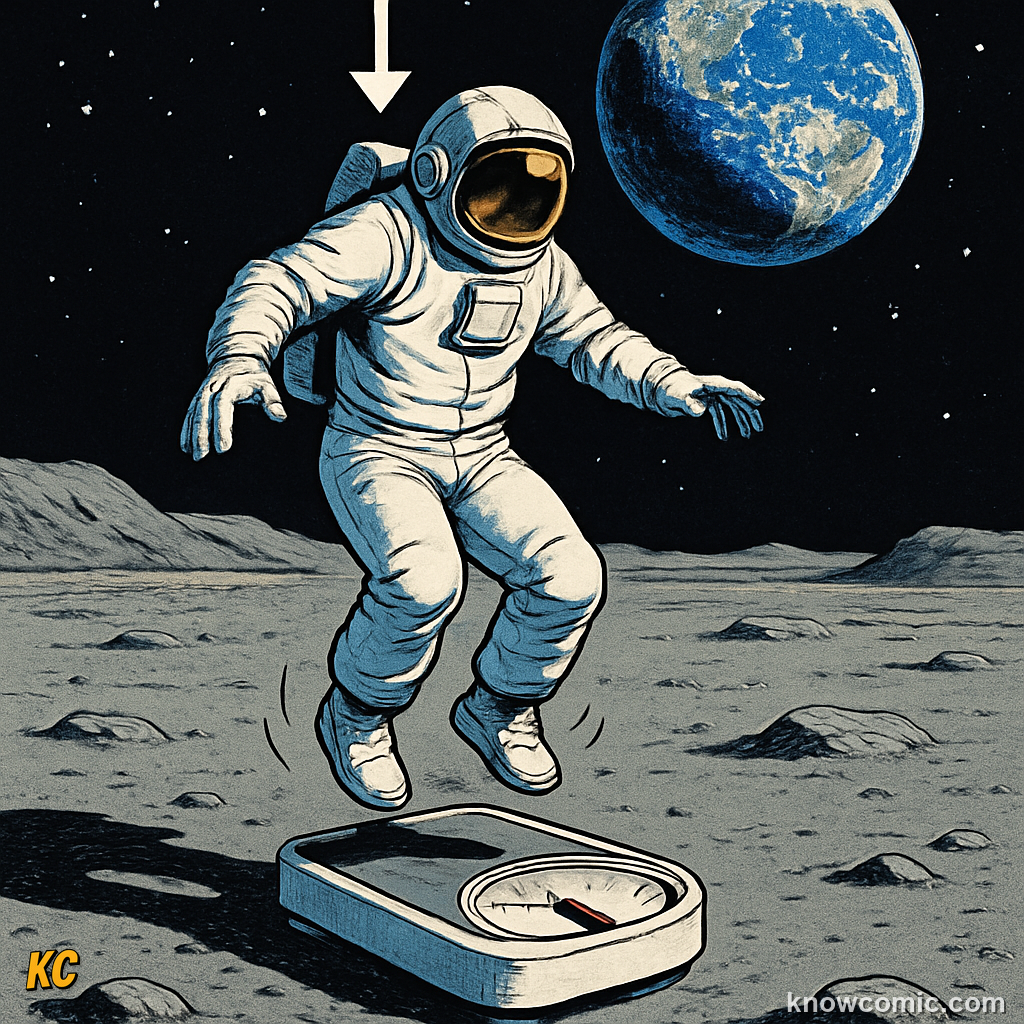
⚖️ Same mass: still 70 kg
💪 Weight on Moon: only 114 Newtons
🌙 Moon's gravity: only 1.62 m/s²
🚀 You'd weigh 6× less on the Moon!
💪 Weight on Moon: only 114 Newtons
🌙 Moon's gravity: only 1.62 m/s²
🚀 You'd weigh 6× less on the Moon!
MASS vs WEIGHT
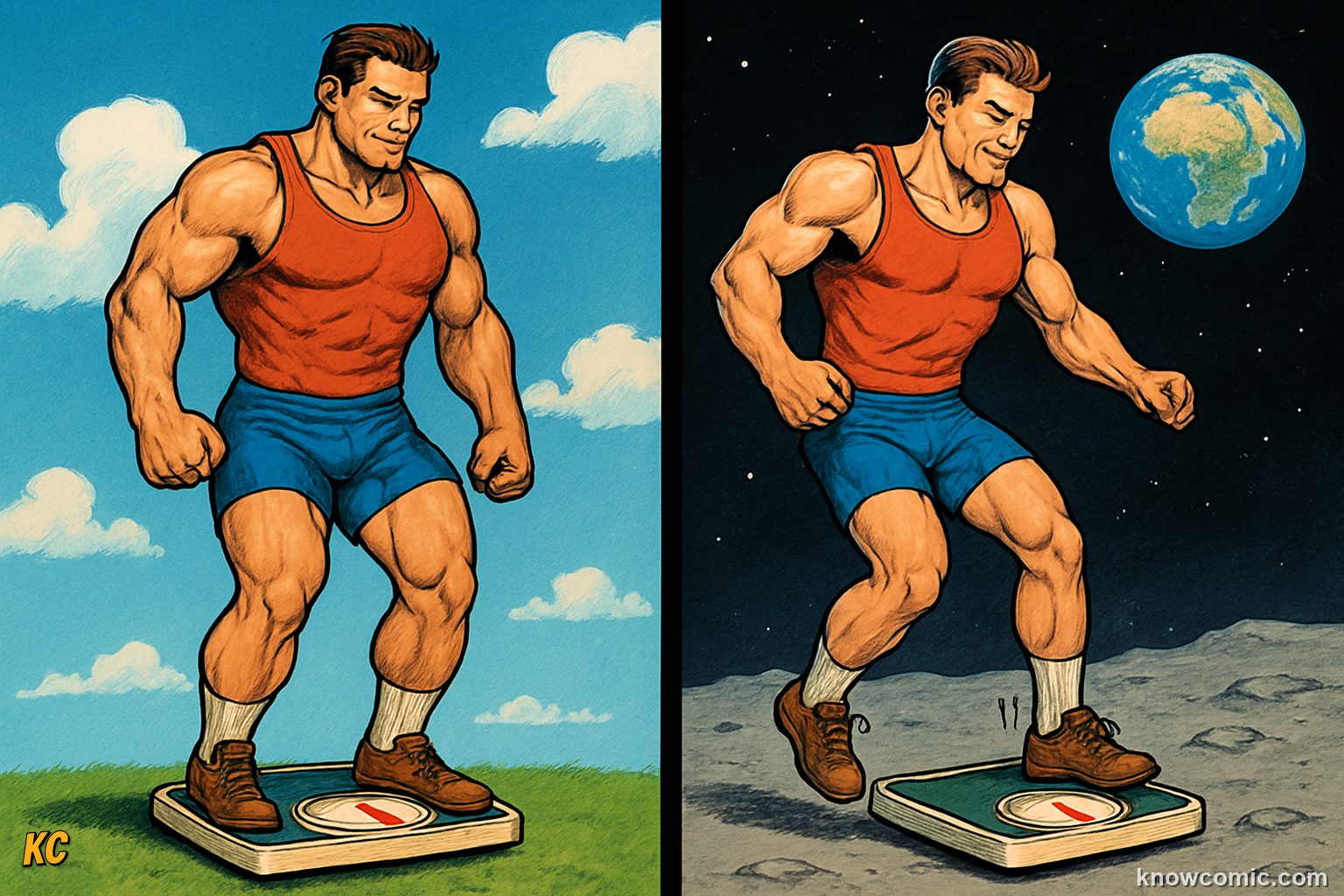
STUFF IN YOU STAYS. THE TUG CHANGES.
Mass is how much stuff is actually in you, your atoms and all. It does not vanish on a trip. A 70 kg person is still 70 kg of person on the Moon, just floating funny.
Weight is how hard a planet tugs you with gravity. A smaller world gives a gentler tug, so the same body feels lighter in your legs. A bigger world tugs harder.
Scientists write weight in a push unit, Newtons, and write mass in kilos. A home scale may show kilos, but it is feeling a tug from Earth first.
Weight is how hard a planet tugs you with gravity. A smaller world gives a gentler tug, so the same body feels lighter in your legs. A bigger world tugs harder.
Scientists write weight in a push unit, Newtons, and write mass in kilos. A home scale may show kilos, but it is feeling a tug from Earth first.
"Mass is the backpack of atoms. Weight is the planet’s yank on that backpack."
WEIGH!
PAGE 3 OF 5 · FEATHER AND HAMMER
THE MOON, 1971
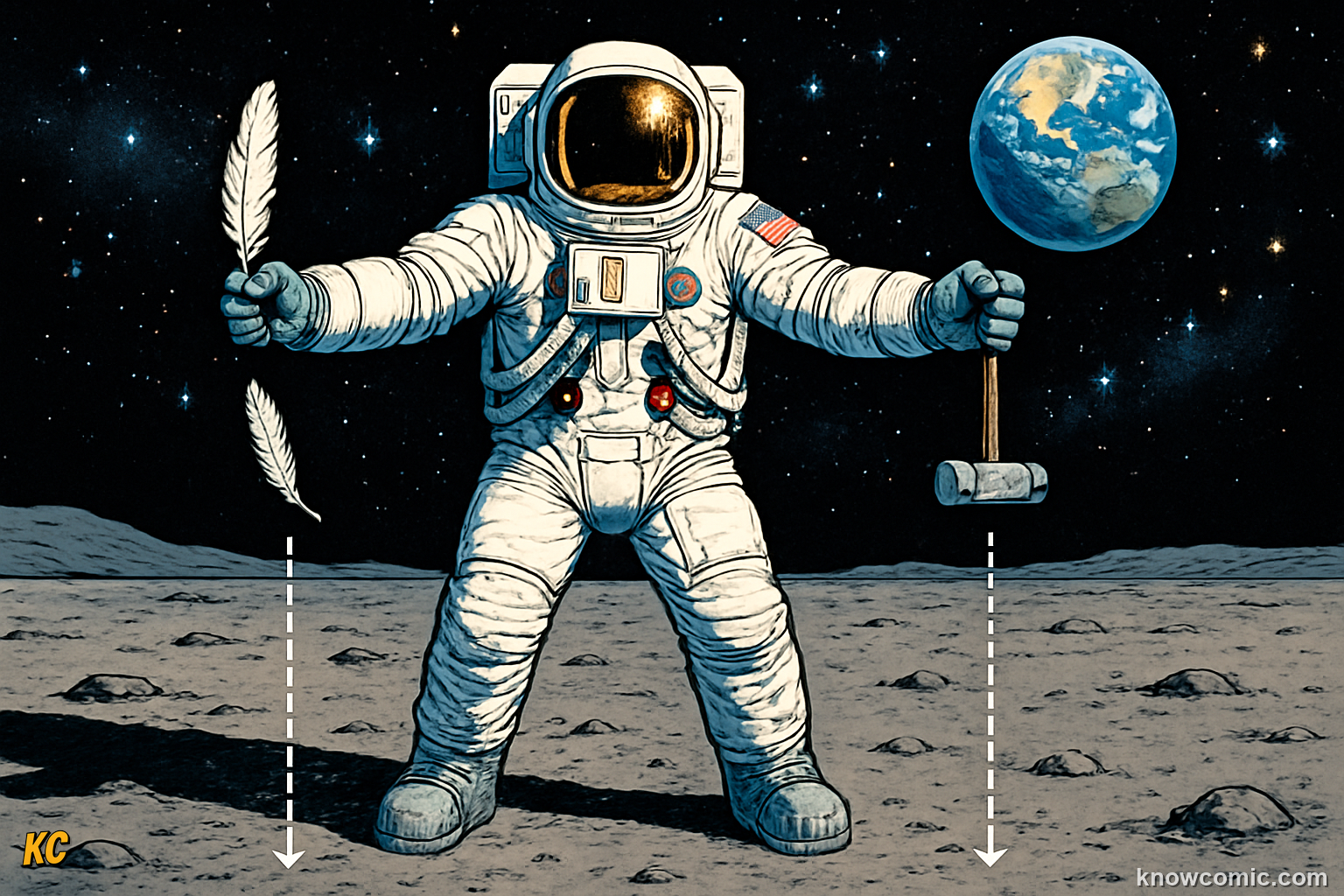
THEY HIT AT EXACTLY THE SAME TIME!
On Earth a feather floats a bit because air bumps it. The pull is not weaker, the air is busy. On the Moon there is almost no air, so the story is simple. An Apollo astronaut held a hammer and a bird feather, let go, and both smacked the ground together. Long before that, Galileo guessed: without air, all things pick up speed the same way for their fall. At home the ball and feather look different only because of the wind in the way.
DROP!
GALILEO'S EXPERIMENT
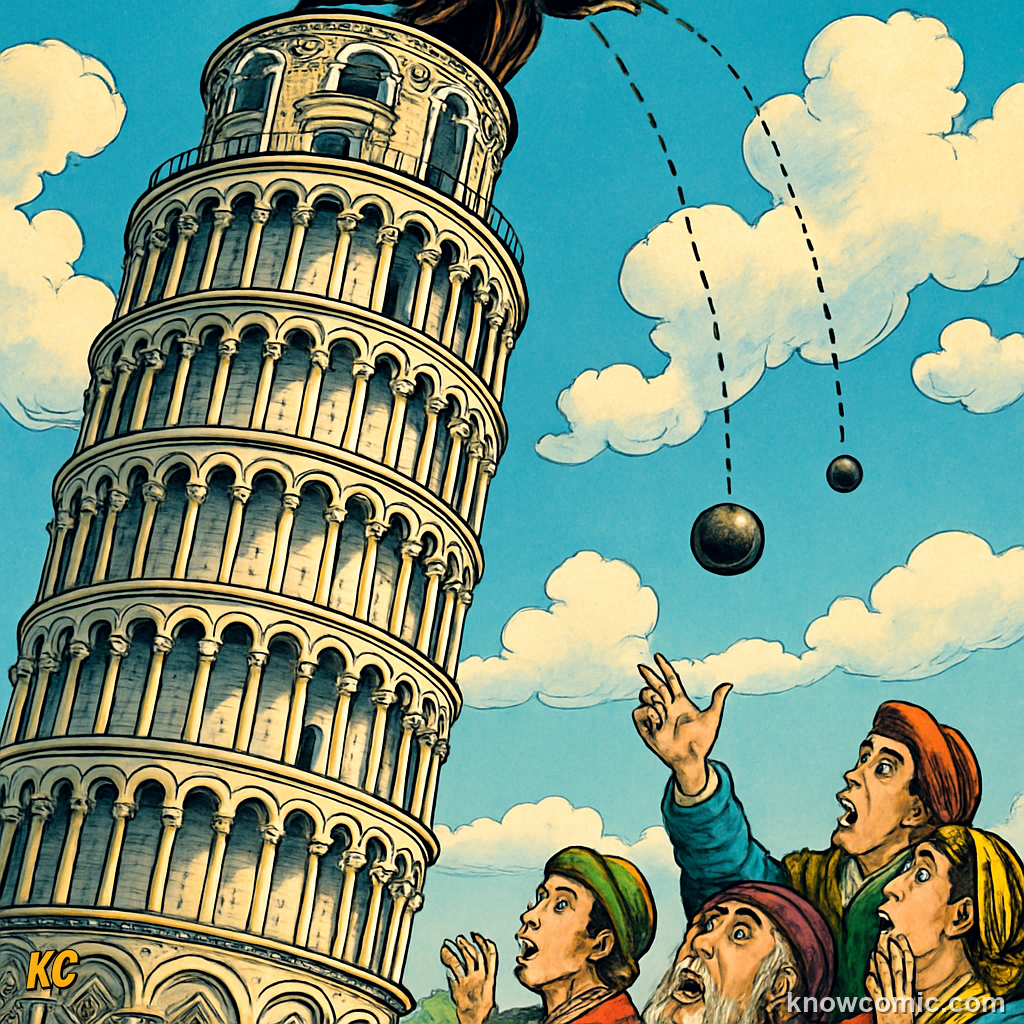
🏭 Galileo dropped balls from Pisa tower
🔴 Light and heavy balls hit together
💥 Disproved Aristotle's 2000-year belief
⚡ Mass does NOT affect fall speed
🔴 Light and heavy balls hit together
💥 Disproved Aristotle's 2000-year belief
⚡ Mass does NOT affect fall speed
AIR RESISTANCE
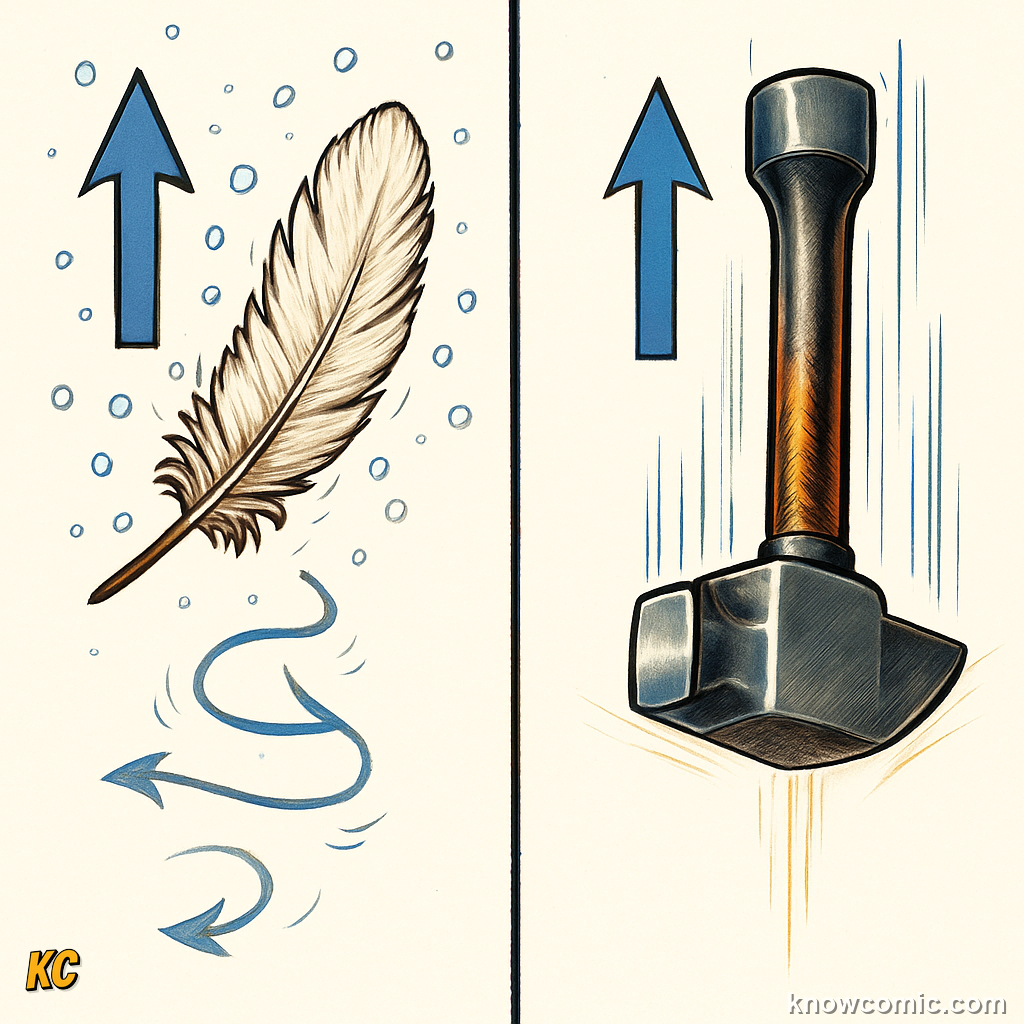
🦅 Feather: large area, very light
🌬️ Air molecules slow it dramatically
🔨 Hammer: small front, very heavy
▼ Splits the air, falls fast
🌬️ Air molecules slow it dramatically
🔨 Hammer: small front, very heavy
▼ Splits the air, falls fast
NO AIR = SAME SPEED
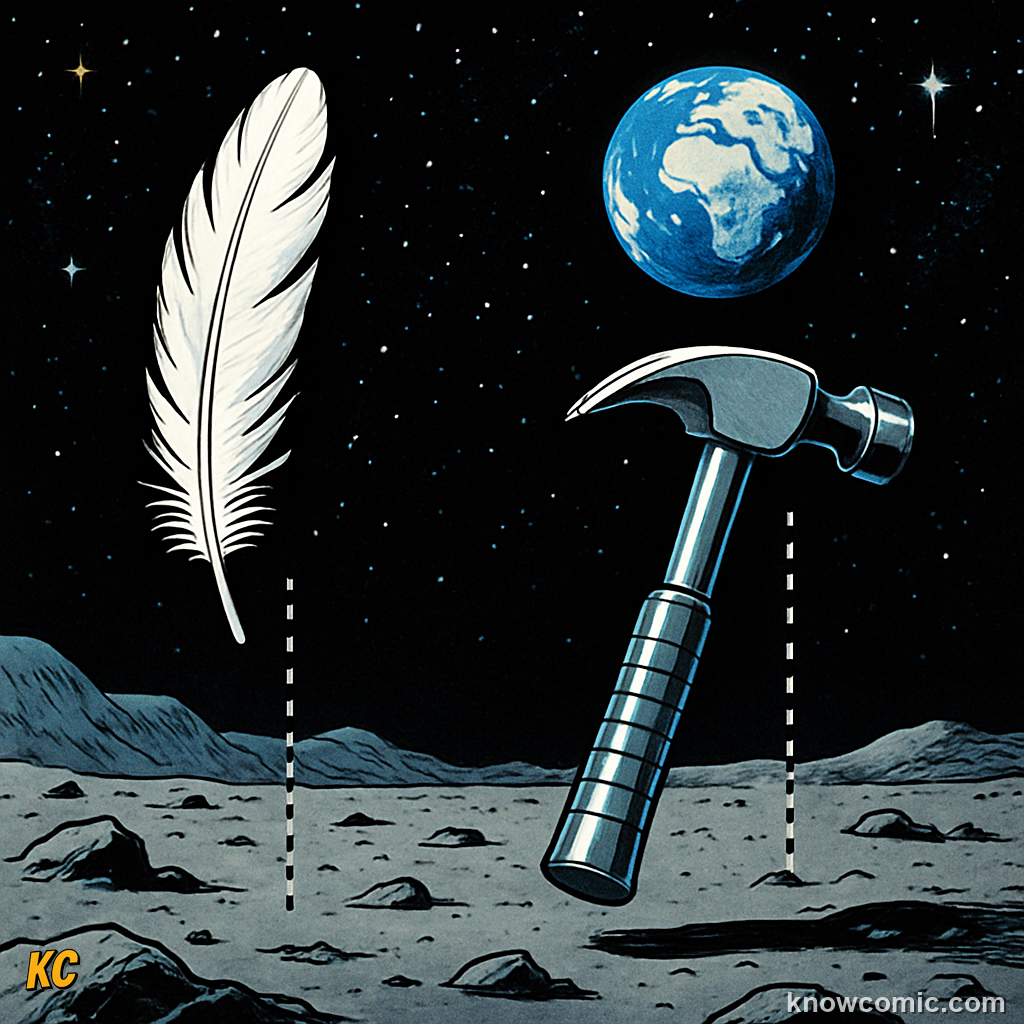
🌙 Moon has zero atmosphere
⛔ No air resistance at all
✅ Feather and hammer fall identically
🆕 Proven live on NASA broadcast 1971
⛔ No air resistance at all
✅ Feather and hammer fall identically
🆕 Proven live on NASA broadcast 1971
PAGE 4 OF 5 · FLOATING IN SPACE
WHY ASTRONAUTS FLOAT
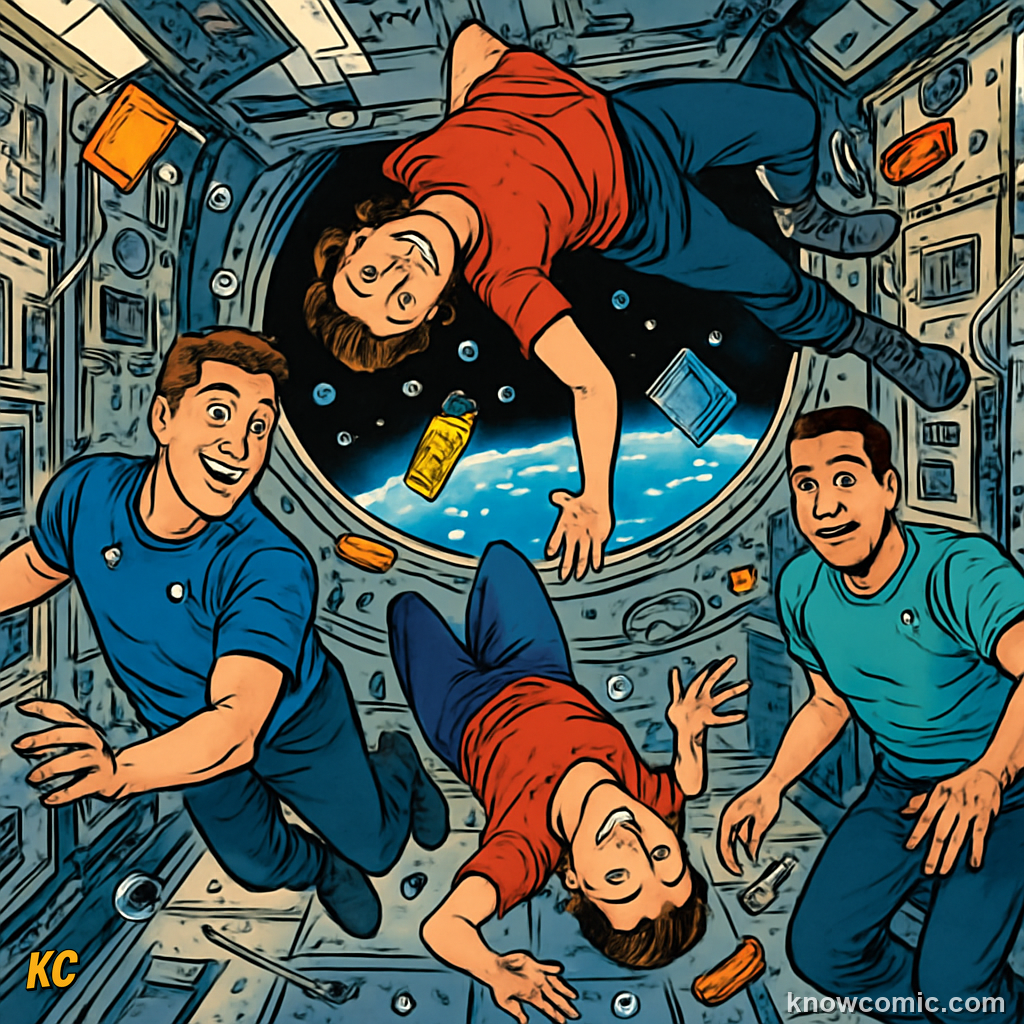
STILL TUGGED BY EARTH, STILL "FALLING" TOGETHER
Space visitors look floaty, but Earth’s tug up there is still most of what you feel on the ground. So what gives?
The space house and everyone inside are falling around the planet, and also racing sideways so fast that the ground curves away under them. They fall in a long loop, not a straight splat. Inside, the room, the fork, the person, all fall the same for a moment, so nothing squashes your feet on a floor.
That is why you see soft floating, not a place with “no gravity.”
The space house and everyone inside are falling around the planet, and also racing sideways so fast that the ground curves away under them. They fall in a long loop, not a straight splat. Inside, the room, the fork, the person, all fall the same for a moment, so nothing squashes your feet on a floor.
That is why you see soft floating, not a place with “no gravity.”
"Floaty does not mean far from Earth’s hug. It means nothing is shoving your feet from below."
FLOAT!
ORBIT EXPLAINED
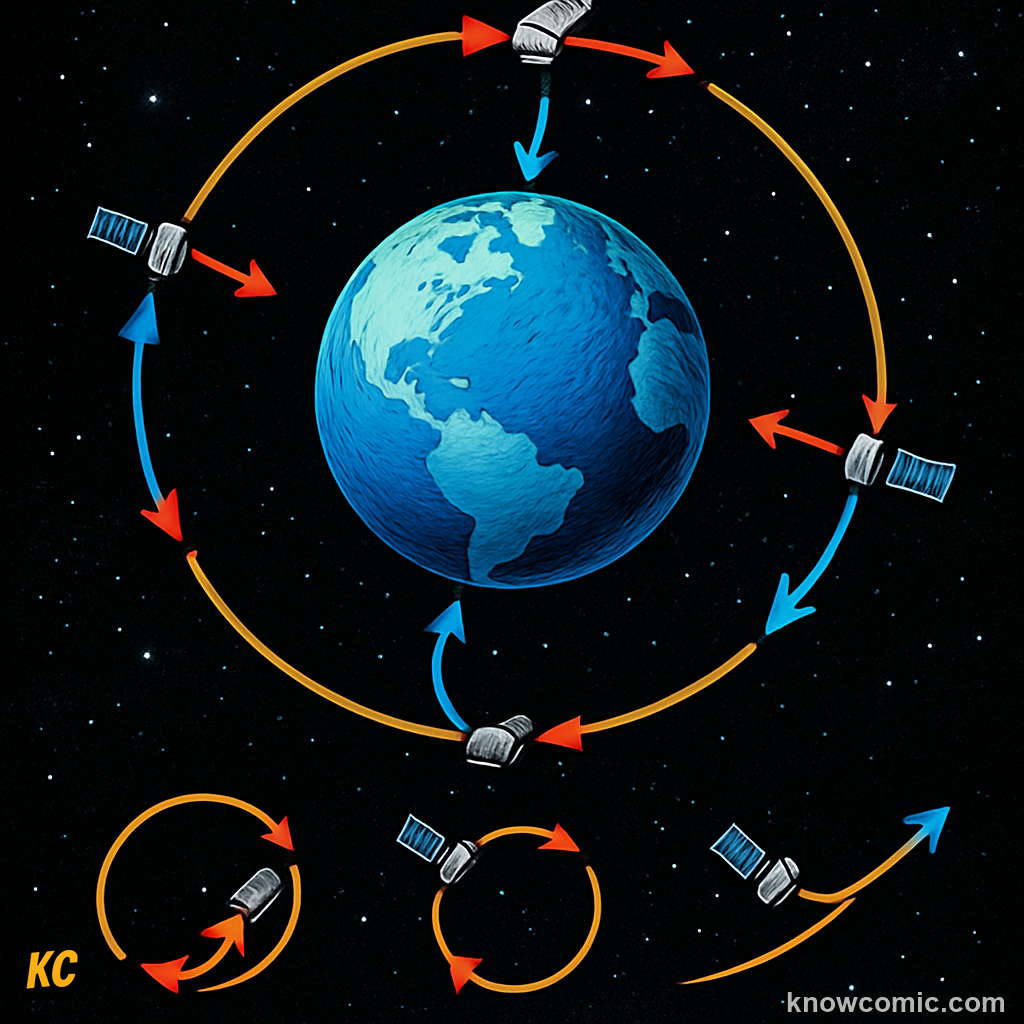
🌏 Orbit = falling + moving sideways
🚀 Go too slow: spiral into Earth
🚀 Go too fast: fly off into space
✅ Just right: perfect circular orbit
🚀 Go too slow: spiral into Earth
🚀 Go too fast: fly off into space
✅ Just right: perfect circular orbit
ESCAPE VELOCITY
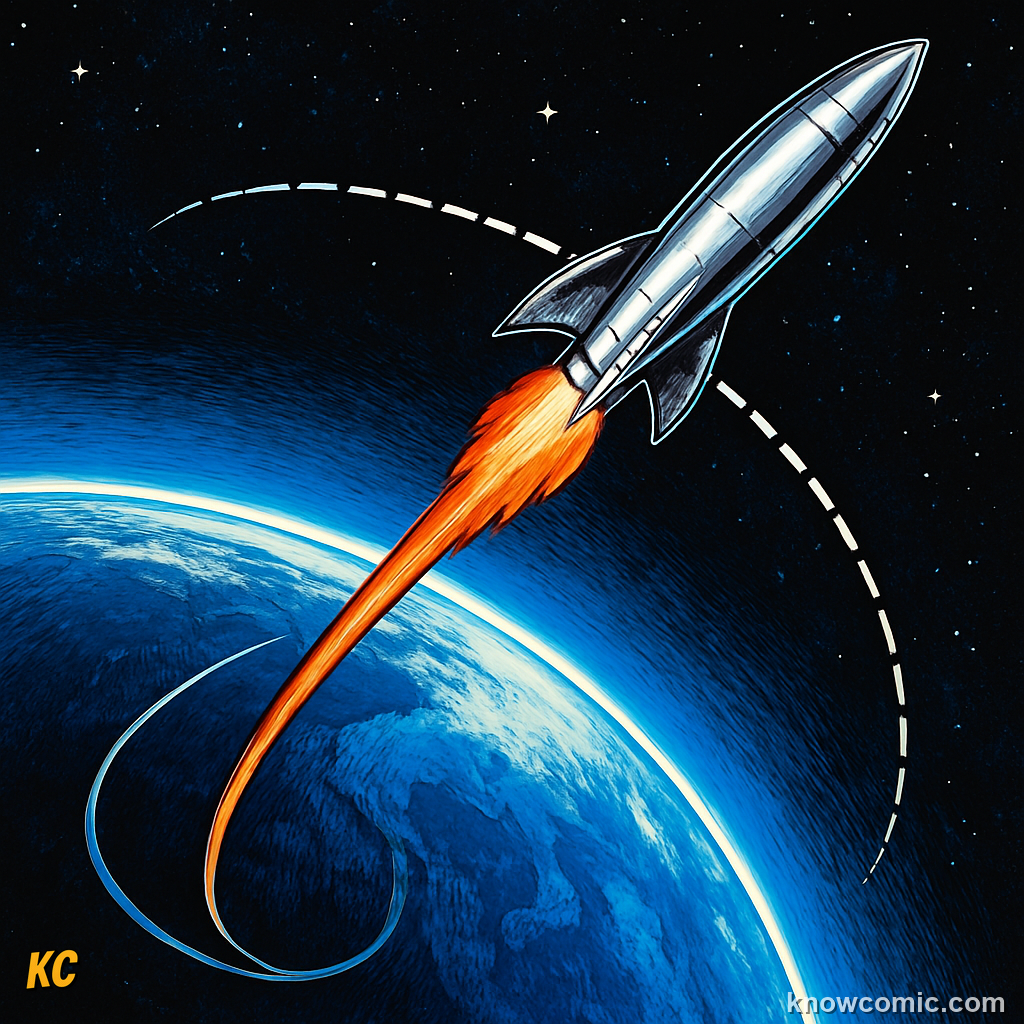
🚀 Earth escape velocity: 11.2 km/s
🌙 Moon escape: only 2.4 km/s
🔥 Sun escape: 617.5 km/s!
⬛ Black hole: even light can't escape
🌙 Moon escape: only 2.4 km/s
🔥 Sun escape: 617.5 km/s!
⬛ Black hole: even light can't escape
PAGE 5 OF 5 · PULLS THAT BUILD WORLDS
TIDES
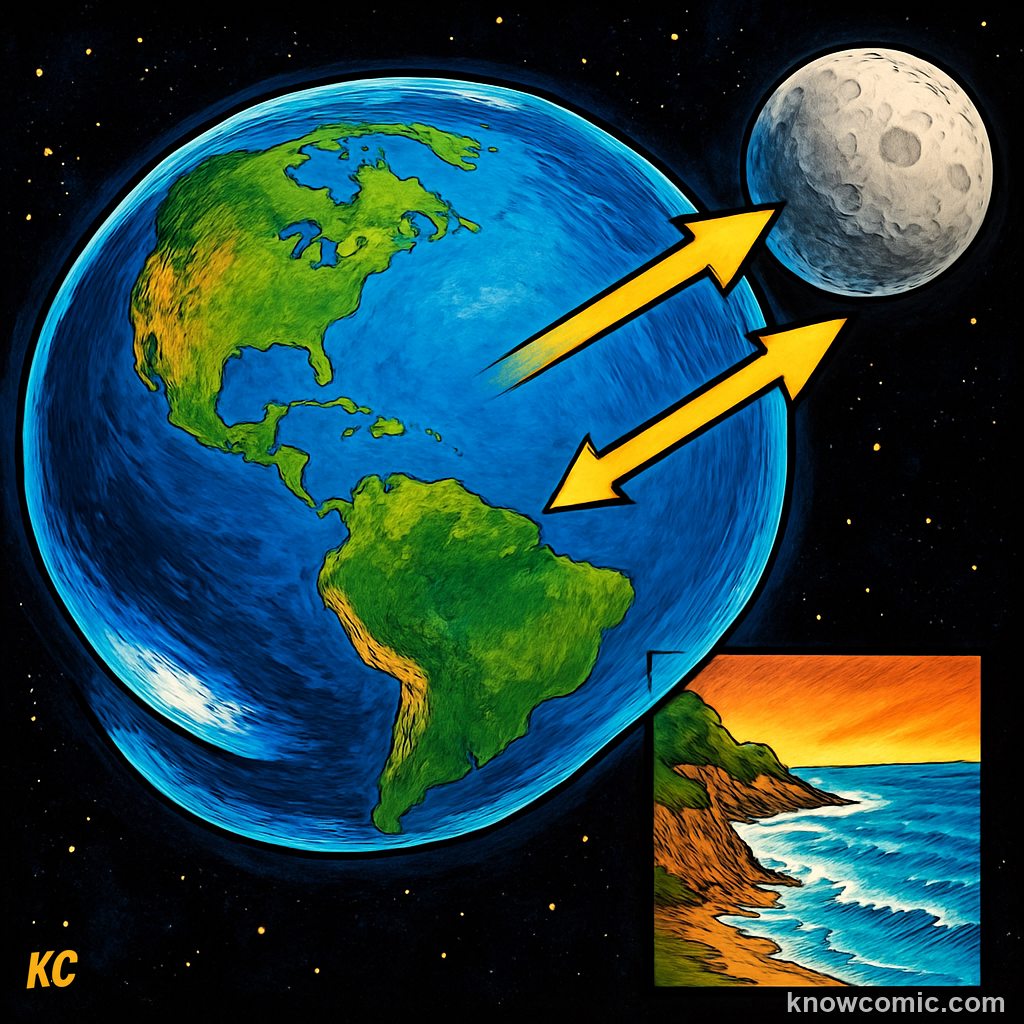
🌙 Moon's gravity pulls Earth's oceans
🌊 Nearest side bulges toward Moon
🌊 Far side hump too, you get a tide rhythm
⏰️ Two high tides every 24 hours
🌊 Nearest side bulges toward Moon
🌊 Far side hump too, you get a tide rhythm
⏰️ Two high tides every 24 hours
KEY TAKEAWAYS
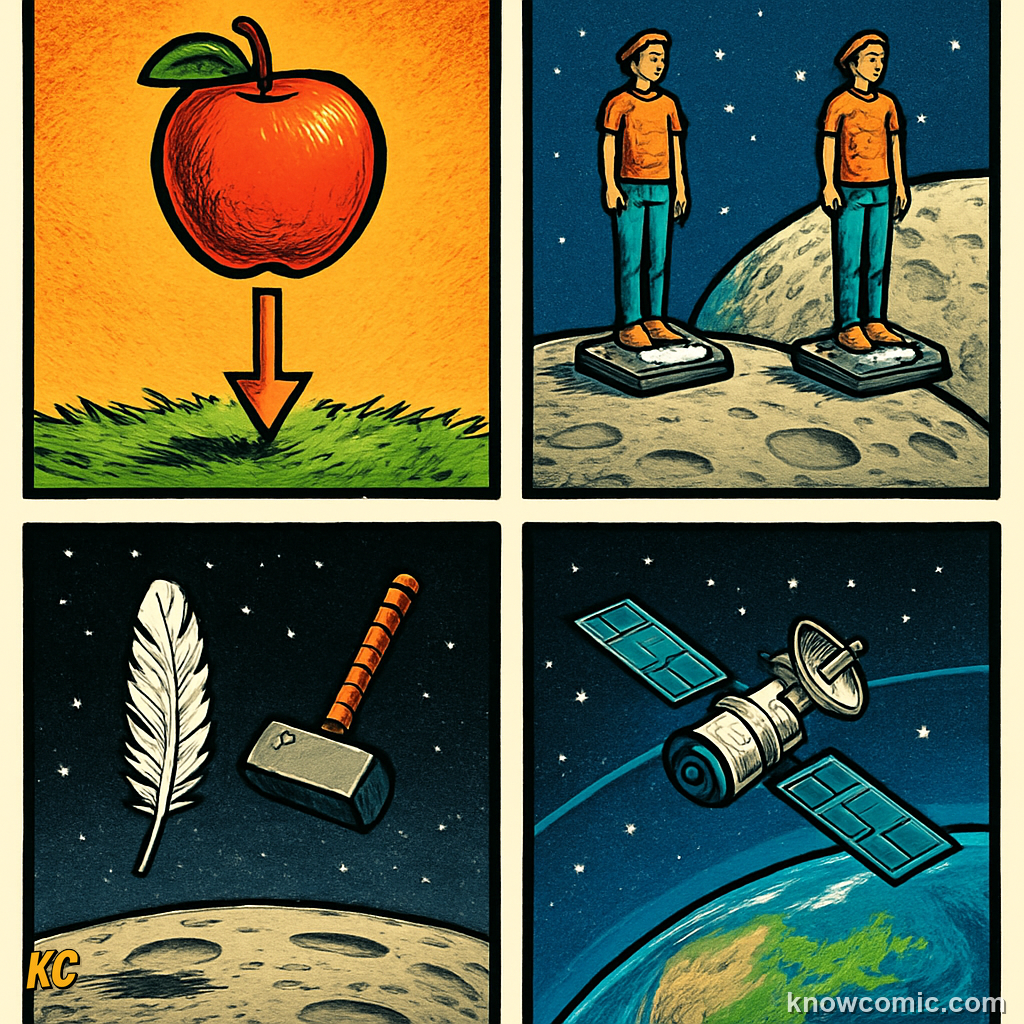
📌 REMEMBER THIS
✦ All stuff tugs a little, big stuff tugs a lot more
✦ How much stuff in you (mass) is steady, how hard the pull feels (weight) changes place
✦ In a thin air or none, a feather and a hammer can fall side by side
✦ A loop in space is fast sideways move plus gentle inward fall, always
✦ How much stuff in you (mass) is steady, how hard the pull feels (weight) changes place
✦ In a thin air or none, a feather and a hammer can fall side by side
✦ A loop in space is fast sideways move plus gentle inward fall, always
FROM APPLES TO GALAXIES
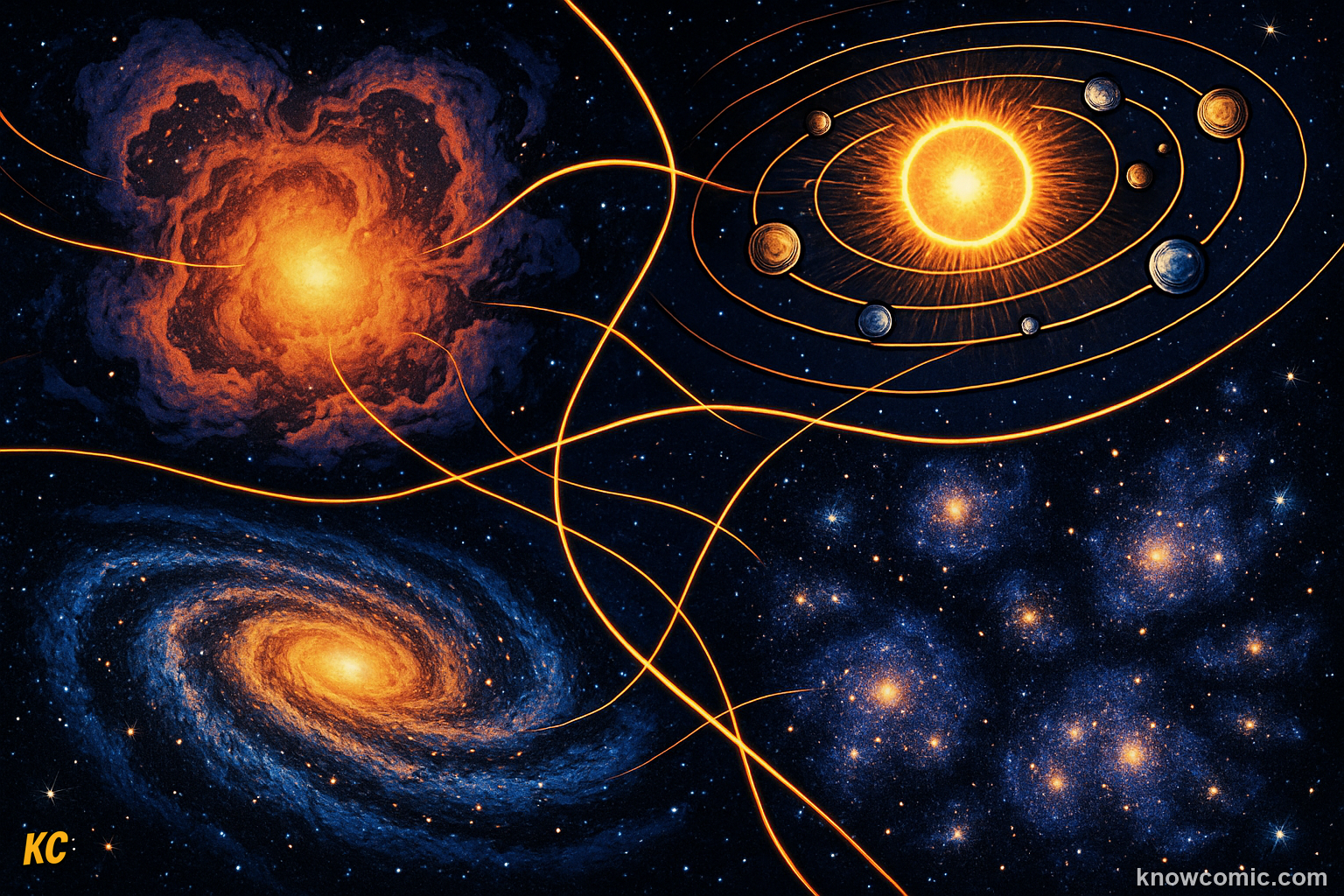
LITTLE TUGS THAT BUILD BIG STUFF
If nothing pulled, gas would drift in a thin fog. Gravity helps gas clump into hot balls we call stars, and stars clump into long rivers of light in the sky. Our Sun formed long ago from a curling, squeezing gas cloud, then the planets, moons, and rocks found paths in that new tug pattern.
Ocean swells, seasons, a ball falling from a tree, a moonlit night, you can name almost every big motion and find gravity in the team. The same kind of pull that yanks a snack to the ground also sorts the dance of space rocks and worlds.
Ocean swells, seasons, a ball falling from a tree, a moonlit night, you can name almost every big motion and find gravity in the team. The same kind of pull that yanks a snack to the ground also sorts the dance of space rocks and worlds.
"Gravity can tell the path of a world. Bigger questions need bigger hearts to wonder." (Adapted, plain words.)
COSMOS!
🧠 QUIZ TIME!
GRAVITY: WHY THINGS FALL DOWN · 5 QUESTIONS
QUESTION 01
In kid words, what is the big difference between mass and weight?
QUESTION 02
On the Moon, a spaceman dropped a hammer and a feather. Then what?
QUESTION 03
How can they float in the space home if Earth still tugs about as hard as a mountain climb?
QUESTION 04
What makes the sea go up and down in a pattern in many places?
QUESTION 05
How fast must you go to leave Earth for good, never to fall back as a little tossed stone?
0/5
LOADING...