🍎 NEWTON'S LAWS OF MOTION
PAGE 1 OF 5 · THE APPLE AND THE THINKER
CAMBRIDGE, ENGLAND, 1666

ONE APPLE CHANGED EVERYTHING
A plague had closed Cambridge University in 1666. A young Isaac Newton (1643–1727) went home to Woolsthorpe and sat under an apple tree. An apple fell. He asked: Why does it fall down, not sideways or up? That question helped grow the three laws of motion (and his work on gravity), later printed in 1687 in Principia Mathematica. Easy read: the same three ideas cover a rolling marble, a car, a rocket, and big orbits, because they are all about forces, mass, and how motion changes.
"I was in the prime of my age for invention." — Isaac Newton (idea: big ideas can come in quiet, stuck-at-home years.)
FALL!
WHO WAS NEWTON?

🏭 Born 1643, Woolsthorpe, England
📚 Studied at Cambridge University
🧪 Invented calculus by about age 26 (Leibniz also invented it)
🌟 Many call him the greatest scientist in history
📚 Studied at Cambridge University
🧪 Invented calculus by about age 26 (Leibniz also invented it)
🌟 Many call him the greatest scientist in history
THE PLAGUE YEAR (1666)

🎅 1666: plague closed Cambridge
🏠 Newton worked alone at his mother’s farm
📈 ~18 months of deep, uninterrupted work
🧩 Laid the ground for the laws of motion and gravity
🏠 Newton worked alone at his mother’s farm
📈 ~18 months of deep, uninterrupted work
🧩 Laid the ground for the laws of motion and gravity
PAGE 2 OF 5 · FIRST RULE: SIT STILL OR KEEP GOING
ON THE ICE

🏈 Hockey puck: very little friction on smooth ice
⏬ Would keep same speed in a straight line
⛔ Only a force can change that motion
🔸 That “keep going” idea = inertia
⏬ Would keep same speed in a straight line
⛔ Only a force can change that motion
🔸 That “keep going” idea = inertia
IN SPACE
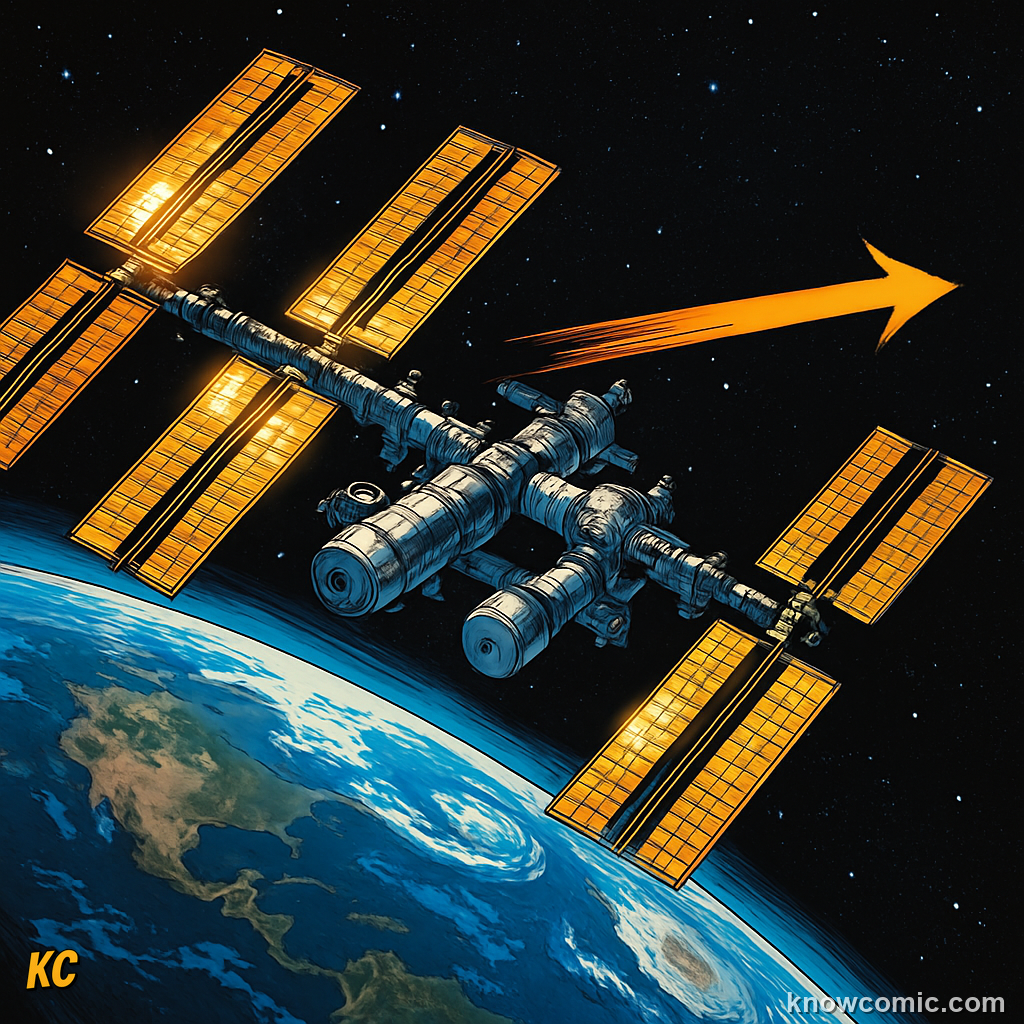
🌏 Space station: often no engine firing
▶️ Still glides ~28,000 km/h (huge inertia)
⛔ Almost no air to slow it down
🚀 First Law is a big part of that ride
▶️ Still glides ~28,000 km/h (huge inertia)
⛔ Almost no air to slow it down
🚀 First Law is a big part of that ride
NEWTON'S FIRST LAW
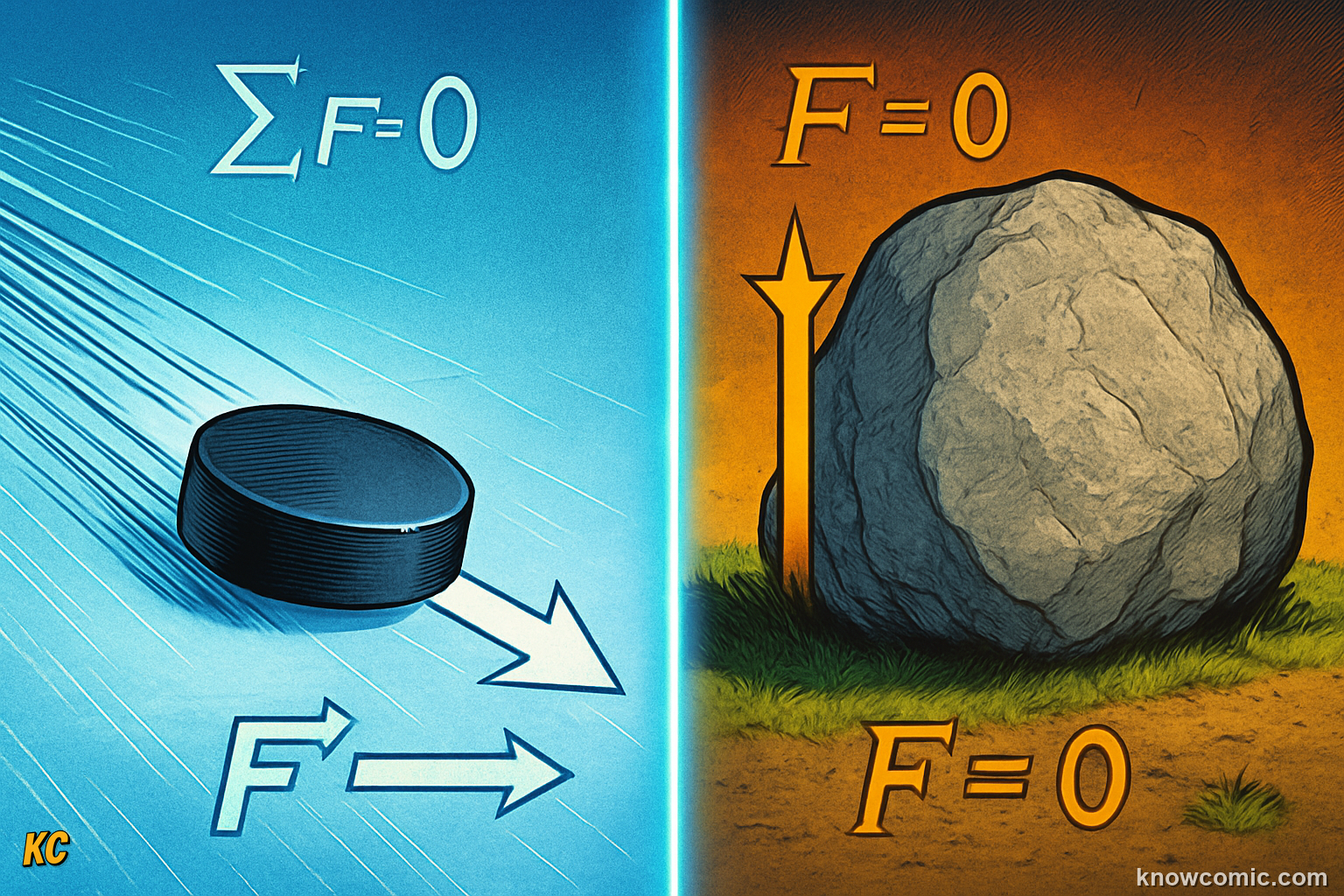
THINGS KEEP THEIR STYLE UNTIL A NUDGE
First rule, in simple words: If no strong outside push or pull messes with it, a thing that rests keeps resting, and a thing that moves keeps moving the same way.
We call that stickiness to your motion inertia. Heavy stuff has more of it, so it is harder to start, stop, or turn.
When a car stops fast, your body still wants to go forward. That is inertia. A seat belt gives you a safe backward tug. Rule one is why belts save lives.
We call that stickiness to your motion inertia. Heavy stuff has more of it, so it is harder to start, stop, or turn.
When a car stops fast, your body still wants to go forward. That is inertia. A seat belt gives you a safe backward tug. Rule one is why belts save lives.
"A body keeps its rest or steady glide until a new force nudges it." (Newton, shorter.)
PUSH!
PAGE 3 OF 5 · SECOND RULE: PUSH, MASS, AND ZOOM
NEWTON'S SECOND LAW
F = m a (SECOND LAW)
Formula (you will use this in class):
Force = mass × acceleration or F = m a
Units: F in newtons (N), m in kilograms (kg), a in m/s².
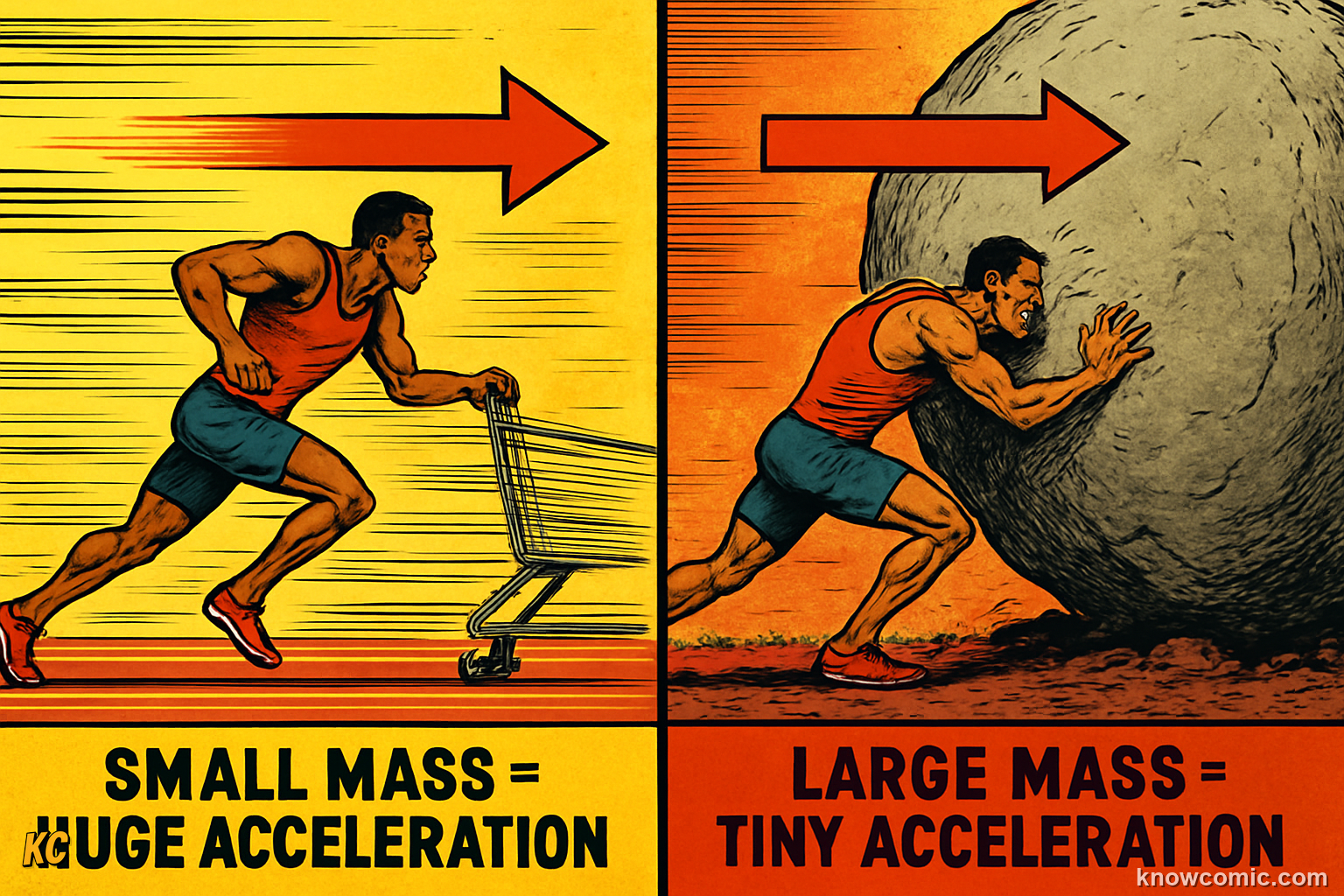
Meaning in plain words: the same force gives a bigger acceleration to a small mass than to a large mass. A rocket needs a huge thrust to accelerate a heavy stack; a light ball zips when you kick hard. This one line links sports kicks, cars, and launch pads.
Force = mass × acceleration or F = m a
Units: F in newtons (N), m in kilograms (kg), a in m/s².
Meaning in plain words: the same force gives a bigger acceleration to a small mass than to a large mass. A rocket needs a huge thrust to accelerate a heavy stack; a light ball zips when you kick hard. This one line links sports kicks, cars, and launch pads.
"The alteration of motion is ever proportional to the motive force impressed." — Newton (same as: net force fixes how fast motion changes.)
SMASH!
THE FORMULA
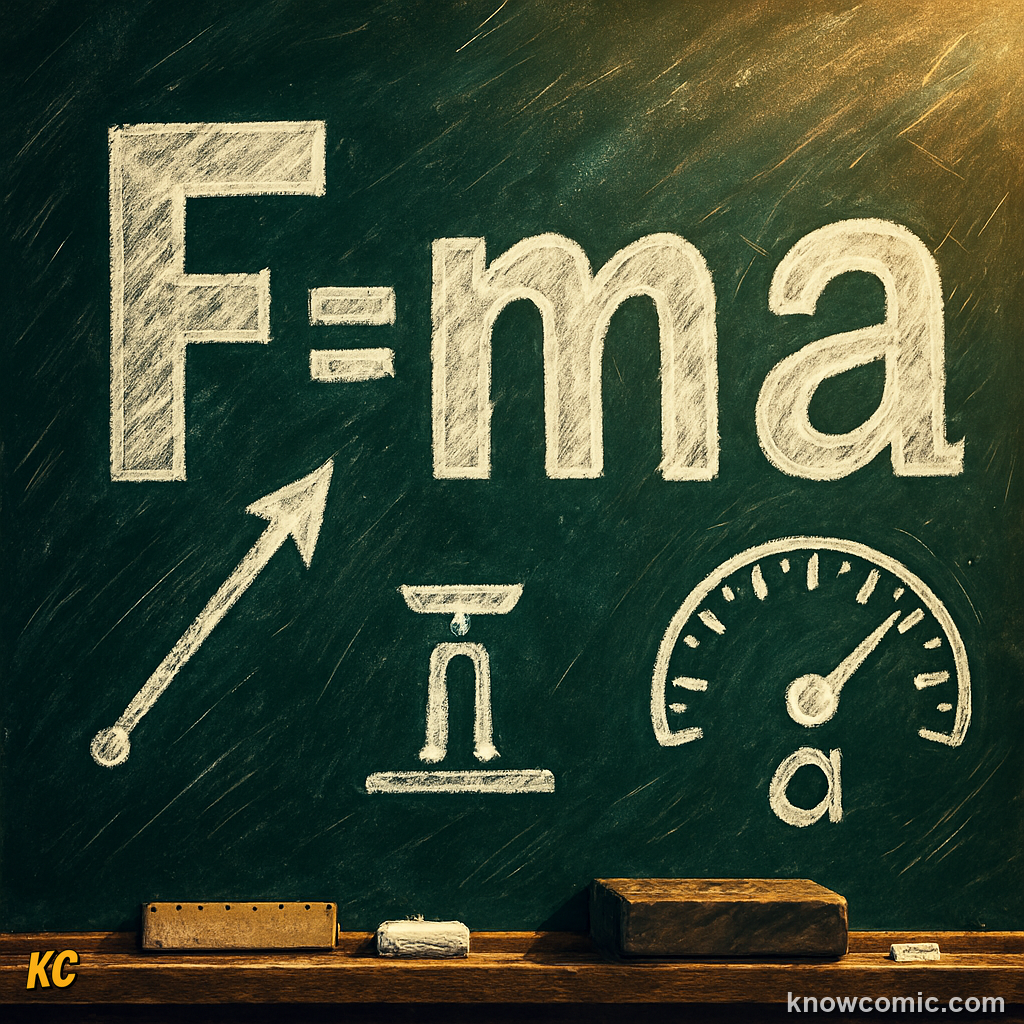
🔺 F = force (newtons, N — named for Newton)
🔺 m = mass (kg)
🔺 a = acceleration (m/s²)
⚡ Same m: bigger F ⇒ bigger a; same F: bigger m ⇒ smaller a
🔺 m = mass (kg)
🔺 a = acceleration (m/s²)
⚡ Same m: bigger F ⇒ bigger a; same F: bigger m ⇒ smaller a
SOCCER KICK
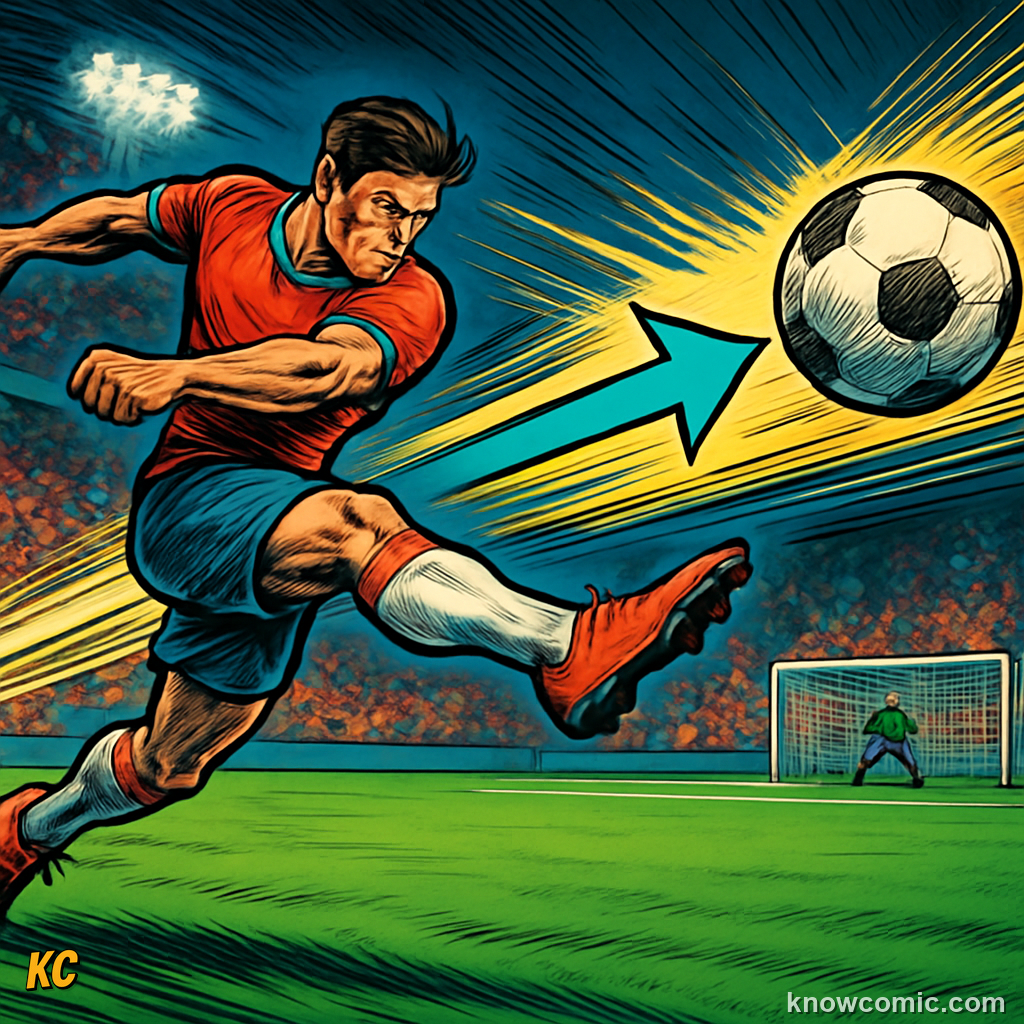
⚽ Ball mass: 0.5 kg
💪 Kick force: 500 Newtons
🚀 Acceleration: 1000 m/s²
🔥 That's why it flies so fast!
💪 Kick force: 500 Newtons
🚀 Acceleration: 1000 m/s²
🔥 That's why it flies so fast!
PAGE 4 OF 5 · THIRD RULE: EVERY PUSH GETS A PUSH BACK
NEWTON'S THIRD LAW
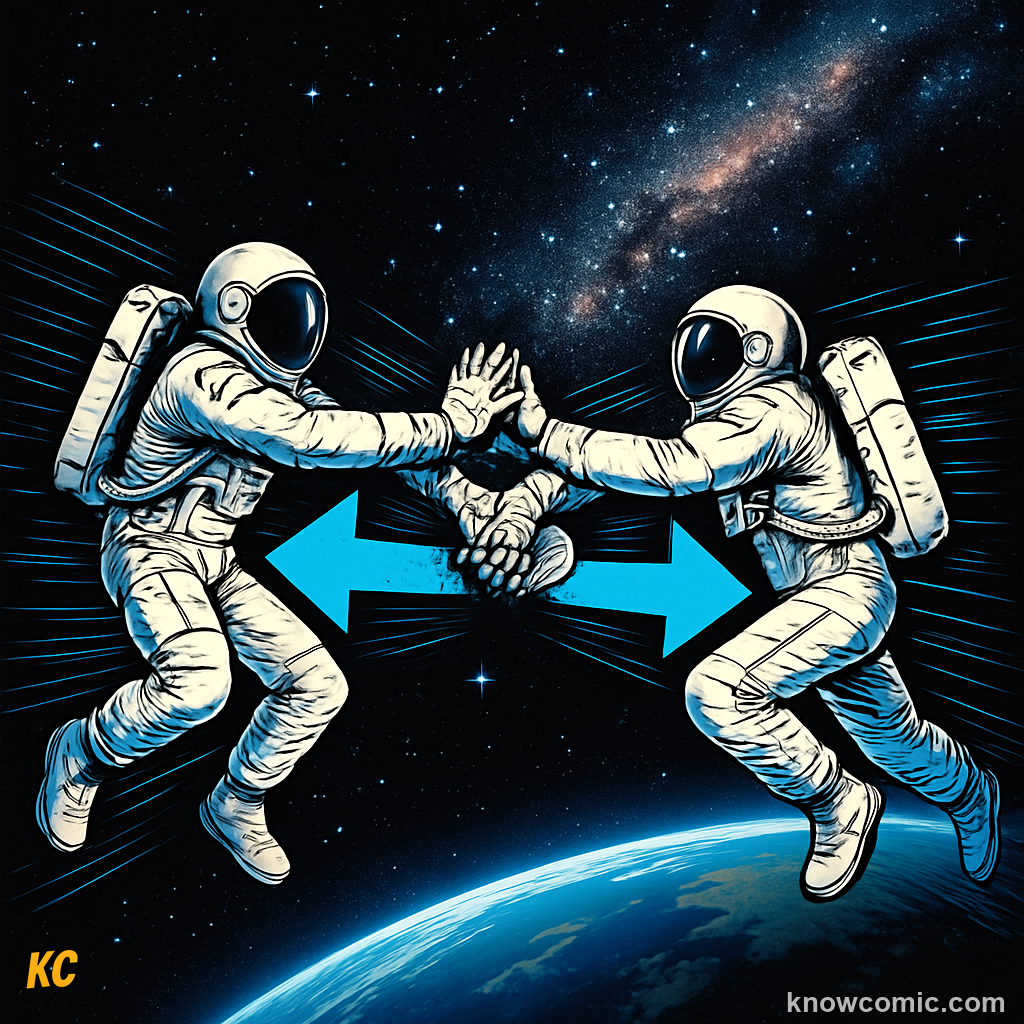
NEWTON’S THIRD LAW (ACTION–REACTION)
If one thing pushes or pulls on another, the second pushes or pulls back on the first with a force the same size and the opposite way. Each force acts on a different object. The older wording is: for every action there is an equal and opposite reaction.
Quick pictures: a rocket throws hot gas backward really hard, and the gas shoves the rocket forward (no ground needed). You walk: your foot shoves the ground a little backward, the ground shoves you forward. A wing bends air down, the air lifts the plane up. Same rule, many scenes.
Quick pictures: a rocket throws hot gas backward really hard, and the gas shoves the rocket forward (no ground needed). You walk: your foot shoves the ground a little backward, the ground shoves you forward. A wing bends air down, the air lifts the plane up. Same rule, many scenes.
ZOOM!
ROCKET LAUNCH
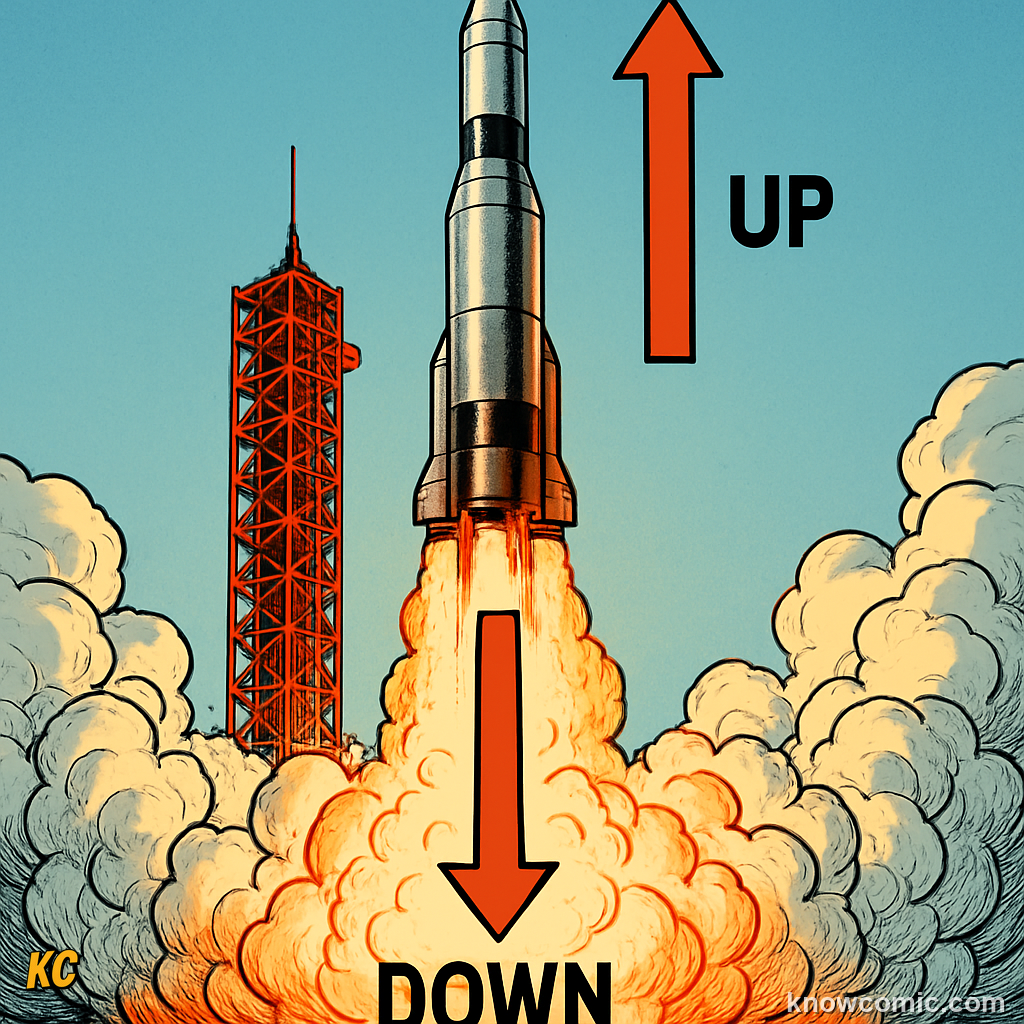
🔥 Gas blasts down at huge speed
🚀 Rocket goes up, same size push
🌏 No ground needed to push against
⏬ Works perfectly in empty space
🚀 Rocket goes up, same size push
🌏 No ground needed to push against
⏬ Works perfectly in empty space
BIRD FLIGHT
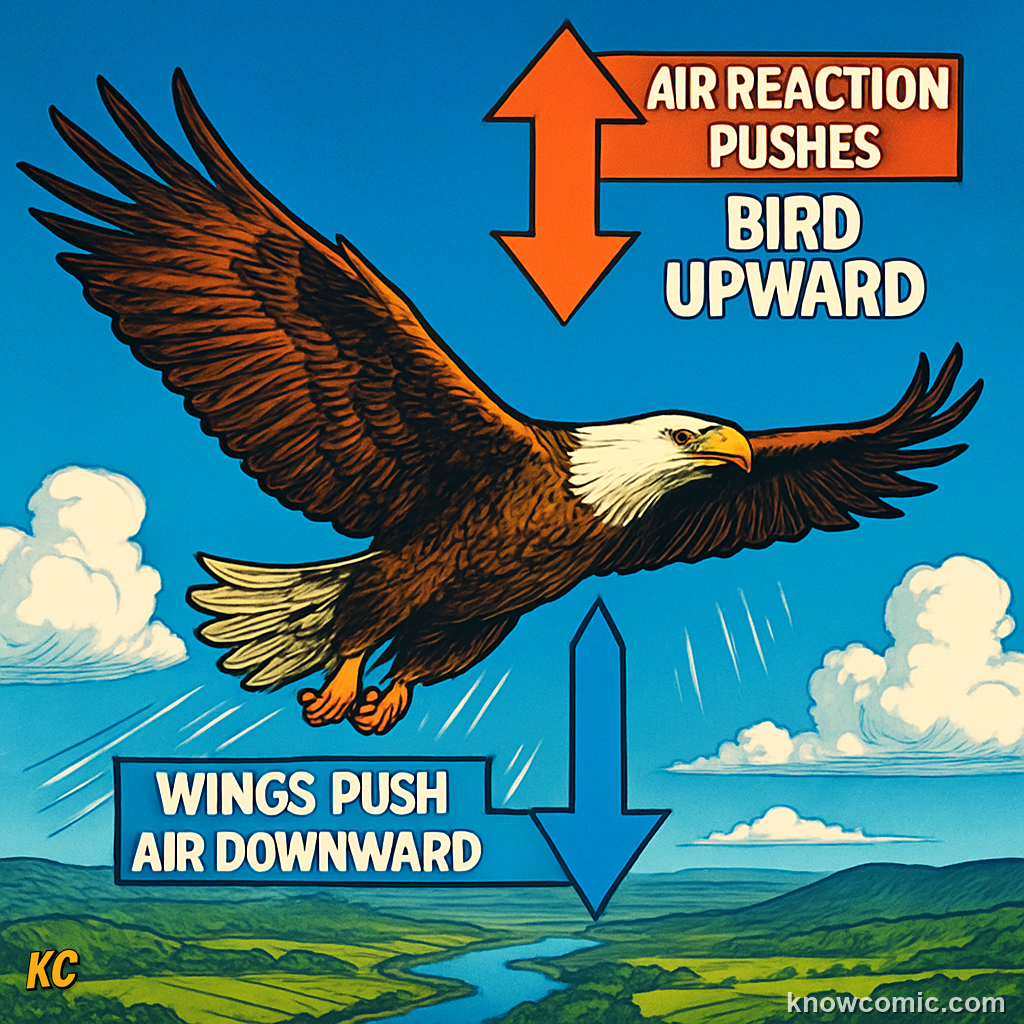
🦅 Wings push air downward
⬆️ Air pushes bird upward
🔸 Third Law creates lift
🥥 Same applies to aeroplanes!
⬆️ Air pushes bird upward
🔸 Third Law creates lift
🥥 Same applies to aeroplanes!
CAR BRAKING
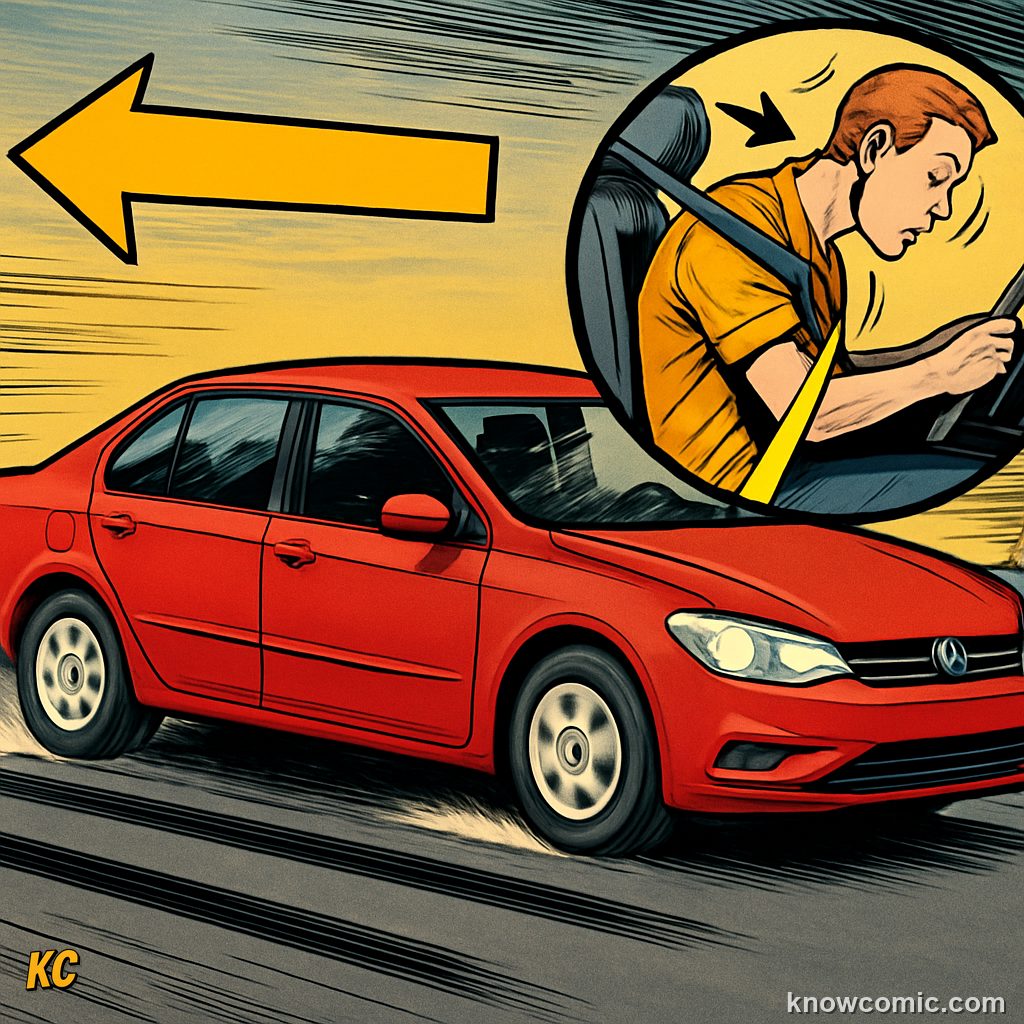
🚘 Car stops, riders still want to roll on
⛔ First Law: body's inertia keeps going
💃 Seatbelt applies opposing force
🔸 Third Law in safety design!
⛔ First Law: body's inertia keeps going
💃 Seatbelt applies opposing force
🔸 Third Law in safety design!
PAGE 5 OF 5 · STILL USEFUL TODAY
1687 → TODAY
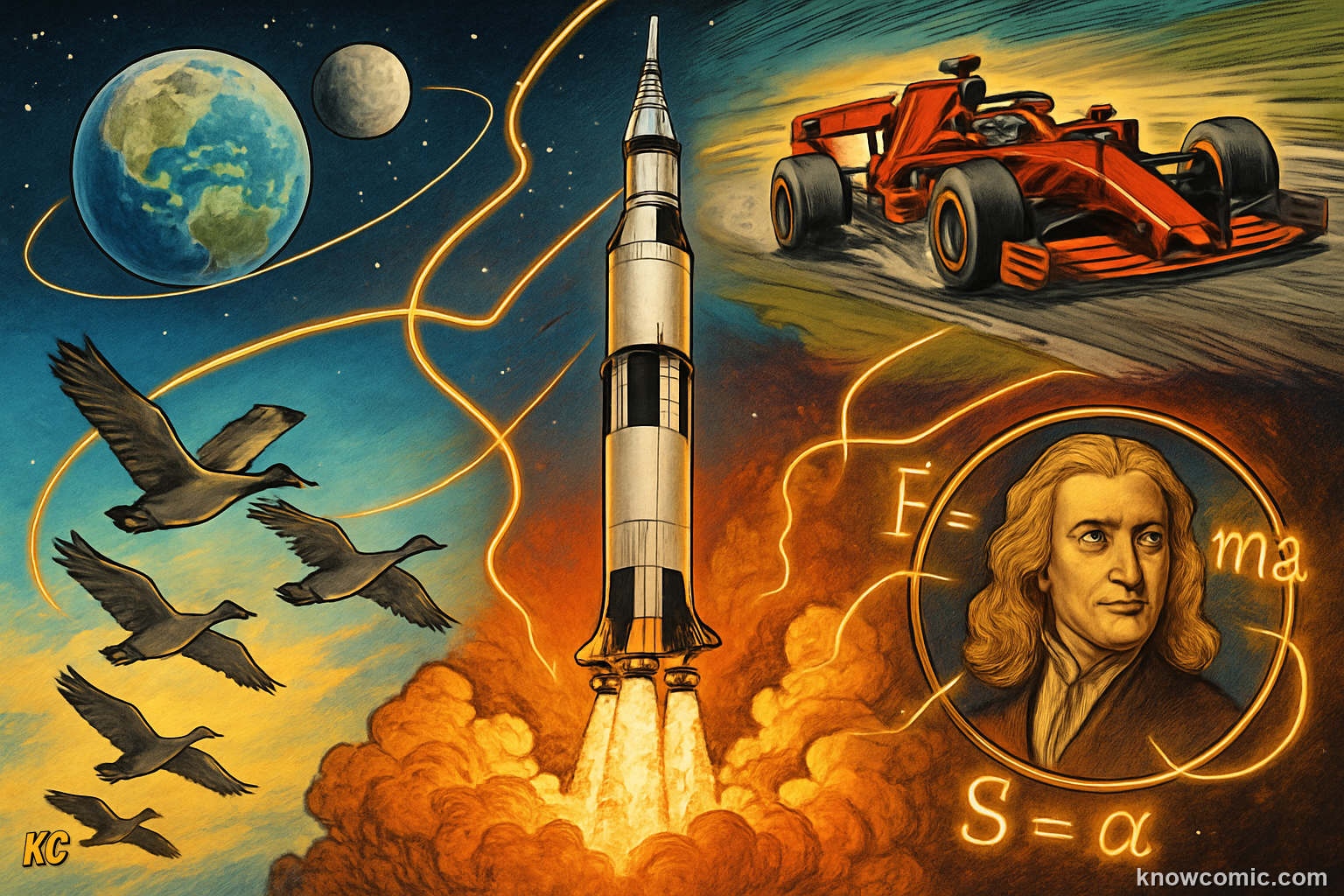
THREE LAWS — STILL EVERYWHERE
Newton’s three laws appeared in 1687 in Principia Mathematica. Engineers still use them for bridges, cars, planes, rockets, and satellites.
Example (Third Law): the Saturn V Moon rocket threw hot gas downward at huge speed; the equal-and-opposite reaction pushed the capsule upward. Peak flow was on the order of about 2,000 tonnes of propellant per minute (staggering numbers on purpose).
From a toy top to the ISS, classical mechanics built on these laws still matches almost all everyday motion on Earth. (Very fast or very small worlds need Einstein or quantum physics — that is a later chapter.)
Example (Third Law): the Saturn V Moon rocket threw hot gas downward at huge speed; the equal-and-opposite reaction pushed the capsule upward. Peak flow was on the order of about 2,000 tonnes of propellant per minute (staggering numbers on purpose).
From a toy top to the ISS, classical mechanics built on these laws still matches almost all everyday motion on Earth. (Very fast or very small worlds need Einstein or quantum physics — that is a later chapter.)
"If I have seen further, it is by standing on the shoulders of giants." — Newton
LAWS!
EARTH'S ORBIT
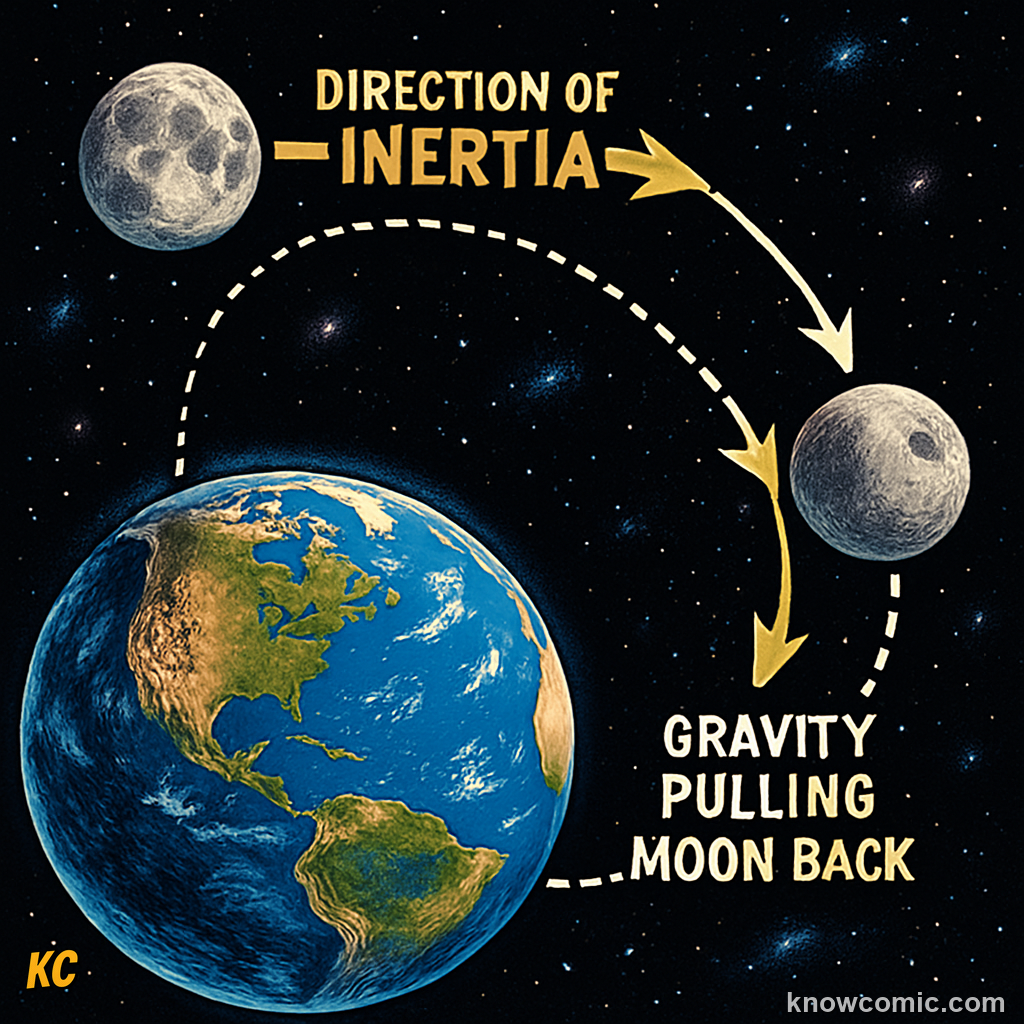
🌙 Moon around Earth: a tug plus a long sideways glide
▶️ No Earth tug, Moon would float off in a line
🌎 No sideways glide, Moon would fall straight in
🔸 Tug and glide match, so the path curves just right
▶️ No Earth tug, Moon would float off in a line
🌎 No sideways glide, Moon would fall straight in
🔸 Tug and glide match, so the path curves just right
KEY TAKEAWAYS
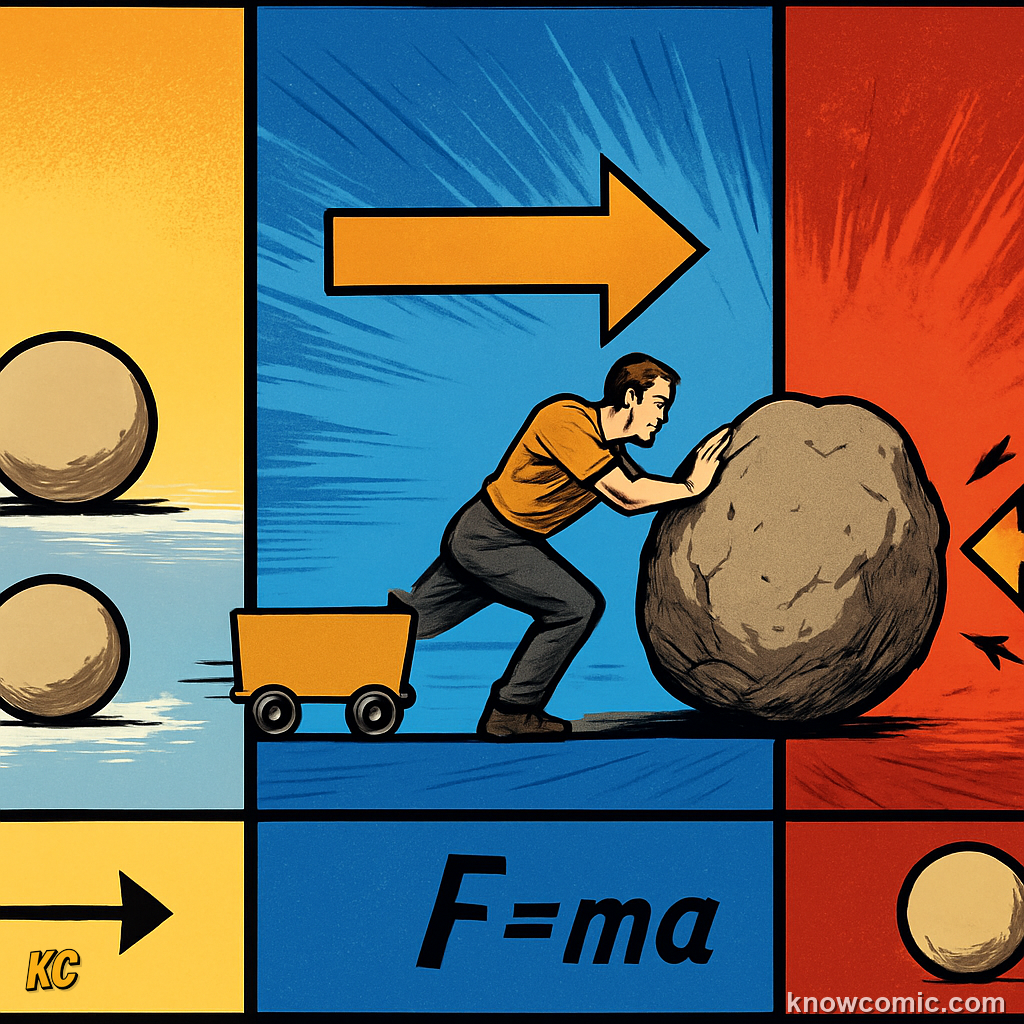
📌 REMEMBER THIS
✦ 1st Law (inertia): rest or steady straight motion until a net force changes it
✦ 2nd Law: F = m a (net force = mass × acceleration)
✦ 3rd Law: action and reaction — equal size, opposite direction
✦ Published 1687 in Principia; still used in engineering and physics class
✦ 2nd Law: F = m a (net force = mass × acceleration)
✦ 3rd Law: action and reaction — equal size, opposite direction
✦ Published 1687 in Principia; still used in engineering and physics class
🧠 QUIZ TIME!
NEWTON'S LAWS OF MOTION · 5 QUESTIONS
QUESTION 01
What is another name for Newton’s first law, in kid words?
QUESTION 02
Same shove, light toy and heavy toy. Who speeds up more?
QUESTION 03
No floor in space. How does a rocket still go?
QUESTION 04
The car stops fast. Your body lurches forward. Which rule fits best?
QUESTION 05
When did the big book with the three rules come out, and when did Newton first dream up a lot of it?
0/5
LOADING...