🌴 MAYA: JUNGLE CITIES
PAGE 1 OF 5, RAINFOREST, LIMESTONE & STONE CITIES
MESOAMERICA
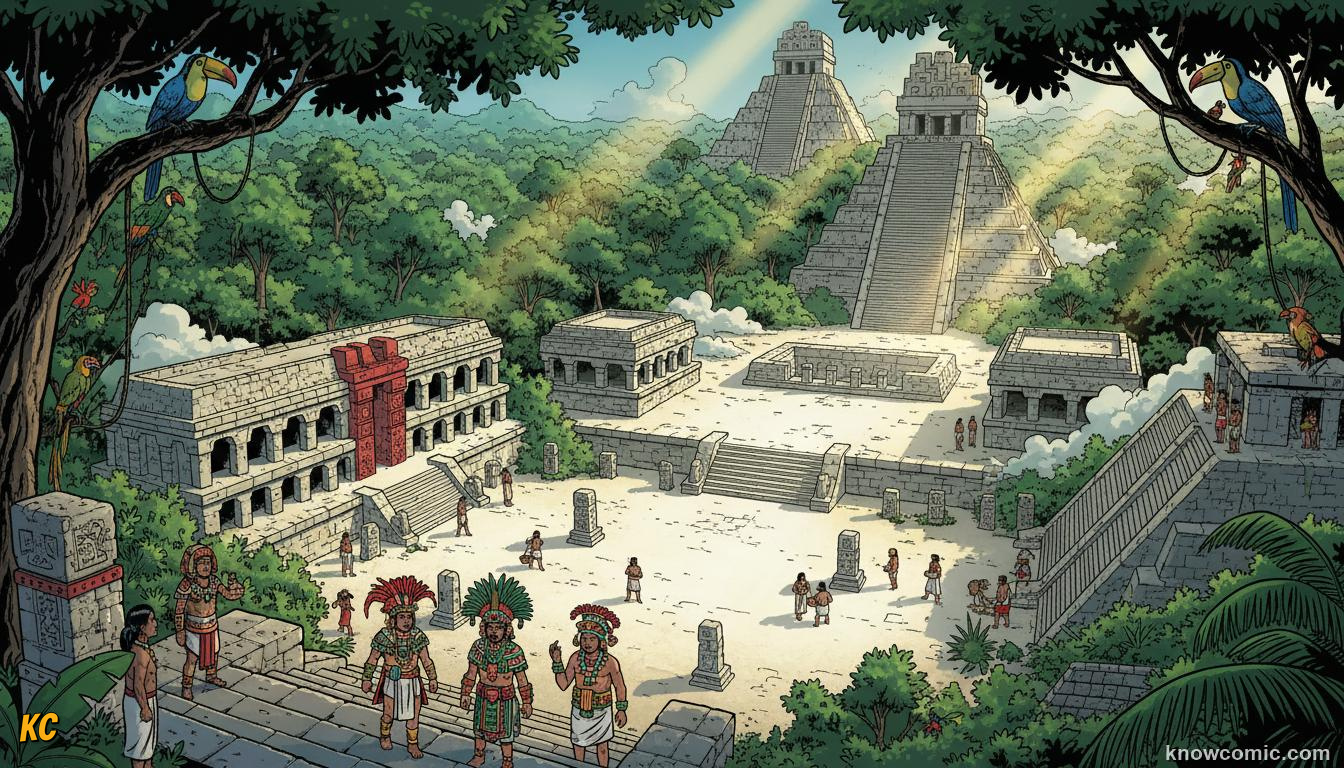
CITIES IN THE GREEN SEA
From southern Mexico through Guatemala and Belize to Honduras, the Maya built one of the New World's greatest civilisations, not one empire but dozens of rival kingdoms linked by trade, marriage and war. Limestone hills rose above steaming rainforest where scarlet macaws screamed overhead. Maya engineers flattened hilltops with terraces, paved plazas with white plaster, and raised steep pyramid-temples whose stairways climbed above the jungle canopy. Rulers carved their deeds on tall stone slabs called stelae and played the sacred ball game in long stone courts. Maize, beans and squash fed millions; cacao beans even served as money. For centuries the lowlands hummed with painters, astronomers, merchants and farmers, until the great cities fell quiet and vines swallowed the plazas again.
⚡ DID YOU KNOW?
Classic Maya civilisation (roughly 250–900 CE) built cities without metal tools, draft animals or the wheel, yet their stone architecture still stands after 1,200 years of jungle rain.
JUNGLE!
TIKAL
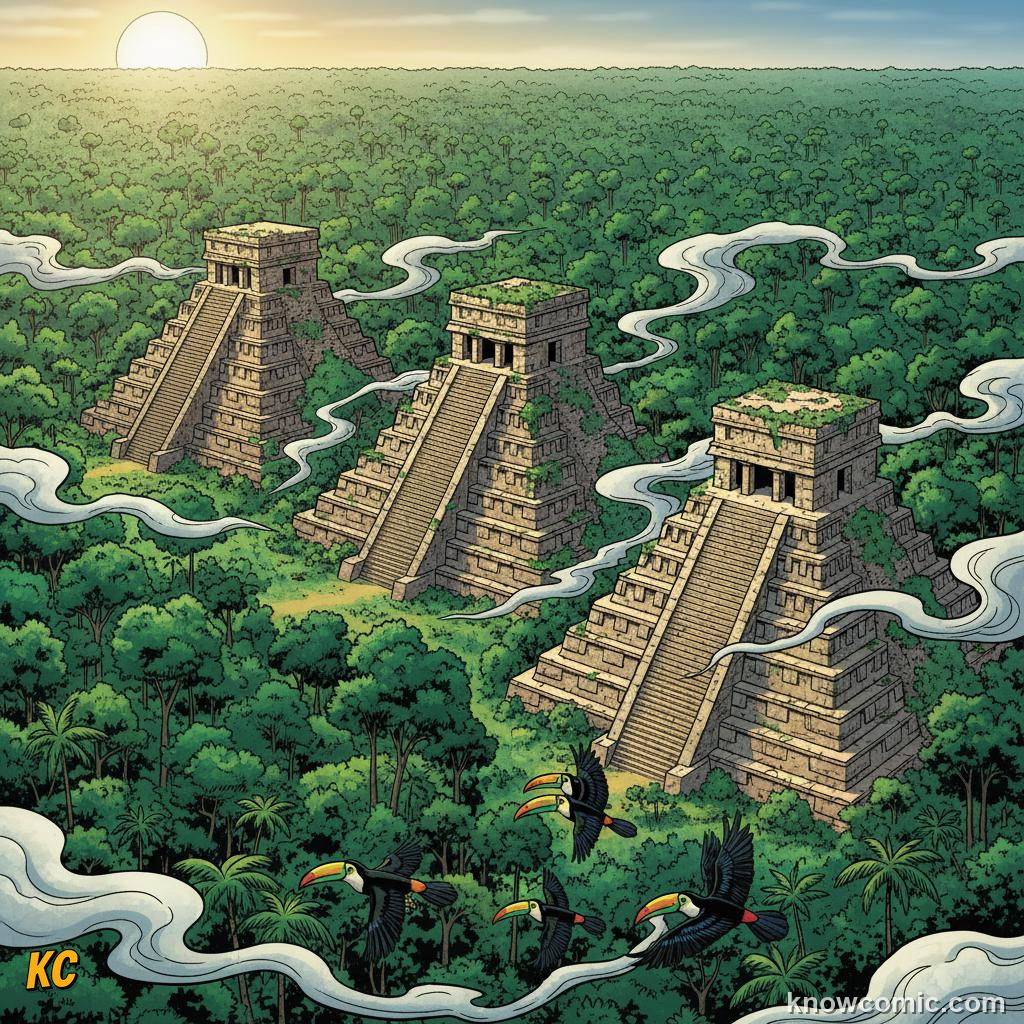
🏛️ Temple-pyramids above canopy
🌴 Guatemala rainforest
👑 Powerful city-state kings
🌴 Guatemala rainforest
👑 Powerful city-state kings
BALL COURT
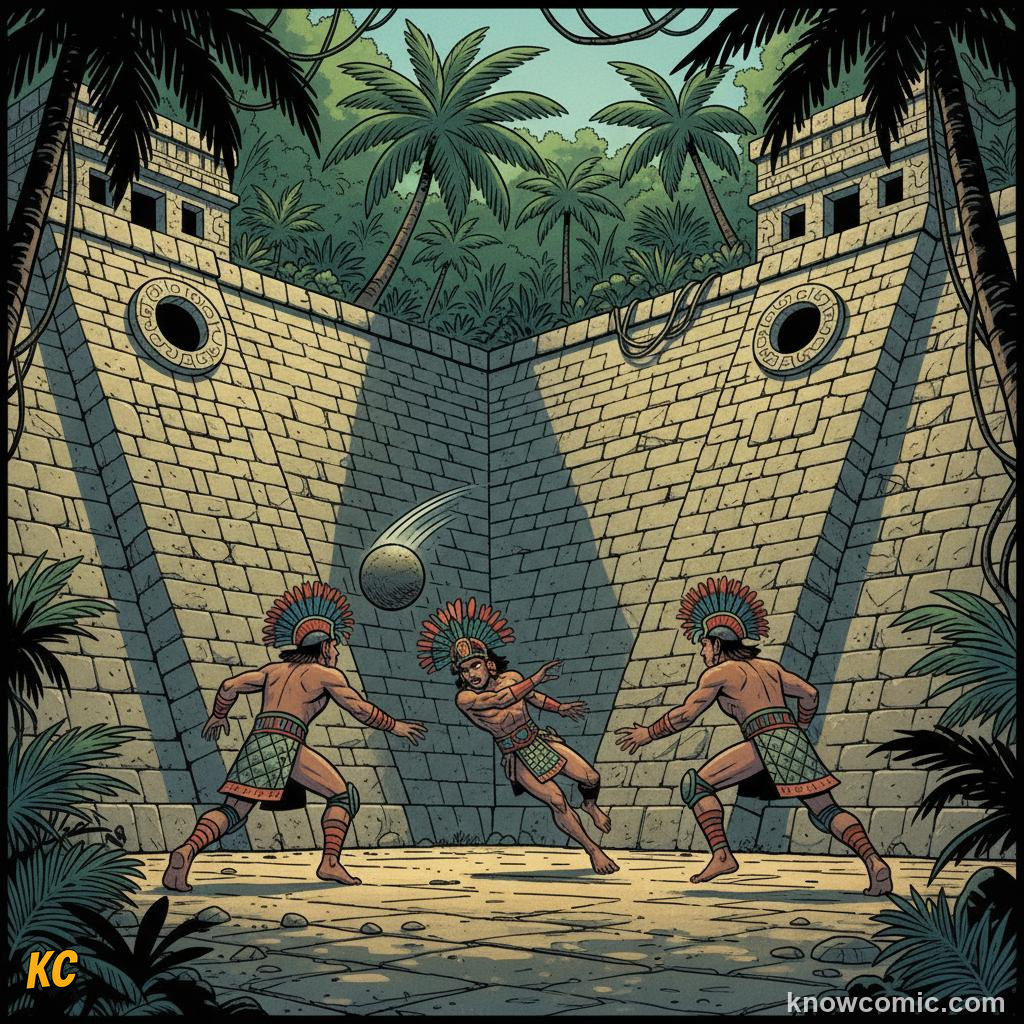
⚽ Rubber ball ritual game
🏟️ Sloping stone walls
🎭 Linked to myth & politics
🏟️ Sloping stone walls
🎭 Linked to myth & politics
PAGE 2 OF 5, KINGS, PYRAMIDS & SACRED TIME
CLASSIC PERIOD
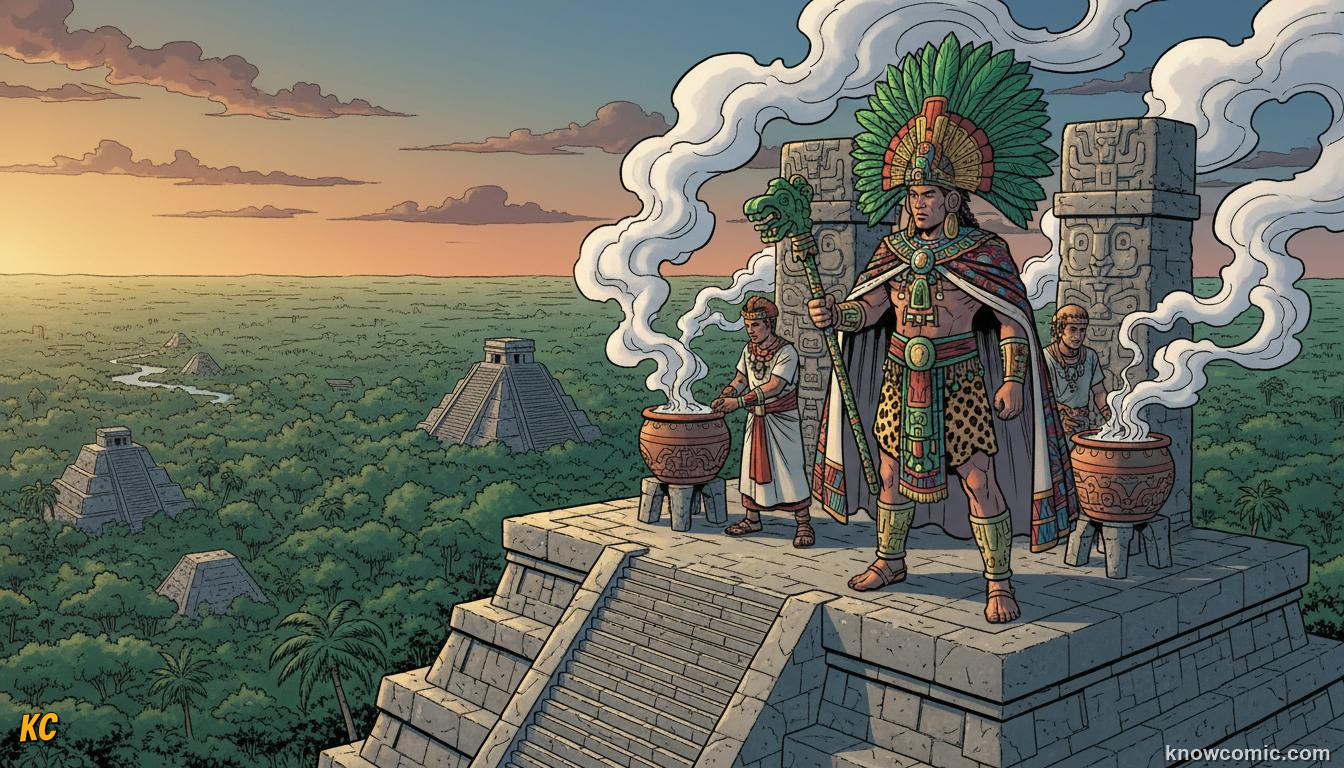
K'UHUL AJAW, HOLY LORDS OF THE STONE
Each Maya city was ruled by a divine king who claimed descent from gods and ancestors. Queens and princesses could wield enormous power too. Royal courts sponsored artists who painted ceramic vases in red and black, carved jade masks only a few millimetres thick, and shaped stingray spines for bloodletting rituals that bound kings to the cosmos, painful ceremonies shown on temple walls. Labour teams raised limestone blocks without metal wheels, dragging them on log rollers with ropes of twisted fibre. War captives might be sacrificed on pyramid summits during crises, a grim part of Maya religion historians still debate. Yet the same kings also commissioned public reservoirs, causeways and marketplaces where cacao, salt, cotton and obsidian blades changed hands.
📜 GLYPHS
Maya writing mixed hundreds of signs, one of only a handful of fully developed writing systems ever invented in the Americas. Most texts were carved in stone or painted in bark-paper books; Spanish friars later burned many codices.
KINGS!
STELAE
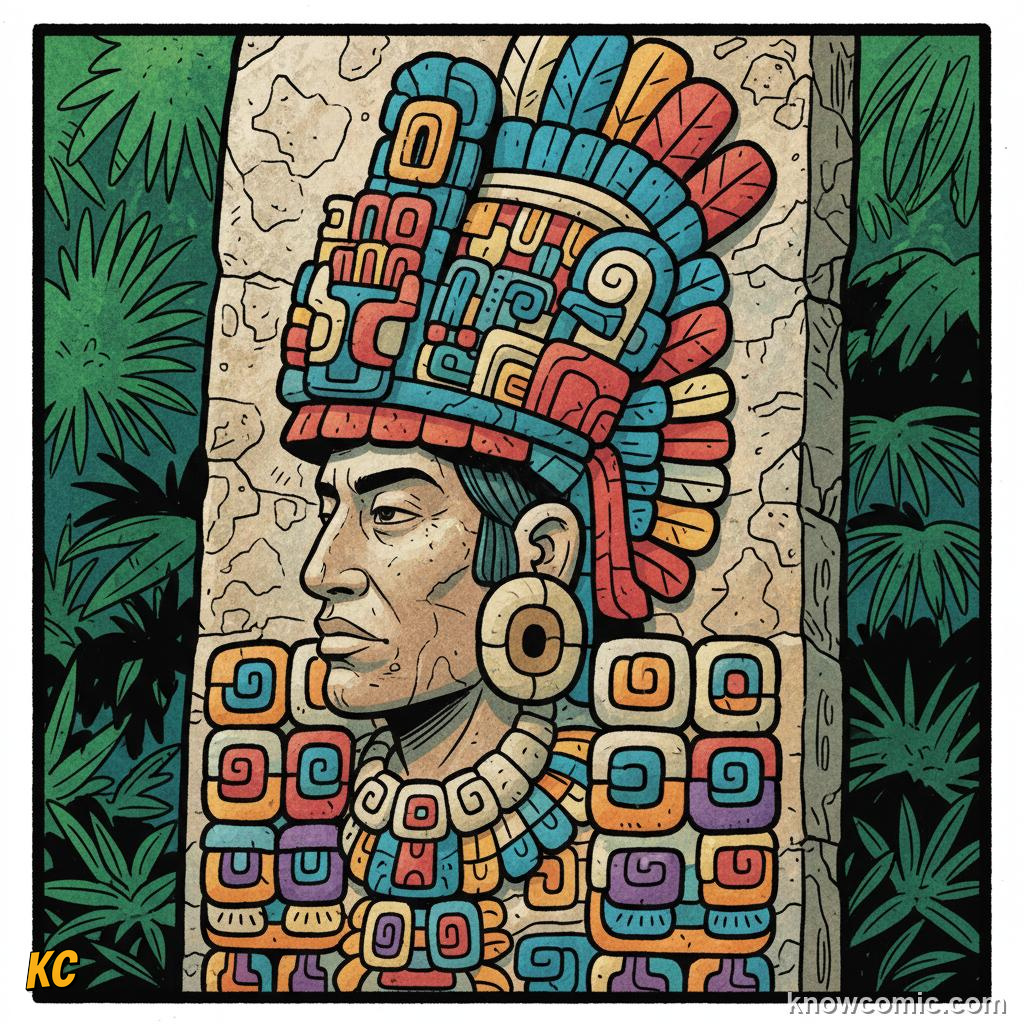
🗿 Carved king portraits
📅 Long Count dates
🌿 Weathered in jungle
📅 Long Count dates
🌿 Weathered in jungle
TEMPLE-PYRAMID
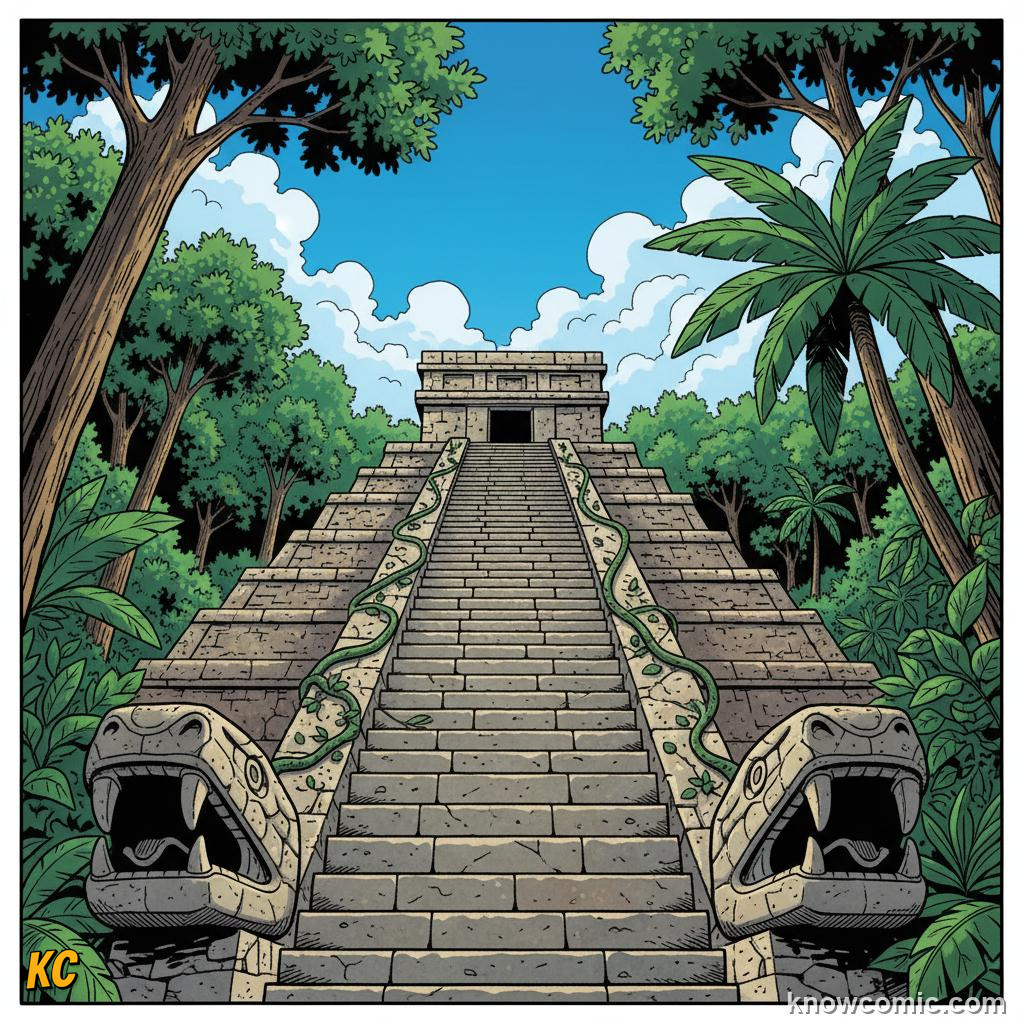
🔺 Stepped platforms
🛕 Shrine on summit
🌅 Aligned to sky events
🛕 Shrine on summit
🌅 Aligned to sky events
WARFARE
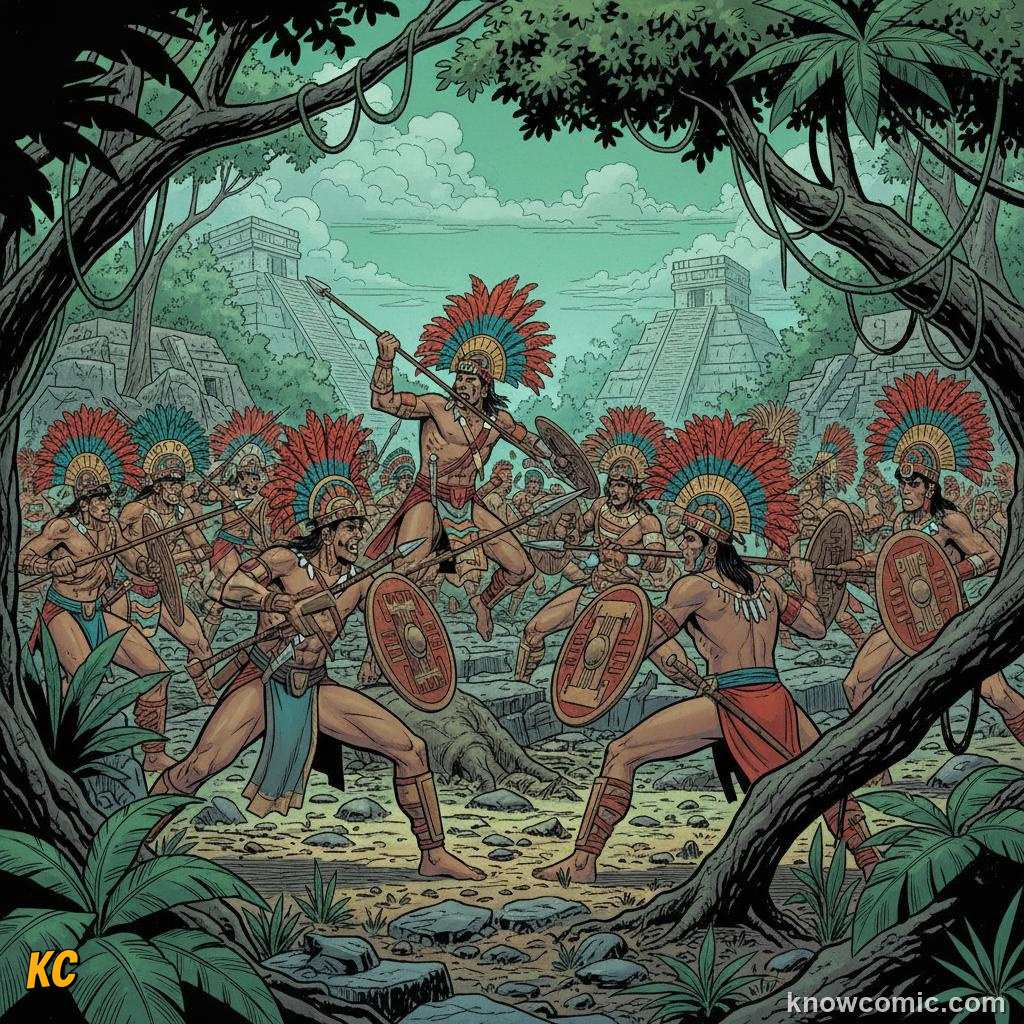
🛡️ Tikal vs Calakmul rivalries
🏹 Atlatl & obsidian points
🏙️ Star-war conquests
🏹 Atlatl & obsidian points
🏙️ Star-war conquests
PAGE 3 OF 5, CALENDARS, ZERO & VENUS IN THE SKY
LONG COUNT
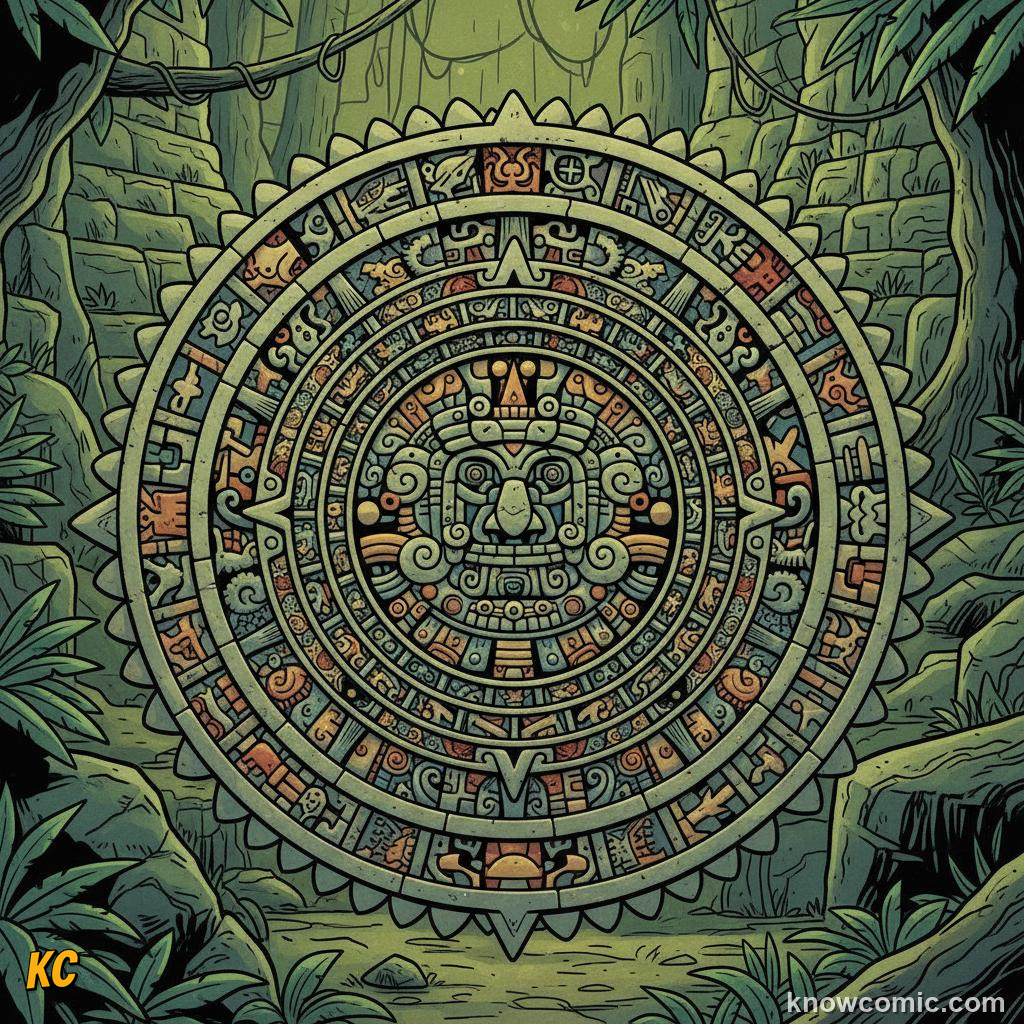
📅 Baktun cycles 400 years
🌑 Eclipse tables
🪐 Venus as morning star god
🌑 Eclipse tables
🪐 Venus as morning star god
BAR & DOT NUMBERS
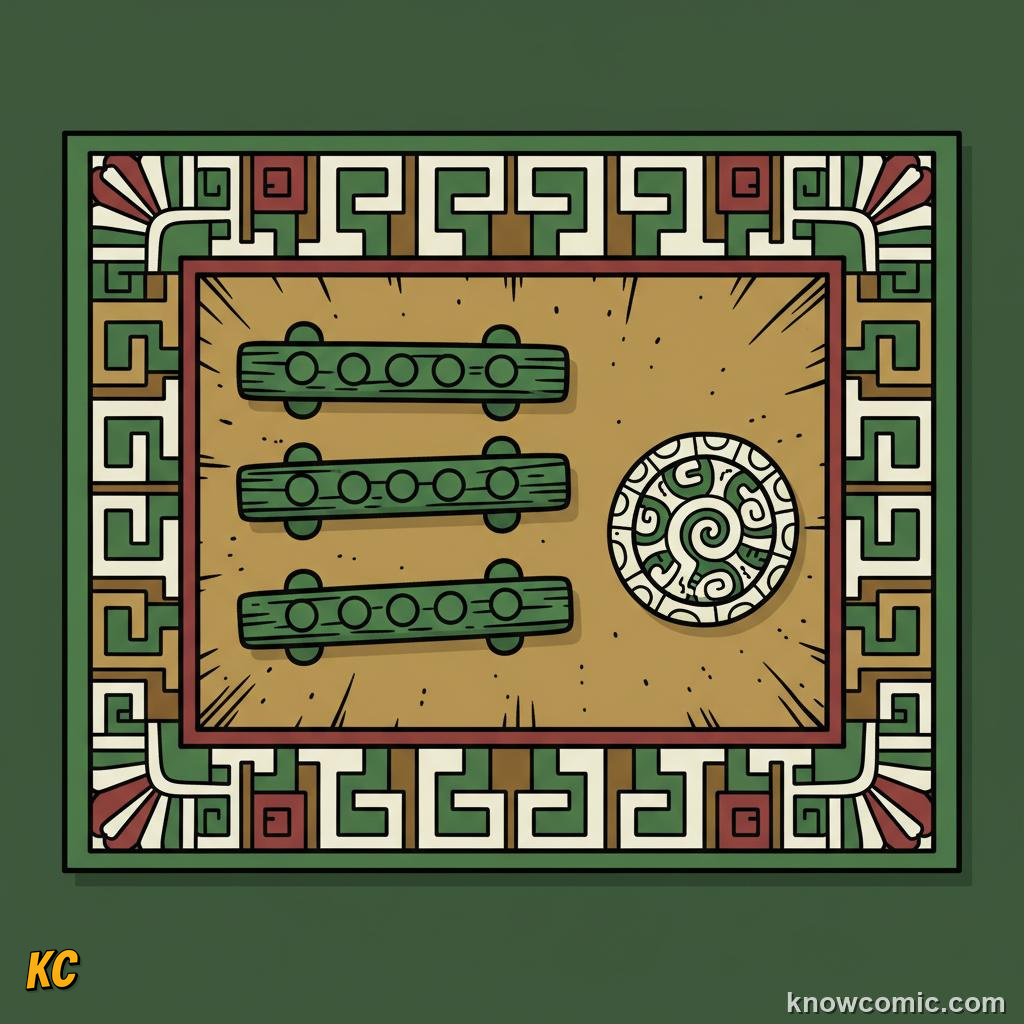
· Dot = 1, bar = 5
🌀 Shell sign for zero
🔢 Base-20 system
🌀 Shell sign for zero
🔢 Base-20 system
ASTRONOMERS
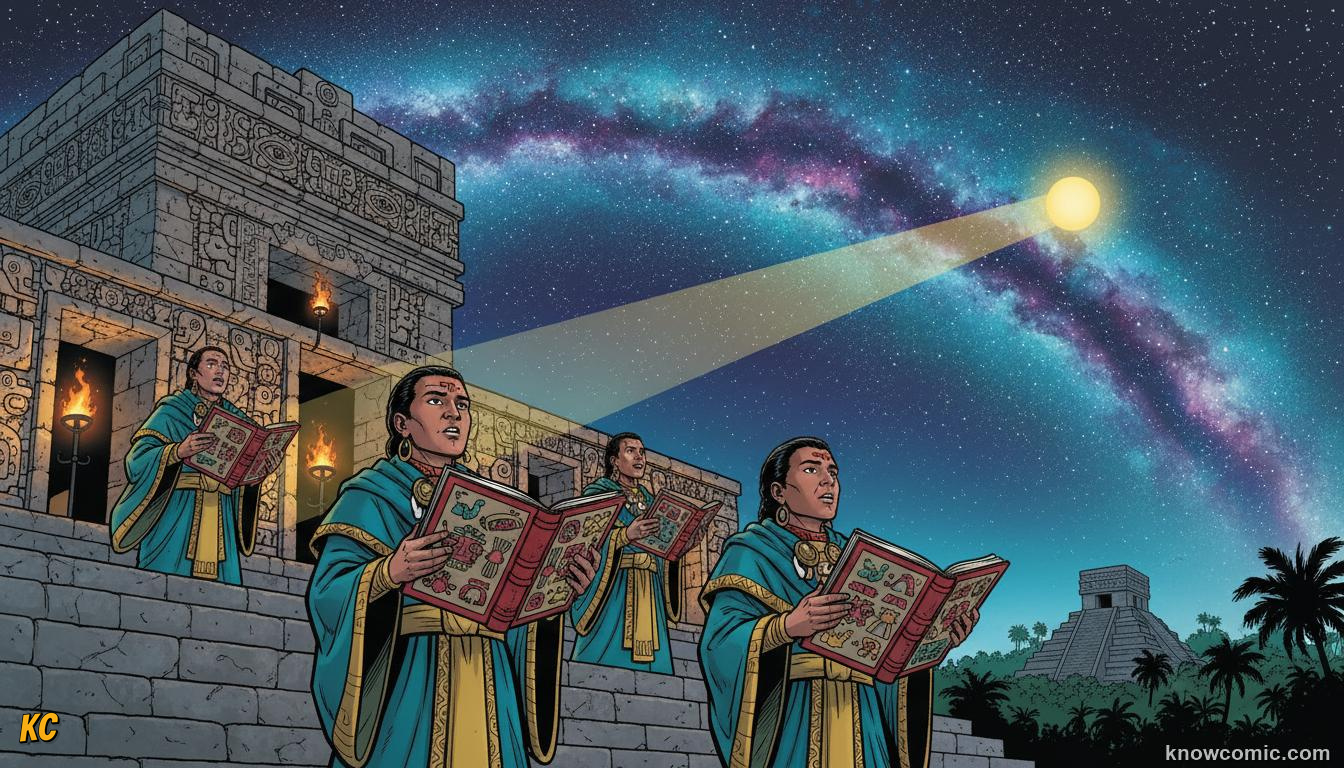
365 DAYS, WITHOUT A TELESCOPE
Maya priests tracked the sun, moon, Venus and Mars from observatory doorways aligned to horizon notches. They interwove a 365-day solar calendar with a 260-day sacred round used for divination, together forming a 52-year Calendar Round that restarted like a century clock. For longer history they carved the Long Count: cycles of 20 days, 360 days, 7,200 days and 144,000 days (a baktun). They were among the first peoples anywhere to use a true zero symbol as a placeholder in their number system, letting them record enormous intervals of time. When a baktun ended in December 2012, modern headlines panicked about "doomsday," but scholars always knew the Maya simply rolled the count forward like an odometer clicking to a new digit.
🔭 ACCURACY
The Maya solar year was off by only about 17 seconds per year, better than many European calendars of the same era.
TIME!
PAGE 4 OF 5, MAIZE, CACAO & JADE ROADS
MARKET & FARM
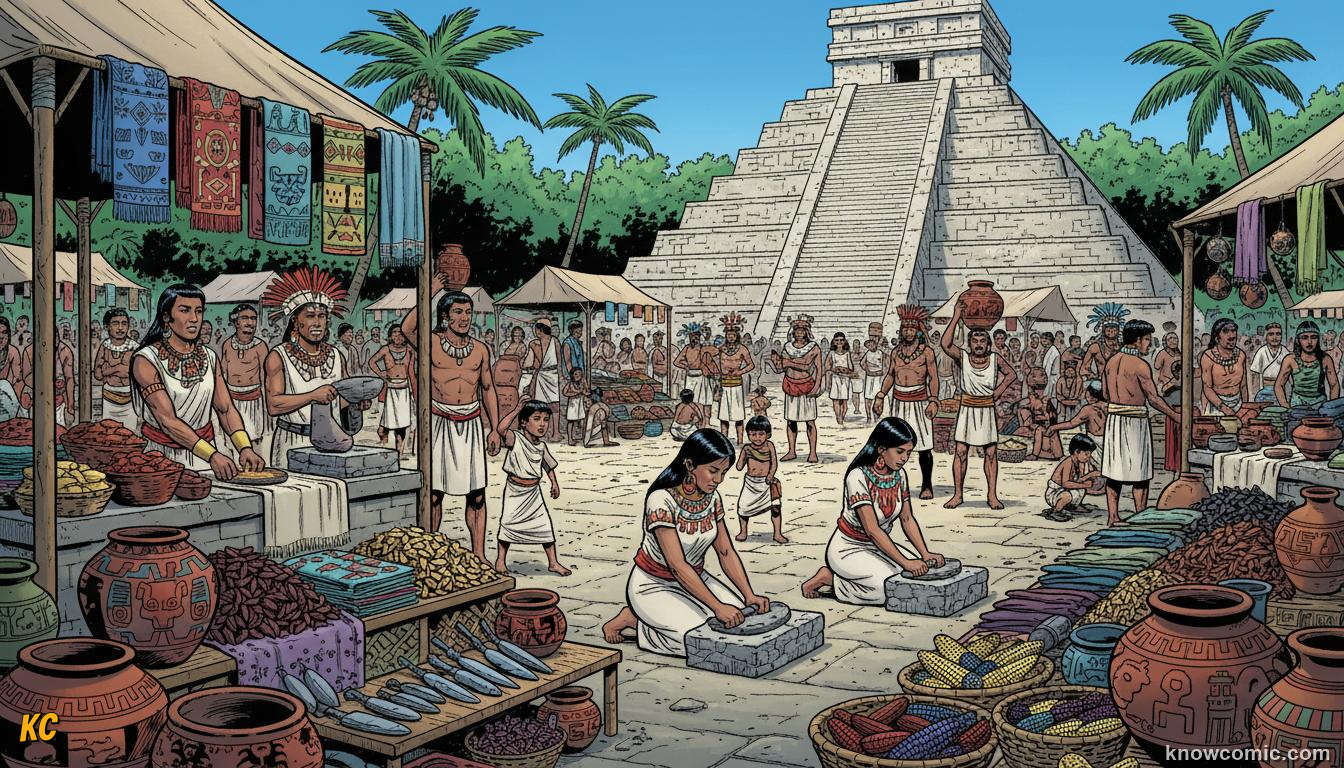
FEEDING THE STONE CITIES
Maya farmers drained swamps into grids of raised fields, terraced hillsides and burned brush to return ash nutrients to soil, feeding cities of tens of thousands without beasts of burden. Women ground maize on limestone metates, patted tortillas, and brewed frothy chocolate drinks spiced with chilli from painted ceramic vessels. Merchants carried jade, quetzal feathers, obsidian and salt along raised white roads through the forest. Jade, symbol of water and sprouting maize, was polished for ear spools and pendants worth more than gold to Maya eyes. Trade linked the highlands to the lowlands, binding commoners, nobles and gods into one shimmering web of exchange.
🍫 CACAO CURRENCY
Cacao beans were saved, counted and even faked, early counterfeiters hollowed them out and filled them with mud!
MAIZE!
METATE
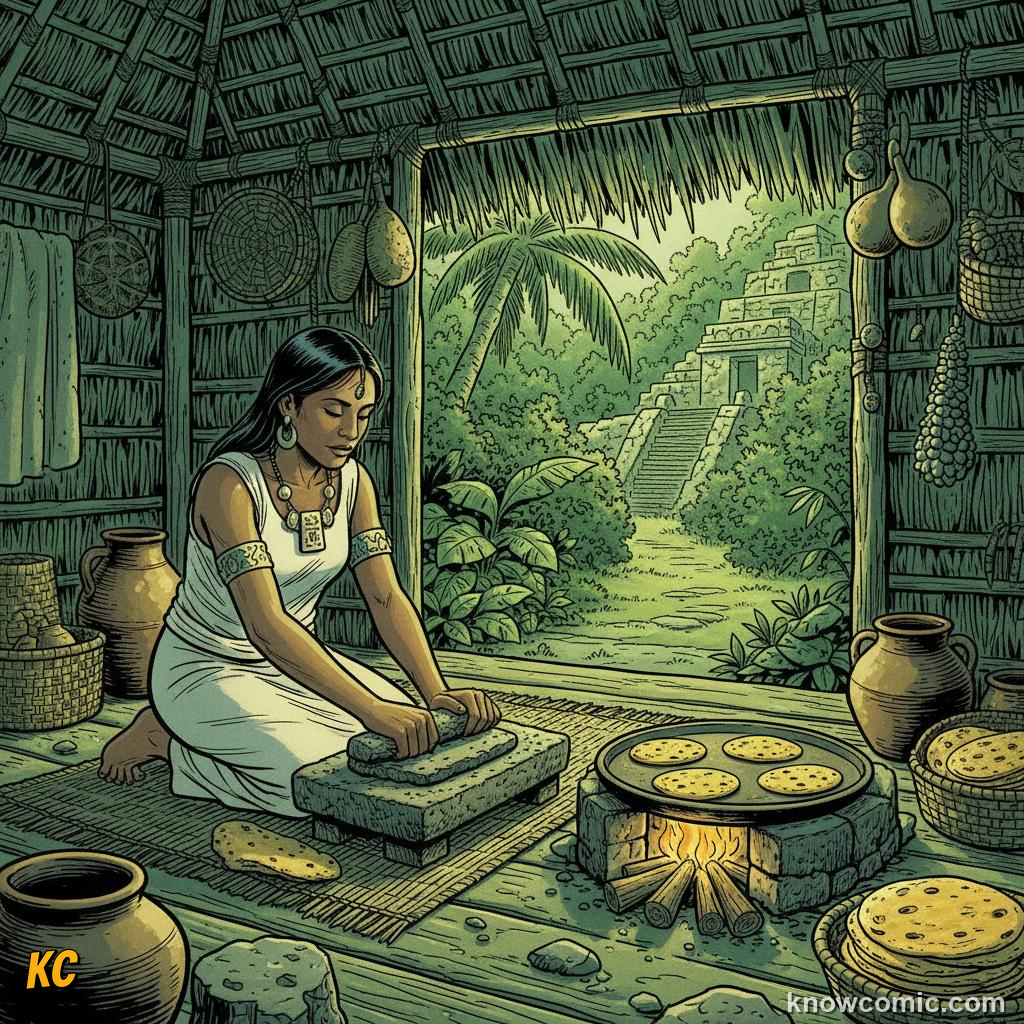
🌽 Grinding maize daily
💪 Limestone tool
👩 Central to women's work
💪 Limestone tool
👩 Central to women's work
OBSIDIAN
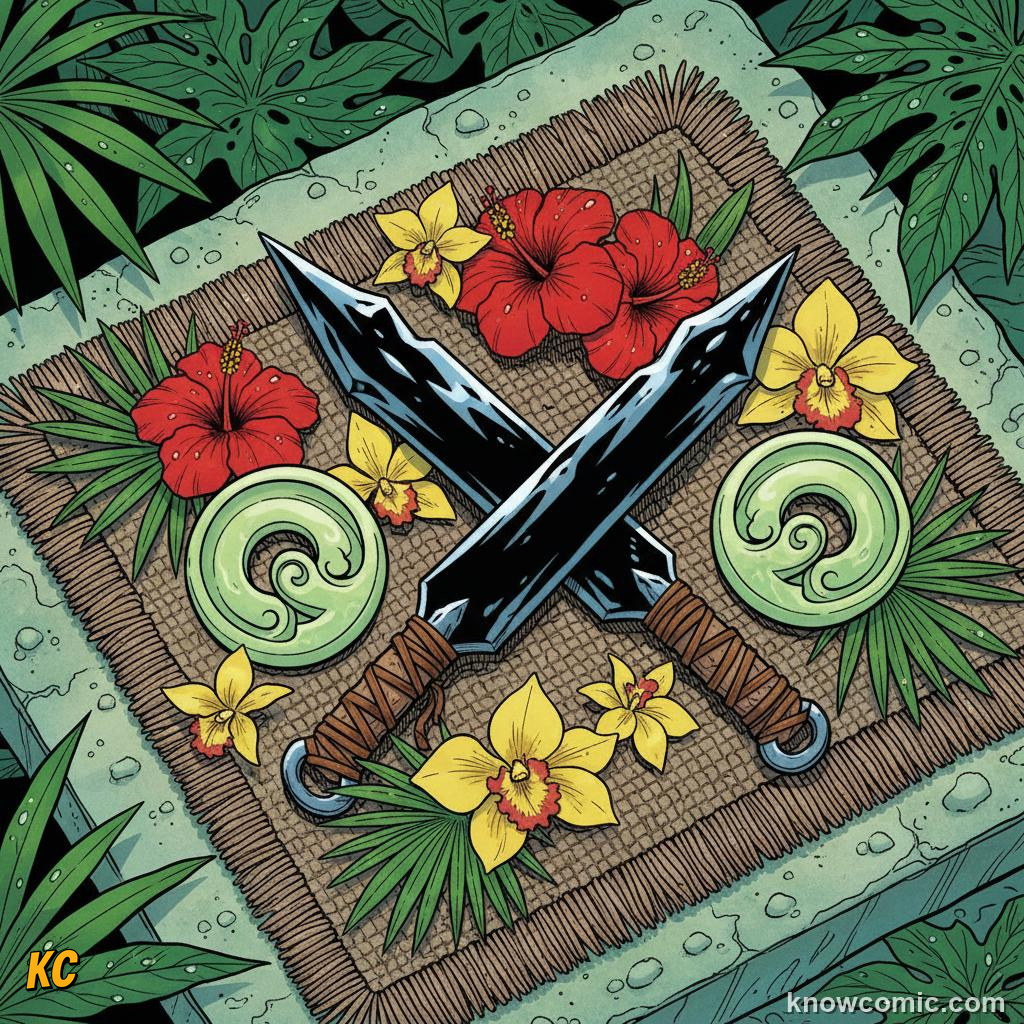
🗿 Volcanic glass blades
🧭 Traded hundreds of km
🏥 Also used in rituals
🧭 Traded hundreds of km
🏥 Also used in rituals
CODEX ARTIST
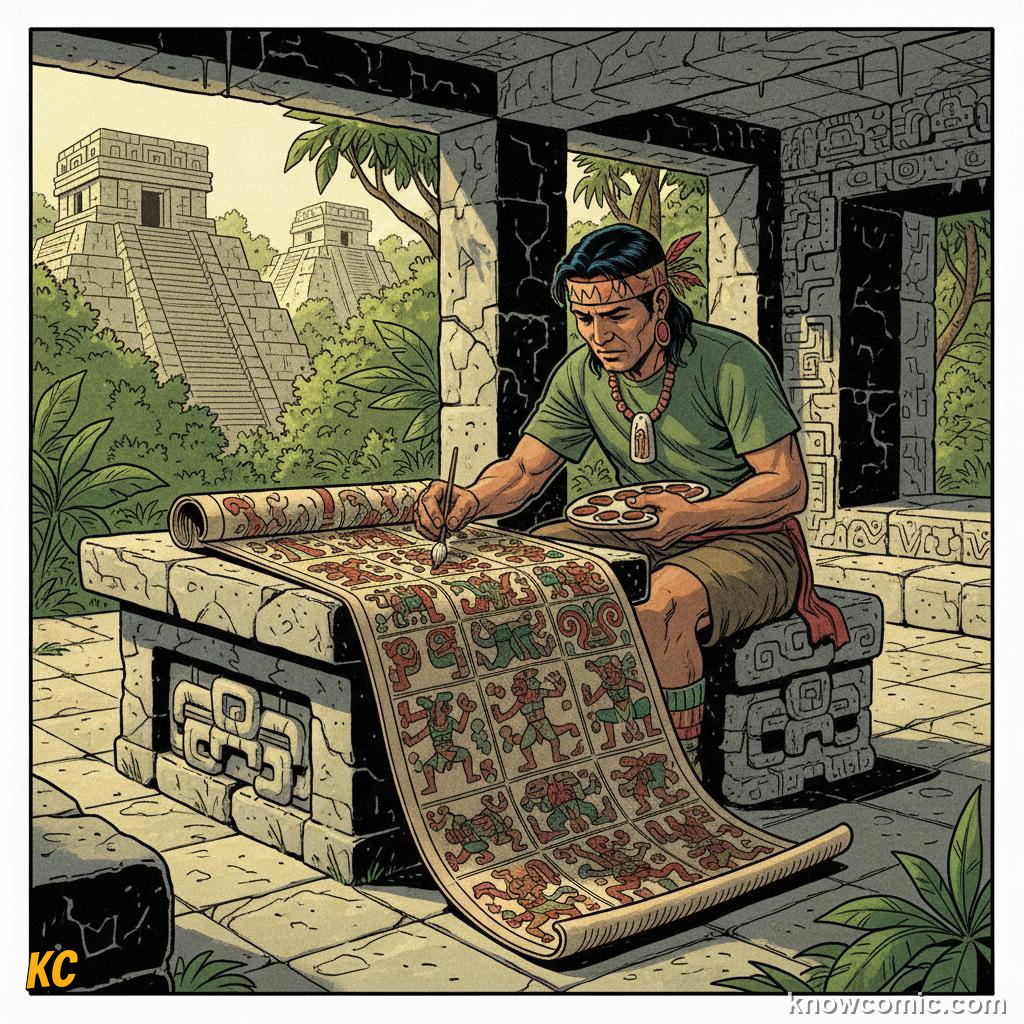
📖 Bark paper folding books
🎨 Red & black line art
🔥 Few survived burning
🎨 Red & black line art
🔥 Few survived burning
PAGE 5 OF 5, COLLAPSE, REDISCOVERY & LIVING MAYA
AFTER 900 CE
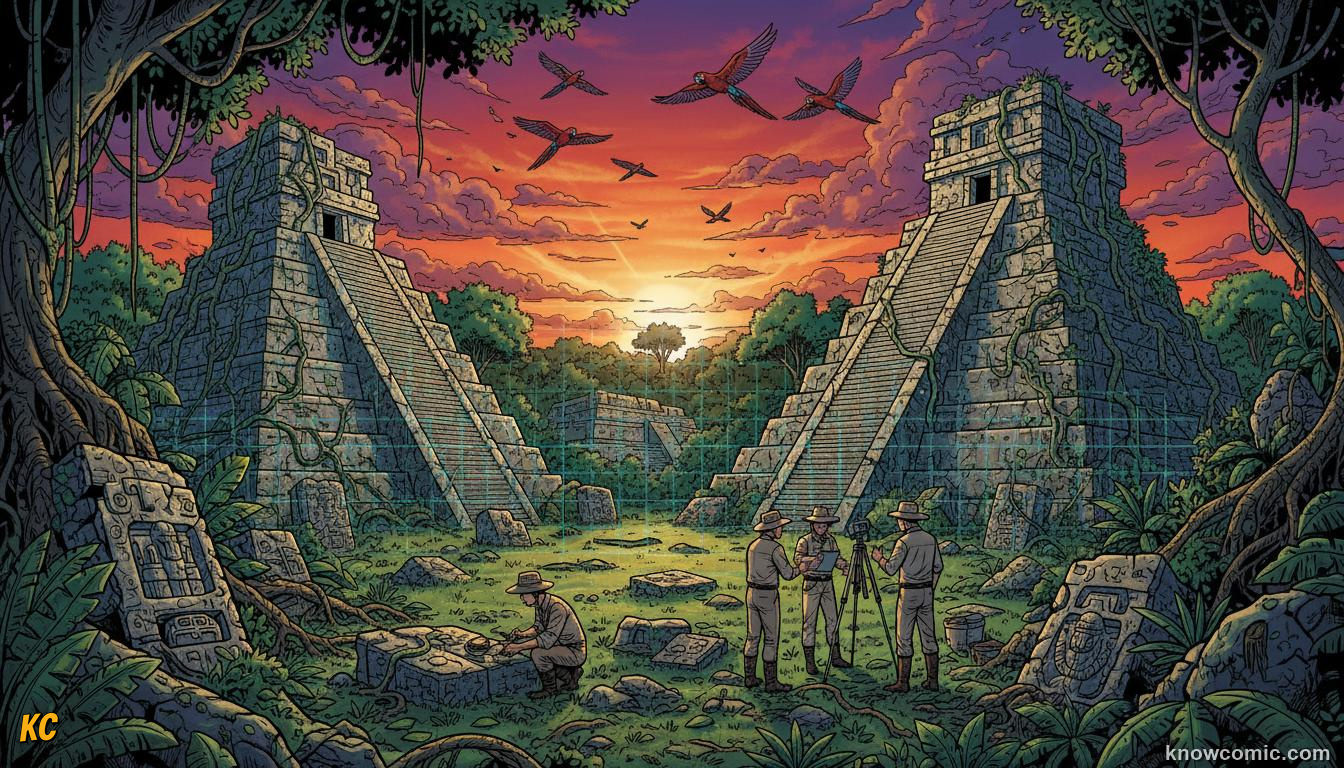
WHY THE LOWLANDS EMPTIED, STILL A MYSTERY
Between roughly 800 and 1000 CE many southern lowland cities saw their monuments stop, palaces burn and populations scatter. No single cause fits every site: decades of drought weakened maize harvests; wars disrupted trade; overpopulation strained reservoirs; maybe faith in kings cracked when calendars failed to bring rain. Yet the Maya did not vanish, people moved to the northern Yucatán where Chichén Itzá and later Mayapán flourished, and highland kingdoms kept calendars alive. When Spanish armies arrived in the 1500s, millions still spoke Maya languages. Today more than six million people identify as Maya, weaving huipiles, farming milpas and reading glyphs deciphered only since the 1980s. Laser mapping (LiDAR) now reveals thousands of hidden platforms under the trees, the jungle still keeps secrets.
🌍 UNESCO & TOURISM
Tikal, Chichén Itzá and other sites are World Heritage treasures, bridges between ancient genius and modern communities.
MAYA!
CHICHÉN ITZÁ
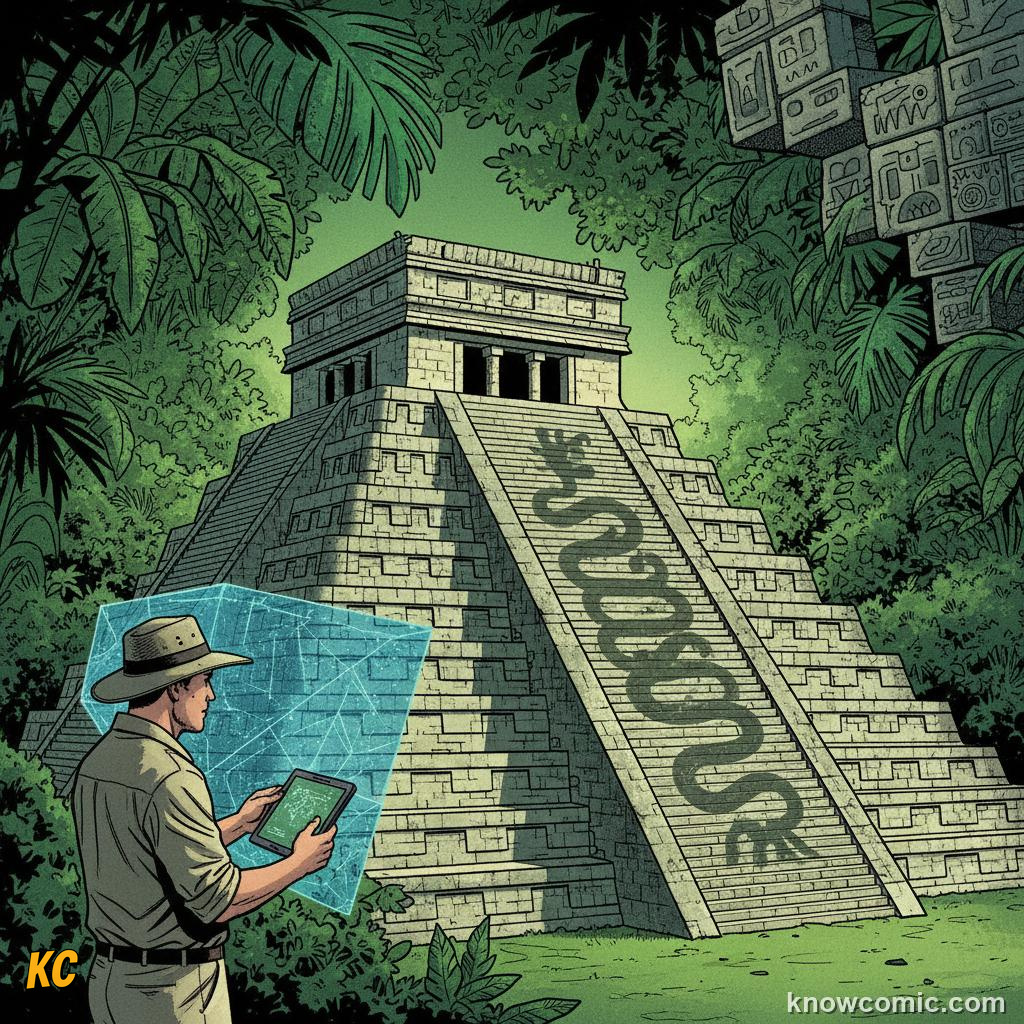
🐍 El Castillo pyramid
🌊 Sacred cenote well
🔭 Equinox serpent shadow
🌊 Sacred cenote well
🔭 Equinox serpent shadow
REMEMBER
🏛️ KEY FACTS
Mesoamerican · city-states · limestone pyramids · Long Count calendar · zero symbol · maize economy · Classic collapse c. 900 CE · millions of Maya today.
✅ Rainforest limestone cities
✅ Astronomy & 365-day year
✅ Hieroglyphic writing
✅ Not "lost", descendants thrive
✅ Astronomy & 365-day year
✅ Hieroglyphic writing
✅ Not "lost", descendants thrive
🧠 QUIZ TIME!
MAYA: JUNGLE CITIES · 5 QUESTIONS
QUESTION 01
In which broad region did the Classic Maya build their greatest cities?
QUESTION 02
Maya holy temples are usually built as tall…
QUESTION 03
The Maya solar calendar was about how many days long?
QUESTION 04
The Maya number system included a shell-like sign used as…
QUESTION 05
What staple crop formed the foundation of the Maya diet?
0/5
LOADING...