🏯 ANCIENT CHINA
PAGE 1 OF 5, RIVERS, FARMLAND & EARLY DYNASTIES
YELLOW & YANGTZE
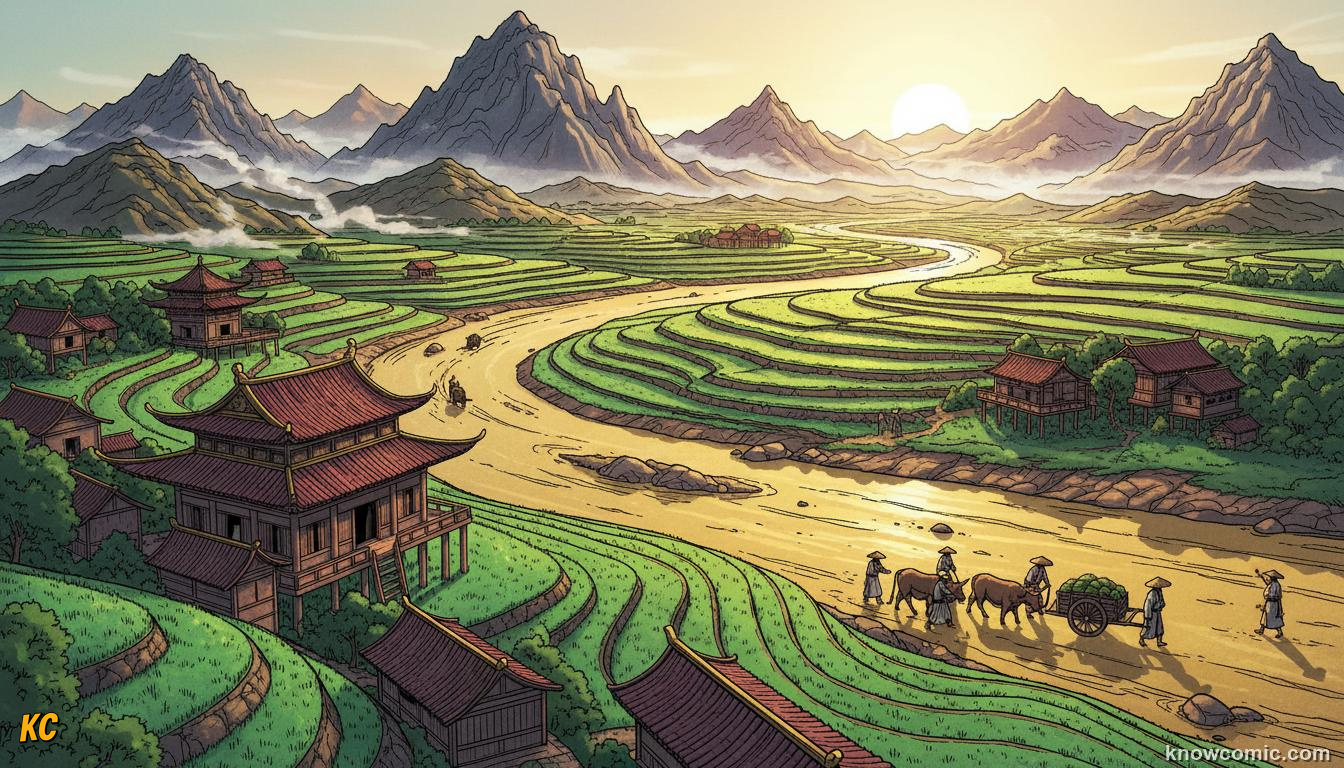
THE MIDDLE KINGDOM TAKES SHAPE
China's story runs along two great rivers, the muddy Yellow River in the north, where millet farming began thousands of years ago, and the long Yangtze in the south, rich with rice and trade. Early dynasties like the Shang left oracle bones carved with some of China's first writing; the Zhou kings ruled loosely through feudal lords until warlords tore the land apart in the Warring States period (475–221 BCE). Philosophers wandered from court to court: Confucius taught respect for ancestors and good government; Daoists sought harmony with nature; Legalists argued for strict laws. When one northwestern state called Qin proved toughest, it would swallow all rivals and forge the first Chinese empire.
⚡ DID YOU KNOW?
Chinese people still call their country Zhongguo, the "Middle Kingdom", a name with roots over 3,000 years old.
ZHONGGUO!
SHANG ORACLE BONES
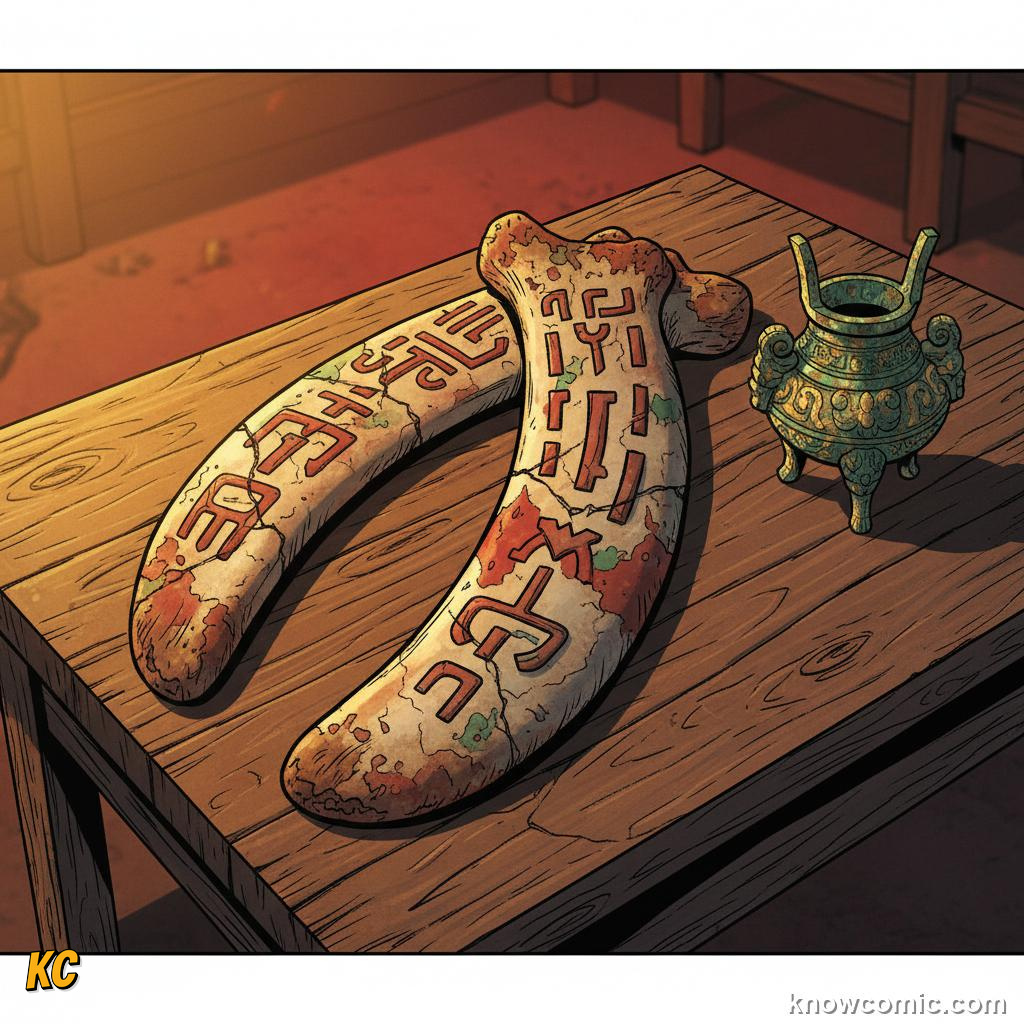
🐉 Ox scapulas & turtle shells
🔥 Cracked by heat, read omens
📝 Early Chinese characters
🔥 Cracked by heat, read omens
📝 Early Chinese characters
CONFUCIUS
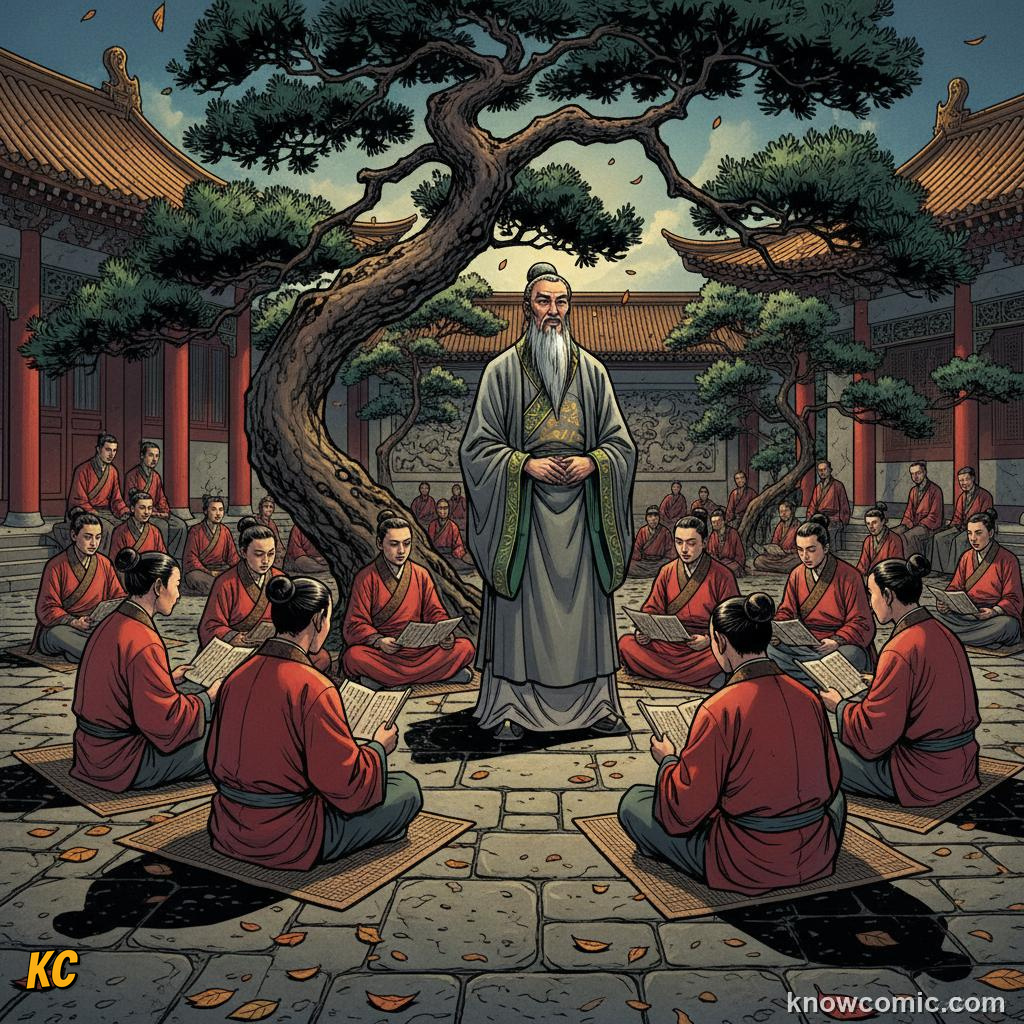
📜 Lived 551–479 BCE
🏛️ Ethics, family, merit exams later
🌏 Still studied worldwide
🏛️ Ethics, family, merit exams later
🌏 Still studied worldwide
PAGE 2 OF 5, QIN: FIRST EMPEROR & THE GREAT WALL
221 BCE · ONE CHINA
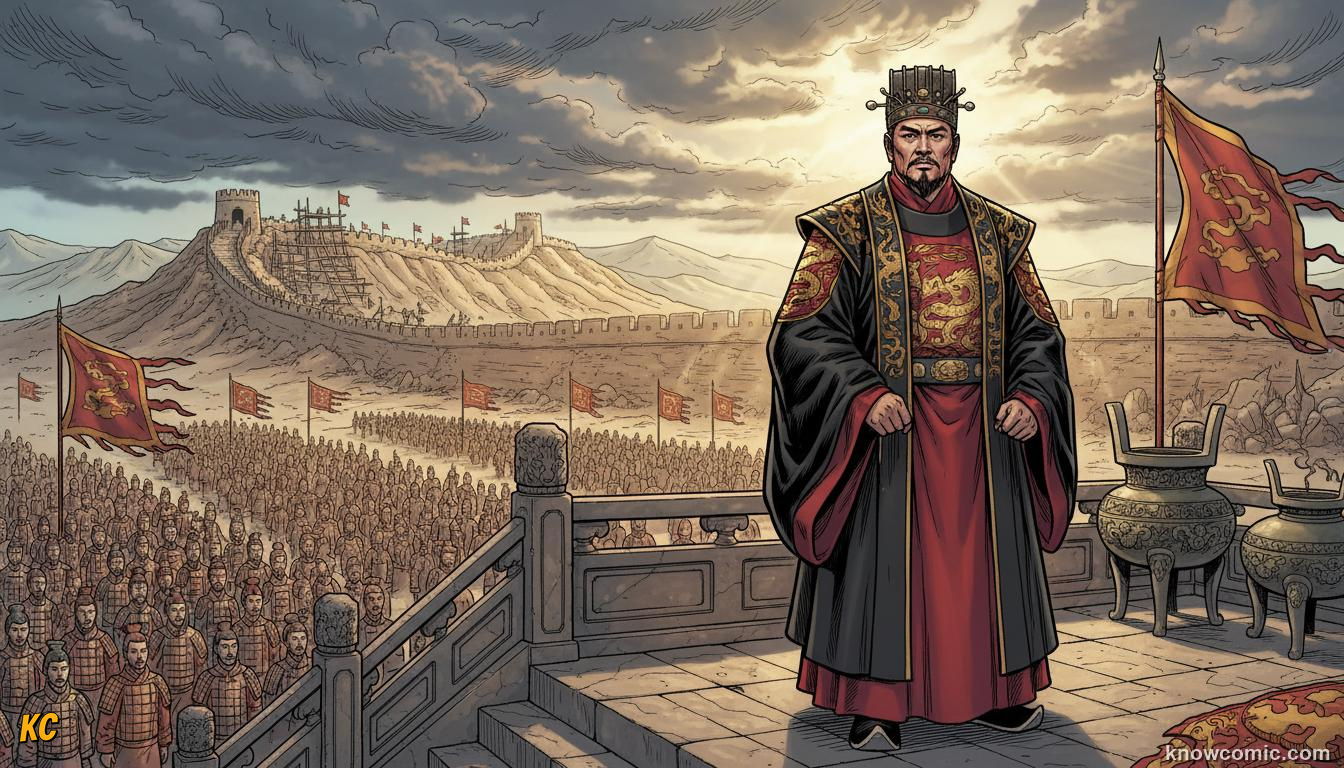
YING ZHENG BECOMES QIN SHI HUANG
The ruler of Qin crushed the last rival states and in 221 BCE proclaimed himself First Emperor, Qin Shi Huangdi, "August God" of a single realm with one currency, one script, one set of laws and standard axle widths so carts could roll on any road. He ordered hundreds of thousands of labourers to link older northern walls into a continuous defence against nomadic Xiongnu horsemen, the ancestor of today's Great Wall. He sent fleets to seek immortality elixirs and buried himself near Xi'an under a hill guarded by thousands of life-sized terracotta soldiers, each face unique, discovered only in 1974. The Qin dynasty was harsh and short, it fell in 207 BCE, but the idea of a united China never broke again.
🏺 TERRACOTTA ARMY
Over 8,000 clay soldiers, horses and chariots were meant to protect the First Emperor in the afterlife.
EMPEROR!
STANDARD SCRIPT
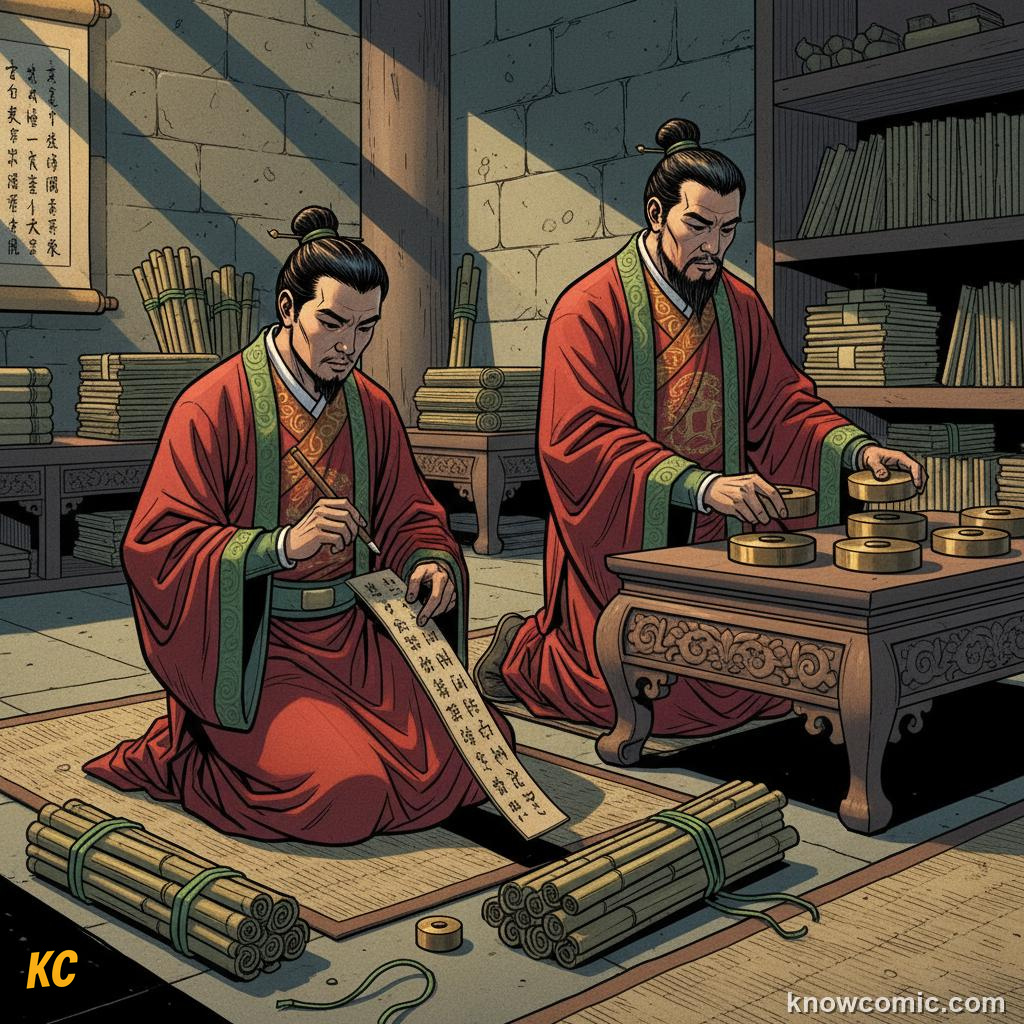
✍️ Small seal script unified
📏 Weights & measures fixed
🛤️ Roads radiated from capital
📏 Weights & measures fixed
🛤️ Roads radiated from capital
GREAT WALL
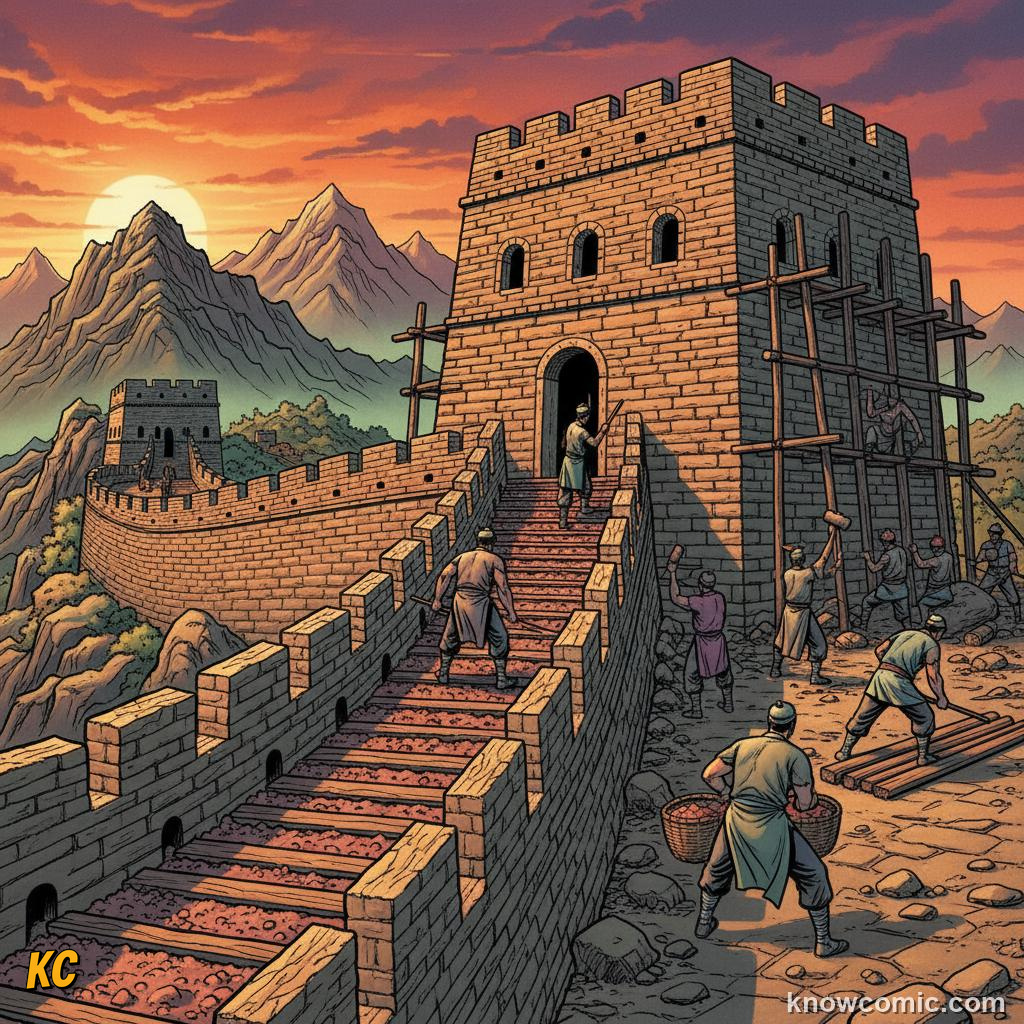
🧱 Rammed earth & stone
🏹 Signal towers & garrisons
🐎 Blocked nomad raids
🏹 Signal towers & garrisons
🐎 Blocked nomad raids
BURNING BOOKS?
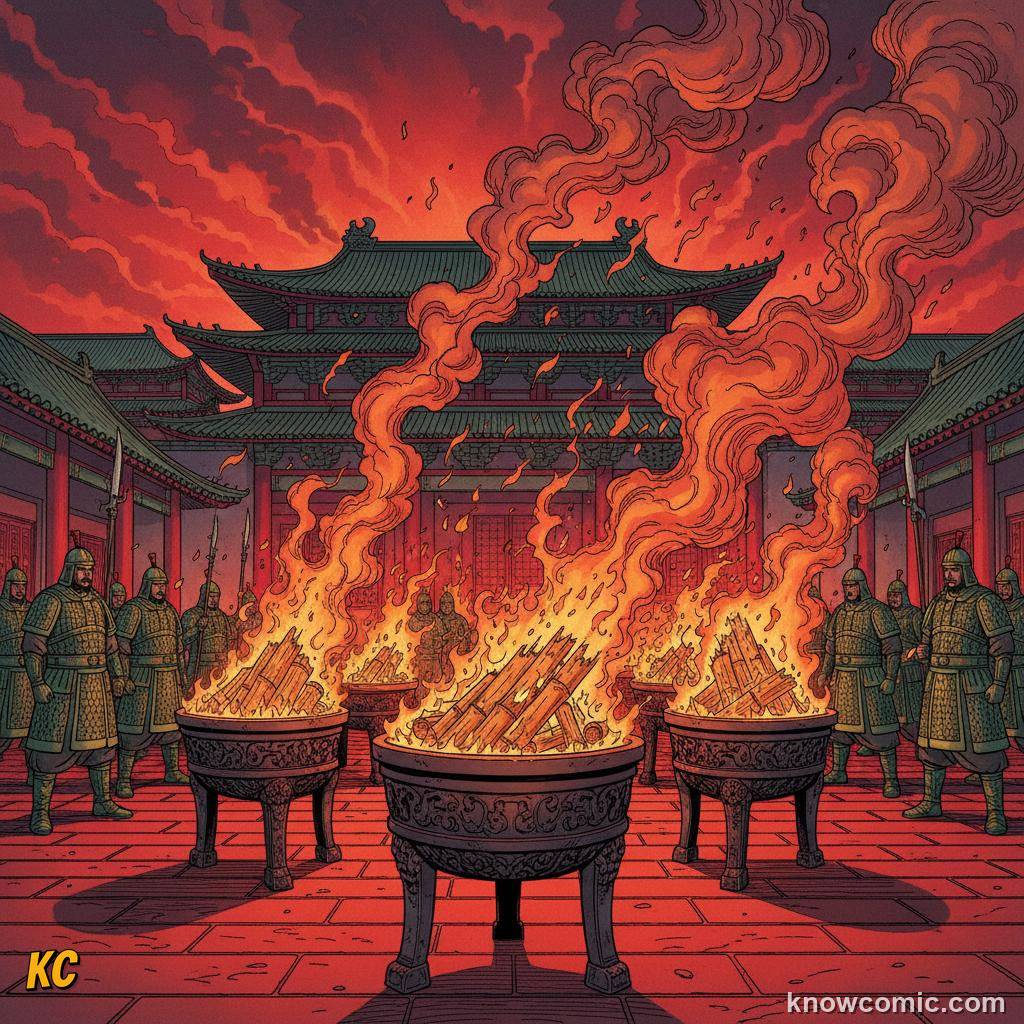
📚 Legalist control of ideas
⚖️ Harsh laws & labour service
🏛️ Standardisation over debate
⚖️ Harsh laws & labour service
🏛️ Standardisation over debate
PAGE 3 OF 5, THE HAN: SILK ROAD & INVENTIONS
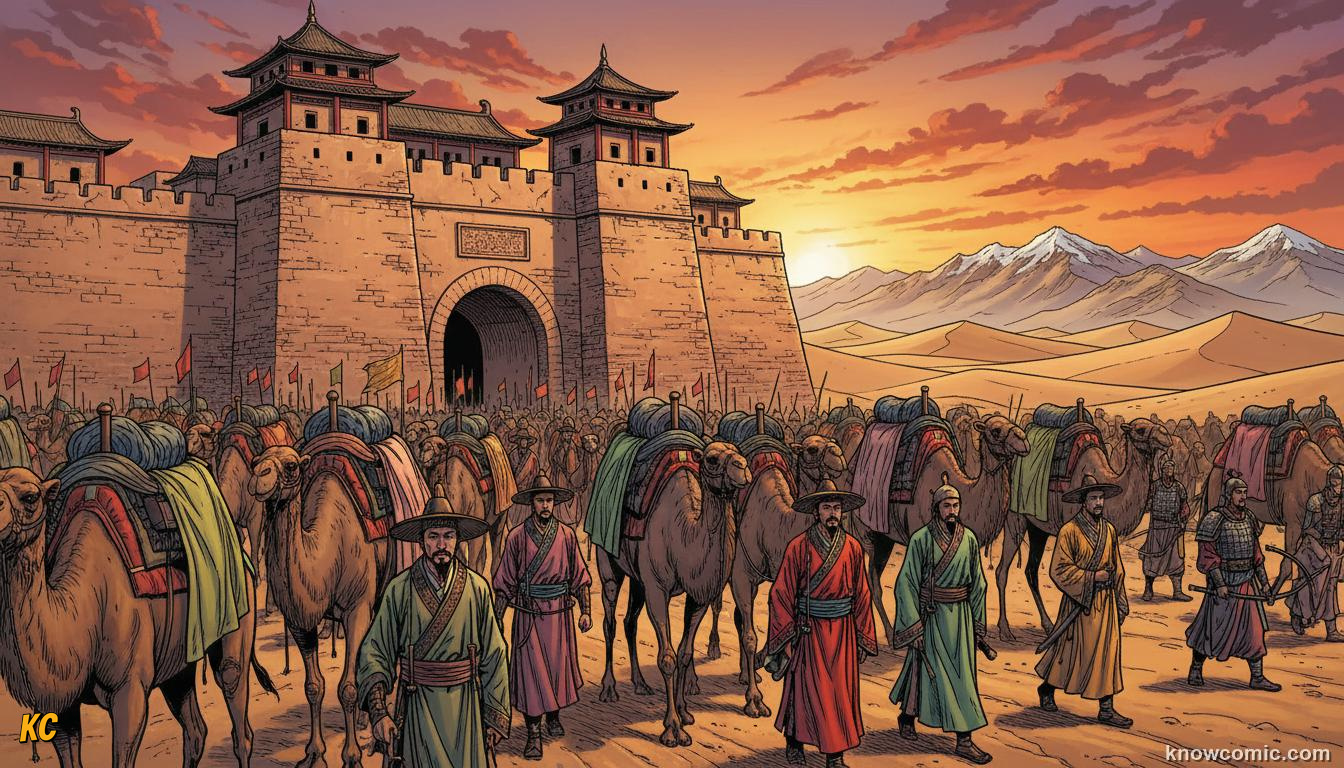
SILK ROAD
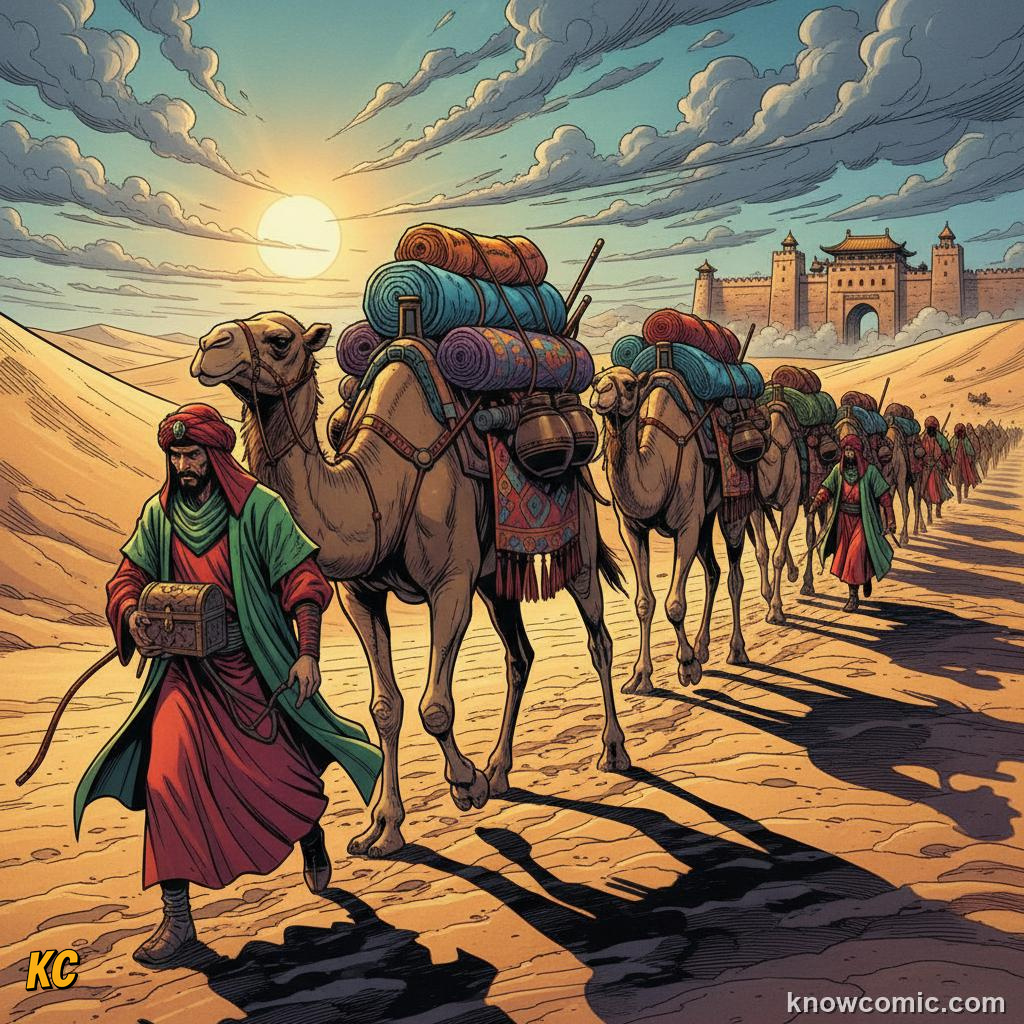
🐫 Caravans to Rome & Persia
🧵 Silk = China's secret export
🌍 Buddhism entered China
🧵 Silk = China's secret export
🌍 Buddhism entered China
PAPER
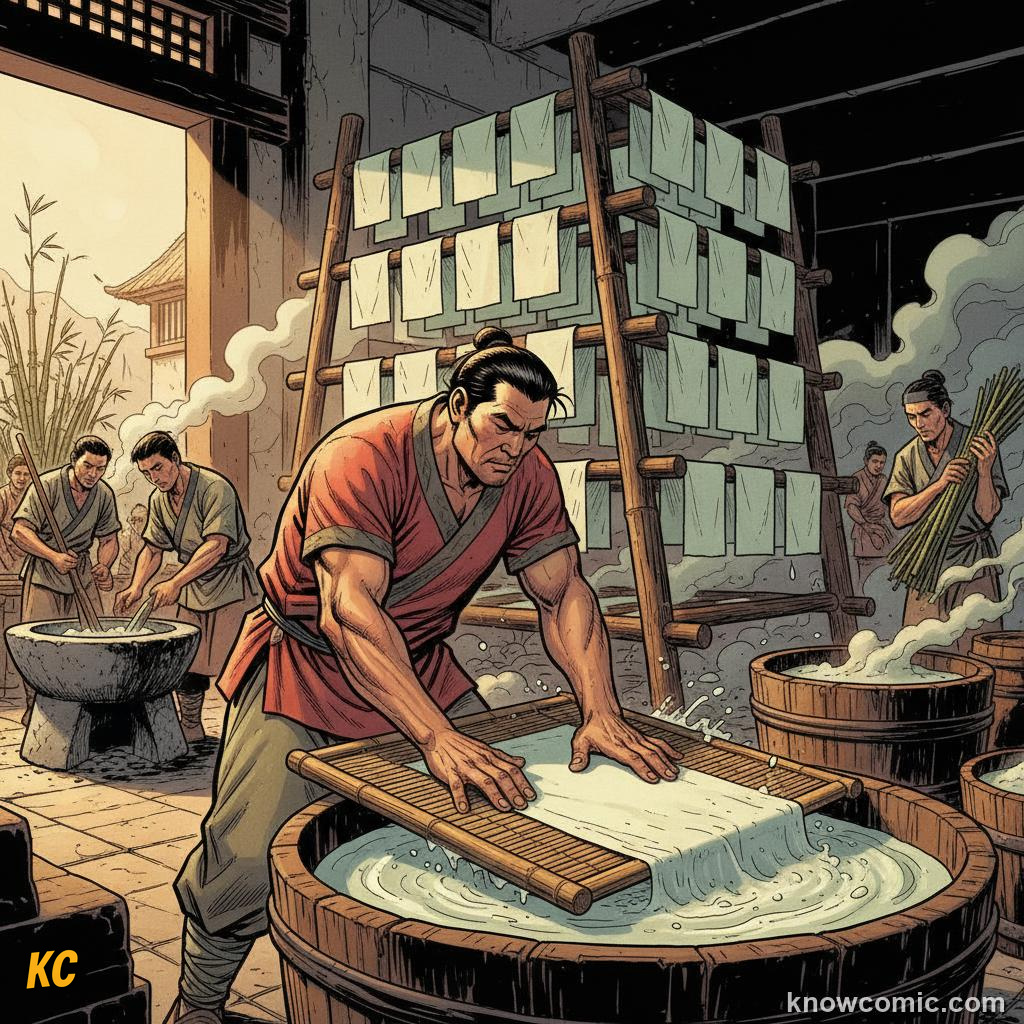
📜 Han improved papermaking
📚 Cheaper than bamboo slips
🖋️ Spread learning empire-wide
📚 Cheaper than bamboo slips
🖋️ Spread learning empire-wide
206 BCE, 220 CE · HAN GOLDEN AGE
EXAMS, ASTRONOMY & STABLE RULE
After Qin's collapse, the Han dynasty restored unity and ruled for four centuries, one of China's longest golden ages. Emperors expanded the Great Wall, opened diplomatic missions along the Silk Road, and ran a huge bureaucracy. Confucian classics became the curriculum for civil-service exams that picked officials by merit as well as birth, an idea still echoed in modern tests. Han workshops mass-produced iron ploughshares, lacquerware and fine bronze mirrors; astronomers mapped comets and supernovae; doctors compiled medical texts. When the Han finally fractured, China splintered, but the memory of Han unity became the dream every later dynasty tried to match.
🧭 LATER INVENTIONS
Gunpowder, printing and the magnetic compass, among the most world-changing technologies, were perfected in China during later dynasties and slowly spread west.
HAN!
PAGE 4 OF 5, TANG & SONG: CITIES, ART & INNOVATION
618–1279 CE
PORCELAIN, POETRY & BUSTLING MARKETS
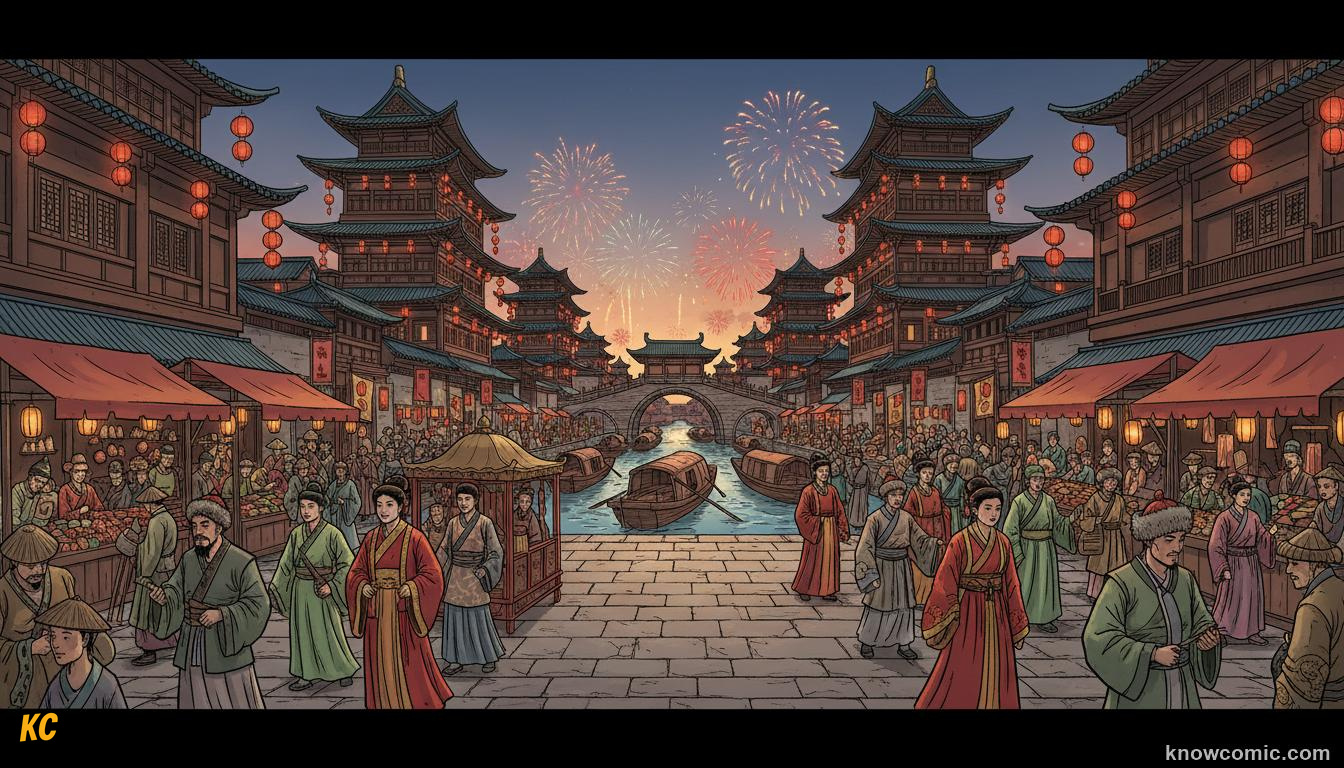
The Tang dynasty (618–907) welcomed traders along the Silk Road into cosmopolitan Chang'an, perhaps the largest city on Earth, with Persian taverns, Indian temples and Chinese tea houses. Tang poets like Li Bai wrote lyrics still memorised in schools. The Song dynasty (960–1279) pushed economic revolution: paper money, mass-printed books, iron industry for farm tools and coins, and navigators who used magnetised needles floating in water, the compass, to steer huge junks across the Indian Ocean. Landscape painting captured misty mountains; Neo-Confucian scholars debated how self-cultivation could perfect society. Southern Song faced constant northern pressure until Mongol armies ended the dynasty, but Song inventions were already on their way around the globe.
🎨 ART & DAILY LIFE
Tea drinking, calligraphy, porcelain ("china" plates), and lunar New Year traditions all deepened during Tang and Song times.
TRADE!
JUNK FLEET
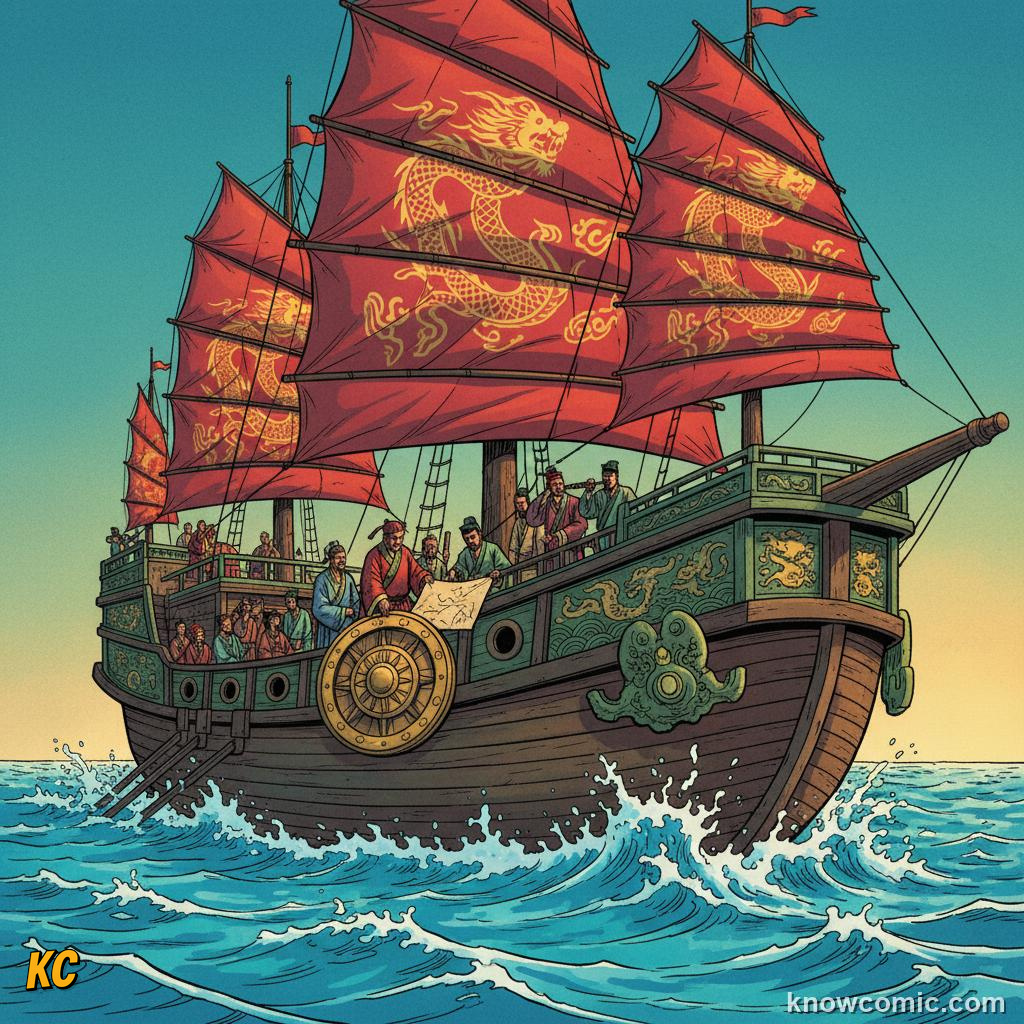
⛵ Watertight bulkheads
🧭 Compass navigation
🌊 Indian Ocean trade
🧭 Compass navigation
🌊 Indian Ocean trade
PORCELAIN
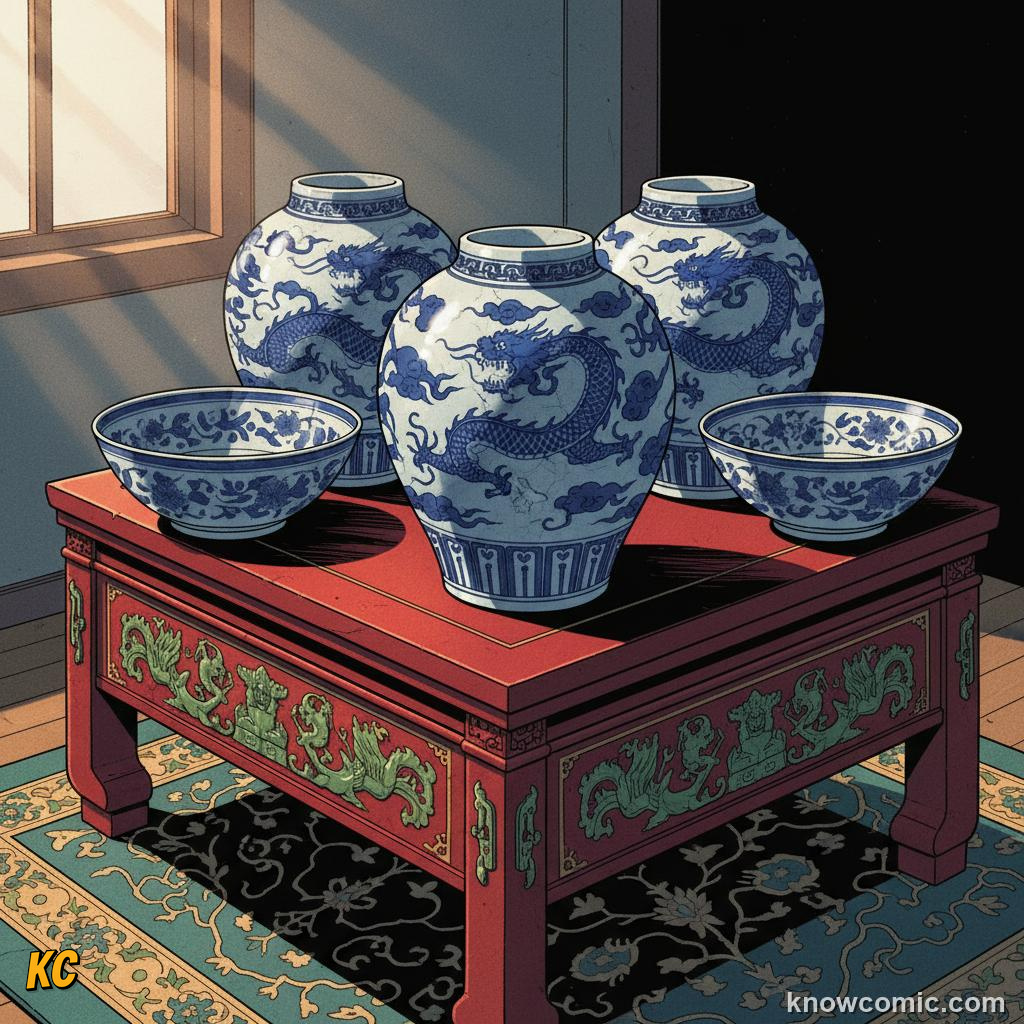
🏺 High-fired white & blue glaze
🚢 Exported by the millions
🌍 "China" became a word for dishes
🚢 Exported by the millions
🌍 "China" became a word for dishes
MOVABLE TYPE
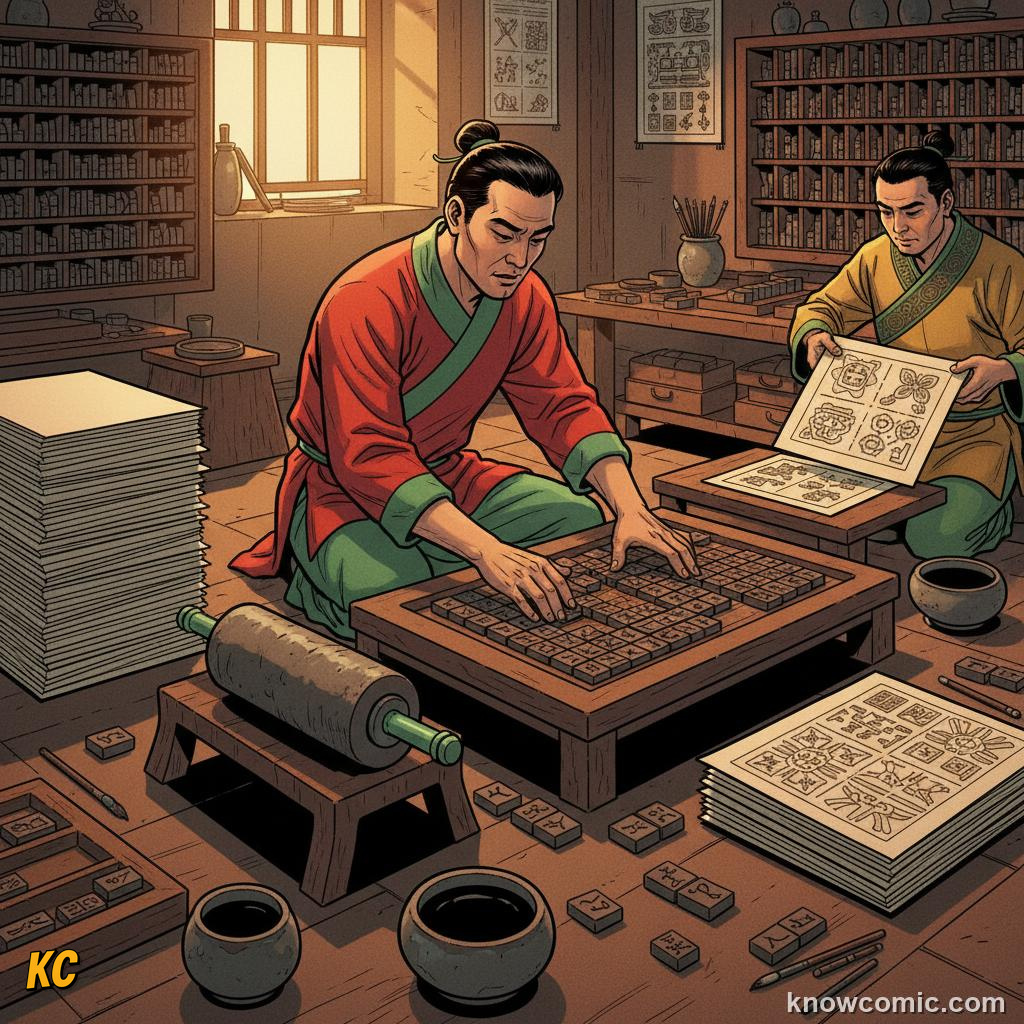
🖋️ Bi Sheng, clay type blocks
📖 Mass printing of classics
➡️ Helped spread exam culture
📖 Mass printing of classics
➡️ Helped spread exam culture
PAGE 5 OF 5, MING GREAT WALL & CHINA'S GLOBAL LEGACY
1368–1644 CE · MING
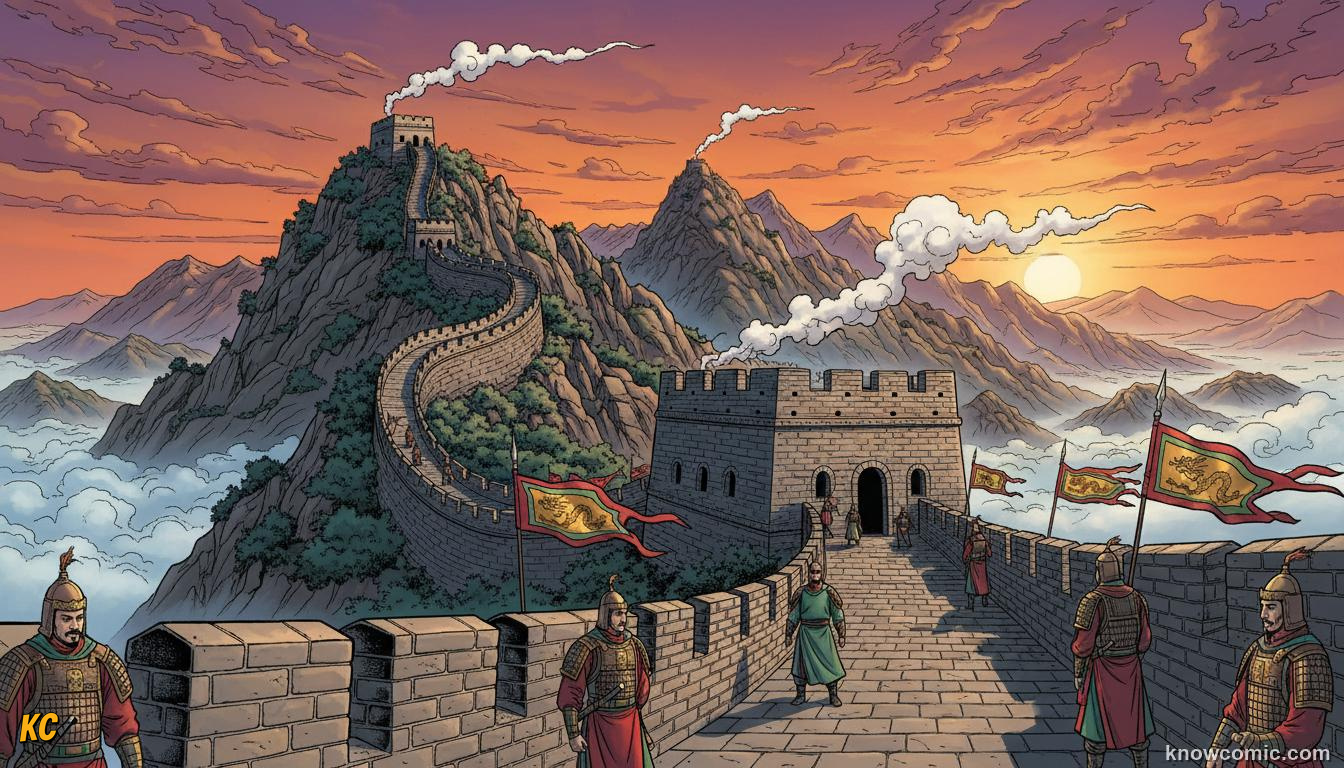
STONE DRAGONS ON THE RIDGELINE
The Ming dynasty drove out the Mongols and rebuilt the Great Wall in the familiar brick-and-stone form winding like a dragon across northern mountains, watchtowers every few hundred metres, beacon fires ready to warn of raid. Ming porcelain, blue-and-white vases and treasure fleets commanded by admiral Zheng He showed China's wealth to the Indian Ocean world. Later dynasties faced new challenges from European traders and internal revolts, leading to the last imperial dynasty, the Qing. In 1911 revolution ended emperors, but ancient China's inventions (paper, printing, gunpowder, compass), its bureaucracy, its characters and its sense of continuous civilisation still shape a quarter of humanity today.
🌍 GIFTS TO THE WORLD
Silk · paper · printing · gunpowder · compass · porcelain · civil-service exams · Grand Canal engineering · traditional medicine ideas.
LEGACY!
DYNASTY SNAP
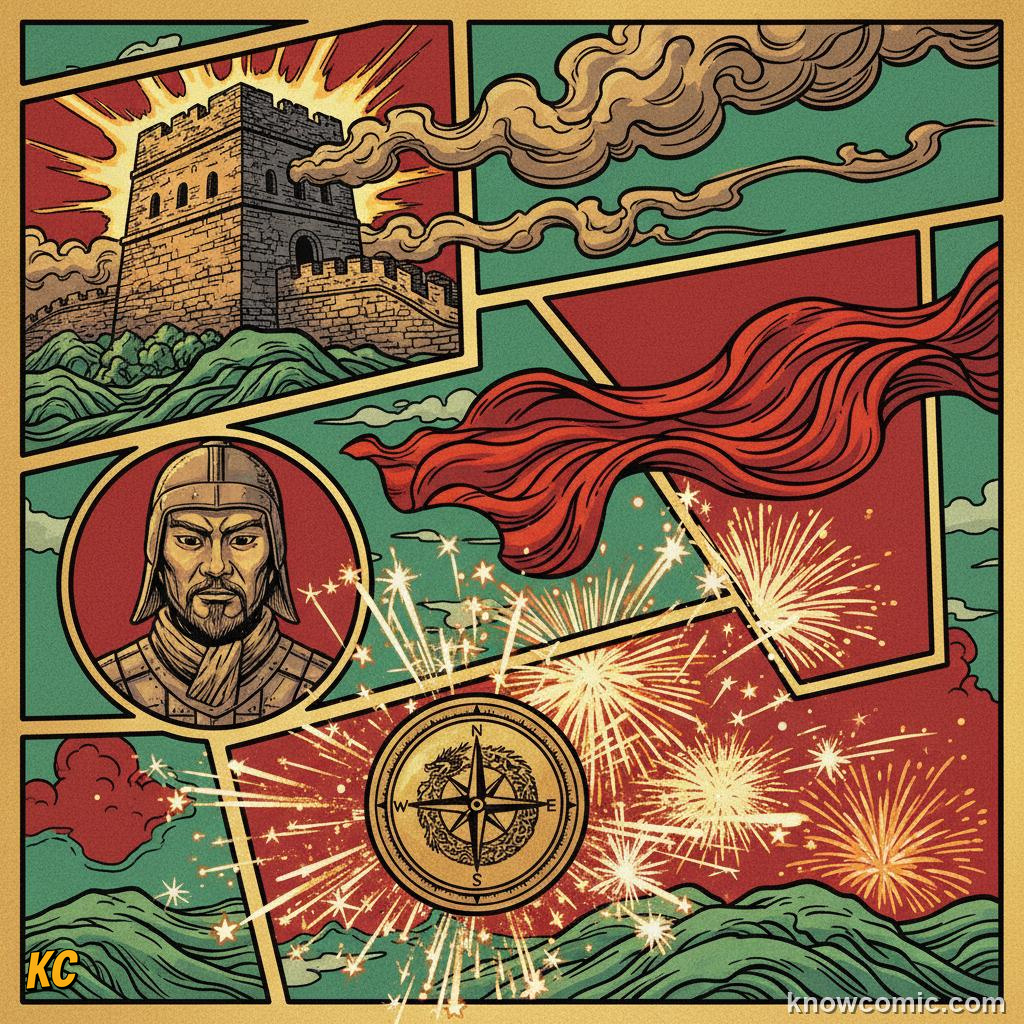
221 BCE Qin unifies China
206 BCE, 220 CE Han golden age
618–907 Tang cosmopolitan age
1368–1644 Ming Great Wall brick
206 BCE, 220 CE Han golden age
618–907 Tang cosmopolitan age
1368–1644 Ming Great Wall brick
REMEMBER
🏛️ KEY FACTS
Yellow & Yangtze rivers · Shang oracle bones · Qin Shi Huang first emperor 221 BCE · Terracotta army · Han Silk Road & paper · Tang/Song trade & tech · Ming stone Great Wall.
✅ Qin, first unified empire
✅ Han, Silk Road & stability
✅ Great Wall, northern defence
✅ Four great inventions spread west
✅ Han, Silk Road & stability
✅ Great Wall, northern defence
✅ Four great inventions spread west
🧠 QUIZ TIME!
ANCIENT CHINA · 5 QUESTIONS
QUESTION 01
Which dynasty first unified China into one empire in 221 BCE?
QUESTION 02
The thousands of clay soldiers buried near Xi'an were made to guard whose tomb?
QUESTION 03
During the Han dynasty, which famous trade route linked China to the west?
QUESTION 04
Which material did Han-era Chinese craftsmen improve so books could spread more cheaply than on bamboo?
QUESTION 05
The Great Wall of China was built and rebuilt mainly to help defend against raids from…
0/5
LOADING...