🕉️ ANCIENT INDIA
PAGE 1 OF 5, INDUS CITIES & THE LAND OF RIVERS
C. 2600–1900 BCE
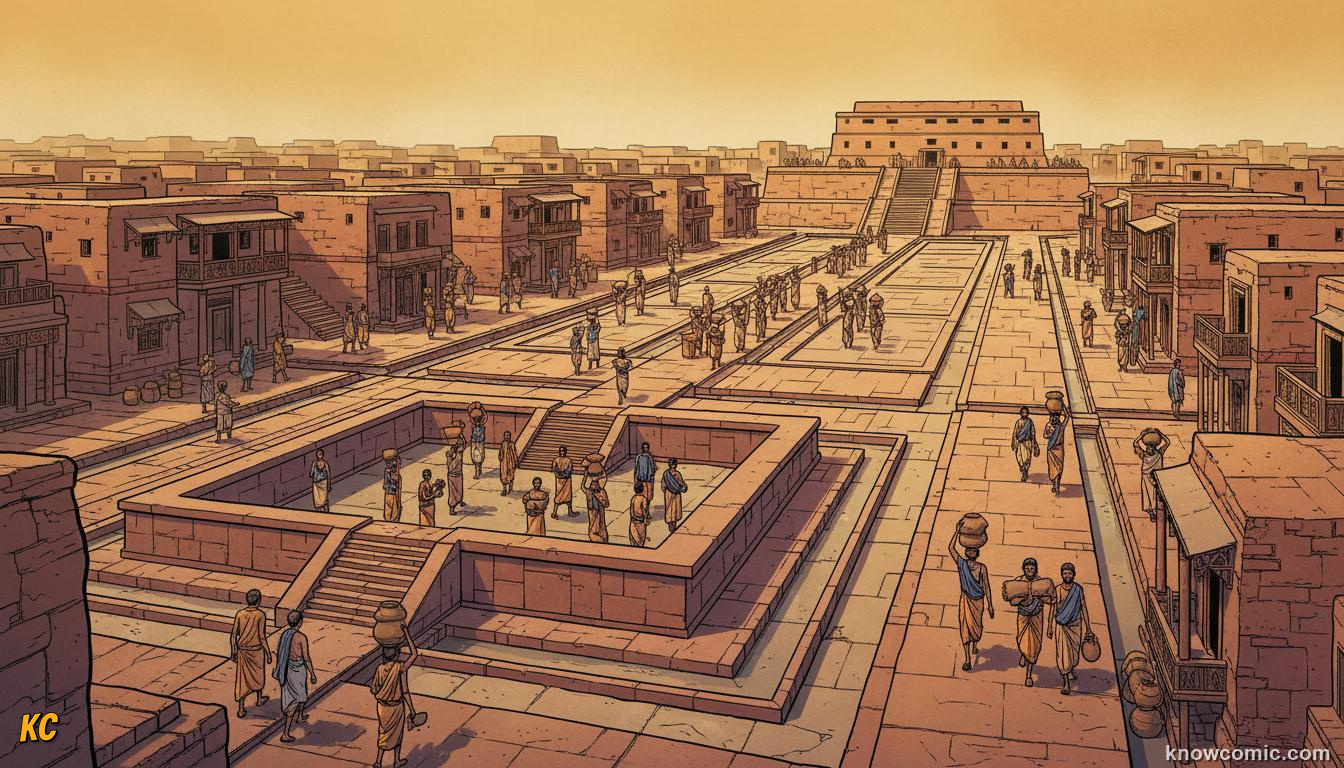
HARAPPA & MOHENJO-DARO, PLANNED CITIES
Long before the Buddha or the Taj Mahal, a brilliant urban culture flourished along the Indus River in what is now Pakistan and north-west India. Broad streets crossed at right angles like a modern grid. Houses had brick-lined bathrooms connected to covered drains under the streets, running water and rubbish chutes when much of the world still lived in huts. Granaries stored taxes of grain; seals carved with unicorn bulls and unknown script marked trade goods. We cannot yet read their writing, so many details stay mysterious, but weights and measures were standardised across hundreds of miles. Around 1900 BCE the big cities slowly emptied, perhaps rivers shifted or trade broke, yet village life and ideas flowed onward into later India.
⚡ DID YOU KNOW?
The Great Bath of Mohenjo-daro may be the world's earliest public water tank, carefully waterproofed with bitumen.
INDUS!
GREAT BATH
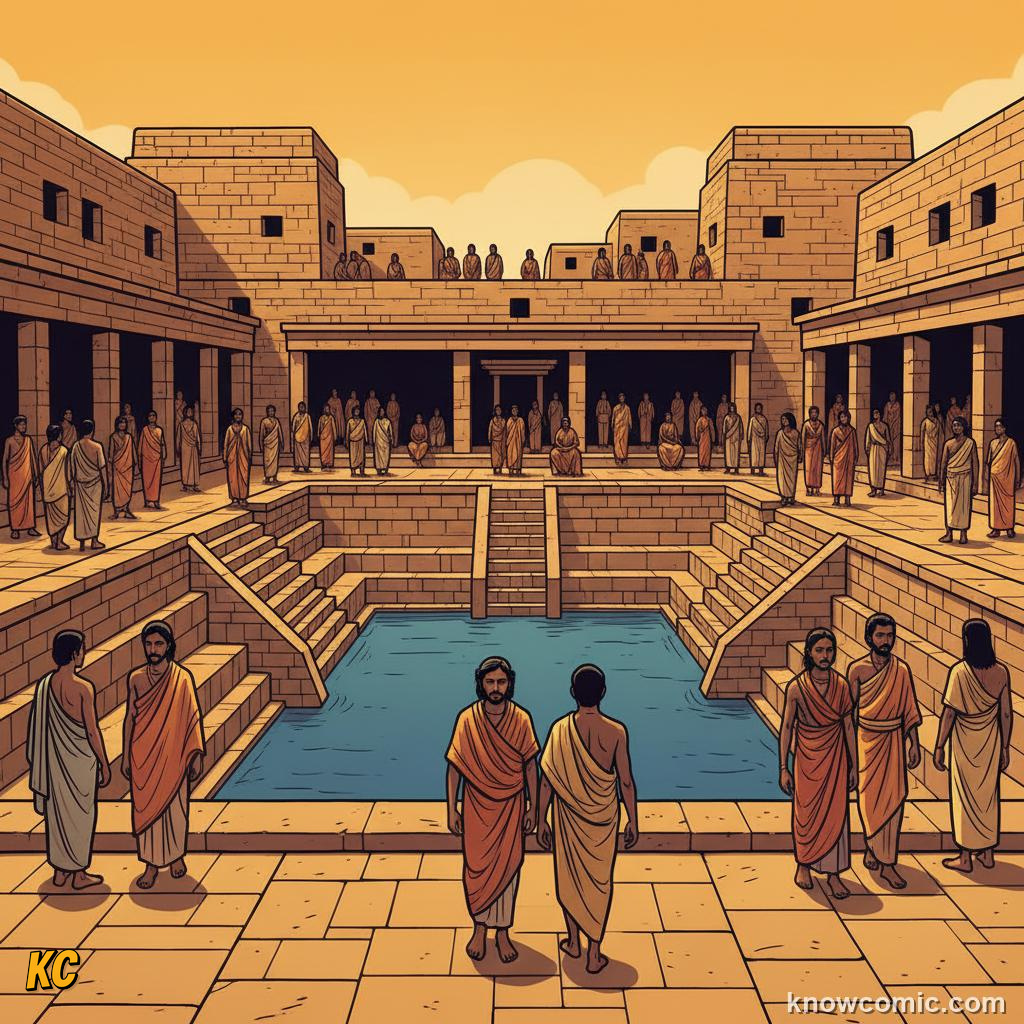
🏊 Brick tank & steps
🧱 Fired brick precision
🕯️ Maybe ritual bathing
🧱 Fired brick precision
🕯️ Maybe ritual bathing
SEALS
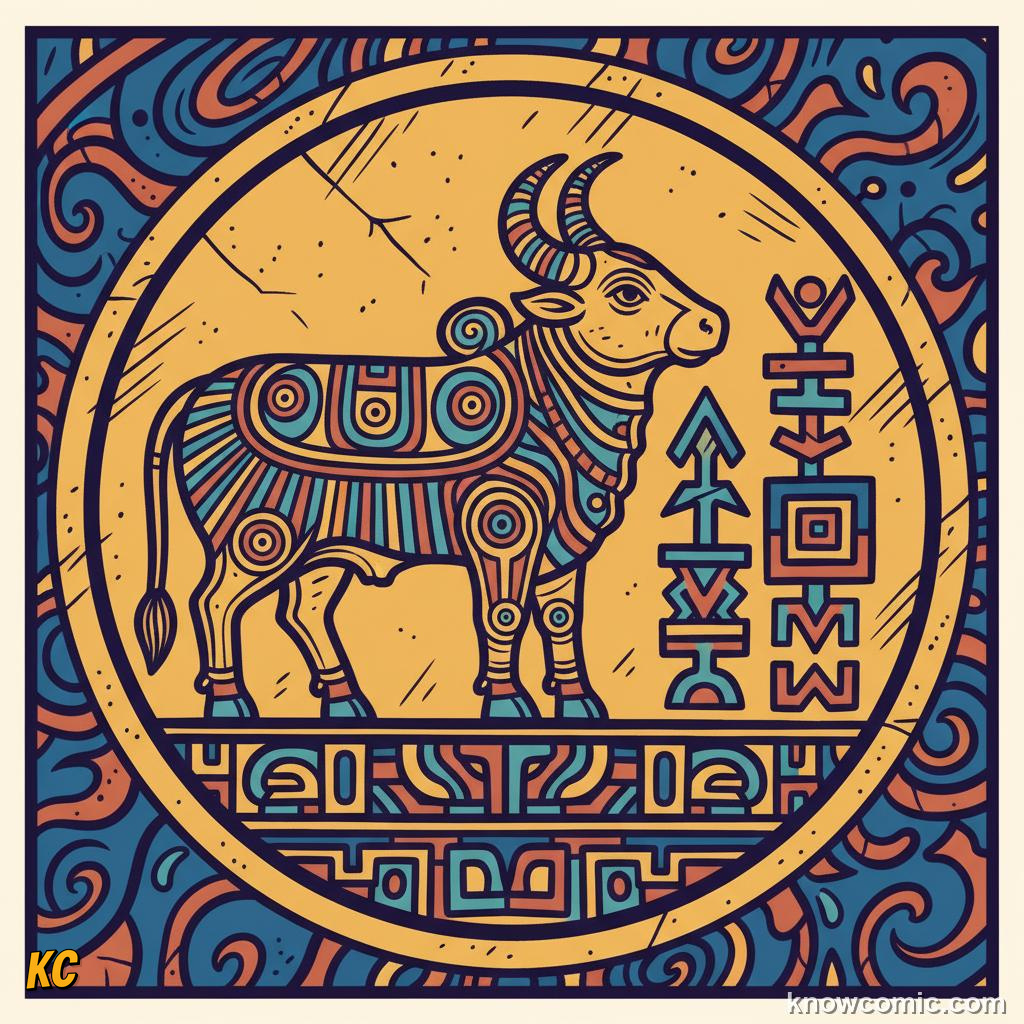
🐂 Unicorn motif
📦 Trade & ownership marks
❓ Script still undeciphered
📦 Trade & ownership marks
❓ Script still undeciphered
PAGE 2 OF 5, VEDAS, CASTE IDEAS & THE DHARMA AGE
1500–500 BCE
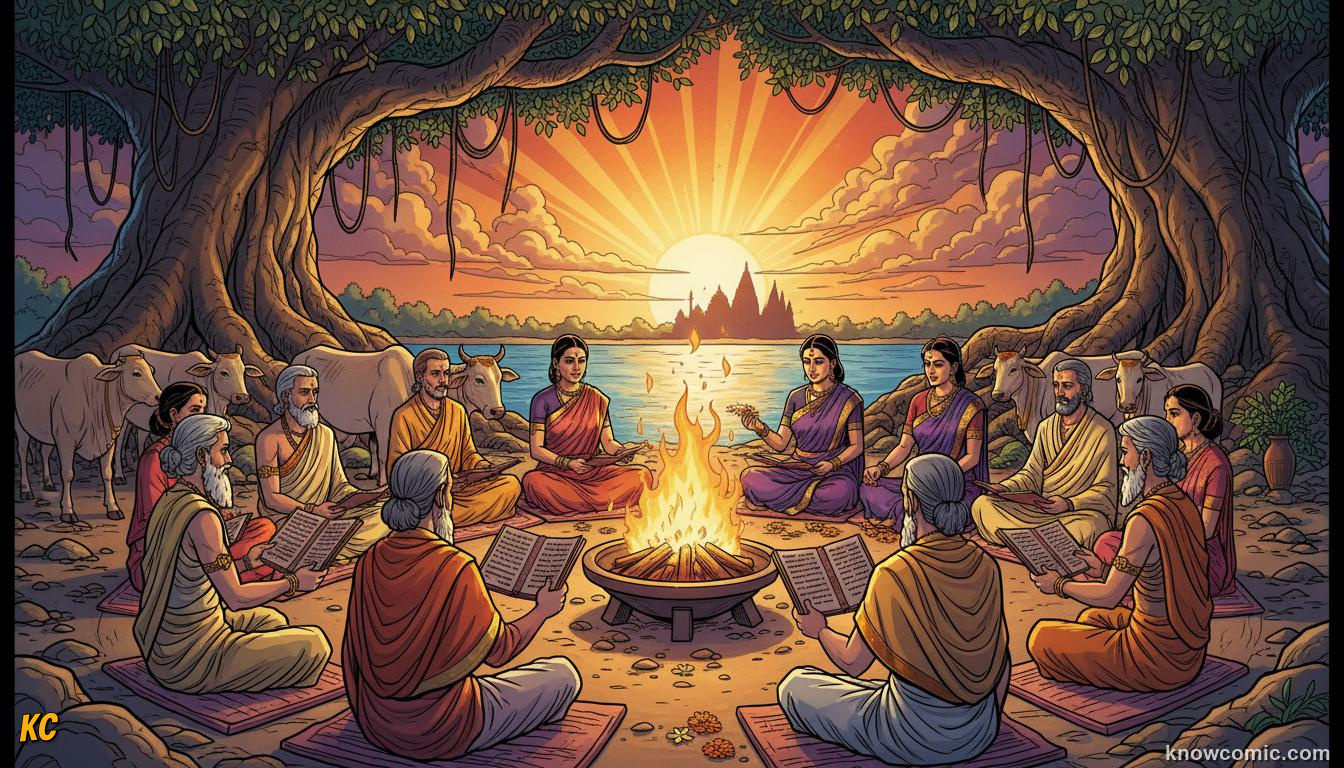
SANSKRIT HYMNS & GANGES CIVILISATION
After the Indus age, new peoples and languages blended across the northern plains. Priests memorised the Vedas, vast hymns to fire, storm and cosmic order, composed in Sanskrit, a language so precise later scientists borrowed its grammar for computer notation. Ritual specialists gradually organised society into varnas (broad social roles) that would evolve into the complex caste system of later centuries, debated and reformed ever since. Herders became farmers along the Ganges; iron tools cleared forests; towns minted punch-marked coins. Out of this ferment came the Upanishads, philosophical dialogues asking what the true self (atman) is and whether it touches ultimate reality (brahman). India was becoming a civilisation of questions as much as answers.
📿 YOGA & MEDITATION
Postures and breath control described in ancient texts are ancestors of the yoga practised in gyms worldwide today.
VEDAS!
SACRED FIRE
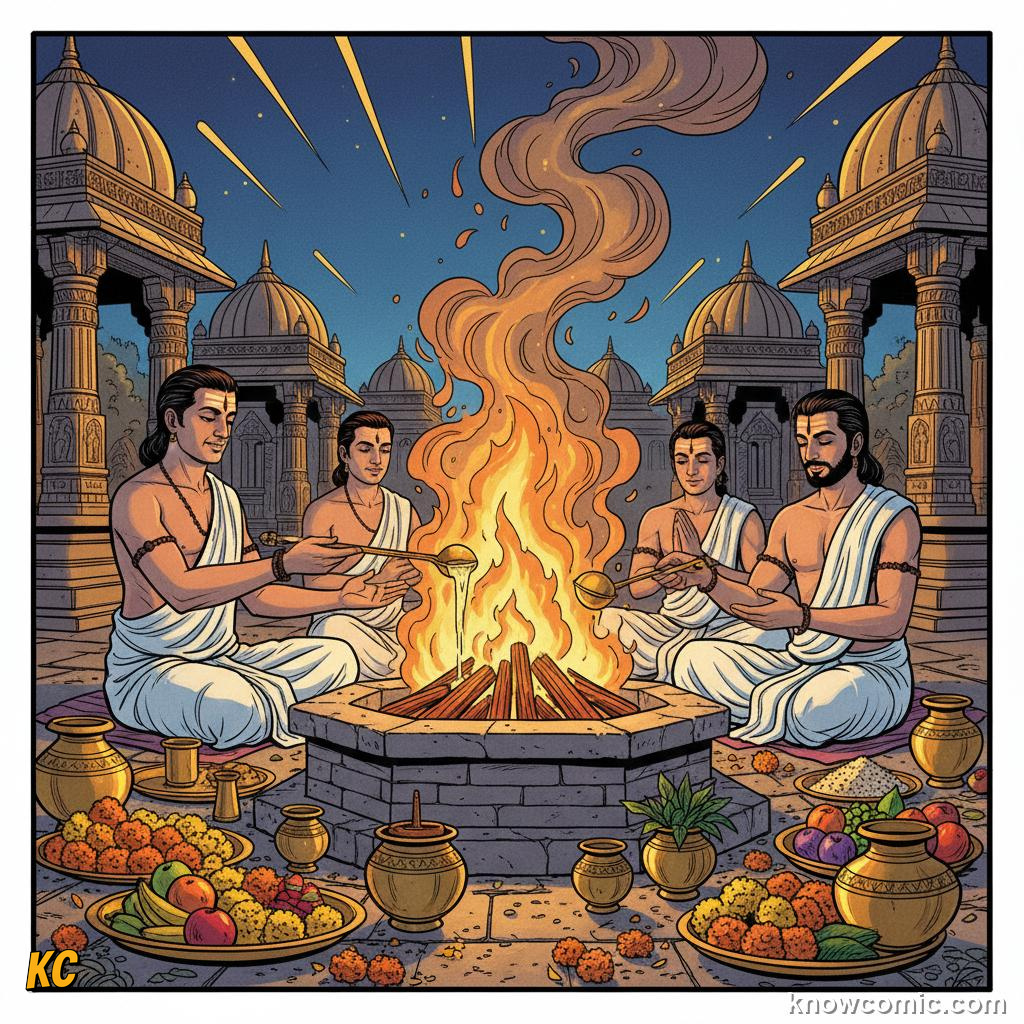
🔥 Vedic sacrifice rituals
🕉️ Early Hindu traditions
📖 Oral memorisation schools
🕉️ Early Hindu traditions
📖 Oral memorisation schools
EPICS
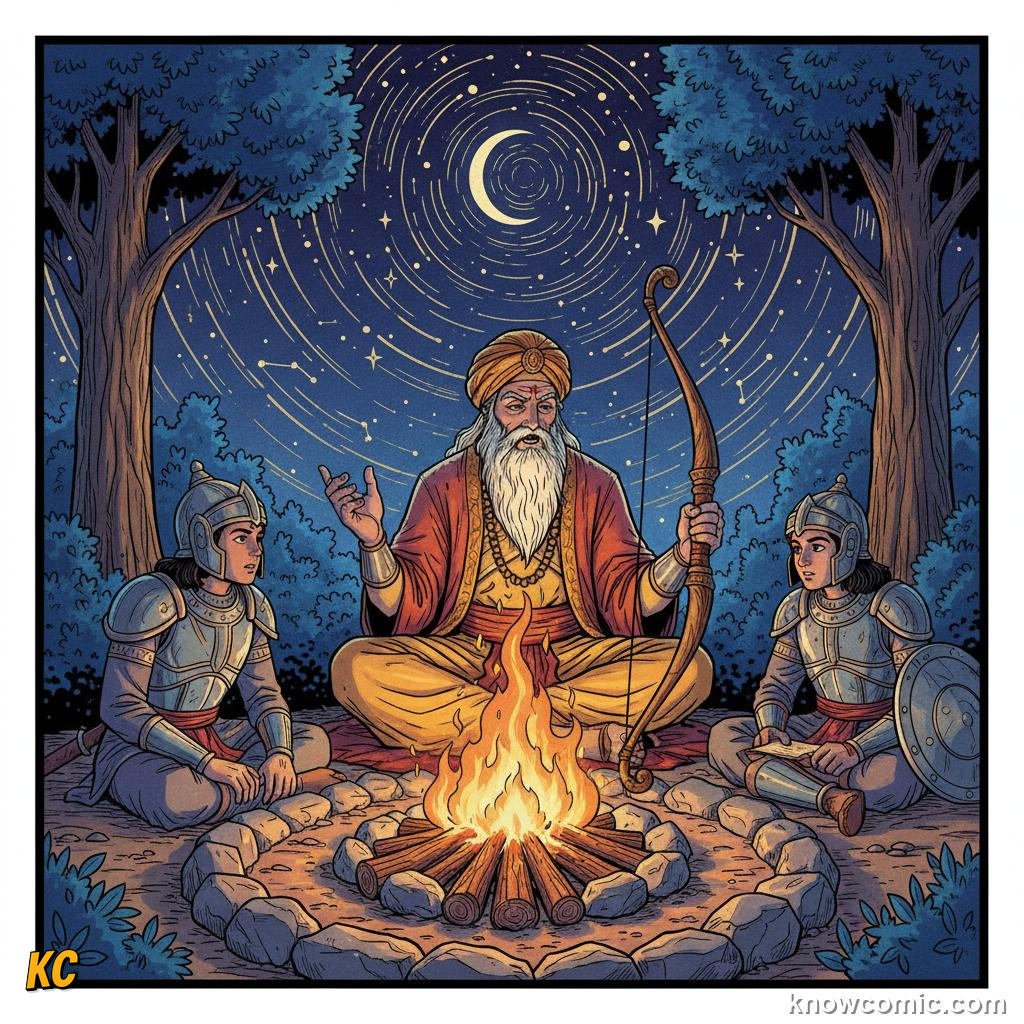
📜 Mahabharata, great war tale
🏹 Ramayana, prince Rama
🎭 Dance & drama ever since
🏹 Ramayana, prince Rama
🎭 Dance & drama ever since
JAIN & BUDDHIST REBELS
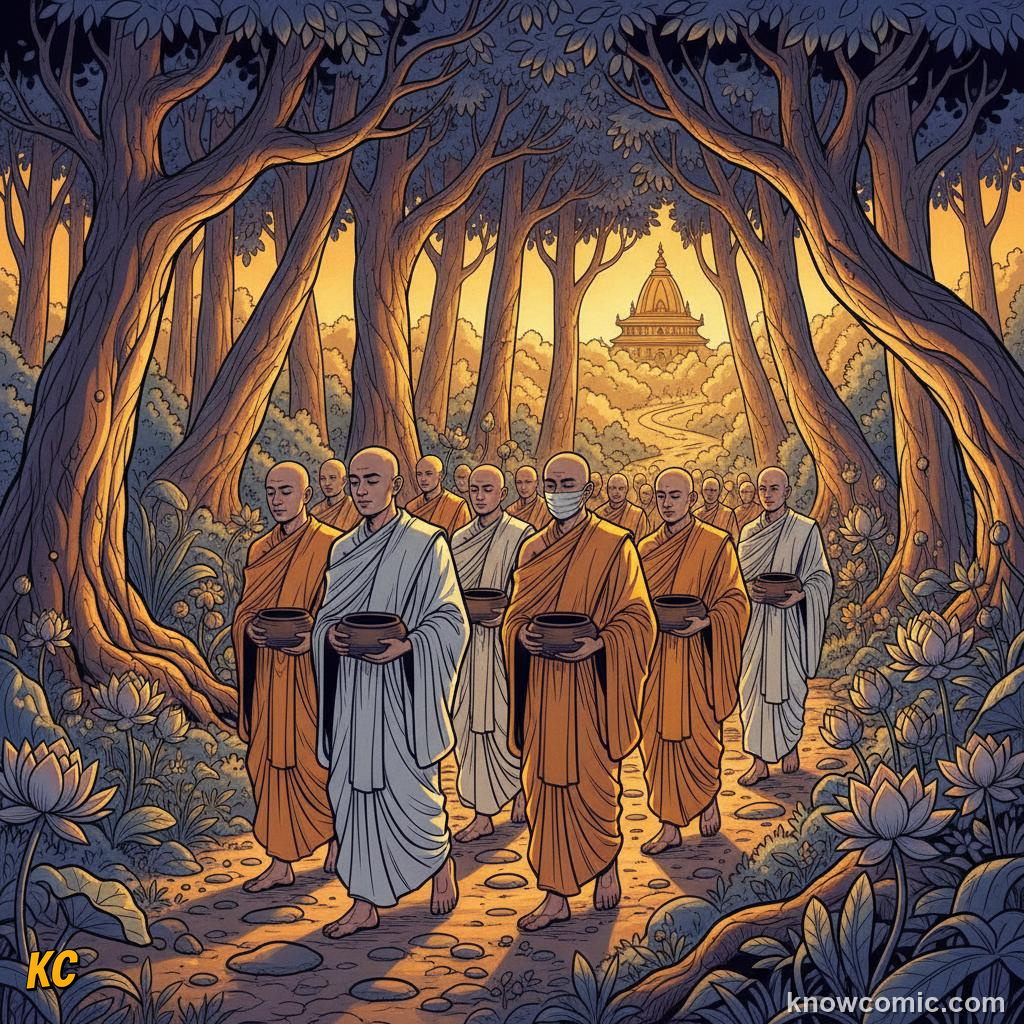
🕉️ Ahimsa, non-harm ethic
🧘 Renouncers & monks
🌏 Missionaries across Asia
🧘 Renouncers & monks
🌏 Missionaries across Asia
PAGE 3 OF 5, THE BUDDHA & KING ASHOKA
BODHI TREE
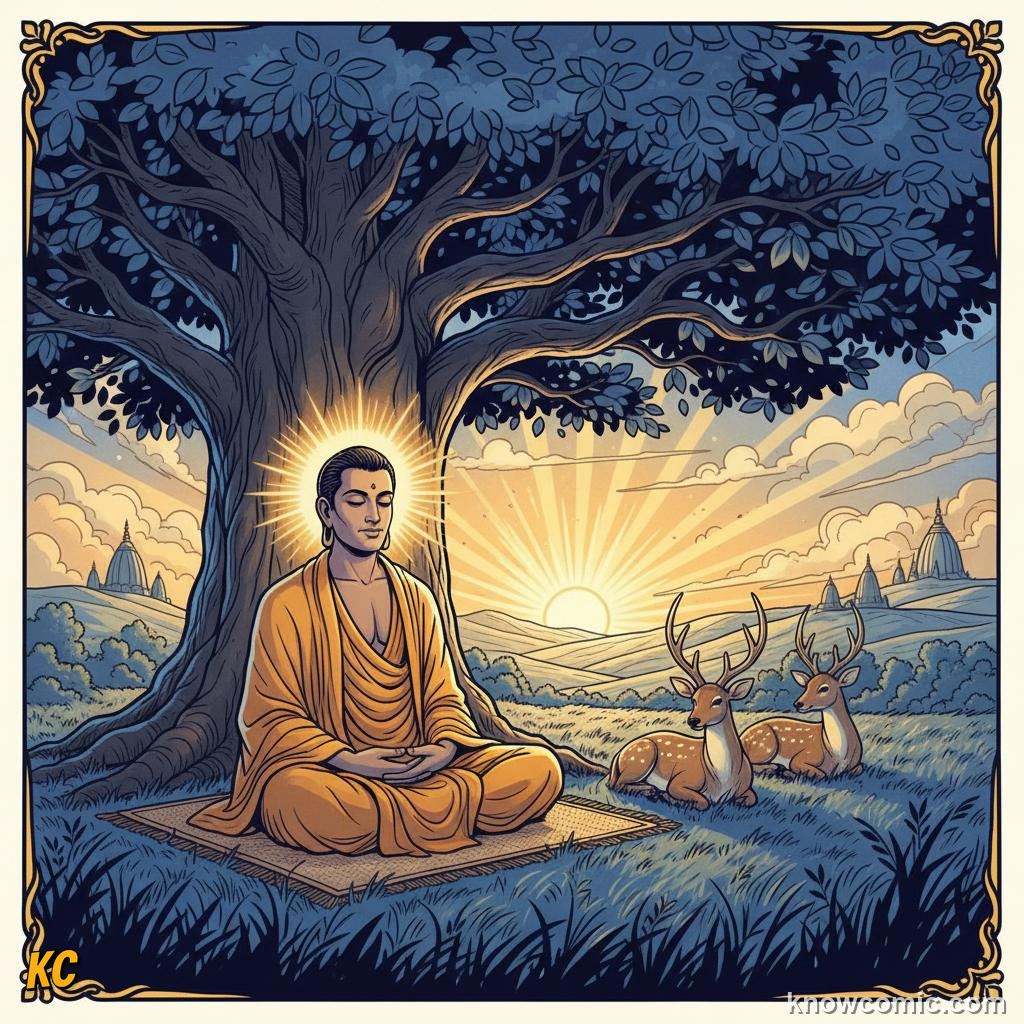
🌳 Siddhartha Gautama
🤫 Meditation under fig
☸️ "Awakened one", Buddha
🤫 Meditation under fig
☸️ "Awakened one", Buddha
DHARMA WHEEL
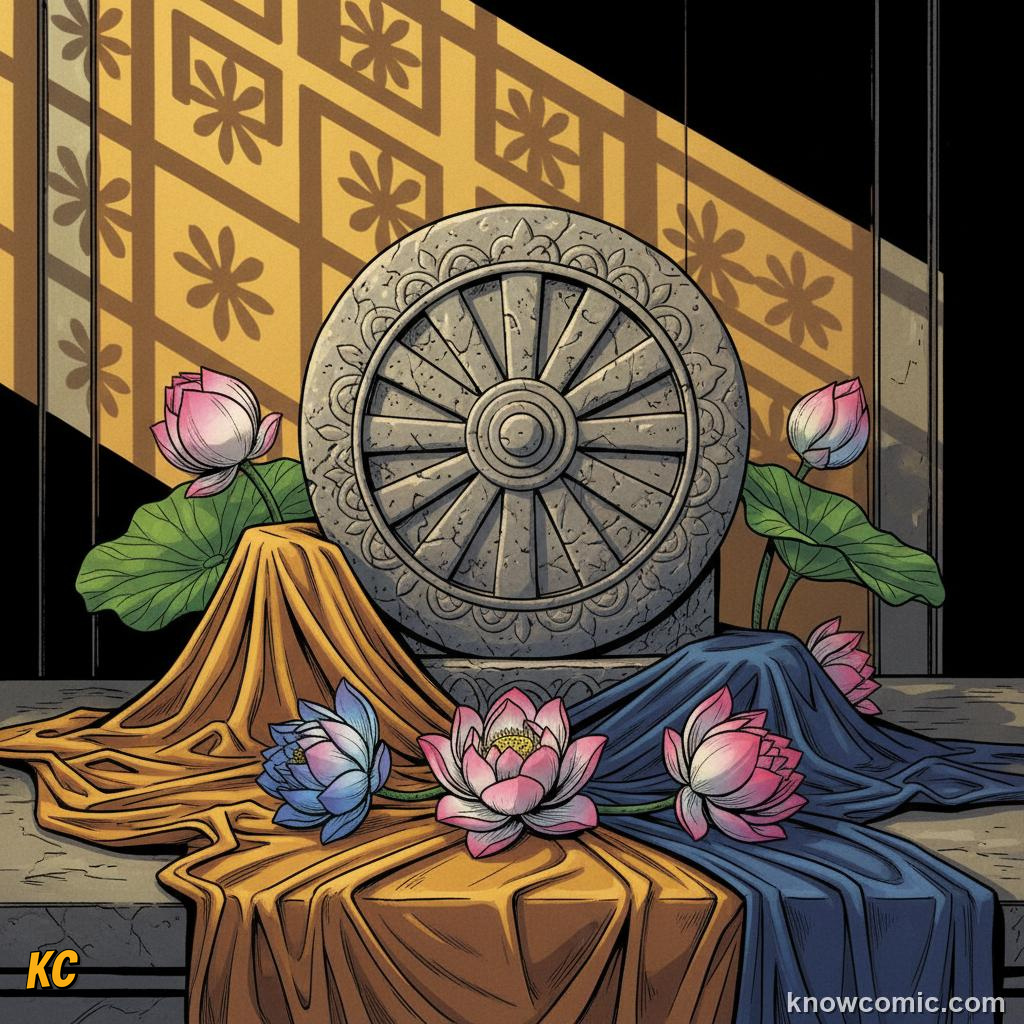
☸️ Four Noble Truths
🧘 Eightfold Path
🏛️ Monasteries & stupas
🧘 Eightfold Path
🏛️ Monasteries & stupas
C. 268–232 BCE
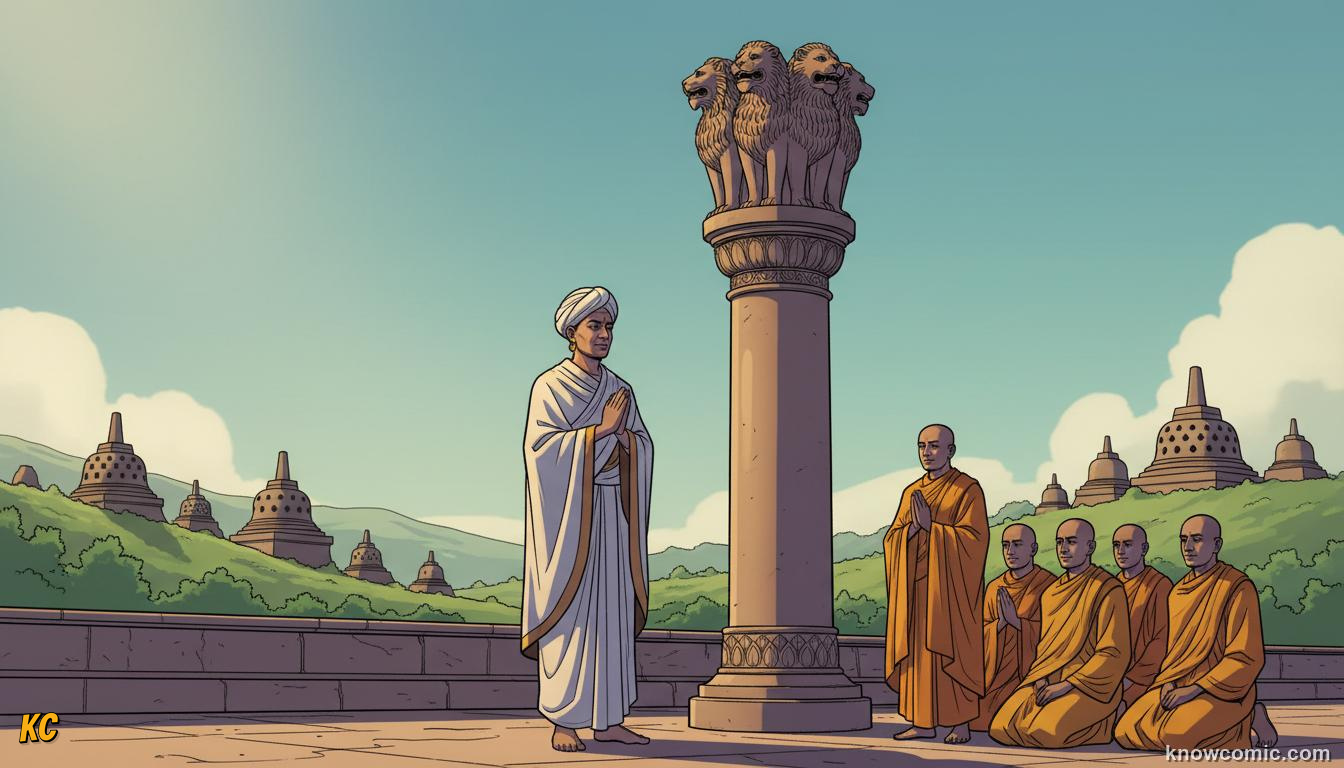
FROM CONQUEROR TO PREACHER OF PEACE
Chandragupta Maurya forged India's first huge empire; his grandson Ashoka began as a fierce warrior who carved his victories into rock. After a brutal war in Kalinga (modern Odisha), Ashoka was horrified by the suffering he had caused. He converted to Buddhism, not by forcing others, but by inscribing edicts on pillars and boulders across the realm in local languages people could actually read. He planted roadside trees for shade, dug wells, built hospitals for people and animals, and sent missionaries to Sri Lanka and beyond. His lion-capital pillar top, four lions back to back, is independent India's national emblem today. Ashoka showed that power could pivot from sword to moral example.
🦁 ROCK EDICTS
Dozens of Ashoka inscriptions survive from Afghanistan to Andhra, a stone Twitter feed from 2,300 years ago.
DHARMA!
PAGE 4 OF 5, GUPTA GOLDEN AGE: MATH, MEDICINE & STARS
320–550 CE
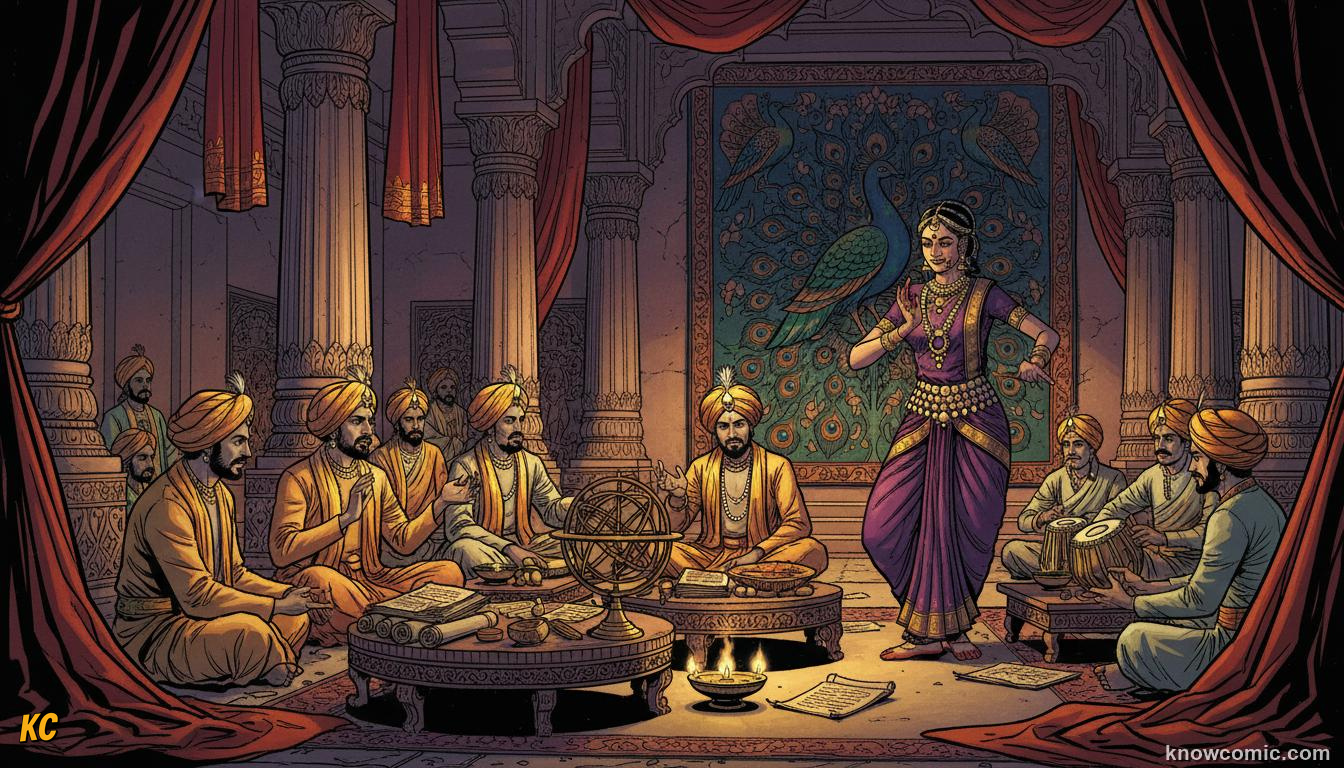
ARYABHATA, ZERO & THE ROTATING HEAVENS
Under Gupta emperors, mathematicians treated zero as a number, not just an empty space, a breakthrough that reached the Arab world and eventually Europe as "Arabic numerals" (really Indian digits). Aryabhata explained eclipses, Kalidasa wrote Sanskrit poetry so beautiful it is still performed, physicians set bones and catalogued herbs in the Charaka Samhita, and artists painted Ajanta cave murals glowing with jewel tones. Hindu temples began sprouting tall shikhara towers covered in sculpture, stone textbooks of myth for worshippers who could not read scrolls. Indian astronomers debated whether Earth spun, ideas centuries ahead of their time. For a few shining centuries North India felt like the mathematical and literary capital of the world.
🔢 INFINITY OF NUMBERS
Indian mathematicians also explored very large numbers, concepts useful for astronomy and later for calculus.
GUPTA!
AJANTA
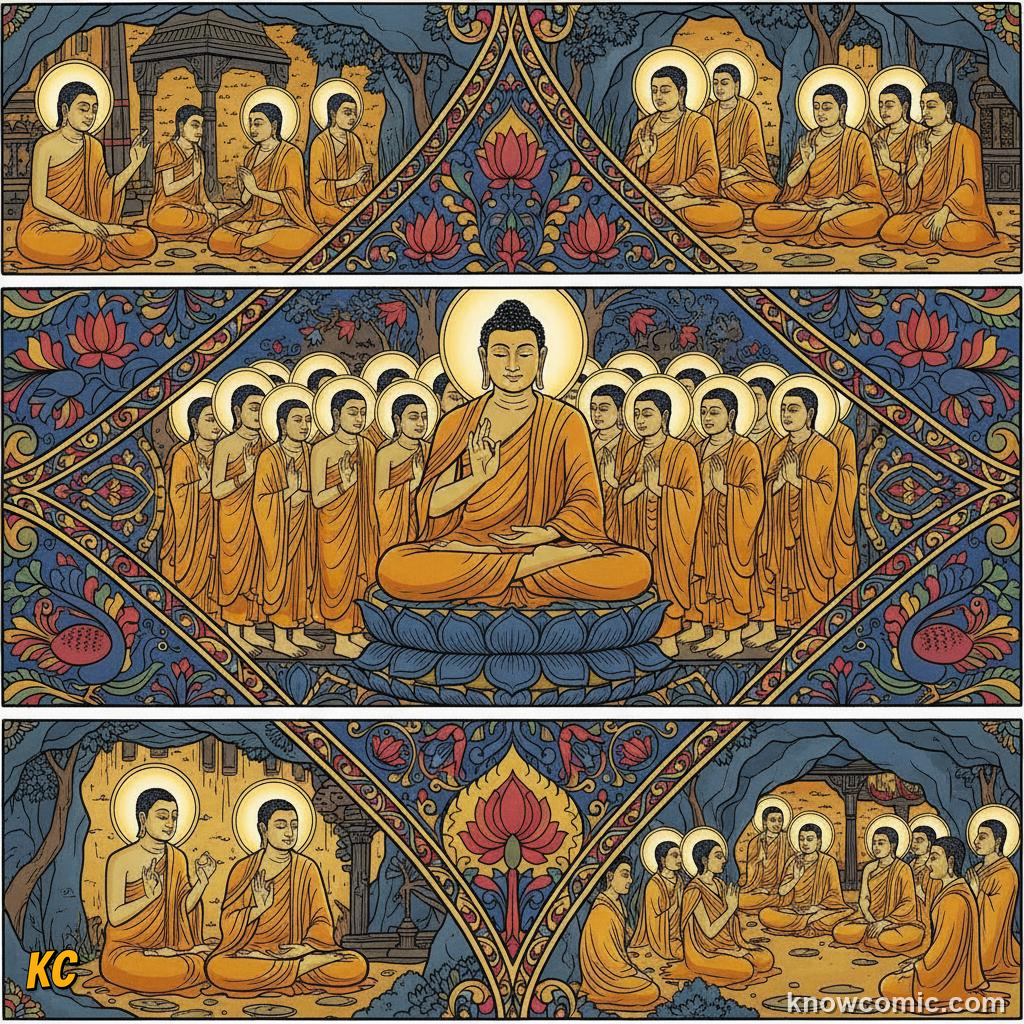
🎨 Buddhist cave paintings
🕯️ Monks' cells carved in cliff
📅 Spanning centuries of art
🕯️ Monks' cells carved in cliff
📅 Spanning centuries of art
TEMPLE TOWER
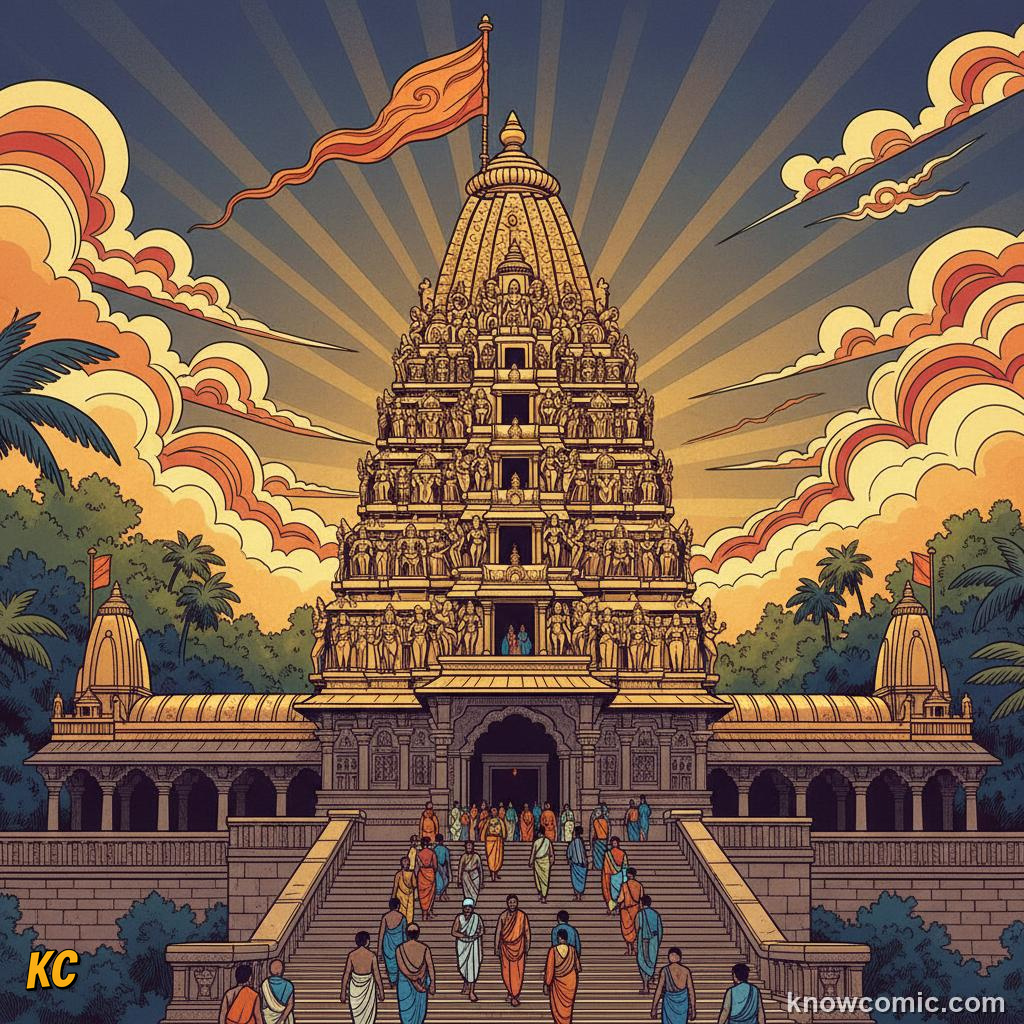
🛕 Curving shikhara spire
🐘 Gods & myths in stone
🔔 Pilgrimage bells
🐘 Gods & myths in stone
🔔 Pilgrimage bells
ASTRONOMY
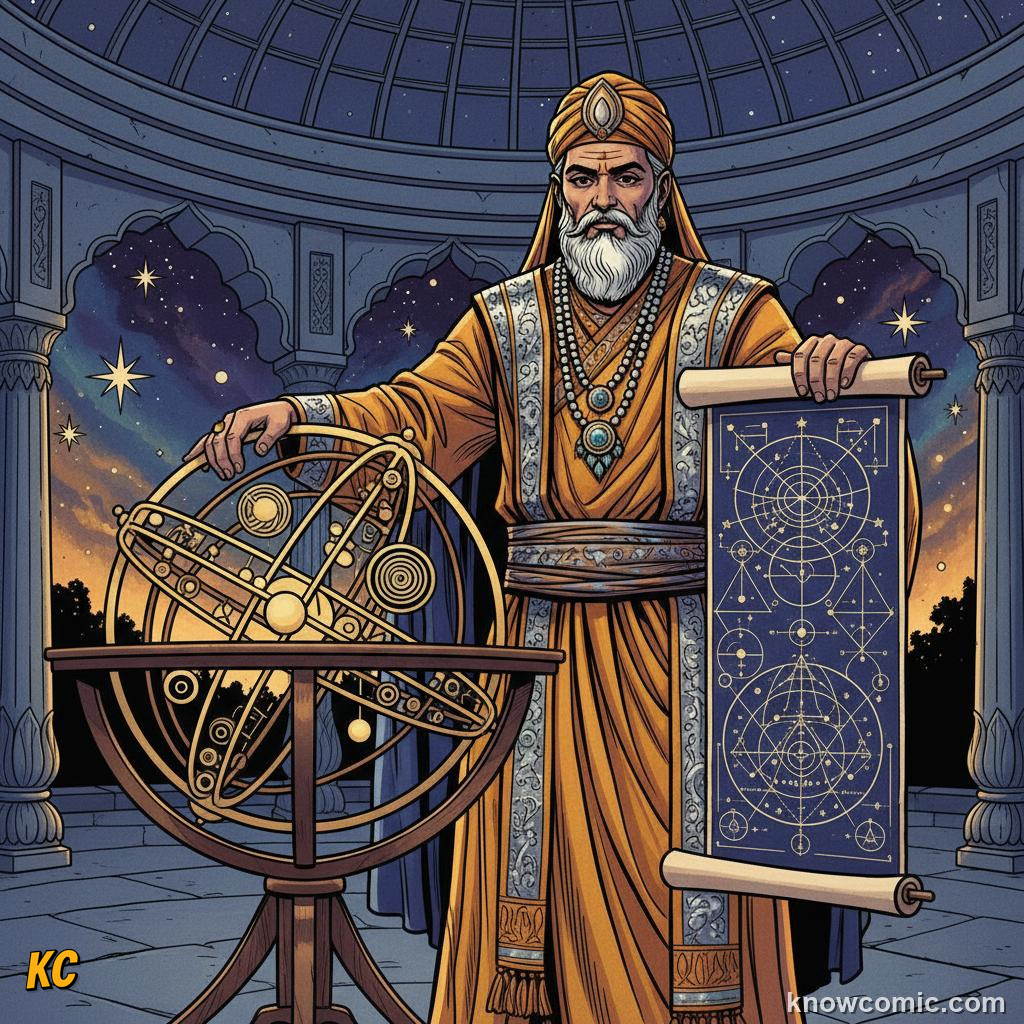
🌙 Lunar month tables
🪐 Planetary models
📐 Trigonometry roots
🪐 Planetary models
📐 Trigonometry roots
PAGE 5 OF 5, CONTINUITY: FROM ANCIENT ROOTS TO TODAY
LIVING TRADITIONS
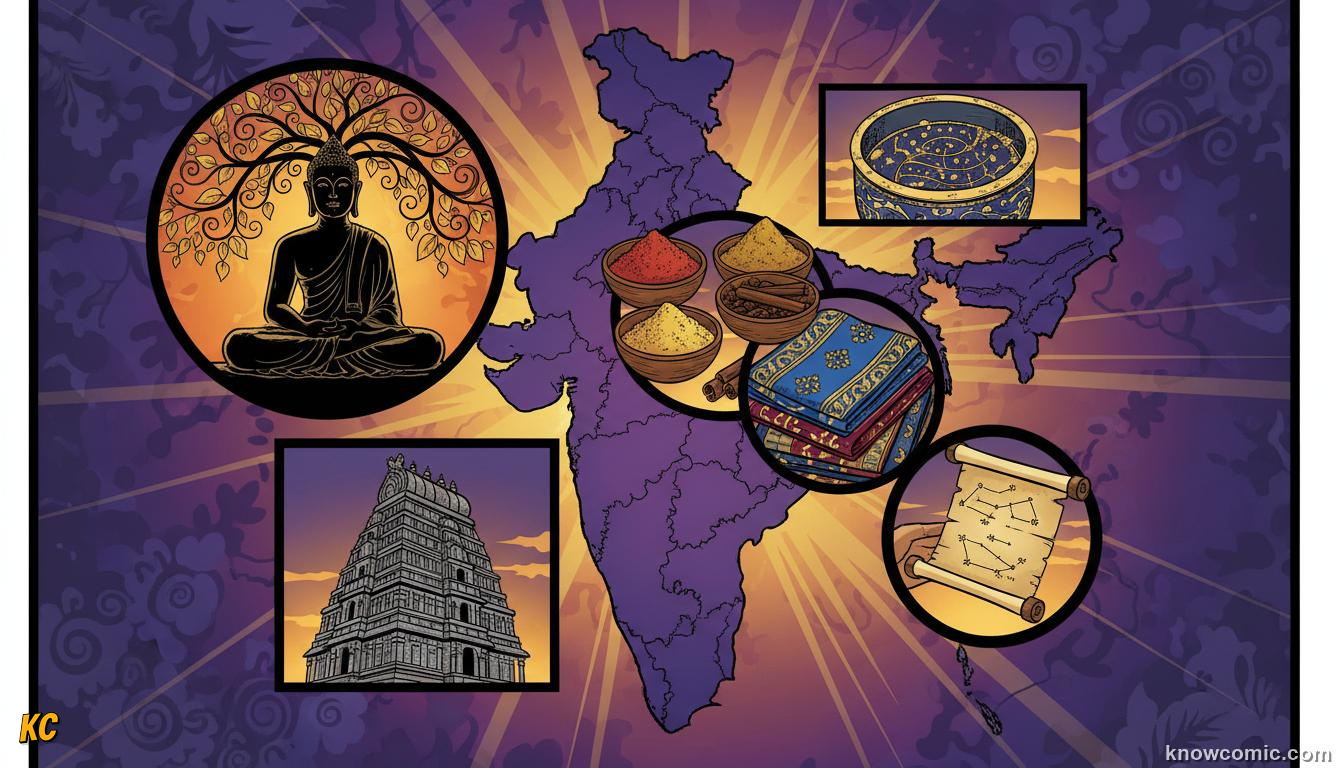
IDEAS THAT TRAVELLED THE WORLD
Ancient India was never frozen, Persian, Greek, Central Asian and Southeast Asian influences flowed back and forth along monsoon sea lanes and caravan routes. Buddhism reshaped art from Afghanistan to Japan; Hindu numerals and chess migrated west; spices and cotton textiles financed empires. Muslim sultanates and later the Mughals added new layers of architecture, language and cuisine, yet Sanskrit learning and temple worship never vanished. British colonial rule brought pain and resistance, but also rediscovery of India's own past through archaeology. Today the Republic of India holds dozens of languages, a billion citizens and a space programme, yet still lights lamps on Diwali, chants texts older than Homer and debates philosophy first argued on the Ganges plains three thousand years ago.
🌍 LEGACY SNAPSHOT
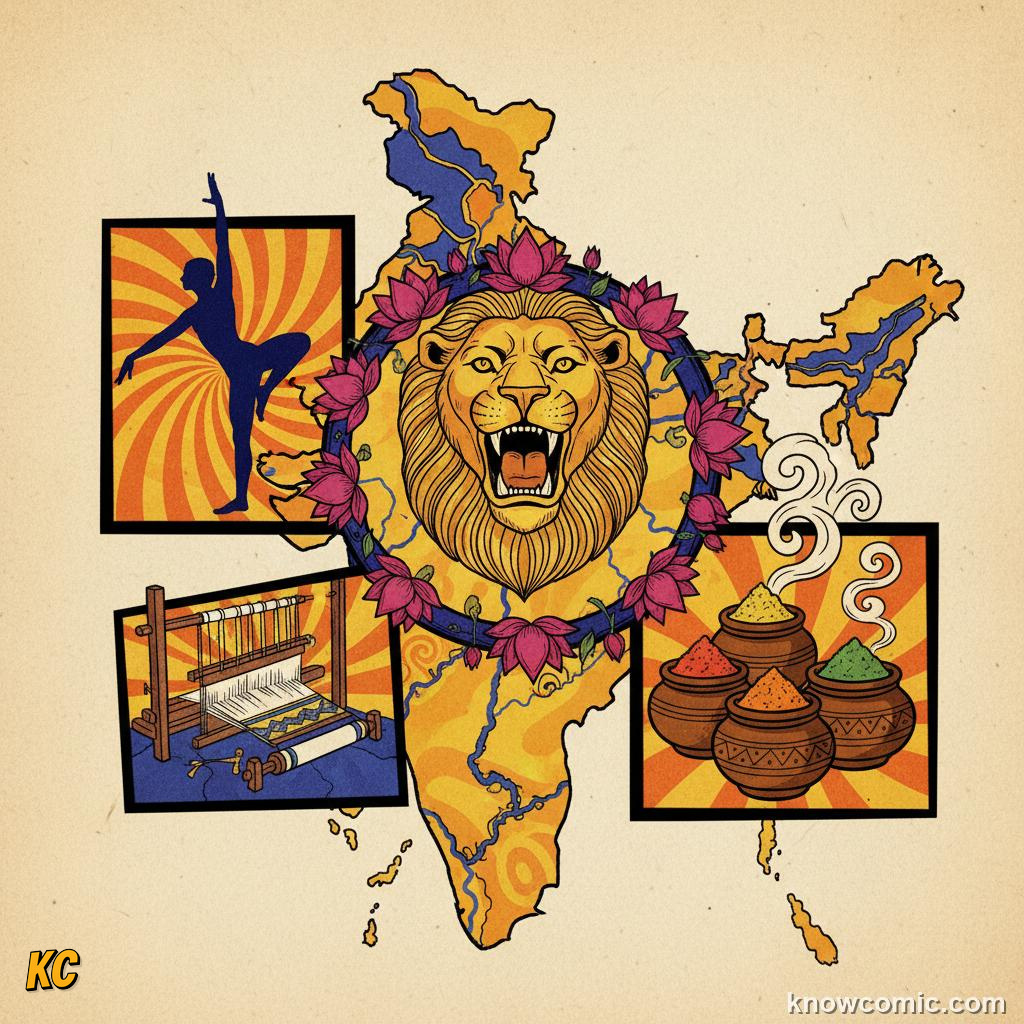
Decimal arithmetic · concept of zero · Buddhism & Hindu traditions · yoga & meditation · epics & storytelling · textiles & spices · rich astronomical record.
INDIA!
TIMELINE
c. 2600 BCE Indus cities
c. 500 BCE Buddha teaches
c. 265 BCE Ashoka's edicts
320–550 CE Gupta golden age
c. 500 BCE Buddha teaches
c. 265 BCE Ashoka's edicts
320–550 CE Gupta golden age
REMEMBER
🏛️ KEY FACTS
Indus grid cities · Vedas in Sanskrit · Buddha & spread of Buddhism · Ashoka's pillars · Gupta maths & art · continuous cultural threads to modern South Asia.
✅ Indus, drainage & seals
✅ Vedic age, hymns & ideas
✅ Ashoka, dharma in stone
✅ Gupta, "golden age"
✅ Vedic age, hymns & ideas
✅ Ashoka, dharma in stone
✅ Gupta, "golden age"
🧠 QUIZ TIME!
ANCIENT INDIA · 5 QUESTIONS
QUESTION 01
Which two famous cities belonged to the Bronze Age Indus Valley civilisation?
QUESTION 02
The ancient hymns called the Vedas were composed mainly in which language?
QUESTION 03
Which Mauryan emperor is famous for spreading Buddhist ideals through rock and pillar edicts after renouncing brutal conquest?
QUESTION 04
The Gupta period (c. 320–550 CE) is often called India's…
QUESTION 05
Siddhartha Gautama, who sought enlightenment under a fig tree, became known as the…
0/5
LOADING...