🌙 THE MOON: OUR NEIGHBOUR
PAGE 1 OF 5, A SILVER WORLD NEXT DOOR
NEIGHBOUR
EARTH'S ONLY NATURAL SATELLITE
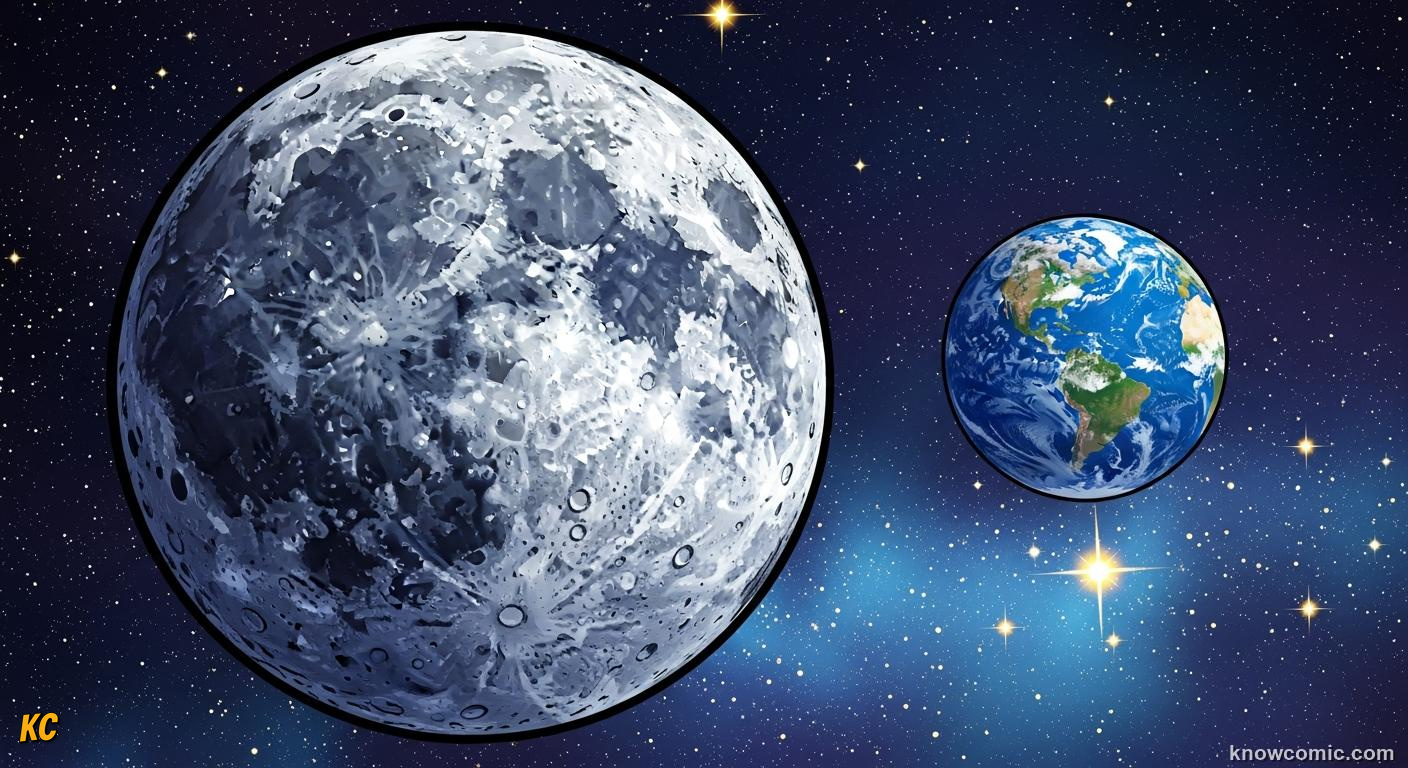
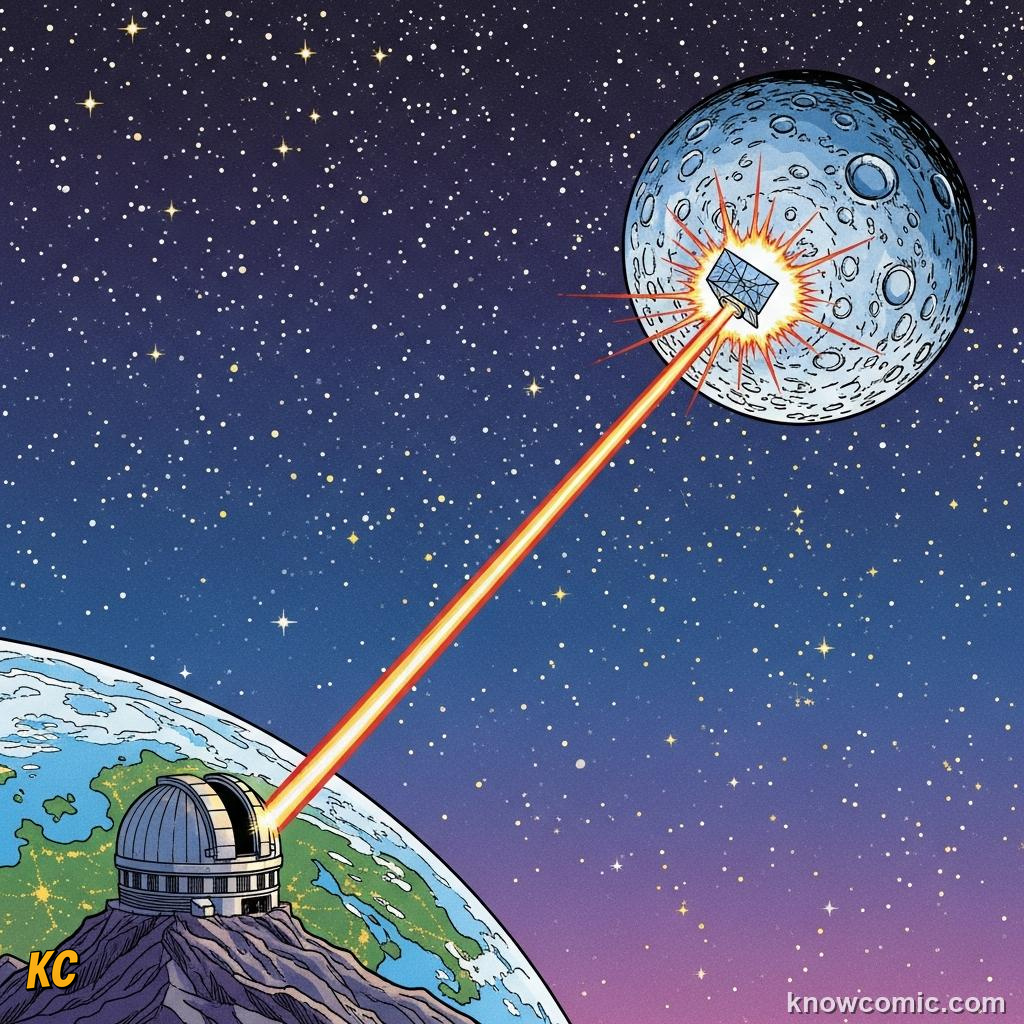
The Moon is a cold, airless ball of rock about one-quarter Earth's diameter, roughly the width of Australia, orbiting us at an average distance of about 384,000 km, close to thirty Earth-widths away. It shines by reflected sunlight, waxing and waning through a month-long pattern humans have used for calendars since prehistory. Telescopes reveal craters frozen in time; laser pulses fired from observatories still bounce off mirrors left by Apollo astronauts to measure the drift of the orbit to millimetre precision.
⚡ DID YOU KNOW?
You could fit every planet in the solar system side by side in the Earth–Moon gap, with room to spare, yet the Moon dominates our night sky because it is so close.
MOON!
SIZE
🌍 ~1/4 Earth diameter
⚖️ Mass ~1/81 of Earth
⚖️ Mass ~1/81 of Earth
GAP
📏 ~384 000 km average
🛰️ Few days by spacecraft
🛰️ Few days by spacecraft
PAGE 2 OF 5, TWO KINDS OF “MONTH”
ORBIT
SIDEREAL VS SYNODIC
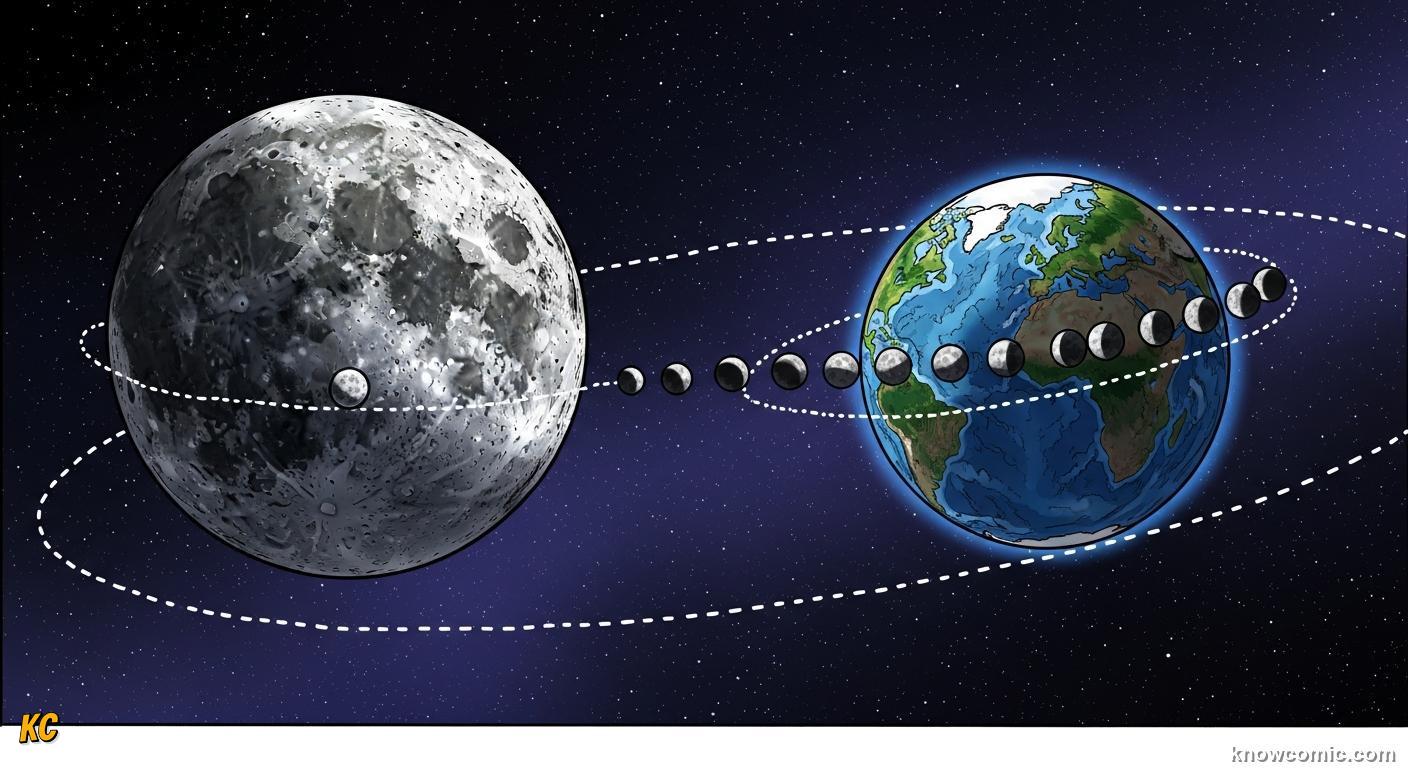
The Moon completes one circuit relative to distant stars in about 27.3 days, the sidereal month. Yet phases repeat every ~29.5 days, the synodic month, because Earth has moved along its own orbit around the Sun, so the Moon must travel a little farther to regain the same Sun–Earth–Moon angle. Calendars that track full moons follow the synodic rhythm; satellite engineers tracking orbital planes care about sidereal numbers.
MONTH!
LOCKED
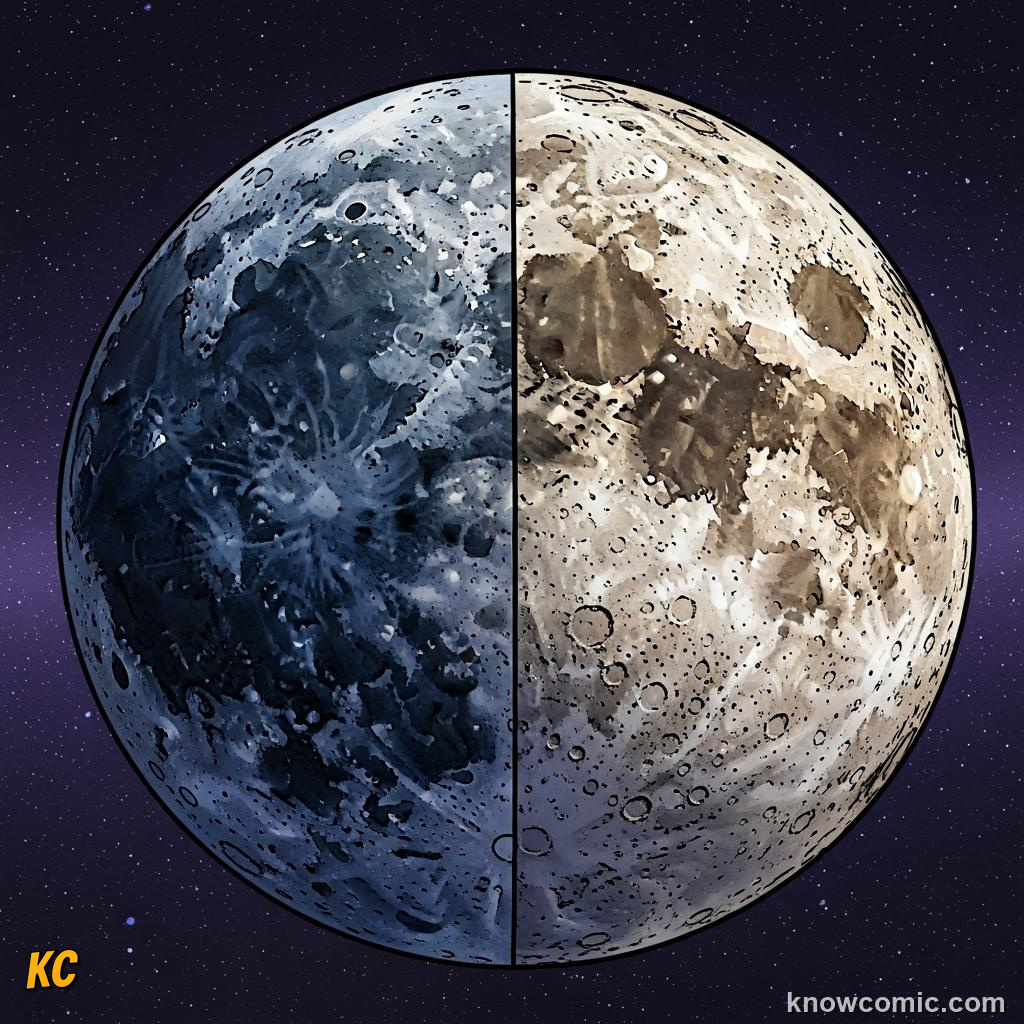
🌗 Same face to Earth
🌊 Tides slowed rotation long ago
🌊 Tides slowed rotation long ago
LIBRATION
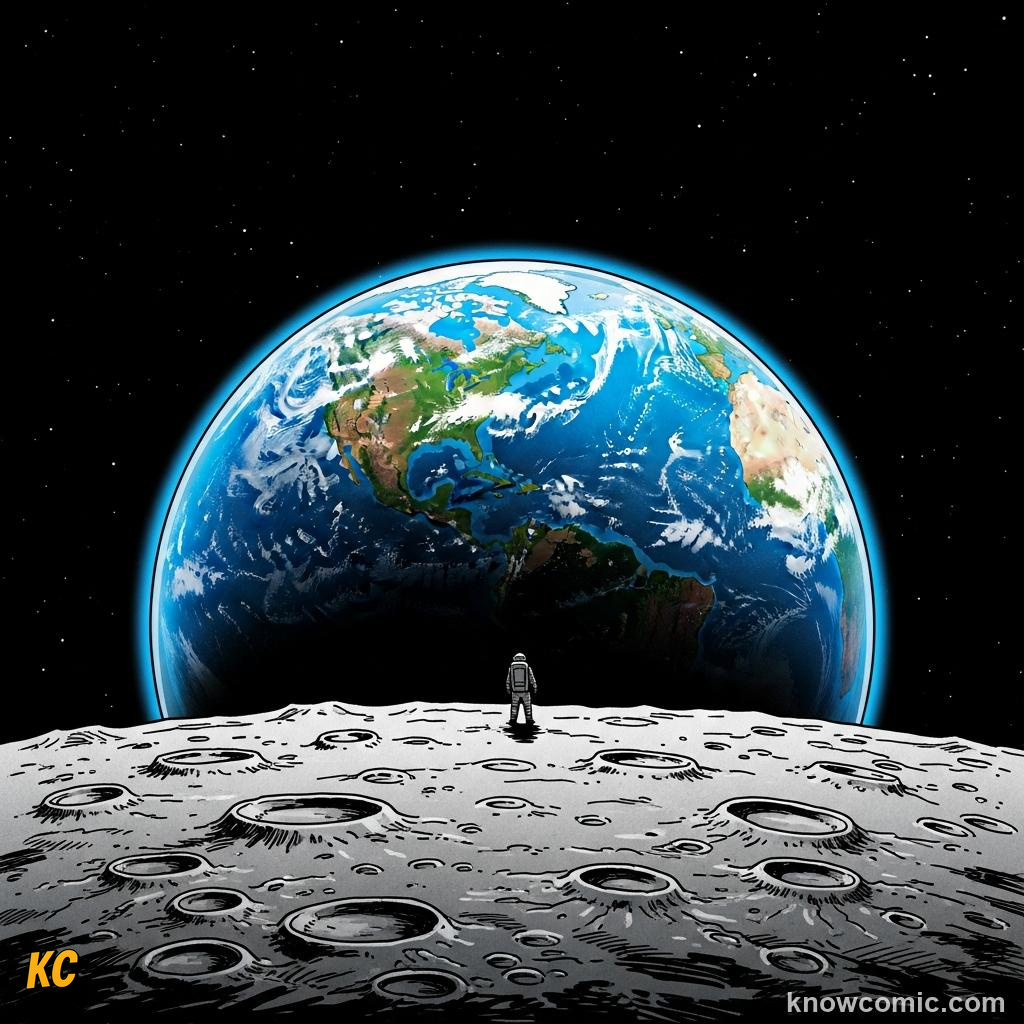
↔️ Slight wobble reveals edges
🔭 Not a perfect freeze
🔭 Not a perfect freeze
CAPTURE?
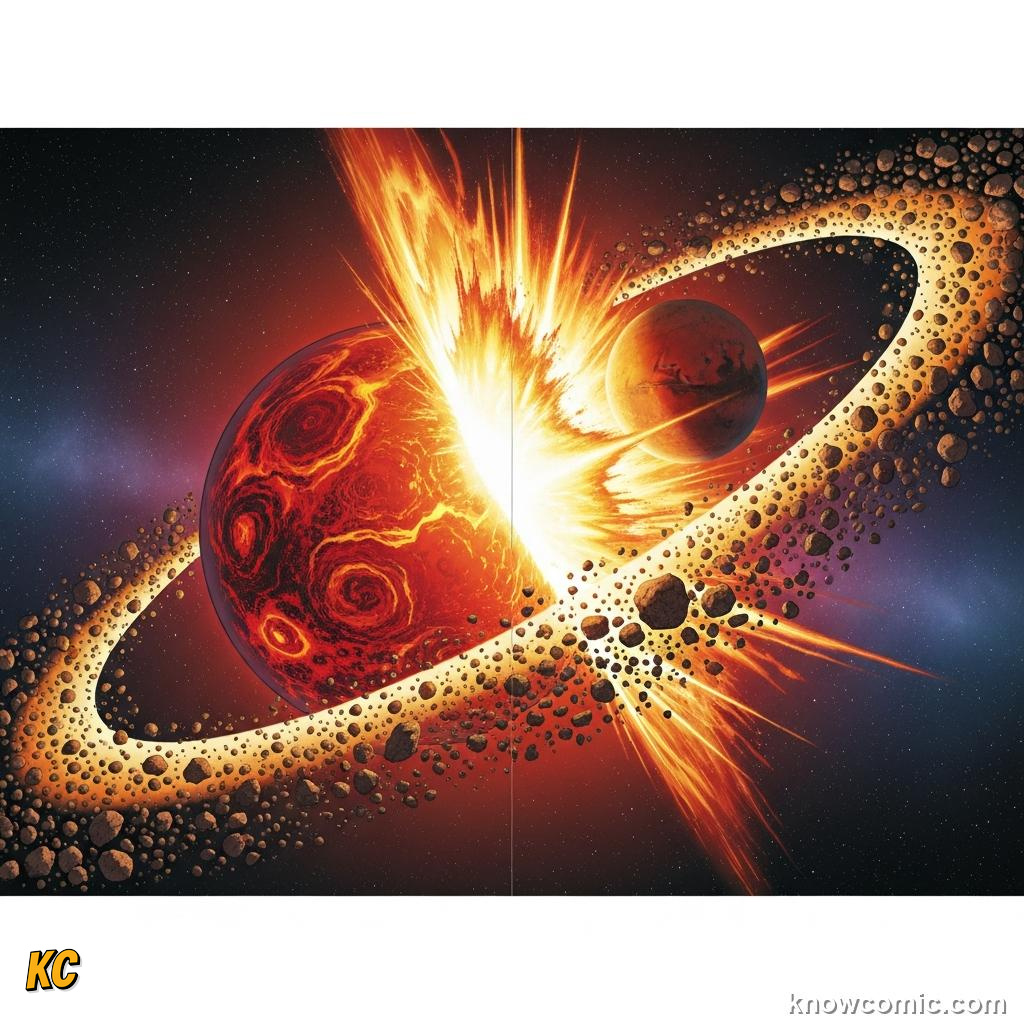
💥 Giant-impact model popular
🪨 Debris ring → Moon
🪨 Debris ring → Moon
PAGE 3 OF 5, PHASES: SUNLIGHT ON A BALL
CRESCENT
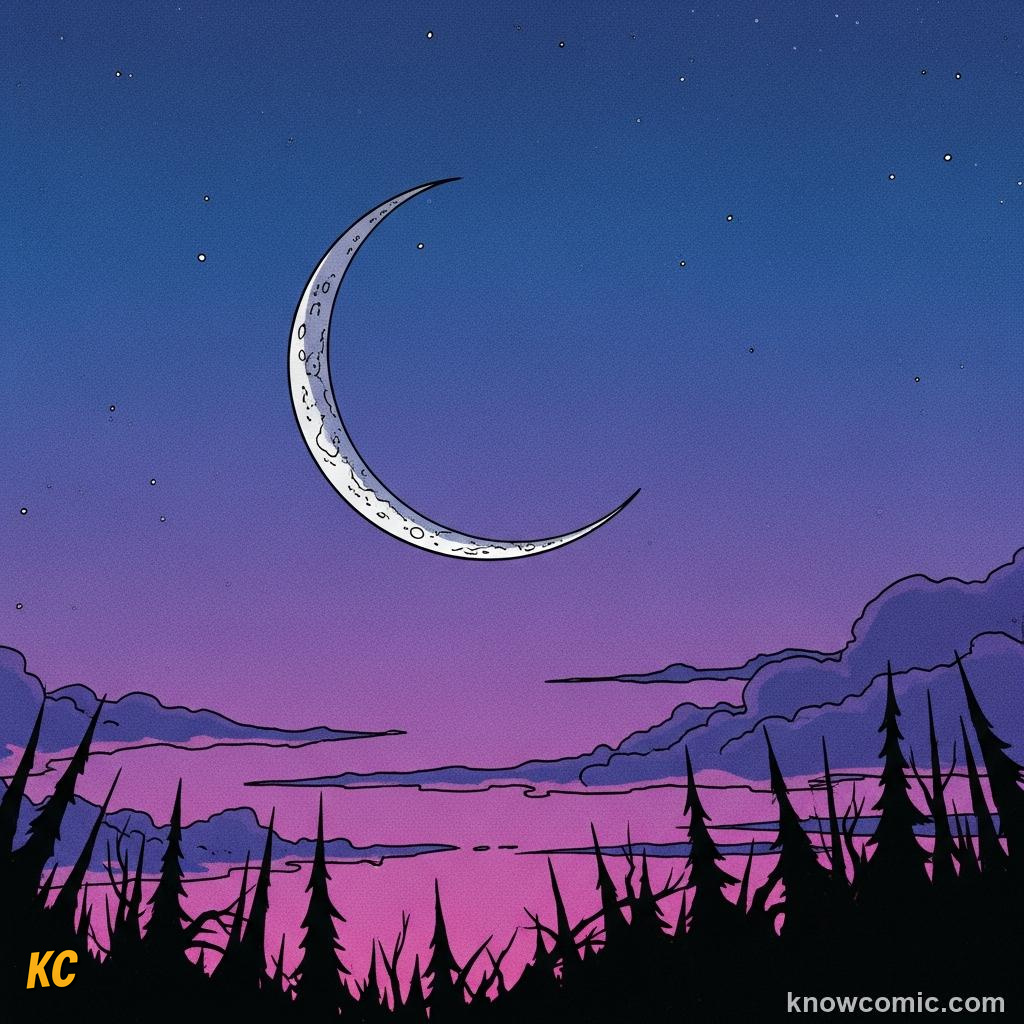
🌒 Thin sunlit sliver
🌑 New near noon sky
🌑 New near noon sky
GIBBOUS
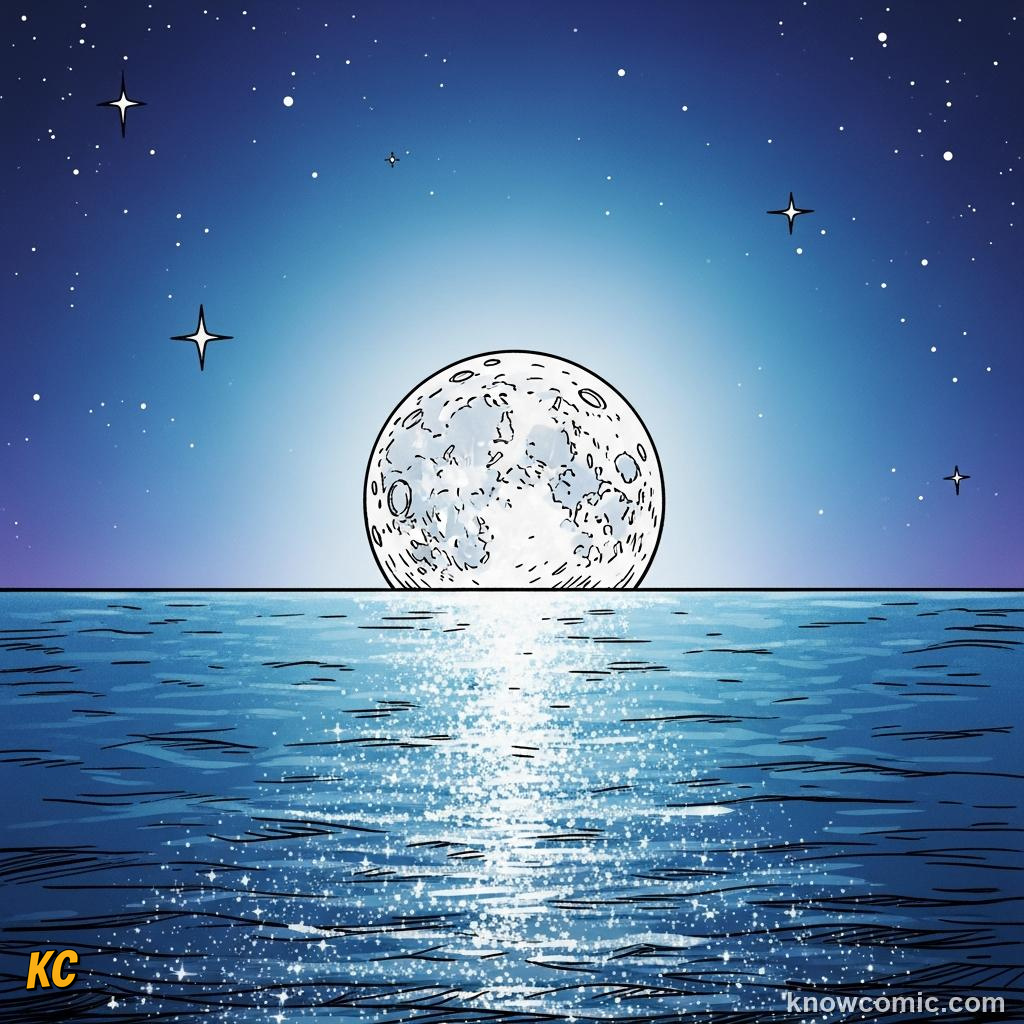
🌔 More than half lit
🌕 Full opposite Sun
🌕 Full opposite Sun
PHASE
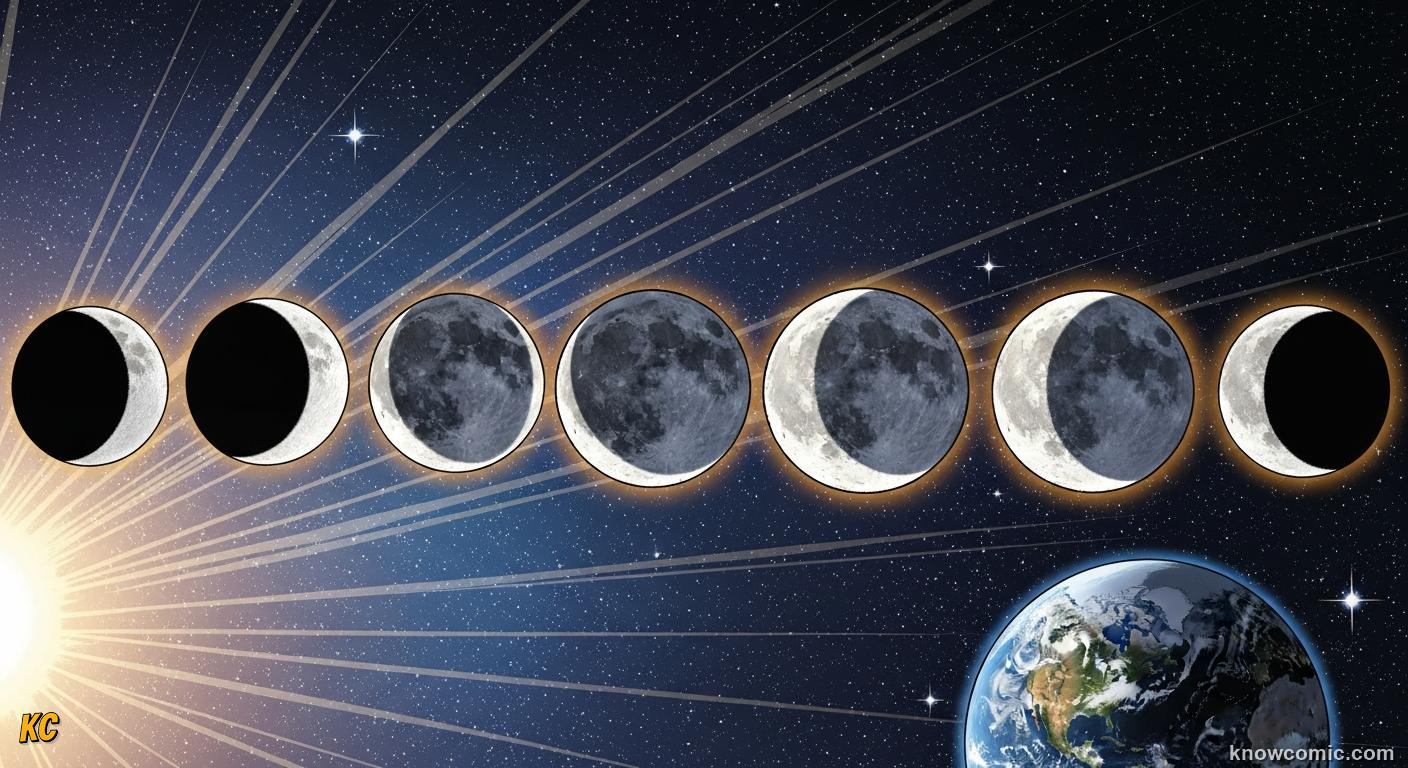
HALF THE MOON IS ALWAYS SUNLIT
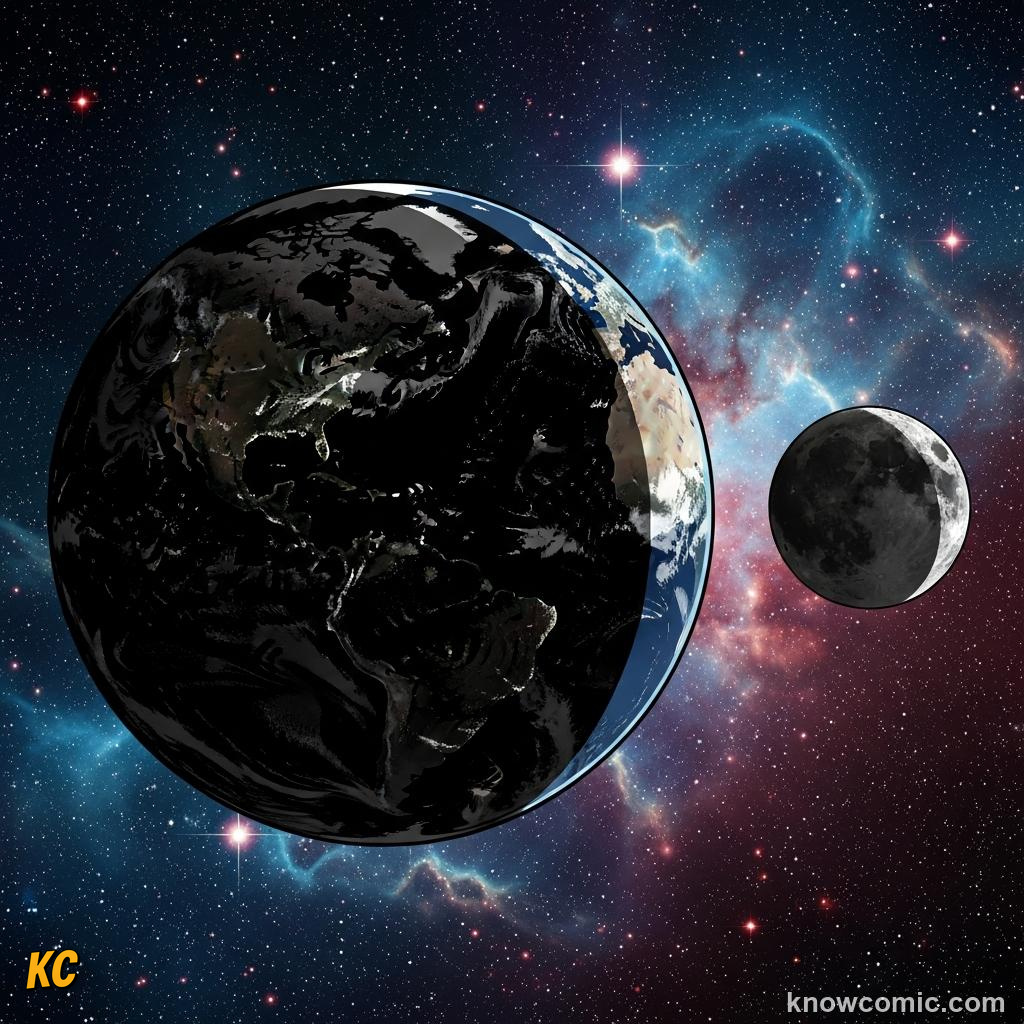
From Earth we see only the hemisphere facing us combined with the Sun direction, geometry, not Earth's shadow (that is lunar eclipses, rare special cases). First quarter rises at noon; full moon rises at sunset; third quarter waits until midnight. Photographers plan “golden hour” landscapes with moonrise tables; biologists study animal behaviour tied to bright nights.
PHASE!
PAGE 4 OF 5, TIDES AND THE MOON'S PULL
TIDES
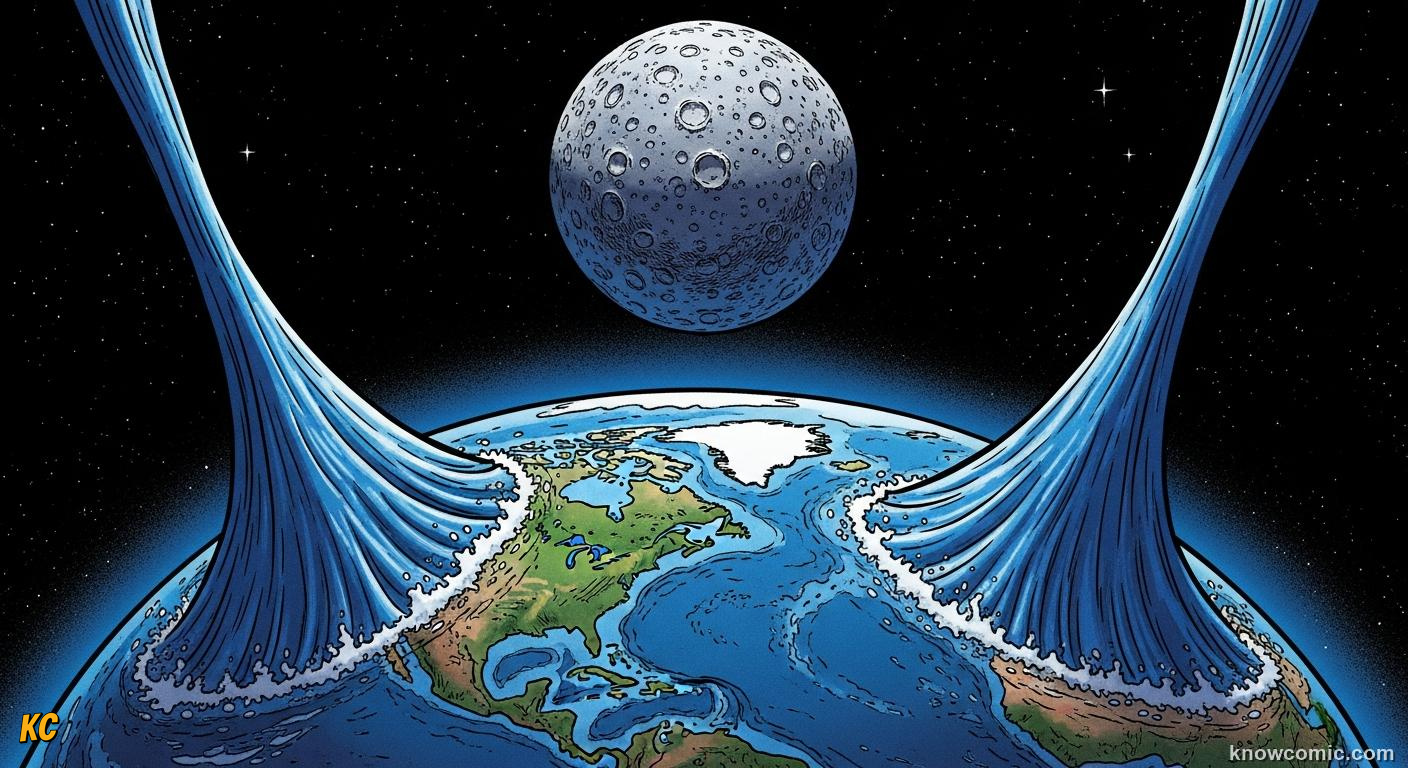
TWO BULGES CHASE THE MOON
Gravity weakens with distance, so ocean water nearest the Moon feels strongest pull and piles into a bulge while Earth's centre is pulled harder than water on the far side, leaving a second bulge opposite the Moon. Earth spins underneath, so most coastlines see two high tides per day when the rhythm matches basin geometry. When Sun and Moon align at new or full moon, spring tides run extra high; at quarter moons, neap tides moderate the swing.
TIDE!
SPRING
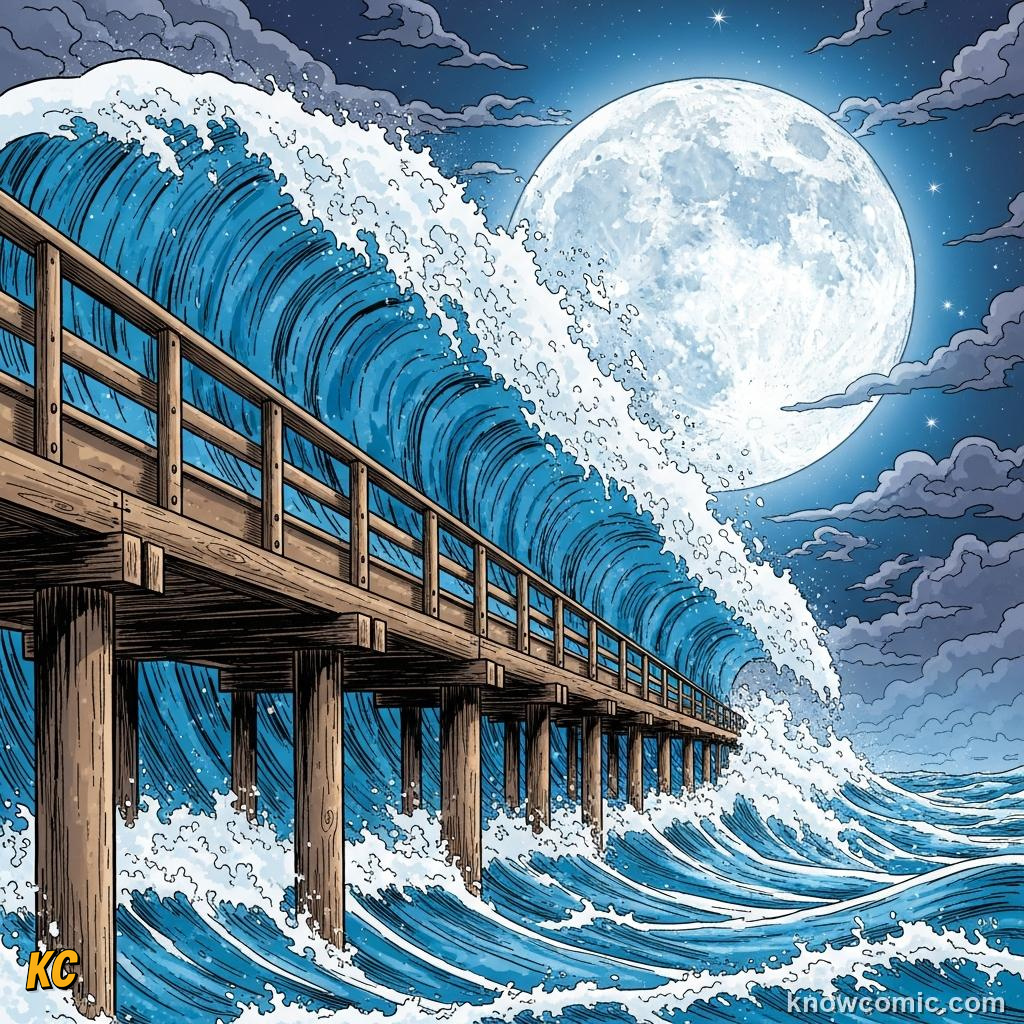
☀️ Sun + Moon combine
🌊 Extra range
🌊 Extra range
NEAP
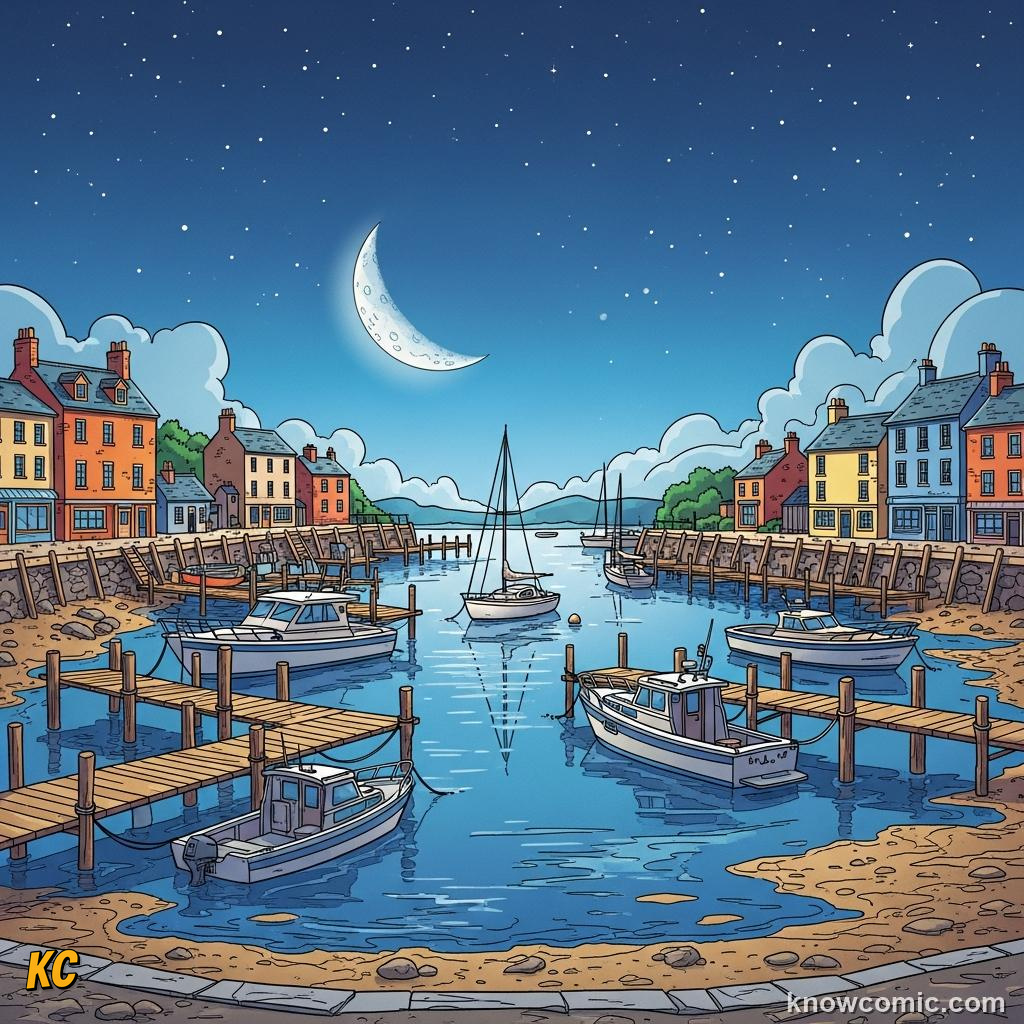
📐 Sun at 90° to Moon
📉 Smaller tidal range
📉 Smaller tidal range
BAY
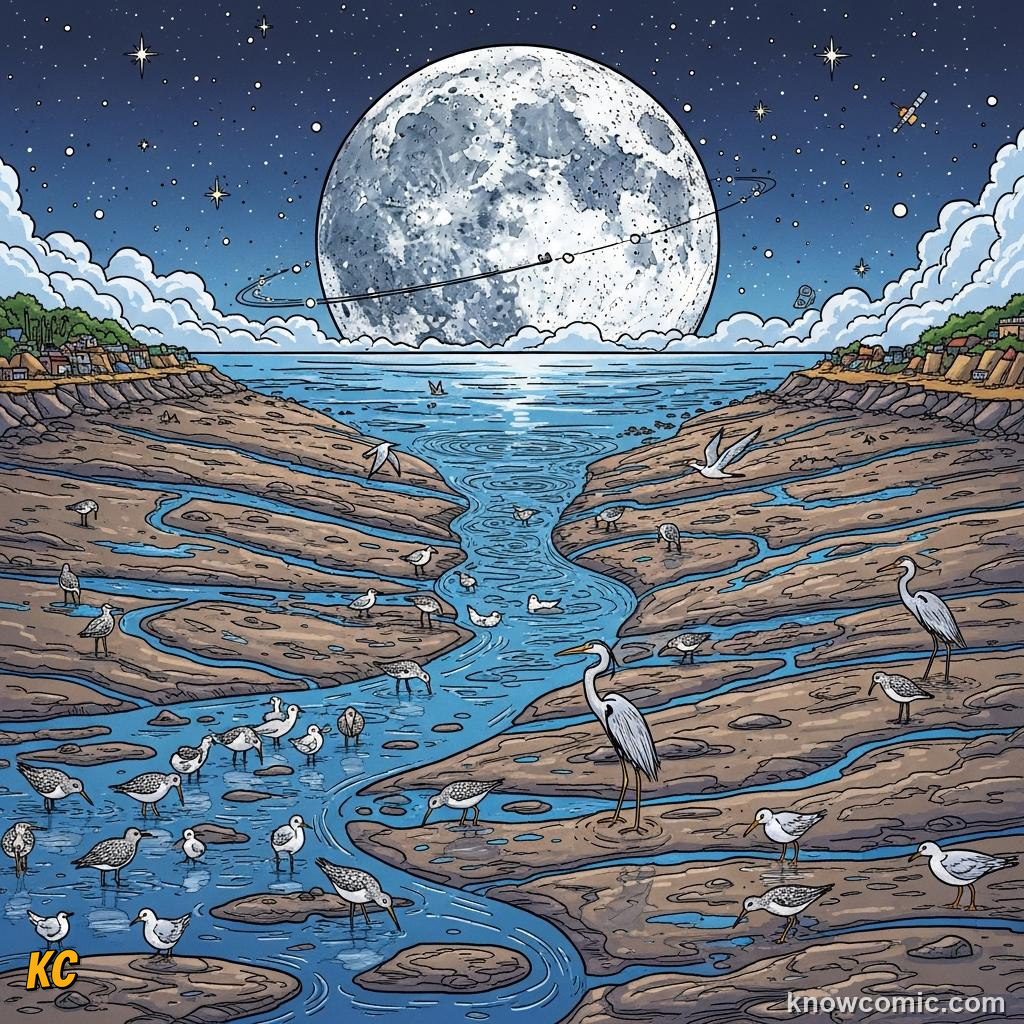
🌊 Fundy-style funnel shapes
⚠️ Storm surge adds on top
⚠️ Storm surge adds on top
PAGE 5 OF 5, FOOTPRINTS, DUST AND FUTURE VISITS
APOLLO
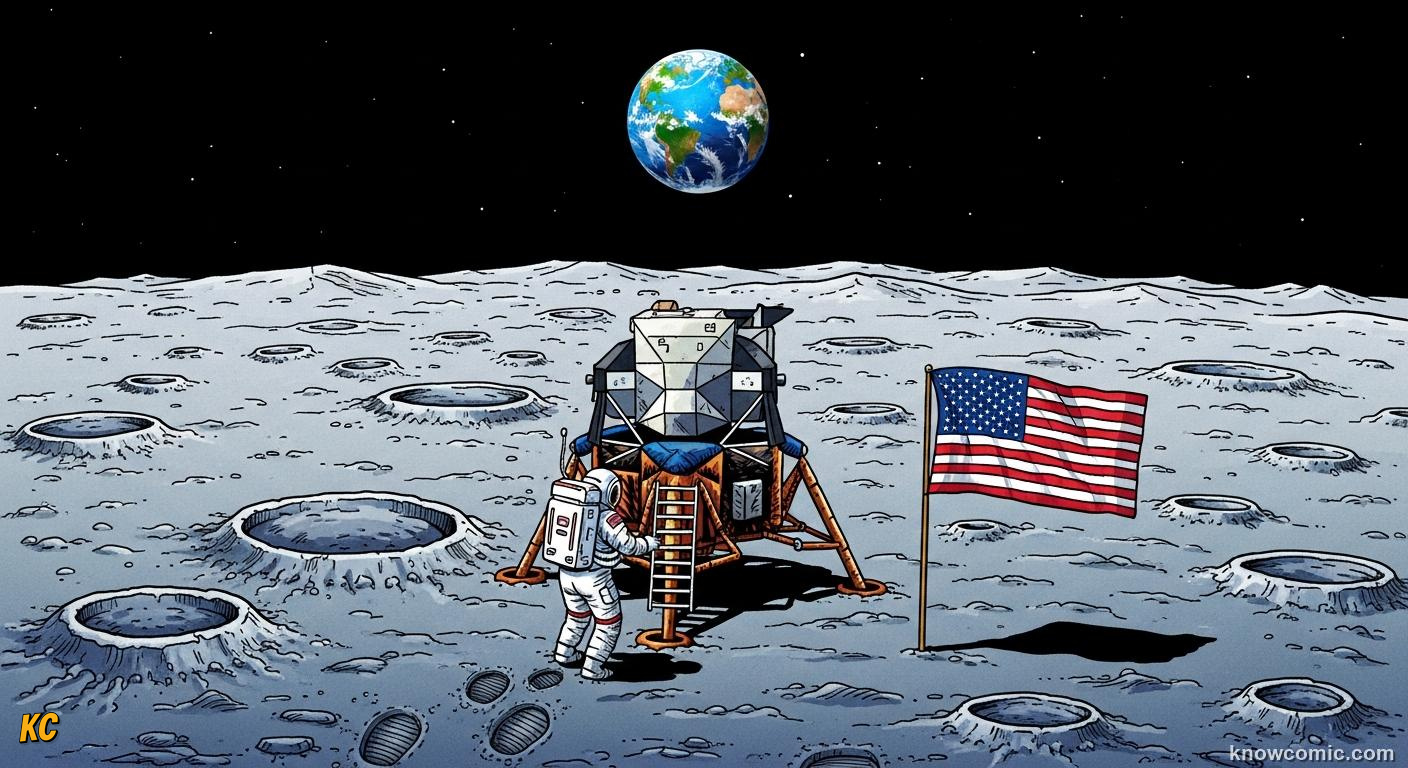
TWELVE HUMANS WALKED HERE 1969–1972
Six crews landed in daylight equatorial zones, collecting rocks that proved ancient lava flows and giant impacts. Fine regolith clings electrostatically to spacesuits; no air means hammering heat extremes between lunar day and night. Robotic missions from many nations map ice in polar shadows today, a possible resource for breathing oxygen and rocket fuel, while NASA's Artemis programme aims to return crews with international partners for long-term science bases.
BACK!
ICE
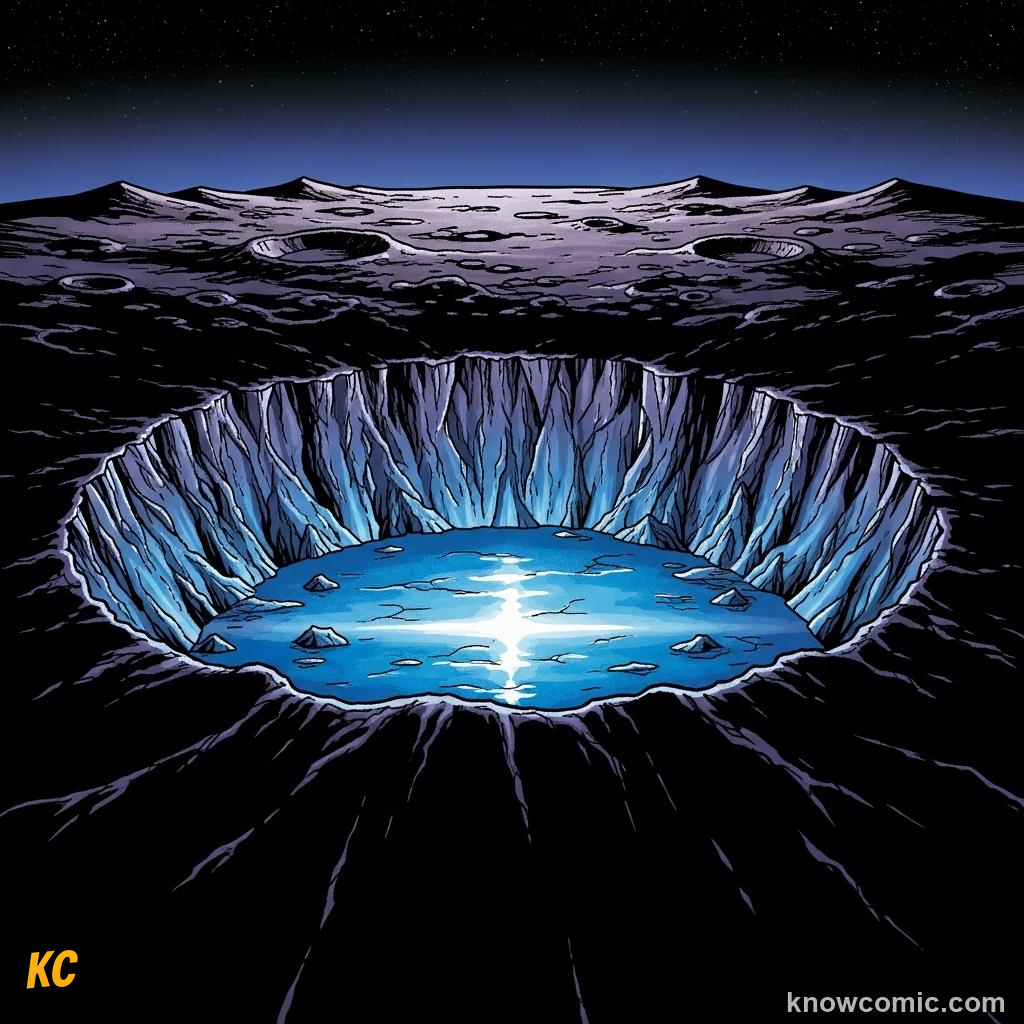
❄️ Cold traps at poles
💧 Molecules from comets?
💧 Molecules from comets?
REMEMBER
🌙 KEY FACTS
Only natural satellite · ~27.3 d sidereal orbit · ~29.5 d phase cycle · Tidally locked face · Drives ocean tides · Airless ancient surface.
✅ Phases = Sun angle
✅ Two tidal bulges
✅ Exploration continues
✅ Two tidal bulges
✅ Exploration continues
🧠 QUIZ TIME!
THE MOON · 5 QUESTIONS
QUESTION 01
What does the Moon mainly orbit?
QUESTION 02
Why do we always see roughly the same side of the Moon from Earth?
QUESTION 03
Ocean tides on Earth are mainly caused by…
QUESTION 04
About how long is one complete cycle of Moon phases (new moon to new moon)?
QUESTION 05
The Moon's atmosphere is best described as…
0/5
LOADING...