🌸 THE FOUR SEASONS
PAGE 1 OF 5, TILT MEETS THE YEARLY ORBIT
TILT
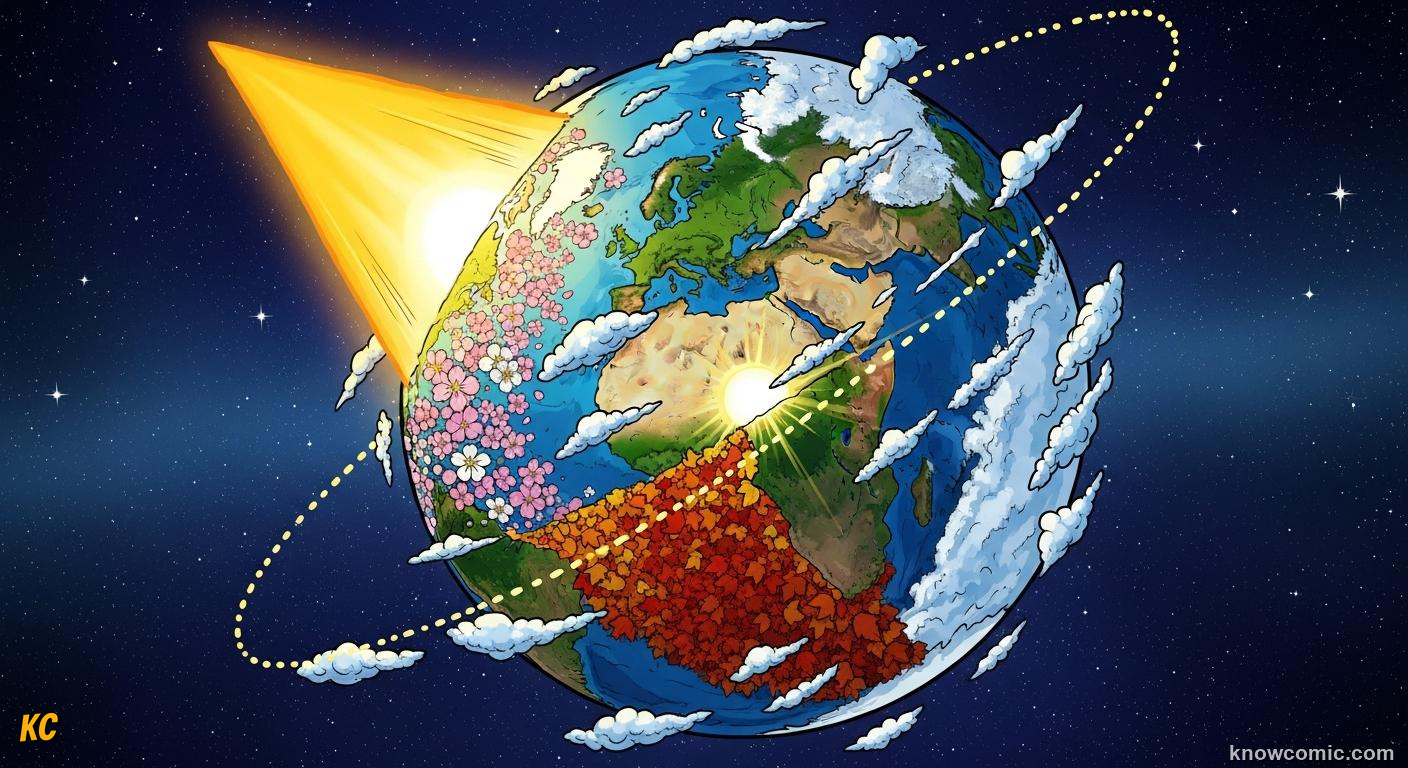
WHY SEASONS ARE NOT JUST “CLOSER TO THE SUN”
Earth's axis stays tilted about 23.5° as we orbit the Sun once per year. For months the Northern Hemisphere leans toward the star, sunlight hits at a steeper angle and days lengthen into summer. Six months later it leans away, rays spread over a larger area, days shorten, winter arrives. If seasons were only distance, both hemispheres would warm together in January, they do not. The tilt explains opposite seasons across the equator.
⚡ DID YOU KNOW?
Near perihelion (closest approach) Earth is actually slightly closer to the Sun in Northern winter, distance is not the main seasonal switch; tilt is.
TILT!
AXIS
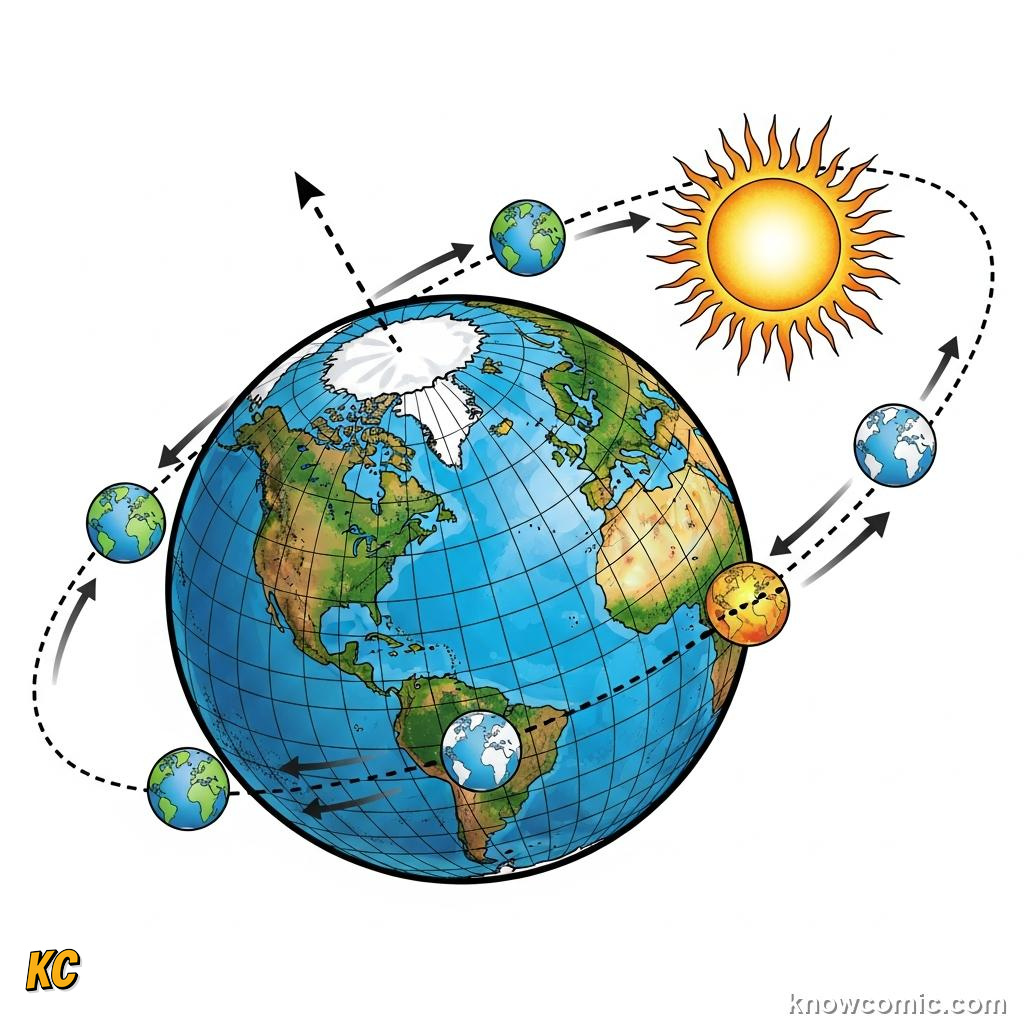
🌍 Pole-to-pole line
📐 ~23.5° year-round tilt
🧭 Points near Polaris (north)
📐 ~23.5° year-round tilt
🧭 Points near Polaris (north)
ORBIT
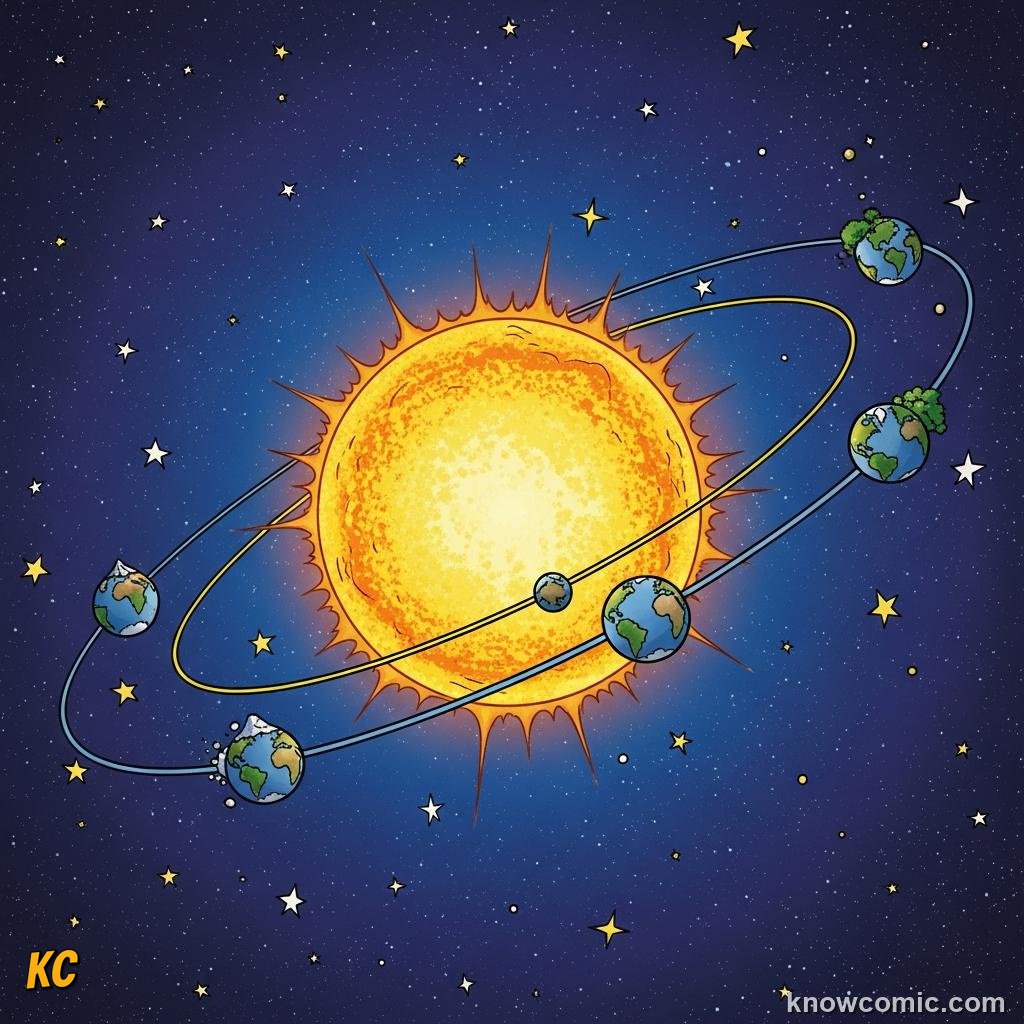
☀️ ~365.25 days per lap
📅 Leap day keeps calendars aligned
📅 Leap day keeps calendars aligned
PAGE 2 OF 5, SOLSTICES: LONGEST AND SHORTEST DAYS
JUNE & DECEMBER
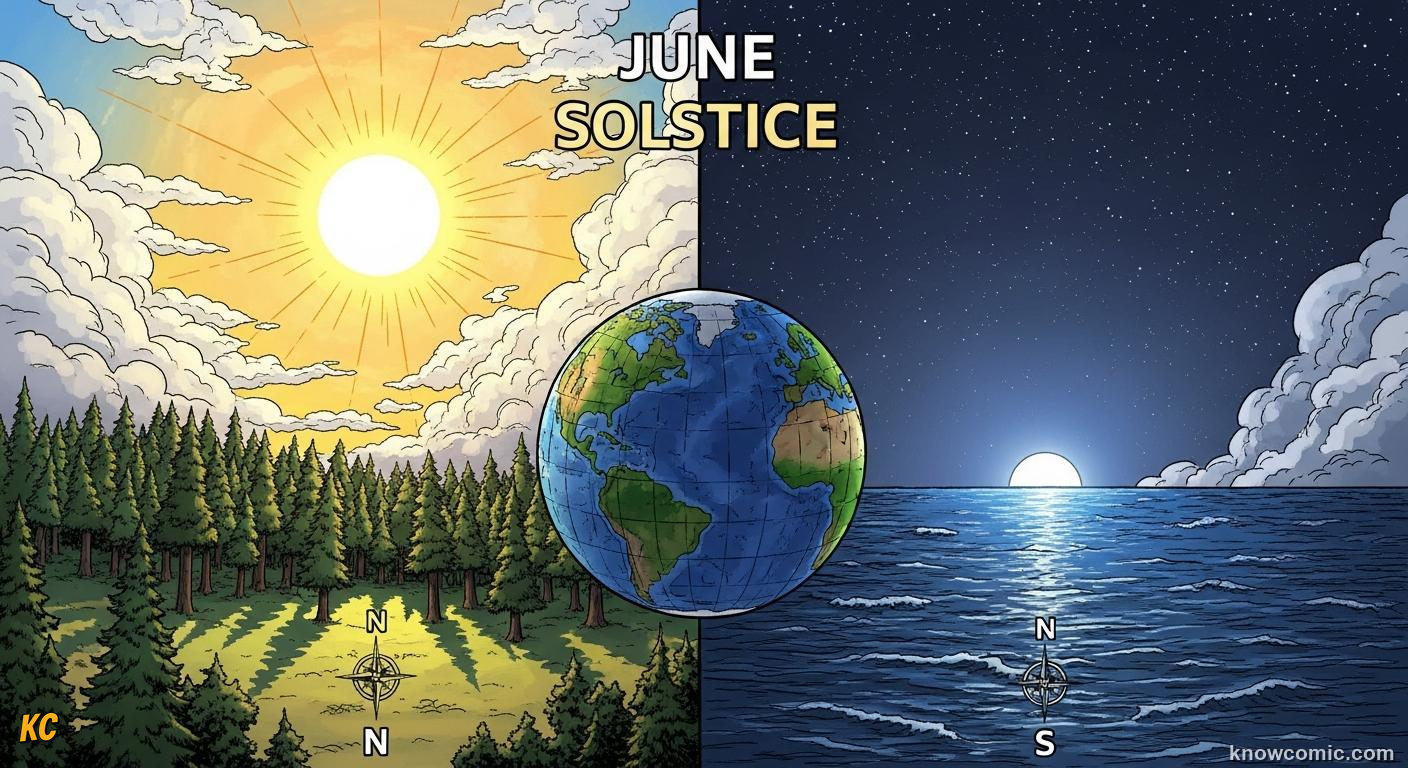
SUN HIGHEST OR LOWEST AT MIDDAY
June solstice (around 21 June) brings the longest day for the Northern Hemisphere, the North Pole sees 24-hour sun while Antarctica stays dark. December solstice reverses the roles. Between them lie the equinoxes when day and night are nearly equal everywhere. Stone circles and modern planetariums both mark these astronomical hinges that farmers, sailors and festival calendars still follow.
SOLSTICE!
ARCTIC
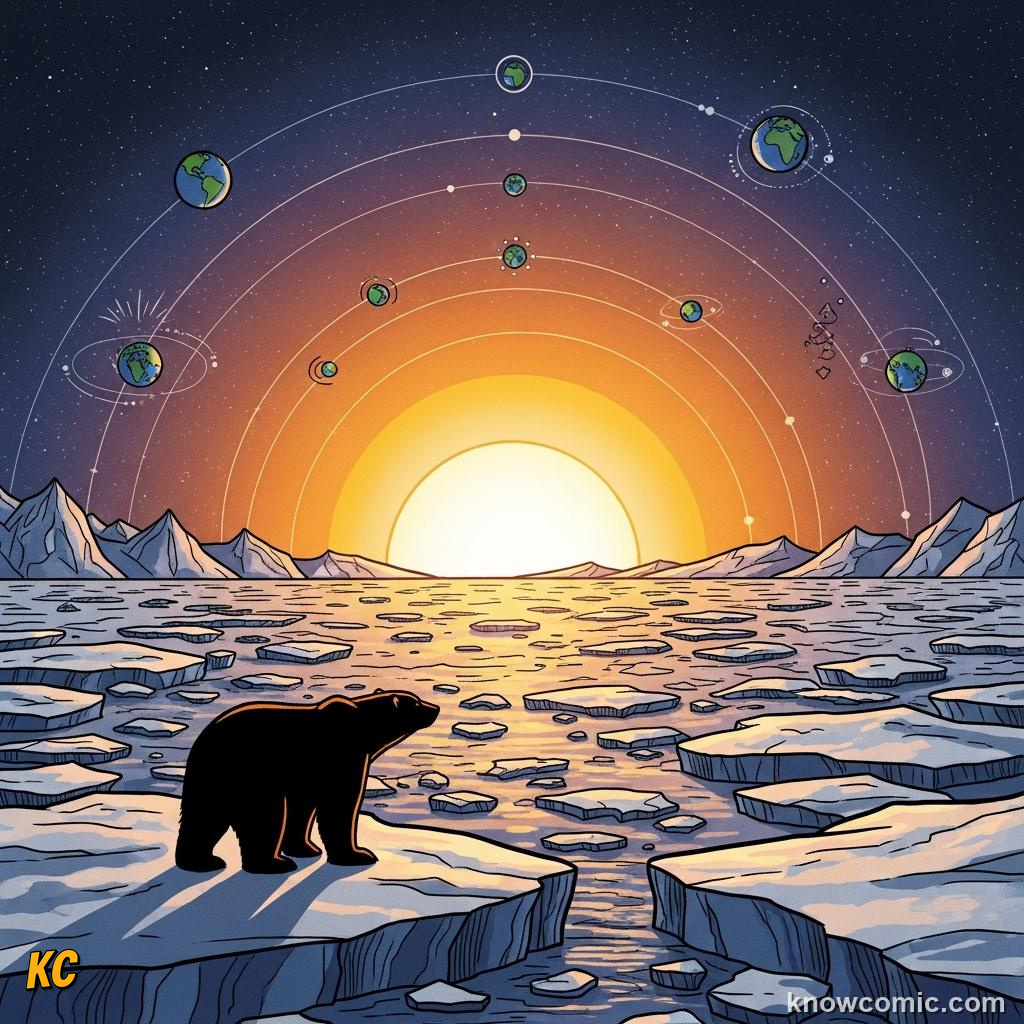
☀️ Midnight sun in polar summer
🌙 Polar night in winter
🌙 Polar night in winter
TROPICS
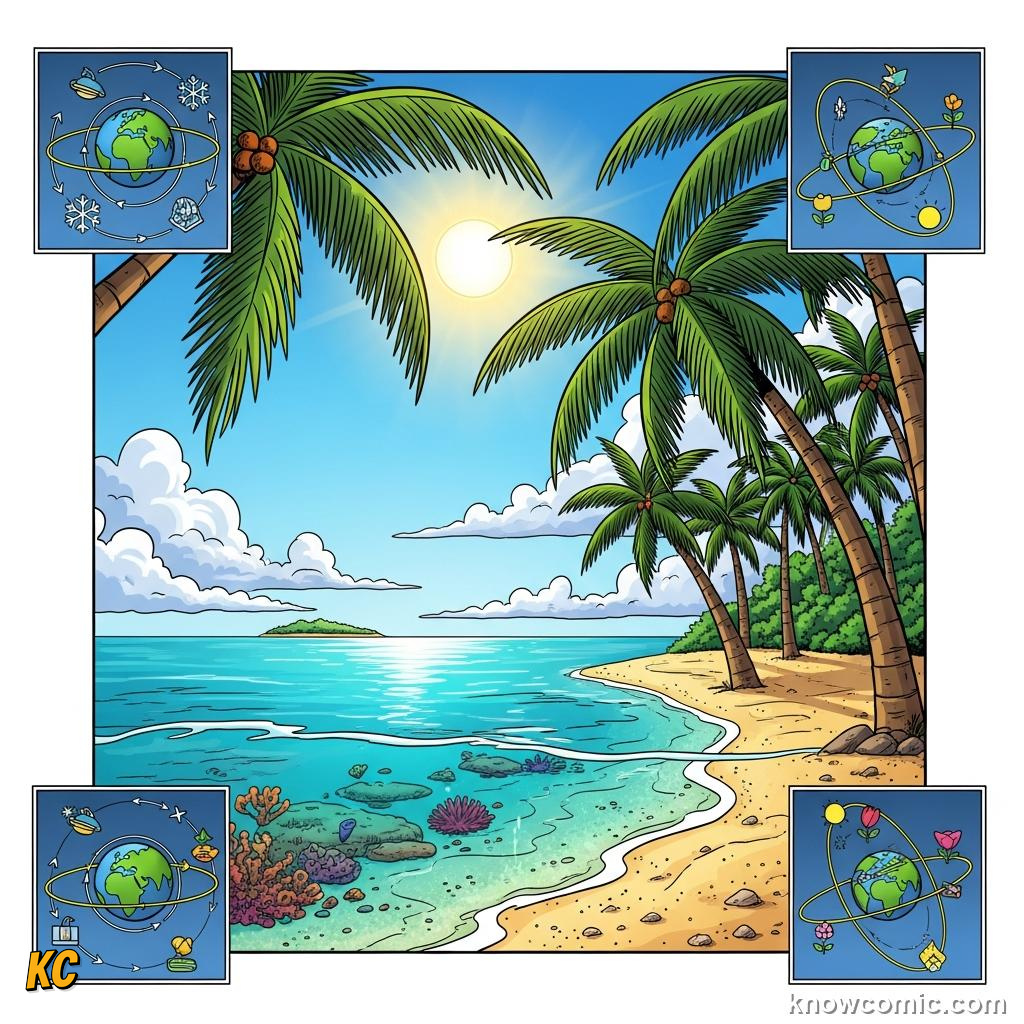
🌴 Sun can pass straight overhead
📏 Cancer & Capricorn parallels
📏 Cancer & Capricorn parallels
SHADOW
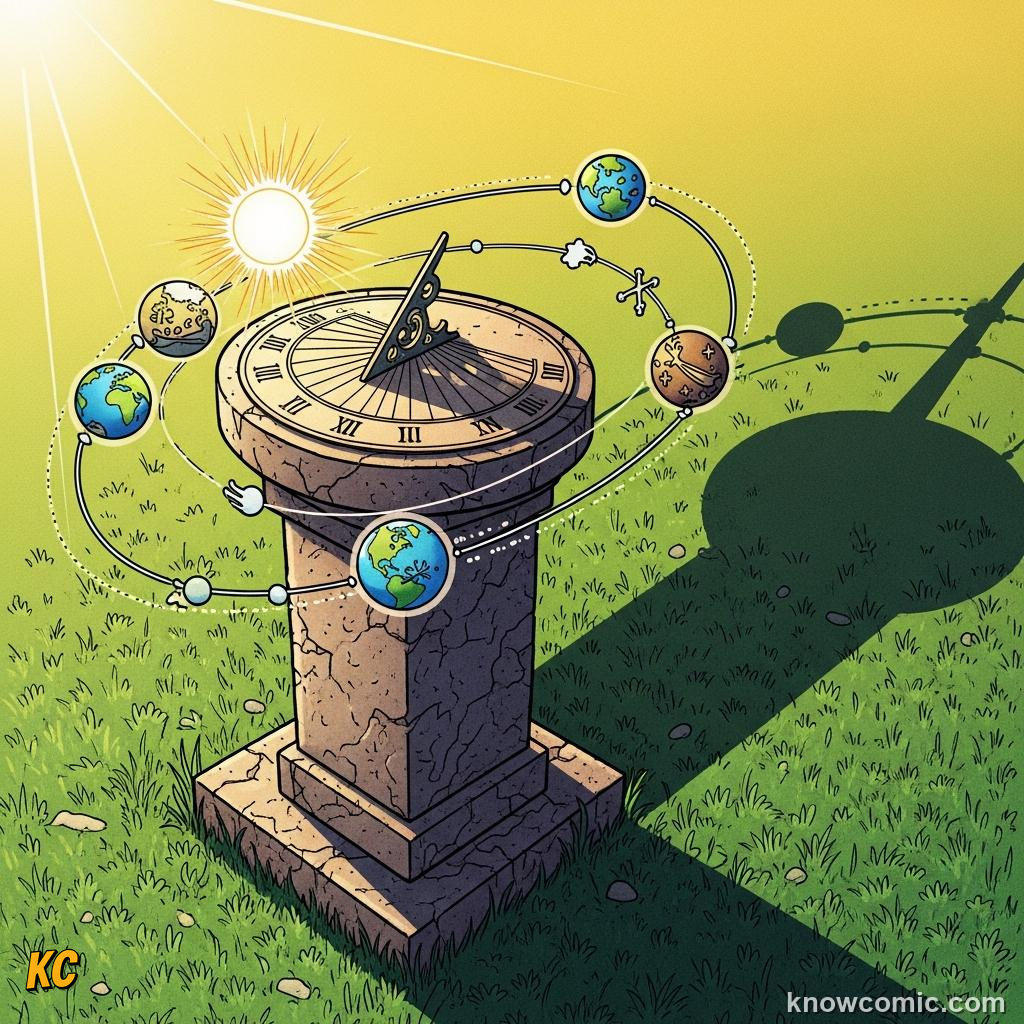
📏 Noon shadow length tracks season
🧭 Sundials encode the tilt
🧭 Sundials encode the tilt
PAGE 3 OF 5, EQUINOX: BALANCE OF LIGHT
MARCH
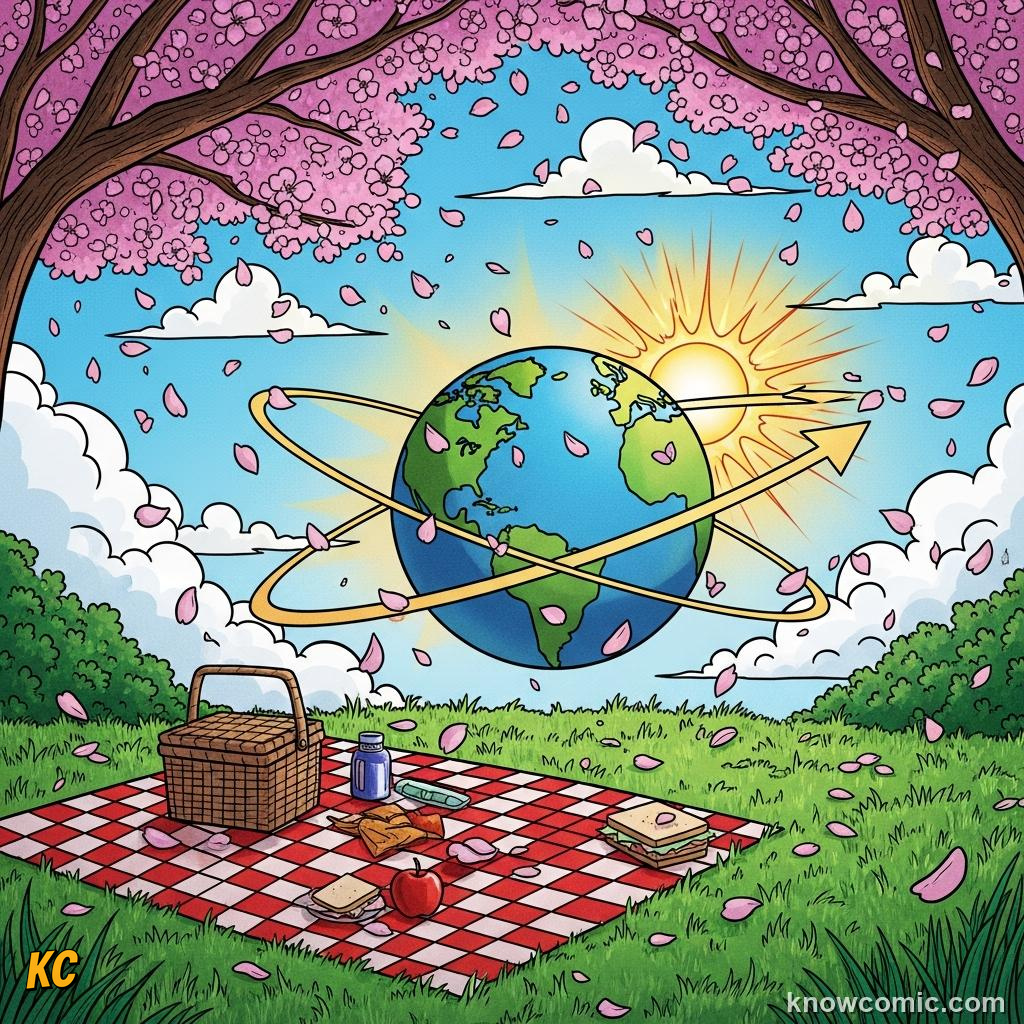
🌸 Northern spring start
🍂 Southern autumn start
🍂 Southern autumn start
SEPTEMBER
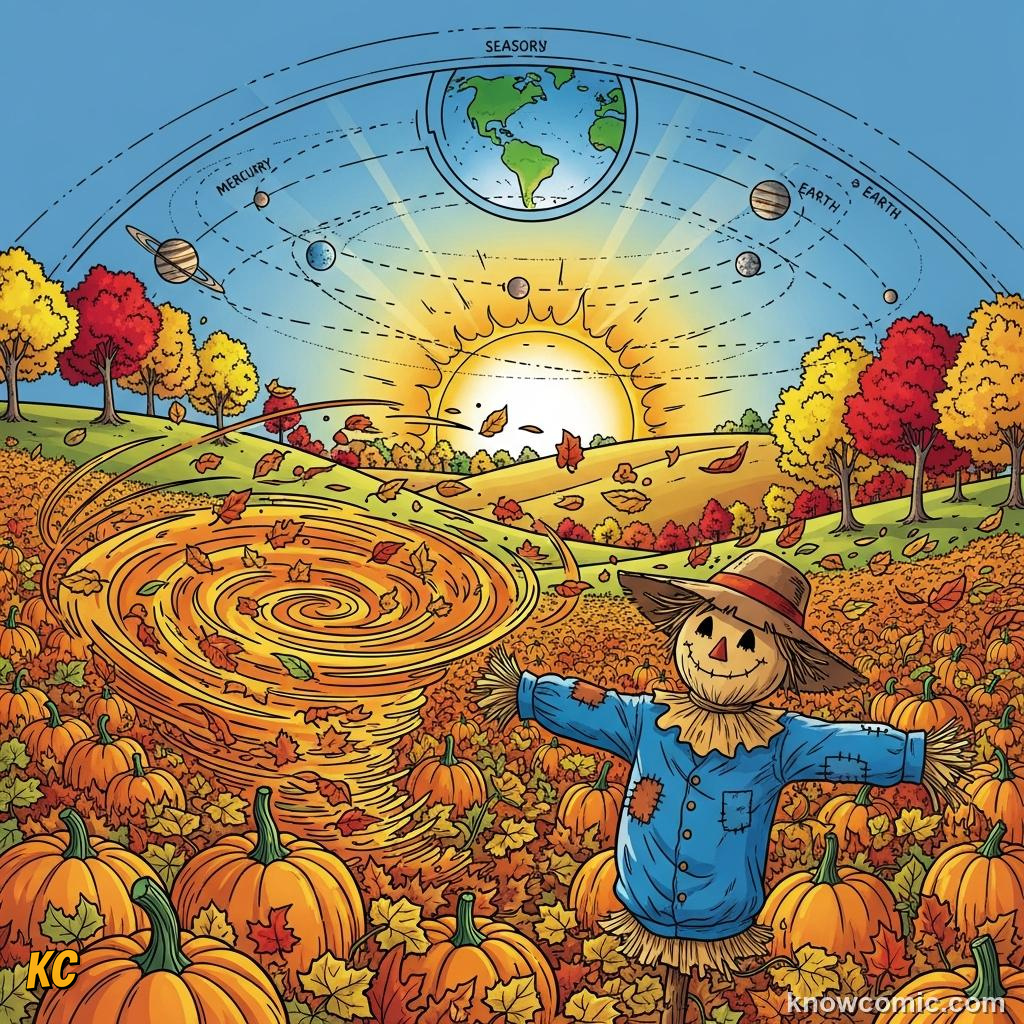
🍂 Northern autumn
🌸 Southern spring
🌸 Southern spring
EQUINOX
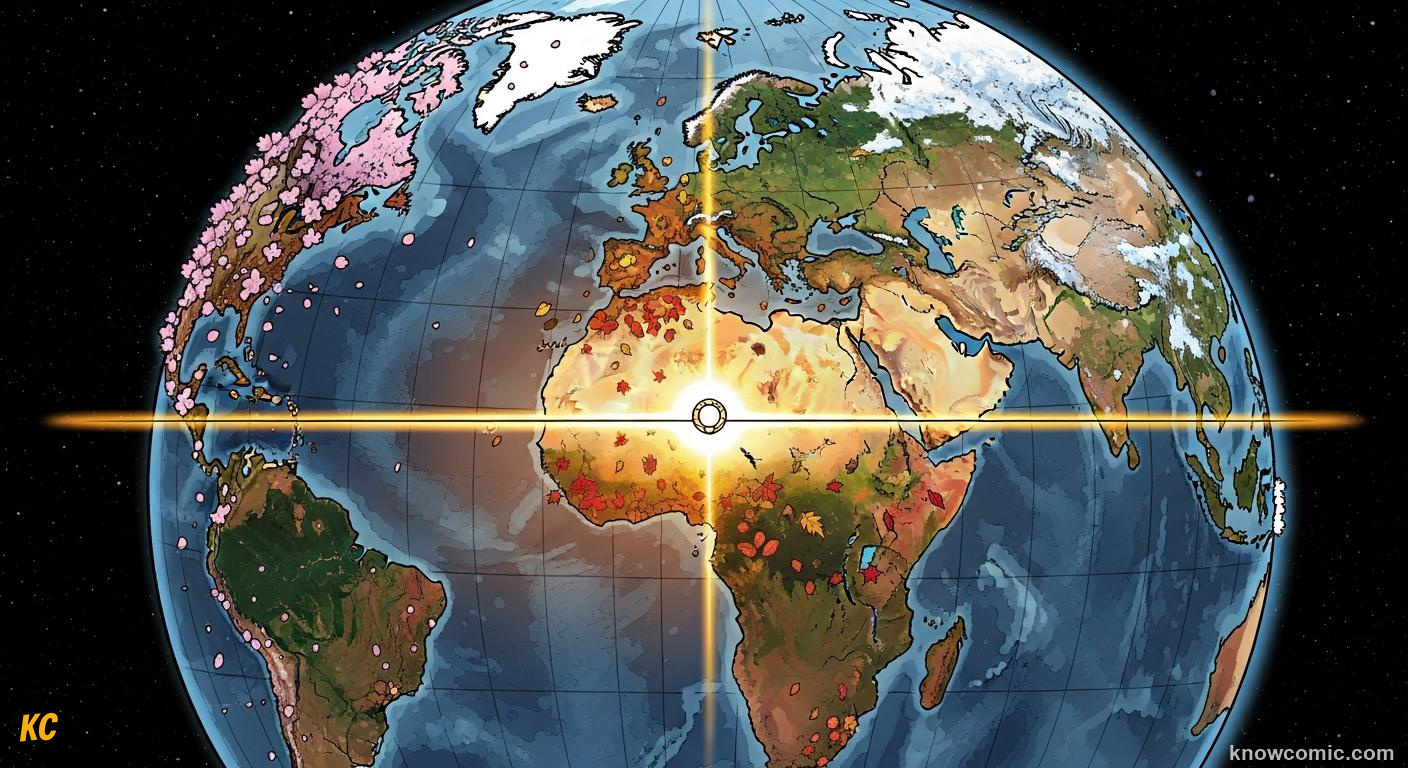
TERMINATOR SWEEPS POLE TO POLE
Twice a year the terminator line, sunrise/sunset boundary, runs almost straight across poles so every latitude gets about 12 hours of daylight. Satellites snap the glowing edge; meteorologists watch the cross-over because heating patterns shift, affecting jet streams a few weeks later. Cultures worldwide celebrate harvest moons, Nowruz or cherry blossoms tied to these astronomical dates.
BALANCE!
PAGE 4 OF 5, CLIMATE ZONES AND SUN ANGLE
ZONES
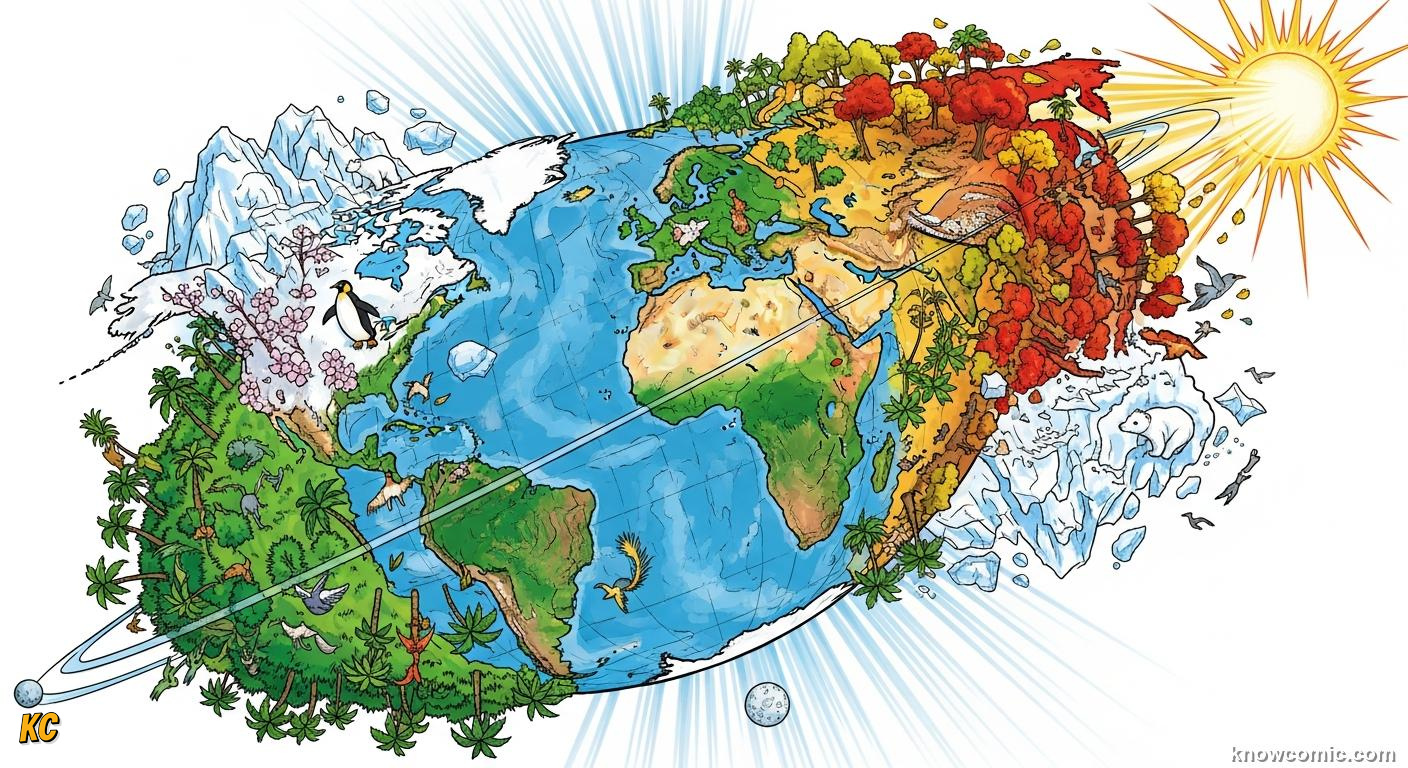
LATITUDE STILL MATTERS WITHIN A SEASON
Low latitudes receive intense overhead rays year-round, tropical rainforests and deserts live there. Mid-latitudes feel four strong seasons with storm tracks. Polar regions see slanting sun even in “summer,” storing less heat, ice reflects light away (albedo feedback). Mountains mimic latitude: climb high on a summer day and you meet winter jackets while valleys bake below.
ZONES!
TROPICS
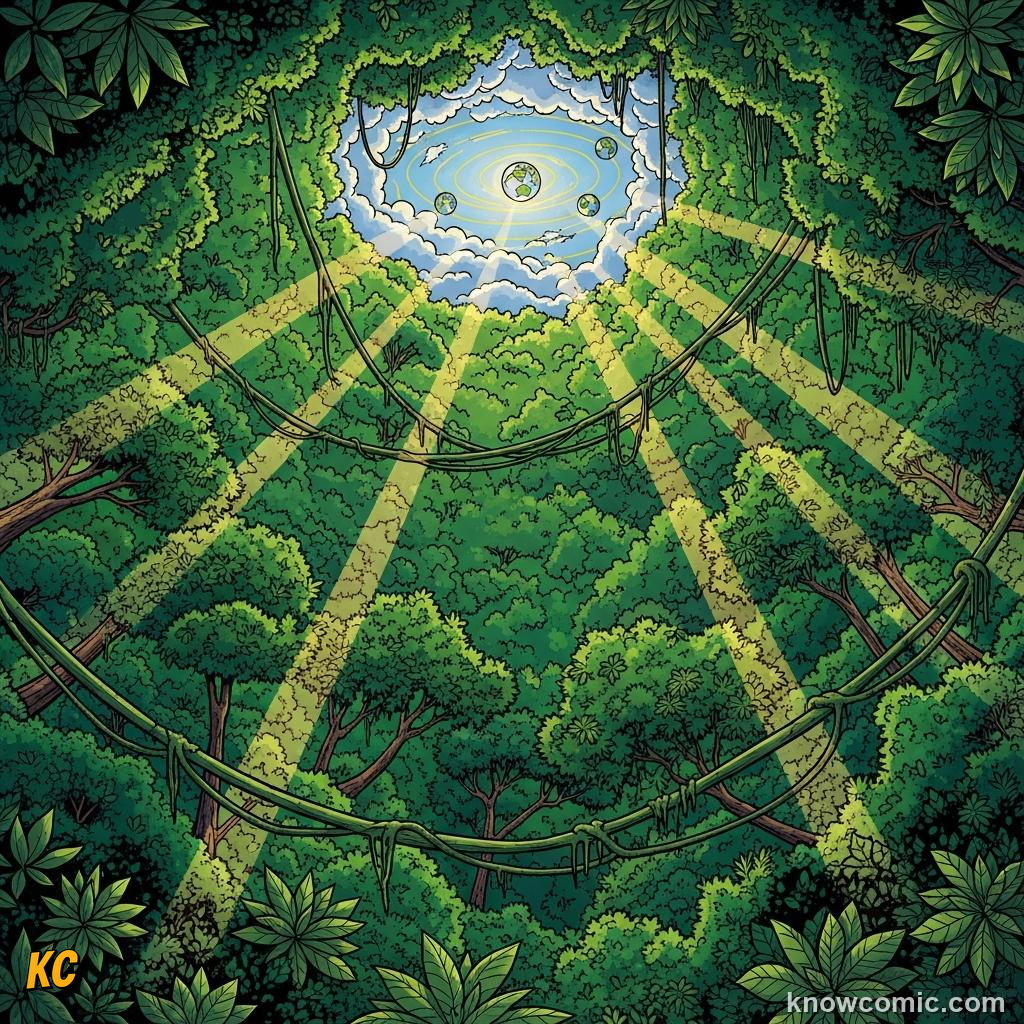
🌴 Between tropics lines
☀️ Two solar zenith days yearly
☀️ Two solar zenith days yearly
TEMPERATE
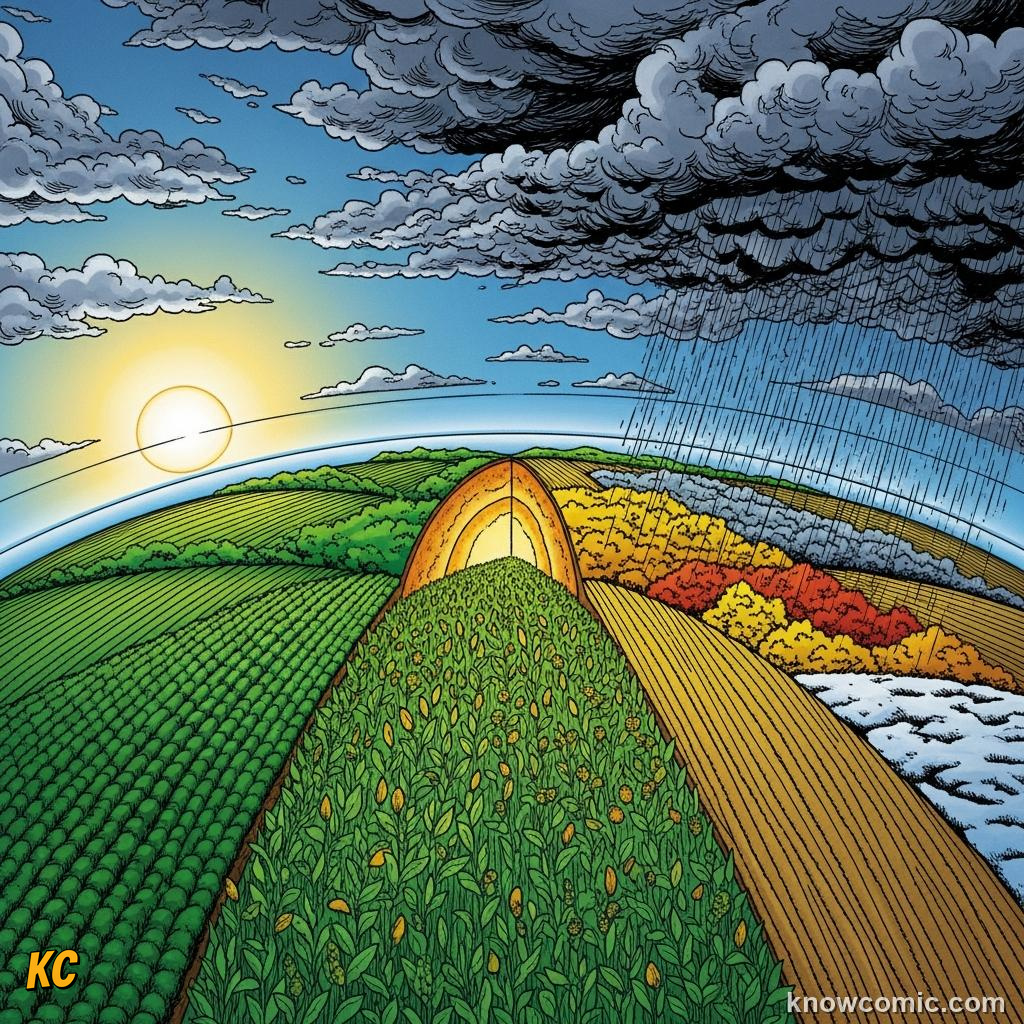
🌧️ Mix of storm types
🌾 Big agriculture belts
🌾 Big agriculture belts
POLAR
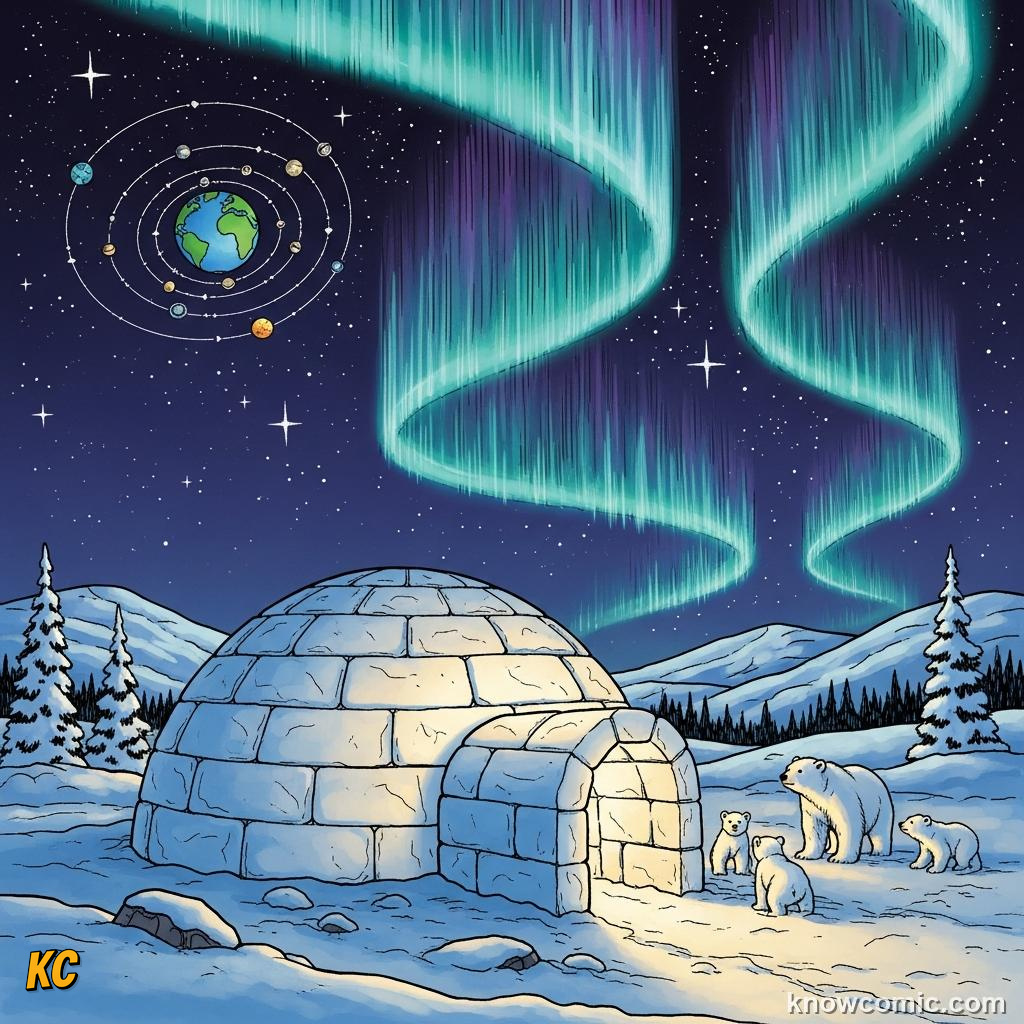
❄️ Ice sheets & tundra
🌞 Weeks-long twilight seasons
🌞 Weeks-long twilight seasons
PAGE 5 OF 5, LIVING WITH THE YEARLY CYCLE
CALENDAR
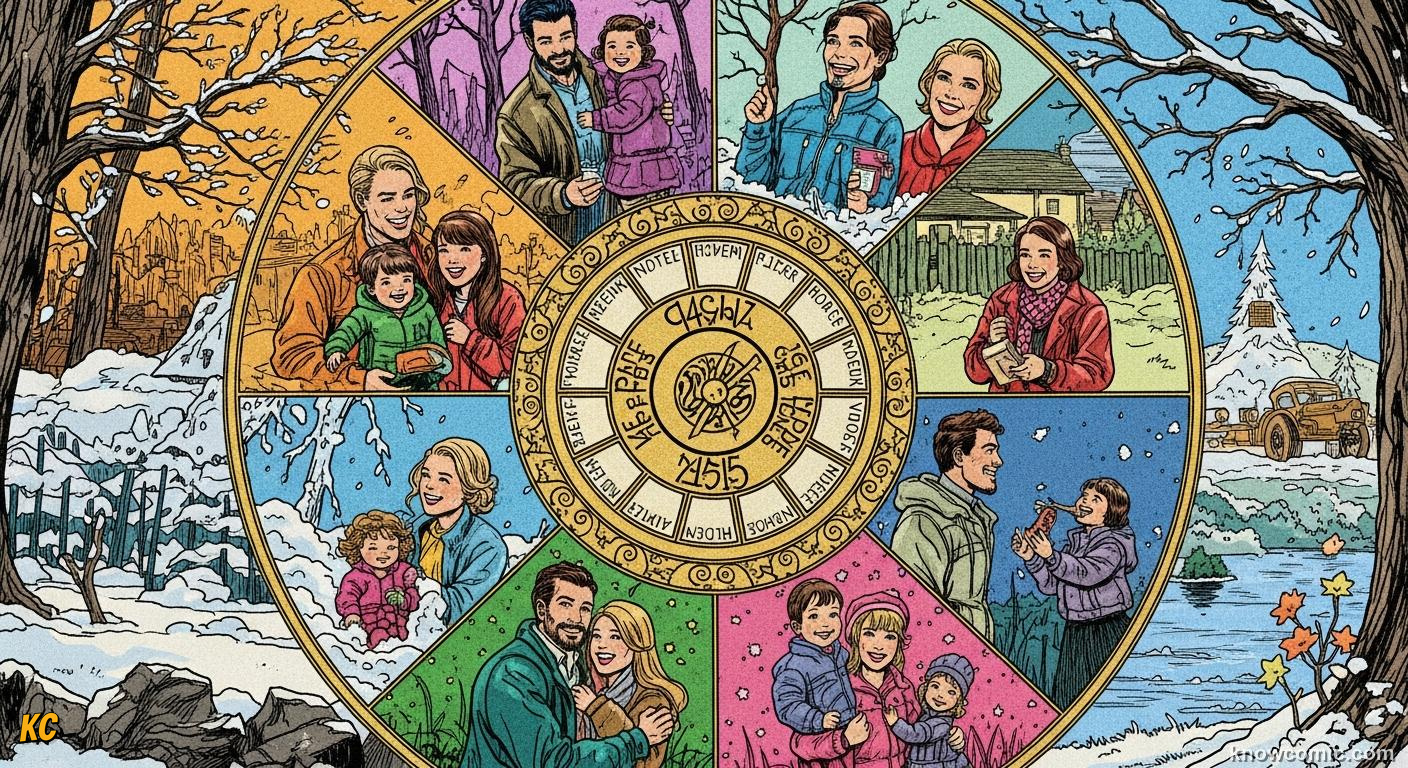
CULTURES, CROPS AND CLOCKS
Farmers time planting to last frost; grid operators plan for summer air-conditioning peaks; animals migrate with photoperiod cues independent of human clocks. Climate change nudges the statistics of warmth and rainfall, seasons still tick astronomically, but local weather distributions shift. Understanding tilt plus orbit lets you read a globe like a story: follow the sunlight and you know why Sydney barbecues while London bundles up in July.
YEAR!
FESTIVALS
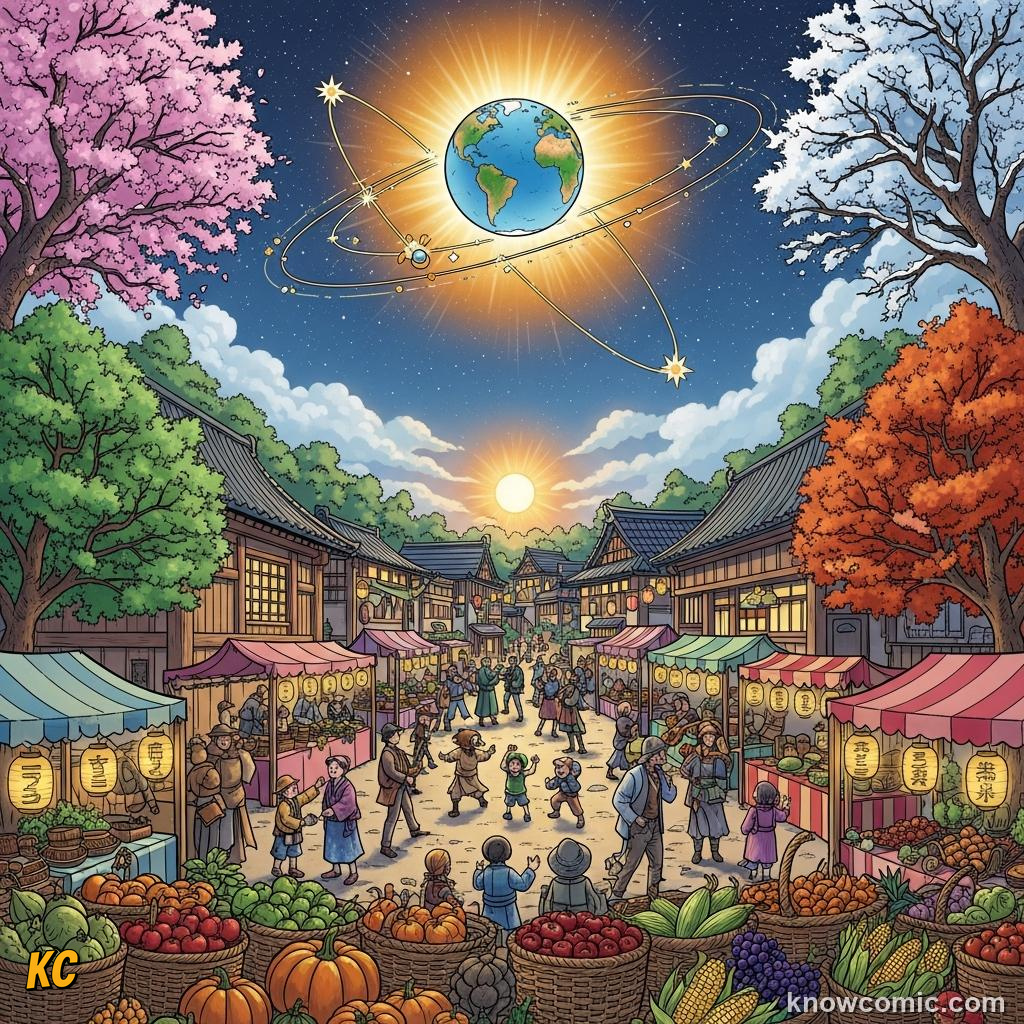
🎉 Solstice celebrations worldwide
🌾 Harvest tied to day length
🌾 Harvest tied to day length
REMEMBER
🌸 KEY FACTS
Axis tilt ~23.5° · Orbit yearly · Tilt beats distance for seasons · Solstices = longest/shortest days · Equinoxes ≈ equal day/night · Hemispheres opposite.
✅ June ≠ hotter Sun for whole Earth
✅ South winter when north summer
✅ Climate zones + seasons combine
✅ South winter when north summer
✅ Climate zones + seasons combine
🧠 QUIZ TIME!
THE FOUR SEASONS · 5 QUESTIONS
QUESTION 01
The main reason Earth has seasons is…
QUESTION 02
In late June, which hemisphere generally experiences summer?
QUESTION 03
On an equinox, day and night are roughly…
QUESTION 04
Around December solstice, Australia is usually in which season?
QUESTION 05
Earth's axis is tilted about how many degrees from straight up-and-down relative to its orbit?
0/5
LOADING...