🌍 WHY THE EARTH SPINS
PAGE 1 OF 5, DAY AND NIGHT ON A SPINNING BALL
SPIN
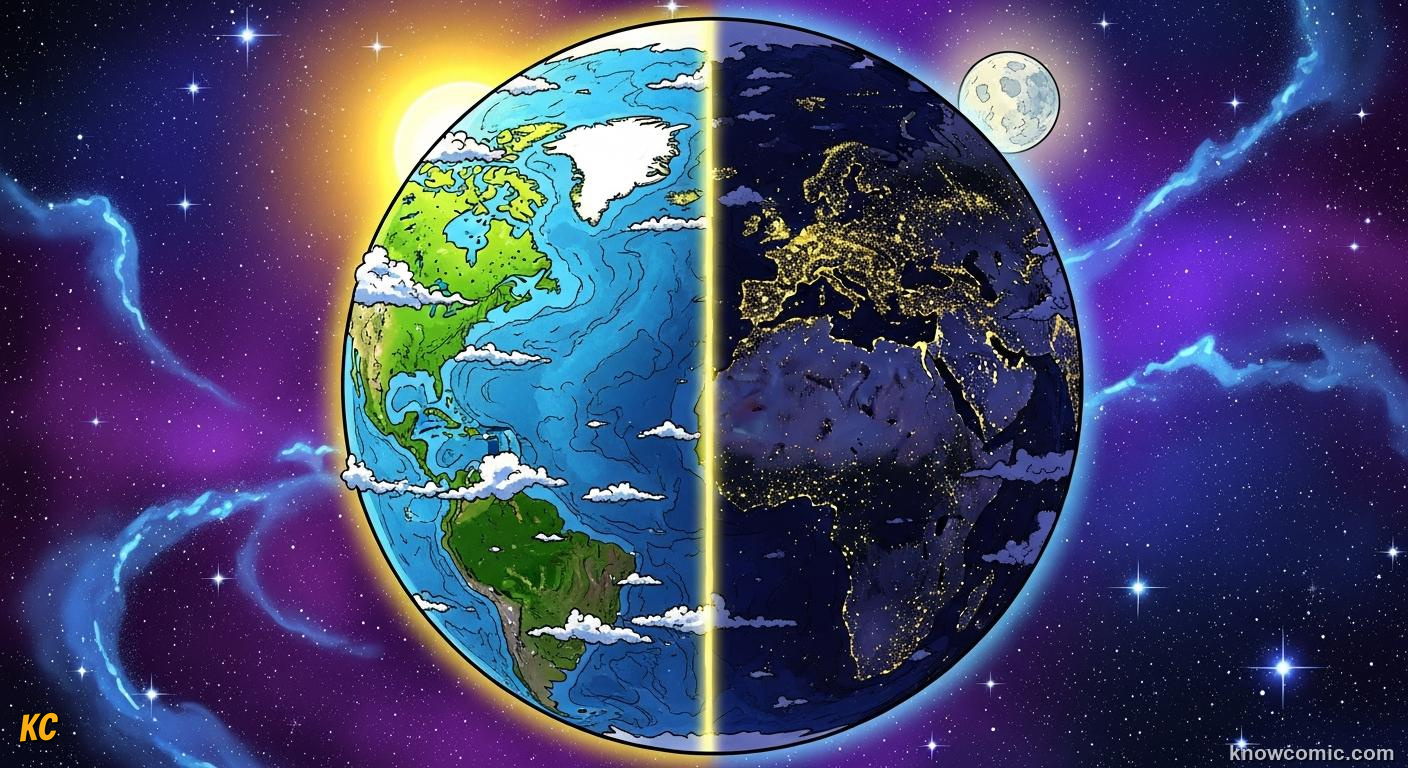
ONE TURN EVERY 24 HOURS
Earth rotates eastward, that is why the Sun appears to rise in the east and set in the west. Half the planet faces the star at any moment (day); the other half faces deep space with only moonlight and starlight (night). A solar day is about 24 hours, the time from one noon to the next. Ancient peoples tracked shadows with sundials; today atomic clocks and GPS satellites measure spin to tiny fractions of a second.
⚡ DID YOU KNOW?
At the equator you move roughly 1,670 km/h just by standing still on the spinning Earth, faster than a jetliner, but you do not feel it because everything around you moves together.
SPIN!
AXIS
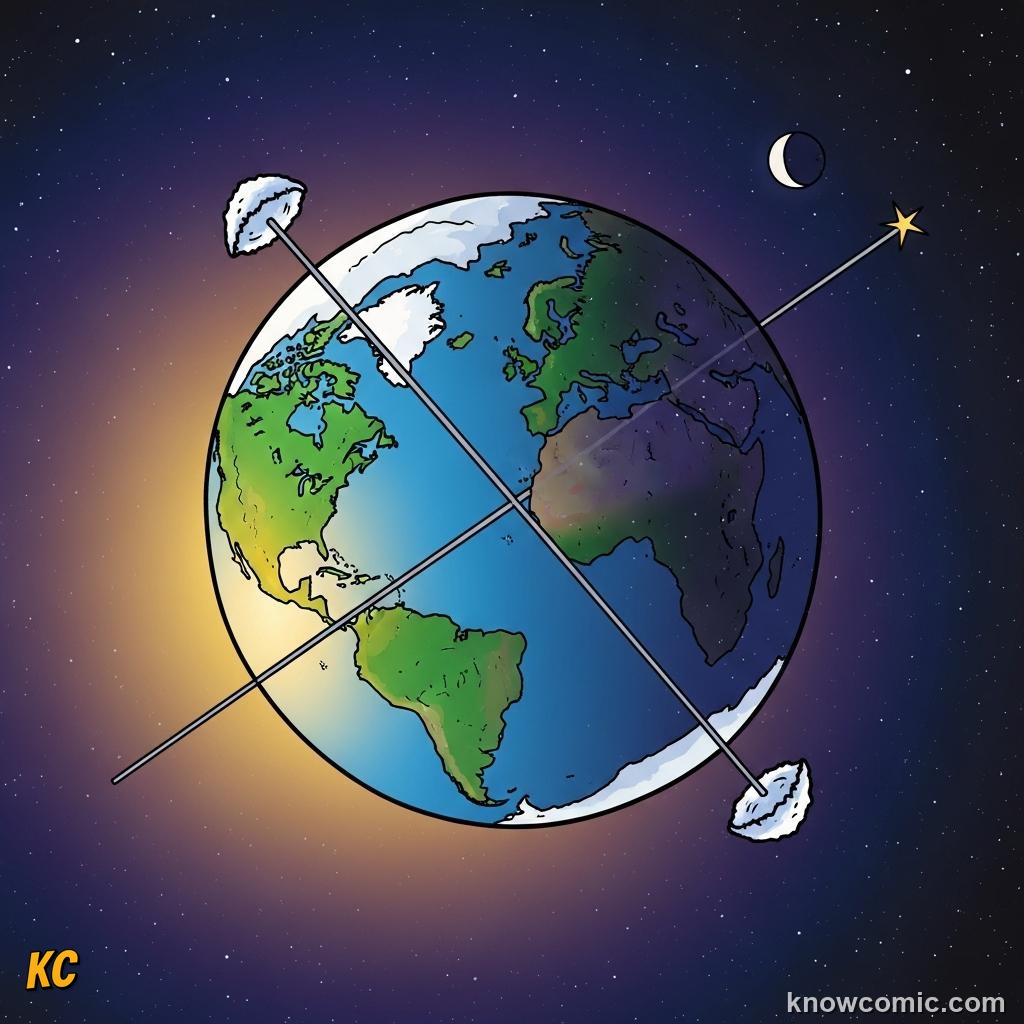
🌍 Imaginary line pole to pole
🎯 Tilt ~23.5°, seasons later
🧭 North star above north pole
🎯 Tilt ~23.5°, seasons later
🧭 North star above north pole
SHADOW
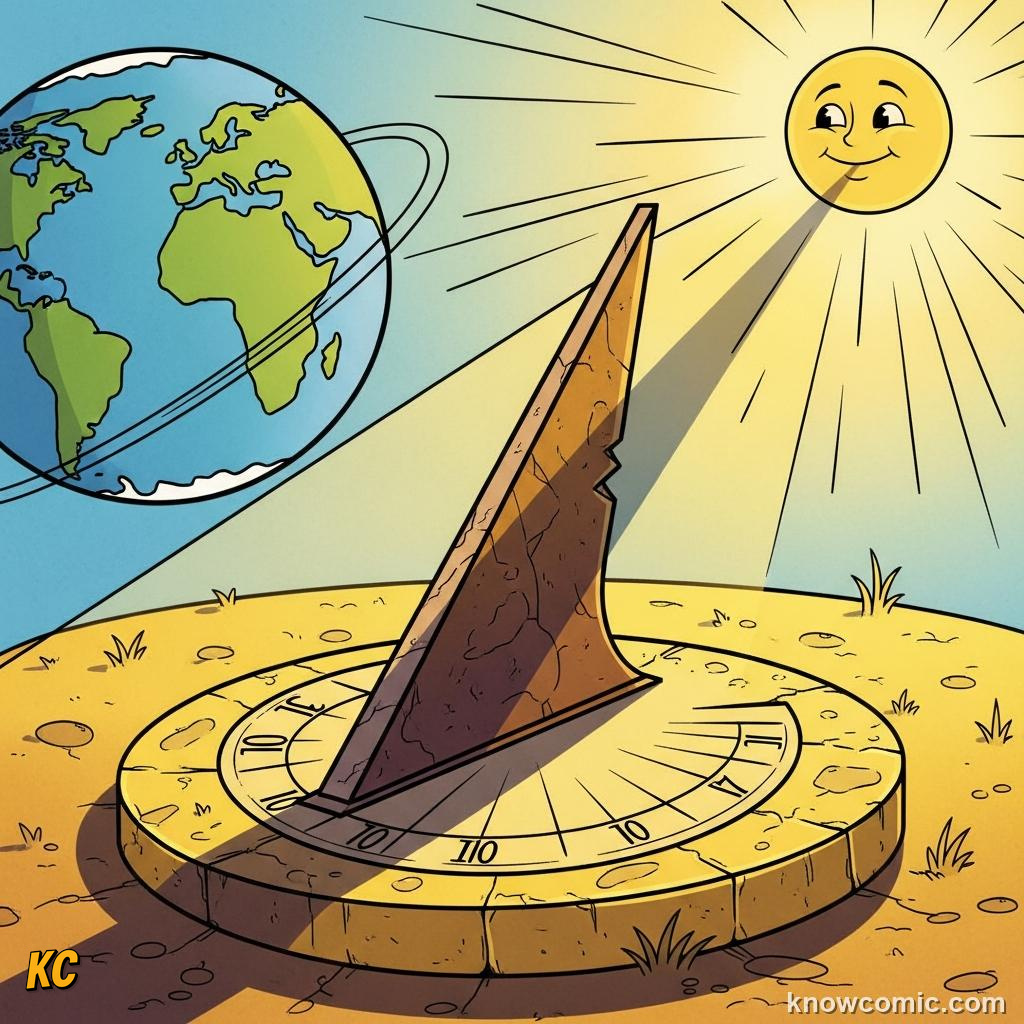
☀️ Long noon shadows in winter
🌗 Half-lit moon phases separate topic
🕰️ Time zones = slice the spin
🌗 Half-lit moon phases separate topic
🕰️ Time zones = slice the spin
PAGE 2 OF 5, HOW FAST AND HOW STEADY
SPEED
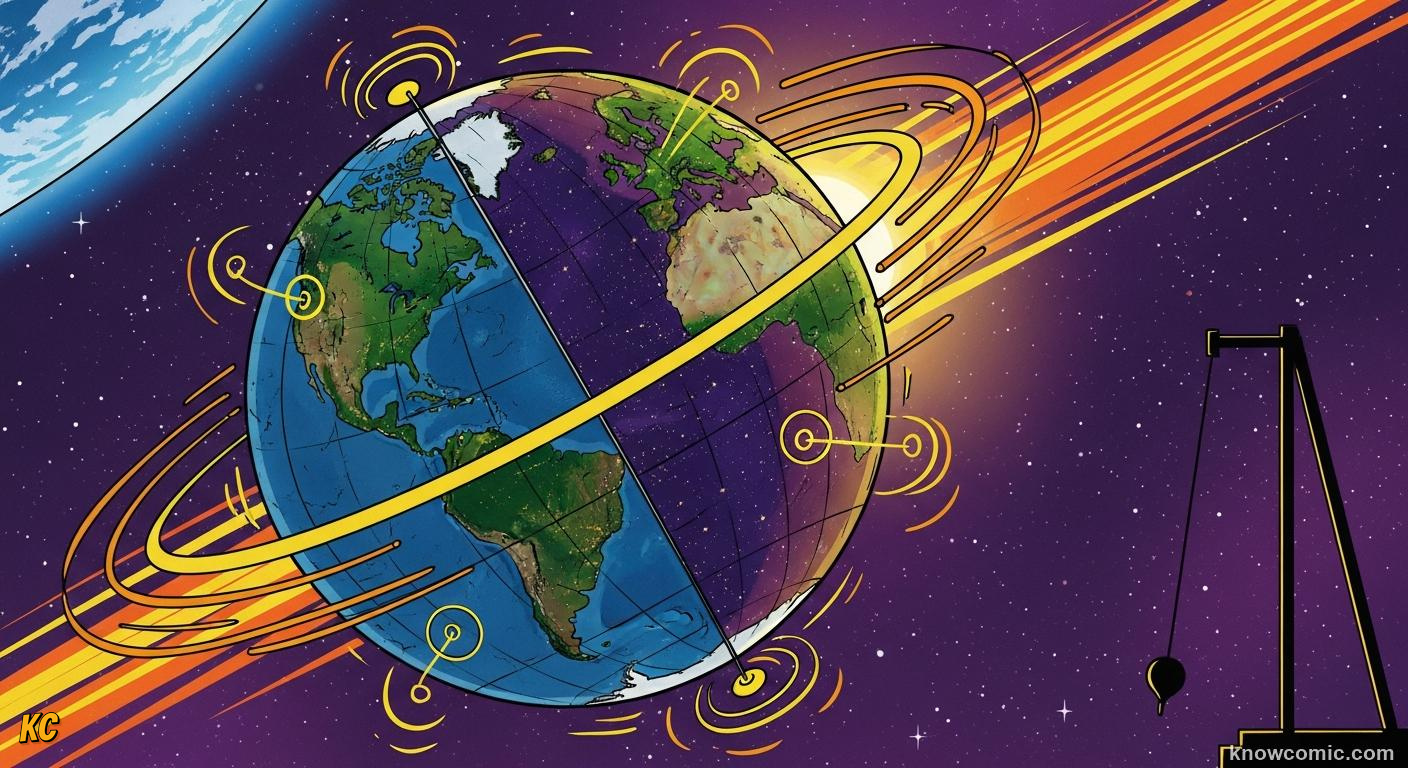
ROTATION SLOWS WITH LATITUDE
Circumference shrinks toward the poles, so a point on the equator travels the full 40,000 km band each day while Oslo moves much slower in a small circle. Astronauts see the terminator, the sharp sunrise line, sweep across continents like a clock hand. Earth is not a perfect timer: tides from the Moon add friction and very slowly lengthen the day by microseconds per year, leap seconds occasionally adjust human clocks.
FAST!
SIDEREAL
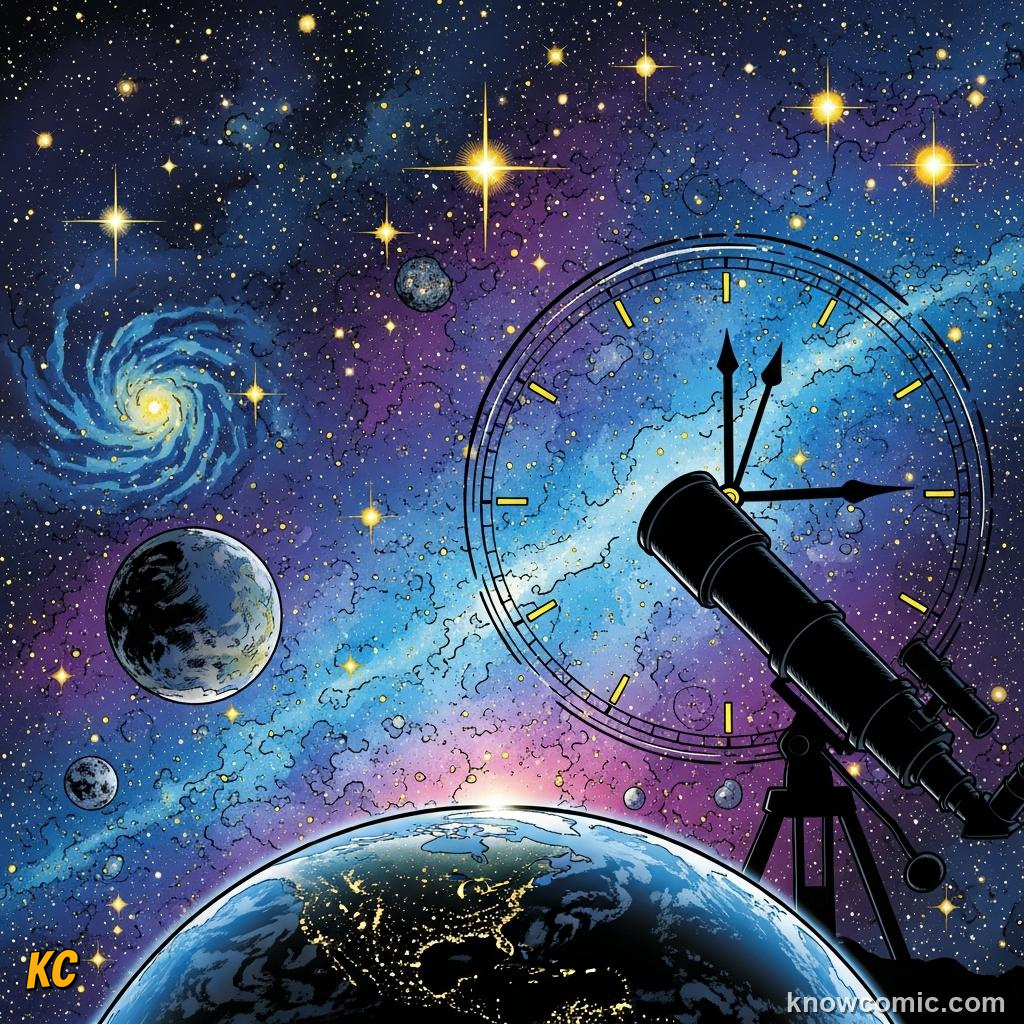
⭐ ~23 h 56 min vs distant stars
🌍 One extra spin vs Sun yearly
🌍 One extra spin vs Sun yearly
SOLAR DAY
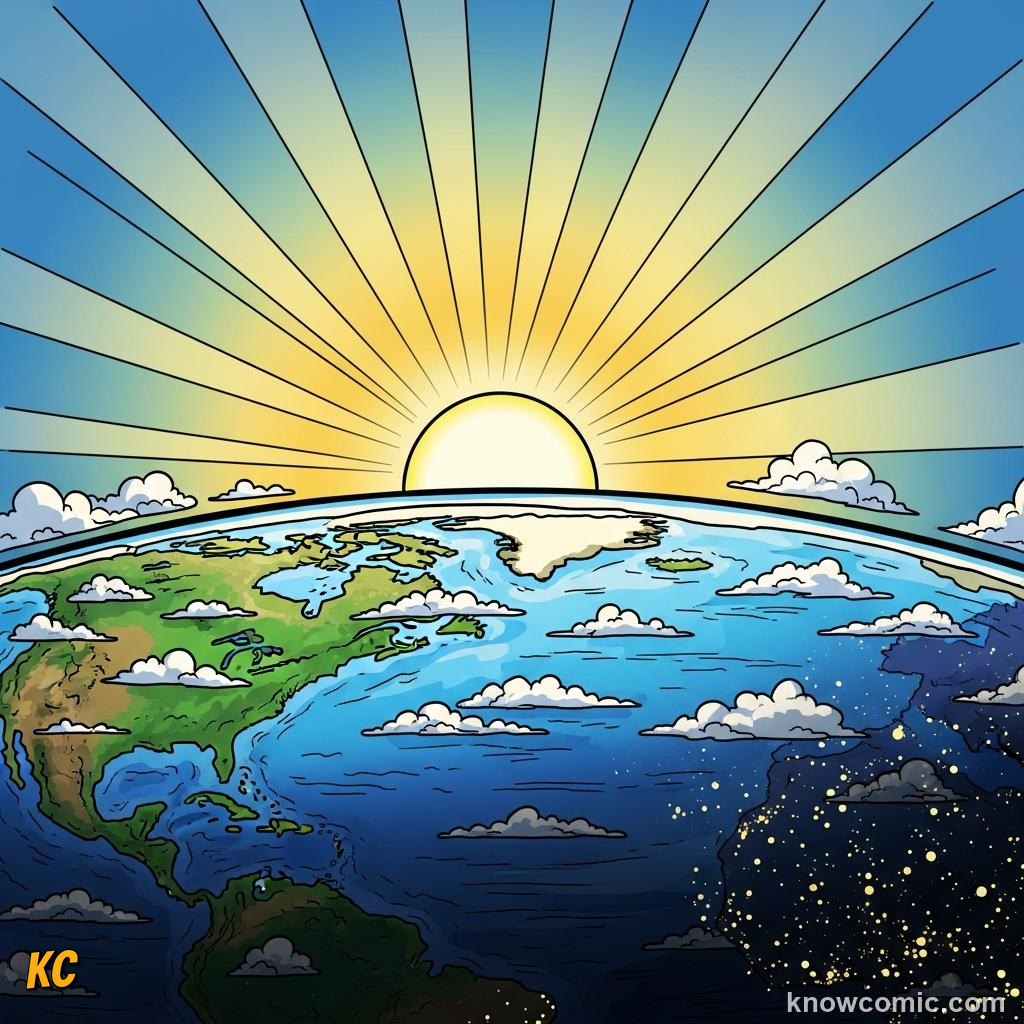
☀️ ~24 h noon to noon
🌍 Orbit curvature adds offset
🌍 Orbit curvature adds offset
FOUCAULT
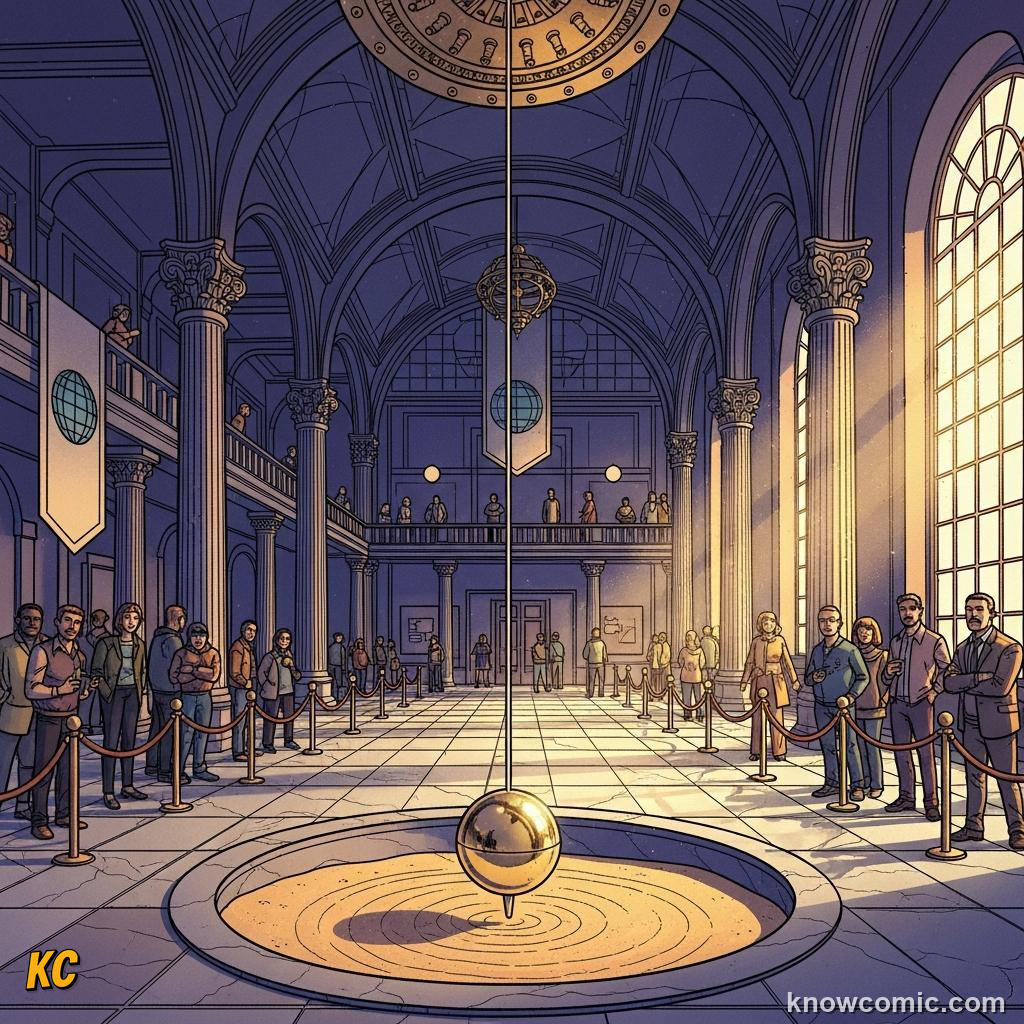
🕰️ Pendulum proves spin in museums
🔬 Classic classroom demo
🔬 Classic classroom demo
PAGE 3 OF 5, WHY YOU DO NOT FEEL THE SPIN
INERTIA
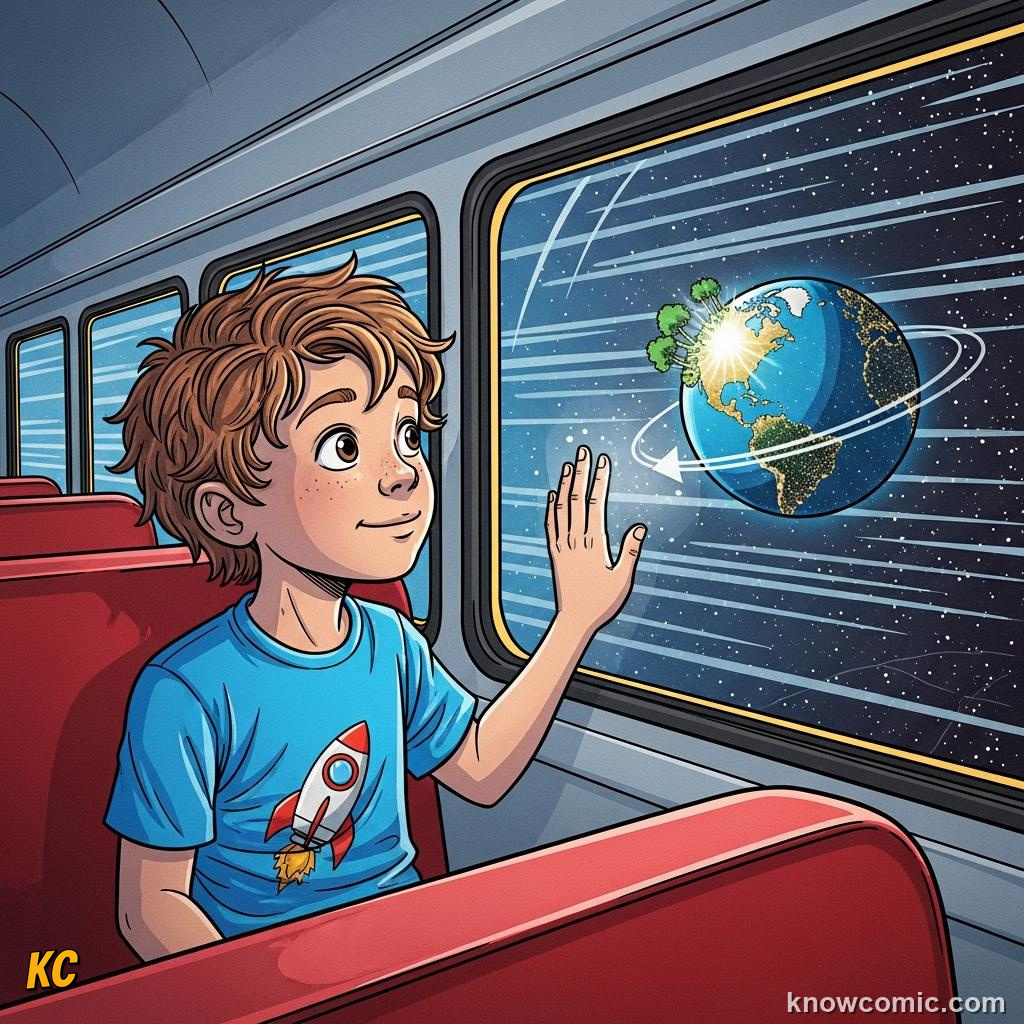
🚌 Same as smooth bus ride
🌬️ Air moves with ground
👀 No nearby reference for spin
🌬️ Air moves with ground
👀 No nearby reference for spin
FRAME
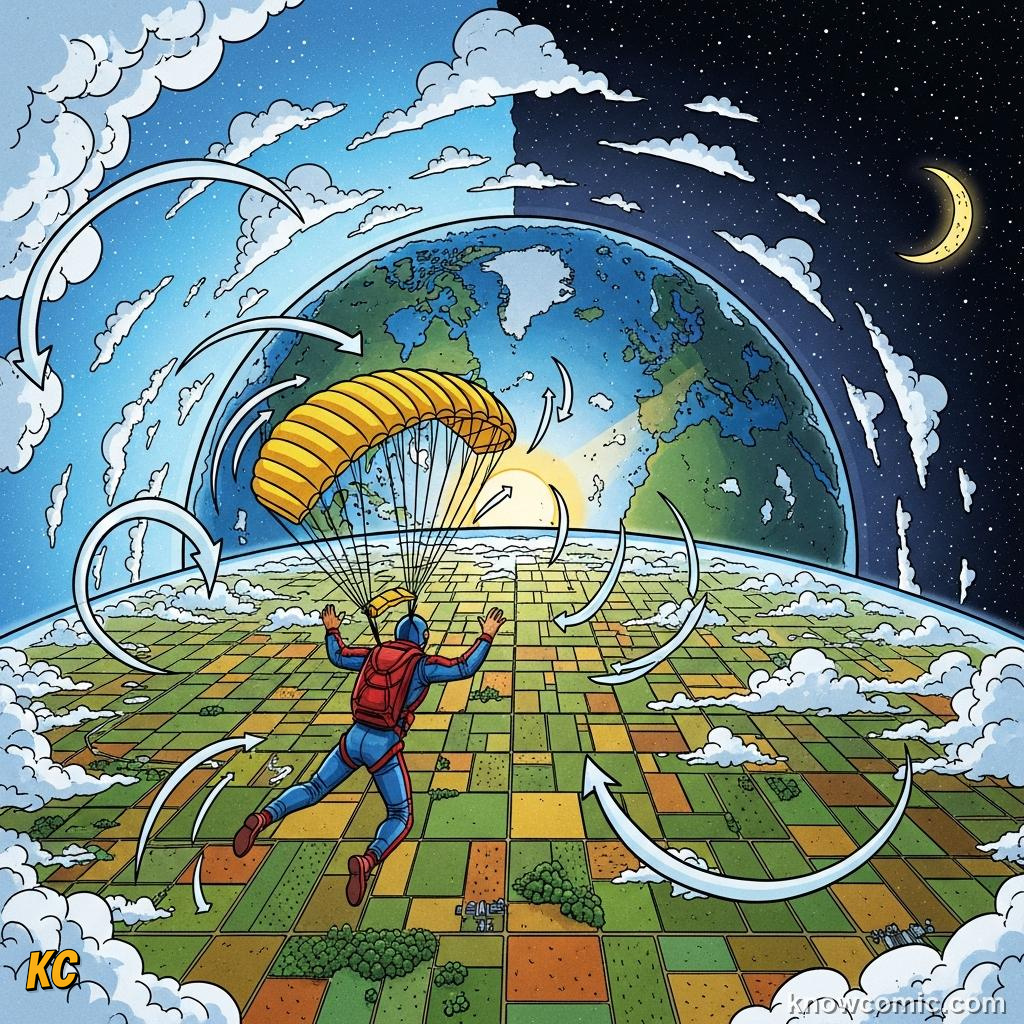
🧠 Physics uses reference frames
🪂 Jump, land same spot (almost)
🪂 Jump, land same spot (almost)
CORIOLIS
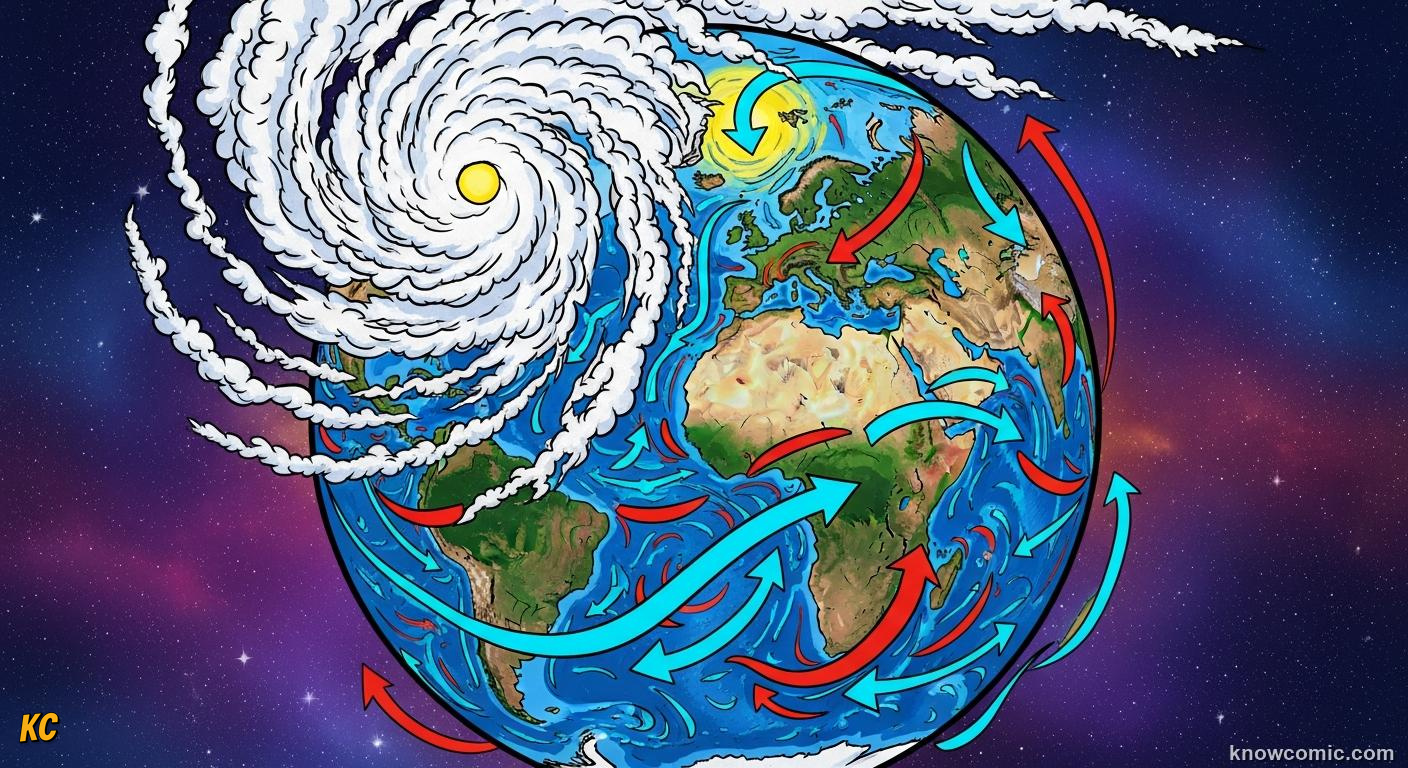
CURVED PATHS OF WIND AND OCEAN
Because Earth rotates, large-scale winds and ocean currents curve instead of flying straight down pressure gradients, the Coriolis effect. It steers hurricanes into rotation patterns and helps set up trade winds that explorers once used. You do not notice it when throwing a baseball, but meteorologists and ship captains build it into every forecast.
CURVE!
PAGE 4 OF 5, MOON, TIDES AND SLOWING SPIN
TIDAL BRAKING
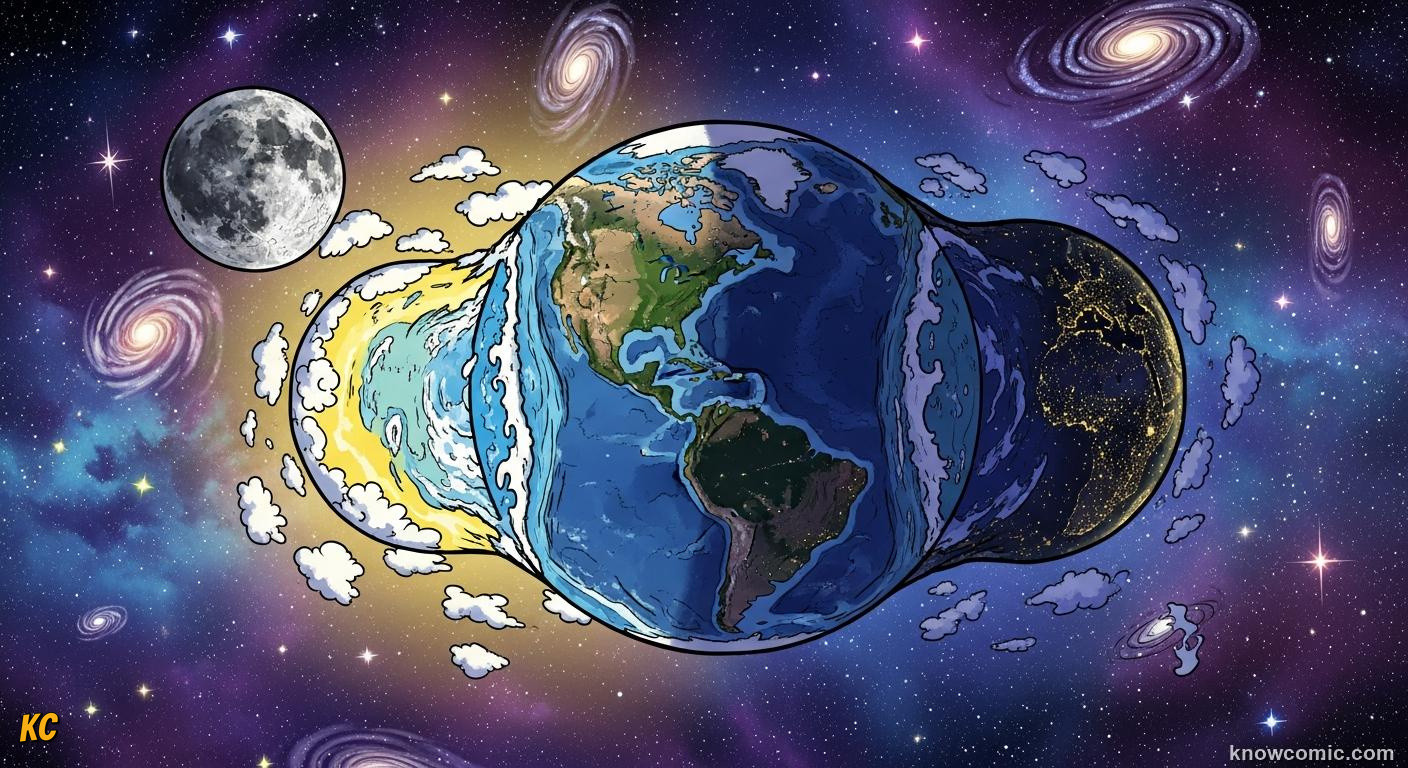
THE MOON STEALS A LITTLE SPIN
The Moon's gravity lifts a tidal bulge; friction drags that bulge slightly ahead of the Moon's line, torque transfers angular momentum outward. Result: days grow longer by about 1.7 milliseconds per century and the Moon drifts a few centimetres farther away each year. Fossil corals from 400 million years ago show years had more days, evidence the spin was faster long ago.
SLOW!
BULGE
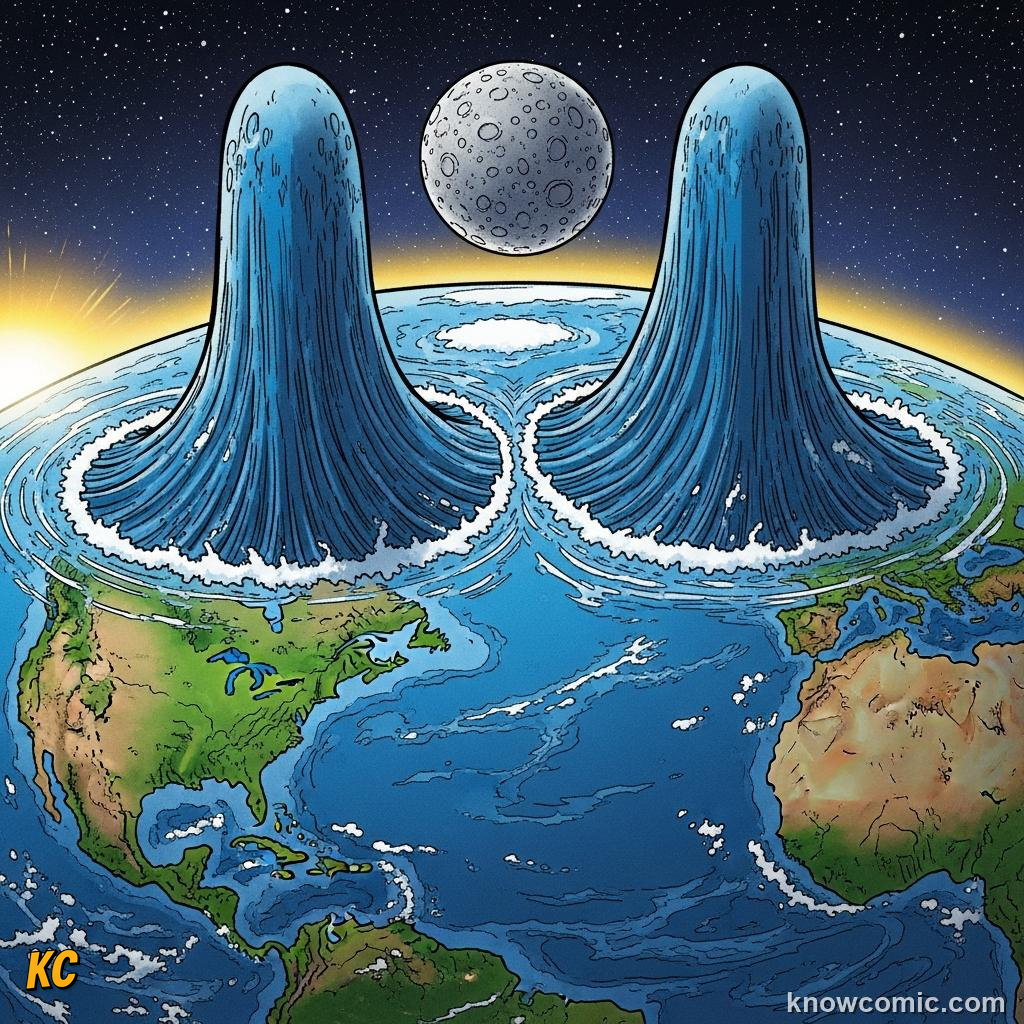
🌊 Two high tides per day typical
🌙 Moon dominant; Sun adds spring tides
🌙 Moon dominant; Sun adds spring tides
FOSSIL CLOCK
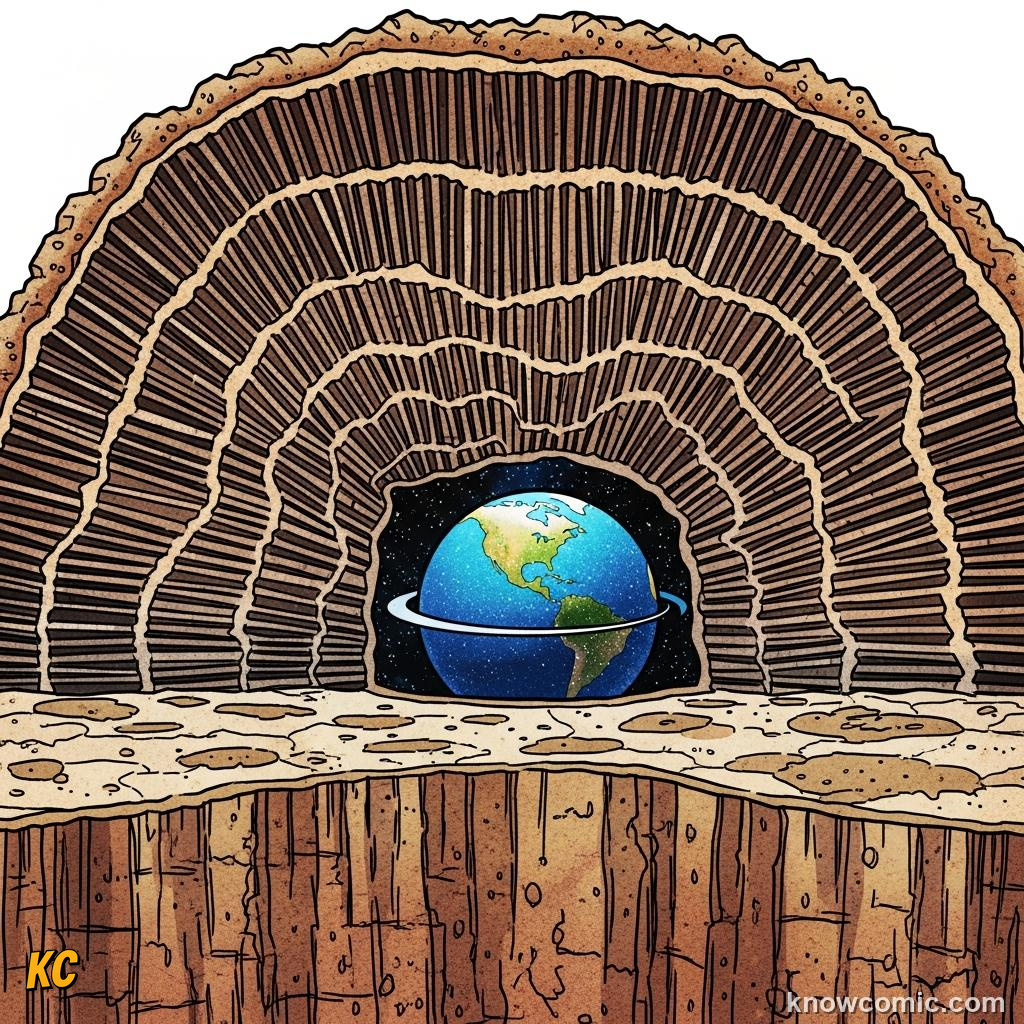
🪸 Daily growth lines in ancient corals
📅 More days per year long ago
📅 More days per year long ago
LEAP
⏱️ Rare leap second adjustments
🛰️ Satellite laser ranging tracks drift
🛰️ Satellite laser ranging tracks drift
PAGE 5 OF 5, SPIN + ORBIT = OUR CALENDAR
YEAR
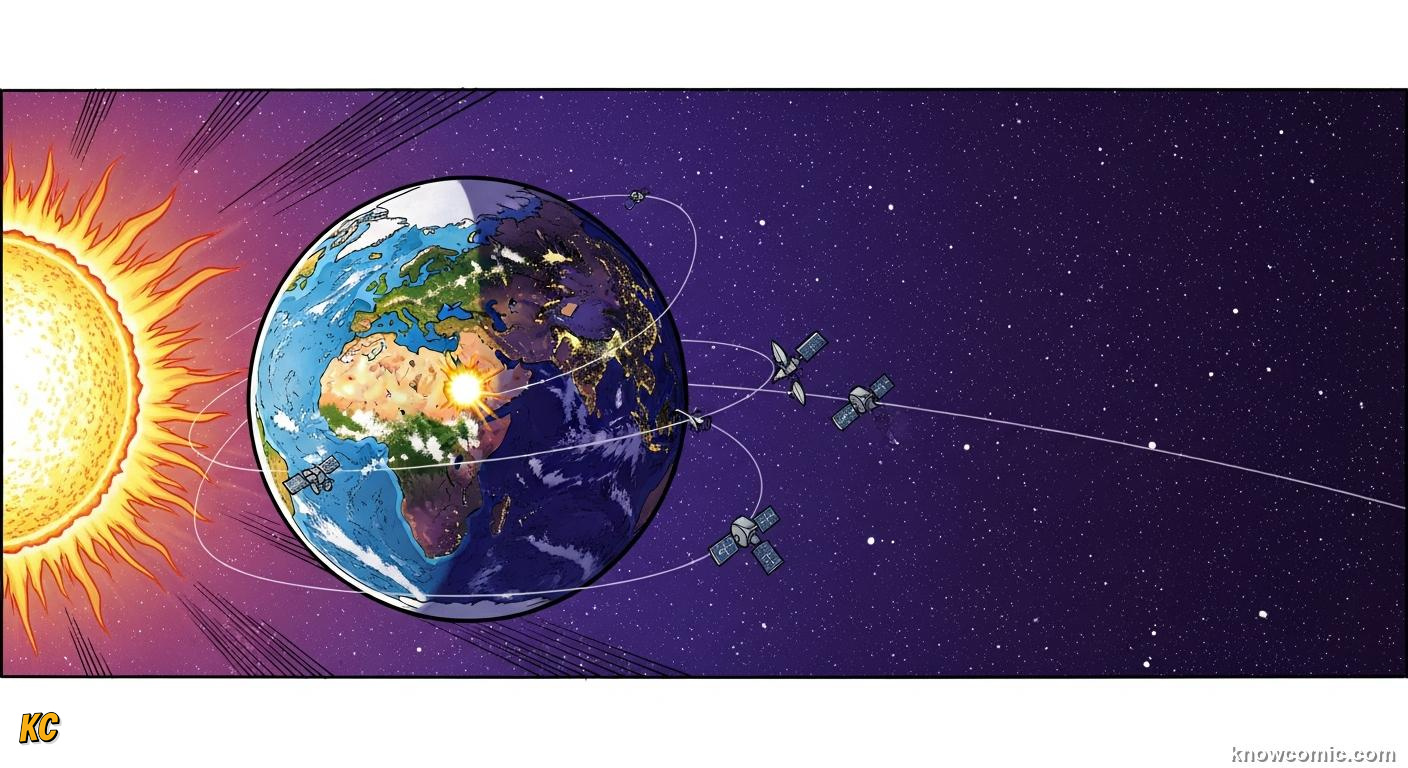
TWO MOTIONS AT ONCE
Earth spins daily while also orbiting the Sun once per year. The axis tilt combines with orbit to create seasons, a different topic, but the spin is what chops each orbit into sunlit summers and darker winters for each hemisphere. Navigation apps, weather satellites and power grids all assume a stable spin; astronomers watch core, ocean and ice shifts that might tweak it slightly over geologic time.
YEAR!
GPS
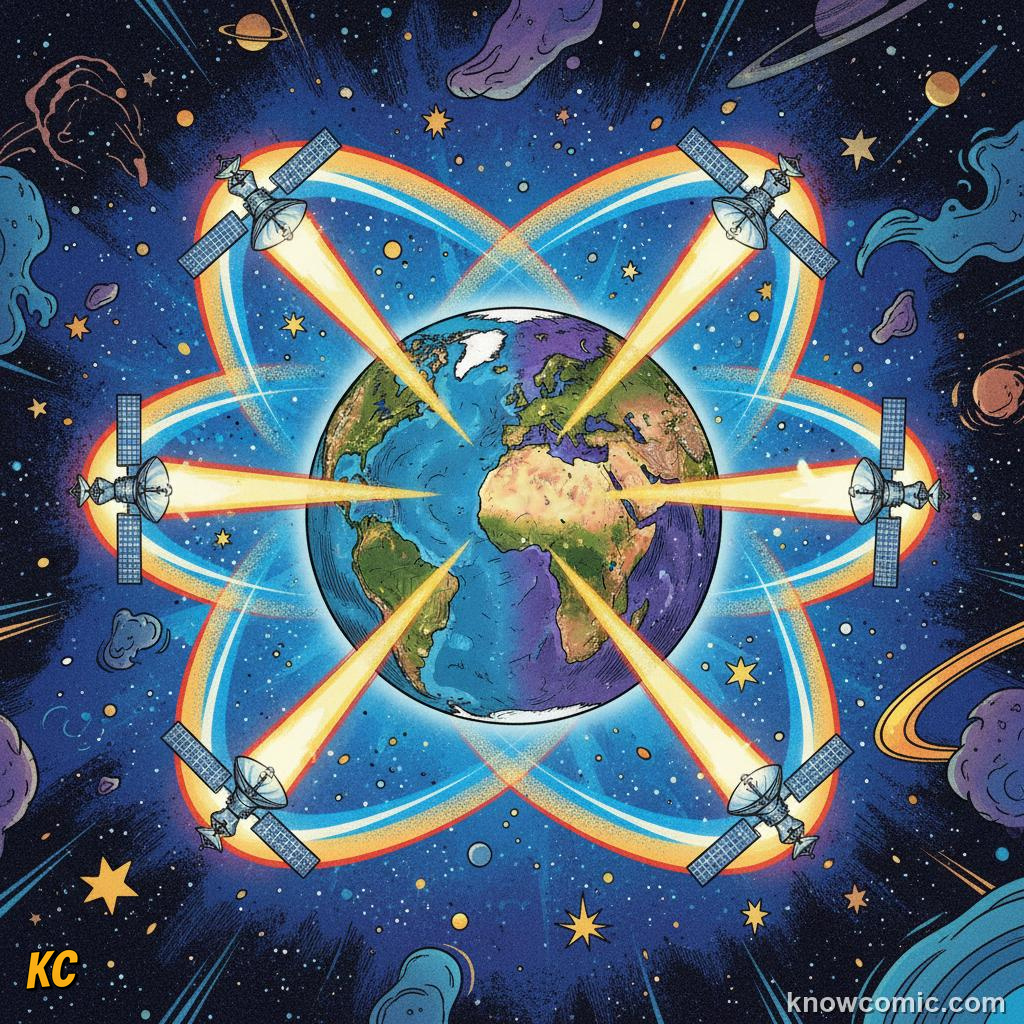
📡 Relativistic corrections tiny but real
🛰️ Constellation clocks beat in orbit
🛰️ Constellation clocks beat in orbit
REMEMBER
🌍 KEY FACTS
Spin causes day/night · ~24 h solar day · Faster at equator · Inertia hides sensation · Coriolis steers big flows · Tides slowly lengthen days.
✅ Eastward spin
✅ Axis through poles
✅ Moon tidally brakes Earth
✅ Axis through poles
✅ Moon tidally brakes Earth
🧠 QUIZ TIME!
WHY THE EARTH SPINS · 5 QUESTIONS
QUESTION 01
About how long is one solar day (noon to noon) on average?
QUESTION 02
What does Earth's rotation mainly create for people on the surface?
QUESTION 03
Why do we not feel the equator's high rotation speed in everyday life?
QUESTION 04
The Coriolis effect most strongly influences…
QUESTION 05
Tidal interactions with the Moon gradually…
0/5
LOADING...