🪨 EARTH'S LAYERS
PAGE 1 OF 5, THE THIN SKIN WE CALL HOME
CUTAWAY
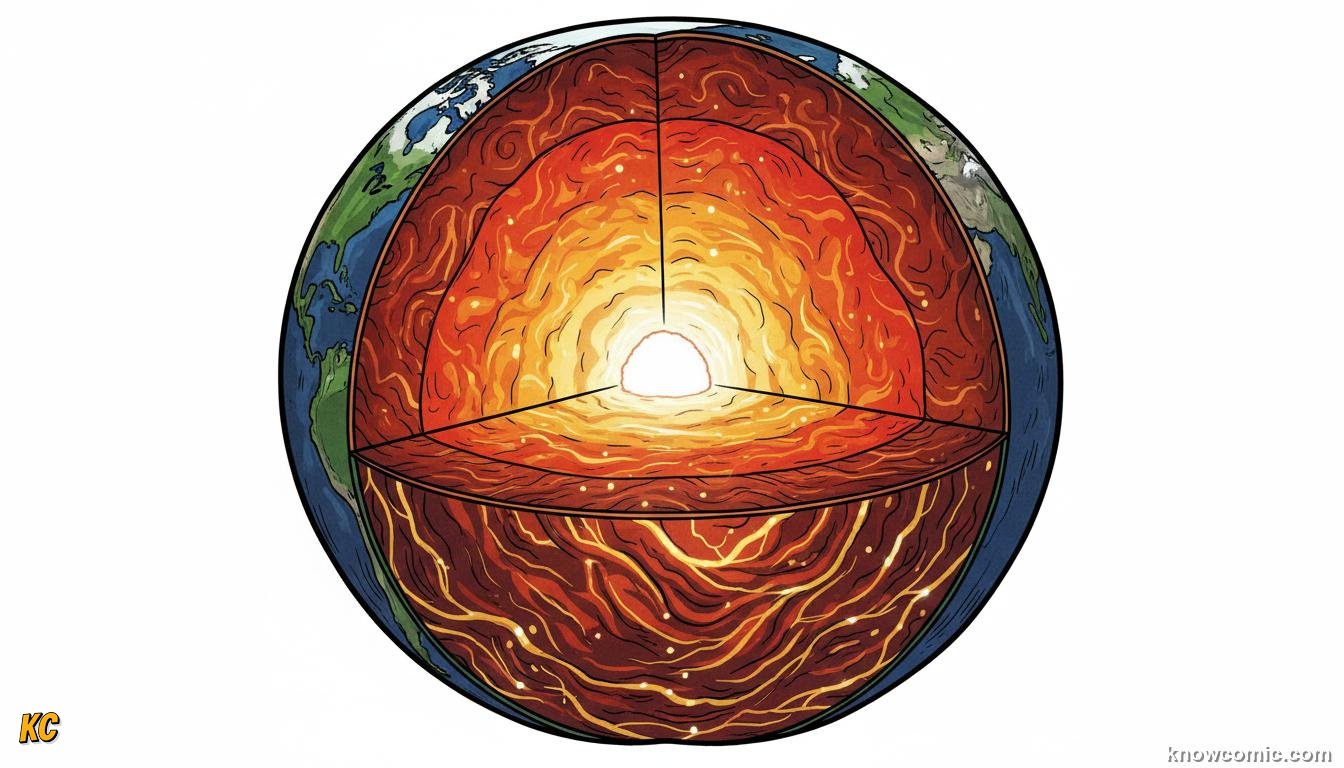
A GIANT BALL OF ROCK AND METAL
Earth is about 12,700 km across, but the rocky crust where humans drill, farm and build cities is only 5–70 km thick, like an apple's skin compared to the fruit. Below that lies the mantle, a hot rocky region thousands of kilometres deep that moves slowly over millions of years. Deeper still sits the outer core, liquid iron and nickel swirling around, and at the very centre, a solid inner core as hot as the surface of the Sun, yet squeezed solid by colossal pressure.
⚡ DID YOU KNOW?
If you could drive straight down at highway speed, reaching the core would still take weeks, the planet is mostly interior, not map lines on the surface!
THIN!
OCEAN VS LAND
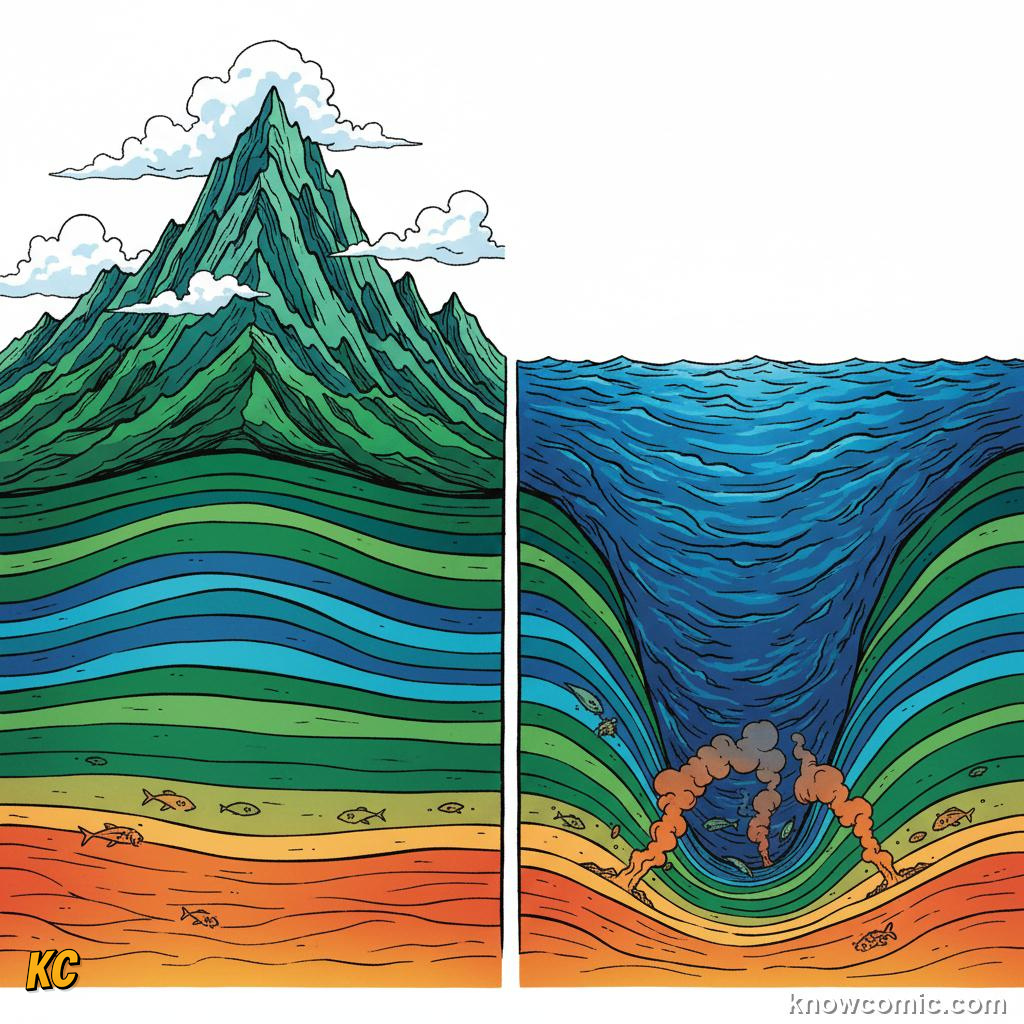
🌊 Oceanic crust ~5–10 km
🏔️ Continental crust ~30–70 km
🧊 Both are solid rock, basalt vs granite-rich
🏔️ Continental crust ~30–70 km
🧊 Both are solid rock, basalt vs granite-rich
ATMOSPHERE
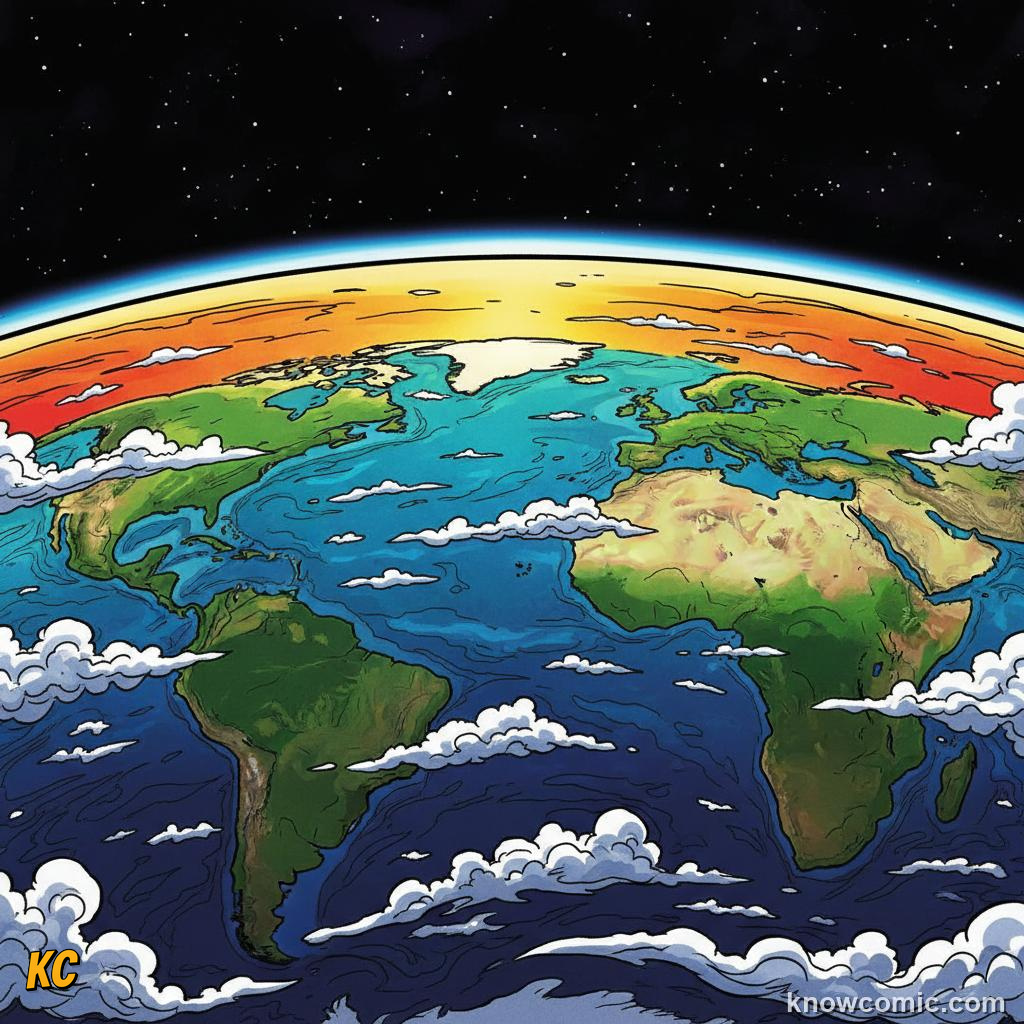
☁️ Thin air blanket above crust
🛡️ Different layer, not the rocky mantle
🌍 All geography starts at the surface
🛡️ Different layer, not the rocky mantle
🌍 All geography starts at the surface
PAGE 2 OF 5, THE MANTLE: SLOW-MOTION ENGINE
CONVECTION
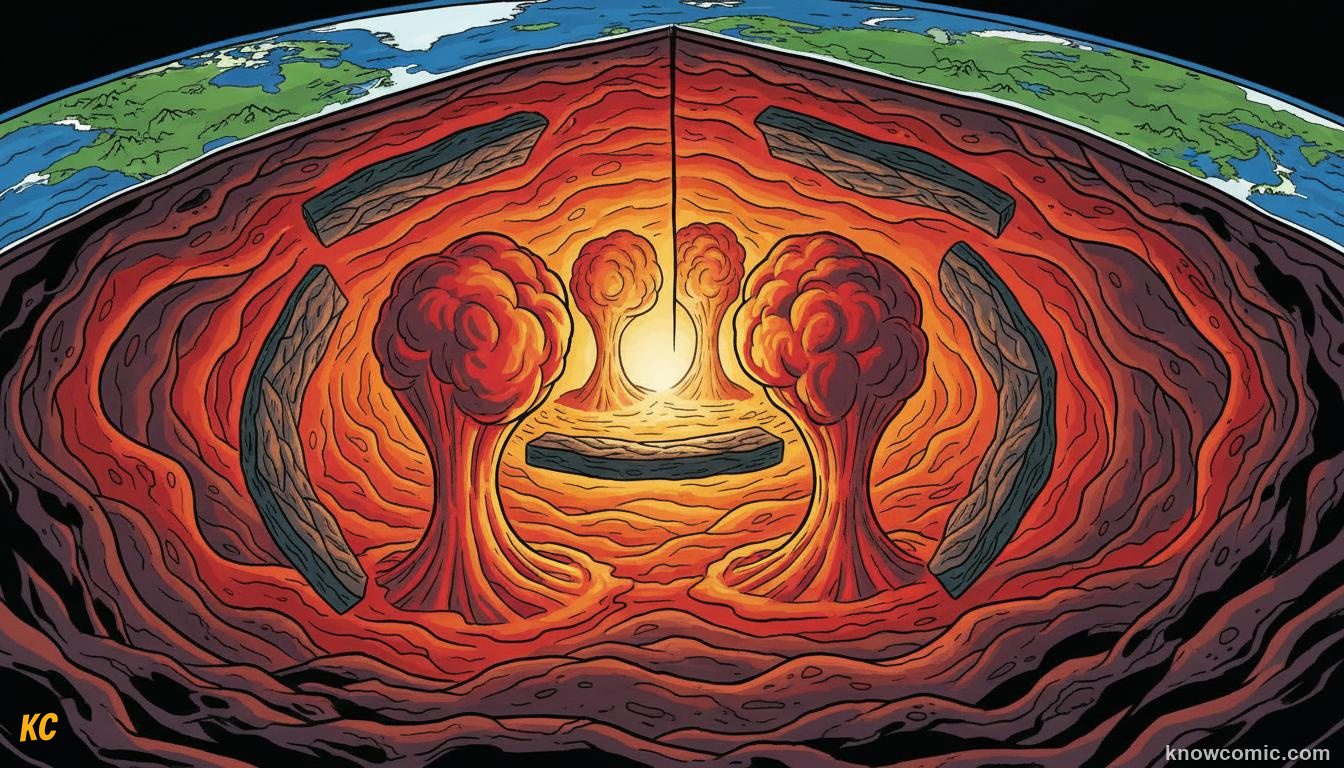
HOT ROCK THAT CREEPS AND CIRCLES
The mantle extends from the base of the crust down to about 2,900 km depth. It is mostly solid, but over geologic time the rock can creep, bend and flow in giant convection cells, warmer material rising and cooler slabs sinking. This slow churn helps drag tectonic plates across the surface and powers volcanoes at mid-ocean ridges and subduction zones. The upper mantle includes a softer zone called the asthenosphere where rock is closest to melting, a key lubricant for plate motion.
🌡️ HEAT
Mantle temperatures rise from roughly 1,000 °C near the top to about 3,700 °C near the core-mantle boundary, far hotter than any kitchen oven!
FLOW!
ASTHENOSPHERE
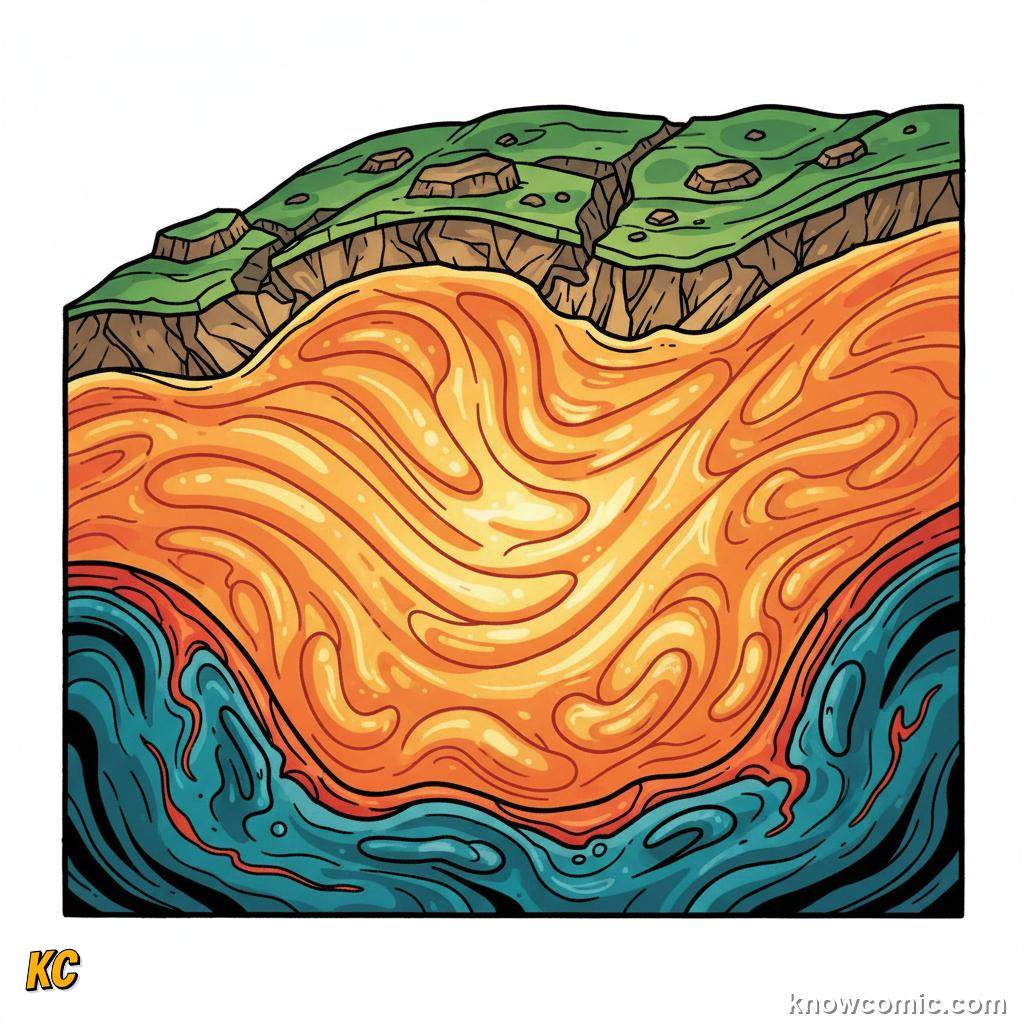
🫠 Ductile, plates slide on it
🔥 Not fully molten overall
🌊 Mid-ocean ridges tap mantle melt
🔥 Not fully molten overall
🌊 Mid-ocean ridges tap mantle melt
LOWER MANTLE
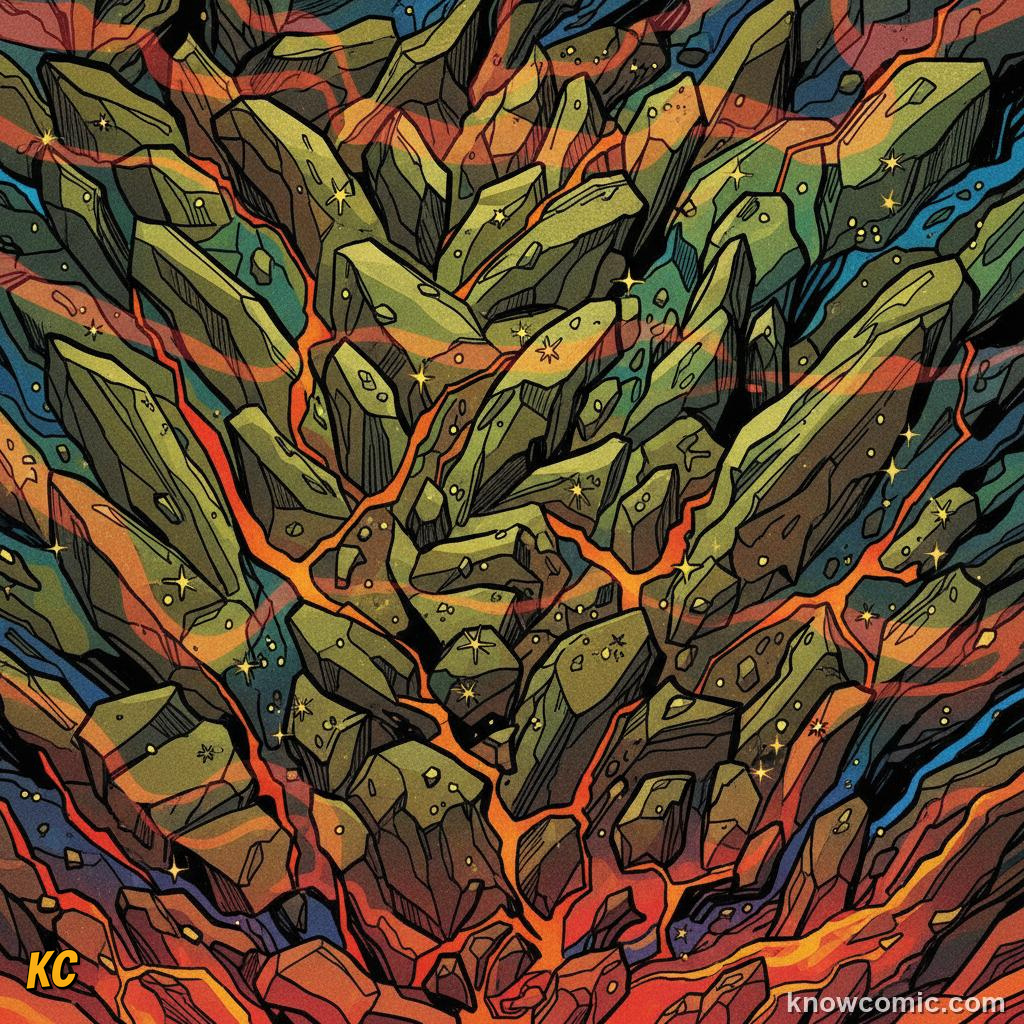
💪 Stiffer rock under pressure
🌊 Giant circulation patterns
⏳ Changes shape over millions of years
🌊 Giant circulation patterns
⏳ Changes shape over millions of years
PLATES RIDE ON TOP
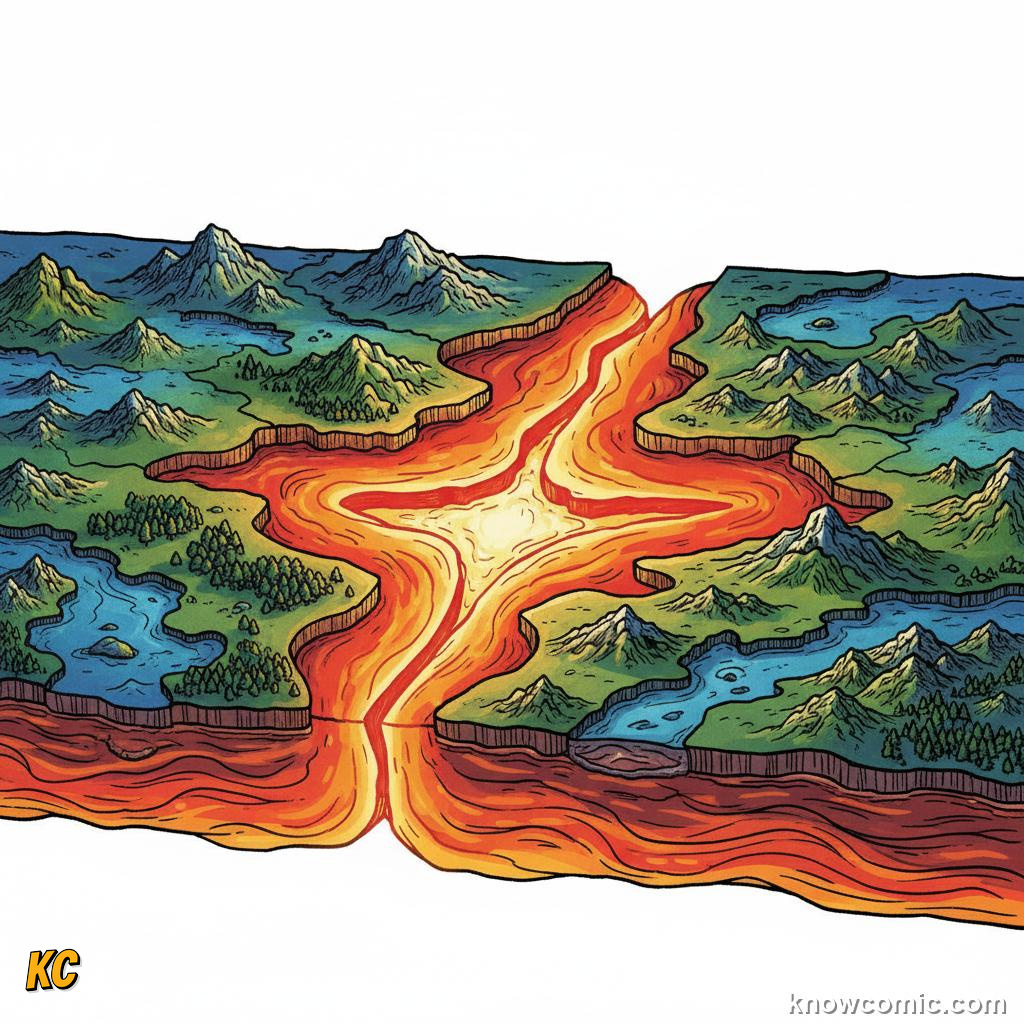
🧩 Crust broken into plates
🐌 Centimetres per year motion
🌋 Mantle melt feeds volcanoes
🐌 Centimetres per year motion
🌋 Mantle melt feeds volcanoes
PAGE 3 OF 5, LIQUID OUTER CORE & EARTH'S MAGNET
FIELD LINES

🧲 Moving metal makes a dynamo
🧭 Compass needles follow the field
🛡️ Helps shield from solar wind
🧭 Compass needles follow the field
🛡️ Helps shield from solar wind
DEPTH
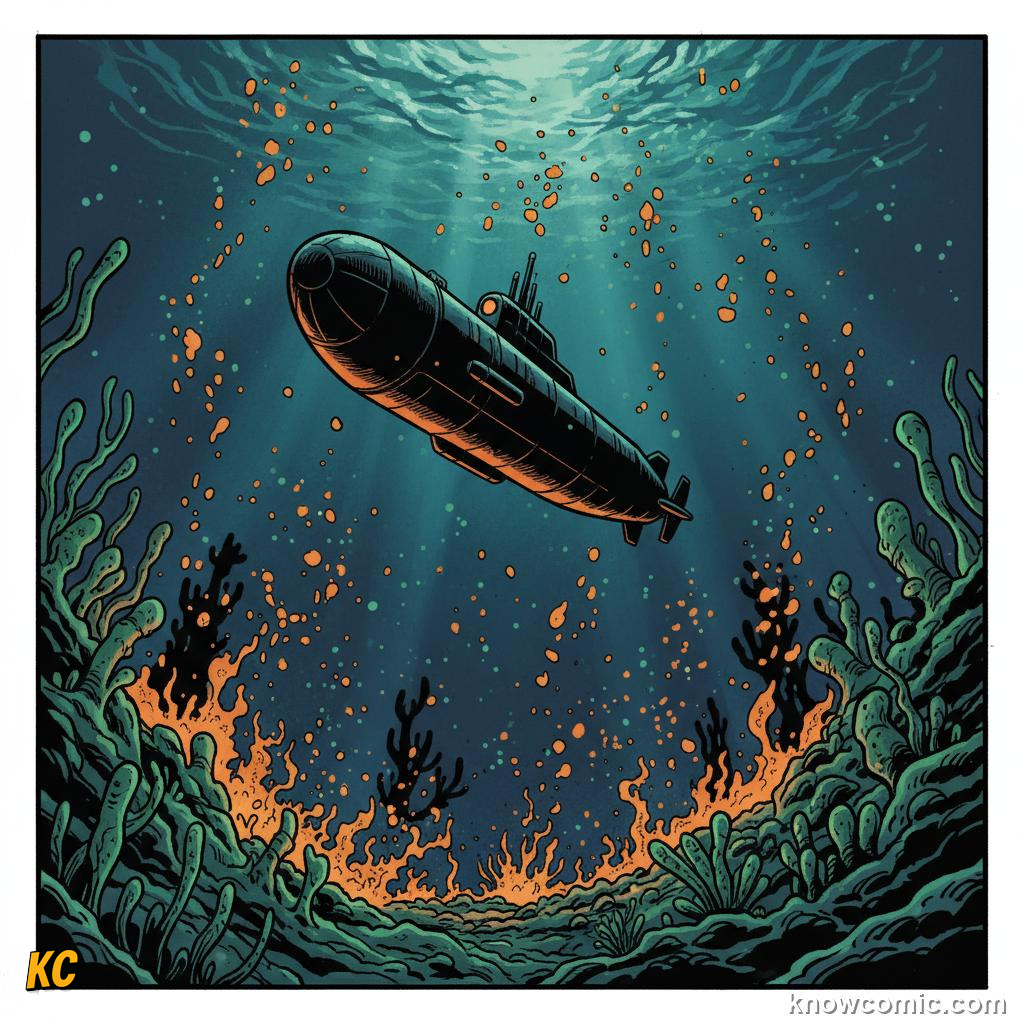
📏 ~2,900 km to ~5,100 km depth
🌊 Liquid iron-nickel alloy
⚡ Electrical currents swirl inside
🌊 Liquid iron-nickel alloy
⚡ Electrical currents swirl inside
OUTER CORE
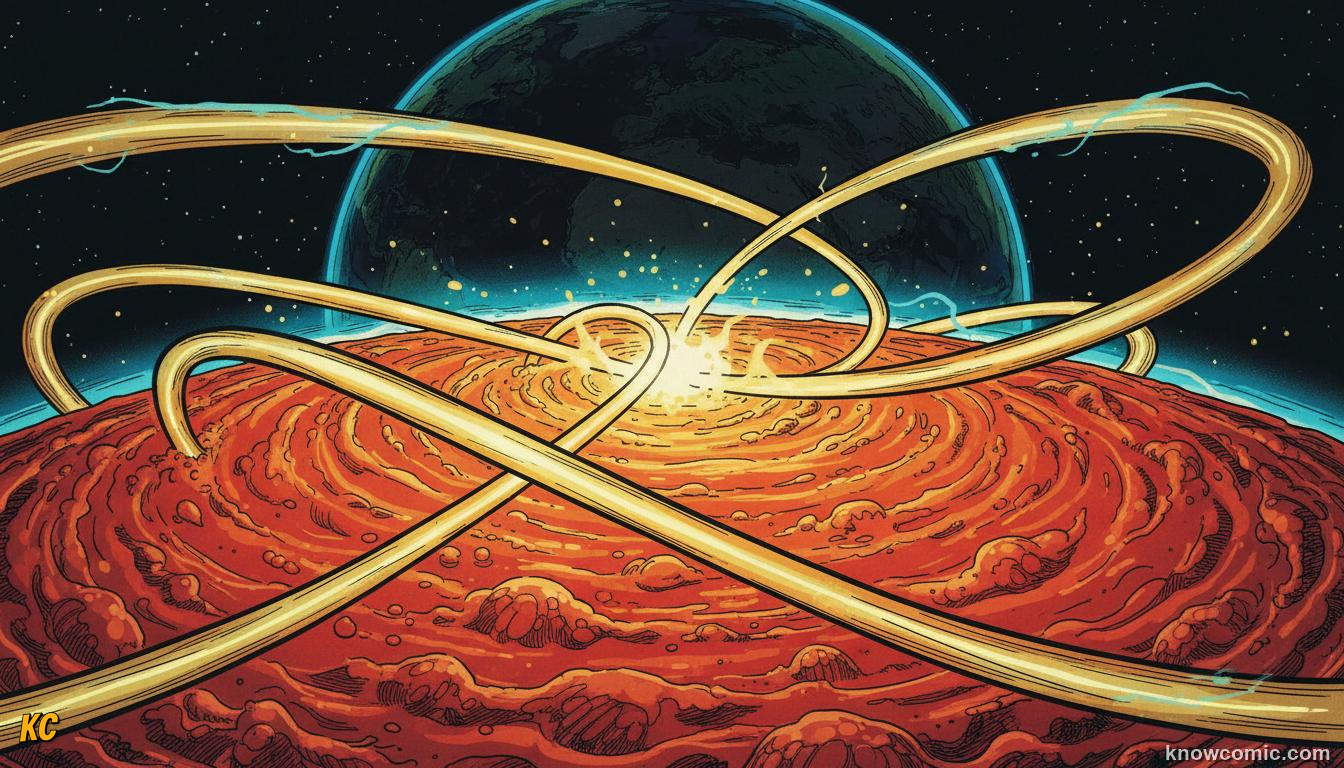
LIQUID METAL, GIANT EFFECTS
Earth's outer core behaves like a planet-sized ocean of molten iron and nickel, but far denser than water. As Earth spins and heat escapes from the inner core, those metals circulate and generate electric currents. That geodynamo creates Earth's magnetic field, which extends thousands of kilometres into space. Without it, charged particles from the sun would strip away more of our atmosphere over geologic time and life would face a harsher environment.
🧭 POLE FLIPS
The magnetic poles wander slowly and have reversed hundreds of times in Earth history, recorded in stripes of magnetised seafloor basalt.
SPIN!
PAGE 4 OF 5, THE INNER CORE: A HOT METAL MARBLE
SOLID CENTRE
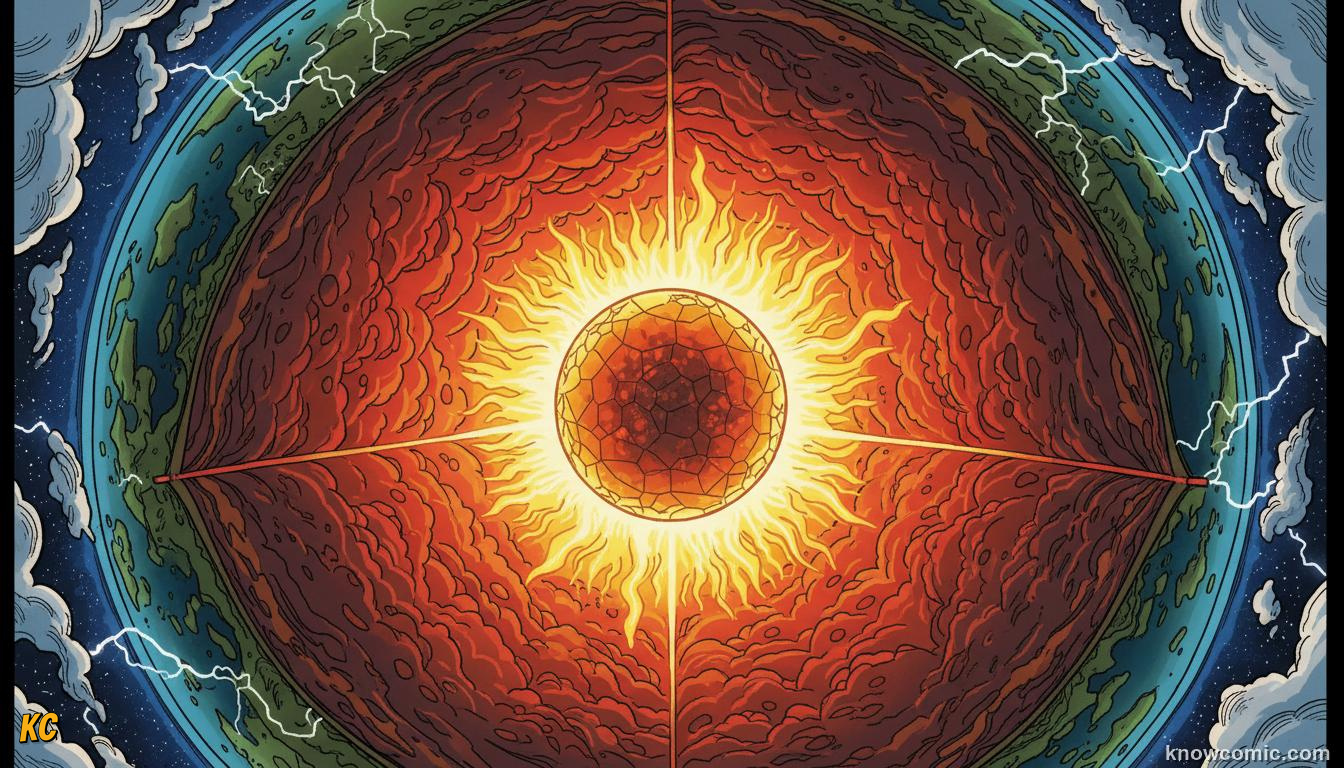
PRESSURE WINS OVER HEAT
From about 5,100 km depth to 6,370 km at the centre lies the inner core, a ball of mostly iron and nickel roughly the size of Pluto. Temperatures soar past 5,000 °C, hot enough to vaporise surface rock instantly, yet the inner core is solid because the weight of the entire planet squeezing inward is even more extreme. Seismic waves that cannot travel through liquids speed up again when they cross this inner sphere, telling scientists it behaves like a crystal growing slowly over time.
⏳ GROWING?
Some models suggest the inner core freezes outward as Earth cools, a tiny change per century, but part of Earth's long-term evolution.
CORE!
SIZE
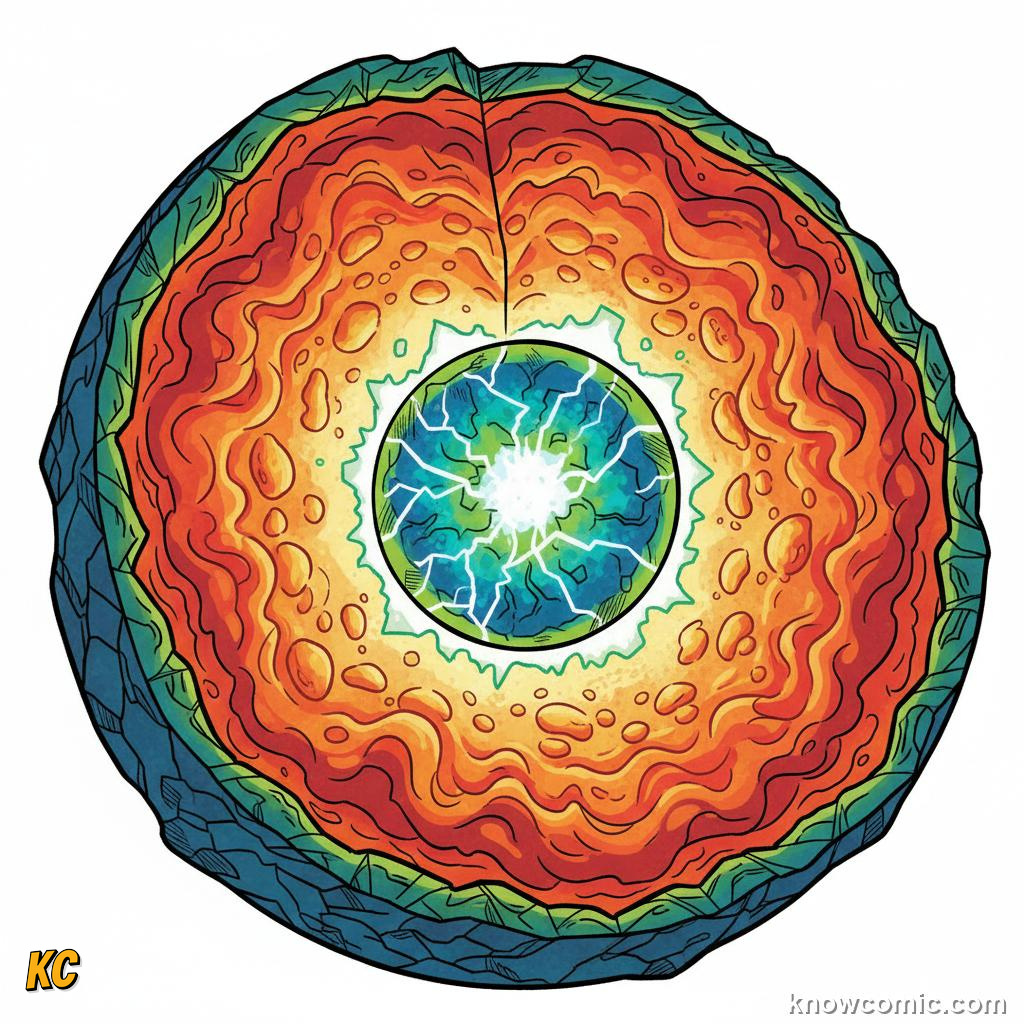
🌑 ~1,200 km radius ball
🪙 Mostly iron plus nickel
🔊 S-waves can pass, it is solid
🪙 Mostly iron plus nickel
🔊 S-waves can pass, it is solid
HEAT
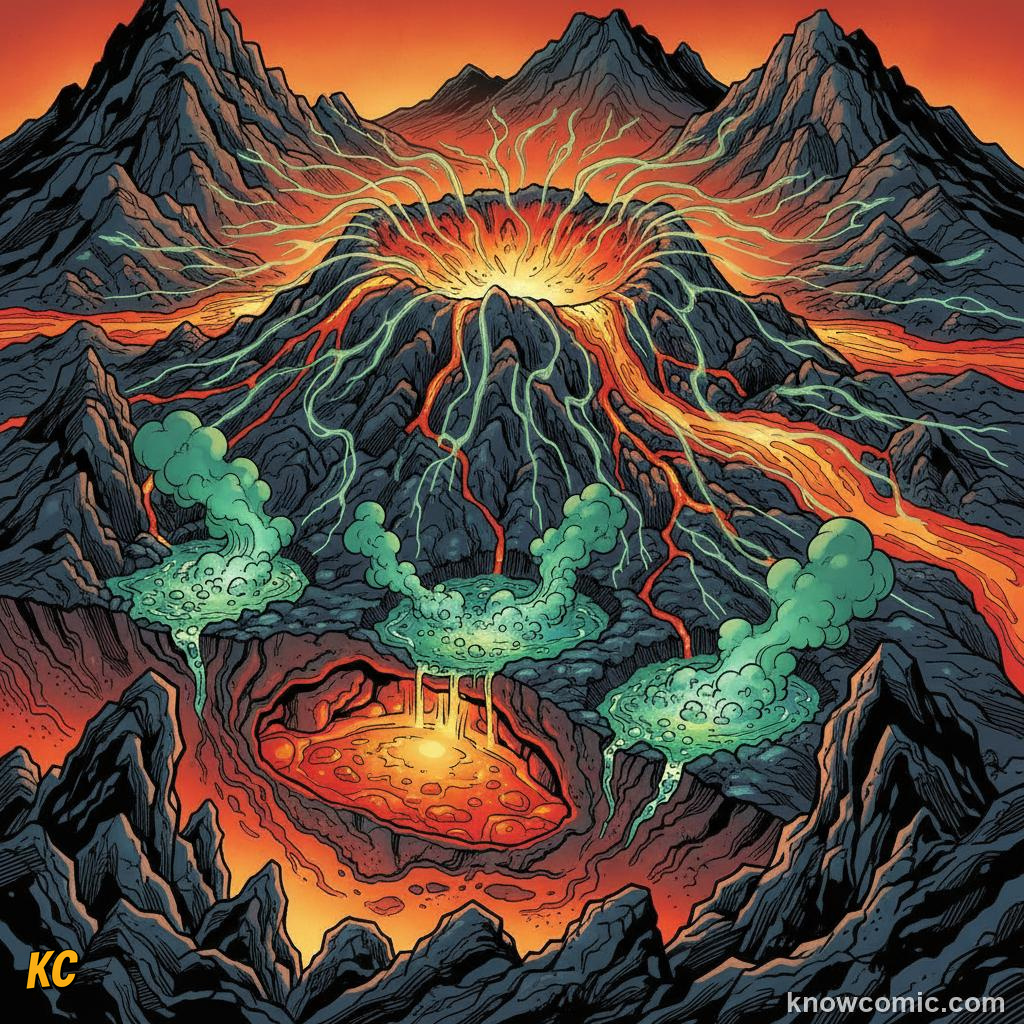
☀️ Comparable to Sun surface heat
🔥 Leftover formation heat + radioactivity
🧊 Still solid, pressure dominates
🔥 Leftover formation heat + radioactivity
🧊 Still solid, pressure dominates
WHOLE PLANET

📐 Mean radius ~6,371 km
🧅 Layers nest like an onion
🛰️ Only crust visible from orbit
🧅 Layers nest like an onion
🛰️ Only crust visible from orbit
PAGE 5 OF 5, HOW WE KNOW WITHOUT DIGGING
SEISMOLOGY

EARTHQUAKE WAVES AS X-RAYS
No drill has ever reached the mantle, let alone the core, the deepest human boreholes are only about 12 km. Instead, scientists place seismometers worldwide. When an earthquake happens, P-waves and S-waves race through the planet, bending, speeding up or slowing down at each boundary. S-waves cannot pass through the outer core's liquid, casting a "shadow" on the opposite side of Earth from the quake, one of the clues that revealed the liquid core in the early 20th century. Modern supercomputers combine millions of recordings into 3-D tomography maps of the interior.
🔬 SCIENCE WIN
Combining lab experiments on rocks at high pressure with seismic data lets geophysicists test ideas about temperature, chemistry and even how the core formed with Theia-scale impacts.
WAVES!
DRILLING
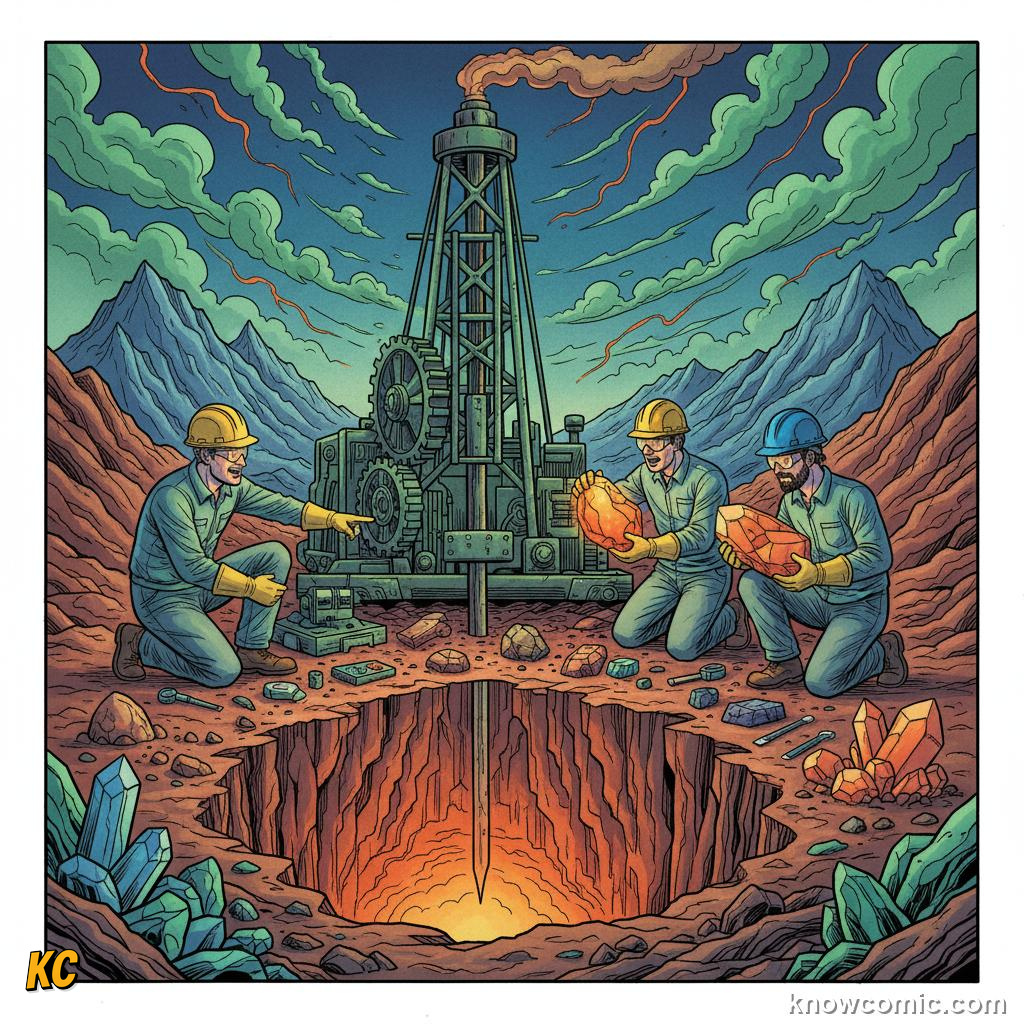
🛠️ Deepest holes ~12 km
🪨 Crust samples only, so far
📡 Waves do the deep mapping
🪨 Crust samples only, so far
📡 Waves do the deep mapping
REMEMBER
🌍 KEY FACTS
Crust (thin, rocky) · Mantle (hot, slow-flowing solid) · Outer core (liquid iron, magnetic dynamo) · Inner core (solid iron-nickel sphere) · We map inside using seismic waves.
✅ Crust = where we live
✅ Mantle drives plate motion
✅ Core = metal, hot, magnetic heart
✅ Mantle drives plate motion
✅ Core = metal, hot, magnetic heart
🧠 QUIZ TIME!
EARTH'S LAYERS · 5 QUESTIONS
QUESTION 01
On which layer do humans live, build cities, and grow food?
QUESTION 02
Earth's outer core is mainly made of liquid…
QUESTION 03
The inner core is solid even though it is extremely hot because…
QUESTION 04
Which waves gave early scientists strong evidence that the outer core is liquid?
QUESTION 05
About how thick is continental crust compared with oceanic crust?
0/5
LOADING...