🍚 RICE: THE GRAIN THAT FEEDS HALF THE WORLD
PAGE 1 OF 5, FROM SWAMP GRASS TO CROP
ORYZA, A GRASS WITH A SECRET
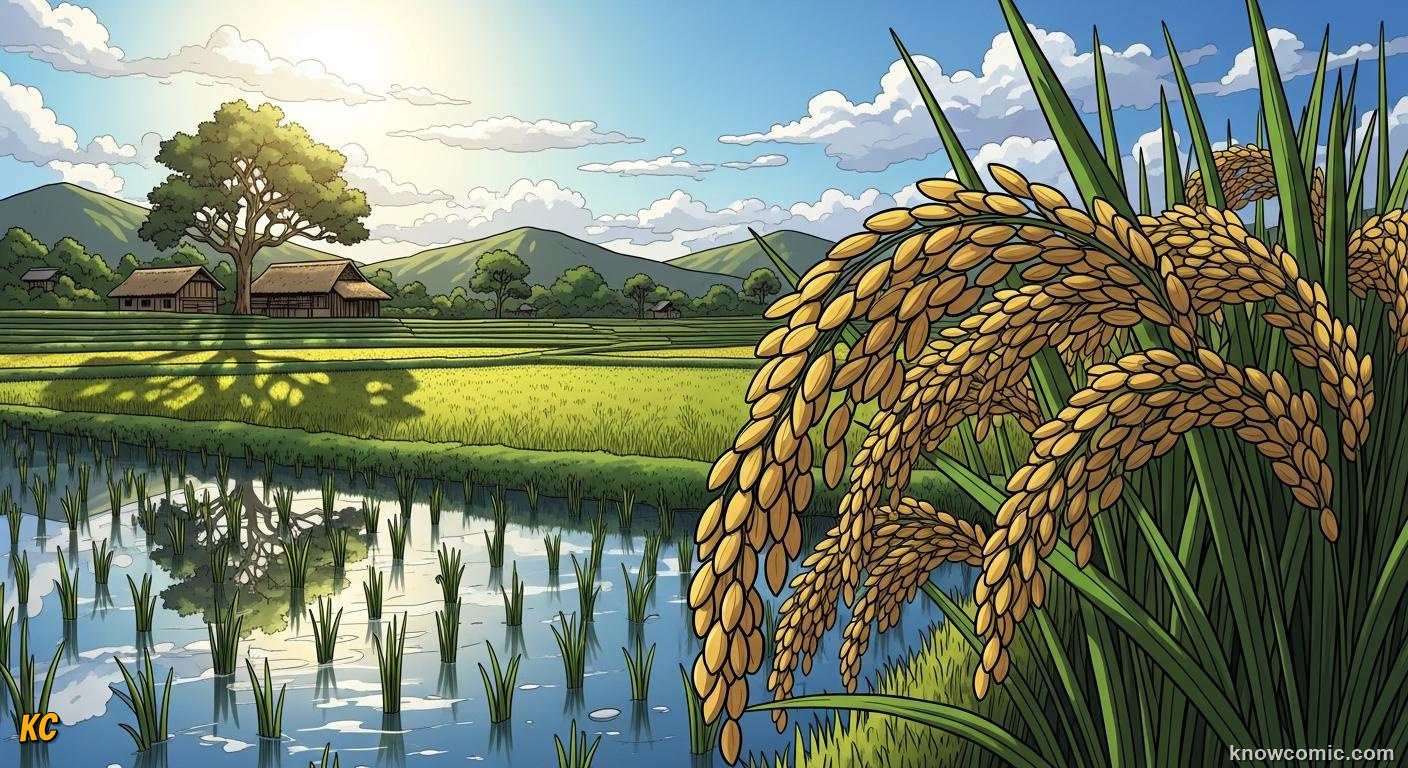
MORE STARCH, MORE PEOPLE
Rice is Oryza, a grass that learned to pack starch into fat seeds. Wild relatives still grow near water; early farmers in warm, rainy river basins (especially in East and South Asia) began saving the plumpest panicles, year after year. The result: seeds that were easier to harvest and that fed family after family—plant breeding before the word science existed.
WILD!
ANCESTORS
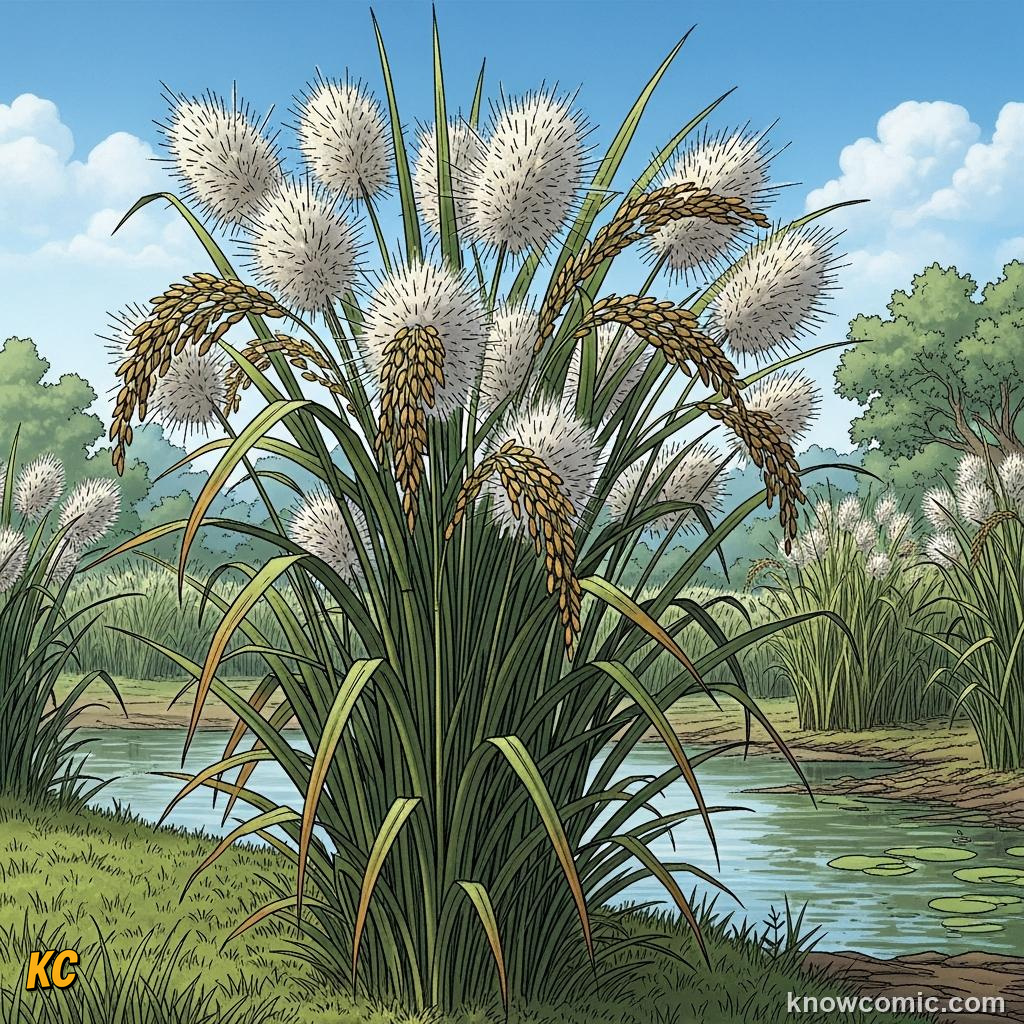
🌾 Feathery wild relatives show what rice’s family looked like first.
RIVER BASINS
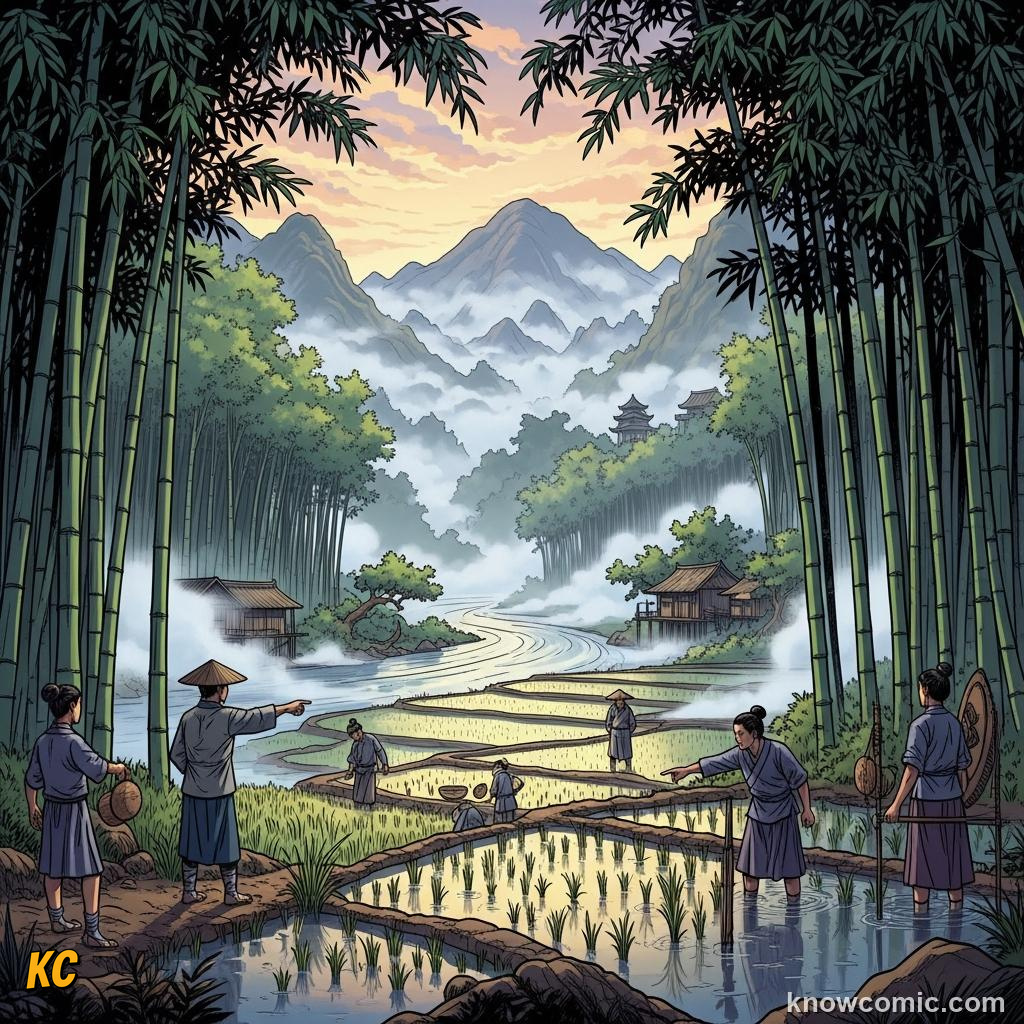
🌍 Monsoon water + mud became humanity’s first rice “factory floors.”
PAGE 2 OF 5, THE PADDY TRICK
WATER, WATER EVERYWHERE
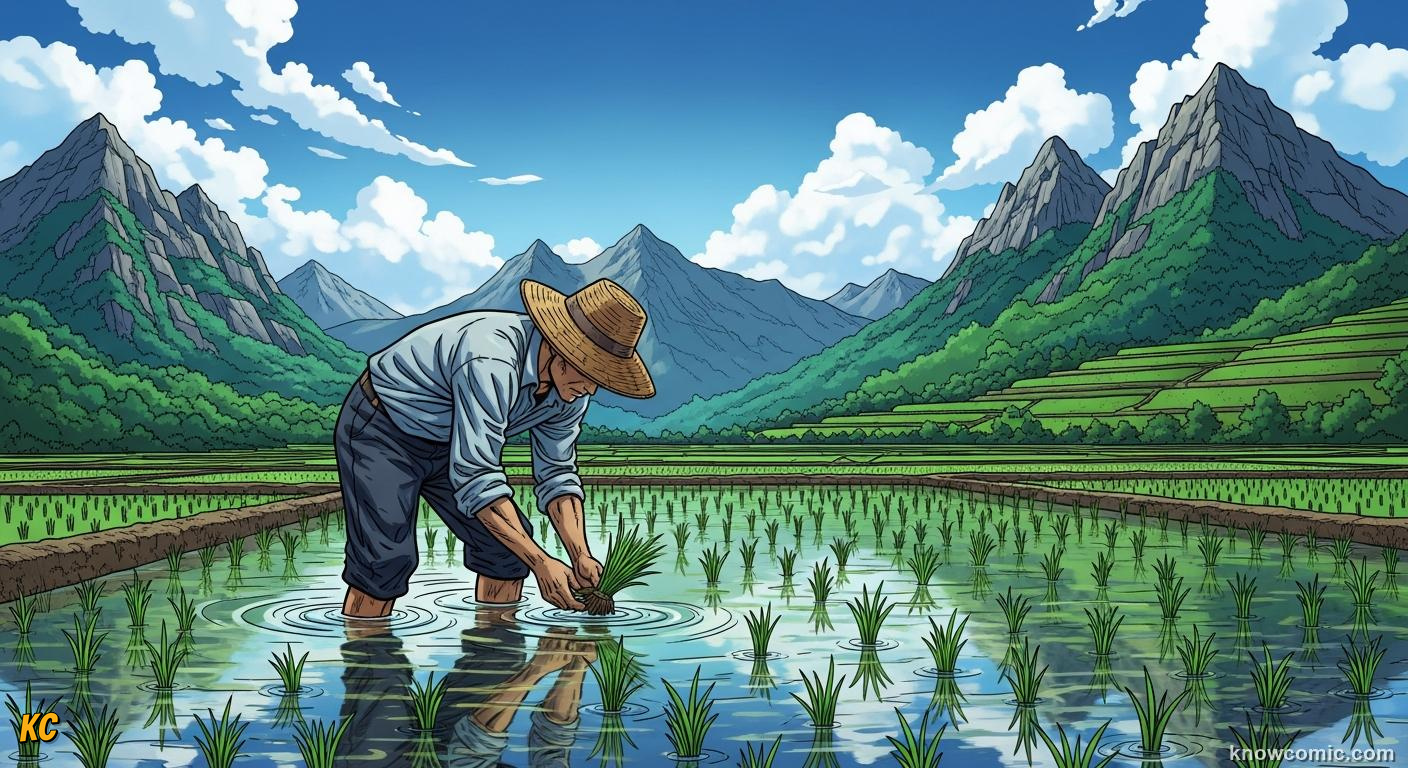
FLOOD, MUD, AND GREEN CROWNS
Unlike dry-field grains that love sunbaked soil, classic rice often grows in flooded paddies. The shallow water drowns many weeds, softens mud so roots can spread, and turns hillsides into stair-step terraces that catch rain like giant bowls. Farmers lift seedling bunches, tuck them in rows, and the mirror-surface farms become some of the prettiest landscapes on Earth—food factories in disguise.
MUD!
BUNDLES
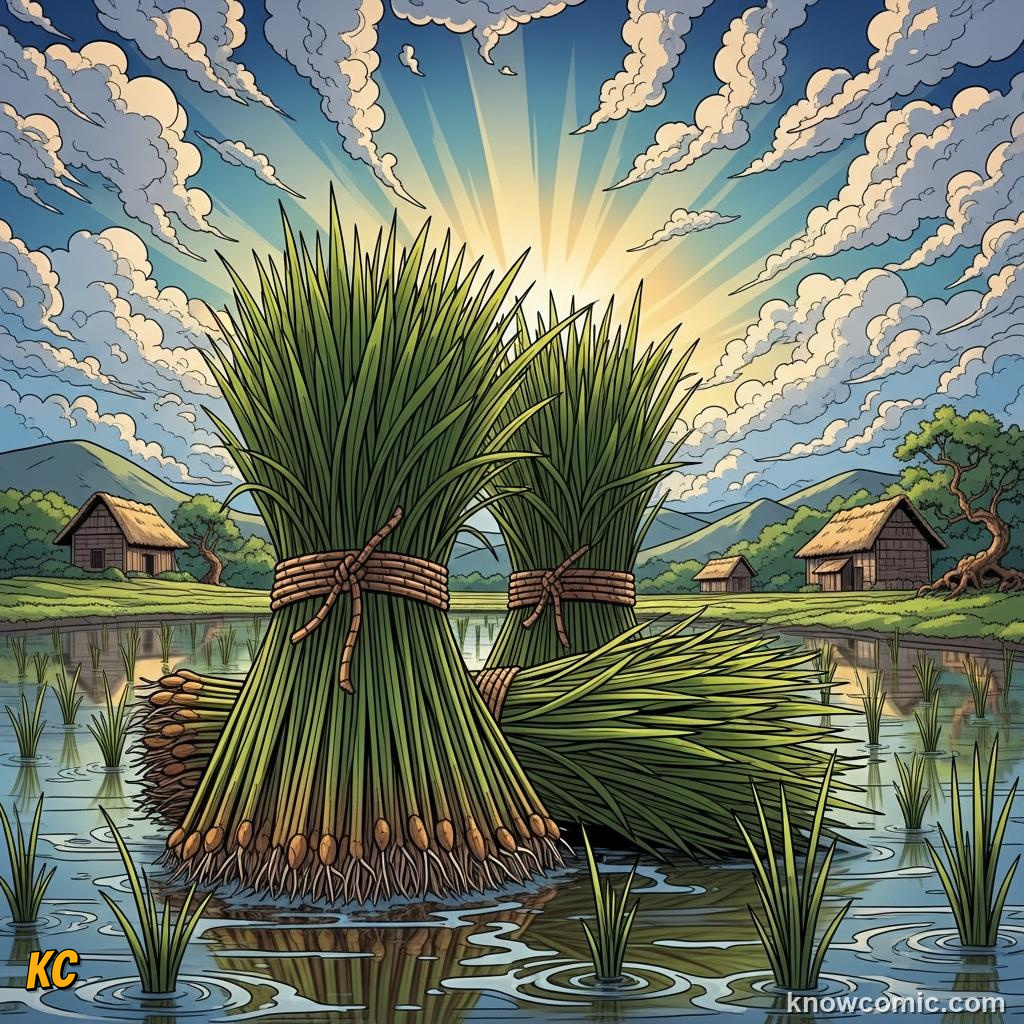
🌱 Young rice travels to the paddy in bright green “haircuts.”
SKY IN THE WATER
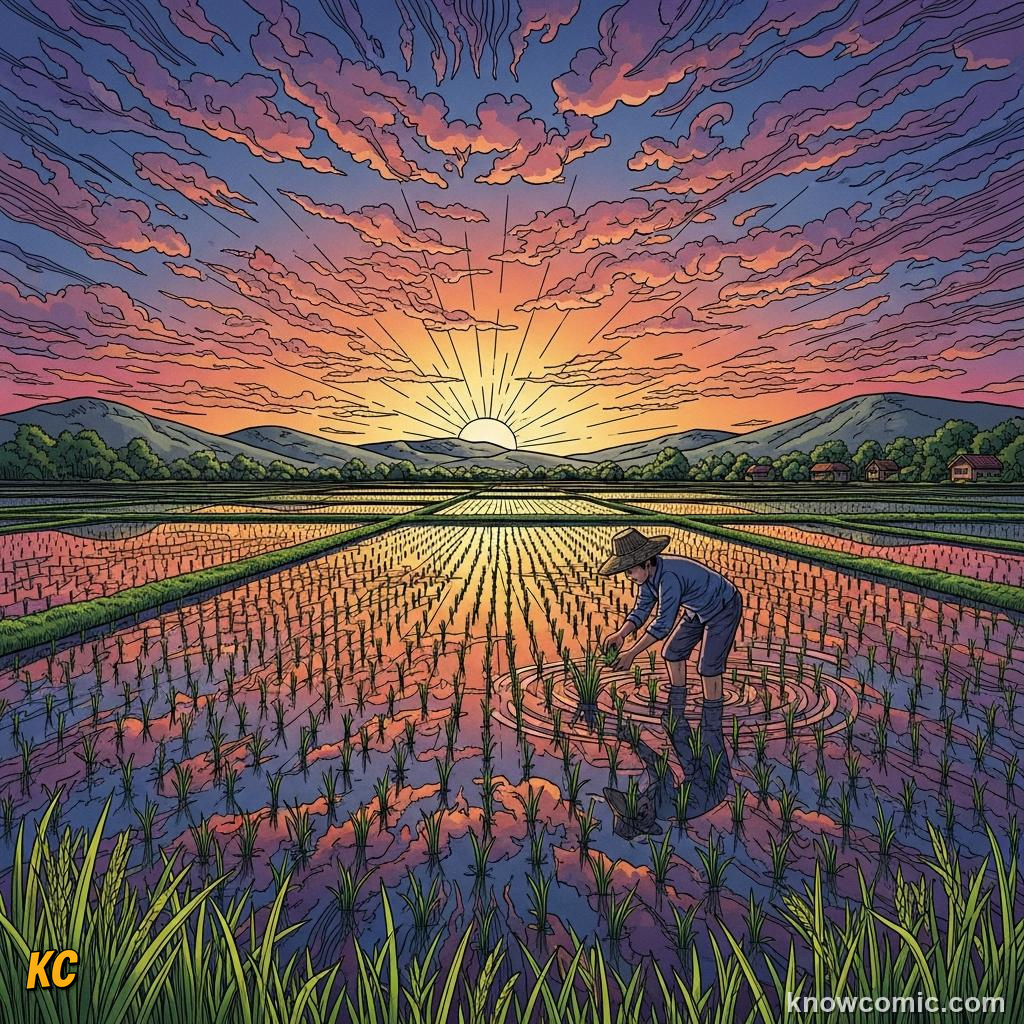
💧 A calm flood reflects clouds—farmers use every drop on purpose.
TERRACES
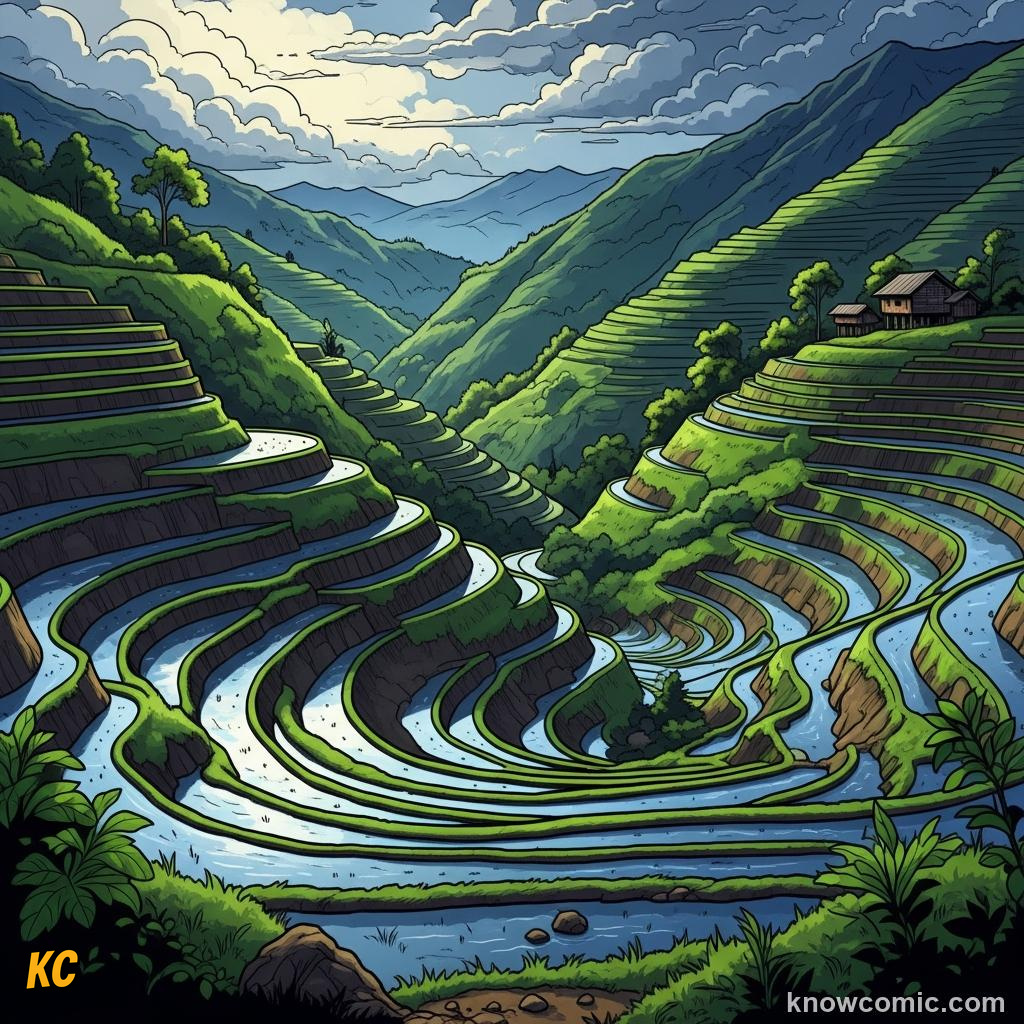
⛰️ Steep hills become giant rice “stairs” to catch rain.
PAGE 3 OF 5, GOLDEN HARVEST
BRINGING THE CROP HOME
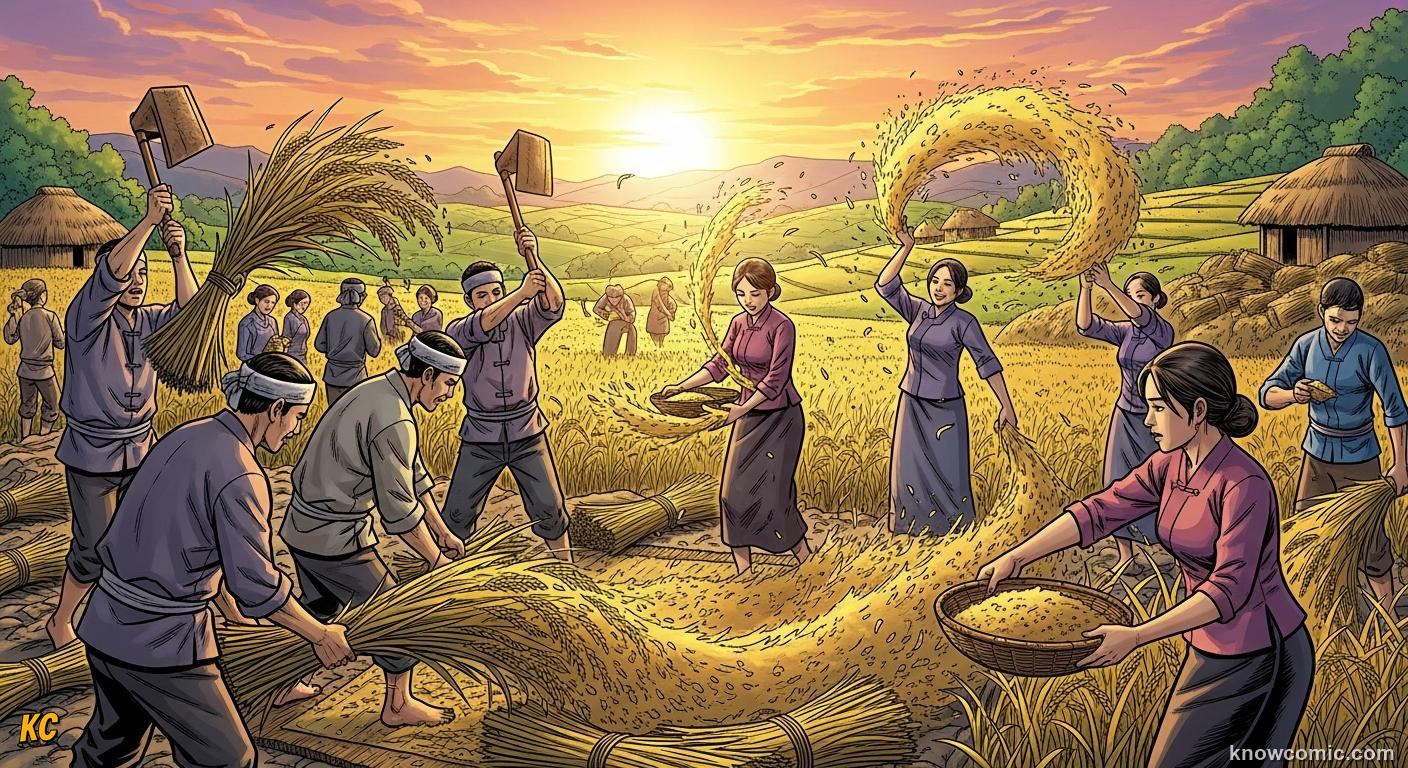
CUT, THRESH, WINNOW
When stalks turn honey-gold, whole villages swing into motion: reaping with sickles, threshing to knock grains free, and winnowing in the breeze to let chaff float away. Today’s combines echo the same story—separate the seed, keep the good stuff, feed the people. Milling can polish off the brown bran, leaving pearly white rice, or stop early for nutty, fiber-rich brown rice—same plant, two personalities.
CHAFF!
SWISH!
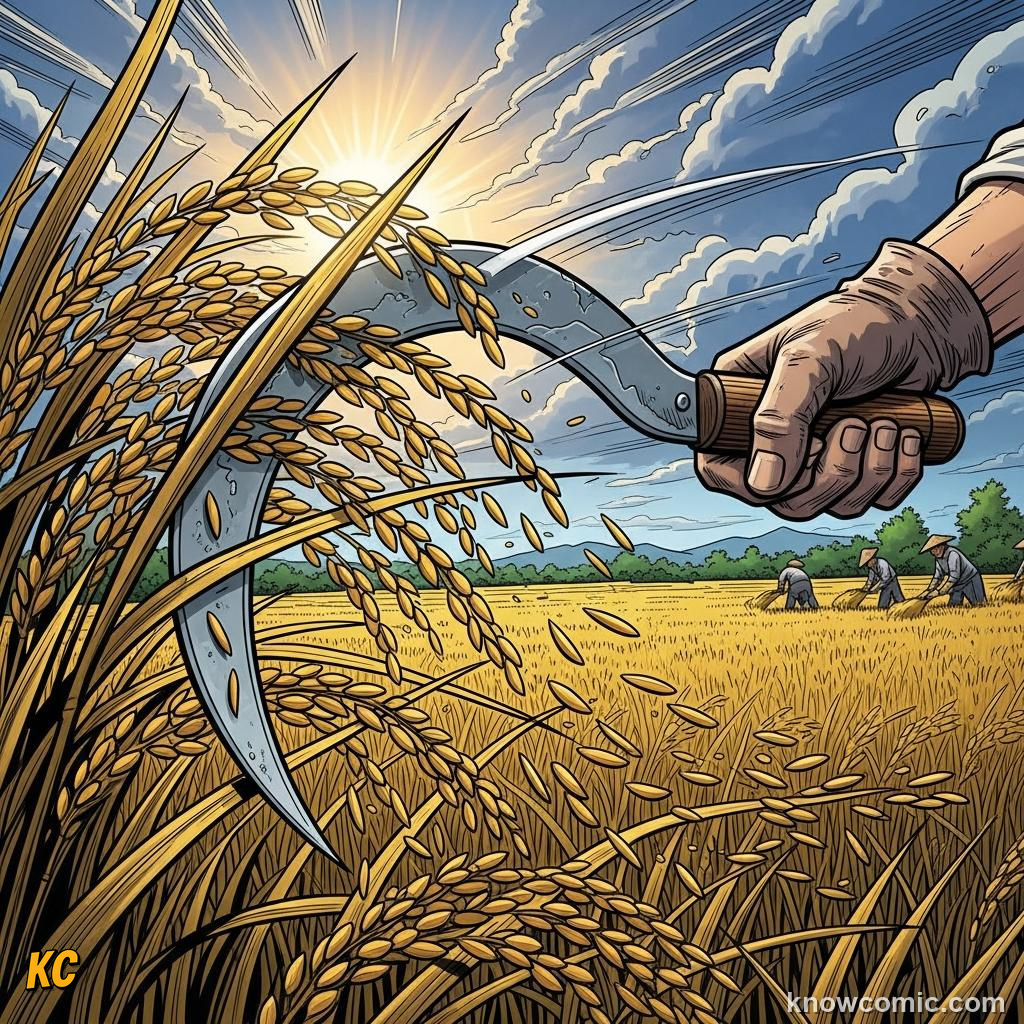
✂️ Hand harvests still teach how heavy a season really is.
BROWN VS WHITE
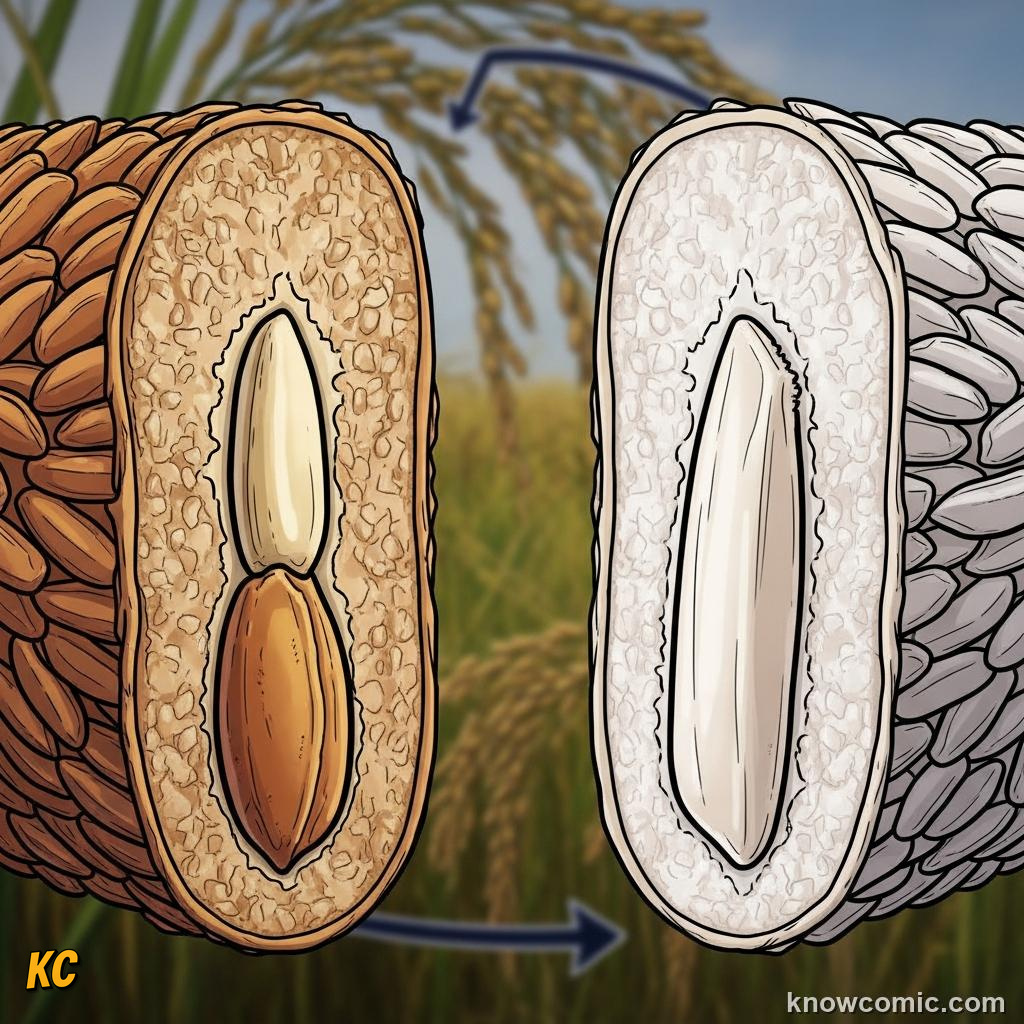
🌰 Polishing strips the bran layer—taste, fiber, and vitamins change in one whir of the mill.
PAGE 4 OF 5, THE FIRE SETS IT
OVEN ENERGY
MAILLARD & MAGIC
Heat sets the loaf: water steams, bubbles swell one last time, proteins firm up, and the crust browns. The Maillard reaction between amino acids and sugars invents new aromas, why toast never smells like raw dough. Clay ovens, communal bakehouses, and later city bakeries could feed crowds from one fire.
BAKE!
PEEL & LOAD
🍞 Bakers slide heavy dough into blistering heat.
STEAM
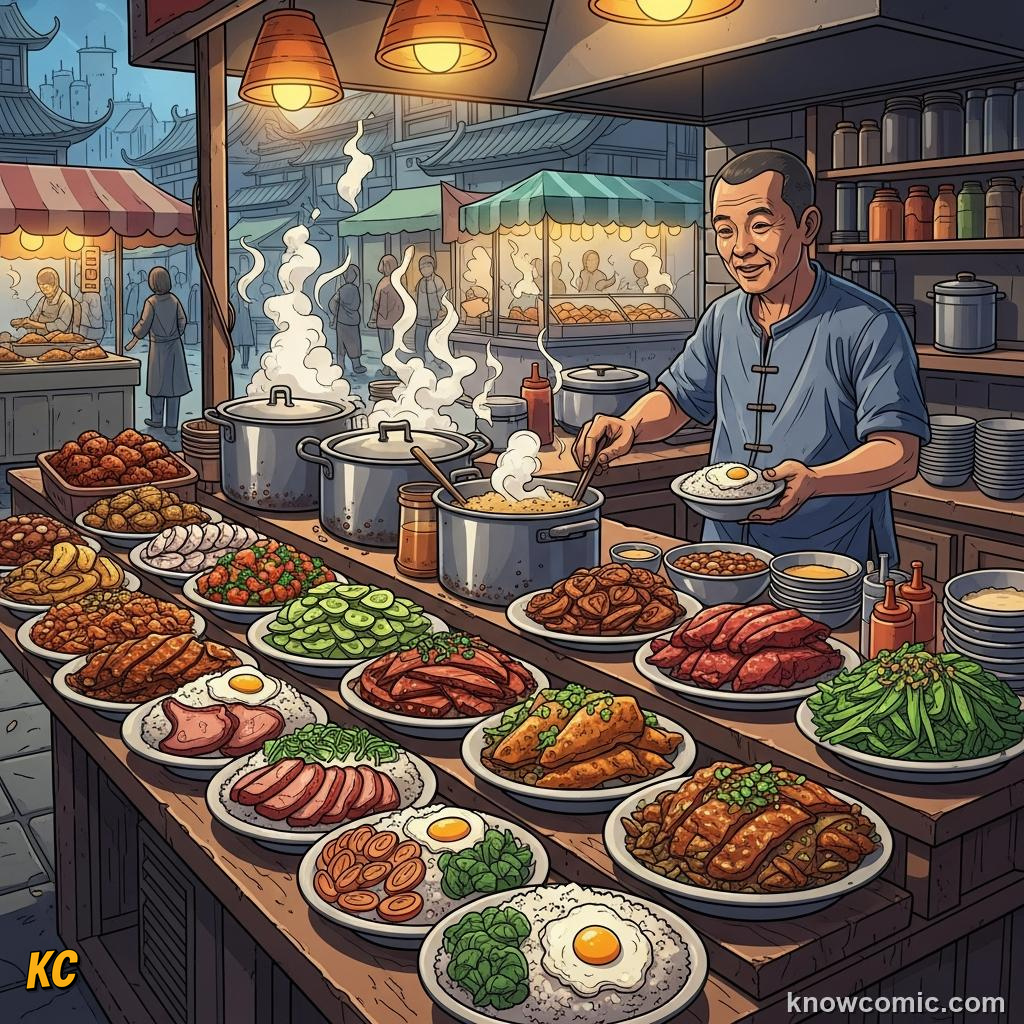
💨 Hot vapor finishes the open crumb inside.
CRUST
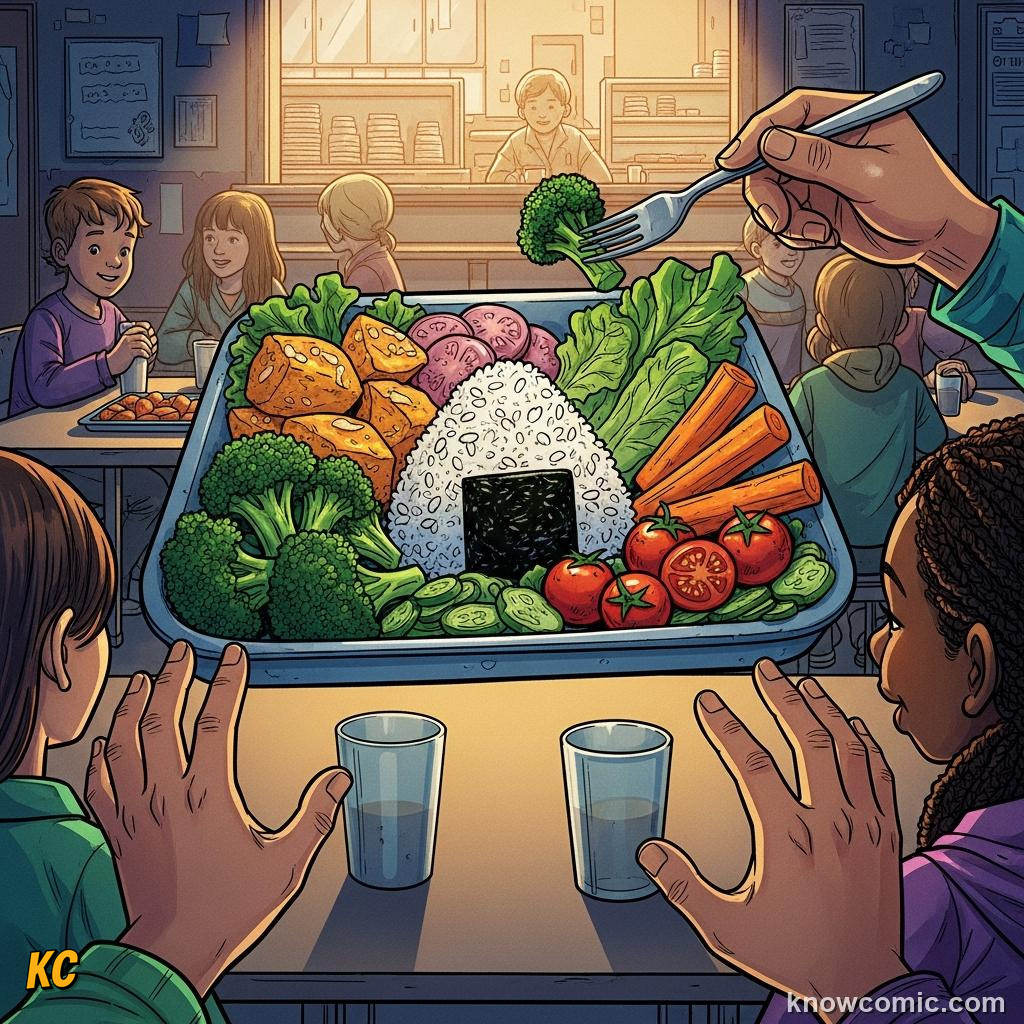
✨ Gold-brown shell locks flavor in every slice.
PAGE 5 OF 5, WATER, SOIL, TOMORROW
THE NEXT HARVEST
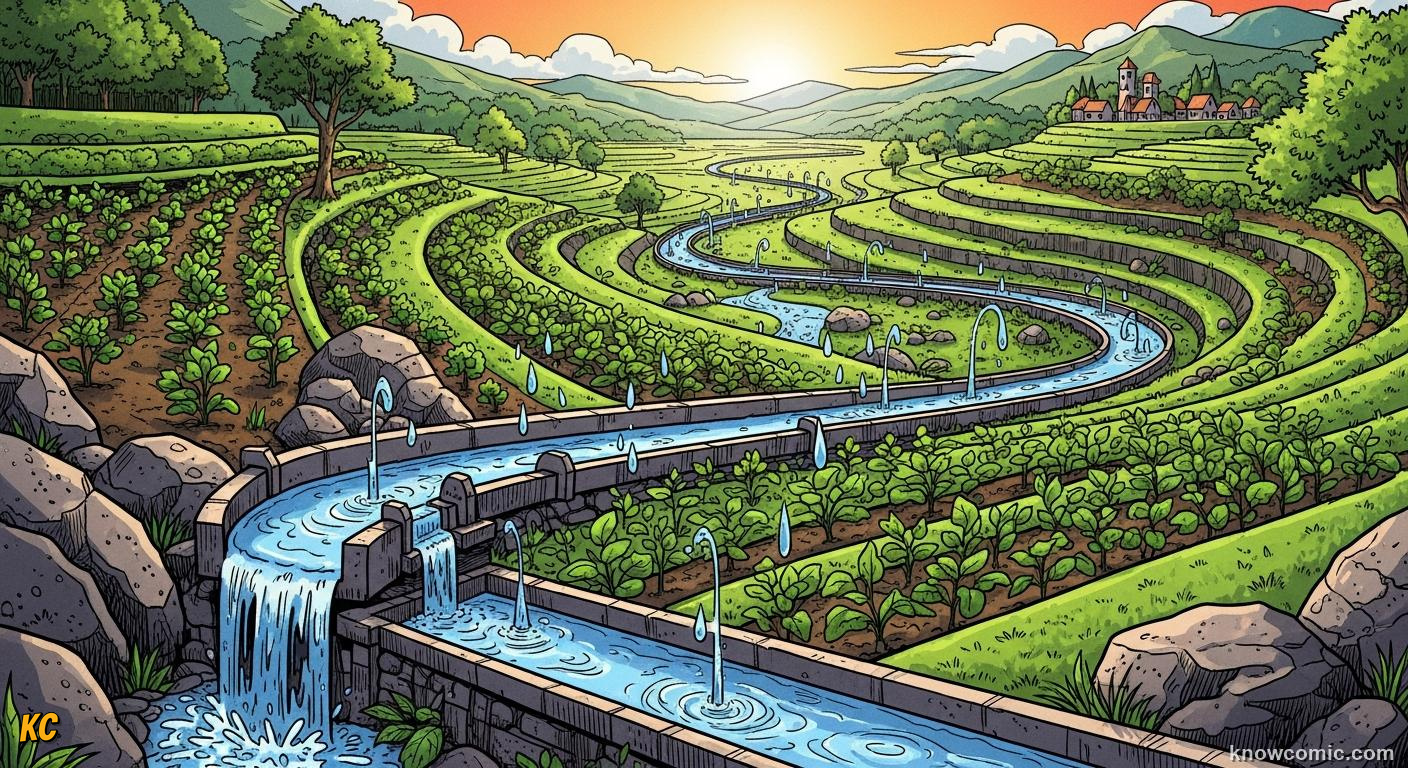
RICE IS A WATER STORY
Flooded fields feed billions, but they also use serious water, care for levees, and release methane (a gas) as microbes wake up in the mud. Breeders, drone scouts, and farmers who time irrigation like clockwork are all working on the same puzzle: more rice, less waste, kinder land. Your leftover grains even star in fritters and porridge—because honoring this ancient crop still matters.
SAVE!
EYES ON THE GAUGE
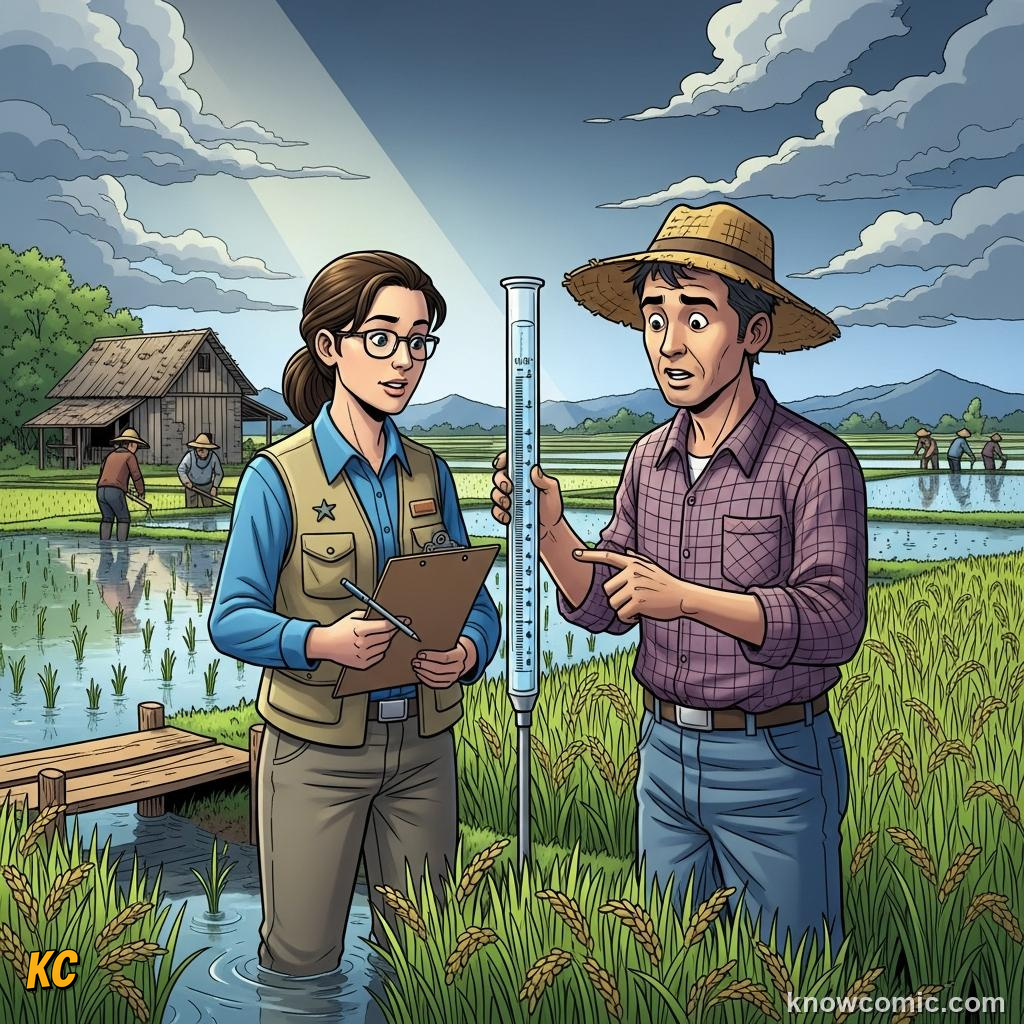
🔬 Teaming with scientists helps every drop and seed count more.
REMEMBER
⚡ KEY FACTS
Rice is a grass we reshaped in rainy river basins. Paddies use flood + mud to outsmart weeds. After harvest, milling can leave bran (brown) or polish it off (white). It feeds a huge share of humankind, so water use and better varieties are live science.
✅ Oryza = the genus behind your bowl.
✅ Flooded fields = old-school weed control.
✅ Brown vs white = bran in or out.
✅ Flooded fields = old-school weed control.
✅ Brown vs white = bran in or out.
🧠 QUIZ TIME!
RICE & PADDIES · 5 QUESTIONS
QUESTION 01
Where did the classic story of turning wild rice into a farmed crop get its biggest early push?
QUESTION 02
One big reason farmers flood paddy fields is to…
QUESTION 03
What’s the key difference when brown rice becomes white rice?
QUESTION 04
Why do people call rice a grain that "feeds half the world"?
QUESTION 05
Sustainable rice farming often focuses on…
0/5
LOADING...