🥖 HOW WHEAT BECAME BREAD: FROM GRASS TO LOAF
PAGE 1 OF 5, WILD BEGINNINGS
THE ORIGINAL GRASS
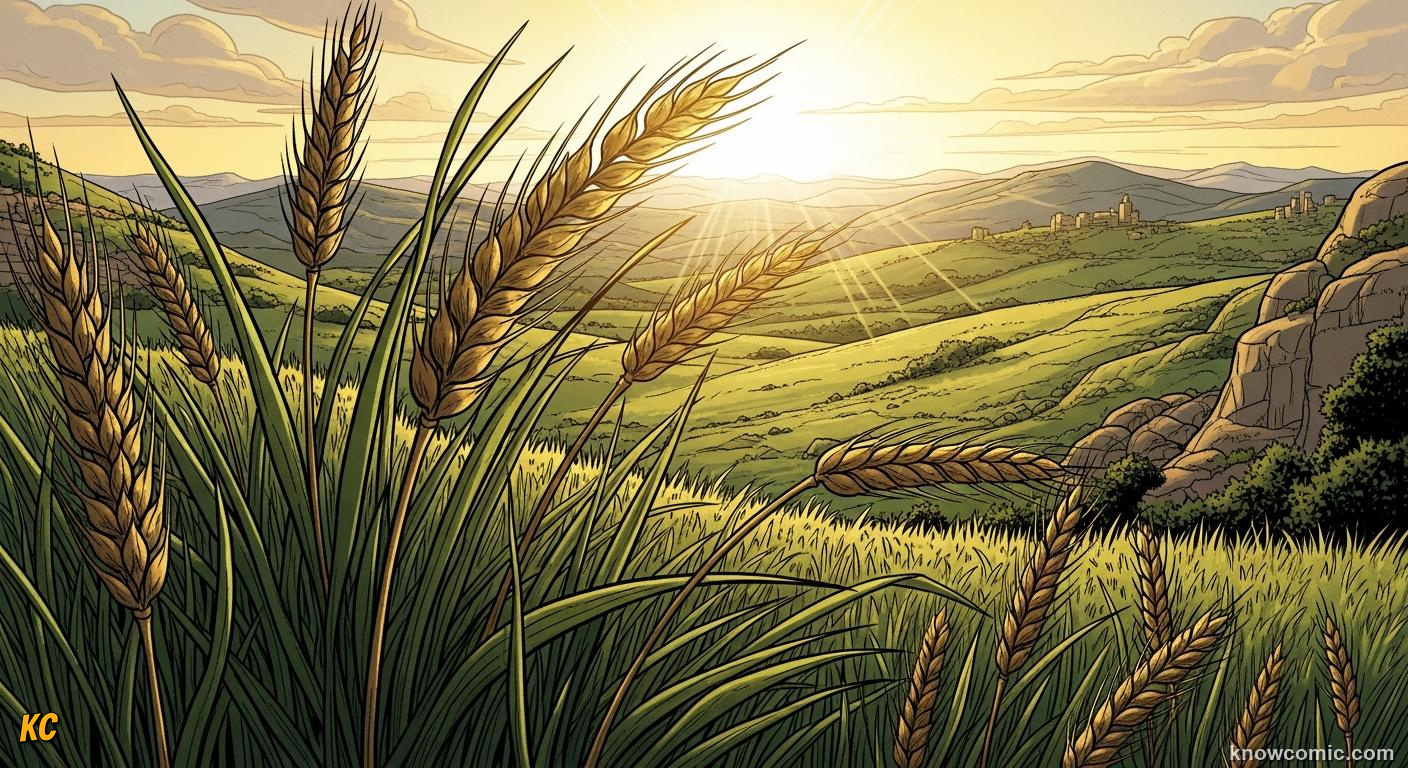
FROM WEED TO WHEAT
Long before supermarkets, wheat was a wild grass. Early kinds such as einkorn and emmer had tiny seeds and tough husks, but they stored serious energy. People in the Fertile Crescent and beyond began saving the best seeds, season after season, nudging “chunkier ears” long before anyone said “DNA.”
WILD!
EINKORN
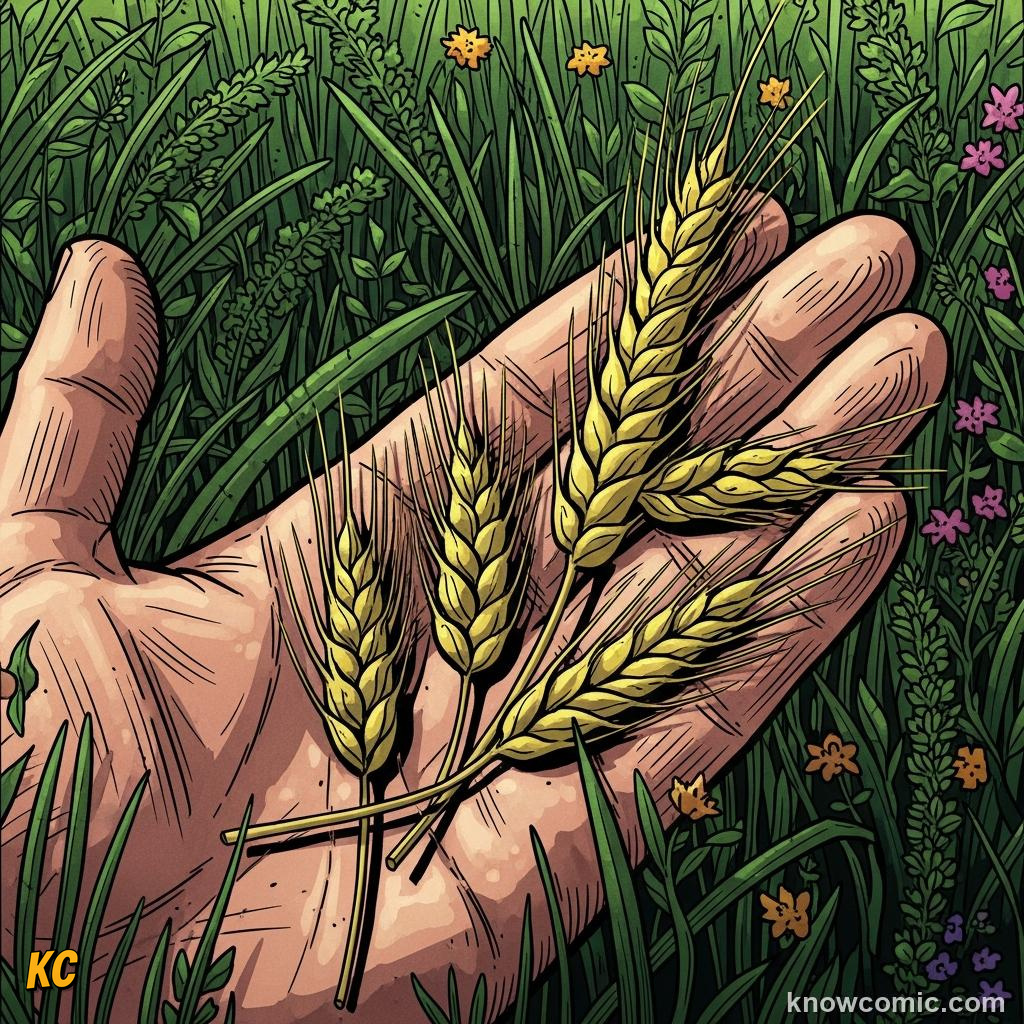
🌾 Among the first grains people shaped on purpose.
RIVERS & FIELDS
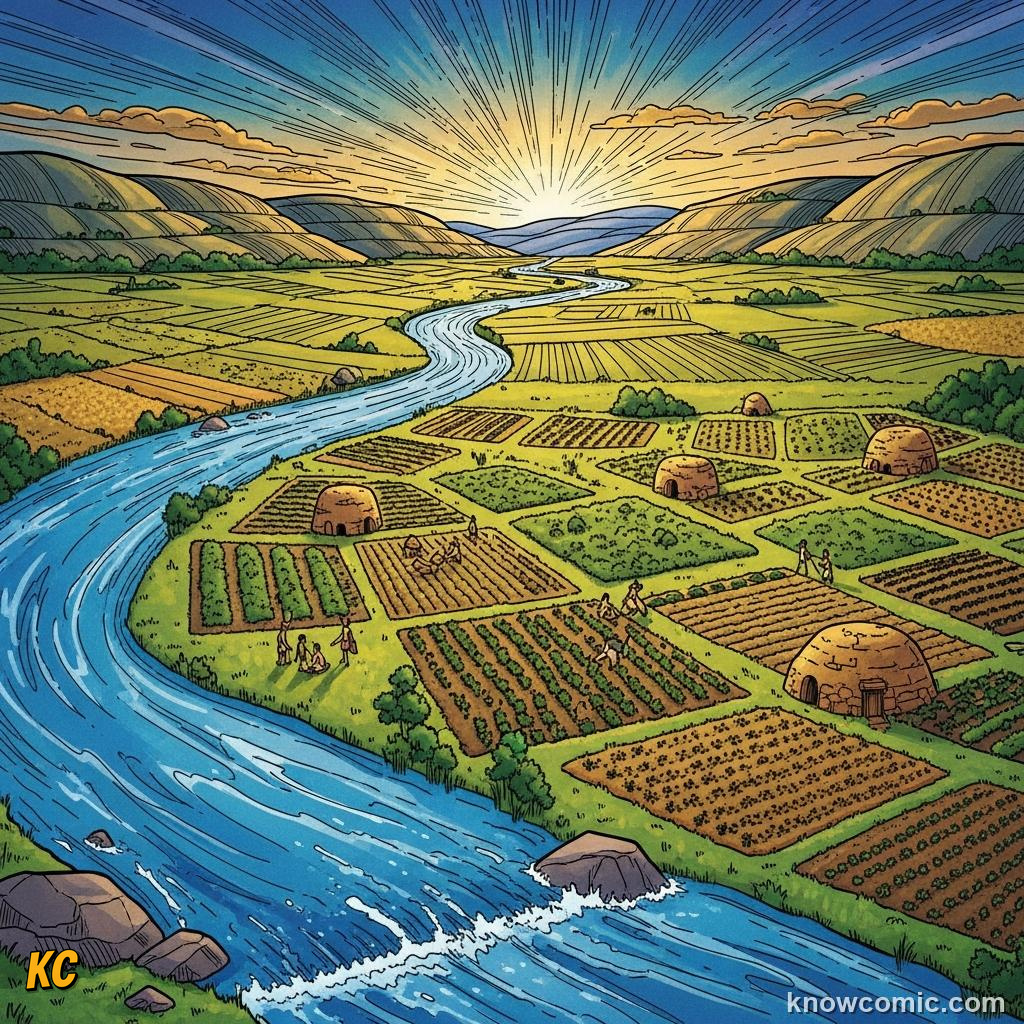
🌍 Mild valleys and water helped fields spread.
PAGE 2 OF 5, THE MIGHTY GRIND
FLOUR POWER
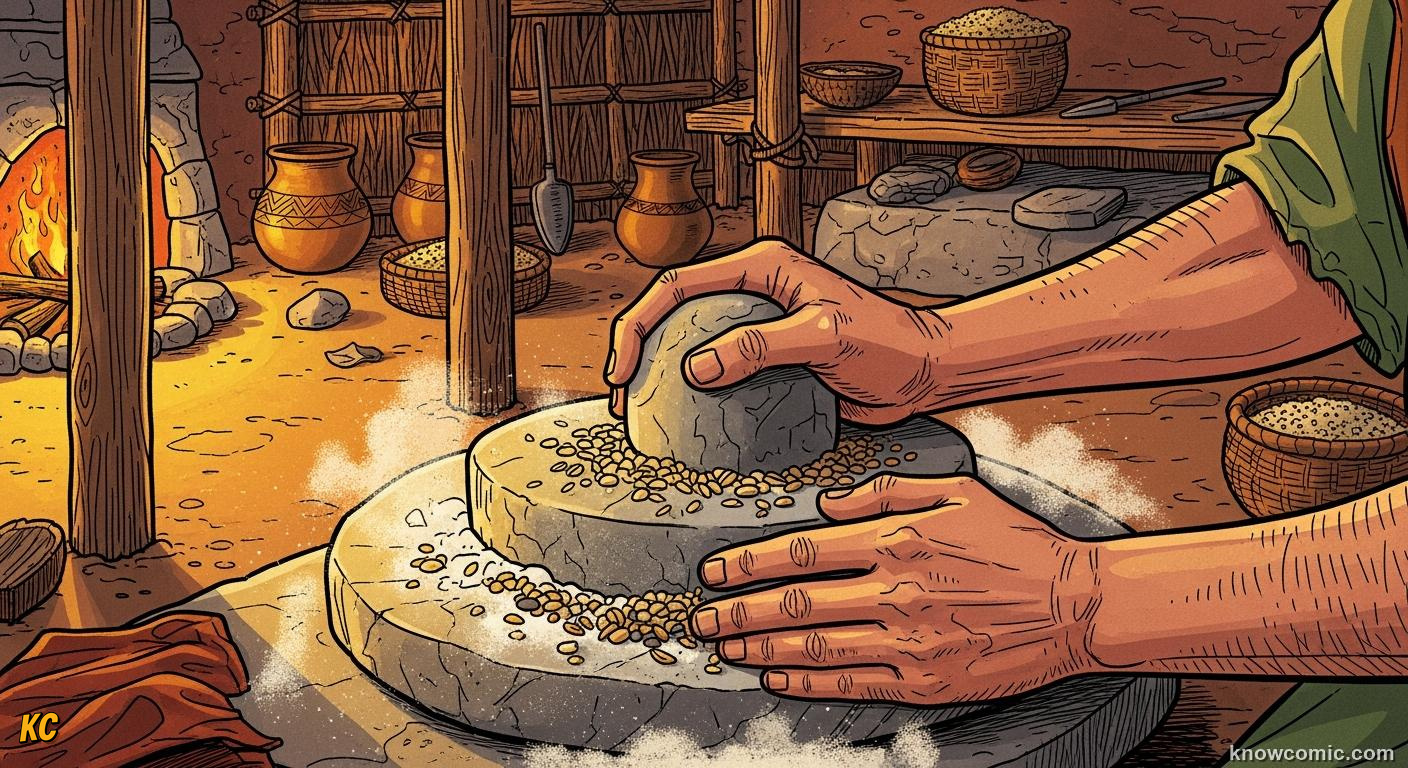
STONES AND SHOULDER POWER
To bake, you first break the seed. For thousands of years, querns and mortars did the job: crush, then grind, until the kernel became fine flour. Dry flour is easier to store than whole grain, so communities could “bank” calories for lean seasons, a quiet superpower for early towns.
CRUSH!
TOOLS
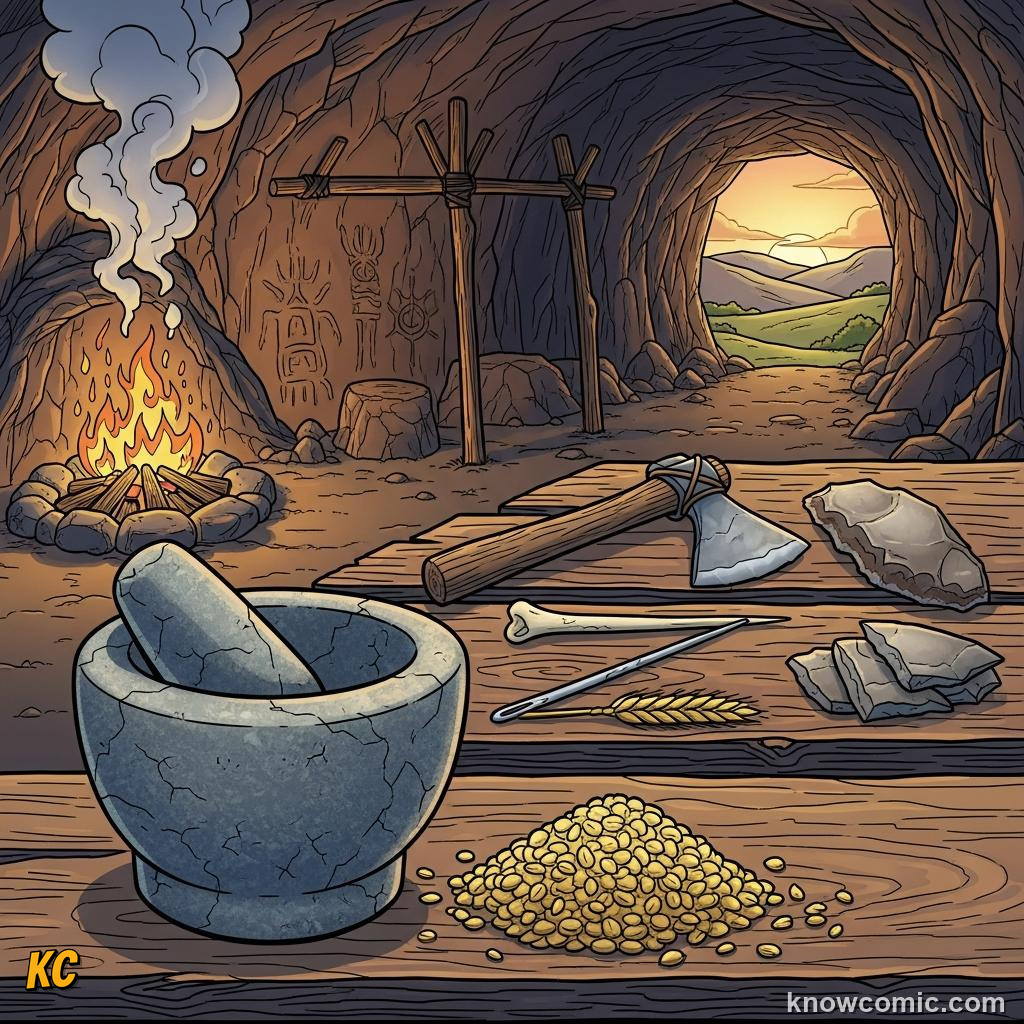
🪨 Simple rocks began the world’s first “food processors.”
SIFT & AERATE
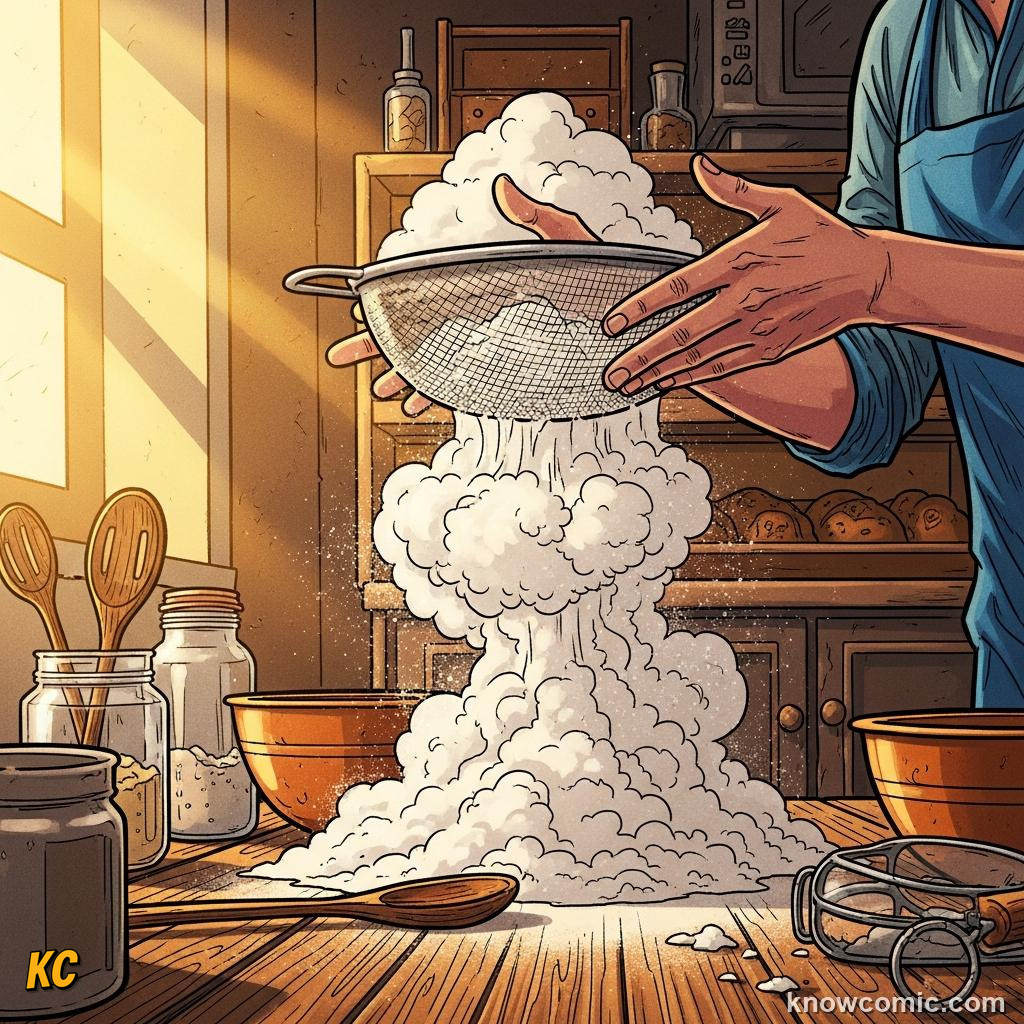
🌬️ Sieving out husks made dough smoother.
JARS
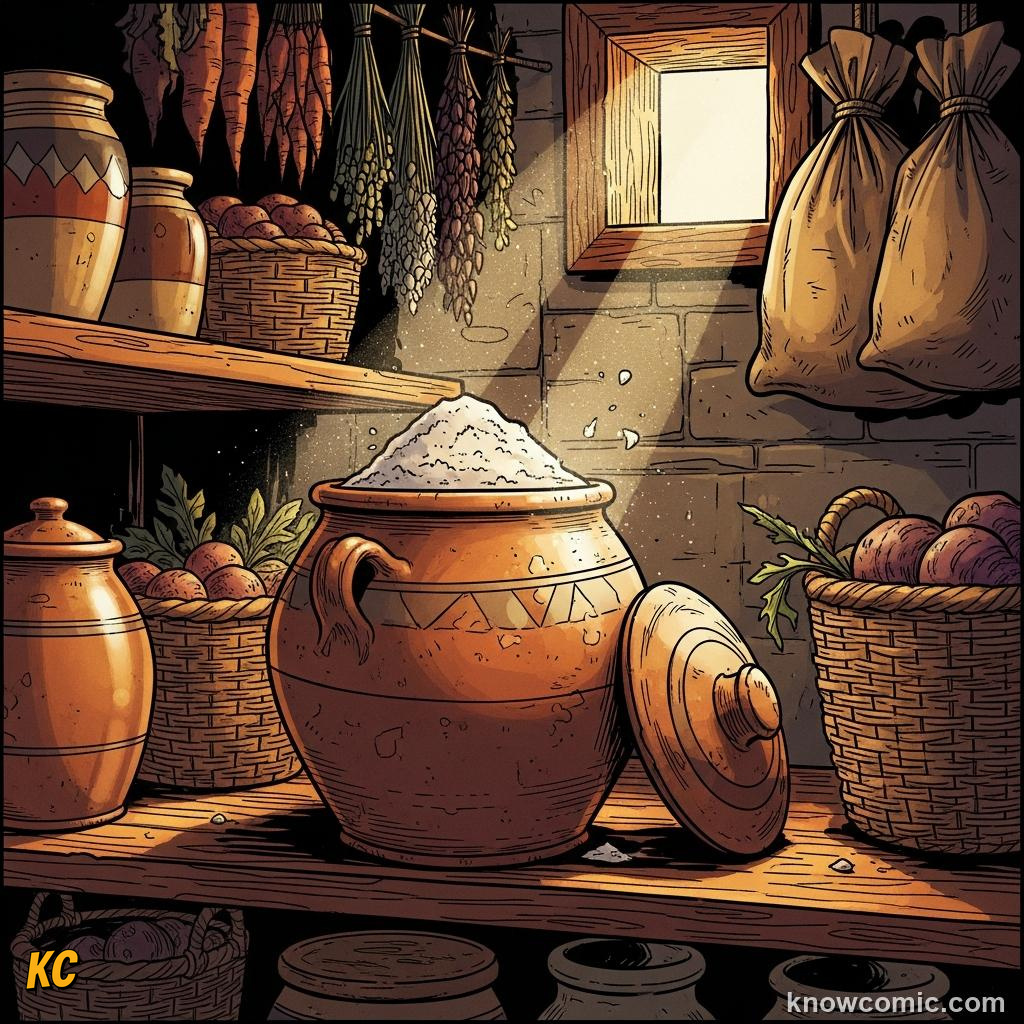
🏺 Dry flour kept in cool corners waited for the oven.
PAGE 3 OF 5, BUBBLES & RISE
MICROSCOPIC CHEFS
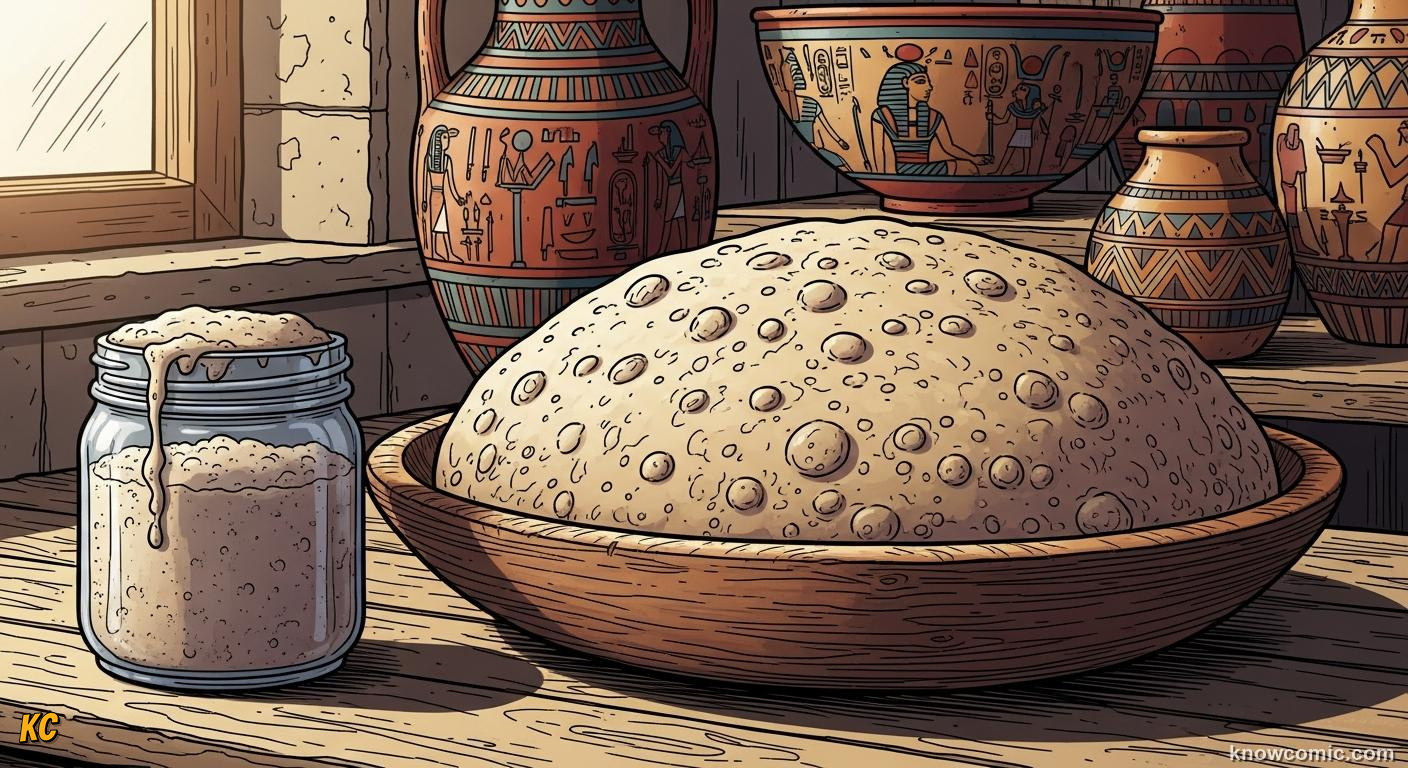
FERMENT = FLUFF
Flat griddle cakes are old; risen bread is a later trick. Wild yeasts, tiny fungi floating in air, land on wet dough, snack on sugar, and release carbon dioxide like microscopic balloons trapped in stretchy gluten. Accidents in Egyptian-style kitchens may have nudged bakers toward loaves that could feed whole crews.
BUBBLE!
STARTER CULTURE
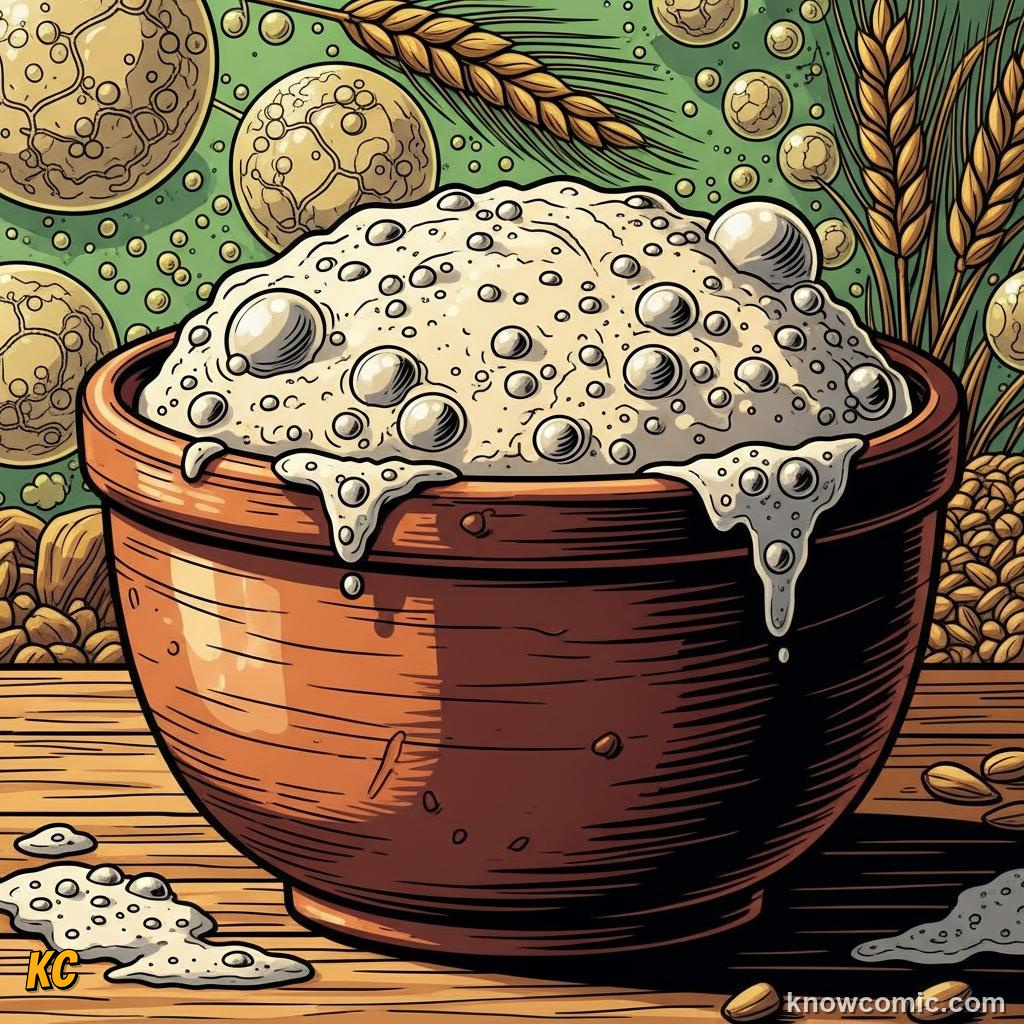
🥣 Sourdough keeps a living community in a jar.
GAS + GLUTEN
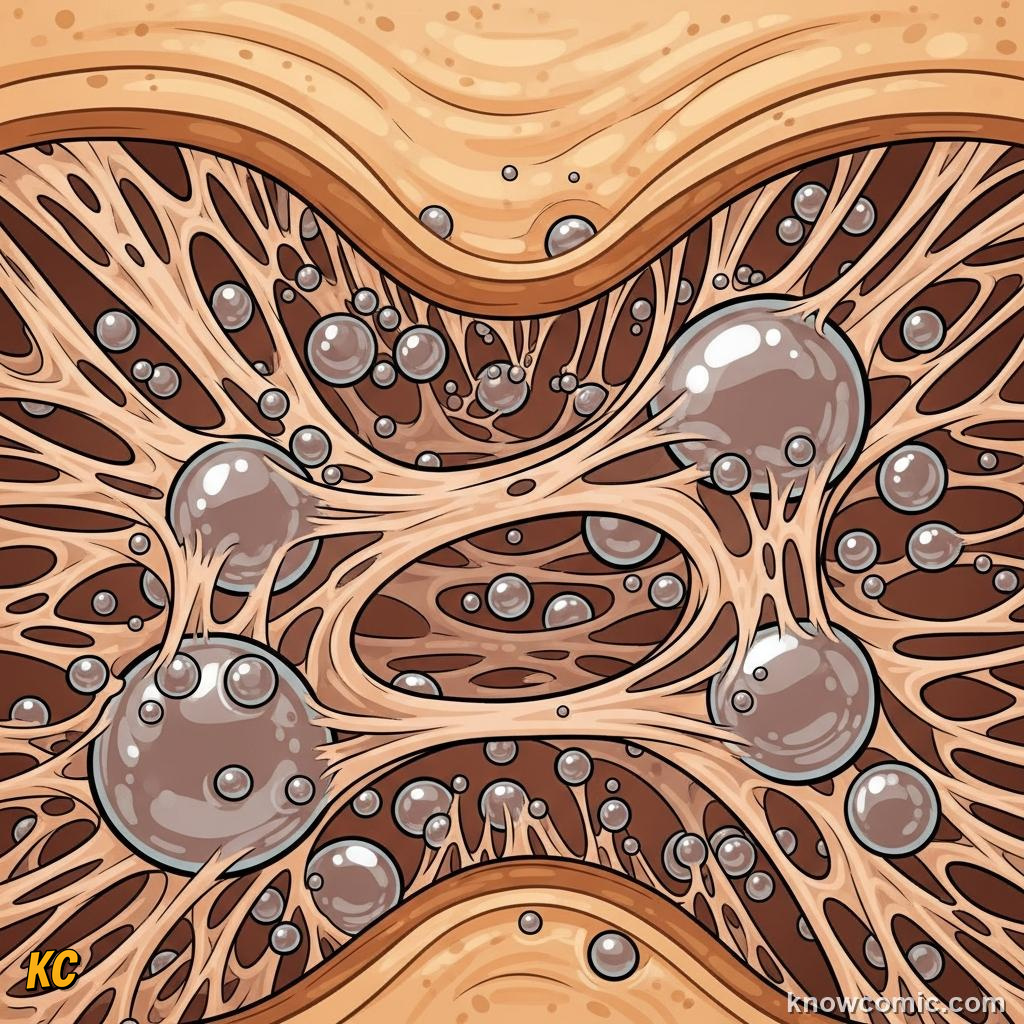
🫧 CO₂ puffs the net that holds the loaf’s shape.
PAGE 4 OF 5, THE FIRE SETS IT
OVEN ENERGY
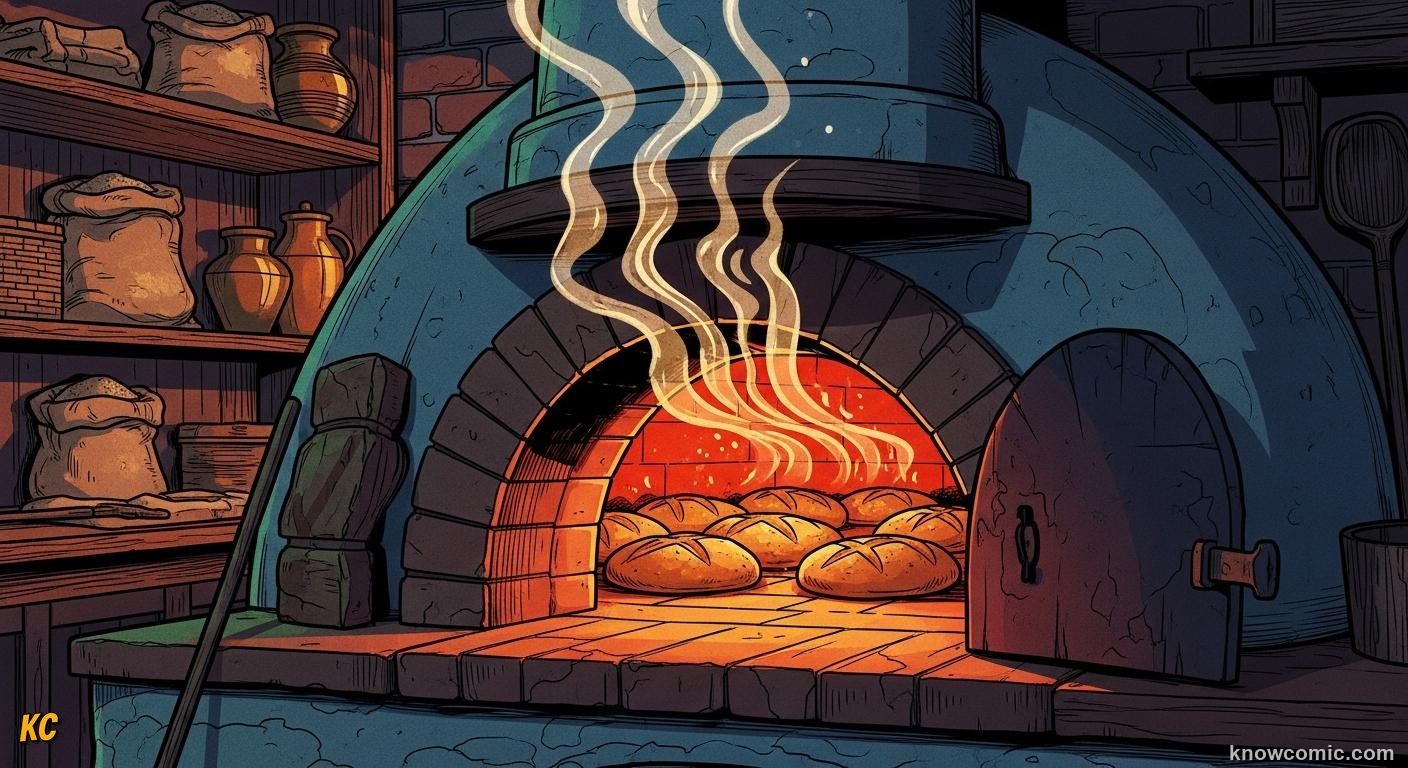
MAILLARD & MAGIC
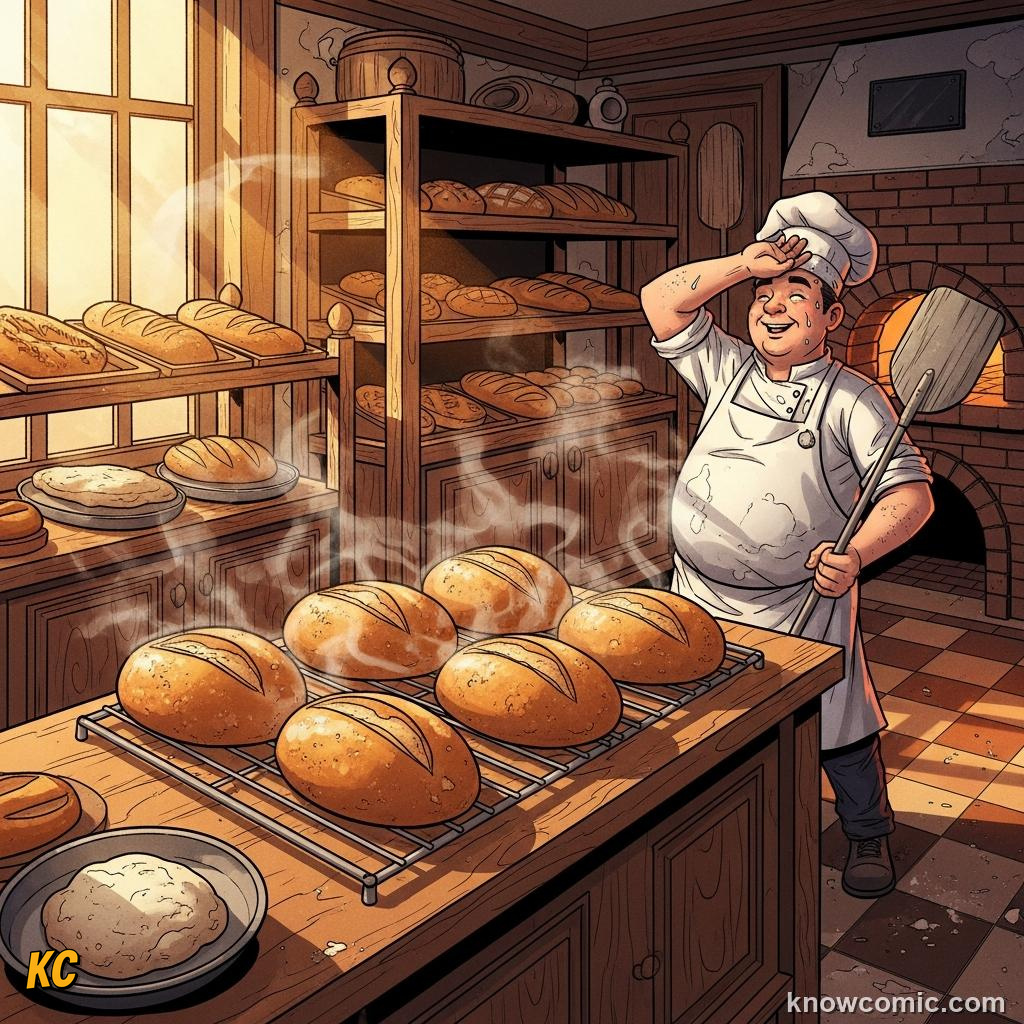
Heat sets the loaf: water steams, bubbles swell one last time, proteins firm up, and the crust browns. The Maillard reaction between amino acids and sugars invents new aromas, why toast never smells like raw dough. Clay ovens, communal bakehouses, and later city bakeries could feed crowds from one fire.
BAKE!
PEEL & LOAD
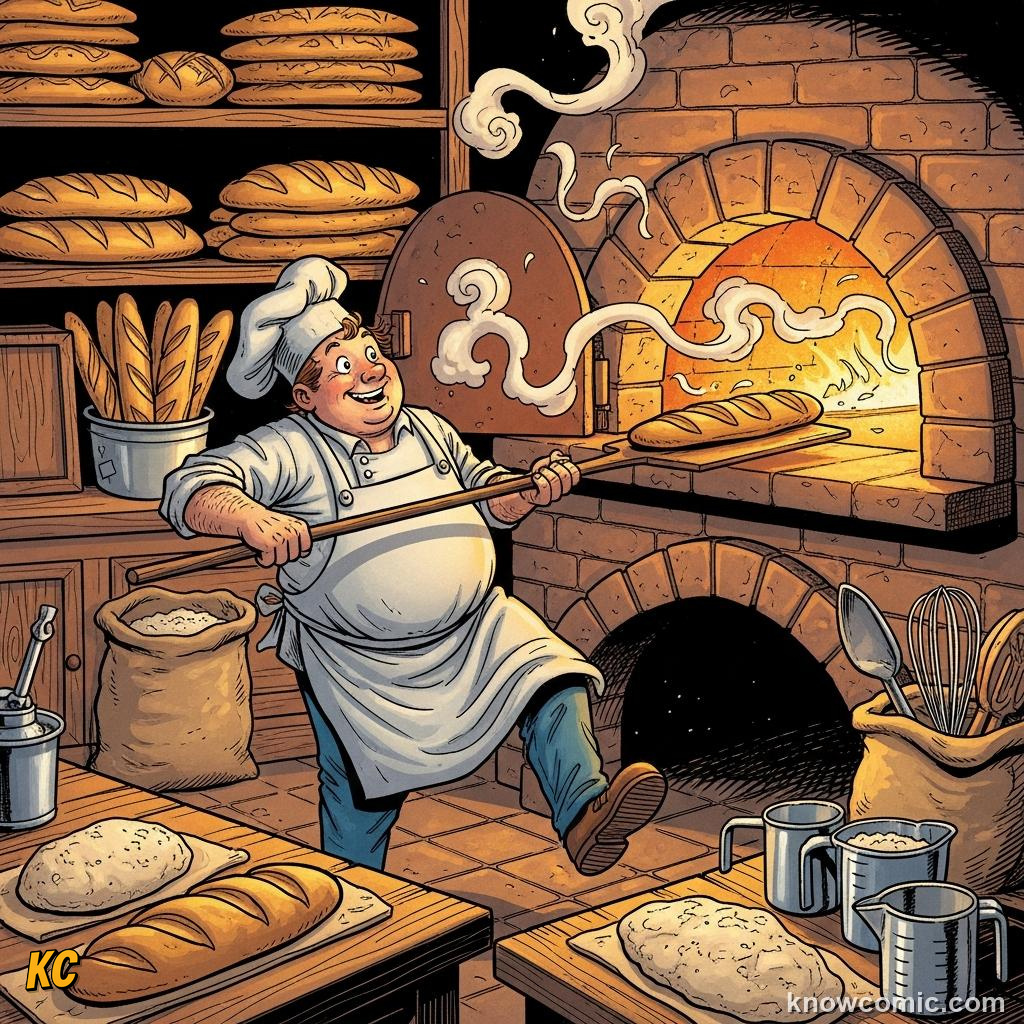
🍞 Bakers slide heavy dough into blistering heat.
STEAM
💨 Hot vapor finishes the open crumb inside.
CRUST
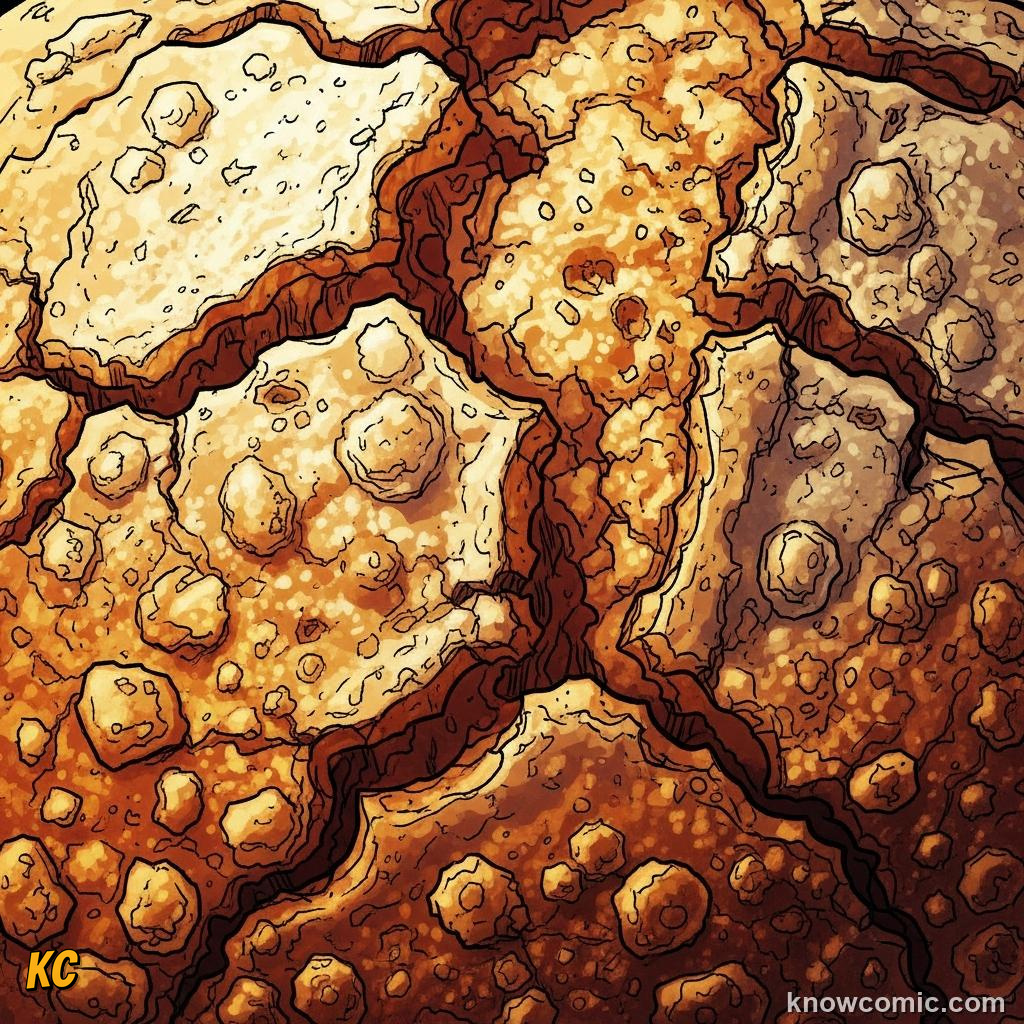
✨ Gold-brown shell locks flavor in every slice.
PAGE 5 OF 5, THE STAFF OF LIFE
AROUND THE WORLD
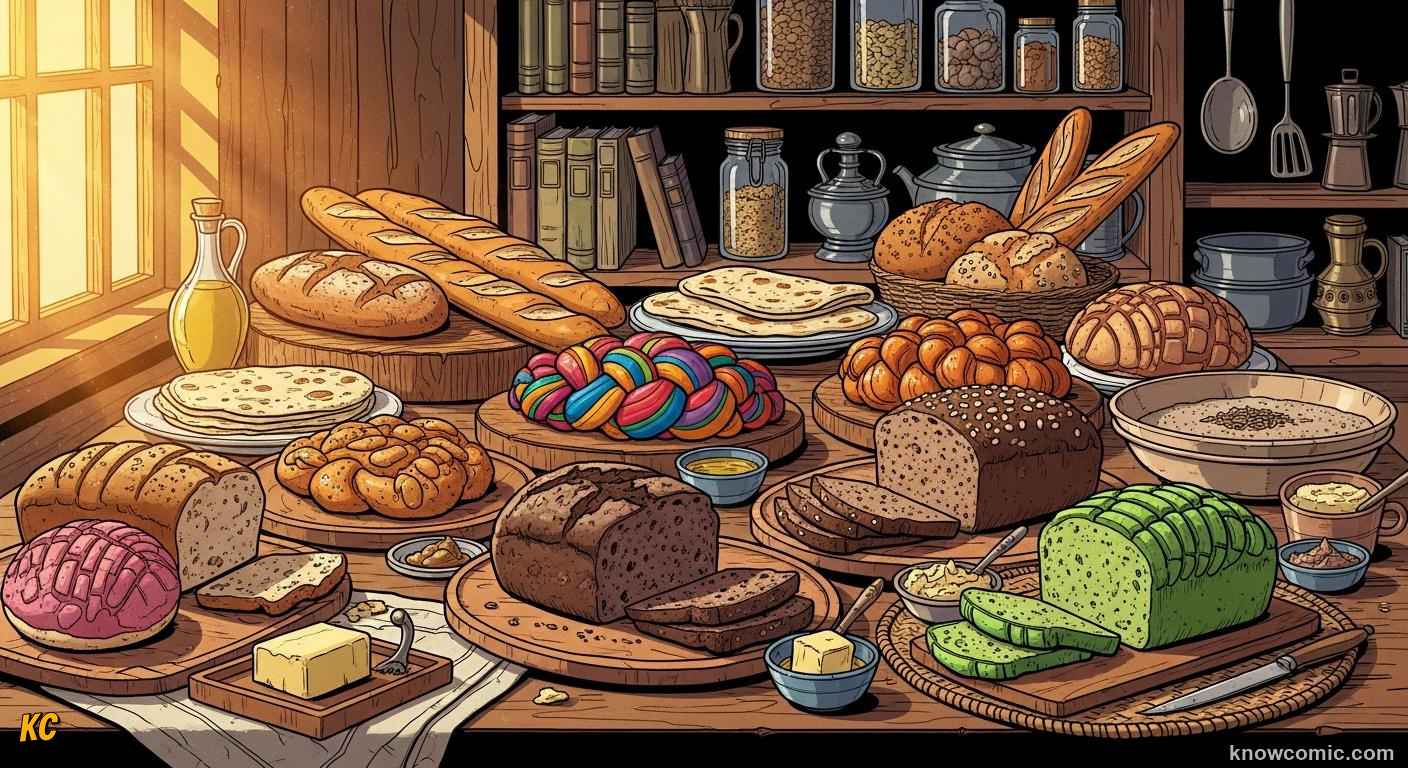
ONE GRAIN, MANY FACES
Bread, in the broadest sense, criss-crosses cultures: long baguettes, soft naan, spongy injera, quick tortillas. Portable calories helped armies, workers, and students stay fed. Wheat’s journey from wild ear to city loaf is a story of biology, tools, and cooperation, a “staff of life” in more than poetry.
BREAD!
TODAY’S SHELF
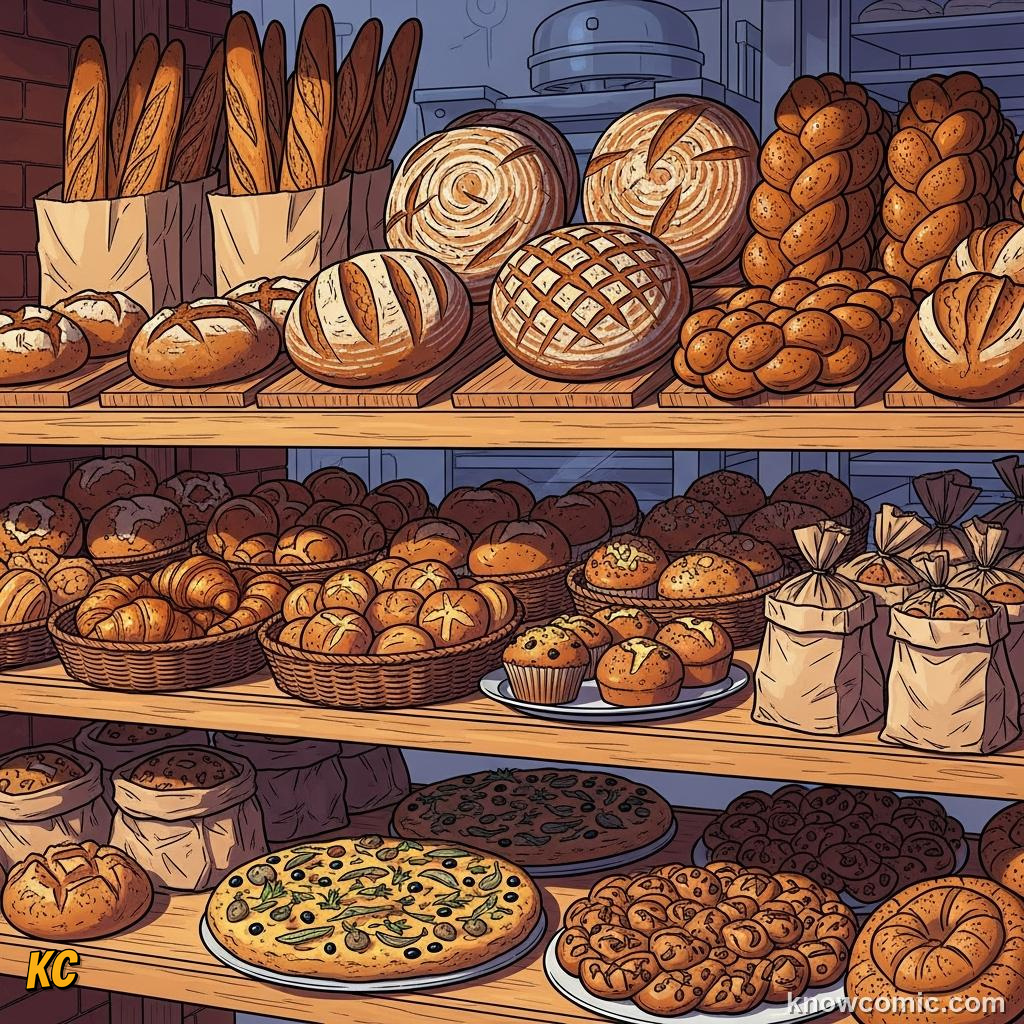
🏪 Mills and bakeries still turn grain into daily meals.
REMEMBER
⚡ KEY FACTS
Wild wheats were small; people selected bigger seeds. Flour needs grind + often yeast for rise. Heat finishes protein set and creates crust flavor. Many breads share the same deep steps, even when shapes differ.
✅ Domestication = many generations of “save the best.”
✅ Yeast makes CO₂; gluten traps it.
✅ Baking = chemistry you can taste.
✅ Yeast makes CO₂; gluten traps it.
✅ Baking = chemistry you can taste.
🧠 QUIZ TIME!
WHEAT & BREAD · 5 QUESTIONS
QUESTION 01
Which names match early wild relatives of wheat people first used?
QUESTION 02
What kind of tool set was used for a long time to grind grain into flour?
QUESTION 03
What living thing is famous for making bread dough rise with gas?
QUESTION 04
Which civilisation is famous for large-scale baking and sourdough-style know-how early on?
QUESTION 05
Bread is sometimes called the “staff of life” because…
0/5
LOADING...