💡 THE BOHR MODEL
PAGE 1 OF 5 — THE FLAW IN RUTHERFORD'S ATOM
WHY ELECTRONS SHOULDN'T EXIST WHERE THEY DO
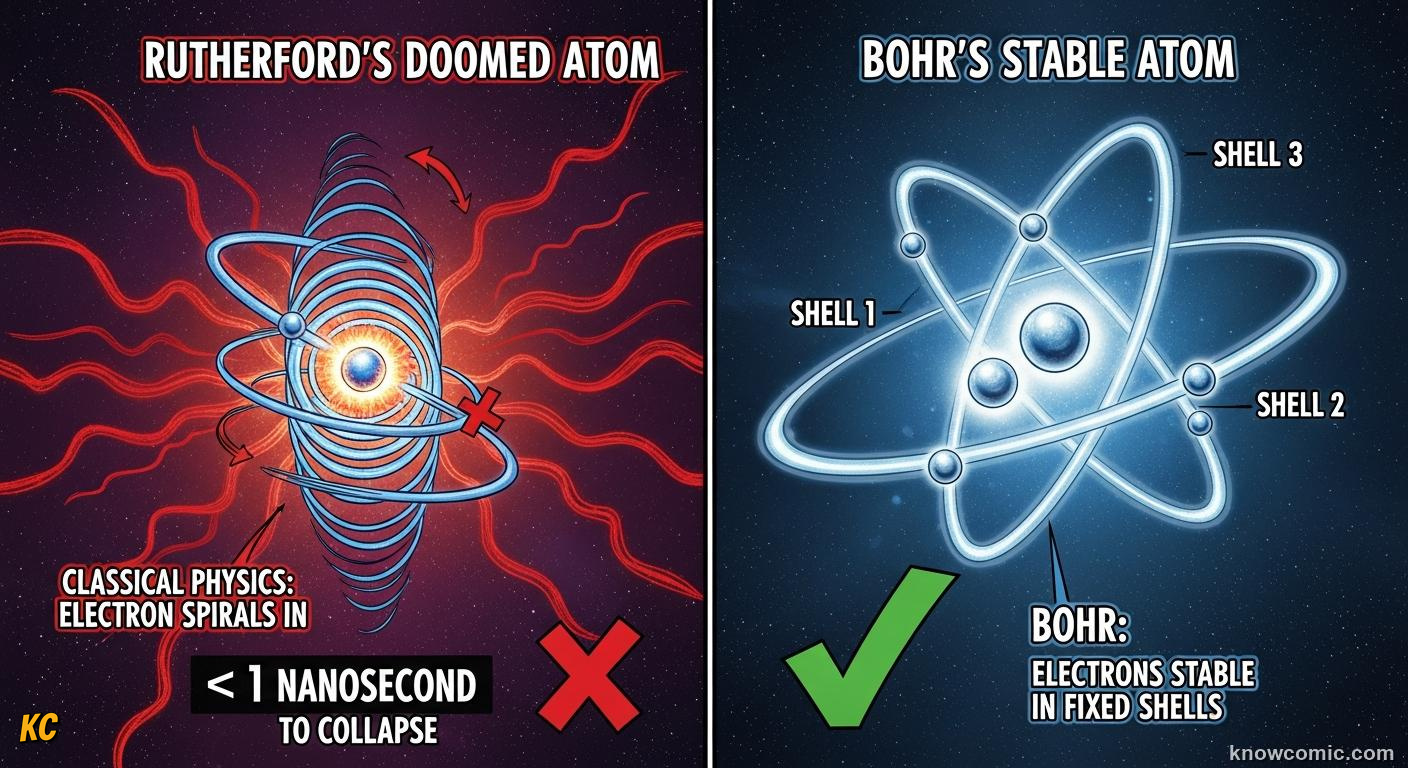
RUTHERFORD'S MODEL HAD A FATAL FLAW
Rutherford's nuclear model was revolutionary — but it had a serious problem. According to classical physics, a charged particle moving in a circle constantly accelerates. An accelerating electric charge must radiate energy as light. So the orbiting electrons in Rutherford's atom should continuously lose energy, spiralling inward and crashing into the nucleus in less than a billionth of a second. All atoms should be instantly unstable — yet clearly they are not! Something was missing. A young Danish physicist named Niels Bohr arrived at Rutherford's lab in 1912 determined to fix this.
🔬 NIELS BOHR
Bohr was 27 years old when he solved the problem. He used the brand-new quantum theory of Max Planck and Albert Einstein to place electrons into fixed energy levels — a revolutionary idea at the time.
SPIRAL!
THE CLASSICAL PREDICTION
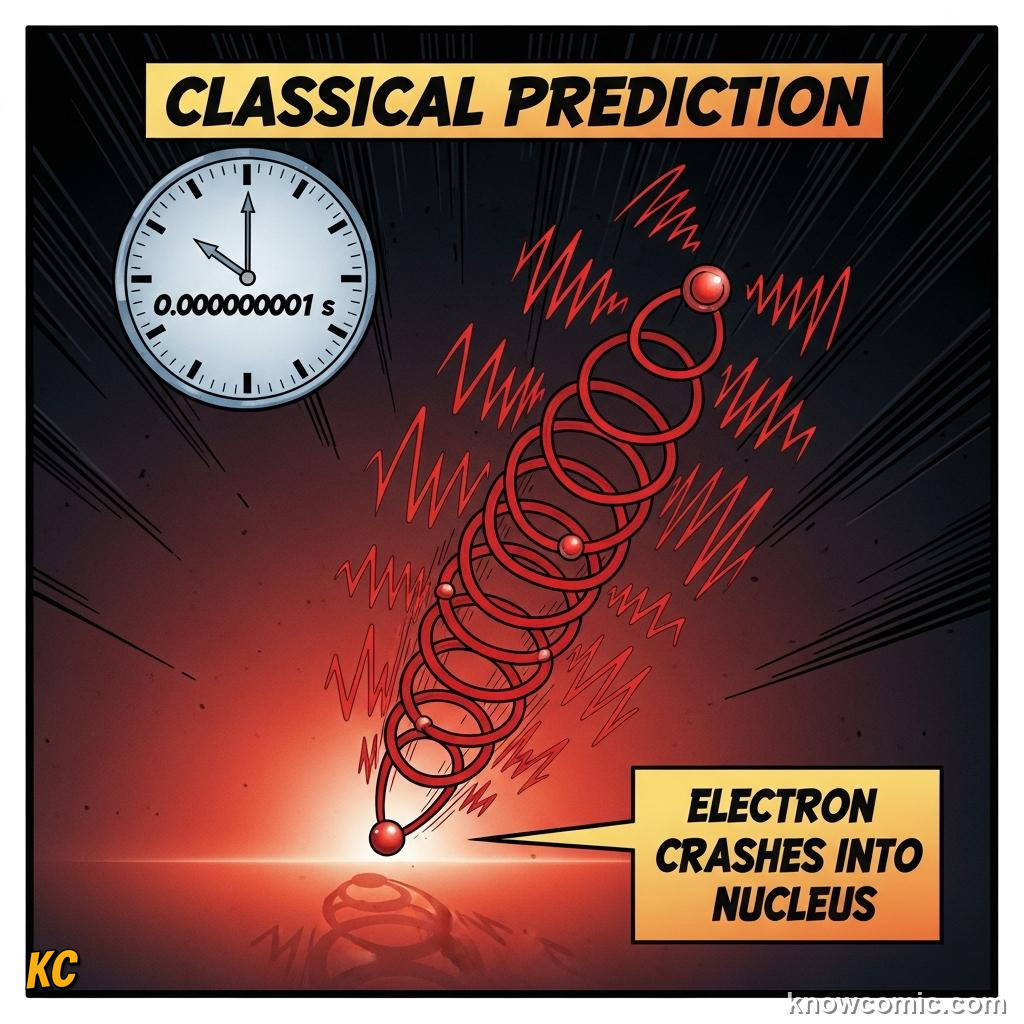
🌀 Orbiting electron = accelerating charge
💡 Accelerating charge radiates light
💥 Electron loses energy → spirals inward
💡 Accelerating charge radiates light
💥 Electron loses energy → spirals inward
THE QUANTUM RESCUE

🔒 Bohr: electrons can only exist at fixed shells
🚫 Between shells: no energy loss allowed
✅ Atoms are stable — this matches reality!
🚫 Between shells: no energy loss allowed
✅ Atoms are stable — this matches reality!
PAGE 2 OF 5 — BOHR'S QUANTUM SHELLS, 1913
THE POSTULATES THAT CHANGED ATOMIC THEORY
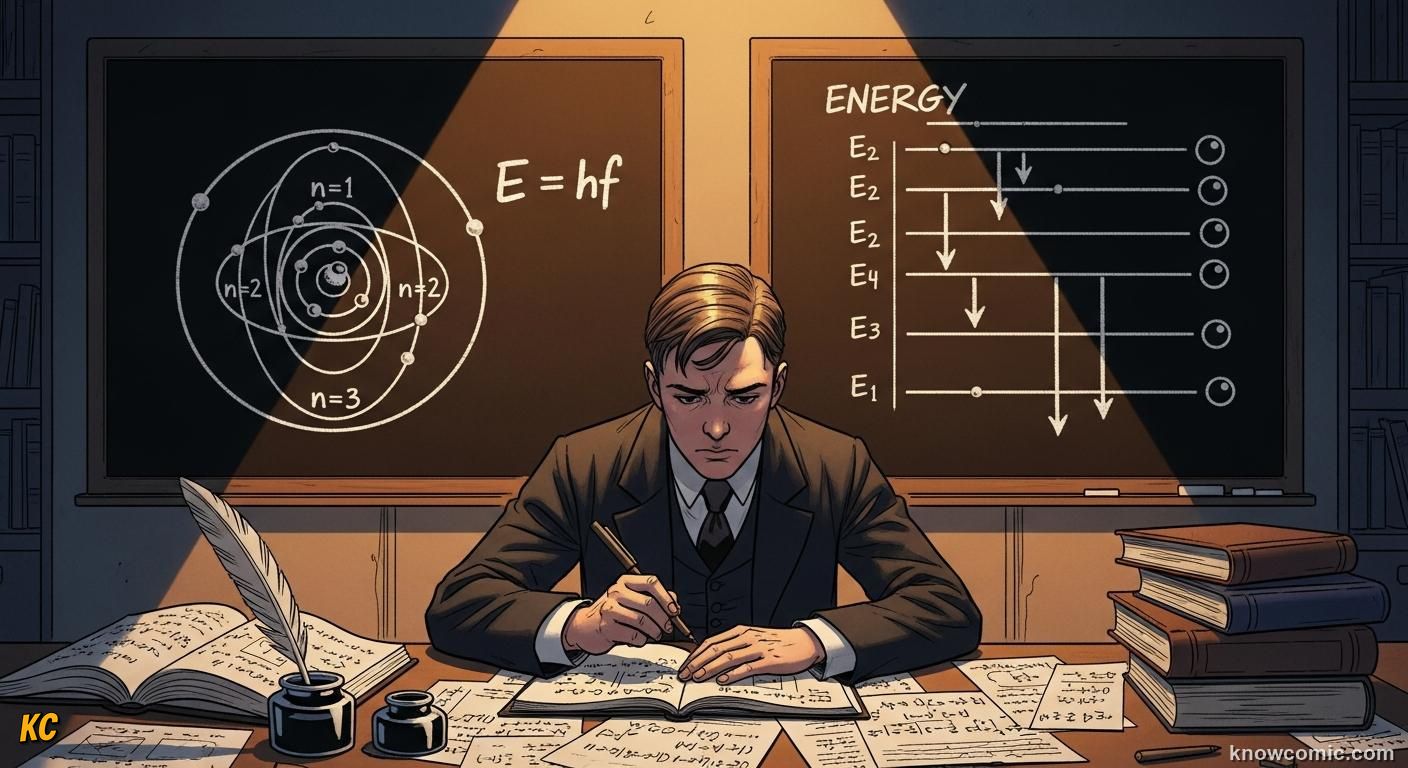
BOHR'S THREE RULES FOR ELECTRONS
In 1913, Niels Bohr proposed three revolutionary postulates. First: electrons can only orbit the nucleus in specific, fixed circular paths called shells or energy levels — numbered 1, 2, 3 outward from the nucleus. Second: while in a fixed shell, an electron does not radiate energy — it is stable. Third: when an electron jumps from a higher shell to a lower shell, it releases a precise packet of energy called a photon, whose colour depends exactly on the energy difference between the shells. Conversely, an electron can absorb a photon of the exact right energy to jump up to a higher shell. This perfectly explained the mysterious rainbow lines seen in hydrogen gas.
📡 QUANTUM ENERGY LEAP
The energy of a photon released equals the difference in energy between the two shells: E = hf, where h is Planck's constant and f is the frequency of the light emitted. Each jump produces a unique colour.
QUANTISED!
📏 SHELL 1 (K)
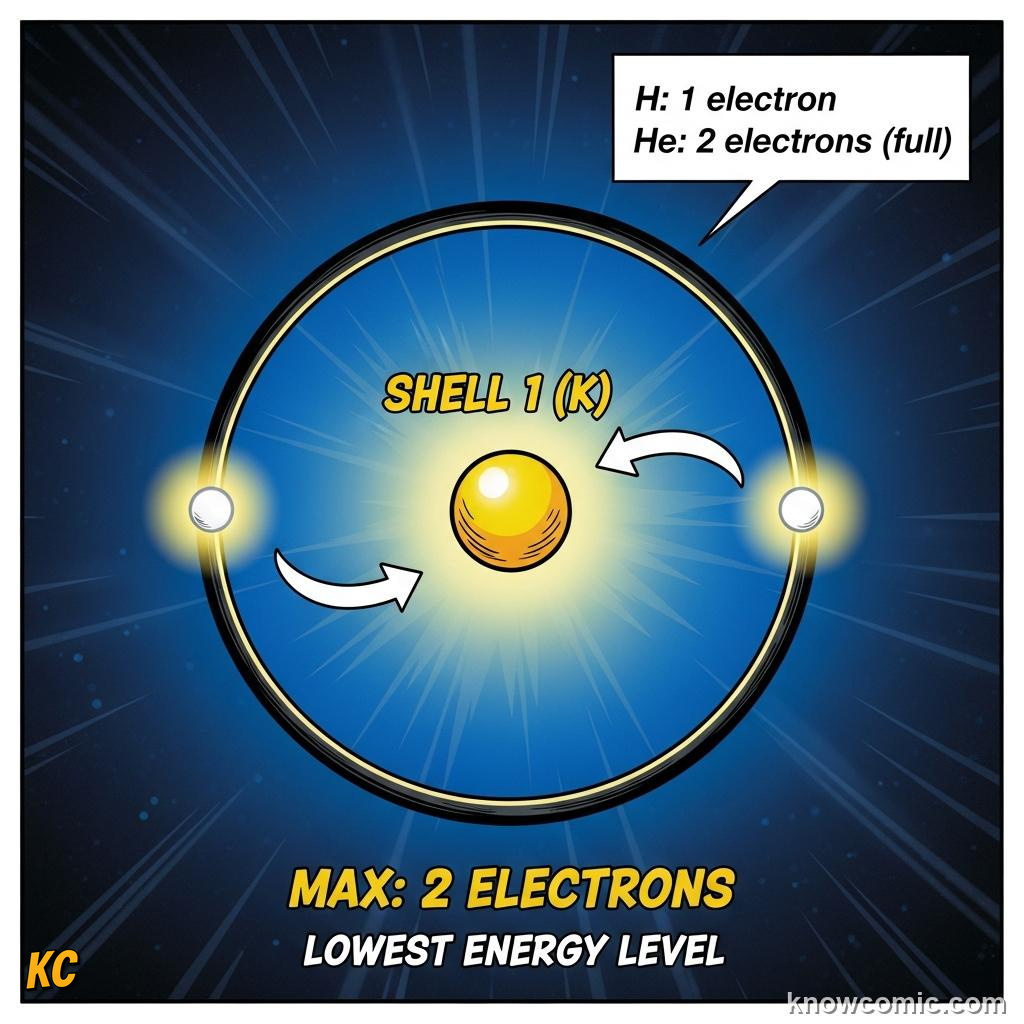
🔢 Closest to the nucleus
📊 Holds maximum 2 electrons
⚡ Lowest energy level
📊 Holds maximum 2 electrons
⚡ Lowest energy level
📏 SHELL 2 (L)
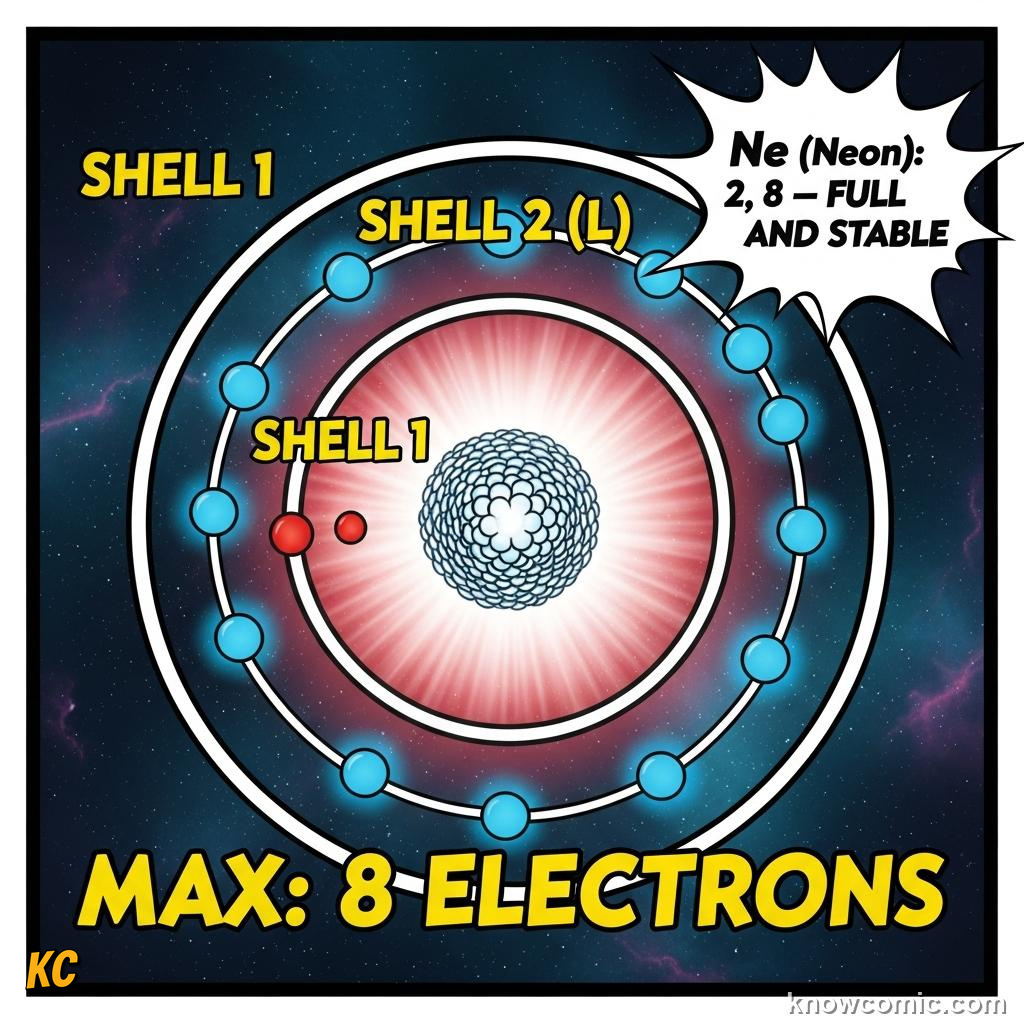
🔢 Second ring from nucleus
📊 Holds maximum 8 electrons
⚡ Medium energy level
📊 Holds maximum 8 electrons
⚡ Medium energy level
📏 SHELL 3 (M)
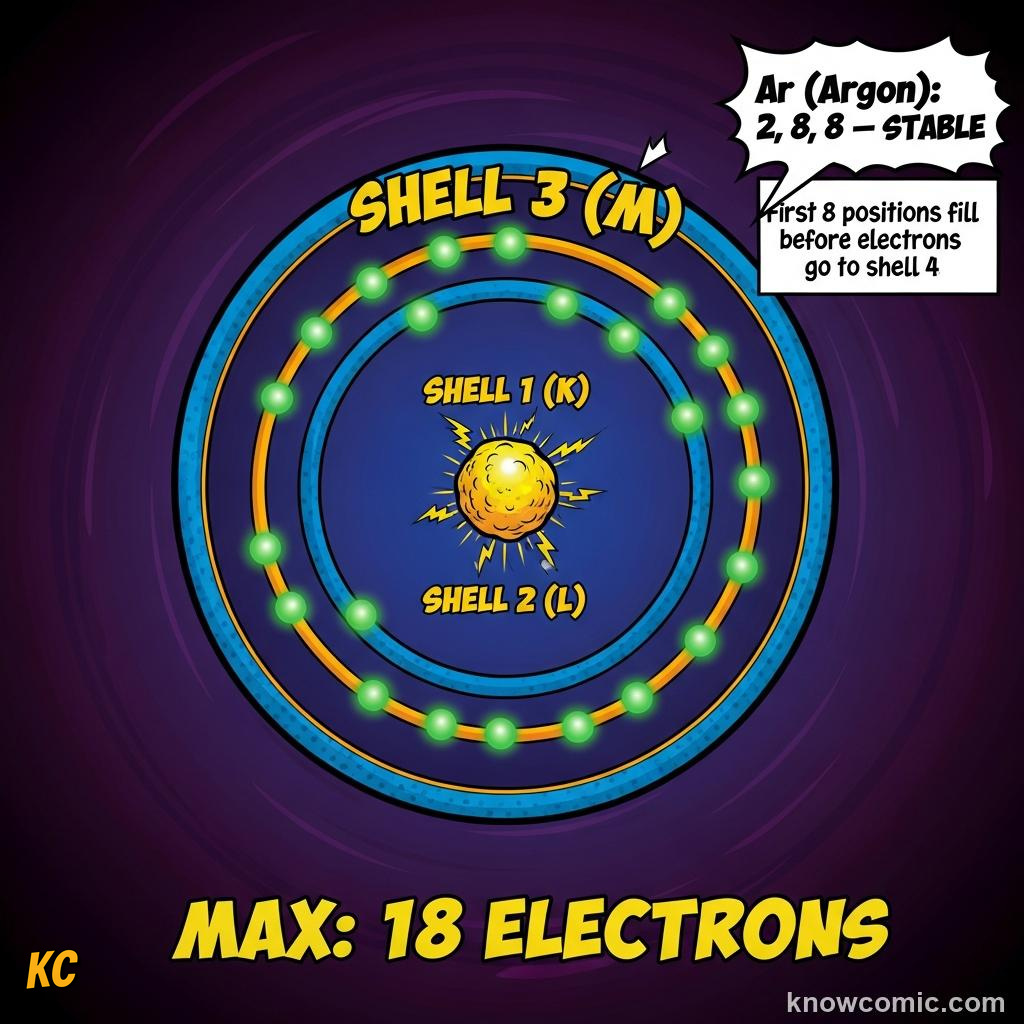
🔢 Third ring from nucleus
📊 Holds maximum 18 electrons
⚡ Higher energy level
📊 Holds maximum 18 electrons
⚡ Higher energy level
PAGE 3 OF 5 — THE HYDROGEN SPECTRUM EXPLAINED
ABSORB A PHOTON: JUMP UP
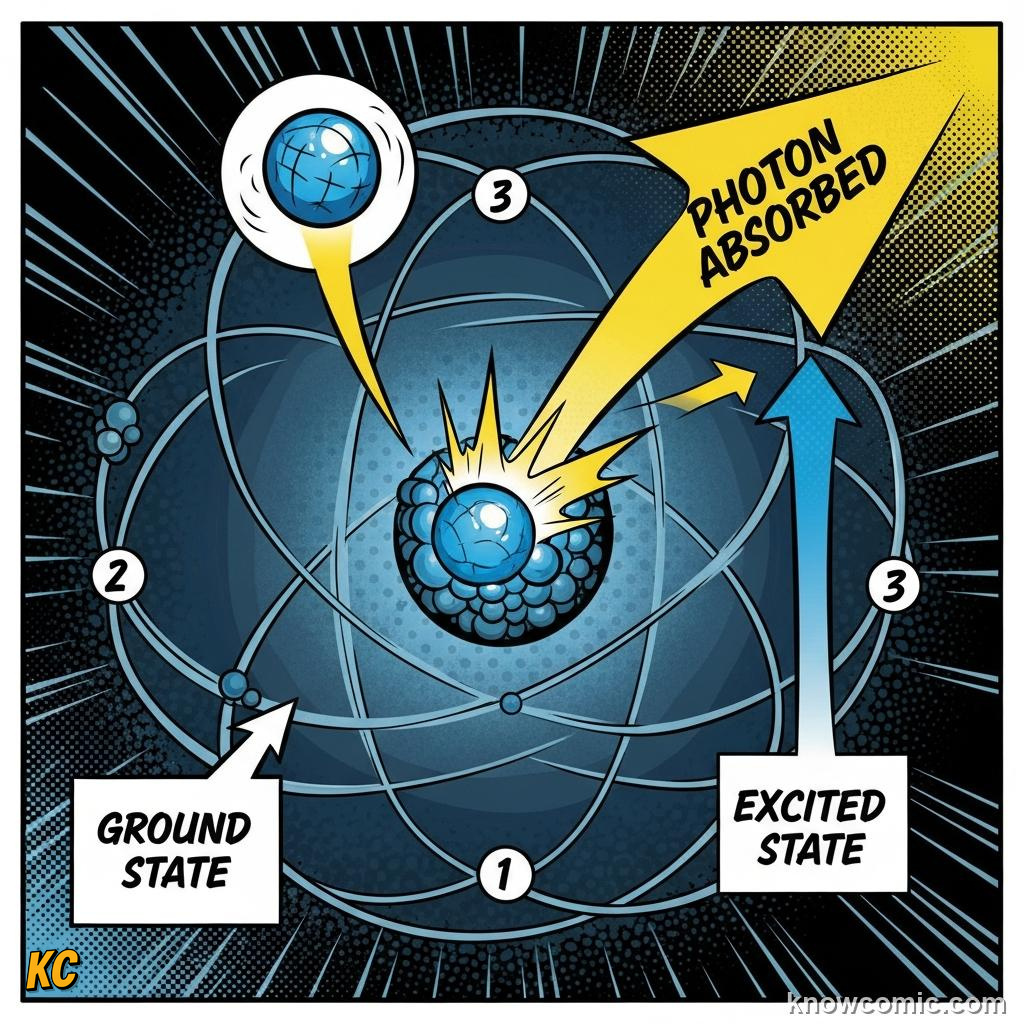
☀️ Light hits atom — photon absorbed
⬆️ Electron jumps to a higher shell
🔥 Atom is now in an excited state
⬆️ Electron jumps to a higher shell
🔥 Atom is now in an excited state
EMIT A PHOTON: JUMP DOWN
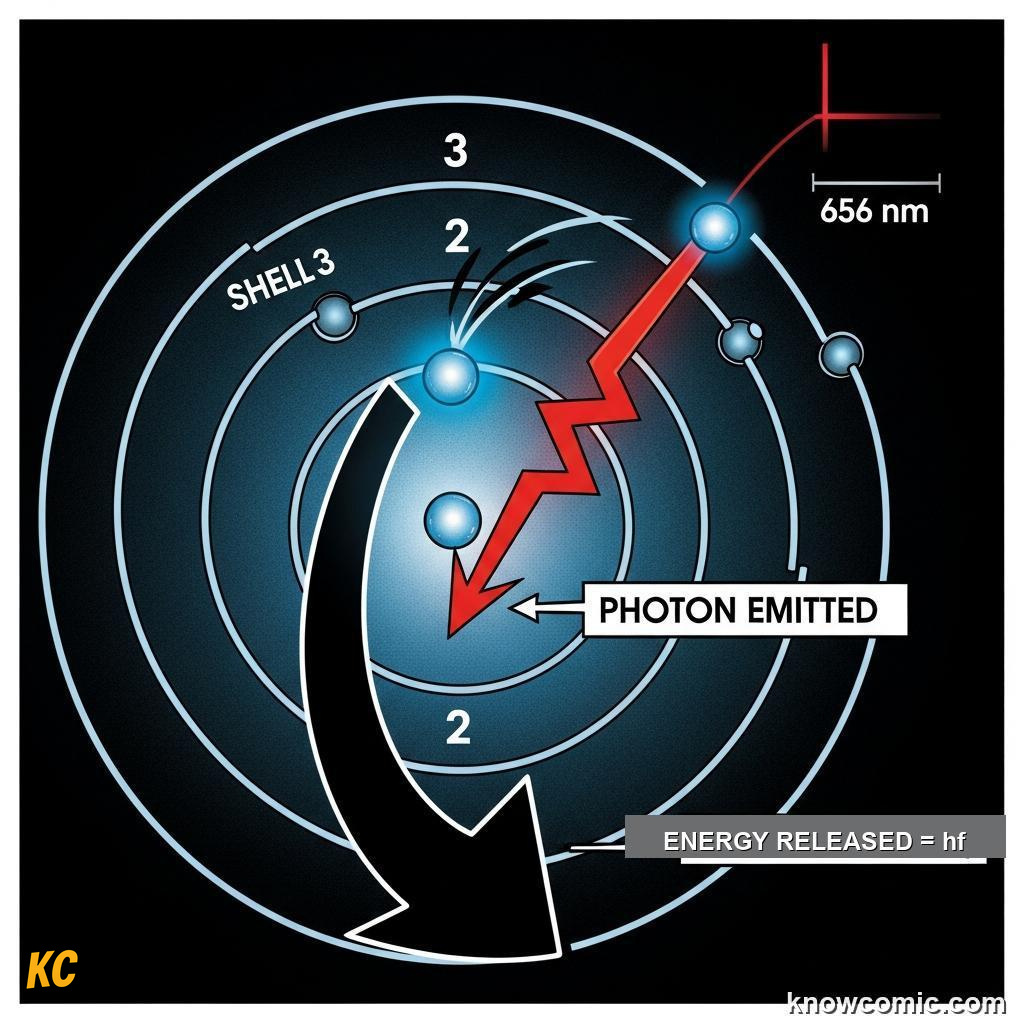
⬇️ Electron falls back to lower shell
💡 Photon of specific colour released
🌈 Each jump = one spectral line!
💡 Photon of specific colour released
🌈 Each jump = one spectral line!
THE HYDROGEN SPECTRUM MYSTERY SOLVED
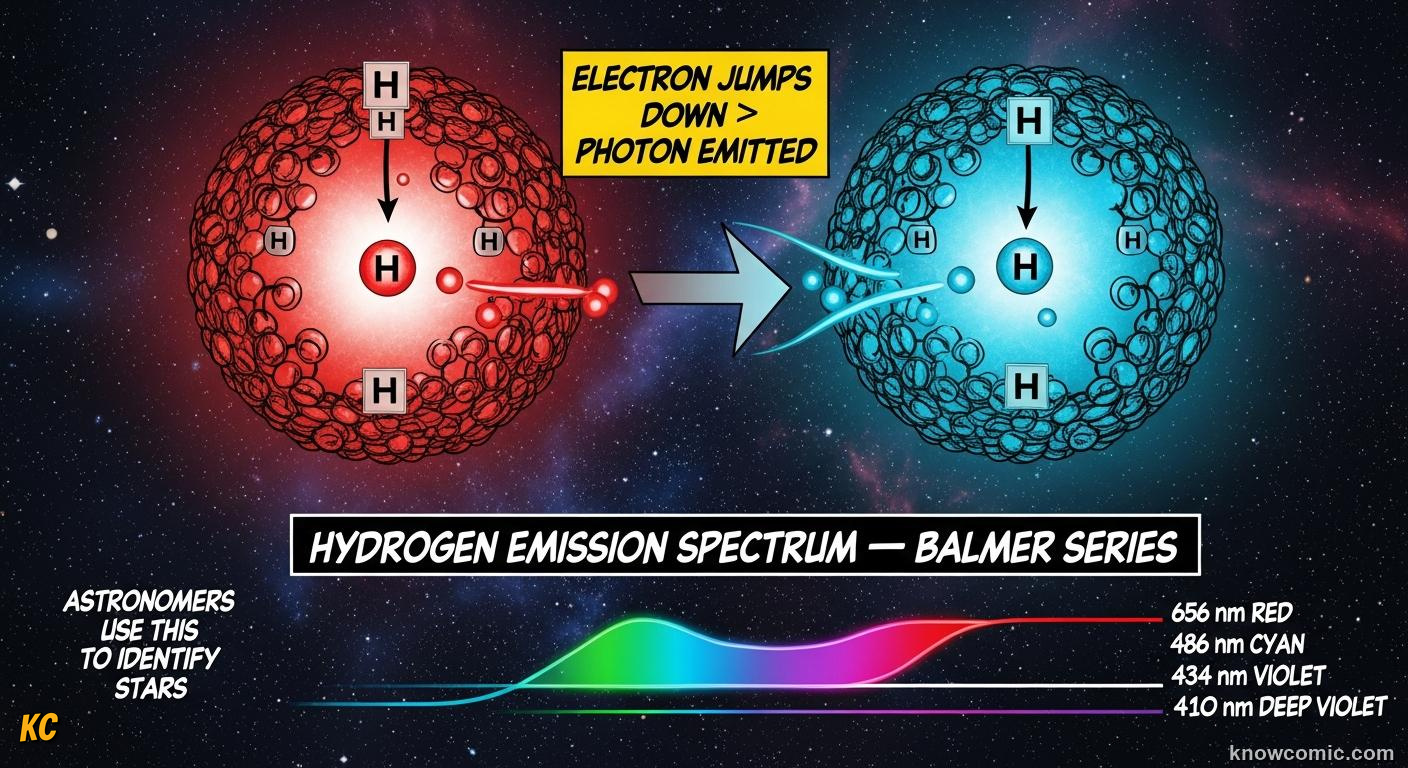
WHY HYDROGEN GLOWS IN RAINBOWS
Since the 1880s, scientists had observed that when hydrogen gas is heated or electrified, it emits only specific colours of light — a pattern of bright lines called a line emission spectrum. Nobody could explain why. Bohr's model gave the perfect answer: each bright line corresponds to electrons jumping between specific shells. A jump from shell 3 down to shell 2 produces a specific red line at 656 nm. A jump from shell 4 to shell 2 gives a cyan line. Each element has its own unique set of energy levels, producing its own unique spectral fingerprint. Astronomers use this to identify elements in distant stars millions of light-years away.
🌠 STELLAR CHEMISTRY
By analysing the spectral lines in starlight, astronomers can identify exactly which elements are present in a star's atmosphere — without ever visiting it! This is how we know the Sun contains hydrogen and helium.
SPECTRUM!
PAGE 4 OF 5 — ELECTRON CONFIGURATIONS
FILLING THE SHELLS — THE ELECTRON CONFIGURATION
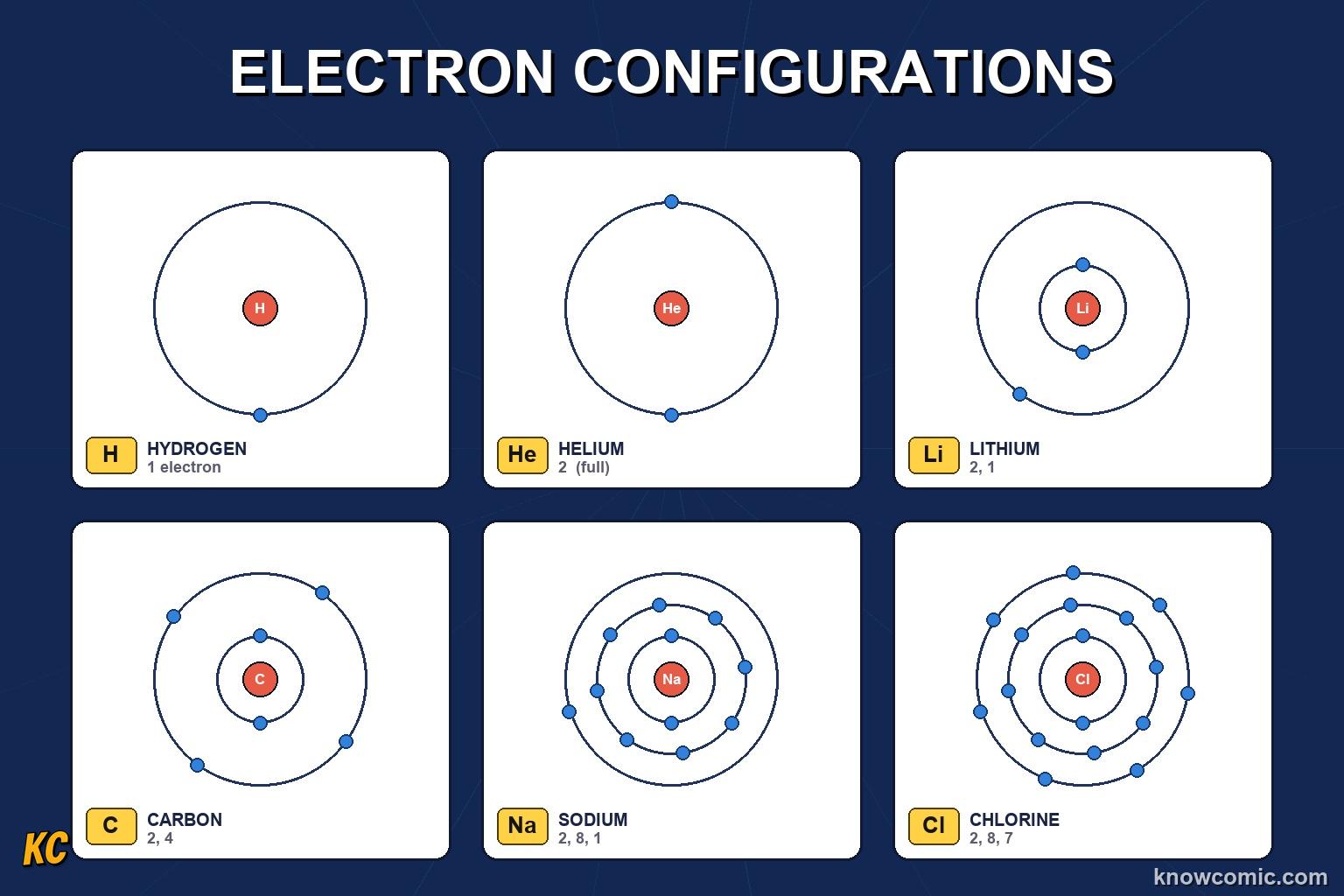
HOW ELECTRONS FILL THE SHELLS
Bohr's model predicts that electrons fill the shells starting from the inside outward. Shell 1 (K) fills first and holds a maximum of 2 electrons. Shell 2 (L) fills next and holds a maximum of 8 electrons. Shell 3 (M) can hold up to 18 electrons, though the first 8 positions fill before any move into shell 4 for lighter elements. The arrangement of electrons in an atom's shells is called its electron configuration. Hydrogen: 1. Helium: 2. Lithium: 2, 1. Sodium: 2, 8, 1. The outer shell electrons — called valence electrons — determine how an element reacts chemically. This is why elements in the same group of the periodic table behave similarly.
🔑 VALENCE ELECTRONS
The electrons in the outermost shell are called valence electrons. They are the ones that participate in chemical bonds. Sodium (2, 8, 1) has 1 valence electron — the same as lithium (2, 1) — which is why they react in similar ways.
CONFIGURE!
⚛️ HYDROGEN & HELIUM
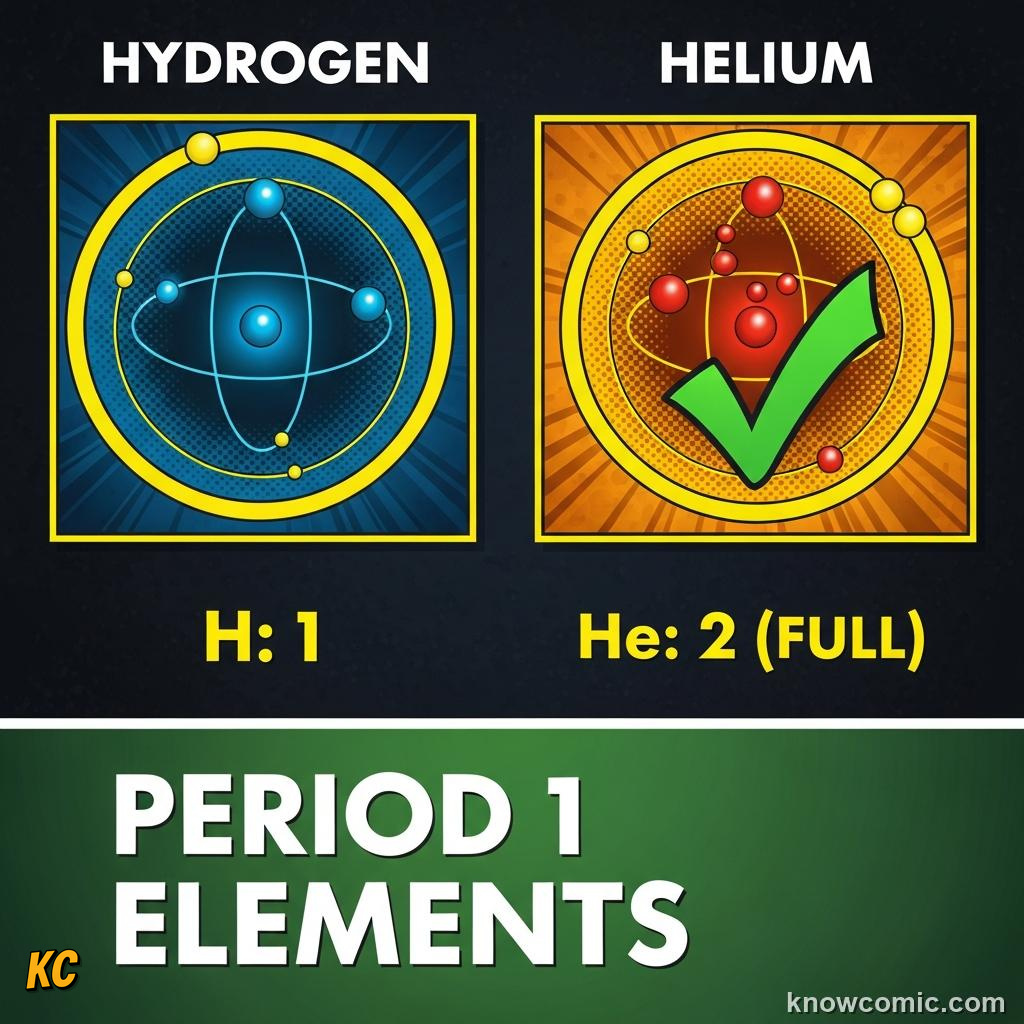
H: 1 electron → shell 1 has 1
He: 2 electrons → shell 1 full (2)
💡 Full shell = very stable (noble gas)
He: 2 electrons → shell 1 full (2)
💡 Full shell = very stable (noble gas)
⚛️ CARBON & OXYGEN
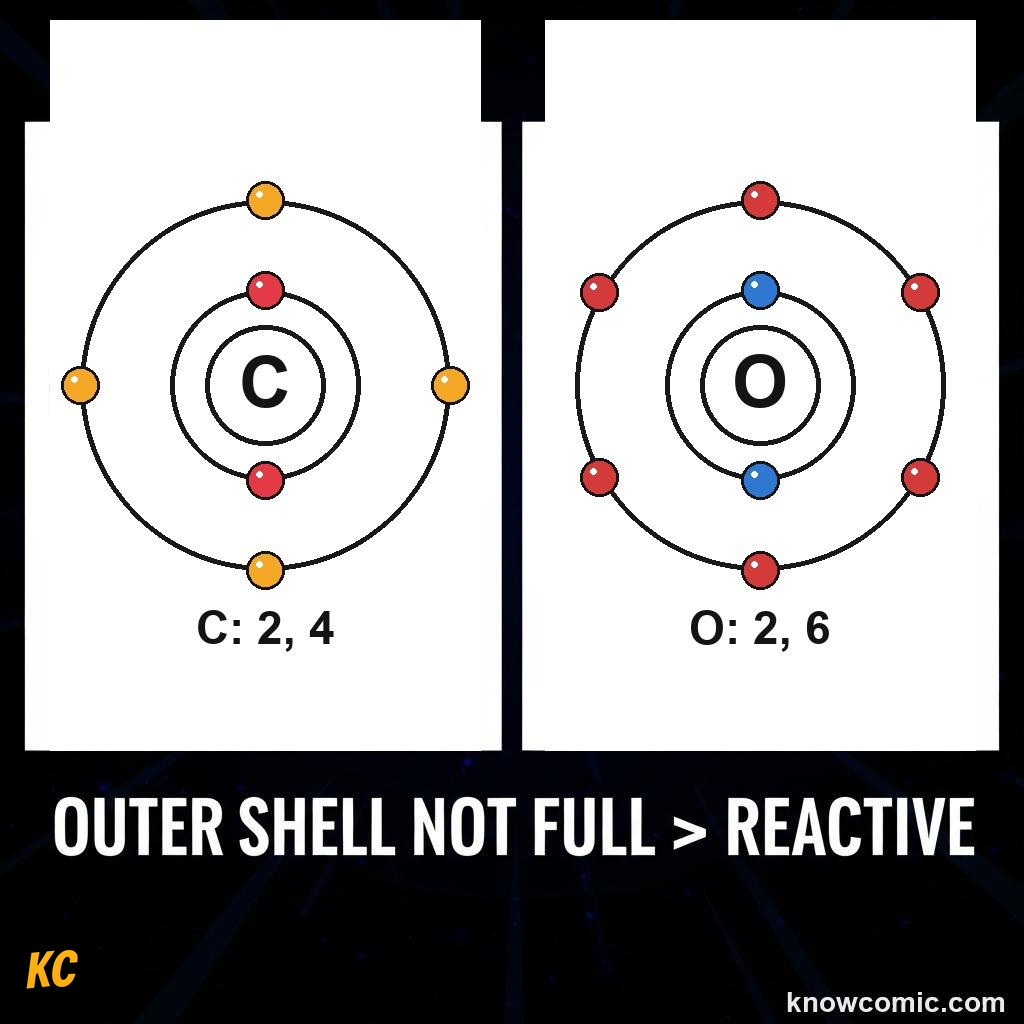
C: 6 electrons → 2, 4
O: 8 electrons → 2, 6
🔗 Outer shell not full → very reactive
O: 8 electrons → 2, 6
🔗 Outer shell not full → very reactive
⚛️ SODIUM & CHLORINE
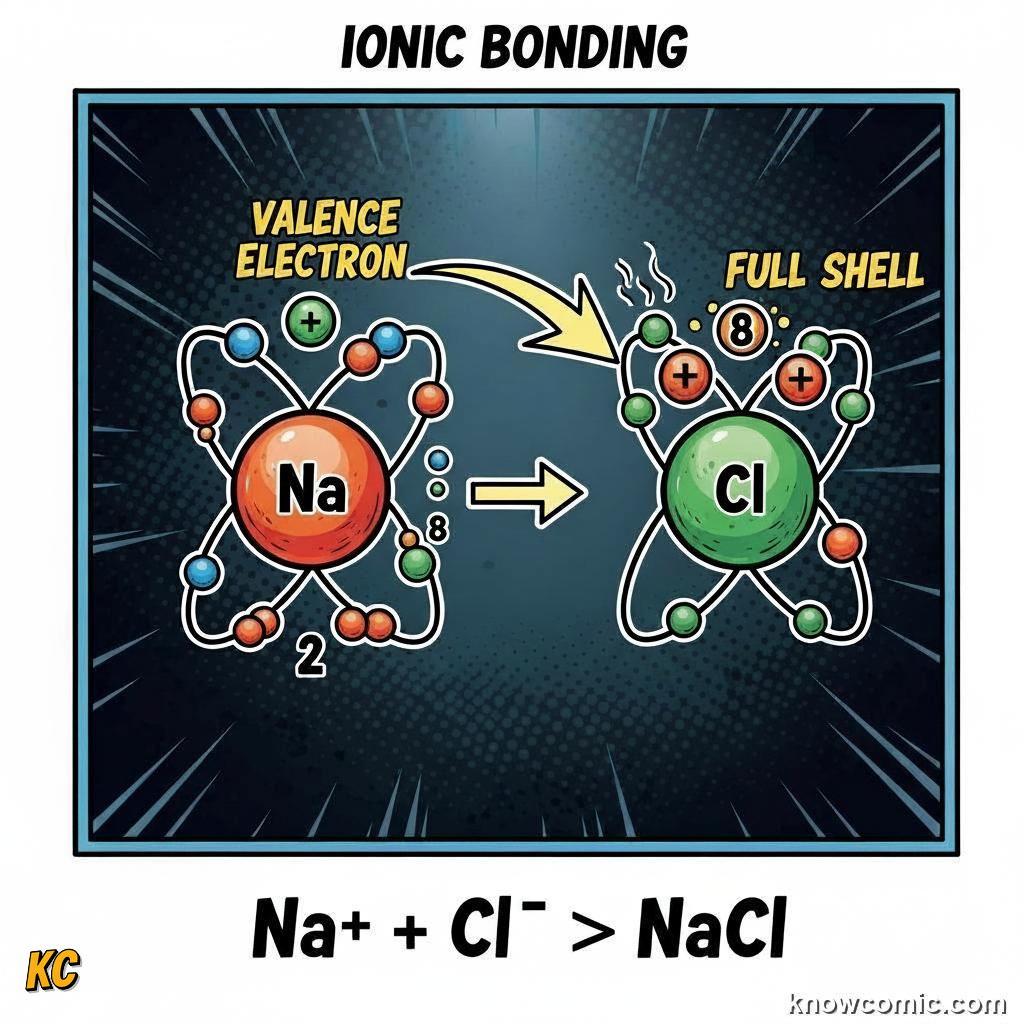
Na: 11 electrons → 2, 8, 1
Cl: 17 electrons → 2, 8, 7
⚡ Na gives 1 electron to Cl → NaCl!
Cl: 17 electrons → 2, 8, 7
⚡ Na gives 1 electron to Cl → NaCl!
PAGE 5 OF 5 — BOHR'S LASTING LEGACY
FROM BOHR TO THE QUANTUM WORLD

WHY THE BOHR MODEL STILL MATTERS
The Bohr model was refined and eventually replaced by the quantum mechanical model in 1926 — electrons do not orbit in neat circles but exist in probability clouds called orbitals. Yet Bohr's core insight — that electrons occupy quantised energy levels and emit photons when they jump down — is completely correct and still used today. Every energy level diagram in your chemistry textbook is Bohr's idea. The periodic table's structure — why period 2 has 8 elements, why noble gases are inert — is directly explained by Bohr's shell filling rules. LED lights, laser pointers, neon signs, and solar cells all operate on the principle of electrons jumping between energy levels.
🏆 NOBEL PRIZE 1922
Niels Bohr won the Nobel Prize in Physics in 1922 for his work on atomic structure. His son Aage Bohr also won the Nobel Prize in Physics in 1975 — one of very few father-and-son Nobel laureate pairs in history.
QUANTUM!
💡 BOHR'S TIMELINE

1913 Bohr publishes quantum shells
1915 Extended to larger atoms
1922 Nobel Prize in Physics
1926 Schrödinger refines with orbitals
1915 Extended to larger atoms
1922 Nobel Prize in Physics
1926 Schrödinger refines with orbitals
REMEMBER
💡 KEY FACTS
Electrons occupy fixed energy shells (1, 2, 3…). Shell 1 holds max 2, shell 2 holds max 8. Electrons emit photons (light) when jumping down a shell. Electron configuration determines chemical behaviour. Valence electrons control bonding.
✅ Fixed shells — no energy loss
✅ Photon emitted when jumping down
✅ Shells fill 1 → 2 → 3 outward
✅ Outer electrons = valence electrons
✅ Photon emitted when jumping down
✅ Shells fill 1 → 2 → 3 outward
✅ Outer electrons = valence electrons
🧠 QUIZ TIME!
THE BOHR MODEL · 5 QUESTIONS
QUESTION 01
What was the fatal flaw in Rutherford's nuclear model that Bohr set out to fix?
QUESTION 02
What is emitted when an electron jumps from a higher energy shell to a lower energy shell?
QUESTION 03
What is the maximum number of electrons that can fit in shell 2 (the L shell)?
QUESTION 04
What is the electron configuration of sodium (atomic number 11)?
QUESTION 05
Why do elements in the same group of the periodic table have similar chemical properties?
0/5
LOADING...