➕ PROTONS & ATOMIC NUMBER
PAGE 1 OF 5 — MEET THE PROTON
THE POSITIVE HEAVYWEIGHT OF THE NUCLEUS
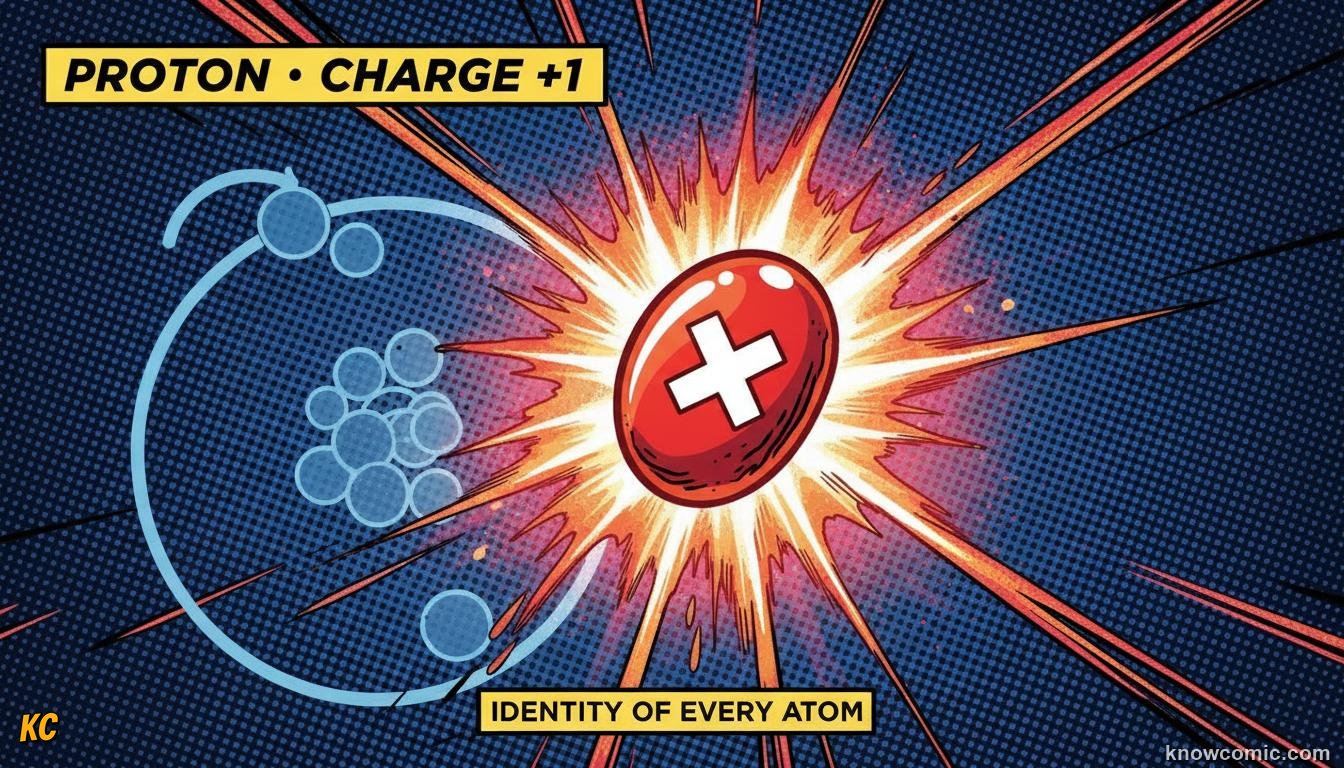
THE PROTON — AN ATOM'S ID BADGE
Deep inside every atom, packed tightly inside the nucleus, lives a particle that gives the atom its entire identity — the proton. A proton is a tiny positively charged particle with a charge of exactly +1, the opposite of an electron's −1 charge. It is almost 1,836 times heavier than an electron, which is why nearly all of an atom's mass lives in the nucleus. Change the number of protons and you change the element itself. Add one proton to a nitrogen atom and it literally becomes an oxygen atom. Protons are the most powerful numbers in all of chemistry — they define the identity of everything around you.
⚡ PROTON QUICK FACTS
Charge: +1. Mass: 1.673 × 10⁻²⁷ kg (about 1 atomic mass unit). Symbol: p or p⁺. Discovered: 1917 by Ernest Rutherford. Named: 1920, from the Greek "protos" meaning first.
PROTON!
INSIDE THE NUCLEUS
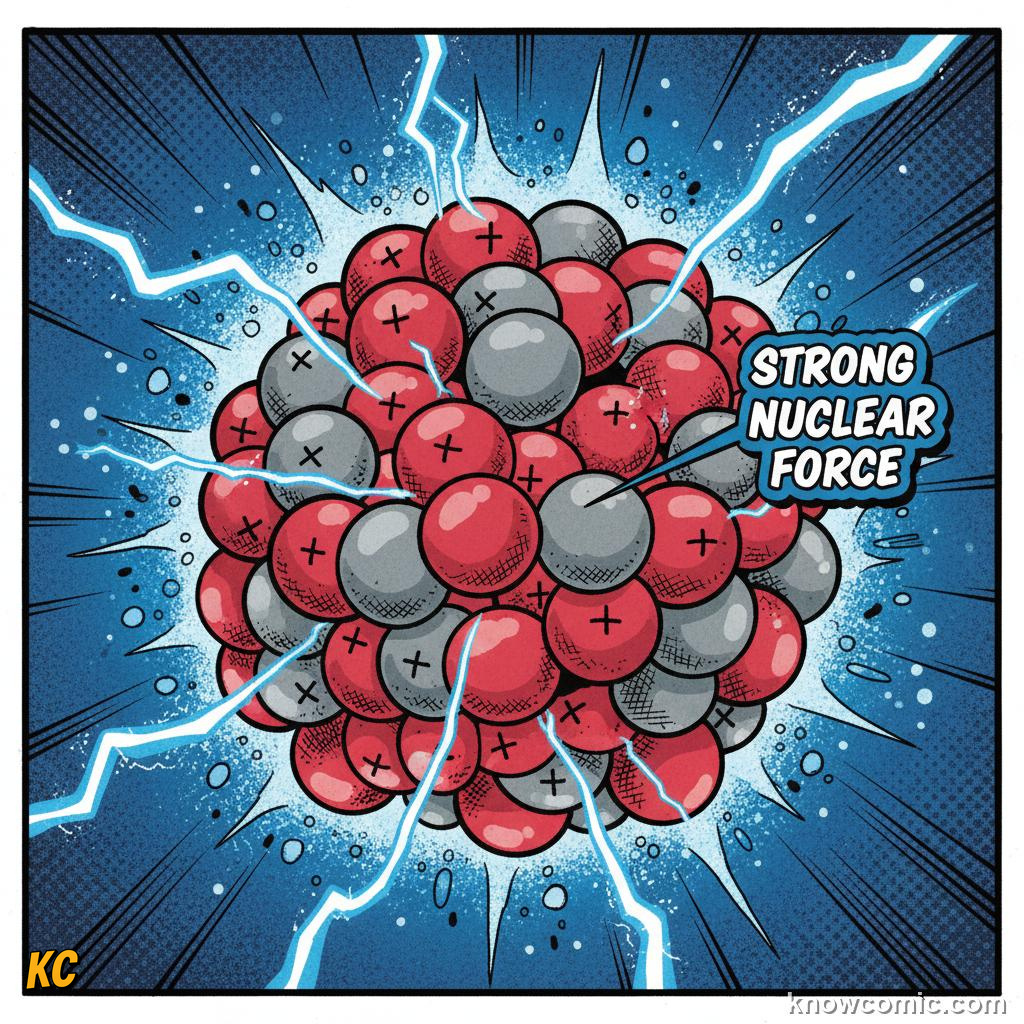
➕ Protons carry the +1 charge
⚪ Neutrons are neutral (0 charge)
🔒 Held by the strong nuclear force
⚪ Neutrons are neutral (0 charge)
🔒 Held by the strong nuclear force
SIZE & MASS
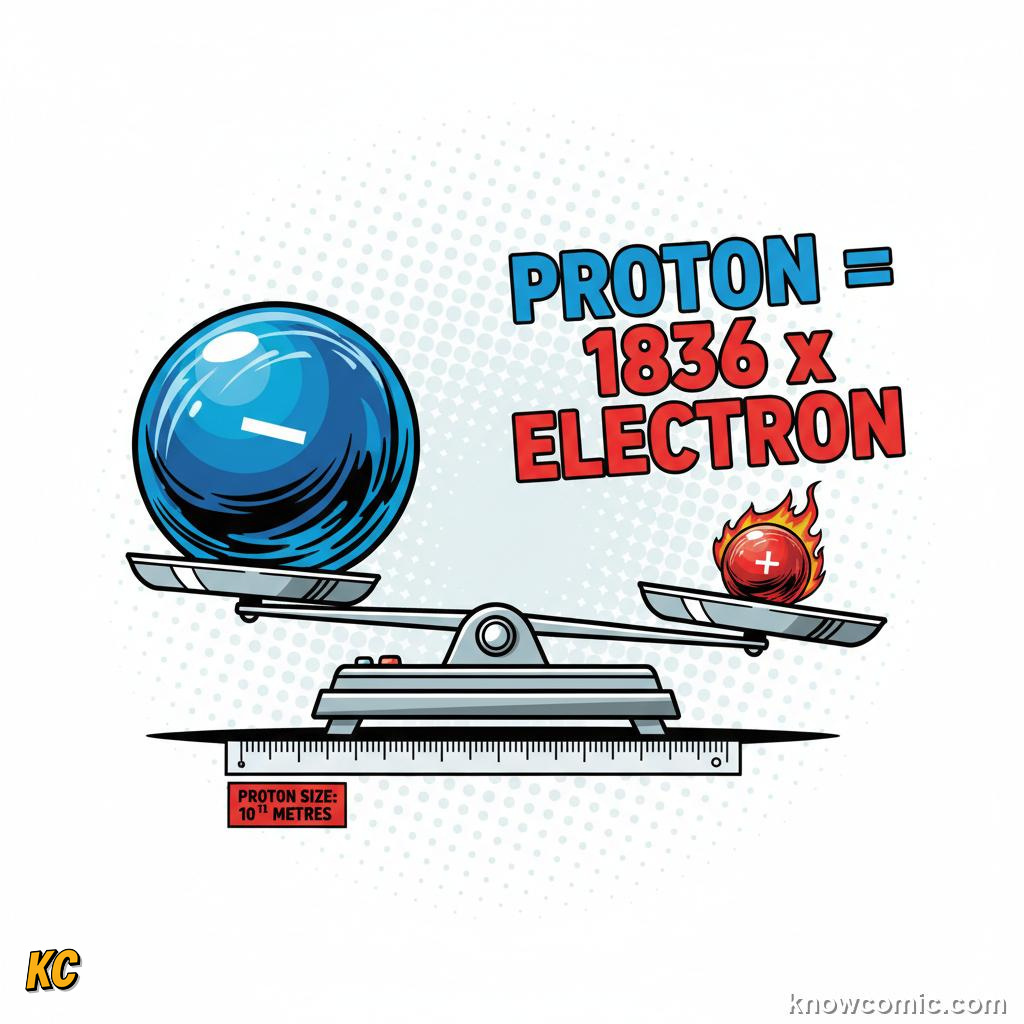
🪶 1,836 times heavier than an electron
📏 Only 10⁻¹⁵ metres across
💪 Nucleus holds 99.9% of atom's mass
📏 Only 10⁻¹⁵ metres across
💪 Nucleus holds 99.9% of atom's mass
PAGE 2 OF 5 — DISCOVERING THE PROTON, 1917
RUTHERFORD'S NITROGEN EXPERIMENT
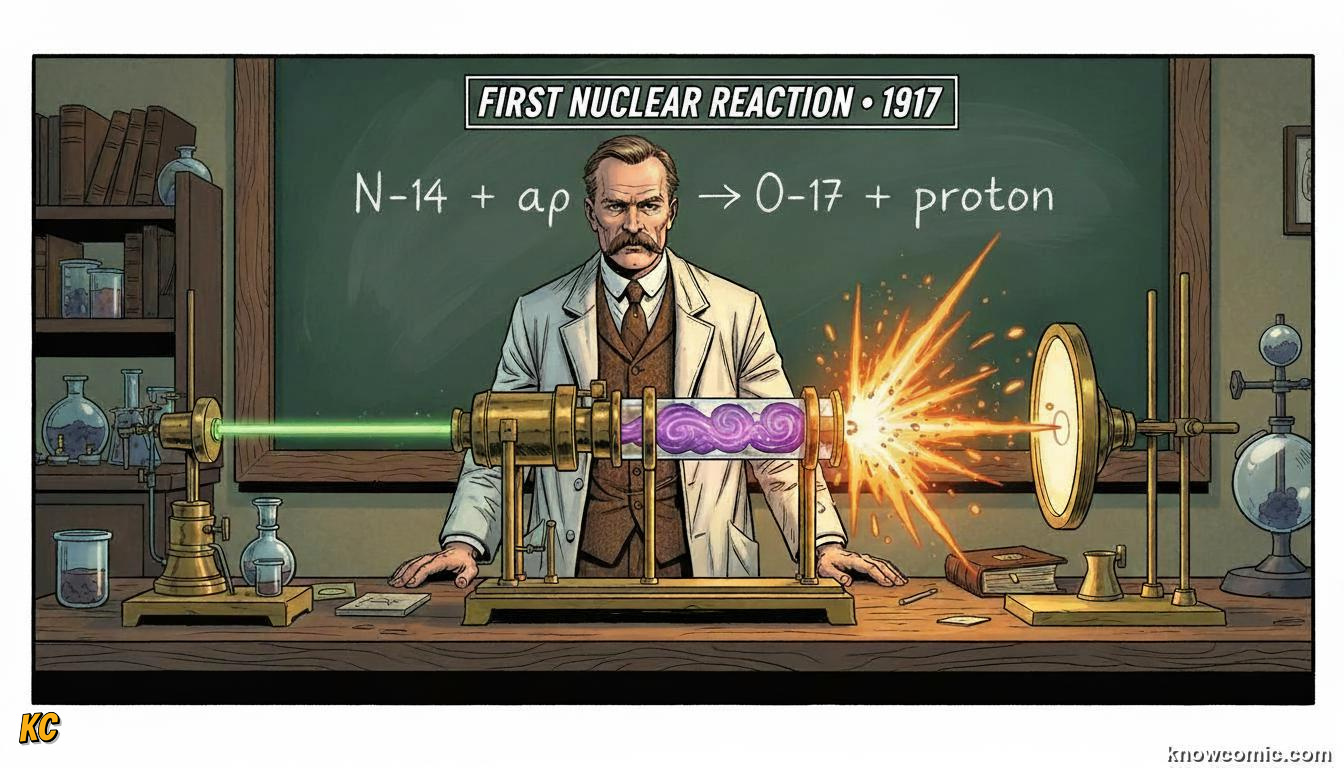
HOW RUTHERFORD FOUND THE PROTON
In 1917, working in his lab at Manchester University, Ernest Rutherford fired fast-moving alpha particles (positive helium nuclei) at nitrogen gas. Something amazing happened — some of the alpha particles knocked bright sparks out of the nitrogen atoms. Those sparks were single positive particles, and when Rutherford measured them carefully, he found they were identical to the nucleus of a hydrogen atom. He had chipped the nucleus of a nitrogen atom and produced a hydrogen nucleus — the first artificial nuclear reaction in history! He realised every atomic nucleus contained these same positive particles. Three years later he named them "protons", from the Greek word for "first", because they were the fundamental positive building blocks of all matter.
🔬 THE FIRST NUCLEAR REACTION
Rutherford's equation: N-14 + alpha → O-17 + proton. He had transmuted nitrogen into oxygen — the first time humans had ever changed one element into another. He called it "splitting the atom" long before fission was discovered.
DISCOVERED!
🌀 1886 CANAL RAYS
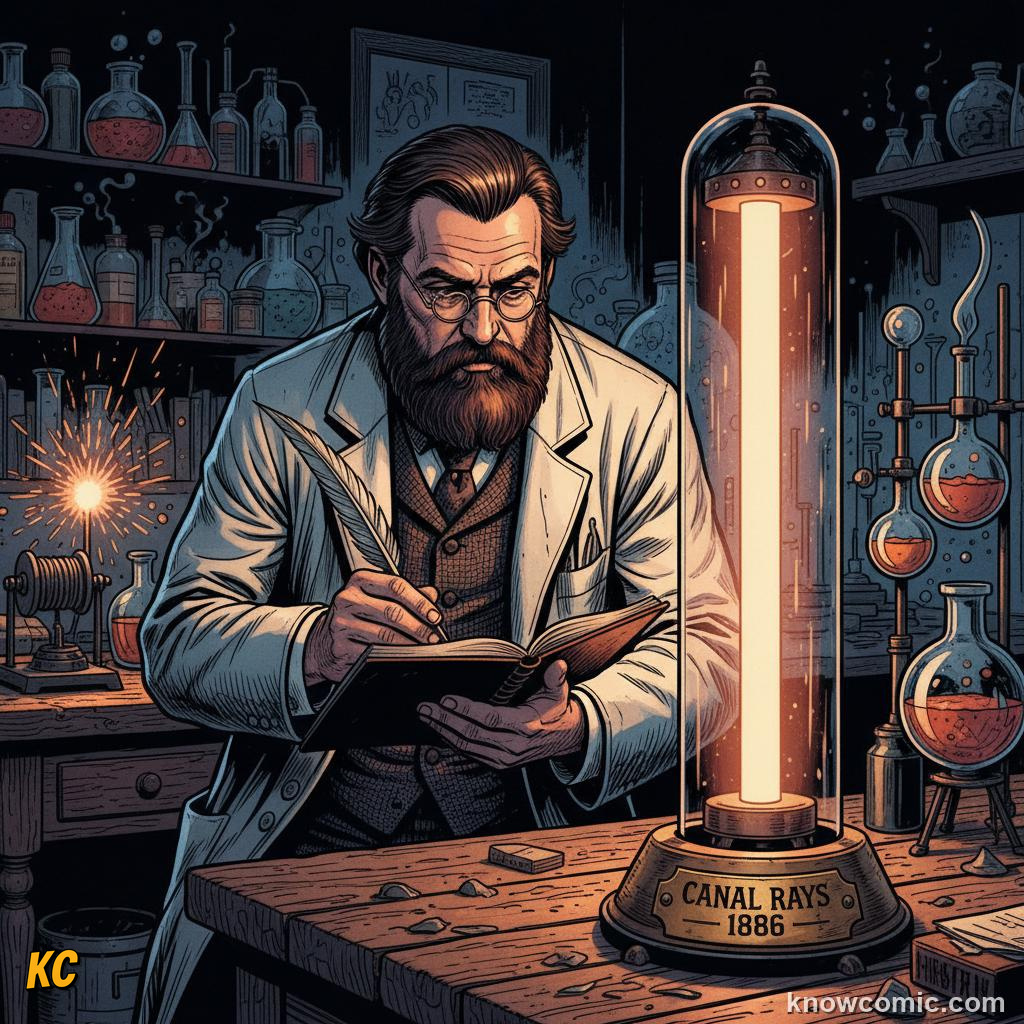
🔭 Goldstein sees glowing positive rays
💡 First hint of positive particles
⚗️ Long before the nucleus was known
💡 First hint of positive particles
⚗️ Long before the nucleus was known
💥 1917 THE FIRST SPLIT
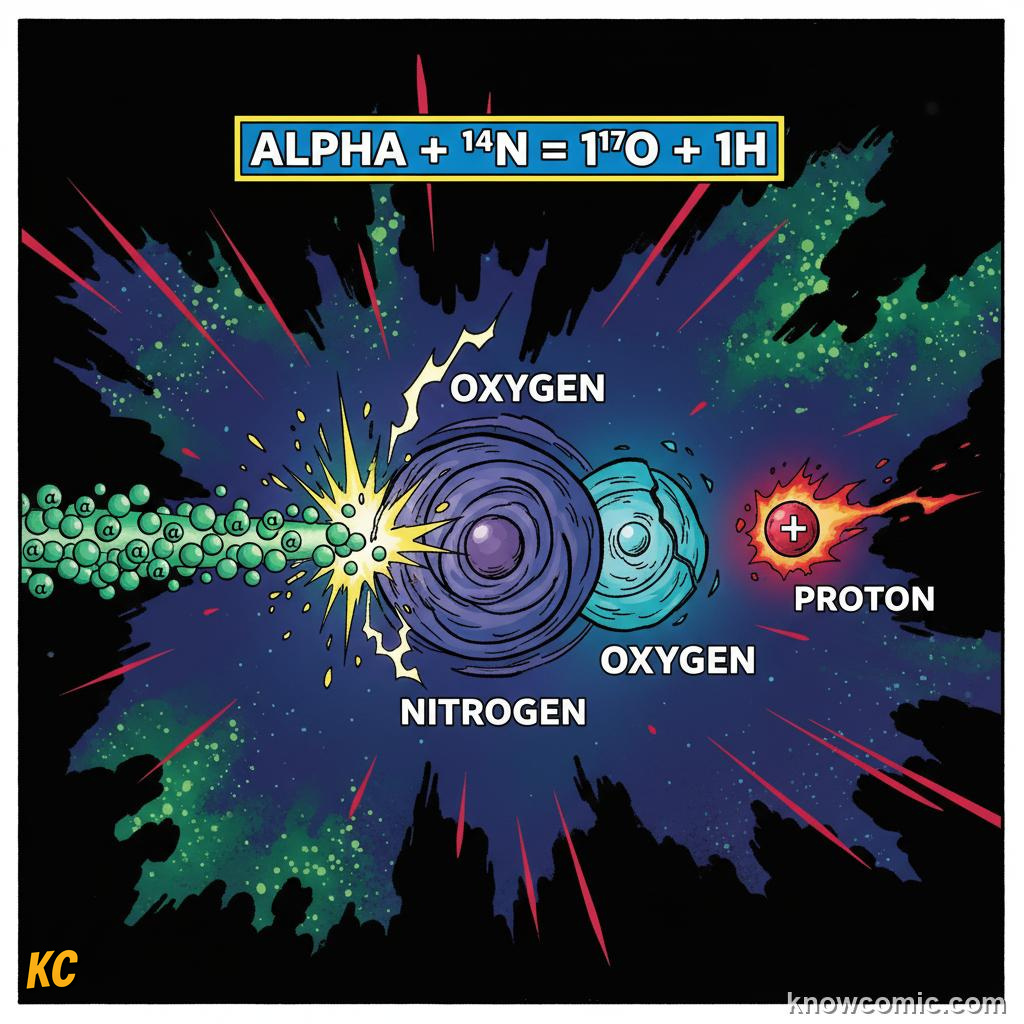
🎯 Alpha particles hit nitrogen gas
✨ Bright sparks — hydrogen nuclei
🔁 Nitrogen transmuted into oxygen
✨ Bright sparks — hydrogen nuclei
🔁 Nitrogen transmuted into oxygen
🏷️ 1920 NAMED "PROTON"
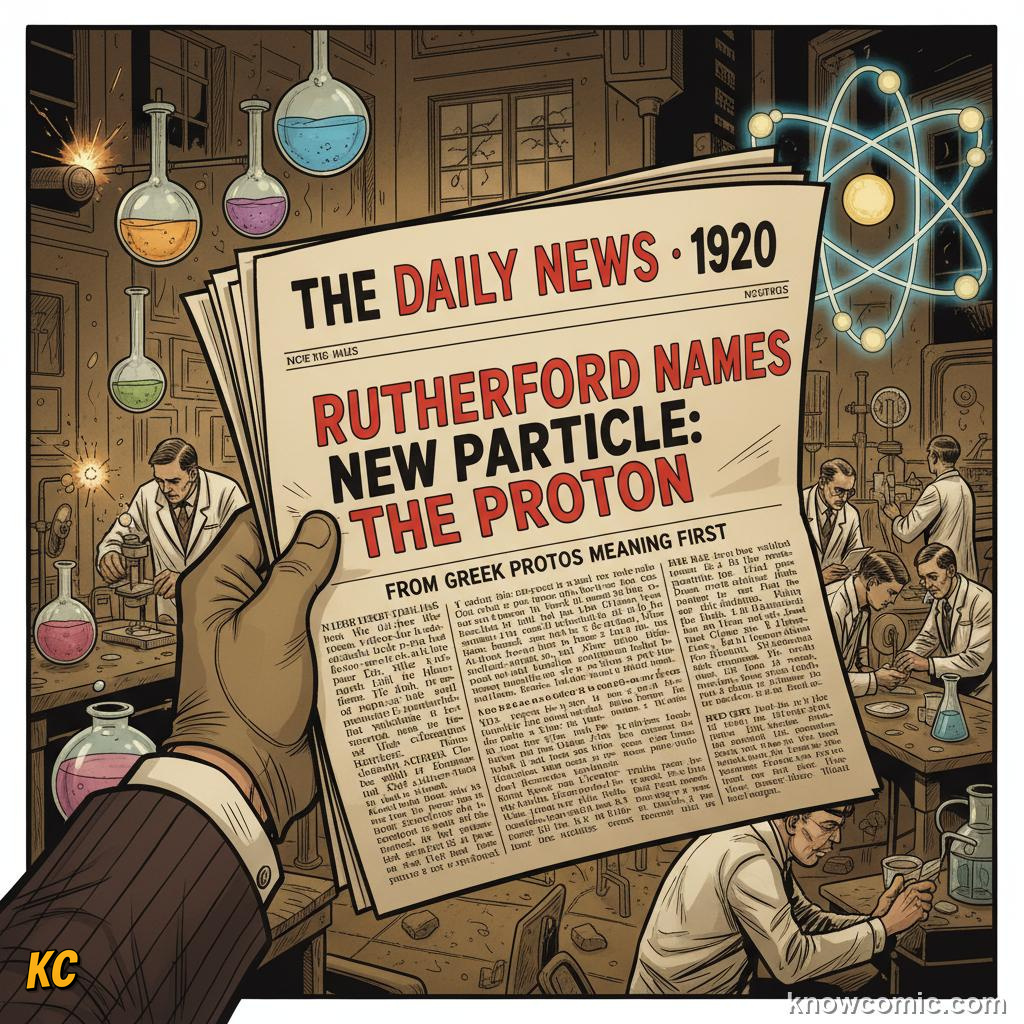
📜 Rutherford picks the name
🇬🇷 "Protos" = Greek for "first"
⚛️ Accepted as a fundamental particle
🇬🇷 "Protos" = Greek for "first"
⚛️ Accepted as a fundamental particle
PAGE 3 OF 5 — ATOMIC NUMBER = IDENTITY
THE ATOMIC NUMBER RULE
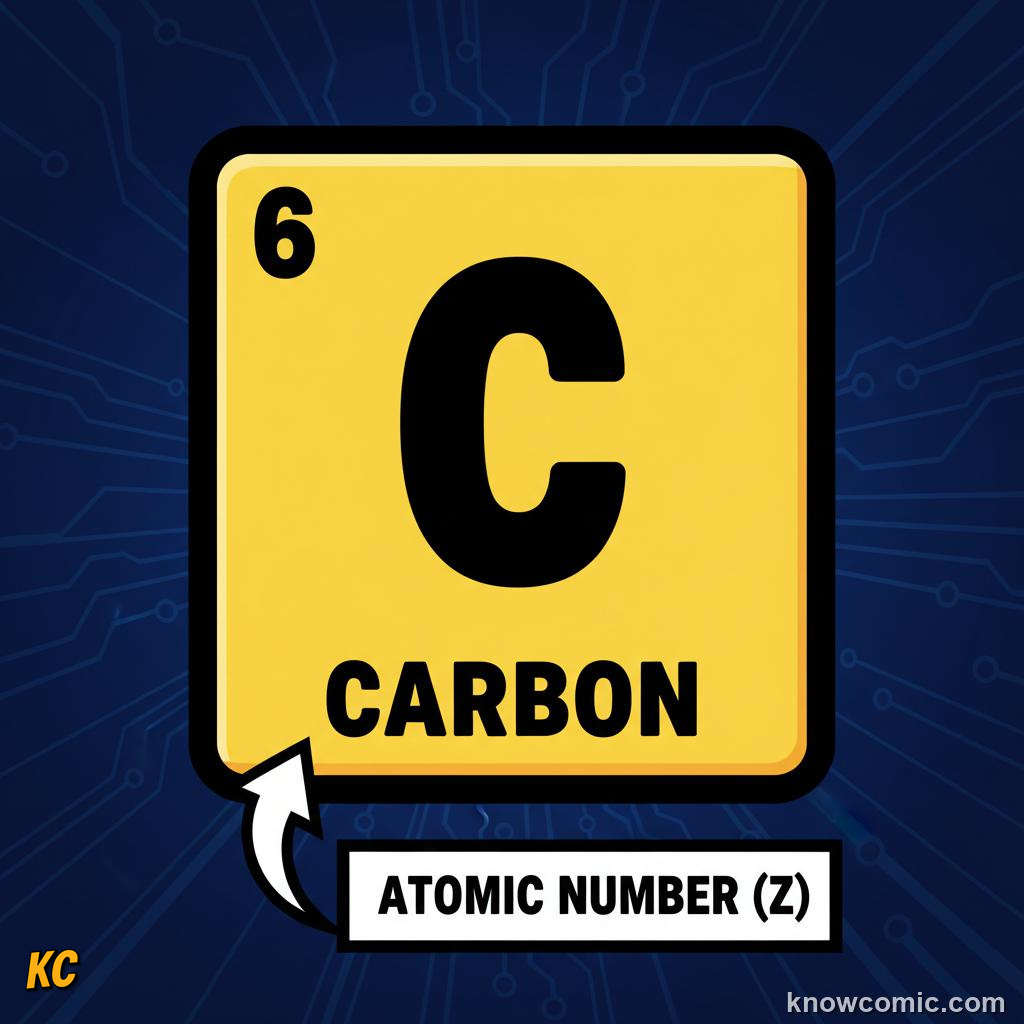
🔢 Atomic number = number of protons
🏷️ Same as Z on the periodic table
🆔 Never changes for an element
🏷️ Same as Z on the periodic table
🆔 Never changes for an element
PROTONS = ELECTRONS (NEUTRAL ATOM)
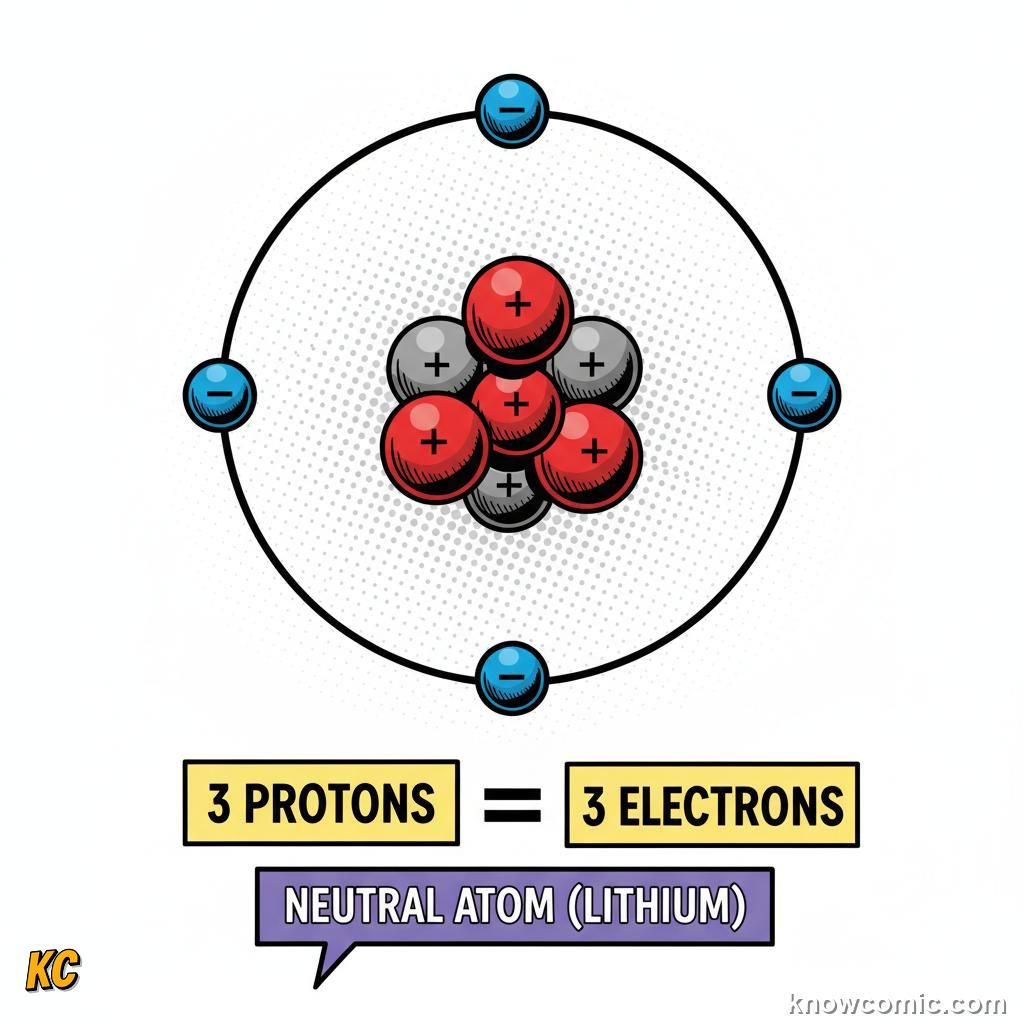
⚖️ In a neutral atom, protons = electrons
➕➖ Positive and negative cancel
⚡ Change electrons → ion, not new element
➕➖ Positive and negative cancel
⚡ Change electrons → ion, not new element
THE ATOMIC NUMBER IS EVERYTHING
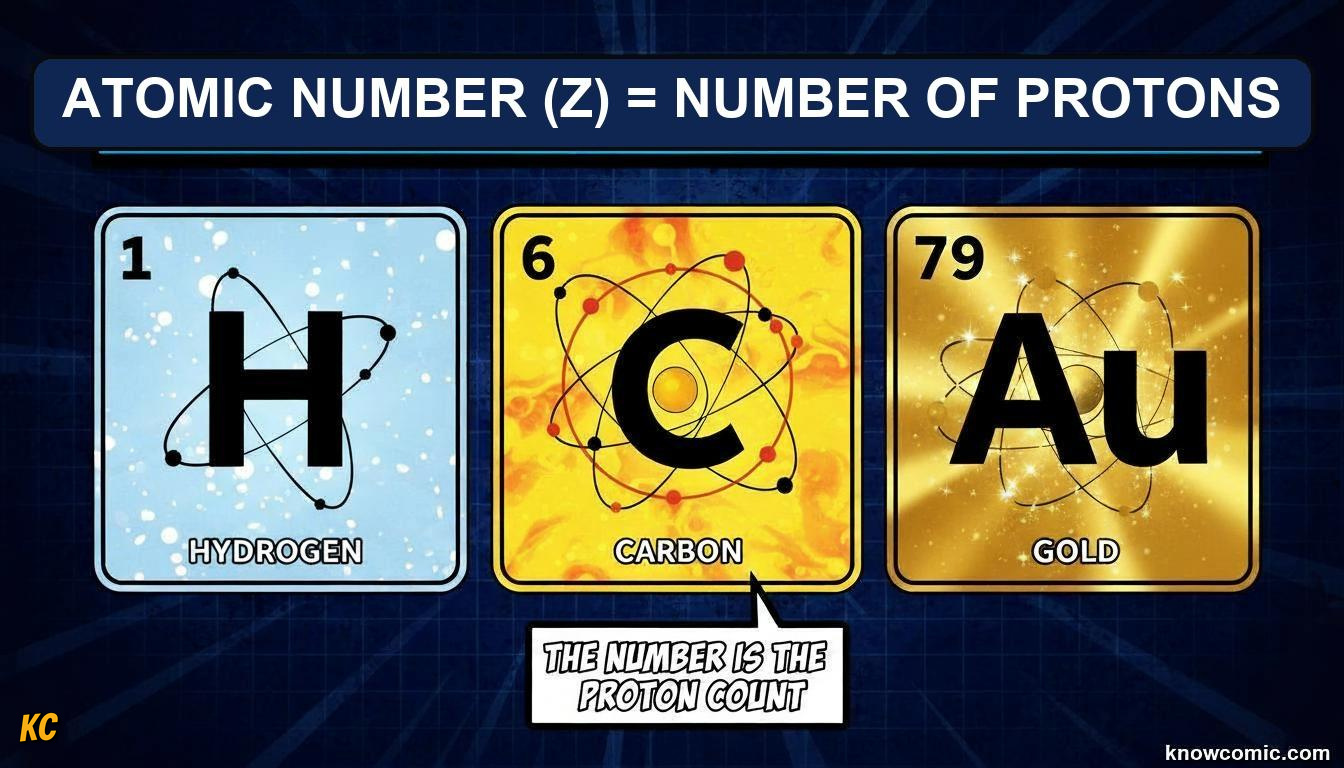
WHY THE PROTON COUNT IS AN ATOM'S ID
Every element in the universe is defined by one single number — its atomic number, written as Z. This is simply the count of protons in the nucleus. Hydrogen has 1 proton, so its atomic number is 1. Helium has 2. Carbon has 6. Oxygen has 8. Gold has 79. Uranium has 92. The periodic table is organised in order of atomic number, starting from hydrogen at position 1 and counting upward. Two atoms can have different numbers of neutrons (we call those isotopes) and different numbers of electrons (we call those ions), but if they have the same number of protons, they are the same element. The proton count is the one number you cannot change without literally changing what kind of atom you have.
🔑 THE GOLDEN RULE
Atomic number (Z) = number of protons. For a neutral atom, Z also equals the number of electrons. Mass number (A) = protons + neutrons. Henry Moseley proved in 1913 that Z — not atomic mass — is the true ordering principle of the periodic table.
IDENTITY!
PAGE 4 OF 5 — MEET THE ELEMENTS BY NUMBER
ONE PROTON AT A TIME
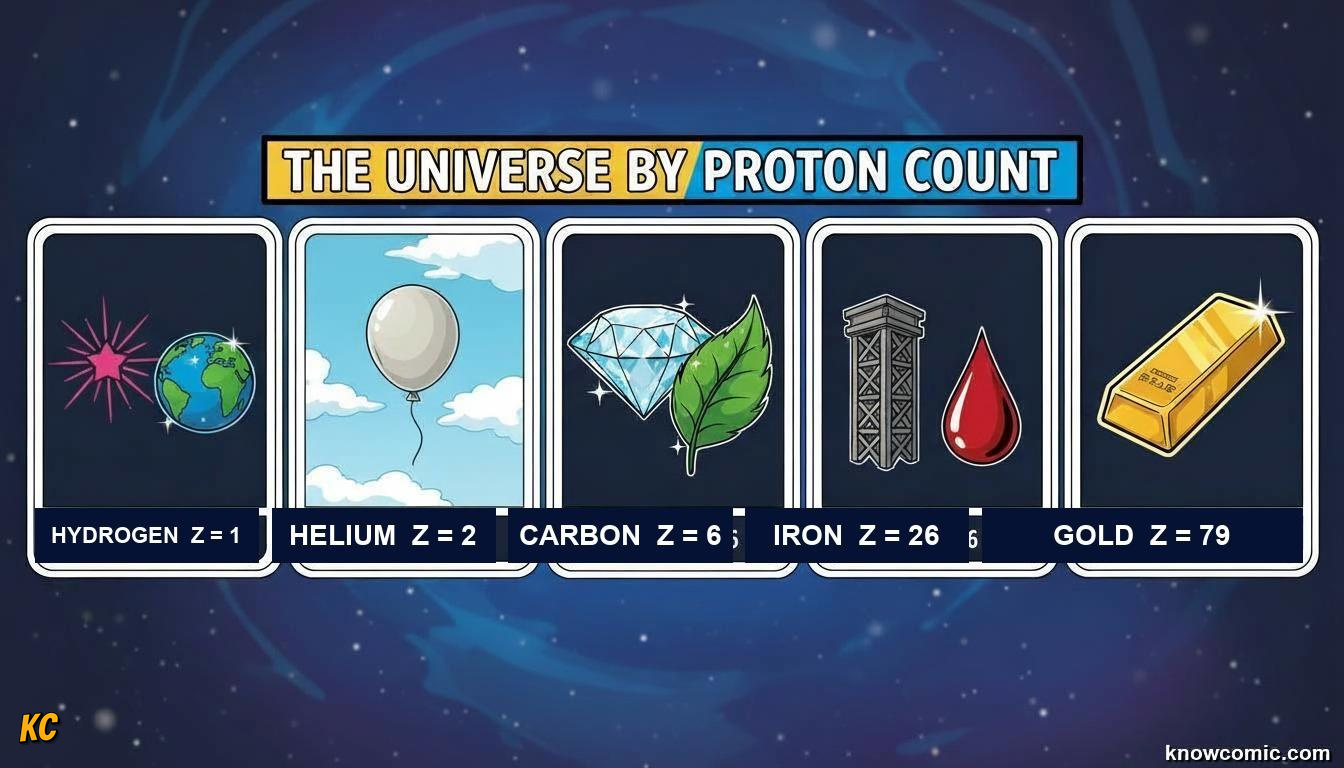
COUNTING PROTONS REVEALS EVERY ELEMENT
Start the simplest possible atom: one proton, one electron. That's hydrogen (Z = 1) — the most abundant element in the universe. Add one proton and you have helium (Z = 2) — a non-reactive gas in party balloons. Keep going: lithium (3) is a soft metal that fizzes on water. Carbon (6) is the backbone of every living thing. Oxygen (8) makes breathing possible. Jump ahead: iron (26) builds bridges and runs your blood. Gold (79) is prized for jewellery and electronics. Uranium (92) powers nuclear reactors. Every single step up in atomic number is a completely different element with completely different properties — all caused by the simple fact that the nucleus now has one more proton than before.
🌌 THE UNIVERSE BY NUMBERS
About 92 elements occur naturally on Earth, from Z=1 (hydrogen) to Z=92 (uranium). Above uranium, elements are mostly synthetic — made in particle accelerators. The heaviest confirmed element today is oganesson, Z=118.
COUNT!
⚛️ HYDROGEN · Z = 1
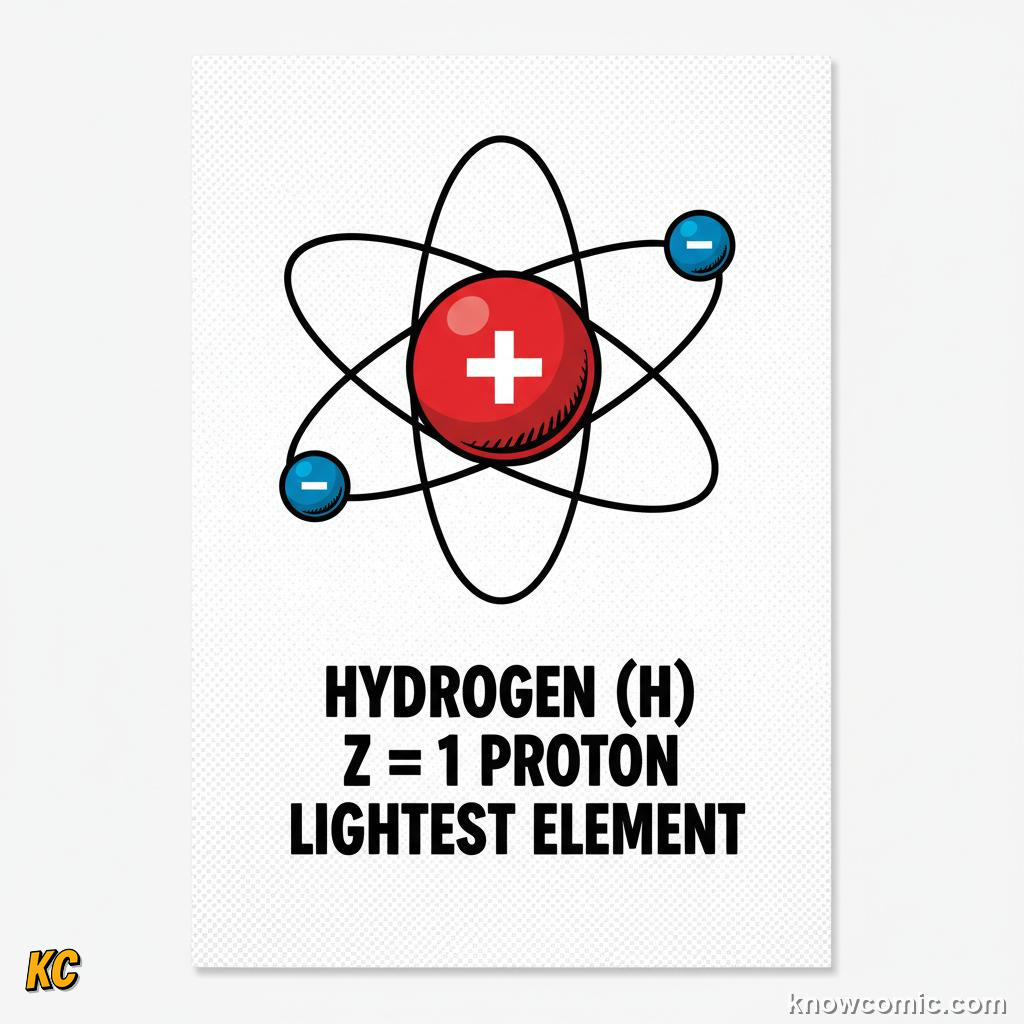
🔢 1 proton in the nucleus
✨ Lightest, simplest element
🌟 Fuels the Sun and every star
✨ Lightest, simplest element
🌟 Fuels the Sun and every star
⚛️ CARBON · Z = 6
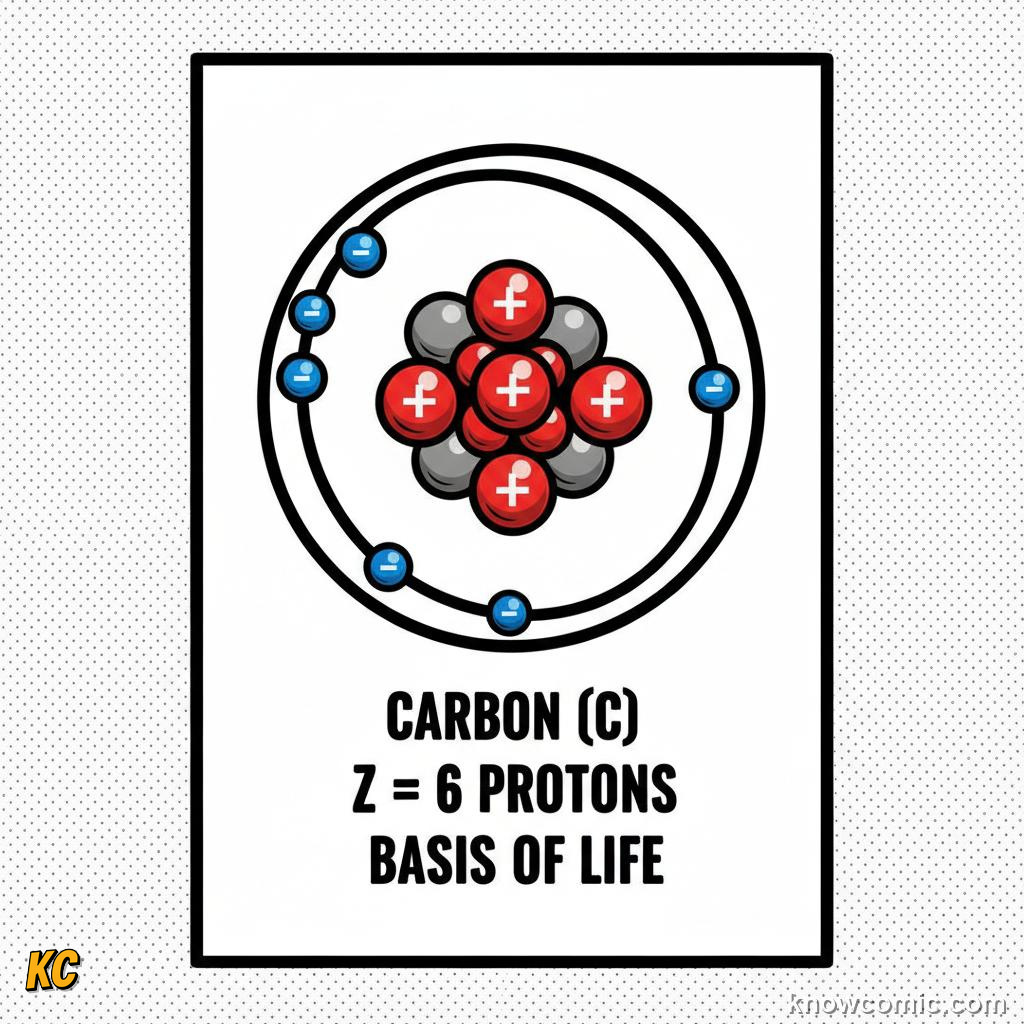
🔢 6 protons in the nucleus
🌳 Basis of all known life
💎 Diamonds are pure carbon
🌳 Basis of all known life
💎 Diamonds are pure carbon
⚛️ GOLD · Z = 79
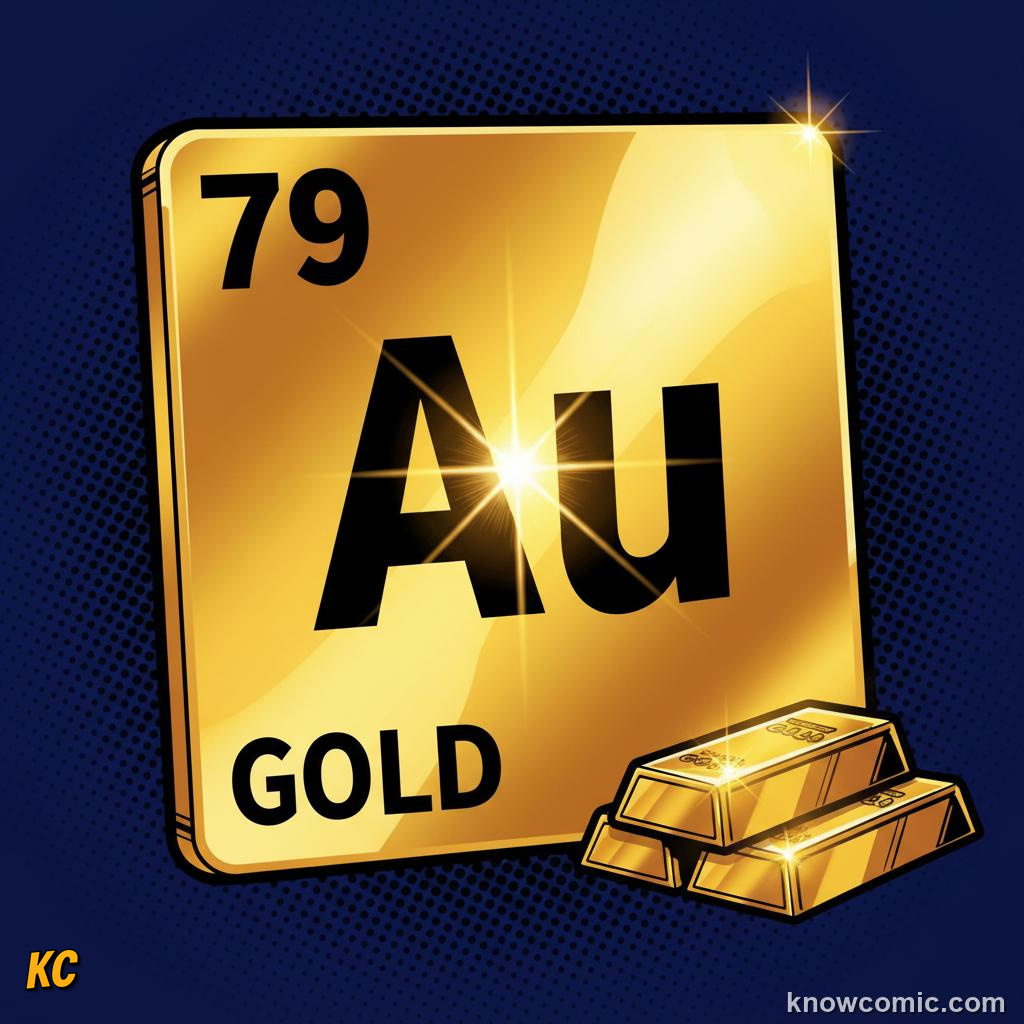
🔢 79 protons in the nucleus
✨ Does not rust or tarnish
💰 Formed in exploding stars
✨ Does not rust or tarnish
💰 Formed in exploding stars
PAGE 5 OF 5 — CHANGING THE PROTON COUNT
WHEN PROTONS CHANGE, ELEMENTS CHANGE
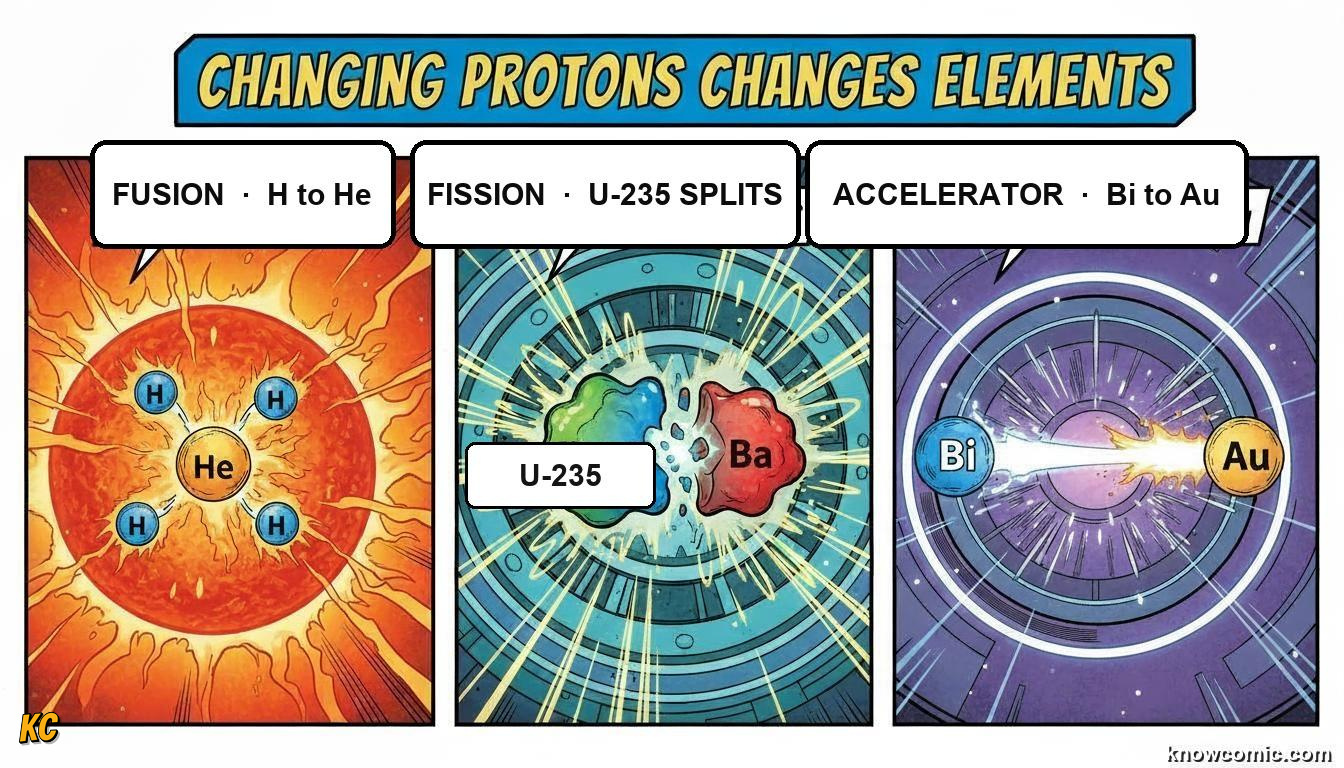
ALCHEMY IS REAL — INSIDE A NUCLEAR REACTOR
Ancient alchemists dreamed of turning lead into gold, but chemistry alone cannot do it — chemical reactions only shuffle electrons, never protons. To change an element, you must change the number of protons inside its nucleus, and that takes a nuclear reaction. Inside the Sun, four hydrogen nuclei (Z=1) fuse together to form a helium nucleus (Z=2), releasing the light and heat that power all life on Earth. In nuclear reactors, heavy uranium atoms (Z=92) split into lighter elements, releasing enormous energy. And in a particle accelerator, scientists really can turn bismuth (Z=83) into gold (Z=79) — by knocking four protons out of the nucleus. It works! It just costs more energy than the gold is worth.
🏆 MOSELEY'S LAW (1913)
British physicist Henry Moseley proved that every element has a unique atomic number by measuring the X-ray frequencies emitted by different metals. His work reorganised the entire periodic table by proton count and predicted gaps for elements not yet discovered (technetium, promethium, astatine, rhenium).
TRANSMUTE!
🔭 PROTON TIMELINE
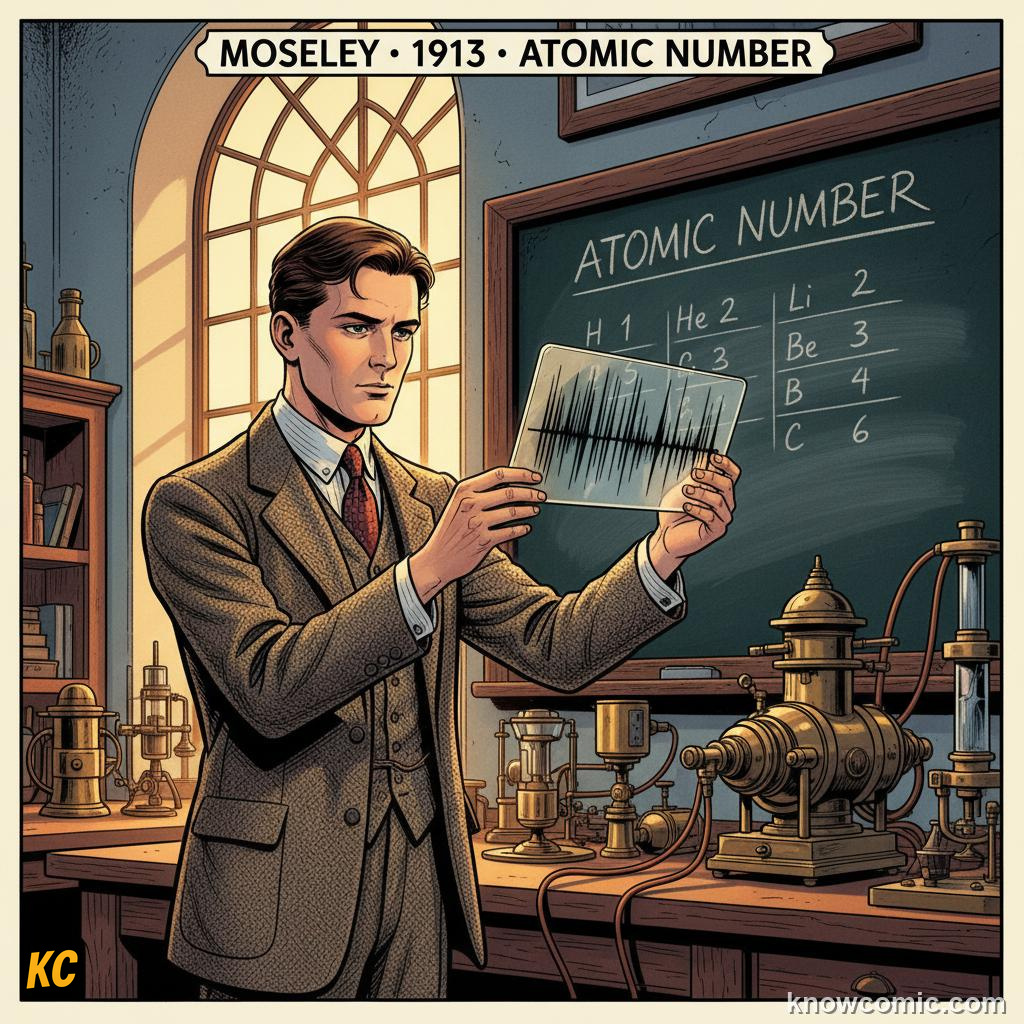
1886 Goldstein's canal rays
1913 Moseley: atomic number = Z
1917 Rutherford discovers the proton
1920 Named "proton"
1913 Moseley: atomic number = Z
1917 Rutherford discovers the proton
1920 Named "proton"
REMEMBER
⚡ KEY FACTS
Protons are positively charged particles in the nucleus. The number of protons (atomic number Z) defines the element. Neutral atoms have equal numbers of protons and electrons. Changing the proton count changes the element. The periodic table is ordered by Z.
✅ Proton charge = +1
✅ Atomic number = proton count
✅ Z defines the element
✅ Only nuclear reactions change Z
✅ Atomic number = proton count
✅ Z defines the element
✅ Only nuclear reactions change Z
🧠 QUIZ TIME!
PROTONS & ATOMIC NUMBER · 5 QUESTIONS
QUESTION 01
What is the electric charge of a proton?
QUESTION 02
Who discovered the proton, and which element did he split in the first artificial nuclear reaction?
QUESTION 03
What does the atomic number (Z) of an element equal?
QUESTION 04
Gold has an atomic number of 79. How many protons are in the nucleus of a gold atom?
QUESTION 05
If a nitrogen atom (Z = 7) gains one extra proton in its nucleus, what does it become?
0/5
LOADING...