🌡️ TEMPERATURE: SOLAR ENERGY & HEAT
PAGE 1 OF 5, THE SUN: WEATHER'S BATTERY
EM RADIATION
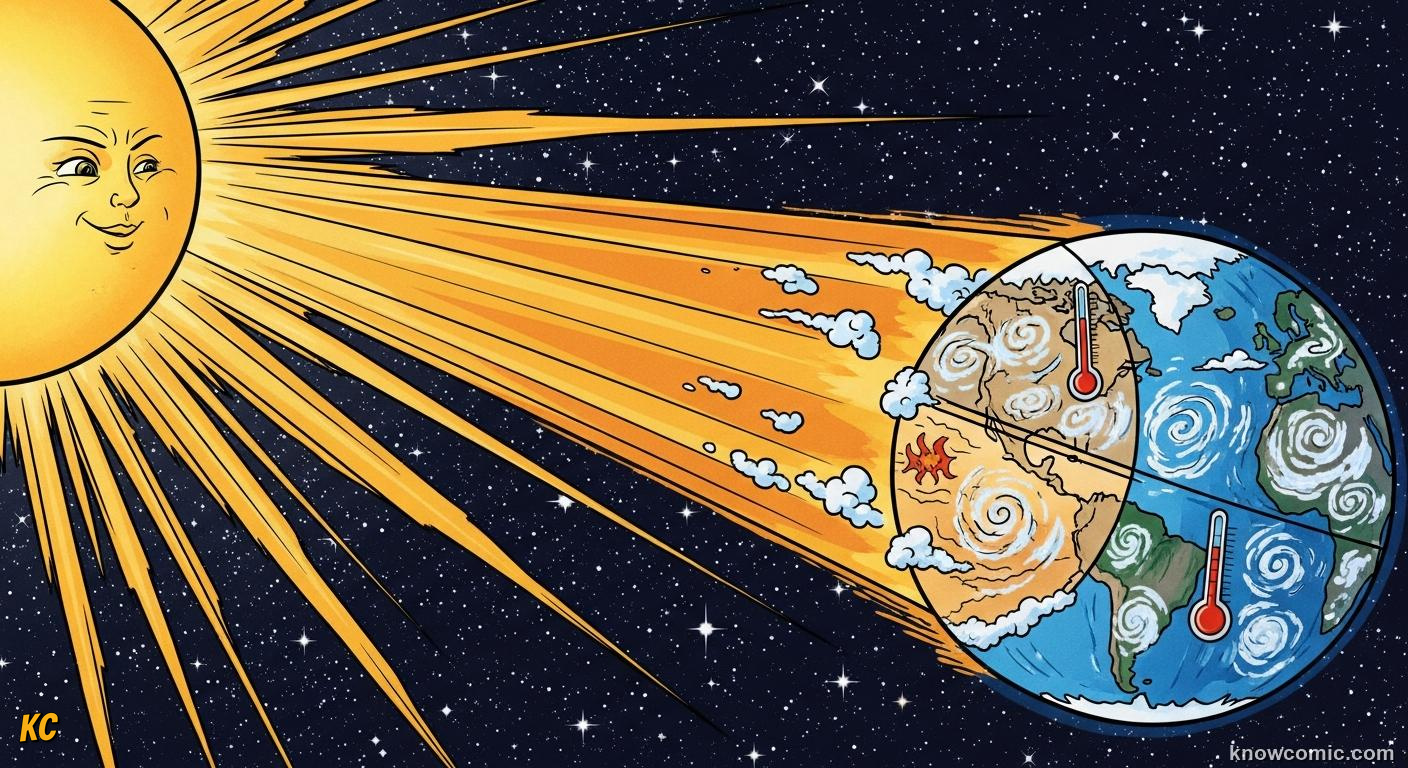
ELECTROMAGNETIC ENERGY, NOT A ROPE
The Sun sits almost 150 million km away — but its light and other radiation cross space in about 8 minutes and slam into the top of Earth's atmosphere. Some is reflected back to space; some is absorbed by air, cloud, and ground. What stays in the surface–ocean–atmosphere system is the main engine of weather. Without that steady input, the planet would freeze (except for leftover internal Earth heat, tiny compared to sunlight). Heat is how we describe energy on the move and stored in wiggling molecules — temperature is a number on a scale for "how fast those wiggles are, on average."
🔋 BALANCE
Earth also radiates energy back to space. Long-term, in ≈ out is why the climate stays in a liveable range — with natural and human twists.
GLOW!
RAYS
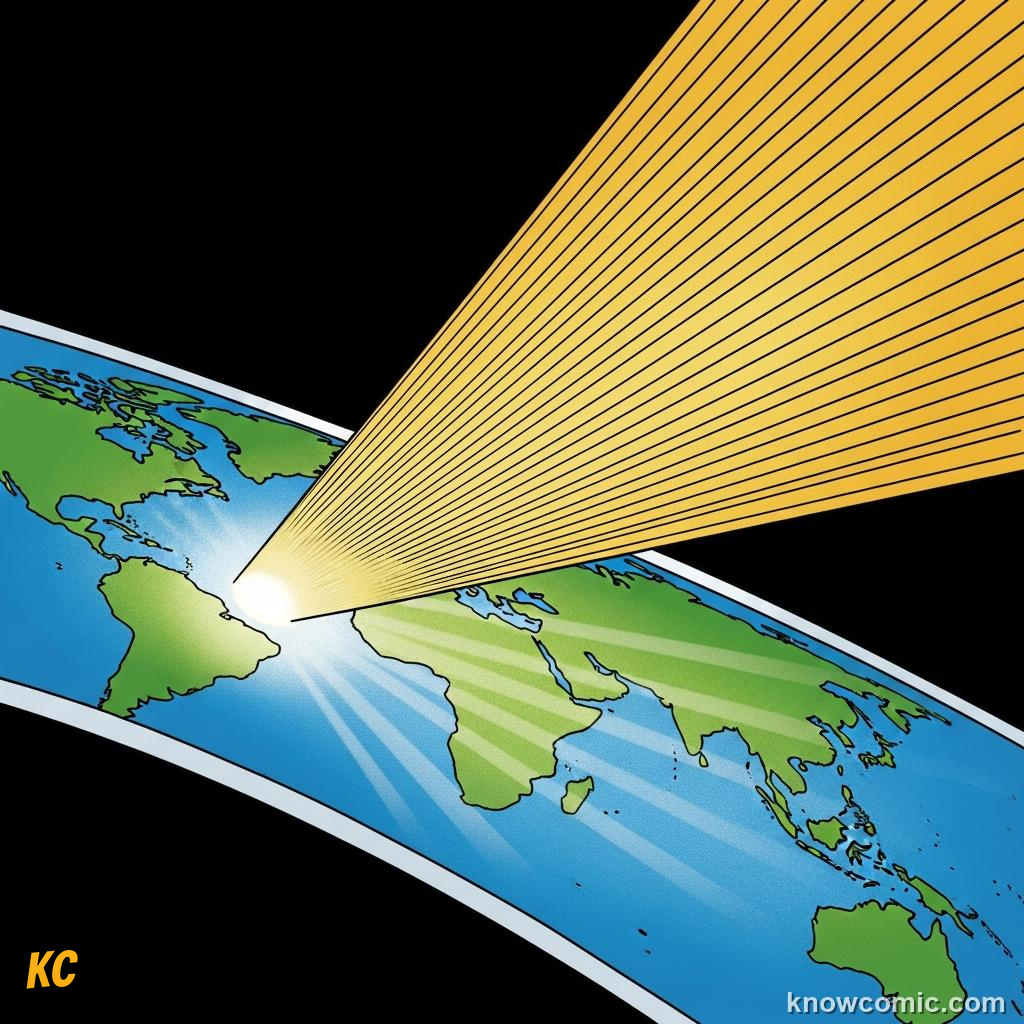
Beams are more spread out near poles, more concentrated near equator (big picture)
OZONE

The atmosphere is not a clear window for all wavelengths — ozone and clouds matter
PAGE 2 OF 5, WHY THE TROPICS BAKE & POLES CHILL
GLOBE GEOMETRY
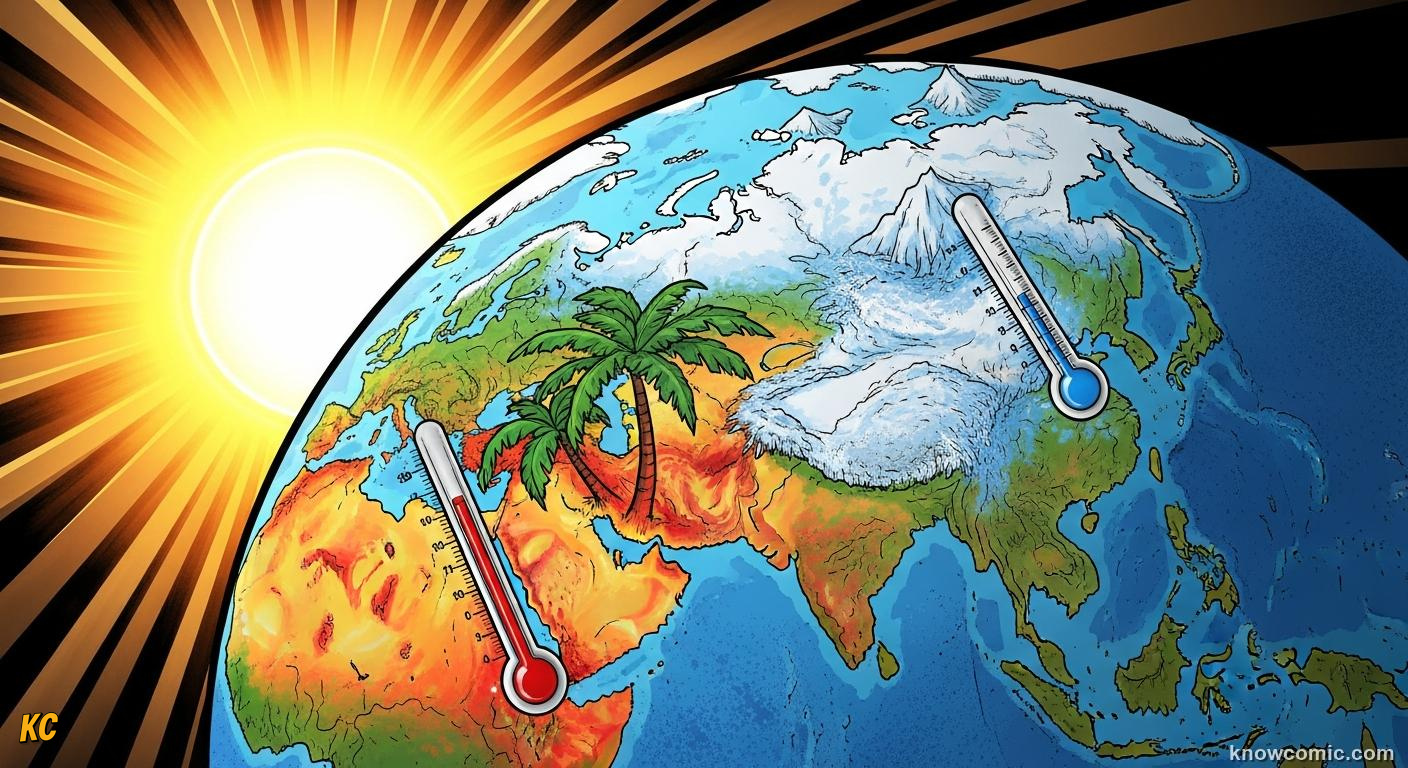
THE SAME SUN, A DIFFERENT "FOOTPRINT"
A beam of sunlight hits the equatorial regions in a steep, direct way — its energy packs into a smaller ground patch per unit area, on average and seasonally speaking. Near the poles, the same energy landing from space is shared across a much bigger ground footprint (plus long polar nights in winter that switch the budget off). Seasons shift day length and sun angle as Earth tilts in orbit — that is why summer in one hemisphere is winter in the other. These differences set up a giant hot-to-cold contrast that helps drive winds, ocean currents, and storm tracks (your wind topic in action).
TILT!
EQ

Tropics: high sun, warm oceans, fuel for convection and cyclones
ICE

Bright snow reflects lots of light — albedo feedback in cold places
YEAR
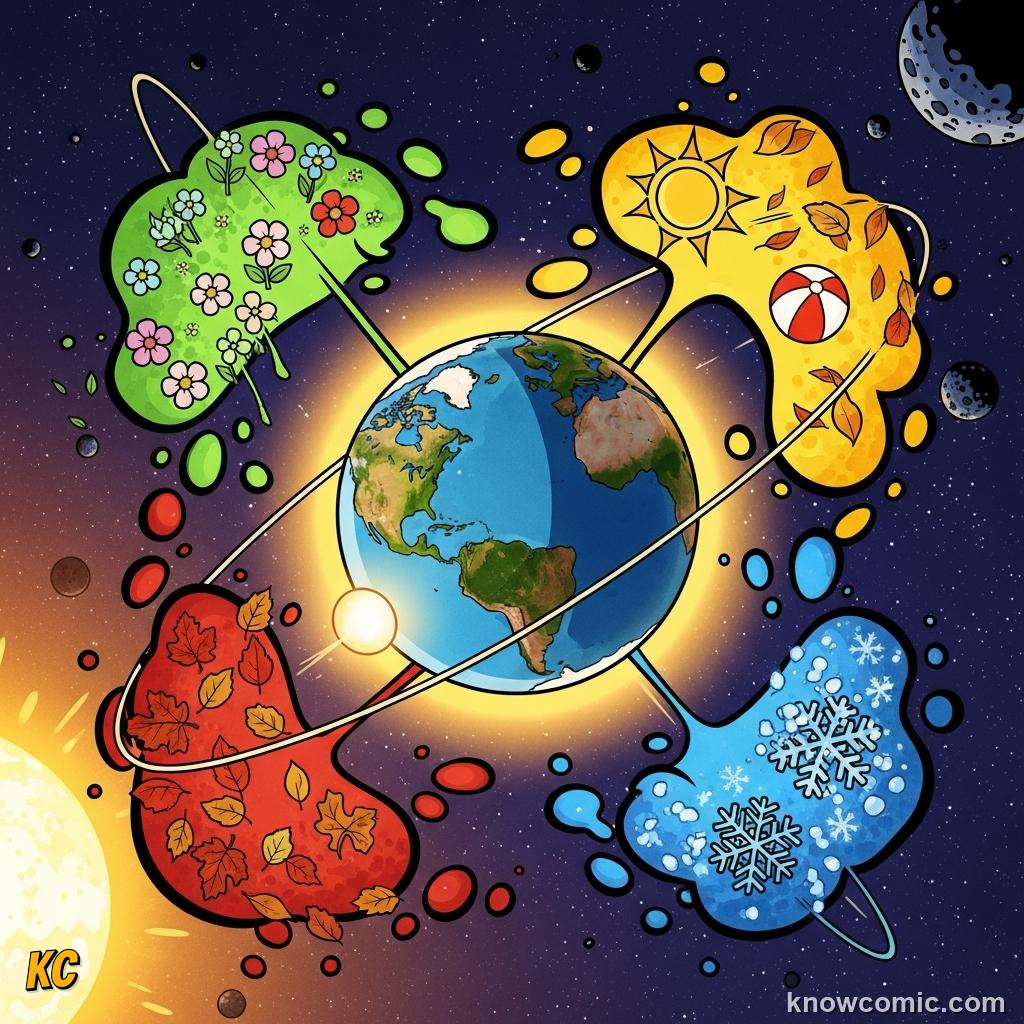
Orbit + tilt → summer and winter "character" in each mid-latitude zone
PAGE 3 OF 5, LAND, SEA, AND "WHO WARMS FASTER?"
HOT SAND

Sunny beach: you scorch bare feet while a wave still feels cool — classic sign
DEEP BLUE
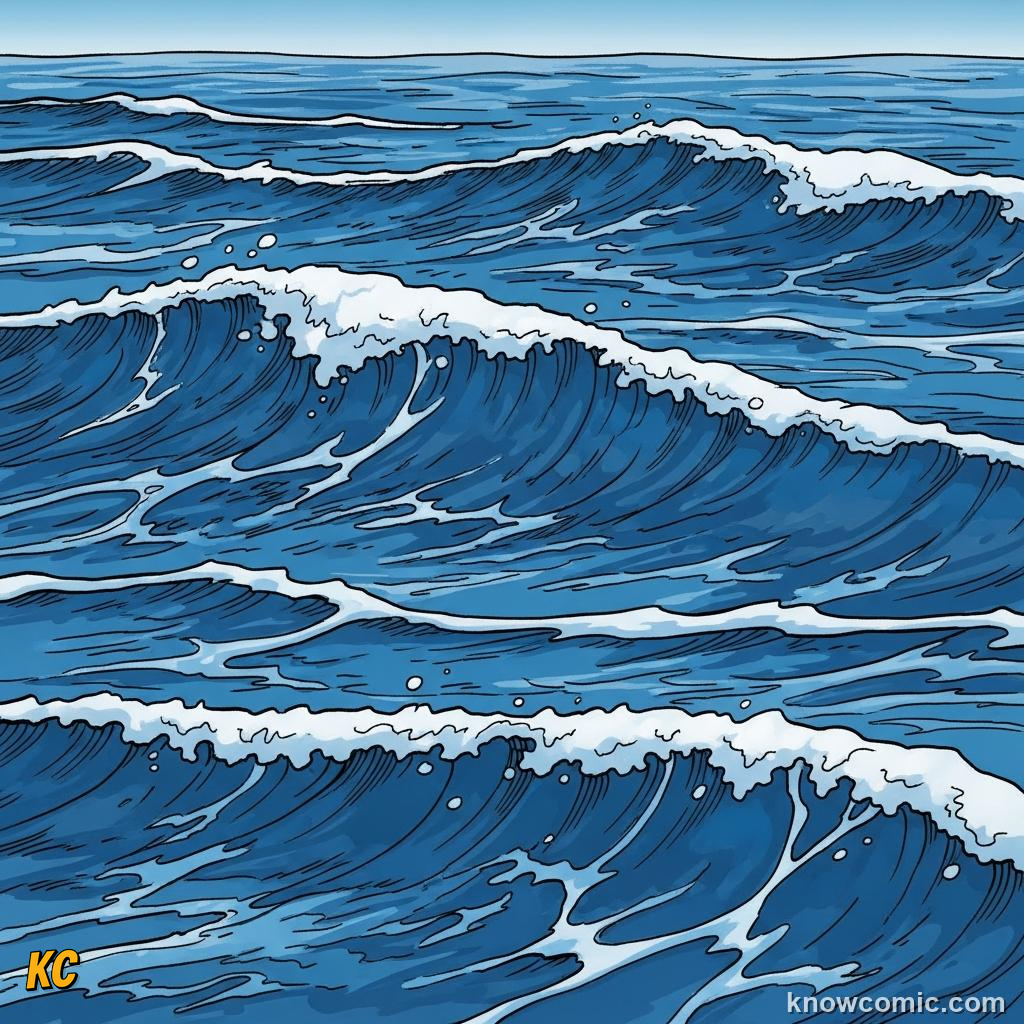
Water's high heat capacity + mixing: temperature swings softer on coasts
SURFACE TYPE
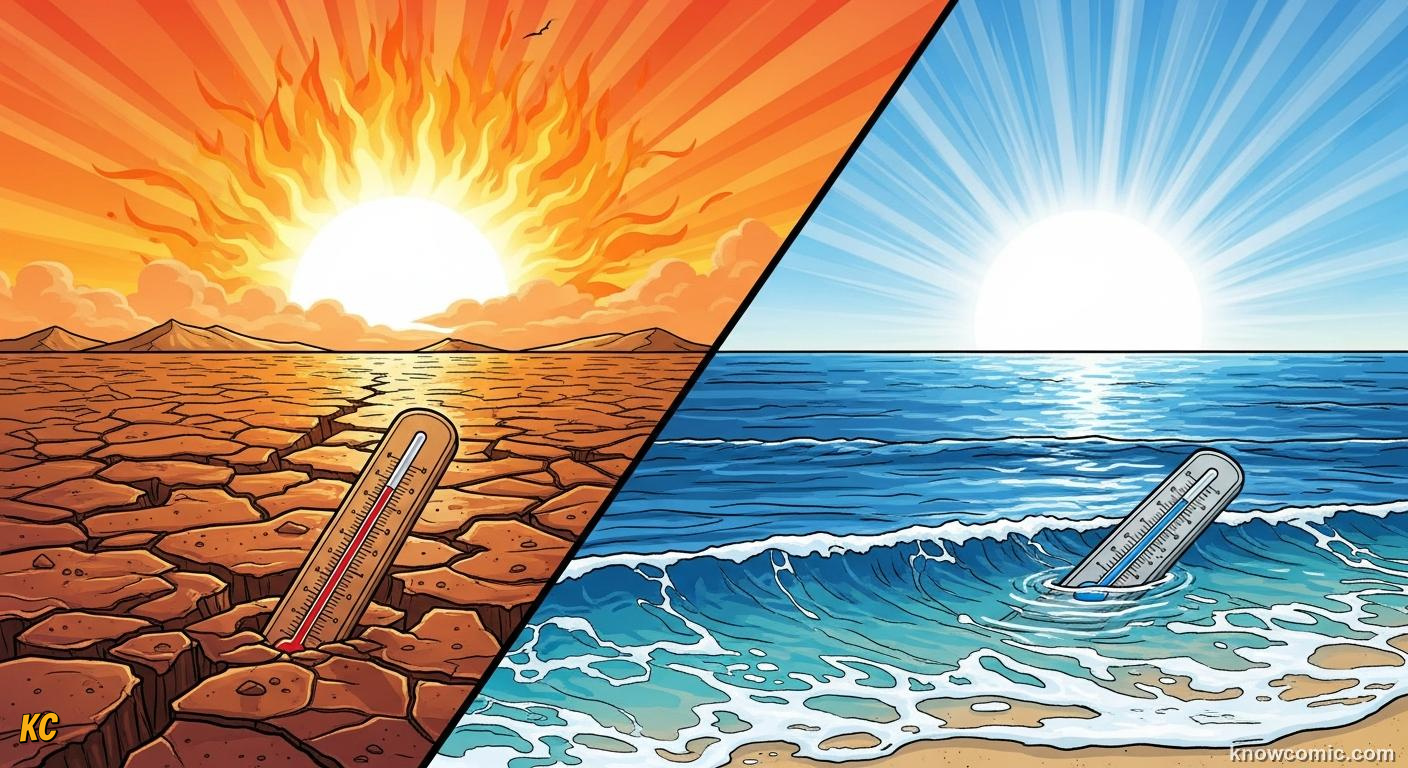
DIFFERENT SKINS, DIFFERENT THERMOSTATS
Land (and rock, tarmac) can heat and cool quickly near the surface in sunshine and clear night — think scorching playground equipment at noon, then rapid chill. Ocean stores and stirs huge amounts of energy — daily and seasonal bumps are smoother in many places. Forests, crops, and soil moisture also change how the surface evaporates vs heats — a preview of the water-vapour link in Topic 8: Humidity. Dark asphalt and light snow differ in albedo (reflectivity) — dark absorbs more of the same sunshine, so it warms the surface faster in daytime.
SWAP!
PAGE 4 OF 5, CITIES, HEIGHT, AND DAILY UP-AND-DOWN
PATCHWORK
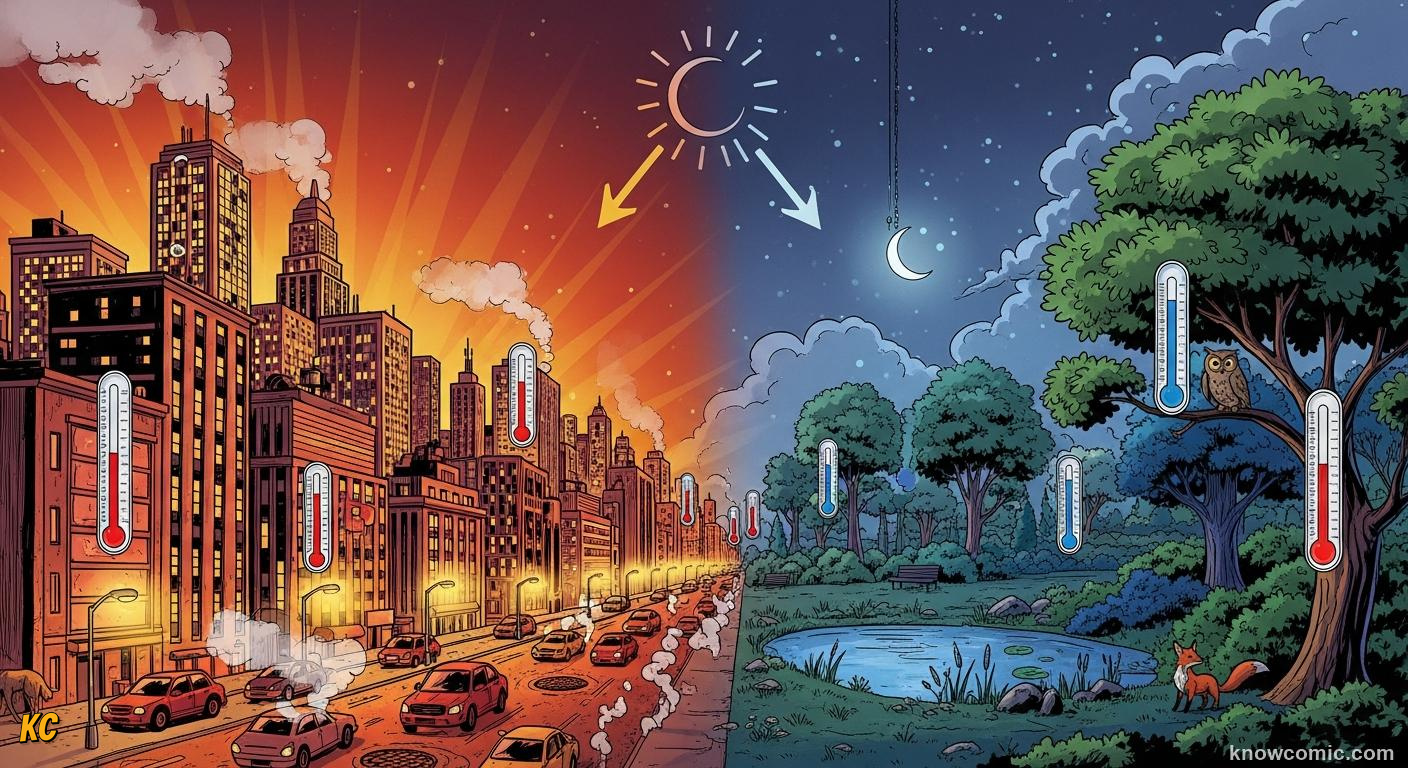
URBAN HEAT, MOUNTAIN CHILL, AND THE DIURNAL CYCLE
A concrete city is often a few degrees warmer at night than fields nearby — the urban heat island: less vegetation, more heat storage, cars and engines. Go up a mountain in the troposphere and the air is usually cooler (even in sunshine) — less atmosphere above, different pressure — see Topic 5. Each day, the surface heats in sun and cools in clear night by radiation — that diurnal (day–night) swing is big in dry deserts and smaller with thick cloud and humid air (evaporation buffers). Not all "hot" feels the same — that is the door to humidity and heat index next.
DAY ↔ NIGHT!
CITY
Cities: roughness + waste heat = often warmer nights than open country
PEAK
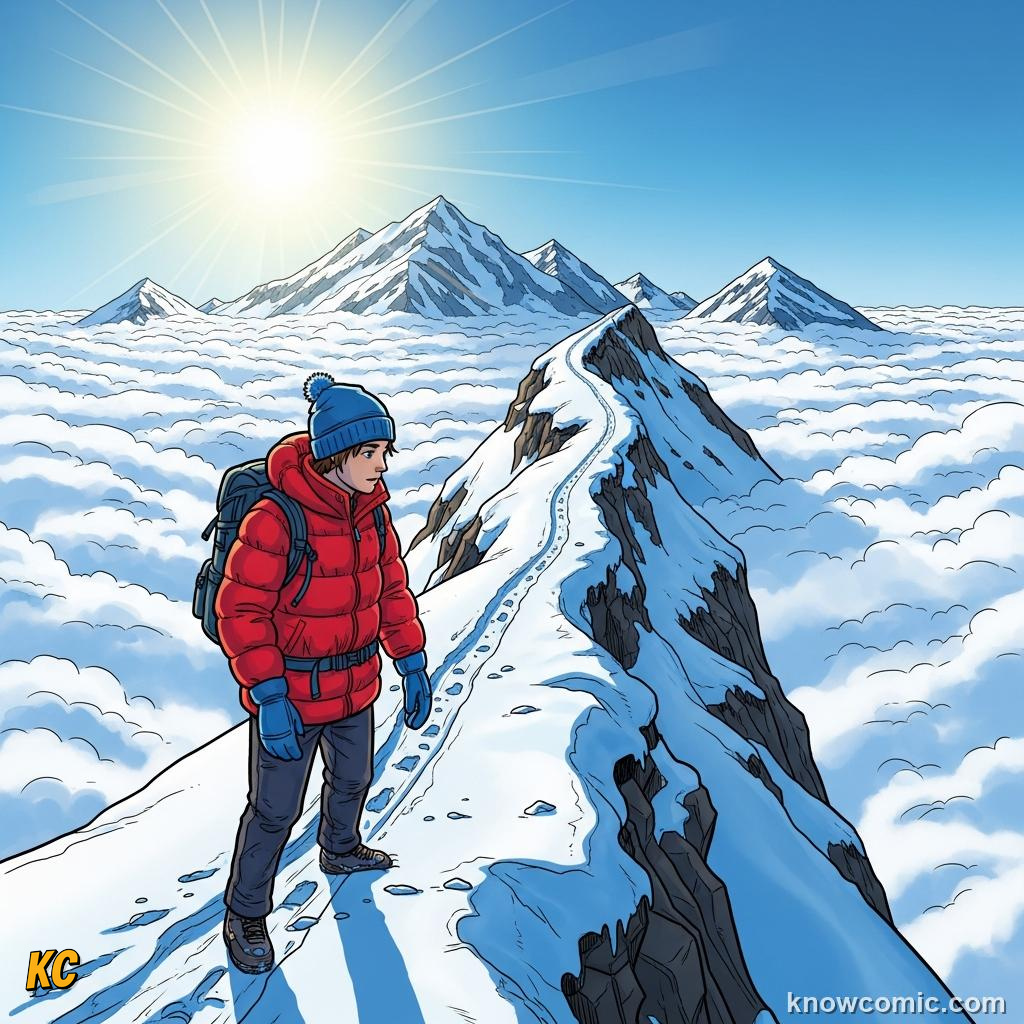
High summit: cold air + thin O₂ = jacket even when the Sun is strong
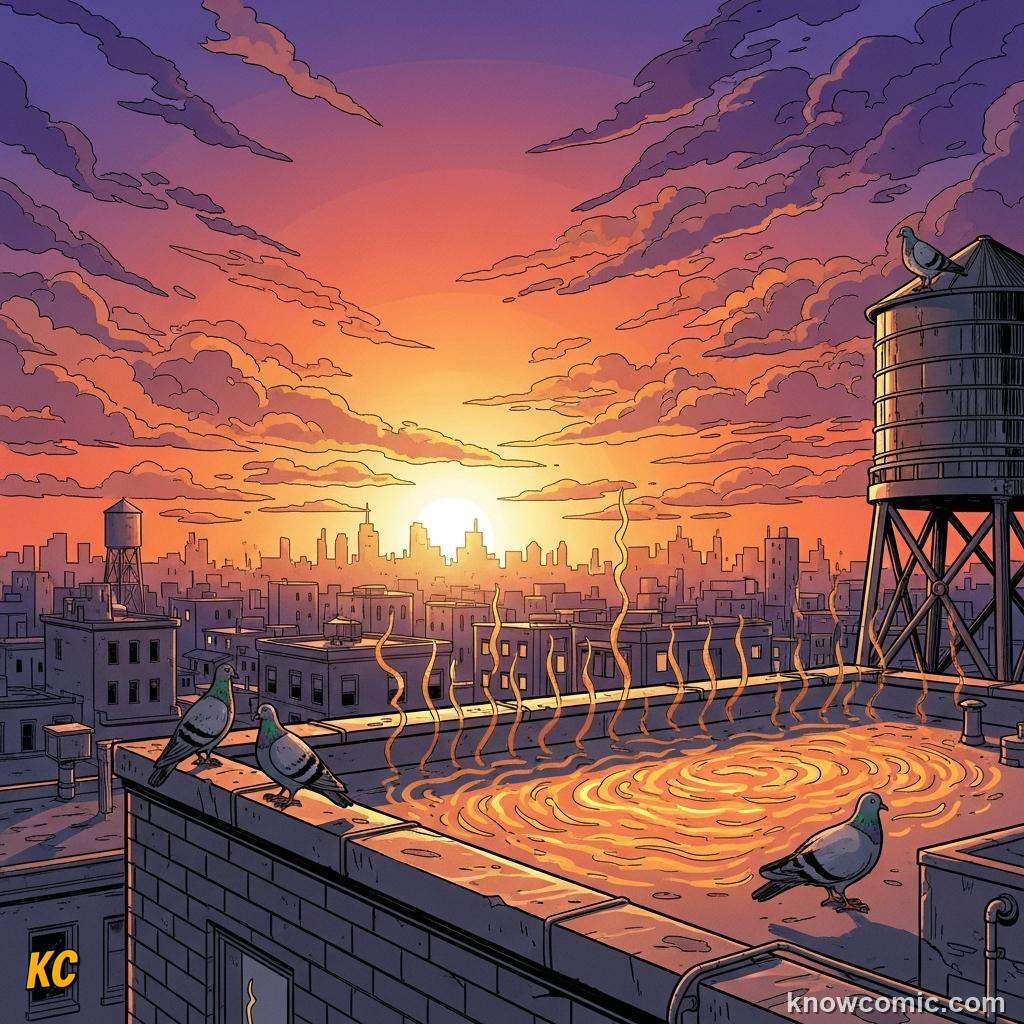
CLOCK

Daily max often lags a bit after noon — the ground is still a net gainer of heat for a while
PAGE 5 OF 5, DEGREES, THERMOMETERS, AND THE NEXT LAYER (HUMIDITY)
READ THE SCALE
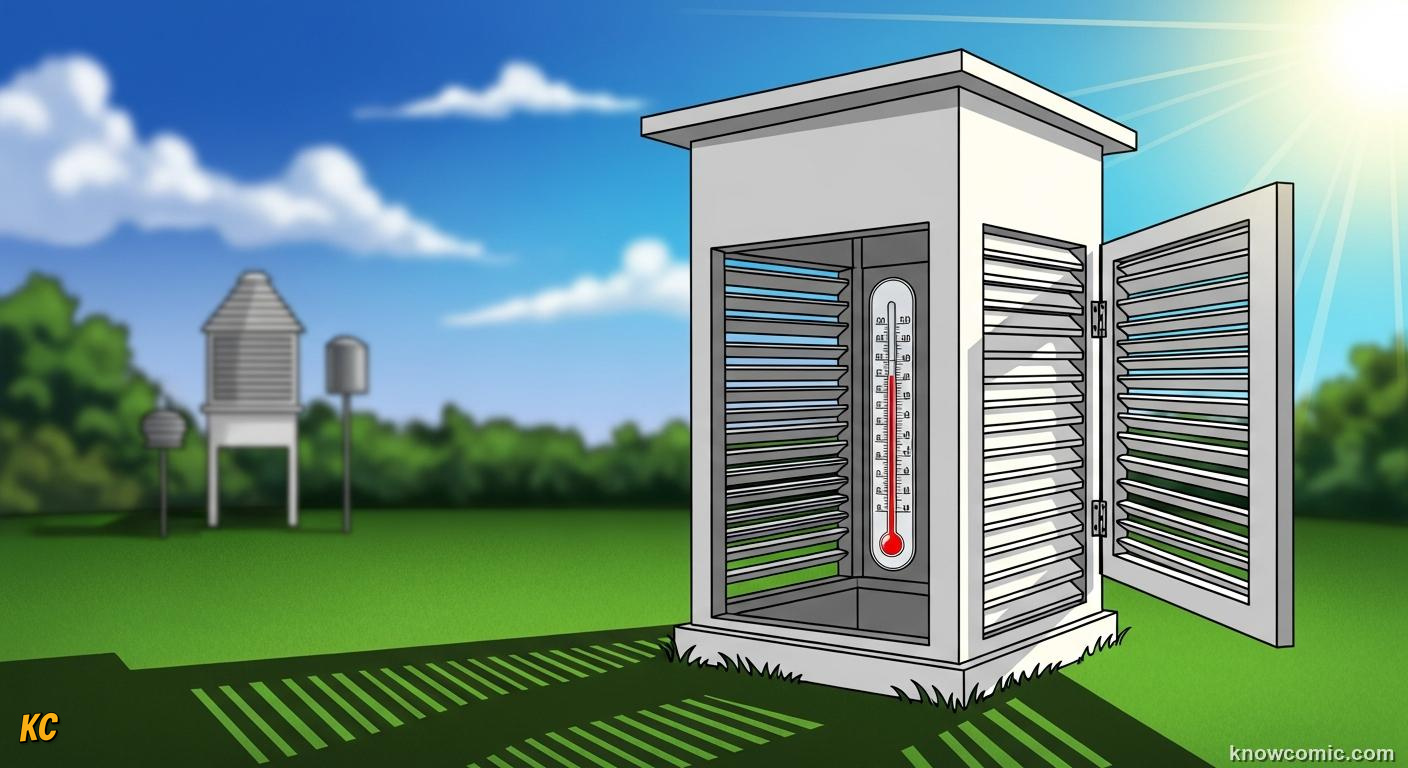
MEASURE THE AIR, NOT "THE TEMPERATURE OF THE SUN"
A thermometer in a Stevenson screen (white louvred box) gives air temperature in the shade in a standard way. Celsius and Fahrenheit are two label systems for the same wiggly molecules — boiling water is 100°C and 212°F at standard pressure; freezing is 0°C and 32°F. Surface skin temperature of sand or metal in full sun can be far above the air in the box — that is a different number. Topic 8 (Humidity) will ask: with the same air temperature, why does 35°C in humid Mumbai feel so different from 35°C in dry Phoenix? The Sun started this chain — water in the air is the next chapter.
🧠 TRY IT
Compare shaded vs sun-baked railings — same day, two "feels," one air temperature story.
°C!
STEVENSON
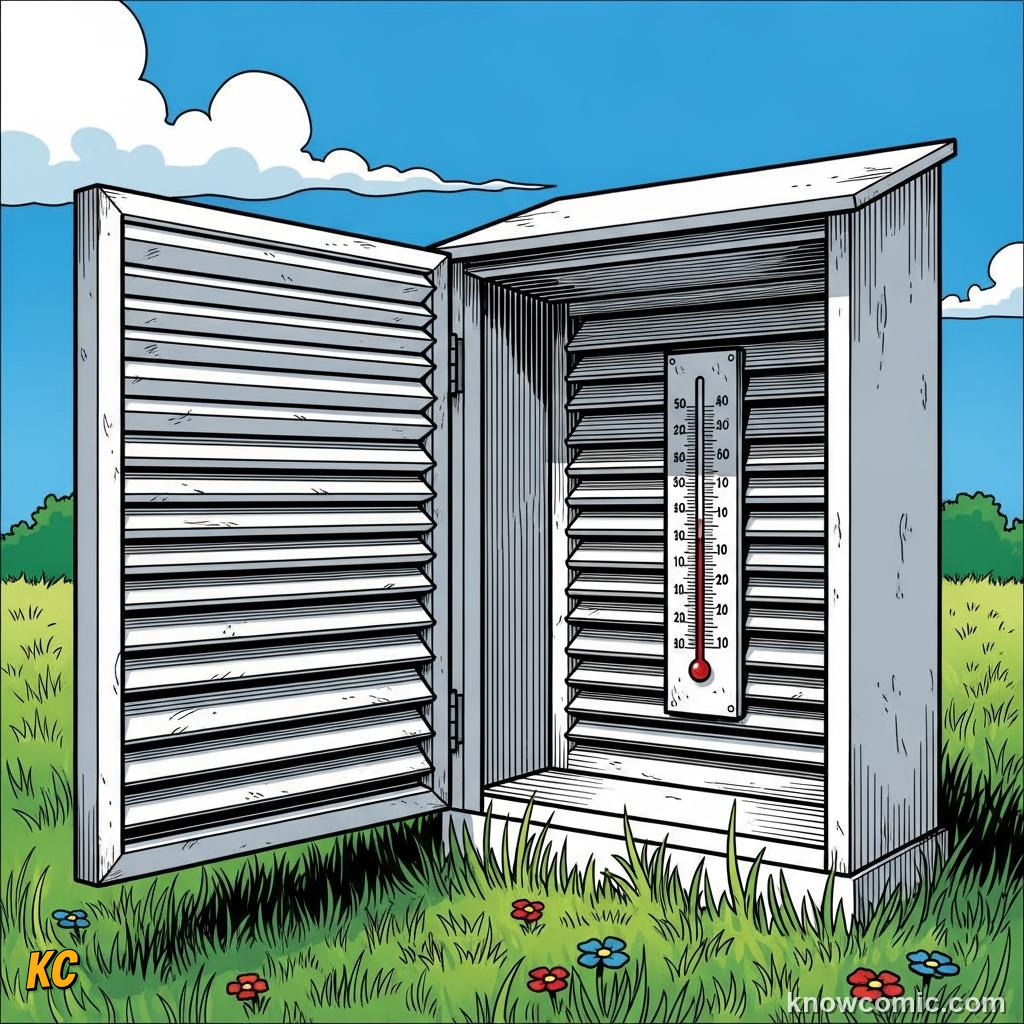
White box = compare apples to apples between weather stations
HUM
📌 KEY FACTS
Sun = main driver · Tropics get more per area in big average · Land vs sea: different speed of change
☀ Energy · 🌡 °C · 💧 Then humidity
🧠 QUIZ TIME!
TEMPERATURE: SOLAR ENERGY AND HEAT · 5 QUESTIONS
QUESTION 01
The main ongoing energy input that warms Earth's surface and drives most weather, in a big-picture way, is —
QUESTION 02
A simple, broad-brush reason the equatorial regions are warmer than polar regions, on an annual average, is that —
QUESTION 03
On a clear, sunny summer afternoon, a very common land–sea story is: —
QUESTION 04
In weather reports, the number called "air temperature" in a standard weather station (usually) measures —
QUESTION 05
A dark asphalt car park in bright sunshine often feels more scorching to bare skin than a light-coloured car park, partly because —
0/5
LOADING...