⚡ SPEED: HOW FAST ARE THINGS?
PAGE 1 OF 5 · THE BIG IDEA: HOW FAST?
TWO INGREDIENTS

SPEED = HOW QUICK THE TRIP
Speed answers: “If I go for a while, how much path do I pack per tick of the clock?” In clean symbols you often see v = d / t for a steady story: d is the distance you moved along the path, t is the time it took, and v is the speed (size only here). If you stop to tie your shoe, a single number may still be a useful average over the whole trip, even if you were not a robot the whole time.
Little-kid line: “Fast = lots of playground gobbled in a small snack of minutes.”
Little-kid line: “Fast = lots of playground gobbled in a small snack of minutes.”
AVERAGE VS INSTANT (FIRST PASS)
Average speed = total distance ÷ total time (same path, whole trip). A car’s needle jumping around is closer to an instant read — we unpack that in later adventures. Units: if d is in metres and t in seconds, v is in metres per second (m/s). Kilometres per hour (km/h) is the road friend in many countries.
ZOOM!
BIKE BATTLE

🚴 The same 100 m in less time = faster. Time is the fair tie‑breaker for “who is quicker.”
RAIL PACE
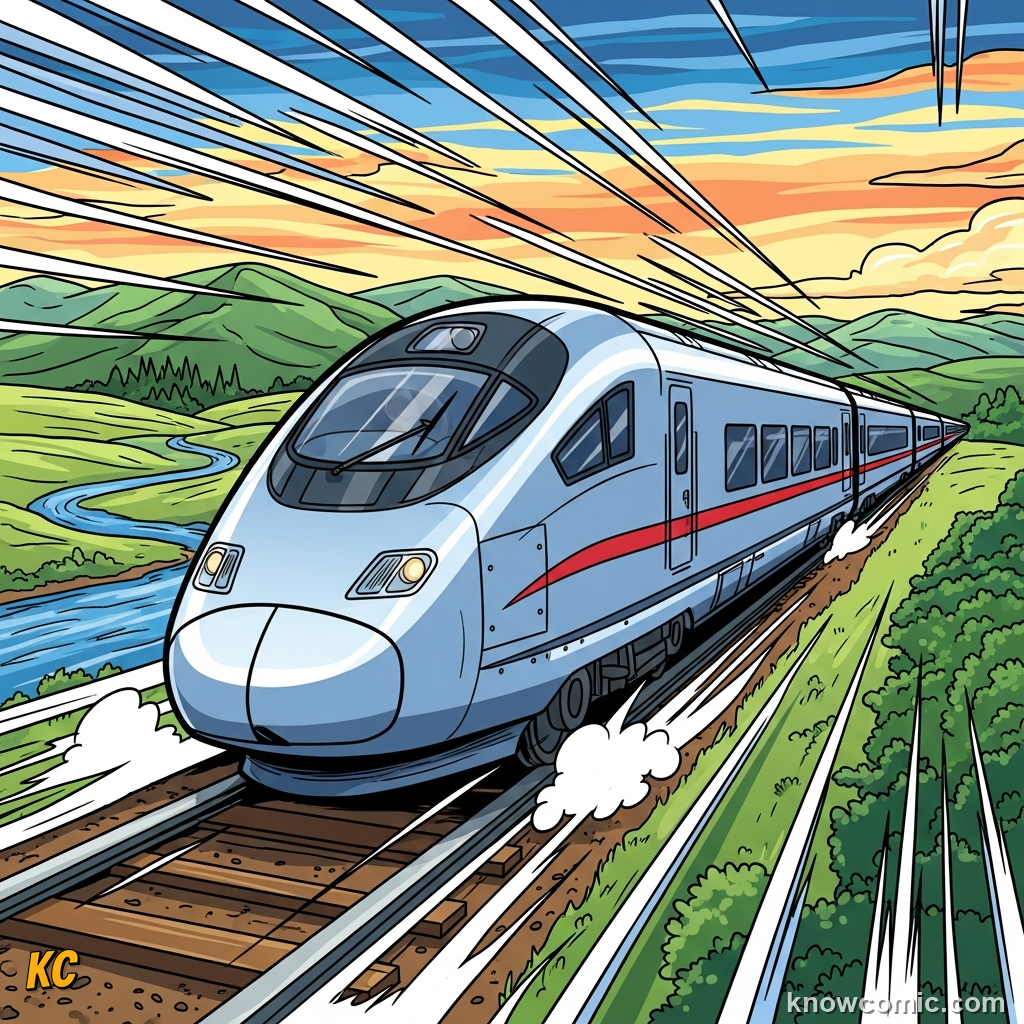
🚄 Long trains chew huge distance per hour — a different scale than a sprint, same idea.
PAGE 2 OF 5 · COMPARE THE WORLD
FAST CATS, FAST CARS
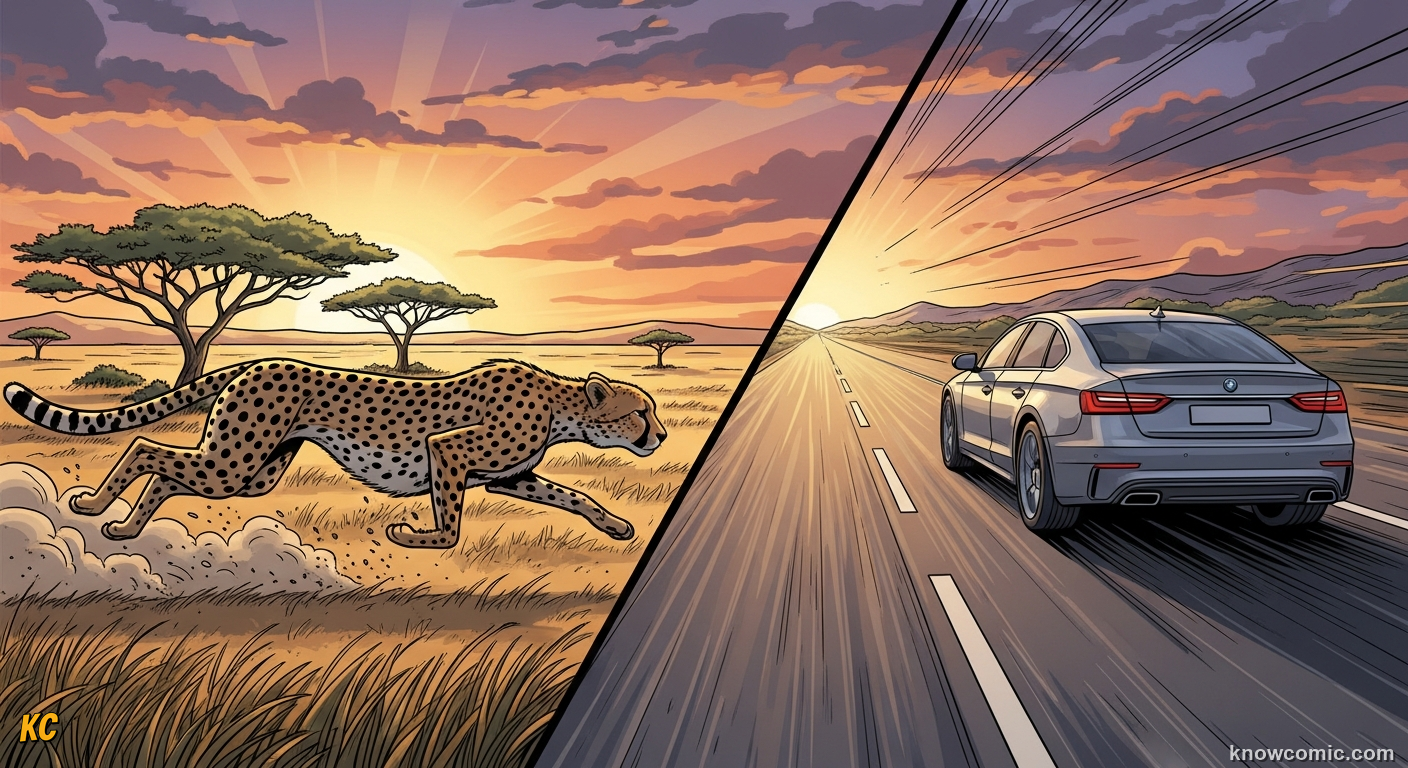
SAME MATH, DIFFERENT ANIMALS
A cheetah in a full sprint, a family car on a long straight — both are “how fast in how much time” stories. 120 km/h (about) is a famous round cheetah number people throw around, and cars can match or beat that in safe legal places. You only win a fair compare if you are careful about the same units and what was measured (a short burst or a long cruise).
UNIT TRICK (HANDY)
To turn m/s into a rough km/h, multiply by about 3.6 (and divide the other way). Your teacher will show why with unit fractions.
WHOA!
SNAIL

🐌 Tiny distance per minute — a sweet low speed for calm science.
SPRINT

🏁 Short track + stopwatch = great lab for a first v guess.
ROAD

🏎️ Big km/h on the open road, but rules and safety are part of the real story.
PAGE 3 OF 5 · MEASURE WELL, TALK FAIR
JET TRAIL

✈️ Planes and rockets are not the same speed story as a bike, but the math shape of “distance per time” still fits.
STAY HONEST
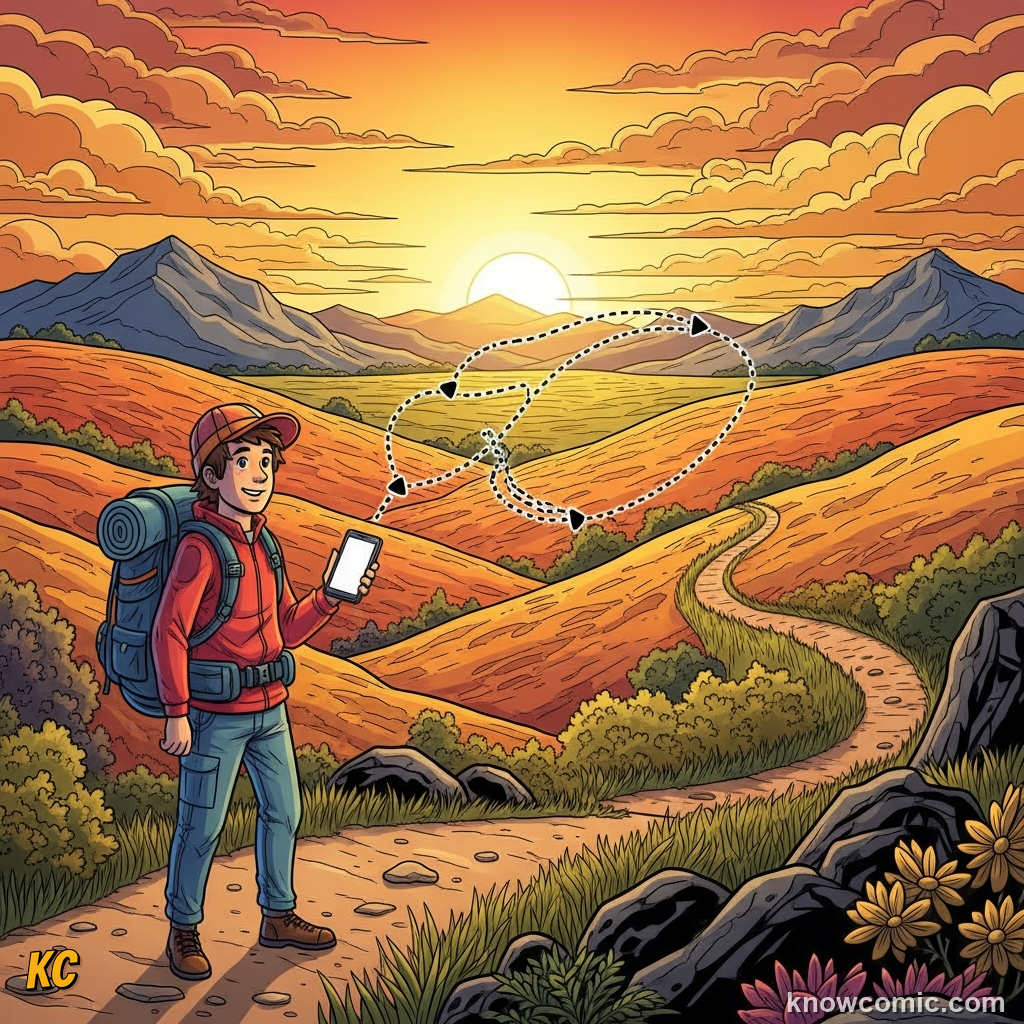
📱 GPS can estimate speed from small hops in position — still distance over time at heart, with extra tech around it.
TAPE + TIMER

MEASURE BOTH SIDES
A wobbly ruler and a forgotten start time make a wobbly v. Metre sticks, trundle wheels, phone timers, and race photo‑finish cameras are all in service of a clean d and a clean t. Write your units in homework — teachers love that, and future you will too.
TICK!
PAGE 4 OF 5 · BIG NUMBERS, CLEAR HEAD
LIGHT: THE ULTIMATE HIGH SCORE (IN A VACUUM)
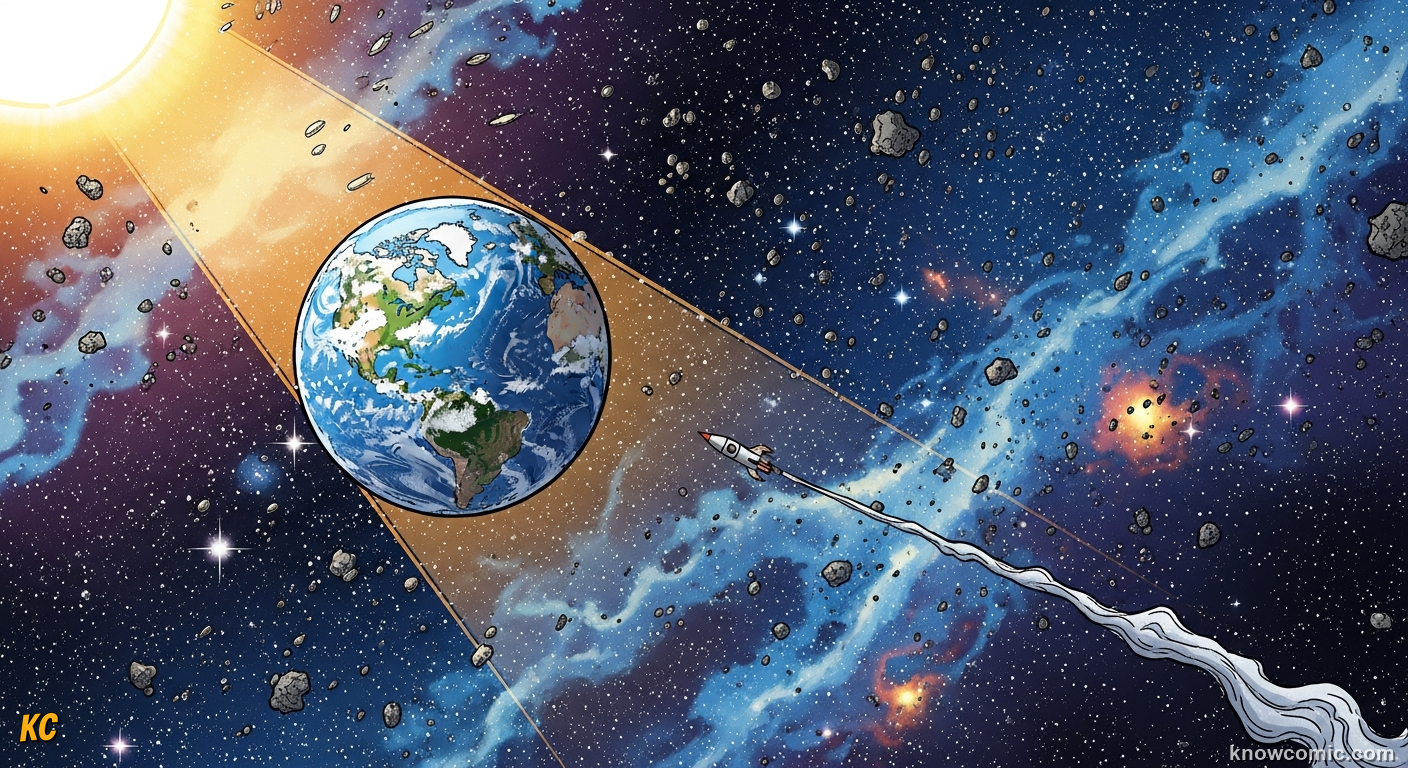
ABOUT 300,000 KILOMETRES EVERY SECOND
Visible light in empty space (and all massless “stuff” in that family) has a cosmic speed cap called c — a famous number near 3 × 10⁸ m/s in the books. Nothing with mass is meant to reach that in simple school relativity, but understanding the scale helps: your bike and a sunbeam are not a fair footrace. Sound in air is already “only” a few hundred m/s — fast for us, slow for light.
WOW!
AVERAGE

“Whole trip distance ÷ whole trip time” is a fair story even if you stopped for juice.”
SYMBOLS

v = d / t (steady or average read). Keep d, t, and v in matching units, or convert with care.
NOT YET
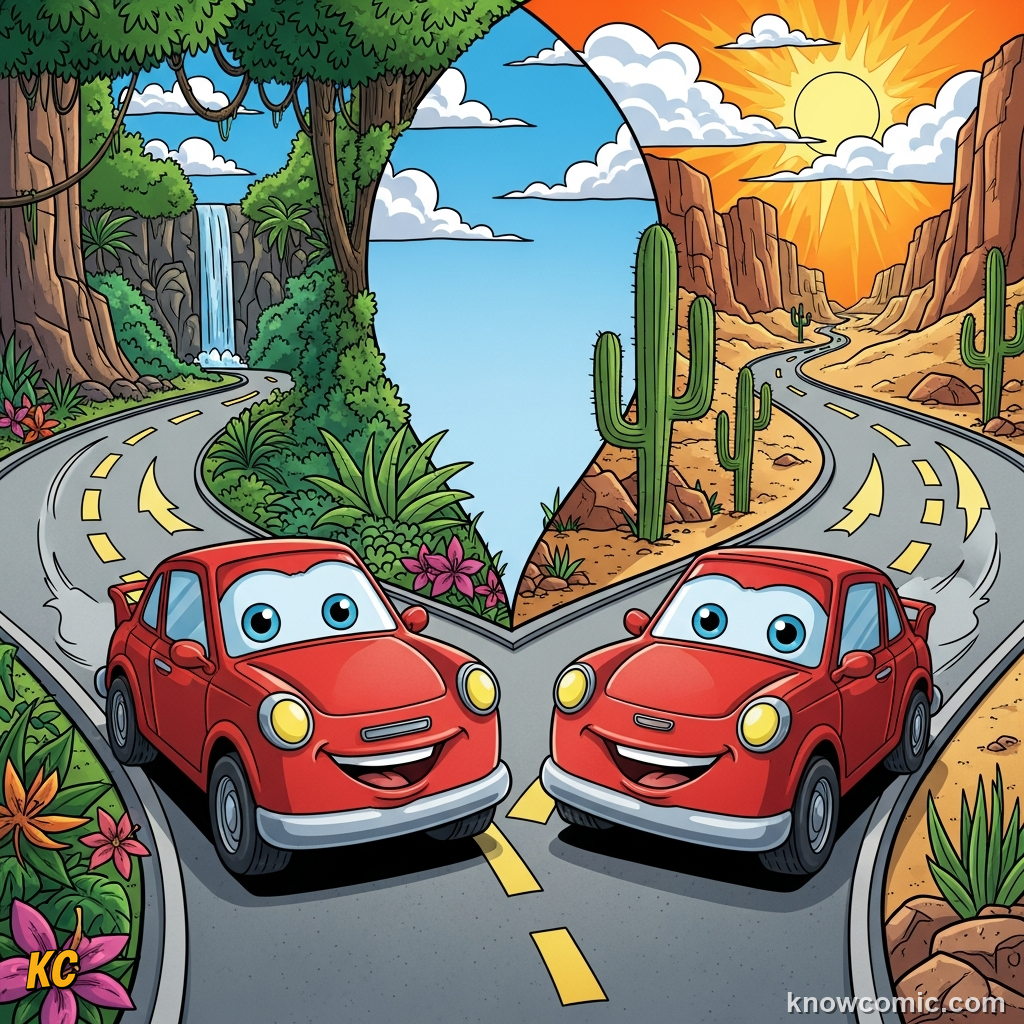
Velocity is speed plus direction as a vector — a later page will steer there. Today: the size of how fast.
PAGE 5 OF 5 · TAKE IT WITH YOU
FROM SNAILS TO SUNBEAMS
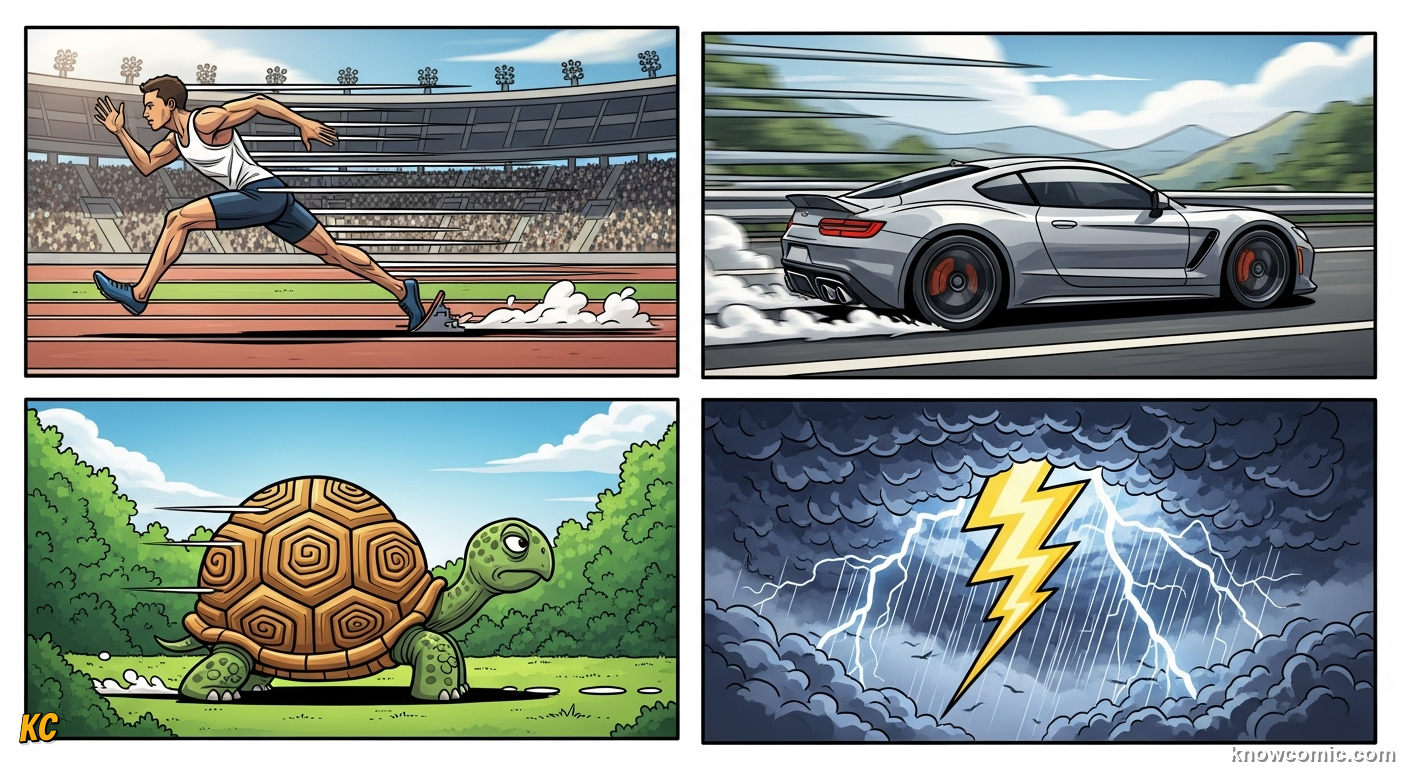
ONE FRACTION, MANY LIVES
Whether you are timing a snack run, a bus route, or trying to feel how wild the number for light is, you are really playing with the same distance per time idea, with a calm measure habit and a wonder for scale. Next on the road: simple machines (how ramps and levers change the force side of a job) in Topic 8 — different comic, same love of clear thinking.
GO!
REMEMBER
🔑 KEY FACTS
v = d / t (steady or average) · m/s, km/h · Light in vacuum ≈ 3×10⁸ m/s (enormous) · Compare speeds with the same units · Velocity adds direction (later topic).
READ ALOUD
“Fast is not a feeling for a test — it is a how far in a how long. Bikes, trains, and beams of light all sit on the same kind of see‑saw, with very different numbers. Write your units, and the universe gets less confusing.”
High five! ✋
High five! ✋
🧠 QUIZ TIME!
SPEED · 5 QUESTIONS
QUESTION 01
In a straight, steady run, the usual school link between speed v, distance d, and time t is —
QUESTION 02
If distance is in metres and time in seconds, the natural SI unit for speed is —
QUESTION 03
A trip is 120 km in 2 h of driving (steady story). The average speed is —
QUESTION 04
The speed of light in vacuum is a famous huge number — in rough round terms, which is the usual order?
QUESTION 05
A rough trick: multiply a speed in m/s by 3.6 to get a close value in km/h. So 10 m/s is about —
0/5
LOADING...