🐠 CORAL REEFS
PAGE 1 OF 5, CITIES BUILT BY TINY ANIMALS
POLYPS
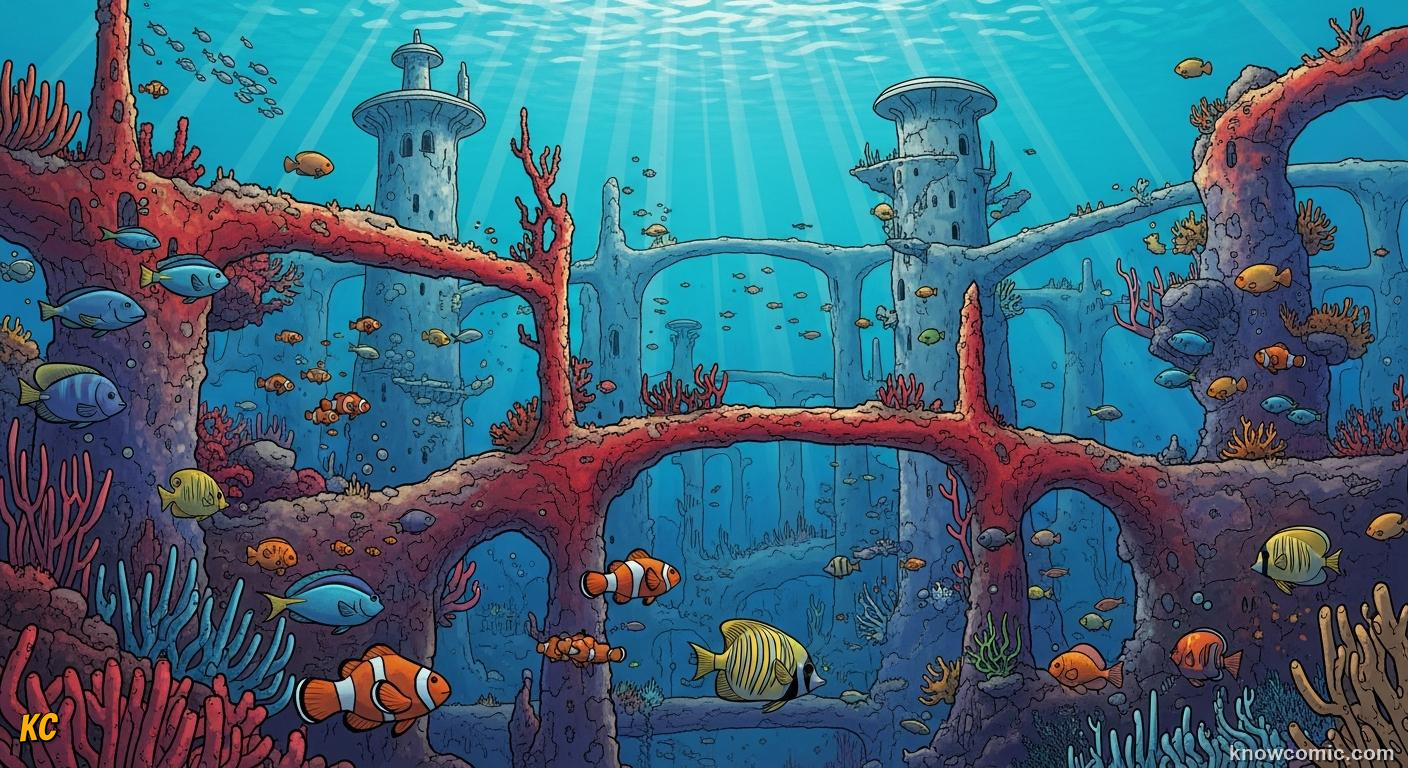
LIMESTONE SKYSCRAPERS UNDERWAVES
Each coral polyp is a soft-bodied cousin of jellyfish and sea anemones, it builds a cup of calcium carbonate around itself. Colonies stack branch on branch for centuries, cemented by algae and sponges, until whole islands rise from fringing rims. Warm, clear, sunlit water lets chemistry run fast enough to outpace erosion from storms and hungry grazers.
⚡ DID YOU KNOW?
The Great Barrier Reef is visible from space, yet each builder is only millimetres wide.
REEF!
SUN
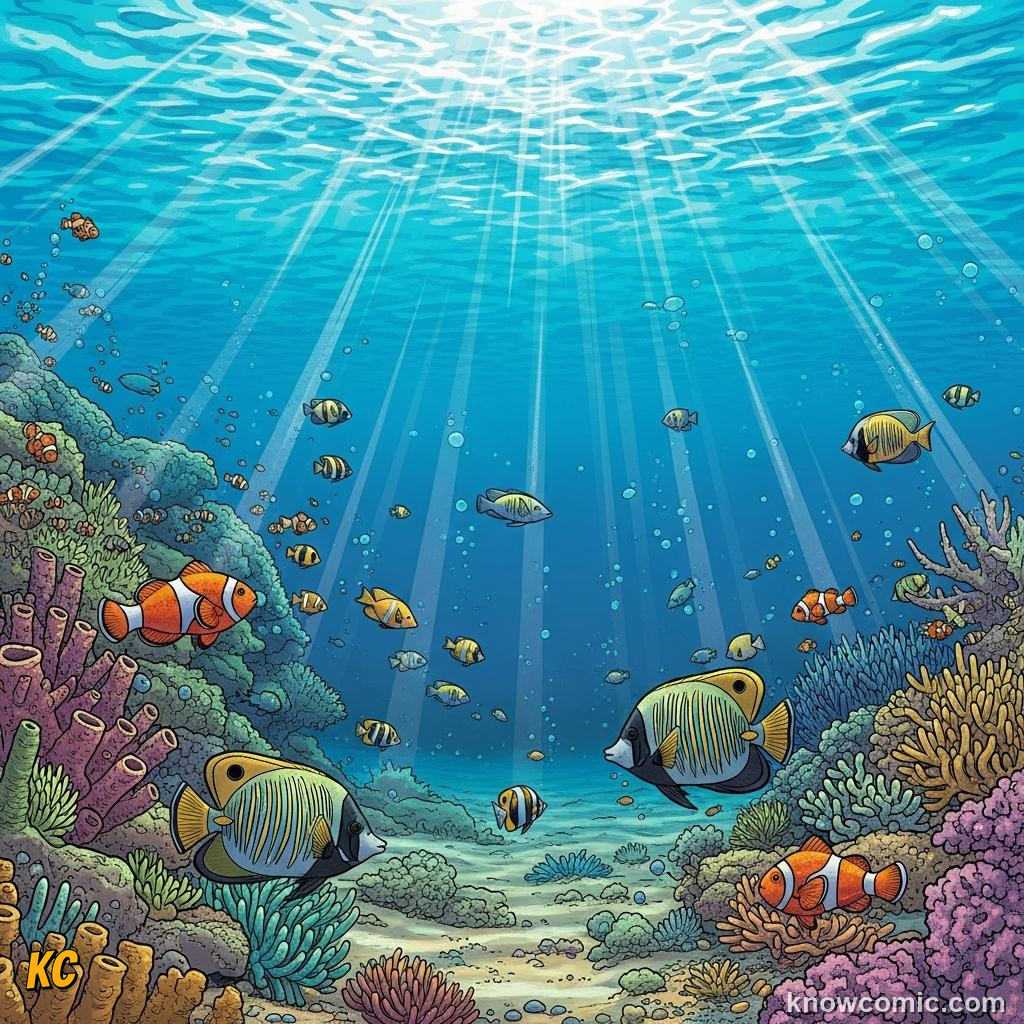
☀️ Shallow < ~60 m typical
🌡️ Warm seas speed growth
🌡️ Warm seas speed growth
SHELL
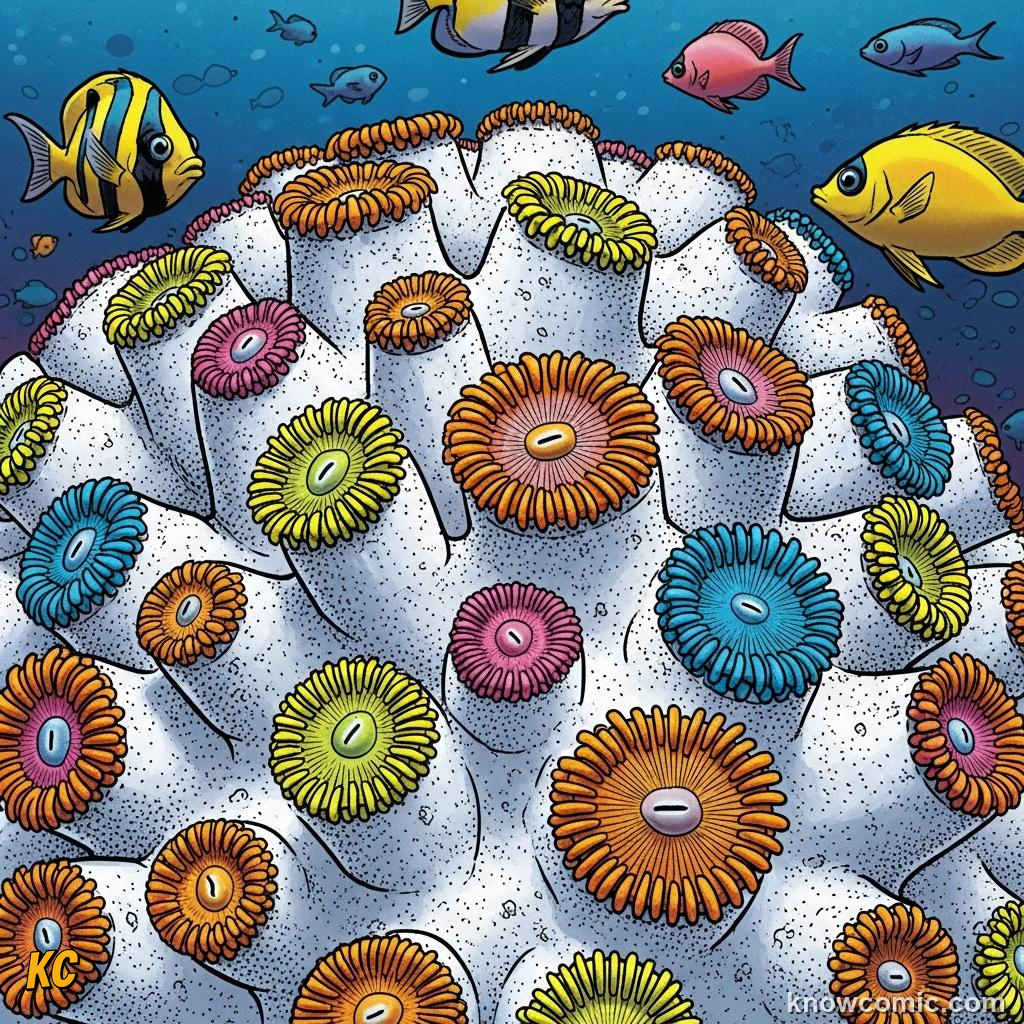
🧱 CaCO₃ skeleton secreted
🪸 Branching shapes trap fish
🪸 Branching shapes trap fish
PAGE 2 OF 5, THE SYMBIOSIS ENGINE
ZOOX
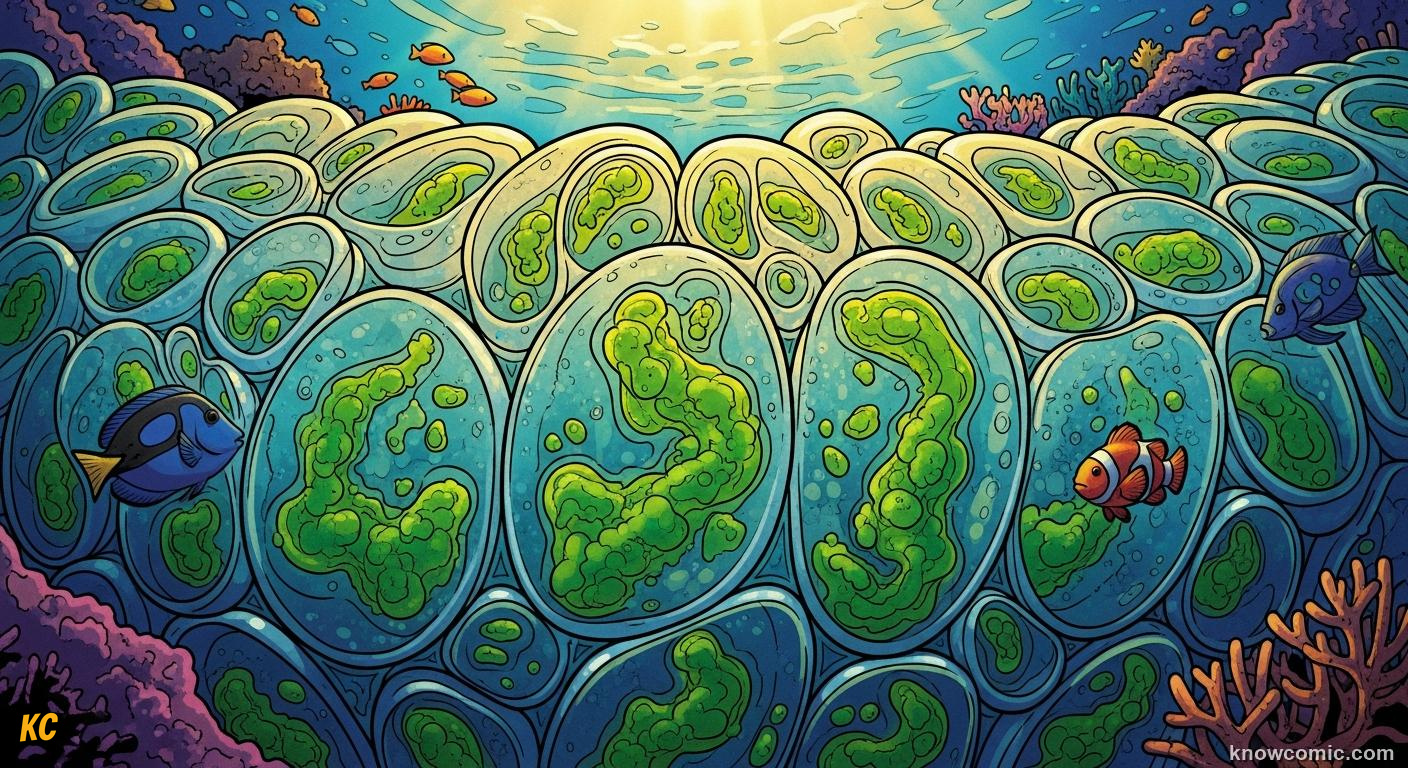
TINY ALGAE RENT ROOM INSIDE CORAL TISSUE
Zooxanthellae are dinoflagellates that photosynthesise inside the polyp, trading sugars and oxygen for shelter and recycled nutrients. That partnership powers most tropical reef productivity; break the lease through heat or murky water and the colony starves while still alive, the first step toward bleaching.
SHARE!
FOOD
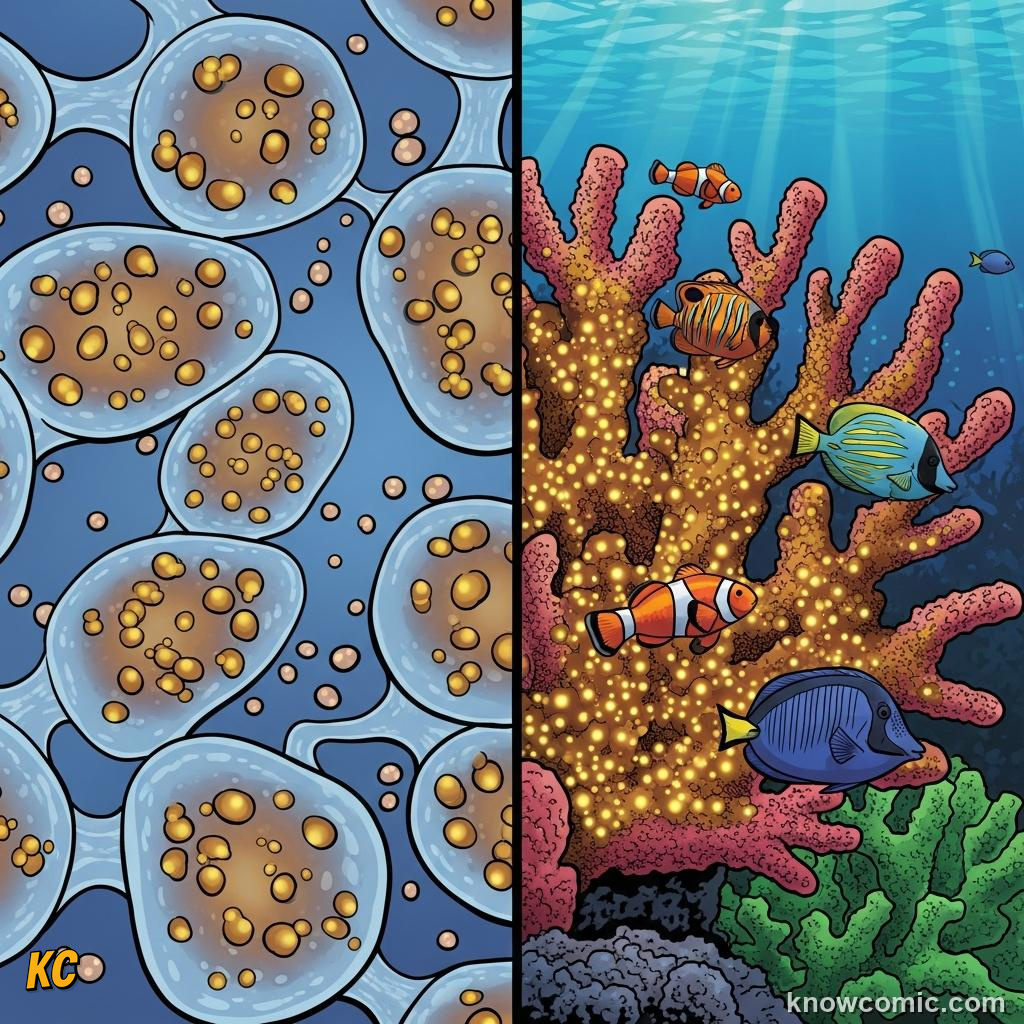
🍬 Up to ~90% energy from algae
🦐 Polyps also catch plankton
🦐 Polyps also catch plankton
CLEAR
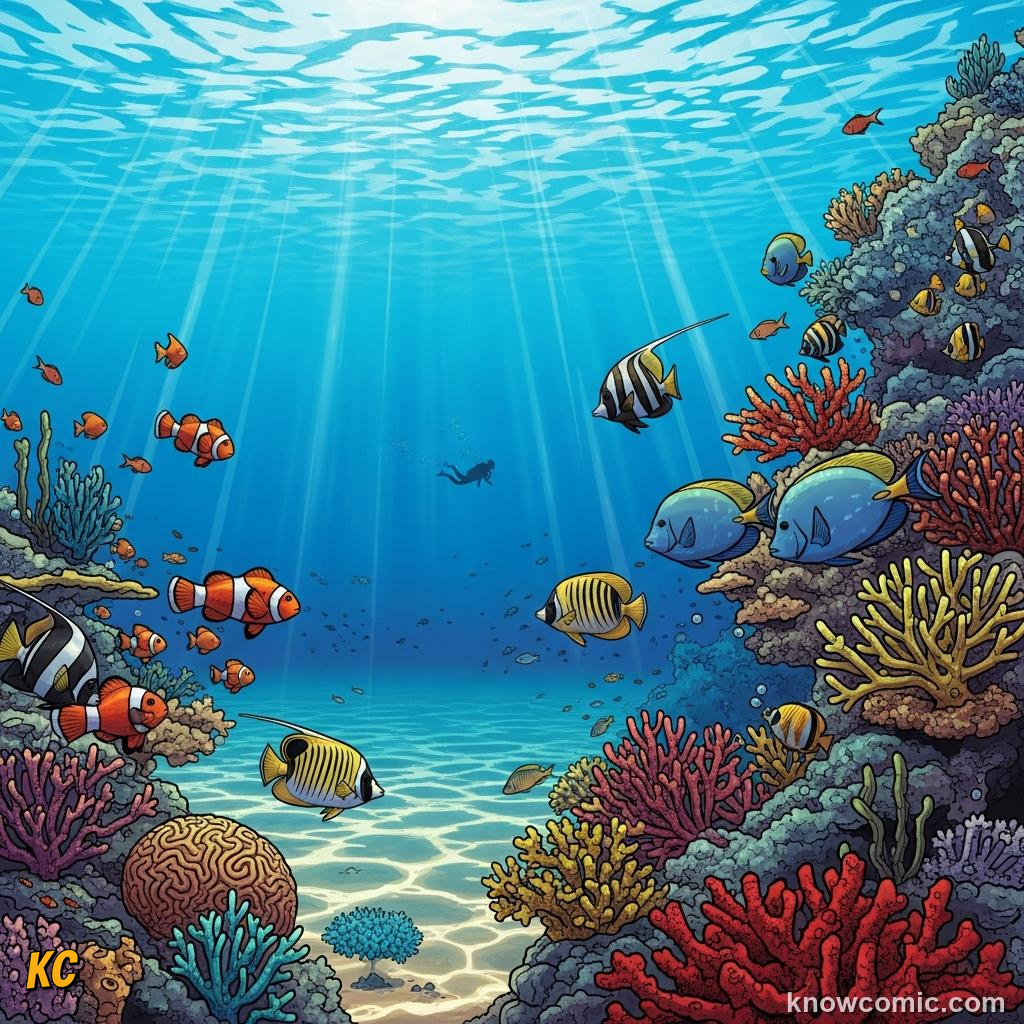
💡 Light must reach tissue
🌊 Sediment smothers if stirred
🌊 Sediment smothers if stirred
pH
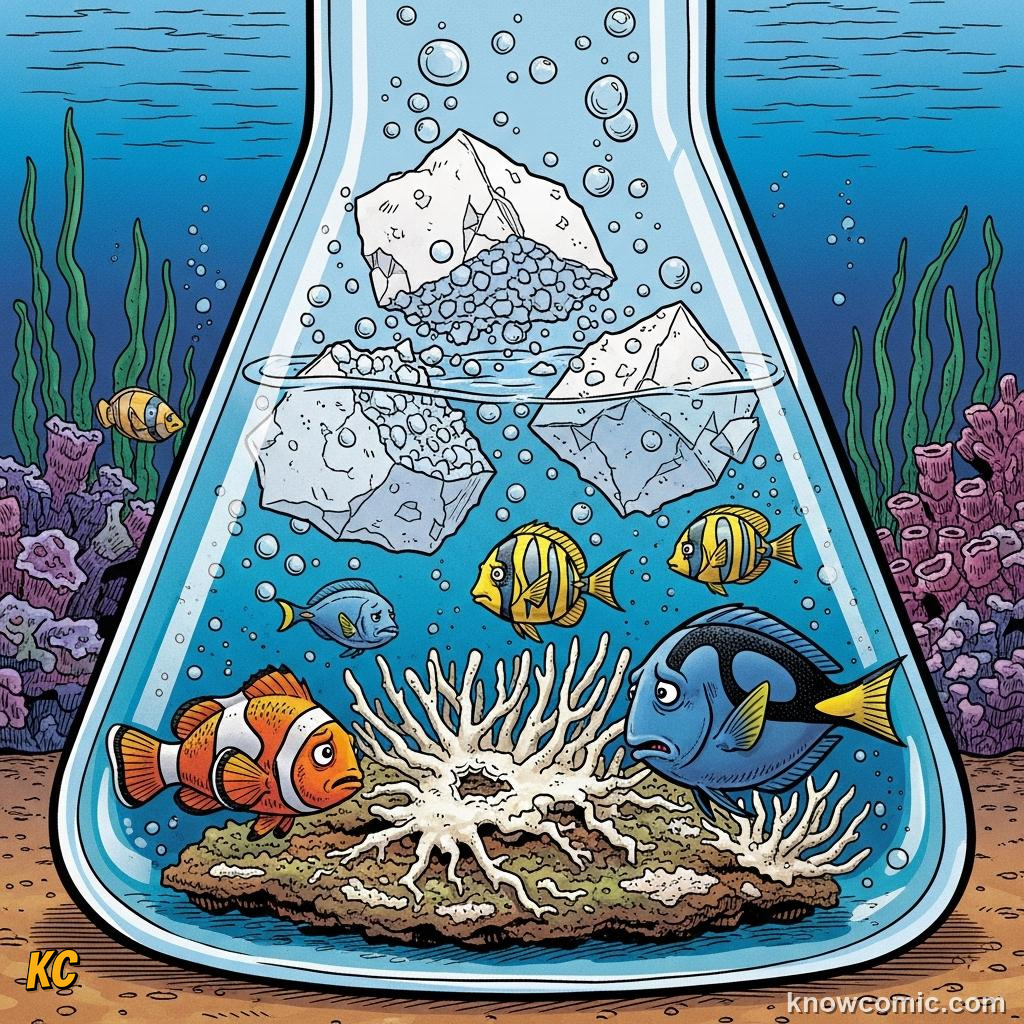
⚗️ Acidic seas weaken skeletons
📉 Slower growth + more erosion
📉 Slower growth + more erosion
PAGE 3 OF 5, RAINFORESTS OF THE SEA
DIVERSITY
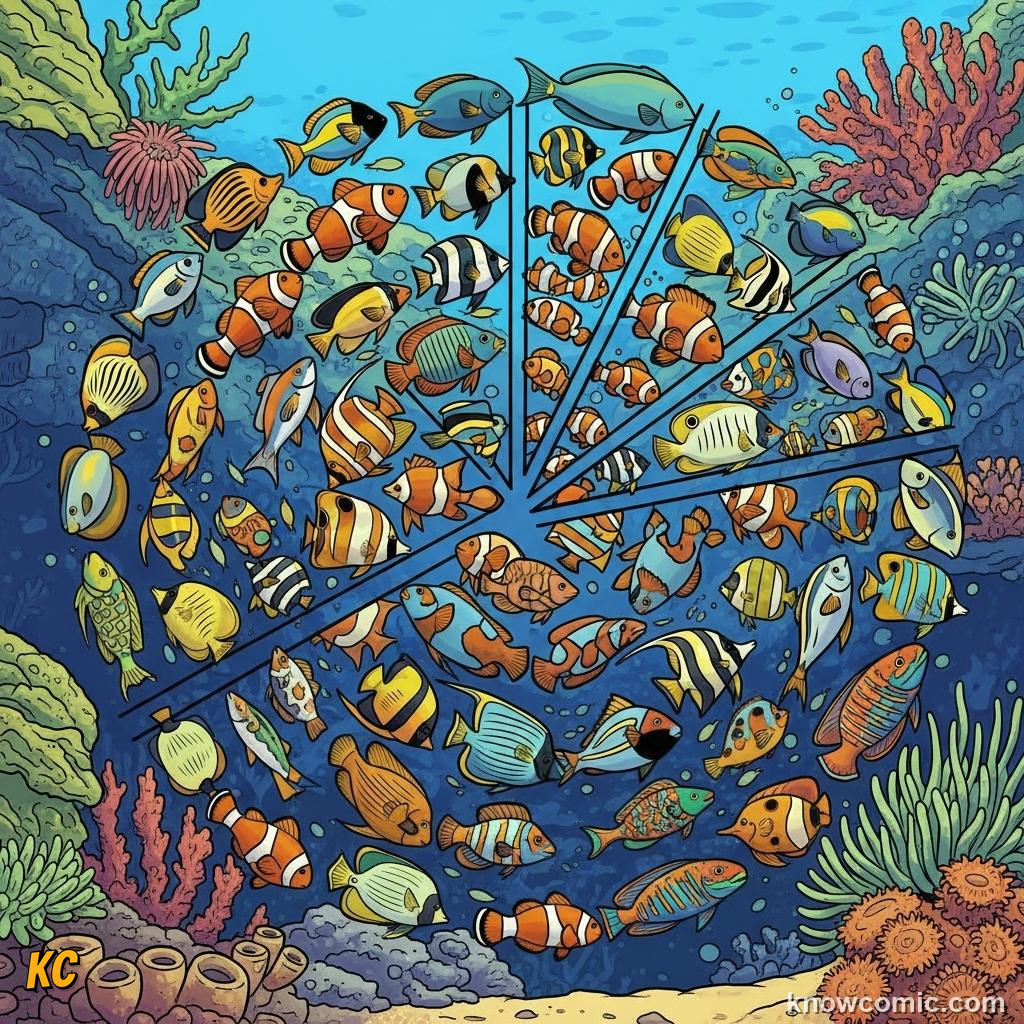
🐠 ~25% marine species on ~1% seafloor
🦎 Cryptic colour + mimicry
🦎 Cryptic colour + mimicry
CLEAN
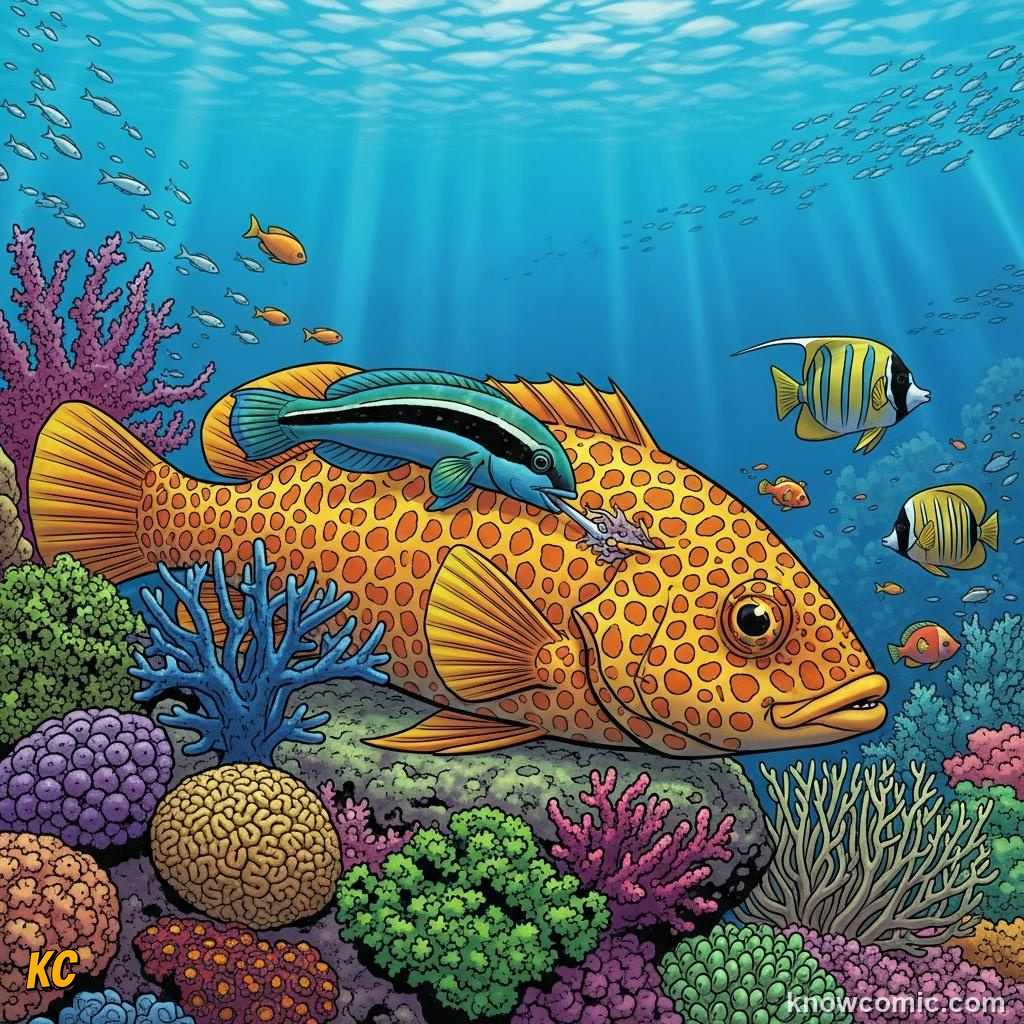
🧹 Cleaner wrasse stations
🦀 Crabs prune algae battles
🦀 Crabs prune algae battles
WEB
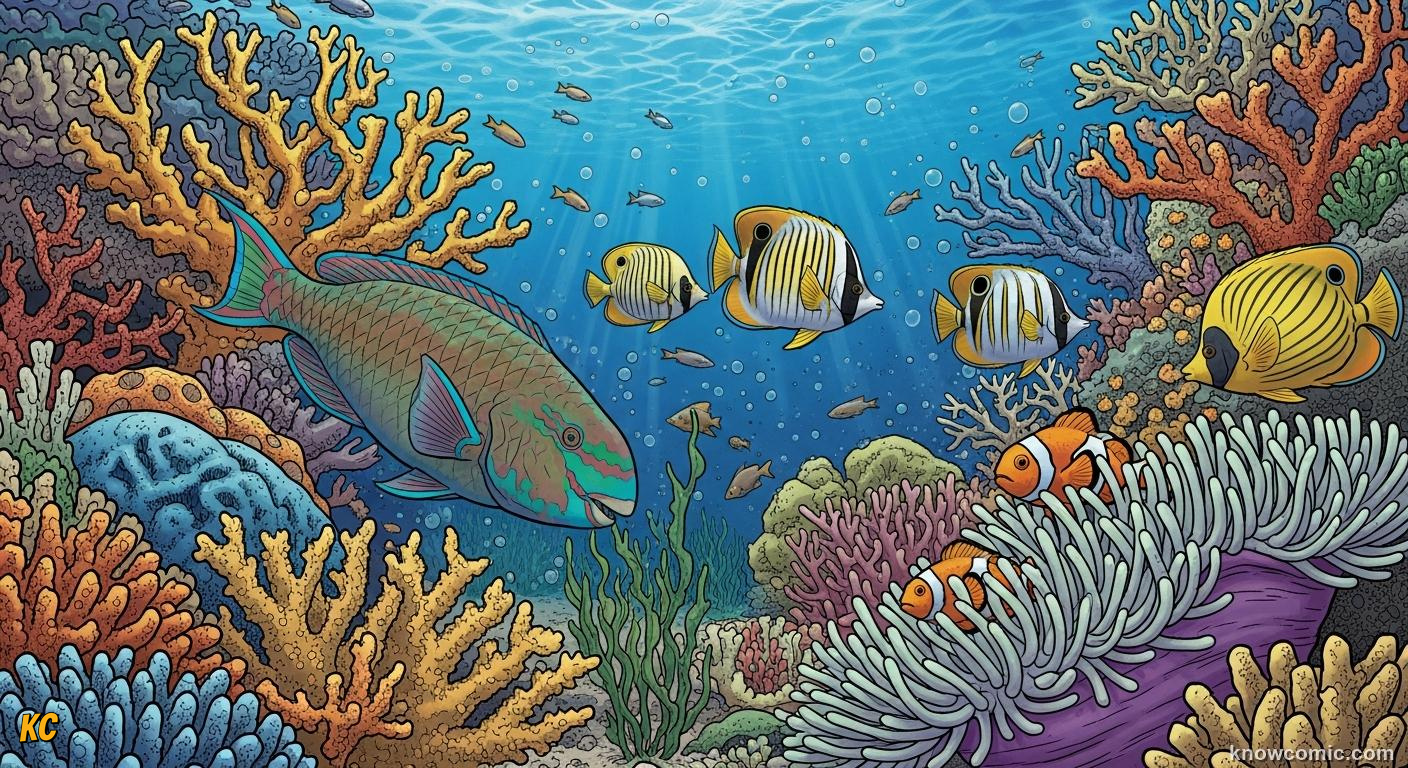
EVERY NOOK IS A NICHE
Branching geometry creates infinite micro-habitats, surge zones, shadowed caves, sandy patches between heads. Parrotfish scrape turf algae and bite coral; butterflyfish pick coral polyps; sharks patrol channels at dusk. Remove one layer, dynamite fishing, cyanide collecting, or runaway algae after nutrient pollution, and cascades ripple through neighbours within weeks.
LIFE!
PAGE 4 OF 5, WHEN CORALS TURN WHITE
STRESS
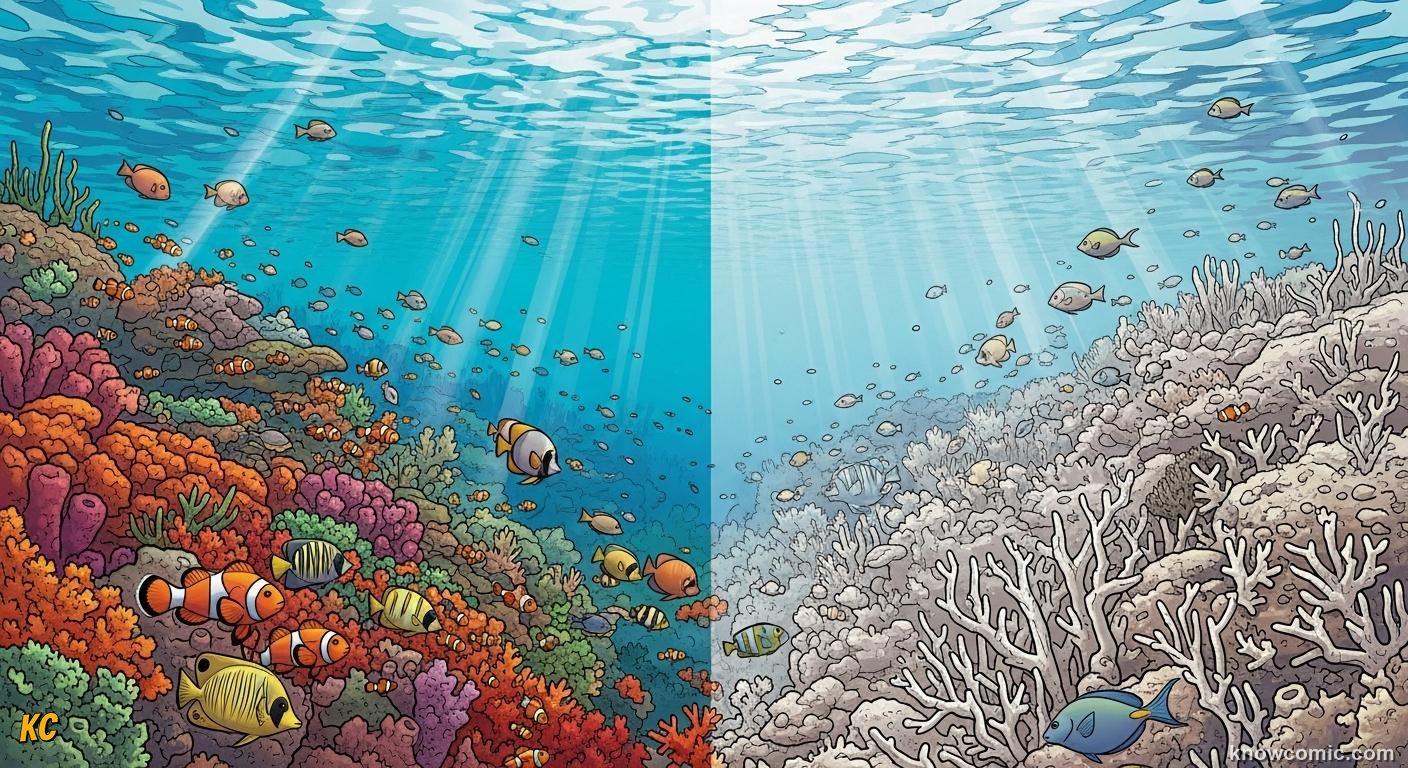
BLEACHING IS MOSTLY A PARTNERSHIP BREAKUP
Hot water, bright UV and sometimes disease prompt polyps to expel their zooxanthellae, tissue turns ghostly white yet animals may still be alive. Repeat hits or long heatwaves leave too little food; recovery needs years if algae do not overgrow first. Local protection, sewage control, sustainable tourism, herbivore-friendly fishing, buys resilience alongside global emissions cuts.
HELP!
HEAT
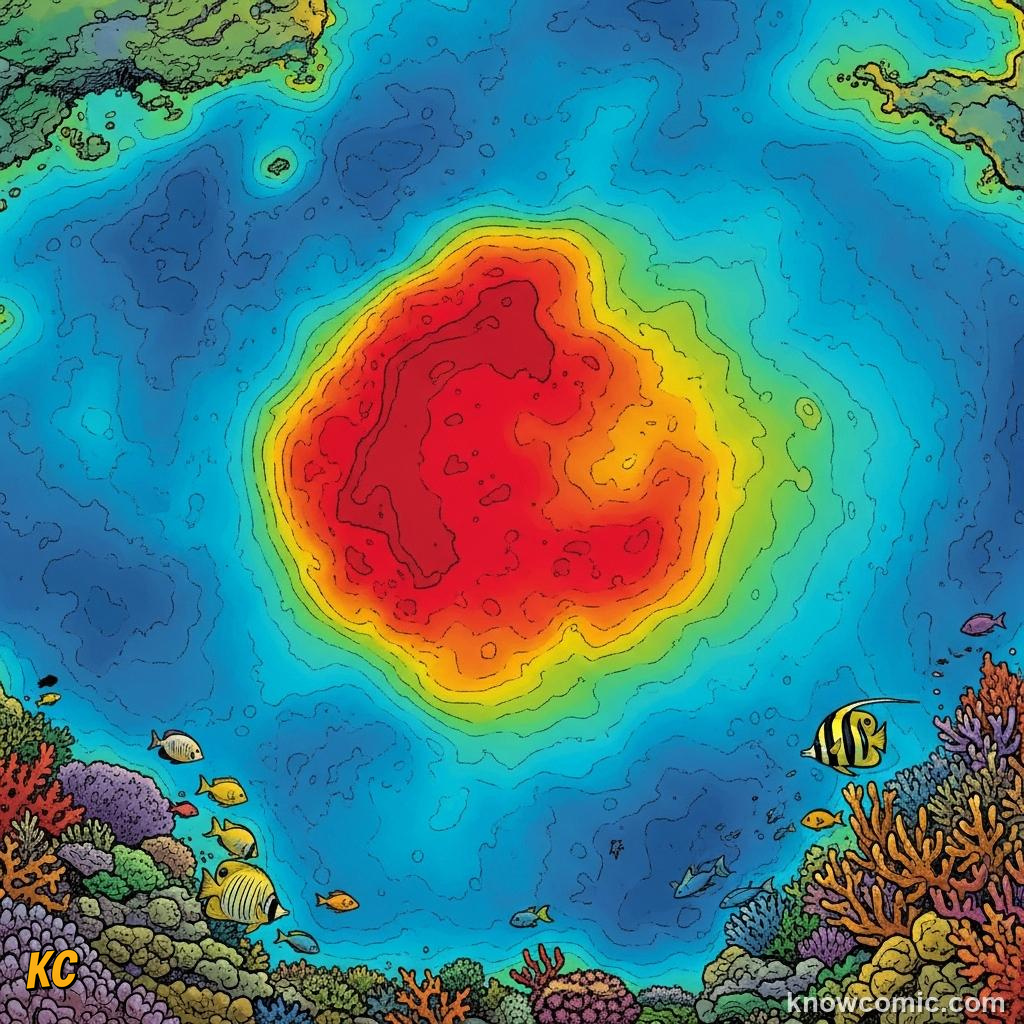
🌡️ Marine heatwaves spike fast
📡 Satellites track hot spots
📡 Satellites track hot spots
HOPE
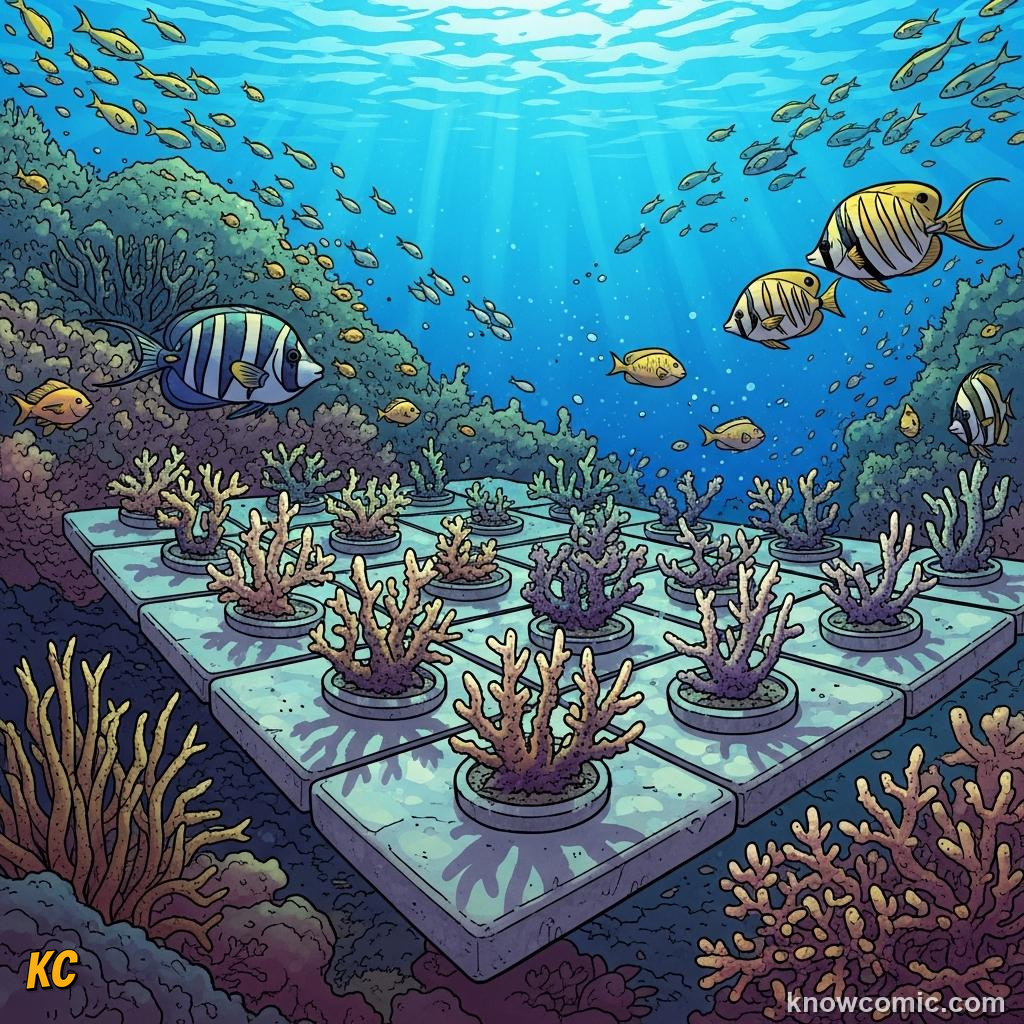
🌱 Larvae drift between reefs
🔬 Assisted evolution experiments
🔬 Assisted evolution experiments
YOU
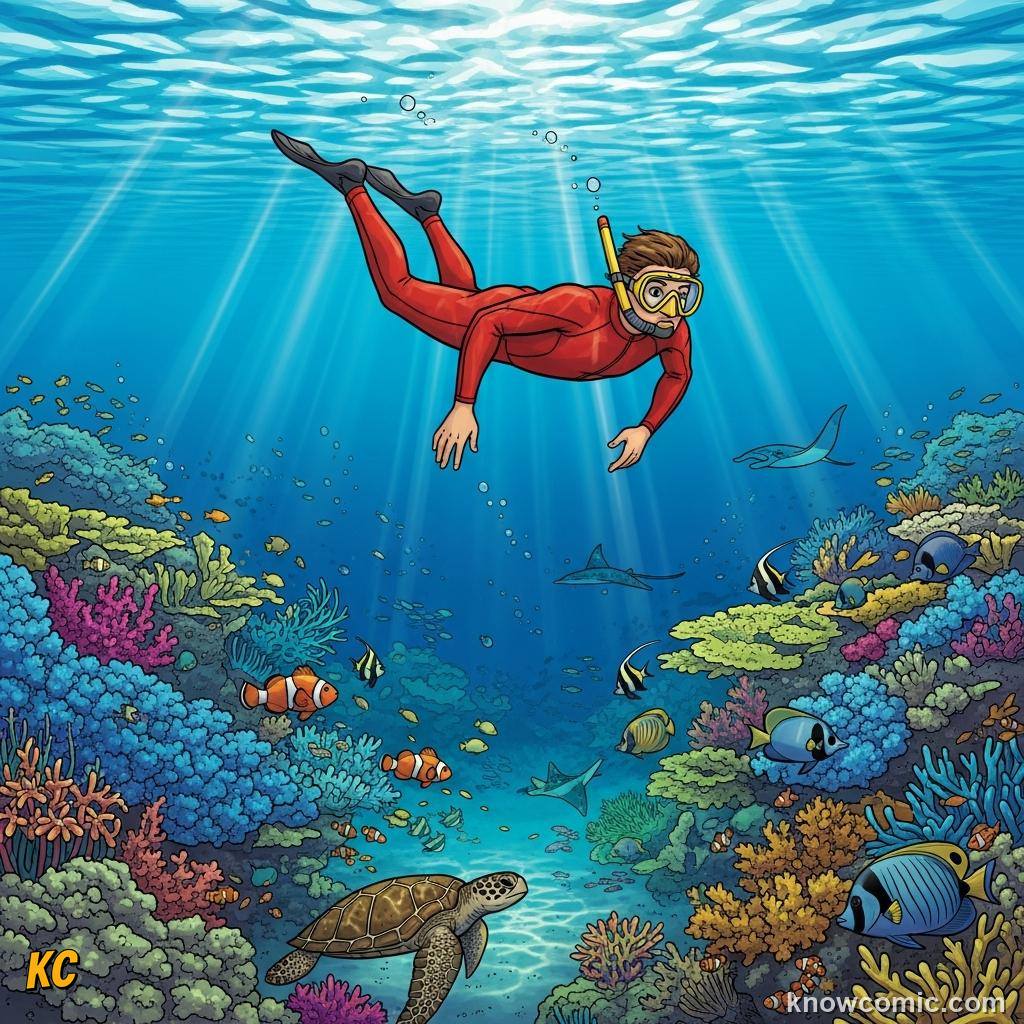
🧴 Reef-safe sunscreen habits
🚫 No touching living rock
🚫 No touching living rock
PAGE 5 OF 5, RINGS, BARRIERS AND SAND FACTORIES
ATOLLS
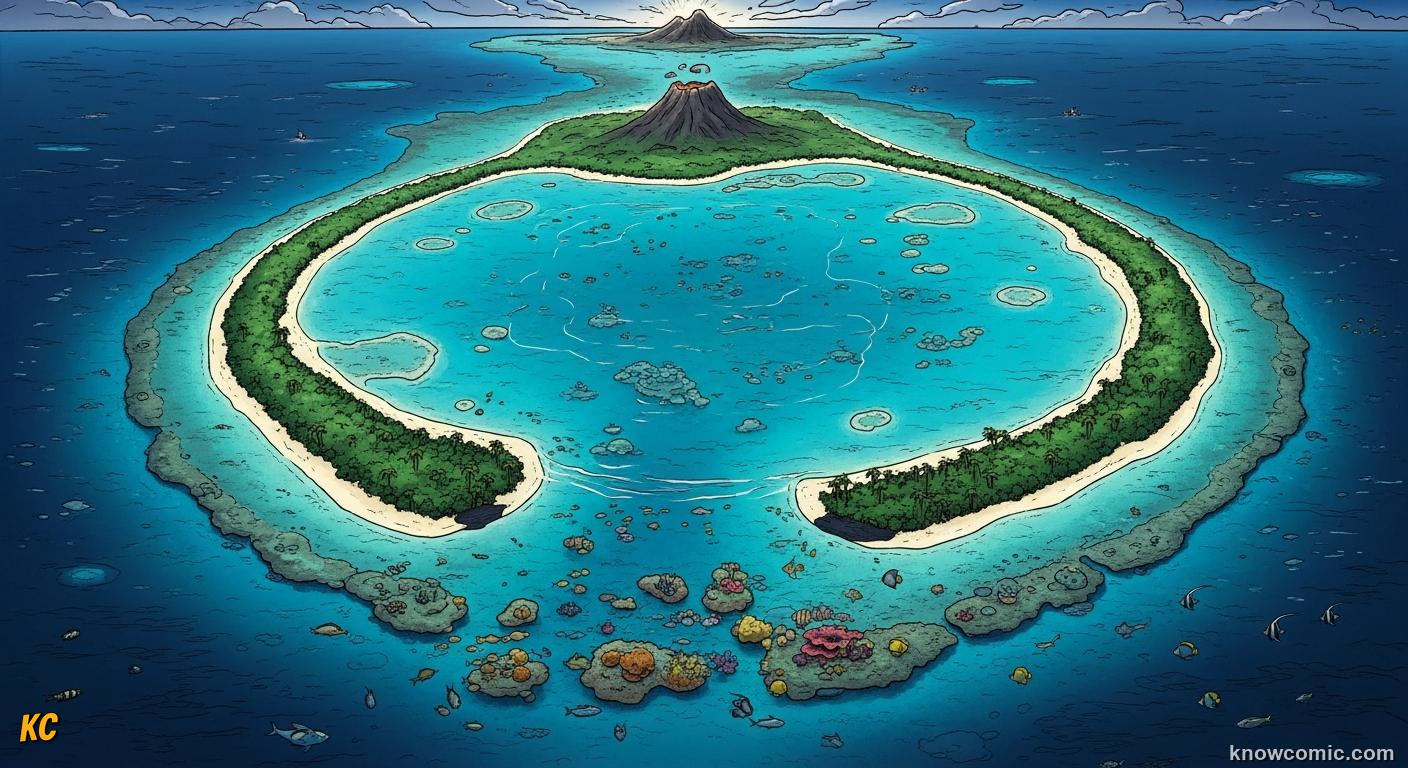
VOLCANO SINKS, CORAL KEEPS CLIMBING
Charles Darwin's model still fits: fringing reefs hug young islands; barrier reefs lag behind eroding shores with lagoons; atolls ring vanished peaks as plates drift and sea level dances. Parrotfish crunch carbonate into fine sand that piles into tropical beaches, one colourful link between geology, biology and your towel spot.
RING!
TYPES
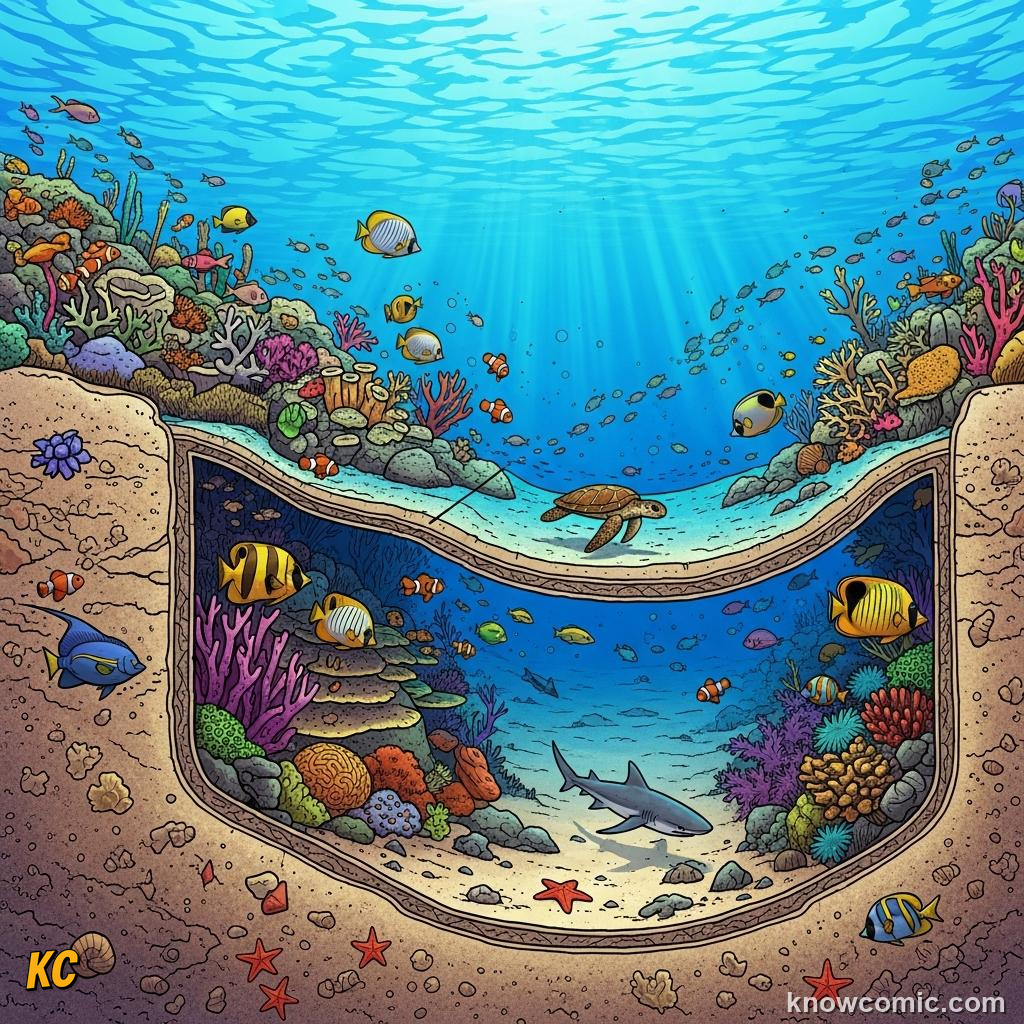
🏝️ Fringing · barrier · patch
🌊 Lagoon circulation matters
🌊 Lagoon circulation matters
REMEMBER
🐠 KEY FACTS
Polyps build CaCO₃ · Zooxanthellae feed the colony · Huge biodiversity per area · Bleaching = lost algae often from heat · Reefs shape coasts & sand · Protection + climate action both matter.
✅ Symbiosis powers growth
✅ Stress shows fast
✅ Every snorkel can be gentle
✅ Stress shows fast
✅ Every snorkel can be gentle
🧠 QUIZ TIME!
CORAL REEFS · 5 QUESTIONS
QUESTION 01
About what fraction of the ocean floor do coral reefs cover while supporting roughly a quarter of named marine species?
QUESTION 02
Photosynthetic partners living inside coral tissue, sharing sugars with the polyp, are called…
QUESTION 03
Coral bleaching usually means corals have…
QUESTION 04
White tropical beach sand is strongly linked to which reef fish family that scrapes algae and coral?
QUESTION 05
Ring-shaped reefs surrounding a central lagoon where a volcanic island sank away are best called…
0/5
LOADING...