🔢 WHAT IS A NUMBER?
PAGE 1 OF 5, WHY COUNT AT ALL?
HOW MANY?
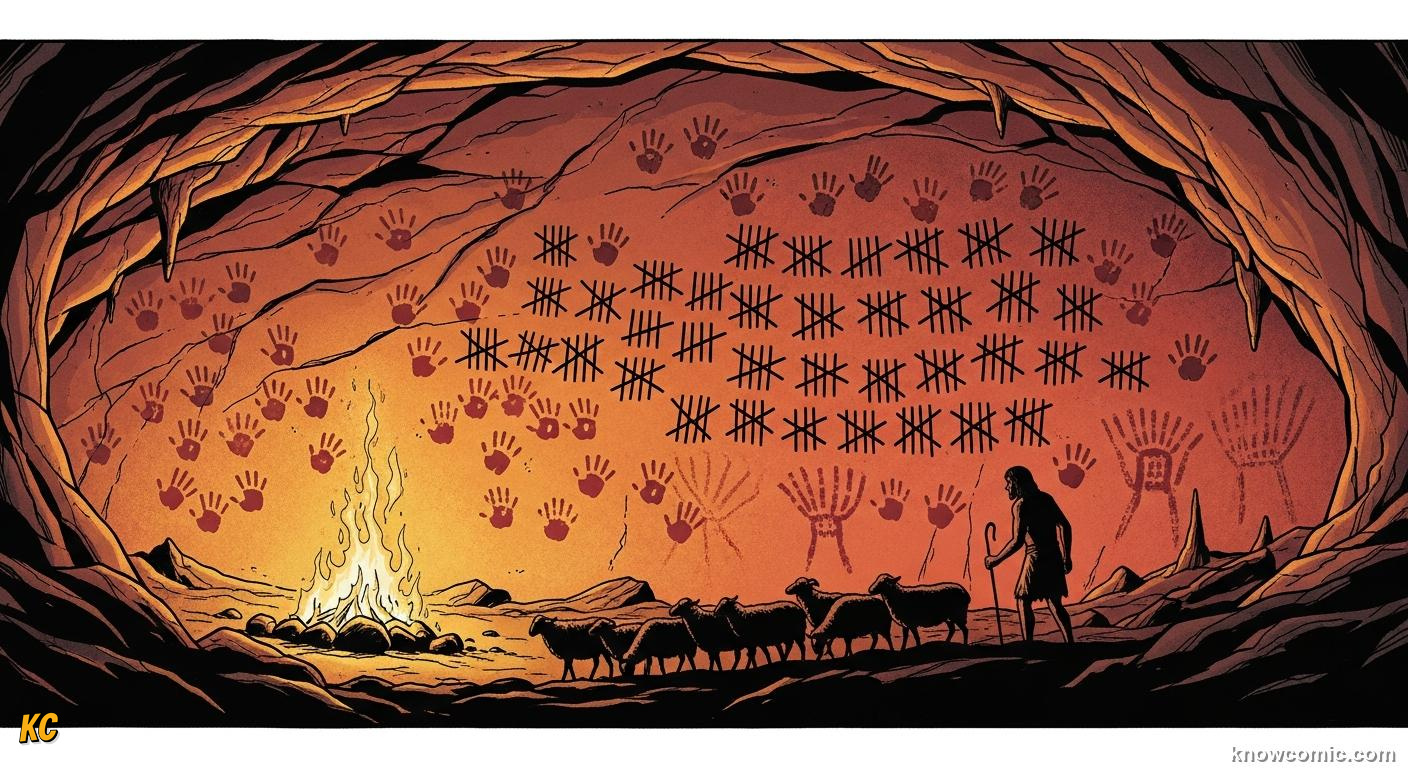
ONE-TO-ONE IS THE GAME
Long before digits, humans needed to know: "Did we bring back the same number of goats we let out?" The deep idea is matching, put a pebble in a bag per animal, or carve a notch per day, or touch each finger as you count. A number, in the beginning, is the answer to "how many" after a careful pairing. Different cultures built different symbols and grouping rules (tally by fives, bundle by tens), but the job was the same: track reality so you can trade, plan, and argue fairly.
🐑 SAME AS
If your fingers run out, use more tokens, the number is not "your hand," it is the size of the set you are matching.
MATCH!
HAND
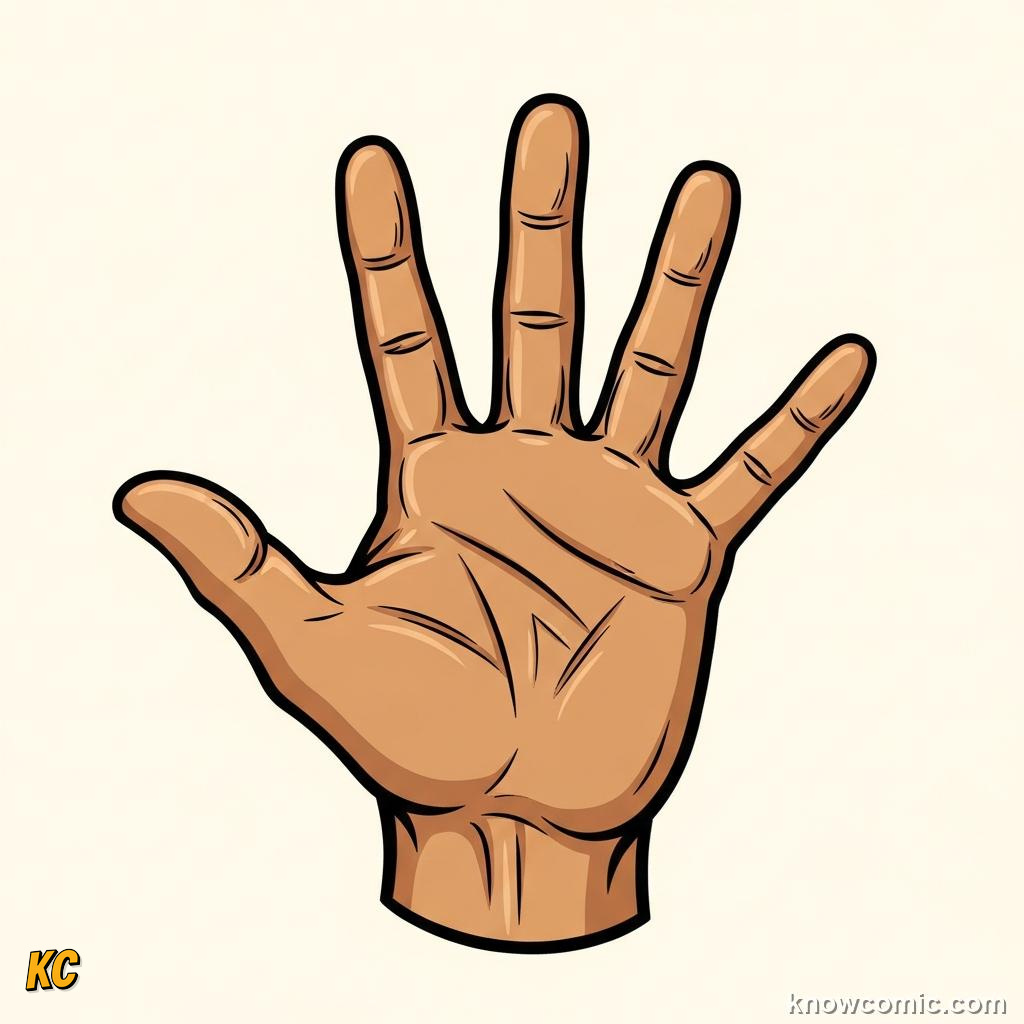
✋ Fingers: portable
🪵 Sticks: shareable count
🧮 Later: beads & frames
🪵 Sticks: shareable count
🧮 Later: beads & frames
NOTCH
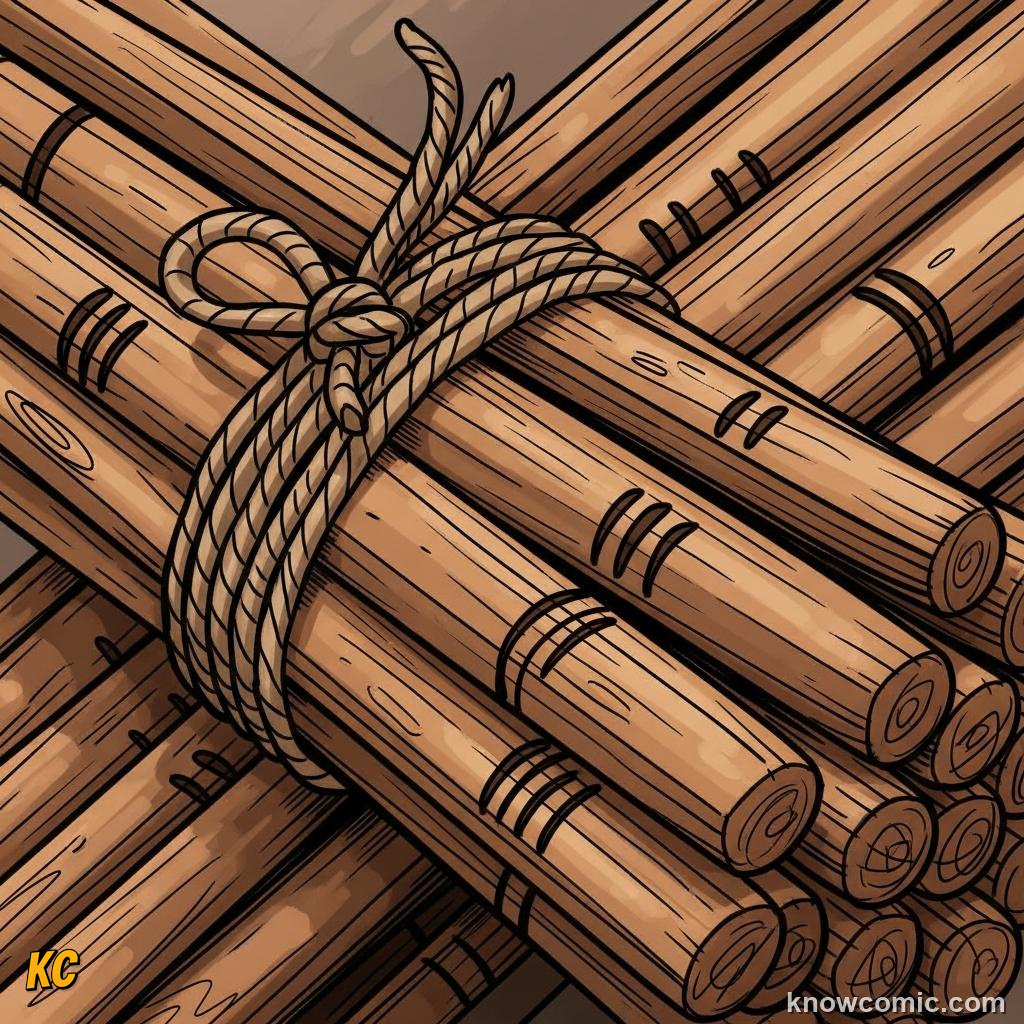
📜 Tallies in bone & clay
✏️ Fifth stroke crossed = bundle
🧠 No magic, memory made visible
✏️ Fifth stroke crossed = bundle
🧠 No magic, memory made visible
PAGE 2 OF 5, SYMBOLS & PLACE VALUE
SCRIBES
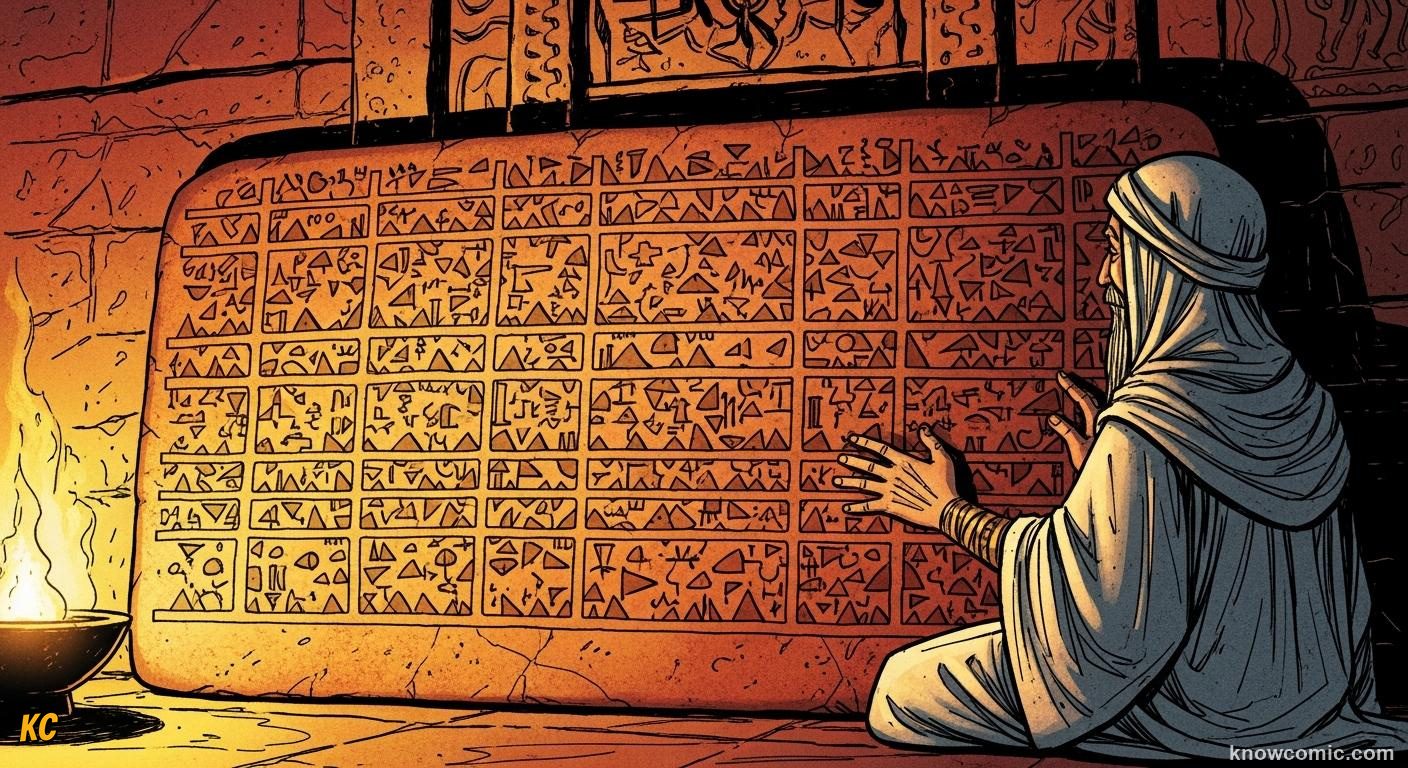
FROM WEDGES TO POSITIONS
Ancient Mesopotamians pressed cuneiform wedges into clay to track grain, land, and taxes, numbers became written technology. A huge leap is place value: the same mark can mean more when it sits in a higher column (think: tens vs ones). The Babylonians often worked in a base-60 (sexagesimal) spirit, still with us in 60 minutes and 360°. The Romans juggled letters (I, V, X, L…) without a place-value zero, arithmetic stayed clunky. Today we mostly use the Hindu–Arabic digits 0–9: compact, line-friendly, and built for the next topic, a 0 that both means "nothing here" and holds a place so 205 is not 25.
🧮 BASES
You can count in any base; computers love base-2. What matters: rules + symbols + agreed meaning.
WRITE!
ABACUS
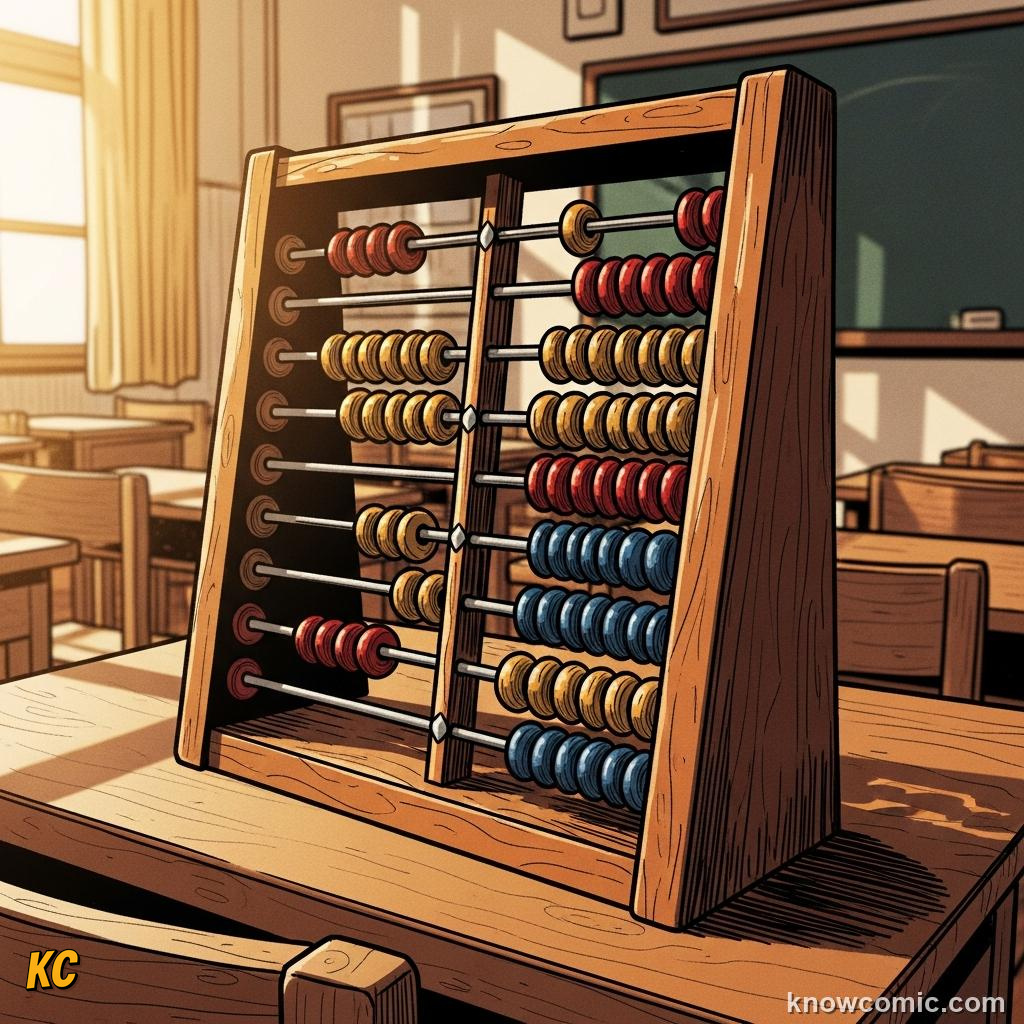
🧮 Beads = physical places
➕ Fast adding with carrying
🌍 Many cultures, same idea
➕ Fast adding with carrying
🌍 Many cultures, same idea
ROMAN
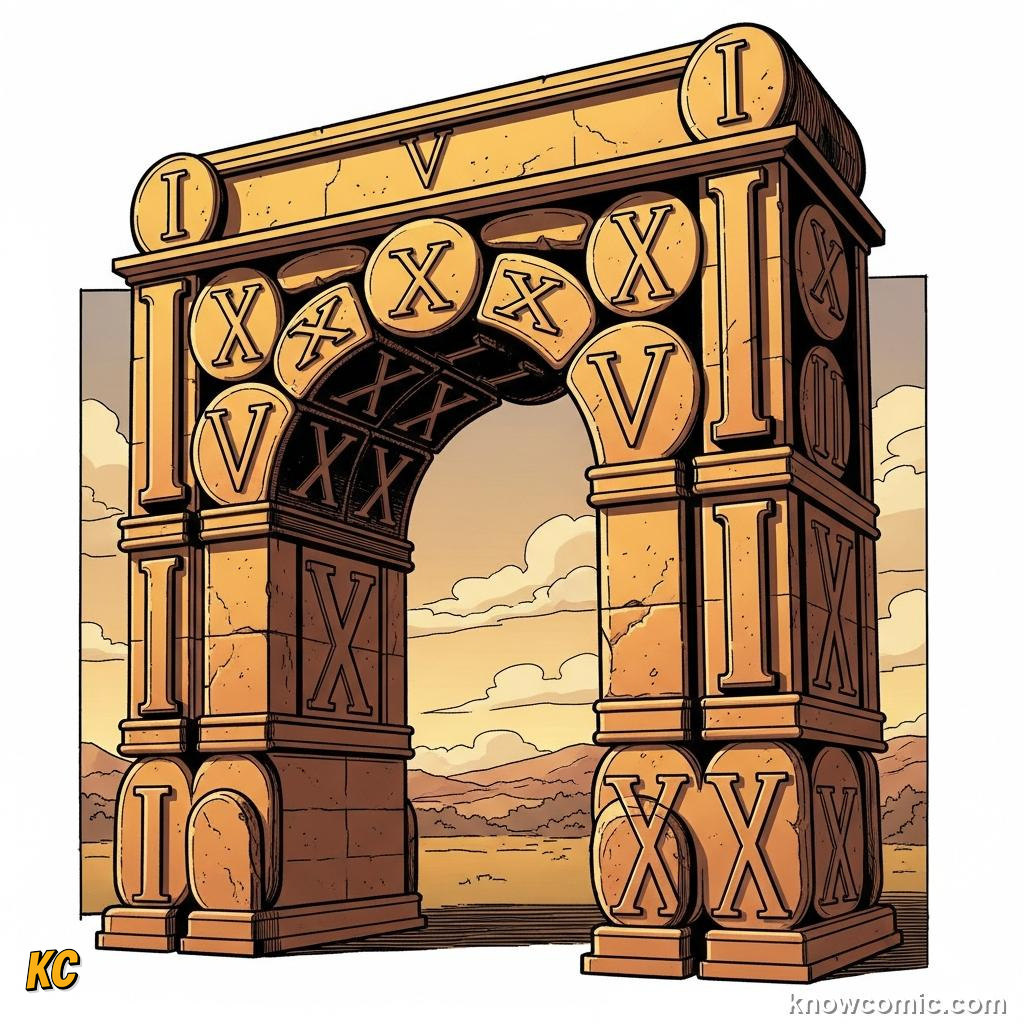
🏛️ Monuments, clocks, chapters
➿ Harder to multiply in head
➡️ Great history, not our main base
➿ Harder to multiply in head
➡️ Great history, not our main base
TIME
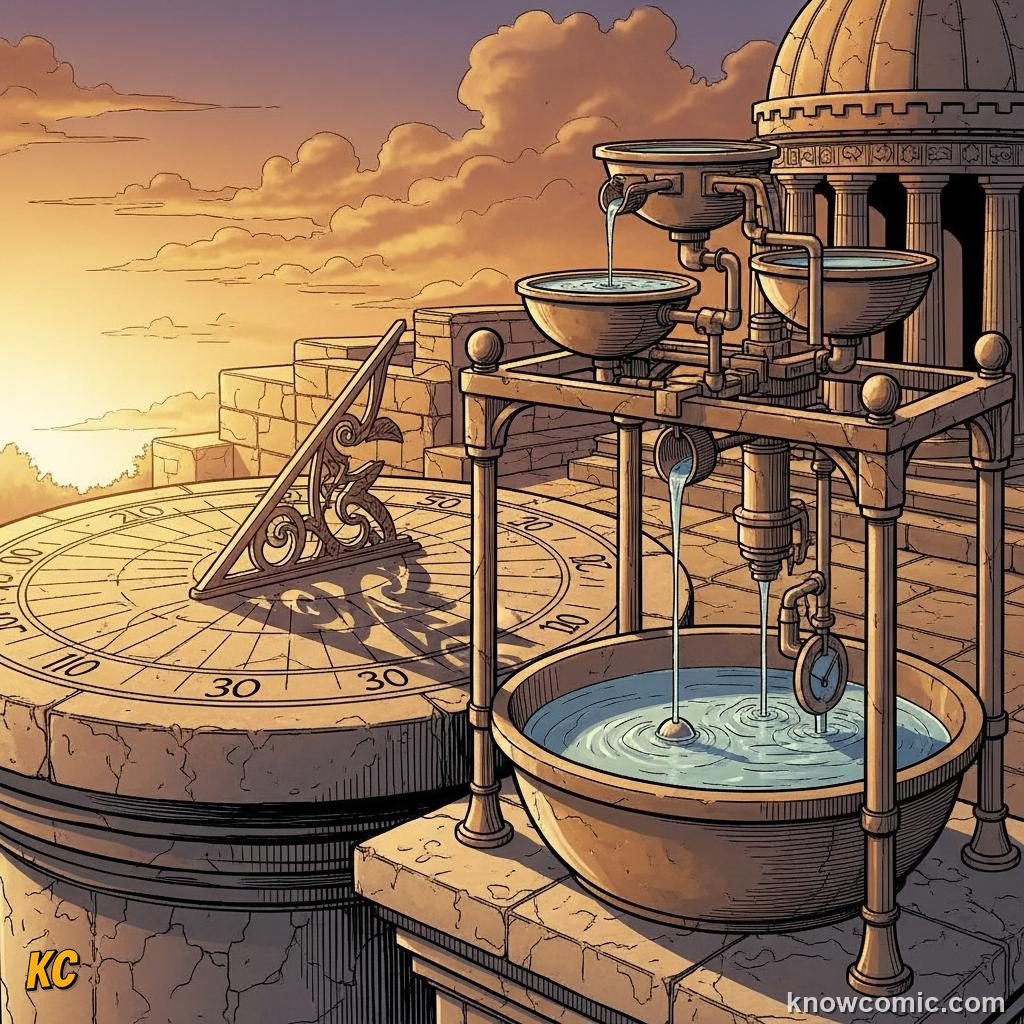
🕰️ 60 minutes, 360° echoes
🌙 Calendars = counting too
🧩 Numbers follow human needs
🌙 Calendars = counting too
🧩 Numbers follow human needs
PAGE 3 OF 5, INDIA, ZERO, AND “NOTHING” THAT MATTERS
SŪNYA
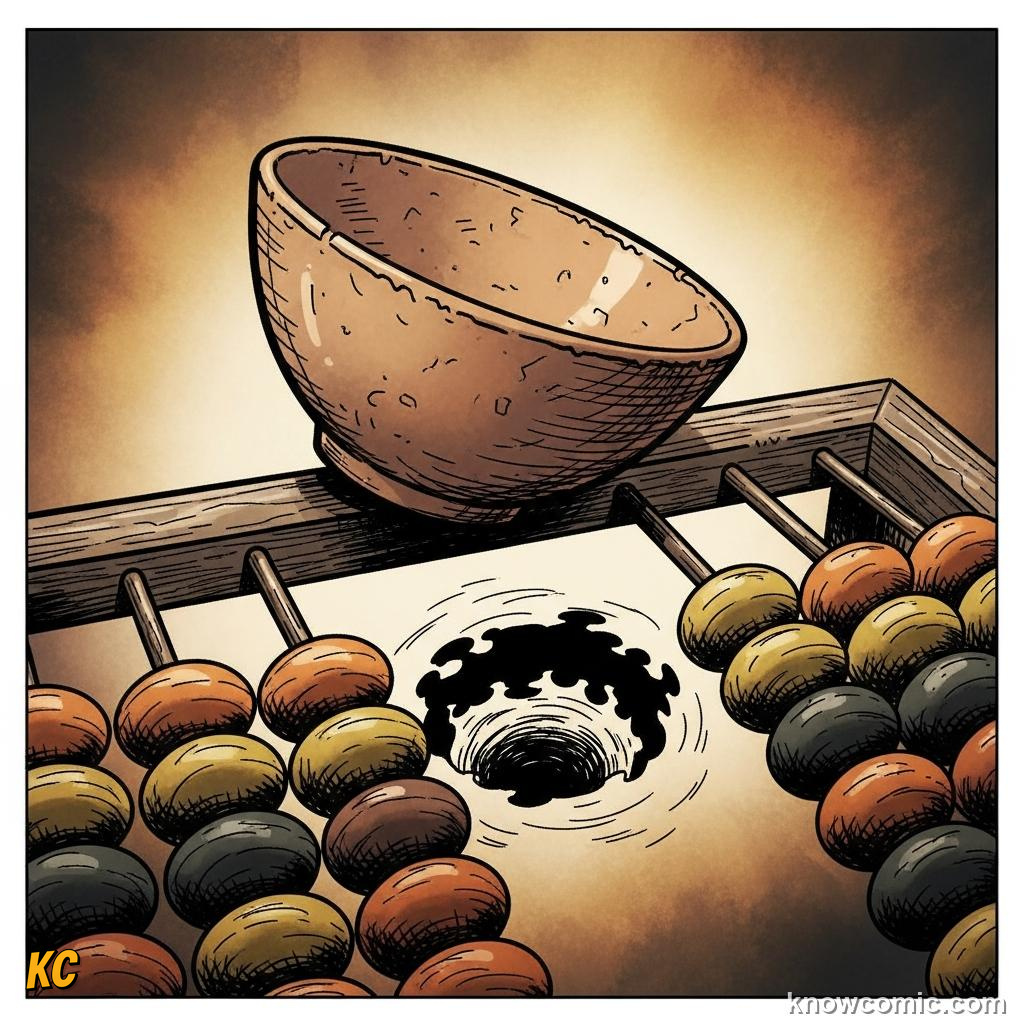
🪷 Philosophy met arithmetic
⭕ Empty = still information
🧩 Place holder + rules together
⭕ Empty = still information
🧩 Place holder + rules together
BRIDGE
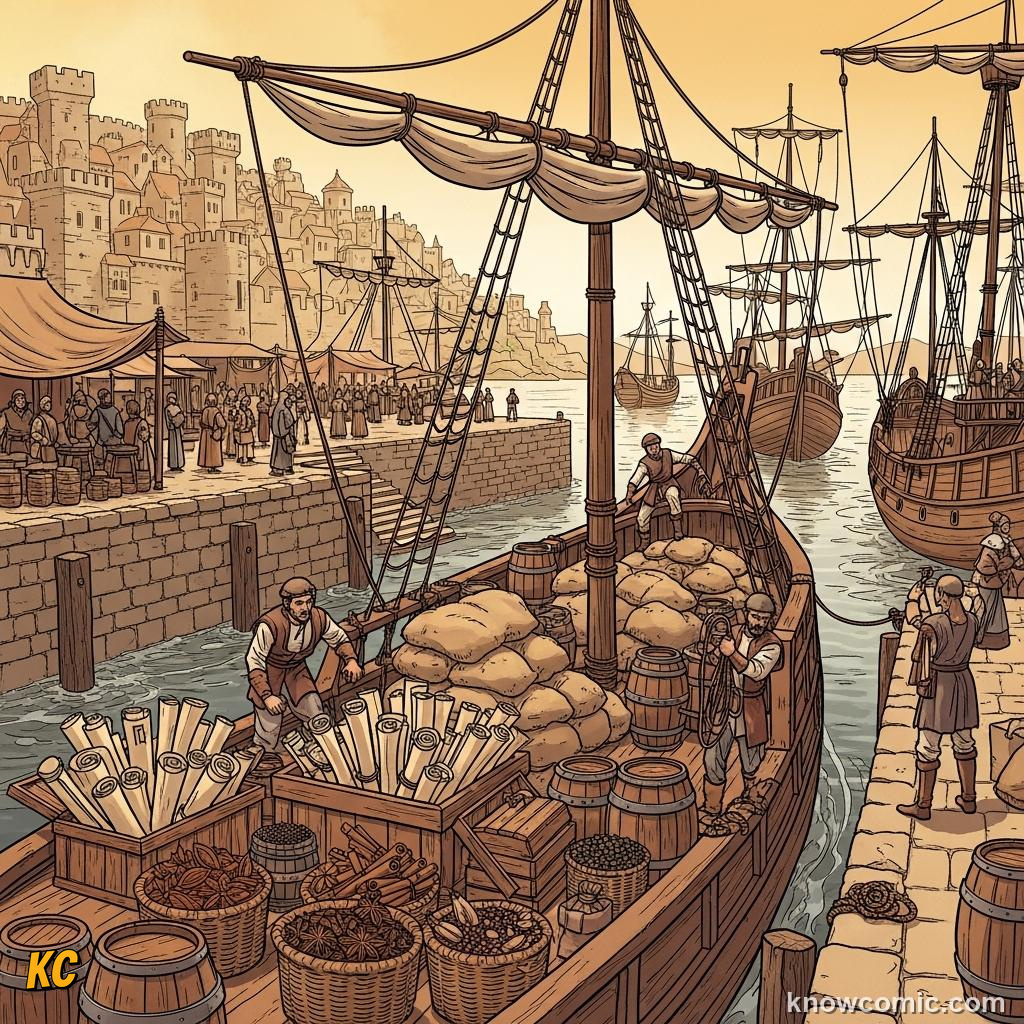
🌐 Ideas crossed trade routes
📿 Scholars compared methods
➡️ Same digits, shared future
📿 Scholars compared methods
➡️ Same digits, shared future
CIRCLE
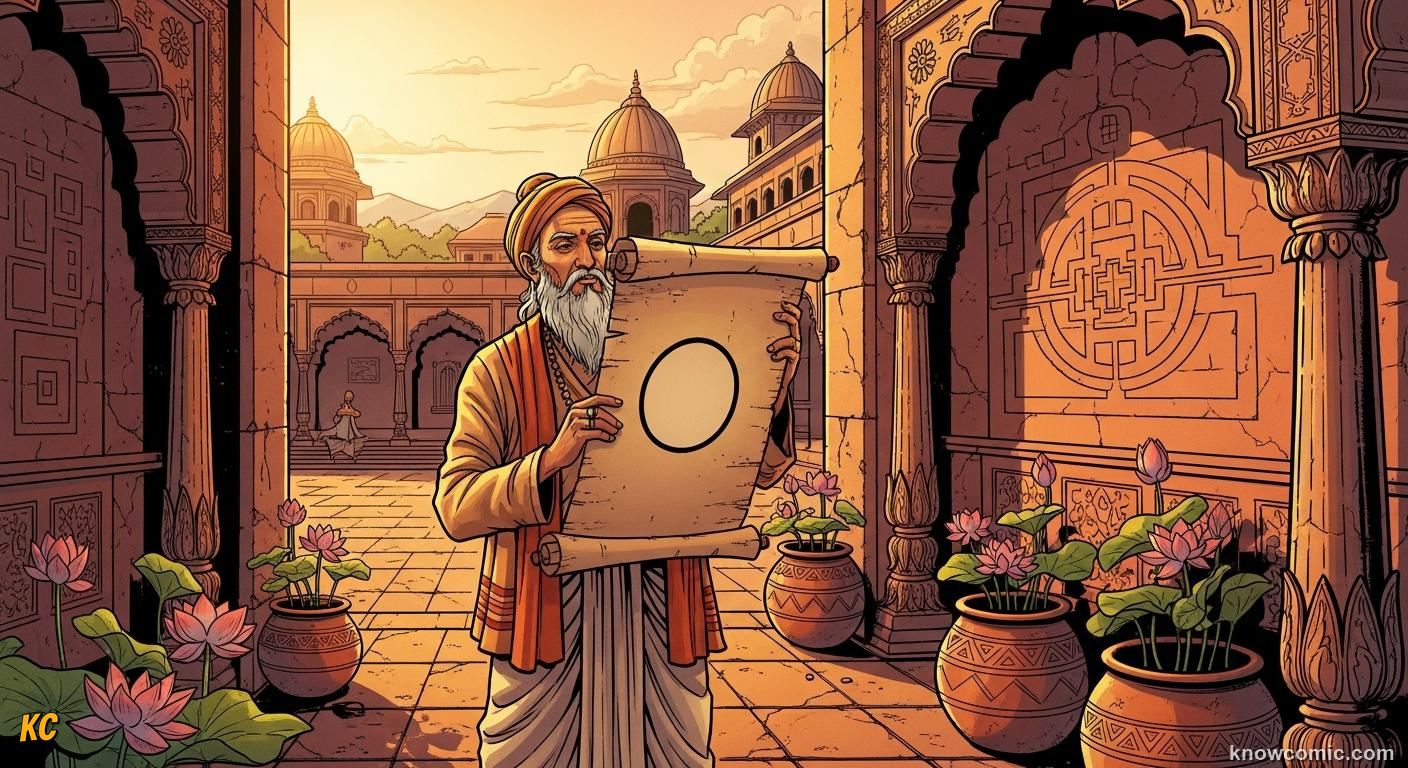
ZERO AS A TEAMMATE, NOT A TRICK
In South Asia, mathematicians tamed a wild idea: 0 is both "none here" and a spacer that gives meaning to columns. Without 0, 205 and 25 are easy to mix up. The astronomer and thinker Āryabhaṭa and later writers (including Brahmagupta with careful rules) helped zero graduate from a philosophical śūnya ("void") to a real digit in calculations, including tricky cases like 0 × anything and rules for negative quantities (debts, temperatures below freezing). The story traveled along trade and scholarship routes; Europe eventually adopted the full Hindu–Arabic system, a reminder that one idea can circle the world.
HOLD!
PAGE 4 OF 5, FRACTIONS, NEGATIVES, AND THE WIDE LINE
MORE WAYS TO COUNT
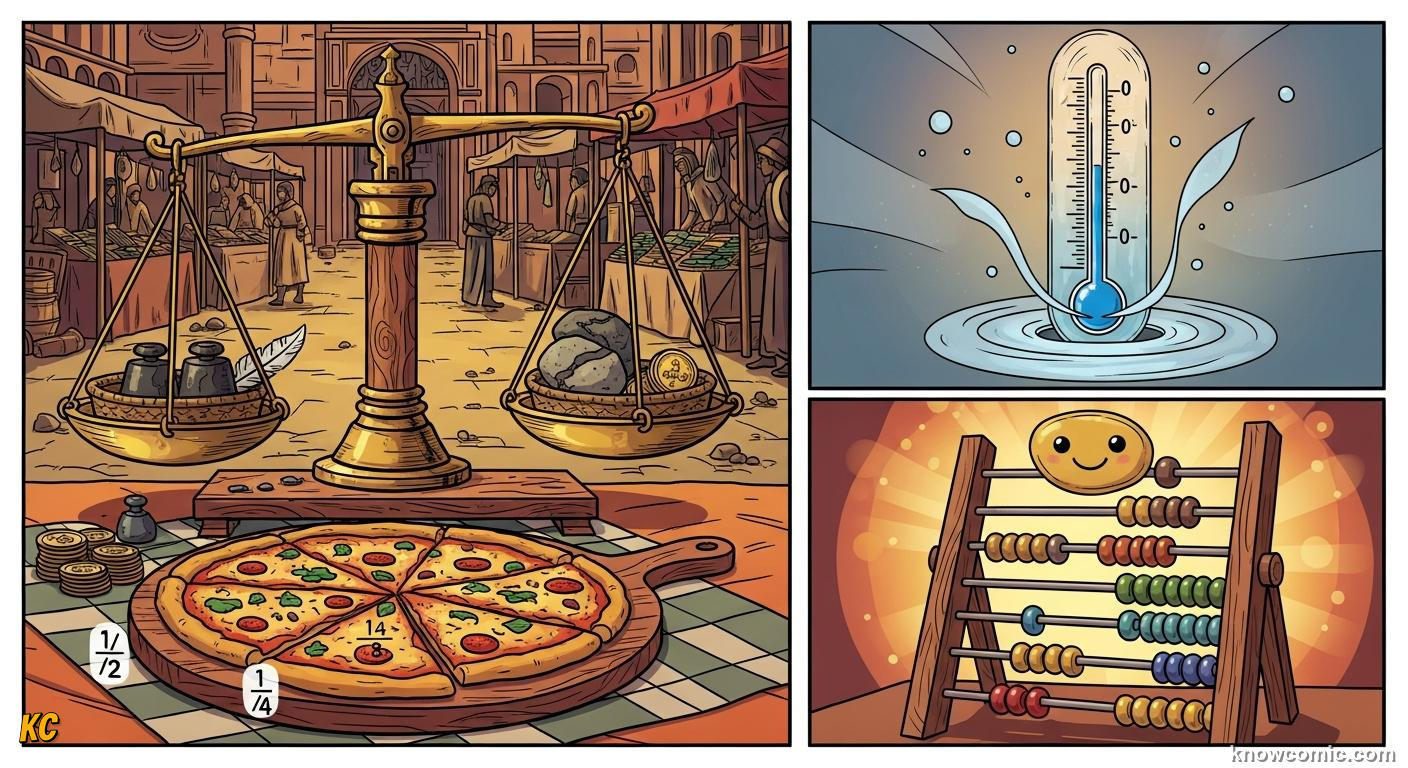
BETWEEN, BELOW, AND BEYOND
Not every useful quantity is a whole step, share a flatbread and you need fractions (the Egyptians loved unit fractions; today we juggle ½, 0.3, ⅓…). A thermometer or a debt in rupees or dollars invites negative numbers: same rules as positives, with a direction or "owing" feel. The big picture: once you have 0, fractions, and negatives, you are ready to spread everything along a number line, a road where order makes sense, zero is a landmark, and both directions count. (Later in school you will add even wilder "numbers", but the line started as a human-friendly map of quantity.)
⚖️ FAIR
Fractions keep sharing fair. Negatives keep track of opposites. Both extend counting without throwing away the old rules, just carefully.
WIDEN!
PIZZA

🍕 Same whole, new slices
➗ Division ↔ fractions link
🧩 Denominator = piece size
➗ Division ↔ fractions link
🧩 Denominator = piece size
CHILL
🌡️ Below-freezing idea
➡️ "Less than nothing" = anchor
🧮 Same line, two directions
➡️ "Less than nothing" = anchor
🧮 Same line, two directions
EUROPE
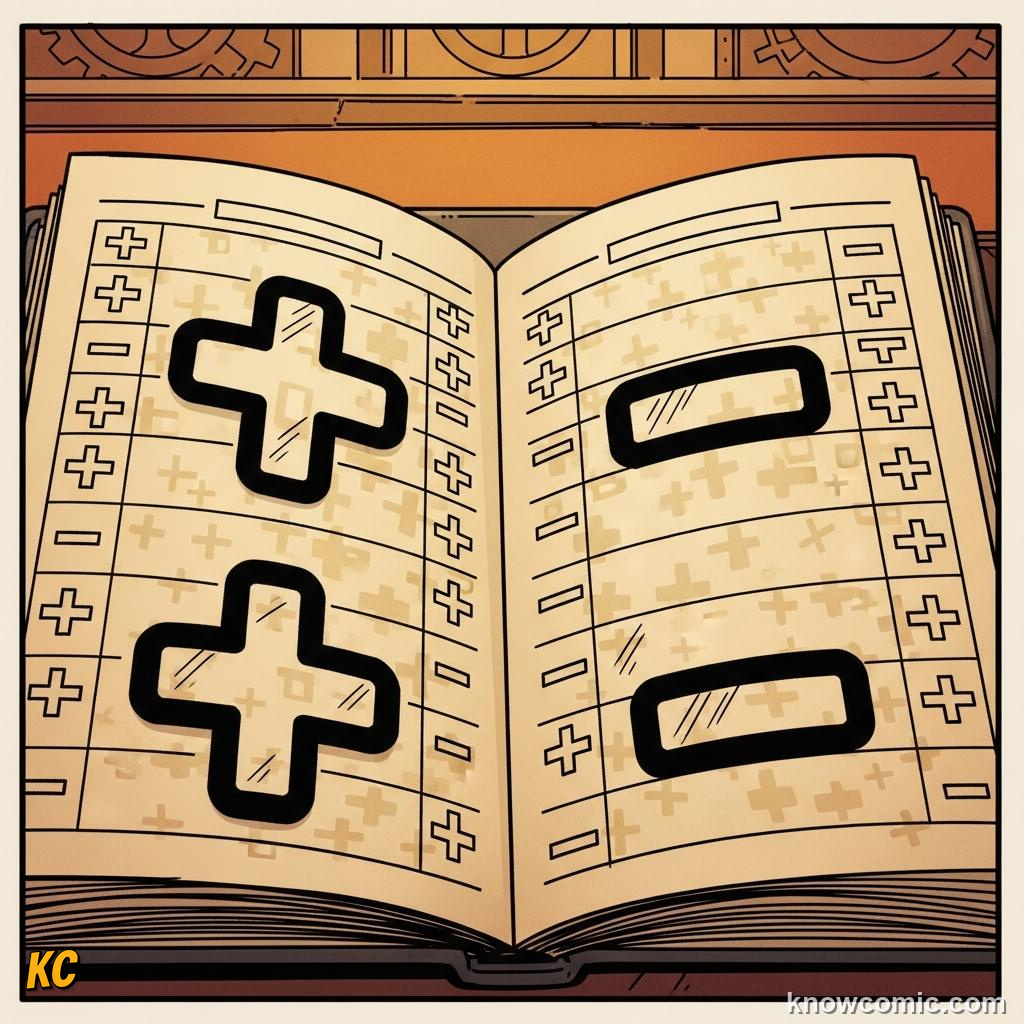
📖 Hindu–Arabic took centuries
🏛️ Reckoning schools spread use
🌍 A global number toolkit
🏛️ Reckoning schools spread use
🌍 A global number toolkit
PAGE 5 OF 5, THE NUMBER LINE IN YOUR SCHOOL, YOUR PHONE, YOUR HEAD
LINE
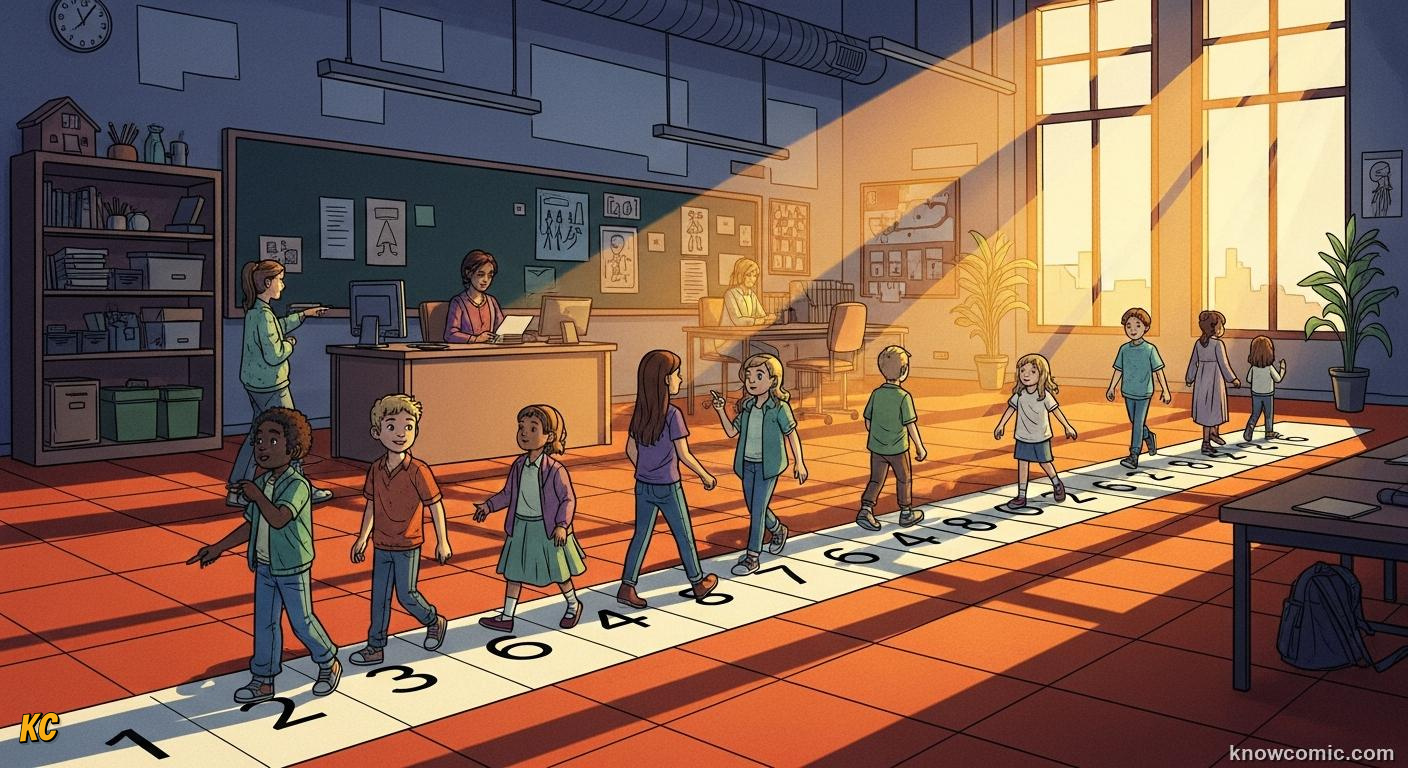
A ROAD OF ORDER
A number line is a friendly lie that tells the truth: put 0 somewhere, go right for more, left for less (including negatives), and you can see which number wins an argument. Classrooms draw giant lines; apps plot graphs on invisible lines; a thermometer is a little line. You do not have to be done learning, the story runs from a tally mark in clay to the digits that power search engines. What is a number? Whatever carefully agreed rules you use to name "how many," "how much," or "where on the road", built by many cultures, for everyone who will come after.
🧁 TAKEAWAY
Match first · Write with place value · 0 is the hero column-holder · Hindu–Arabic digits travel far · Fractions and negatives extend the line · Then ask bigger questions in Topic 3 (infinity) and beyond.
STEP!
ORDER
↔ Compare without guessing
📶 Skip-count preview online
🌱 Bigger ideas start here
📶 Skip-count preview online
🌱 Bigger ideas start here
REMEMBER
🔢 KEY FACTS
One-to-one matching · Tally bundles · Base & place value · 0 as digit · Fractions = parts · Negatives = opposite direction · Number line = order made visible.
✅ Touch each object once when you count
✅ Check columns when you add big numbers
✅ Trace left/right before you say "which is bigger?"
✅ Check columns when you add big numbers
✅ Trace left/right before you say "which is bigger?"
🧠 QUIZ TIME!
COUNTING & NUMBERS · 5 QUESTIONS
QUESTION 01
In early counting, a tally (notches, pebbles, marks) is mainly about —
QUESTION 02
Place value in a number like 730 means —
QUESTION 03
In 205, the digit 0 is important because it —
QUESTION 04
The digits 0–9 we use in most of the world today are often called Hindu–Arabic numerals because —
QUESTION 05
On a standard horizontal number line, every step to the left of zero is —
0/5
LOADING...