🧠 BRAIN: COMMAND CENTRE
PAGE 1 OF 5 · THE THREE-POUND UNIVERSE
NETWORK
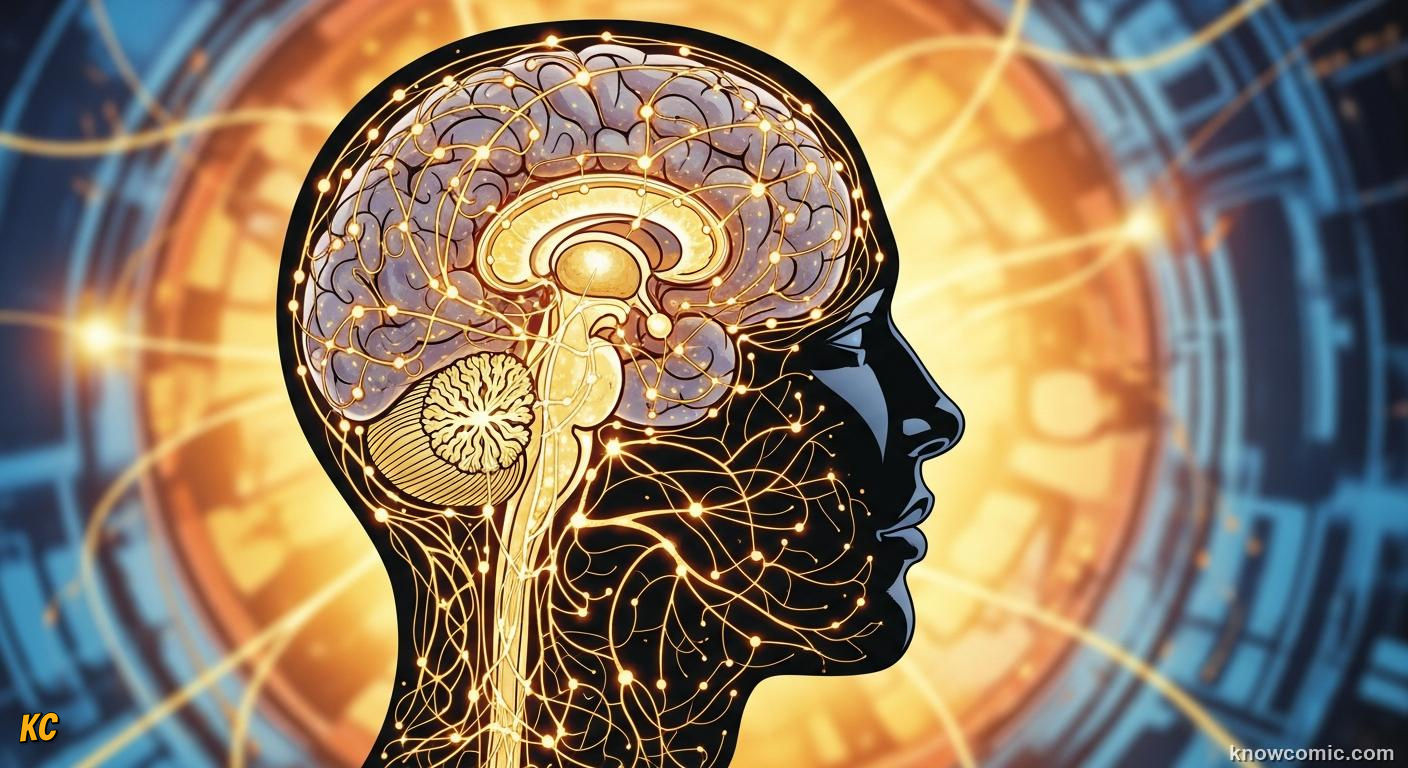
EIGHTY-SIX BILLION NEIGHBOURS
The average adult human brain has on the order of 86 billion neurons — and each can connect to thousands of others, making possible paths beyond counting. The whole thing weighs about 1.3 to 1.4 kg, mostly water, fat, and protein. "Command centre" is fair: it reads senses, steers movement, plans ahead, and invents new ideas — all with chemistry and tiny electrical spikes.
⚡ DENDRITES + AXON
Neurons pass signals: branches (dendrites) collect input; a long wire (axon) can carry output toward the next cell.
FIRE!
SIGNAL
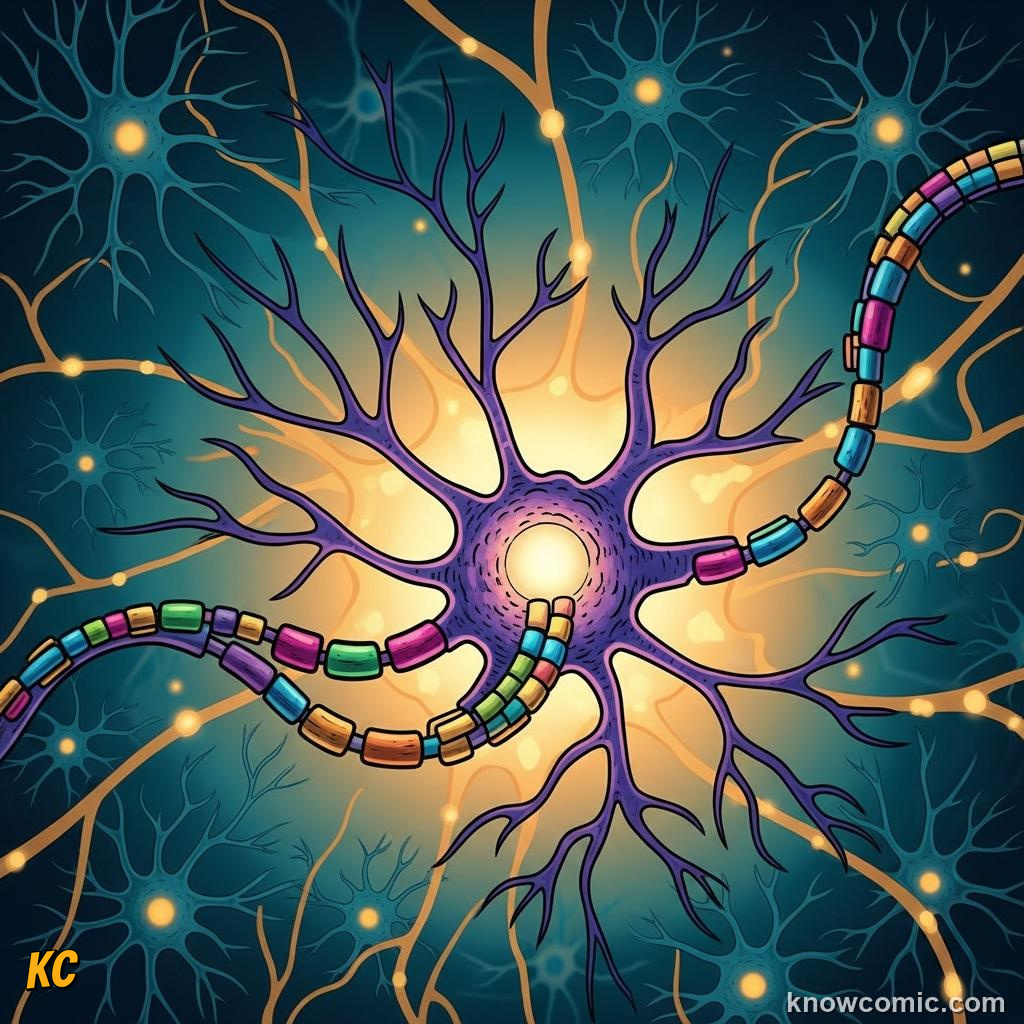
⚡ Neurons are cells built to chatter with electricity and chemistry.
JELLY
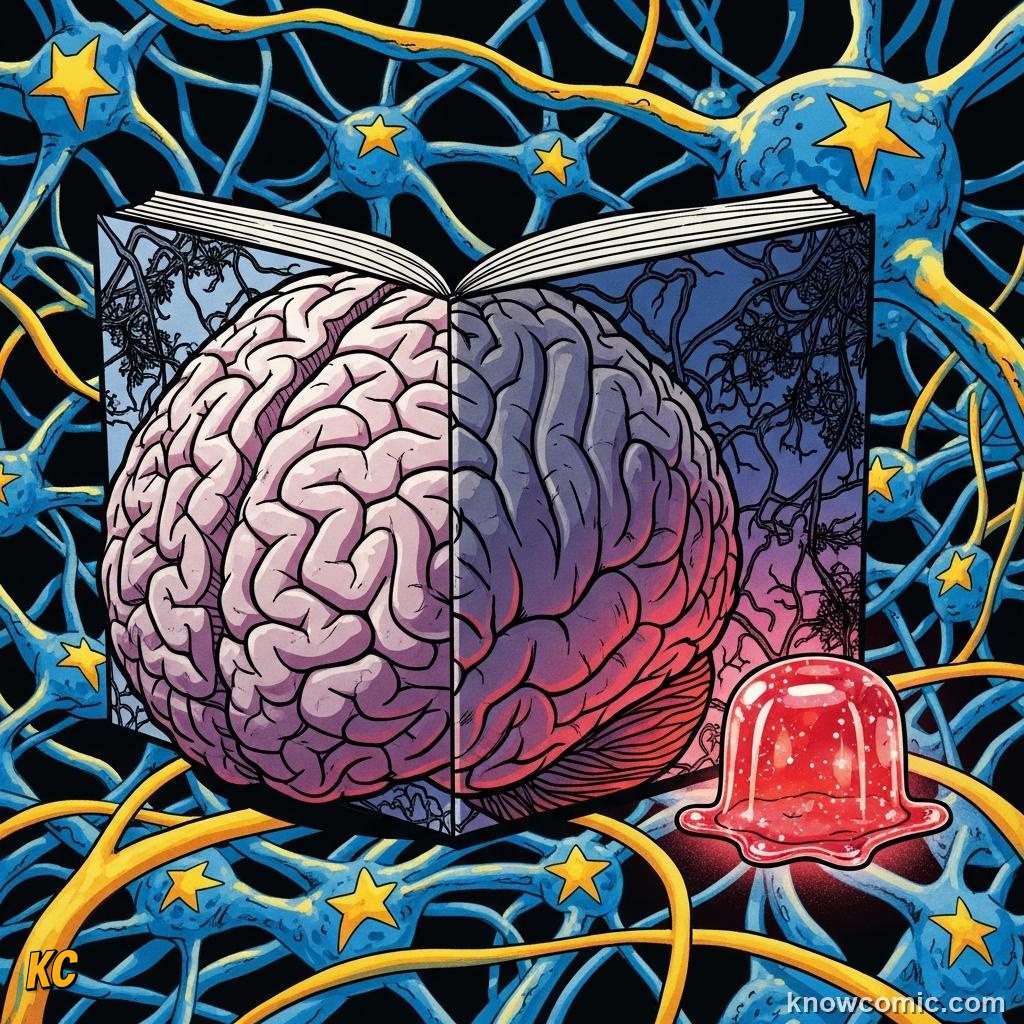
🧬 Soft, folded, and wrapped in protection — your skull, fluid, and meninges.
PAGE 2 OF 5 · FOUR FAMOUS LOBES
REGIONS
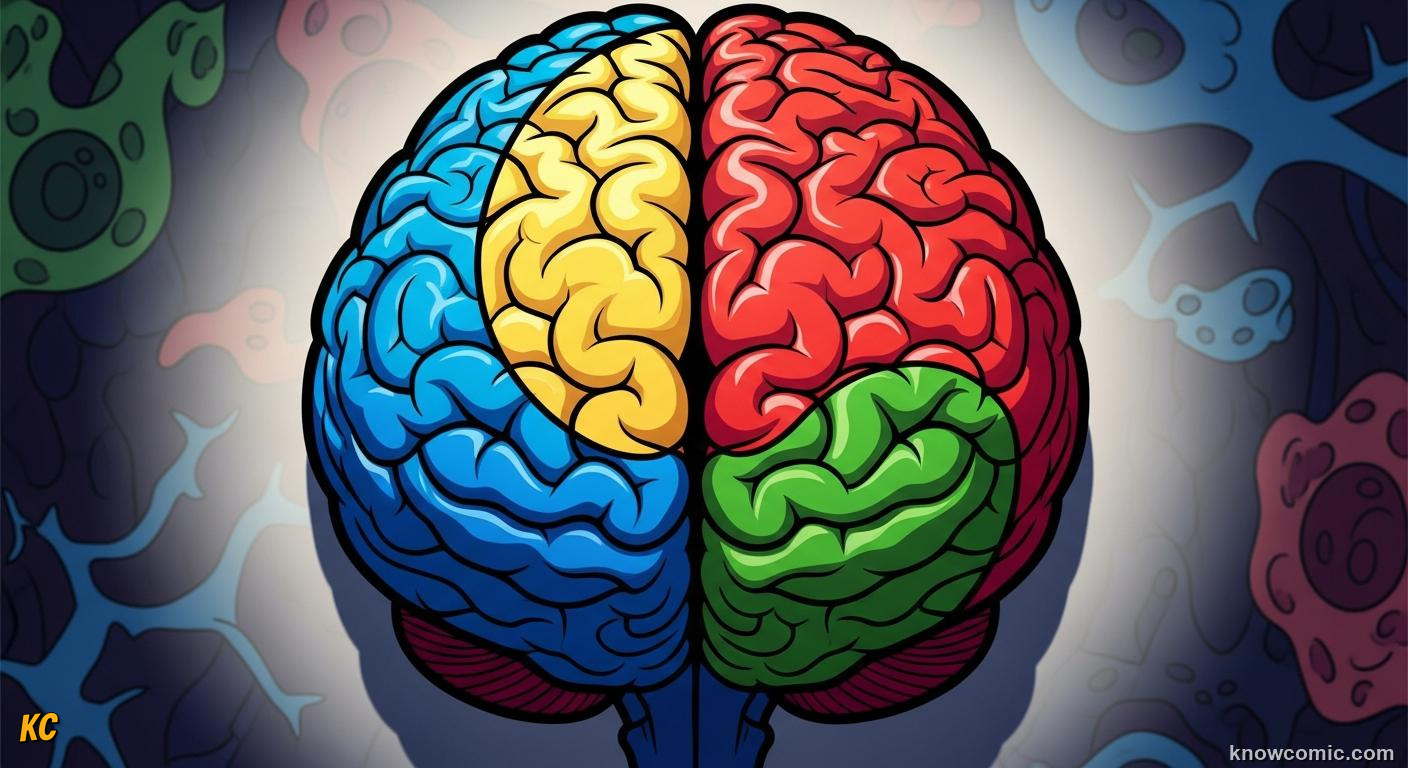
A MAP, NOT A MYSTERY
The frontal lobe leads planning, personality, and voluntary movement. The parietal lobe helps you feel touch and know where your body is in space. The temporal lobe links hearing, language, and memory. The occipital lobe (toward the back) is visual HQ. Real life blurs the borders: big jobs use many areas at once, but the map helps you learn what lives where.
ZONES!
FRONTAL
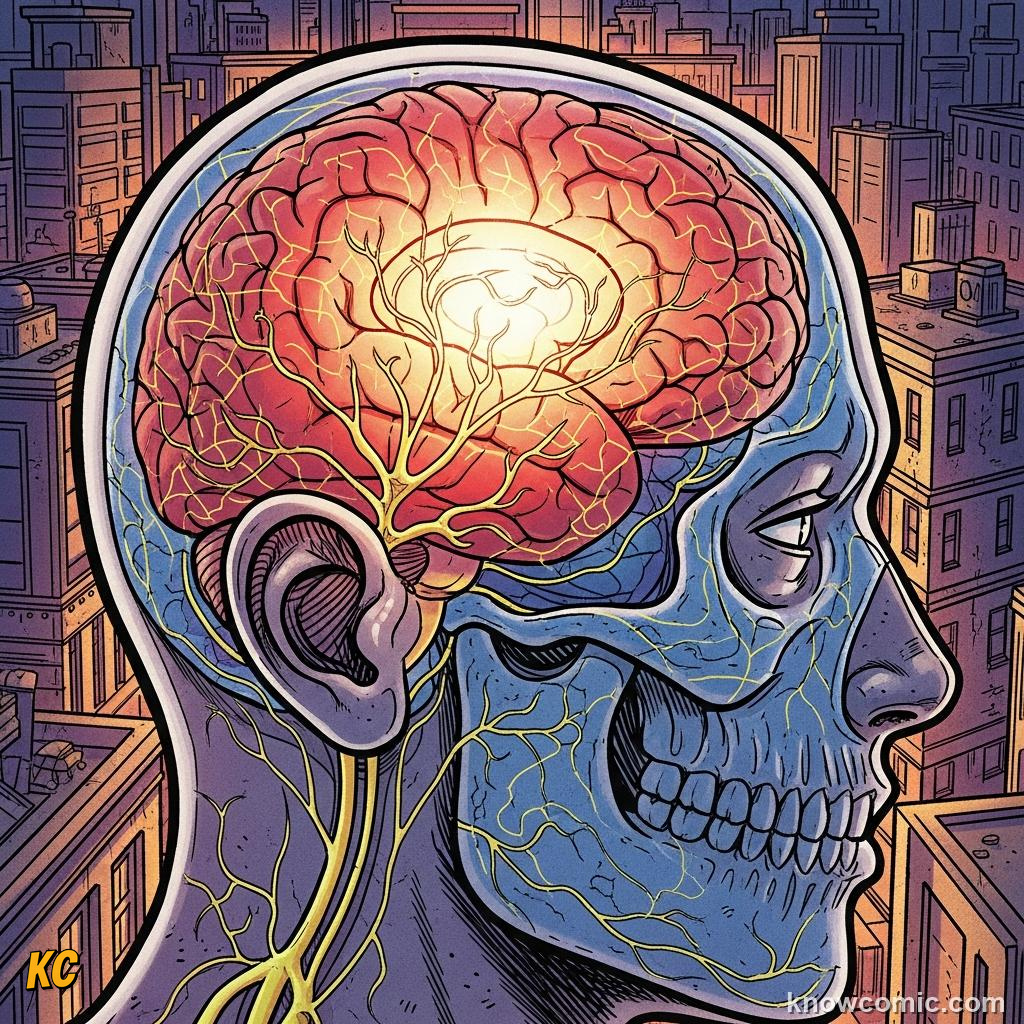
🧭 "What next?" — focus, foresight, and motor plans.
PARIETAL
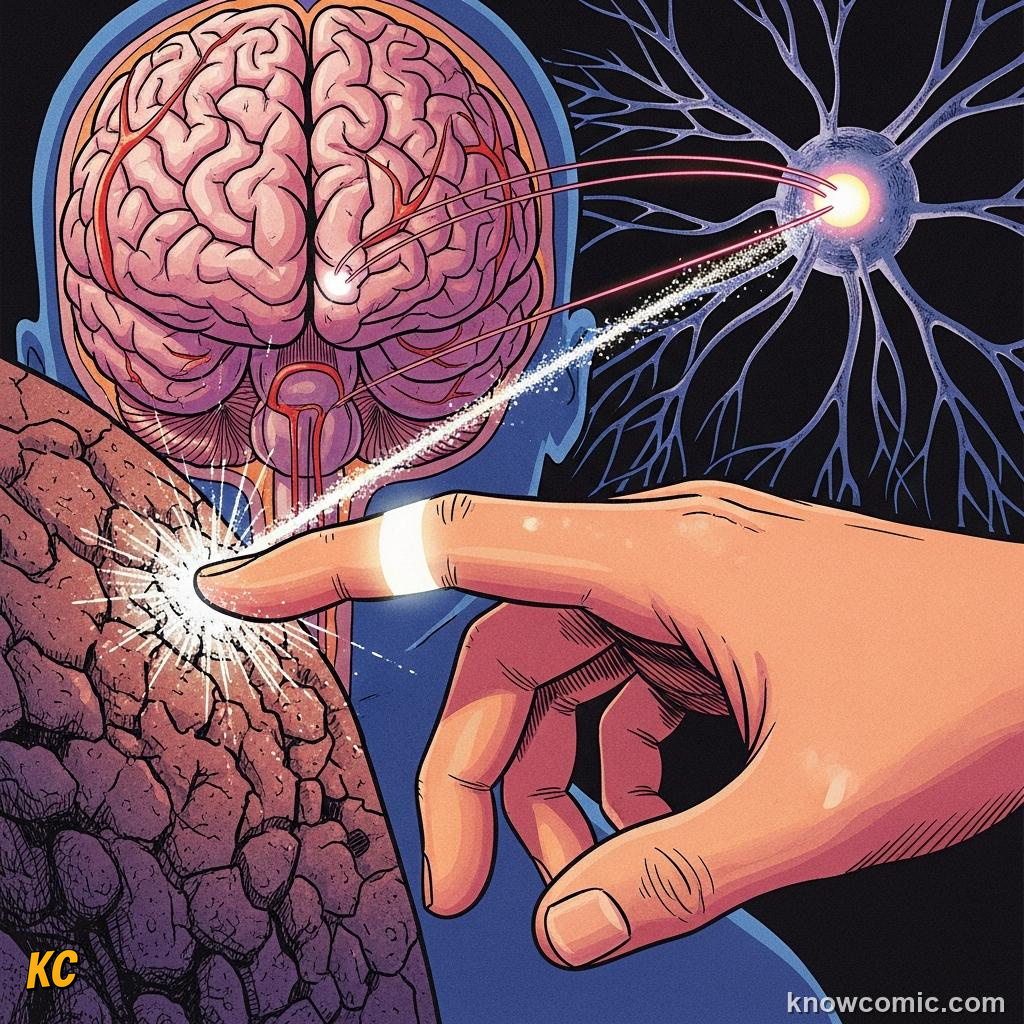
🖐️ Touch, pain, pressure, and "where is my hand?"
TEMPORAL
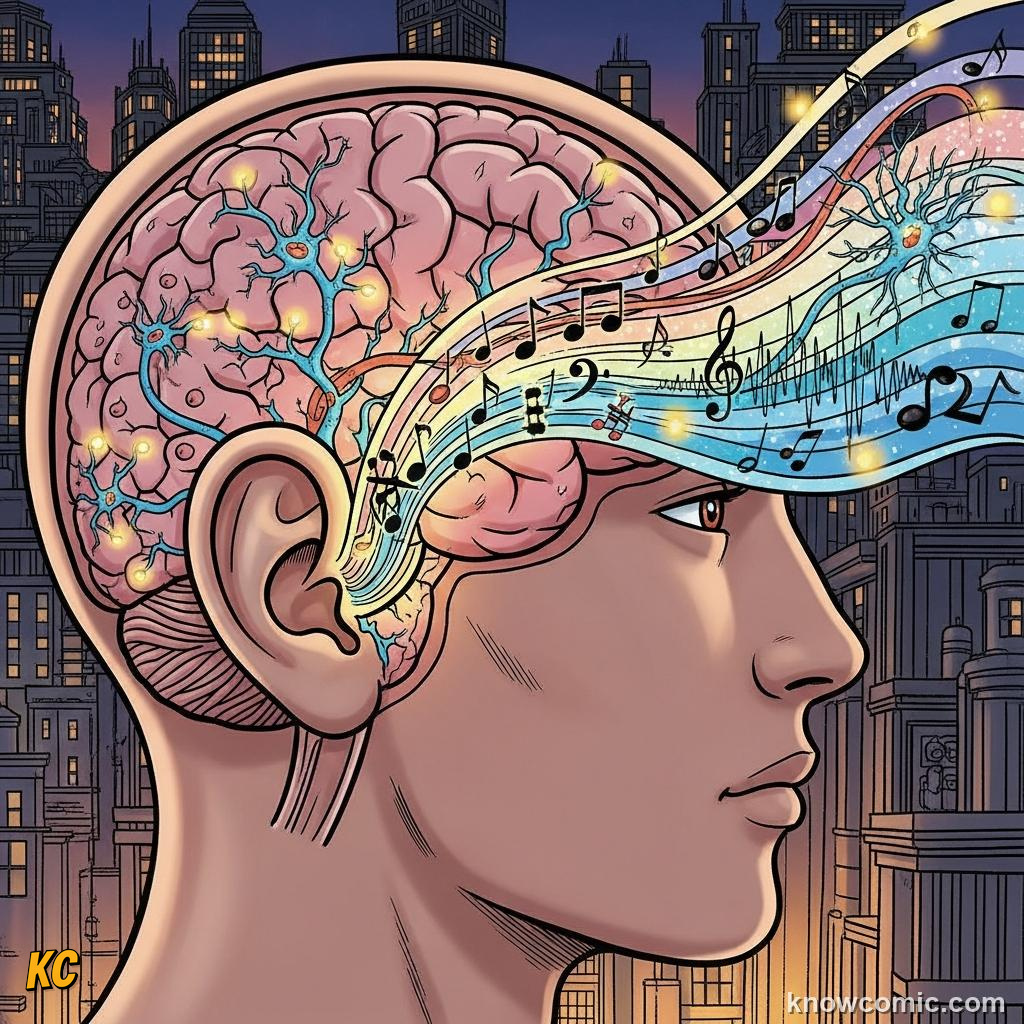
🎧 Hearing, language, and memory — heavy lifting together.
PAGE 3 OF 5 · STEM, BELT, & DEEP PARTNERS
LIFE
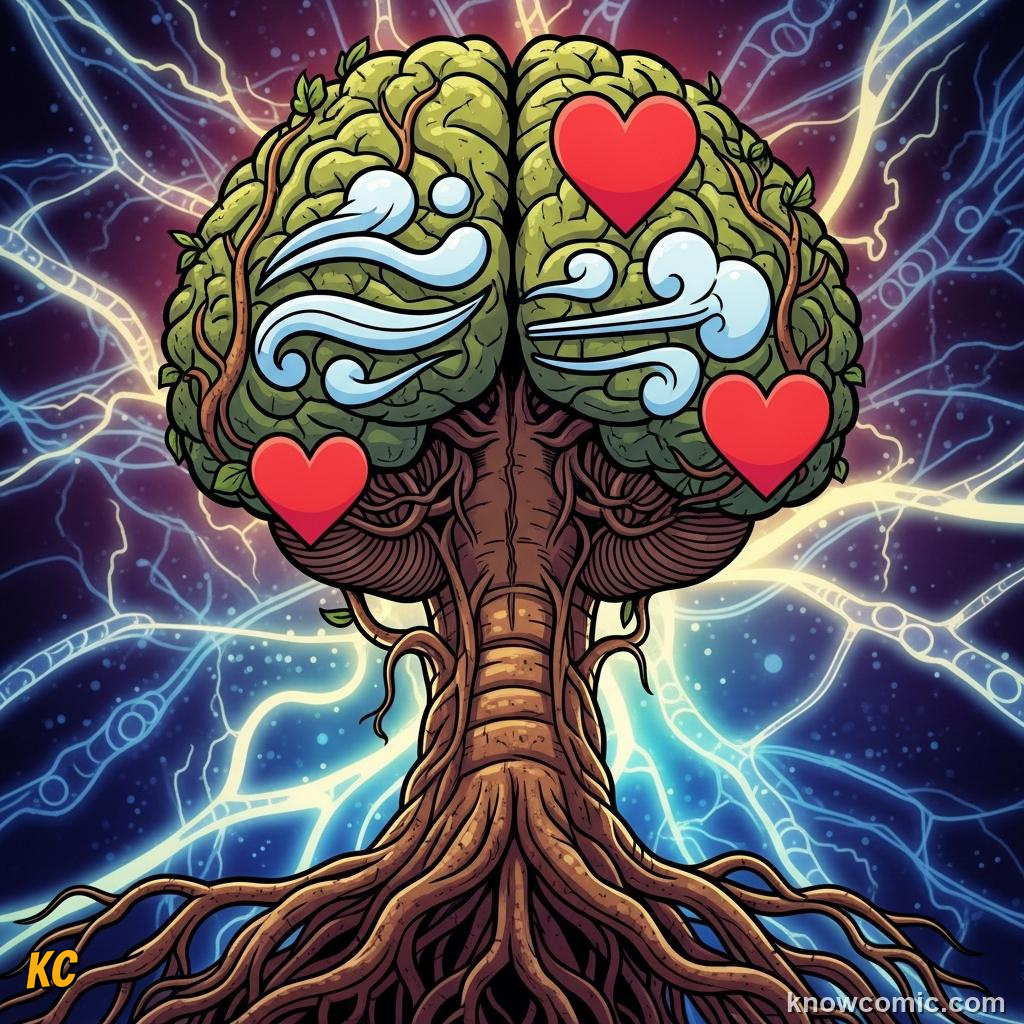
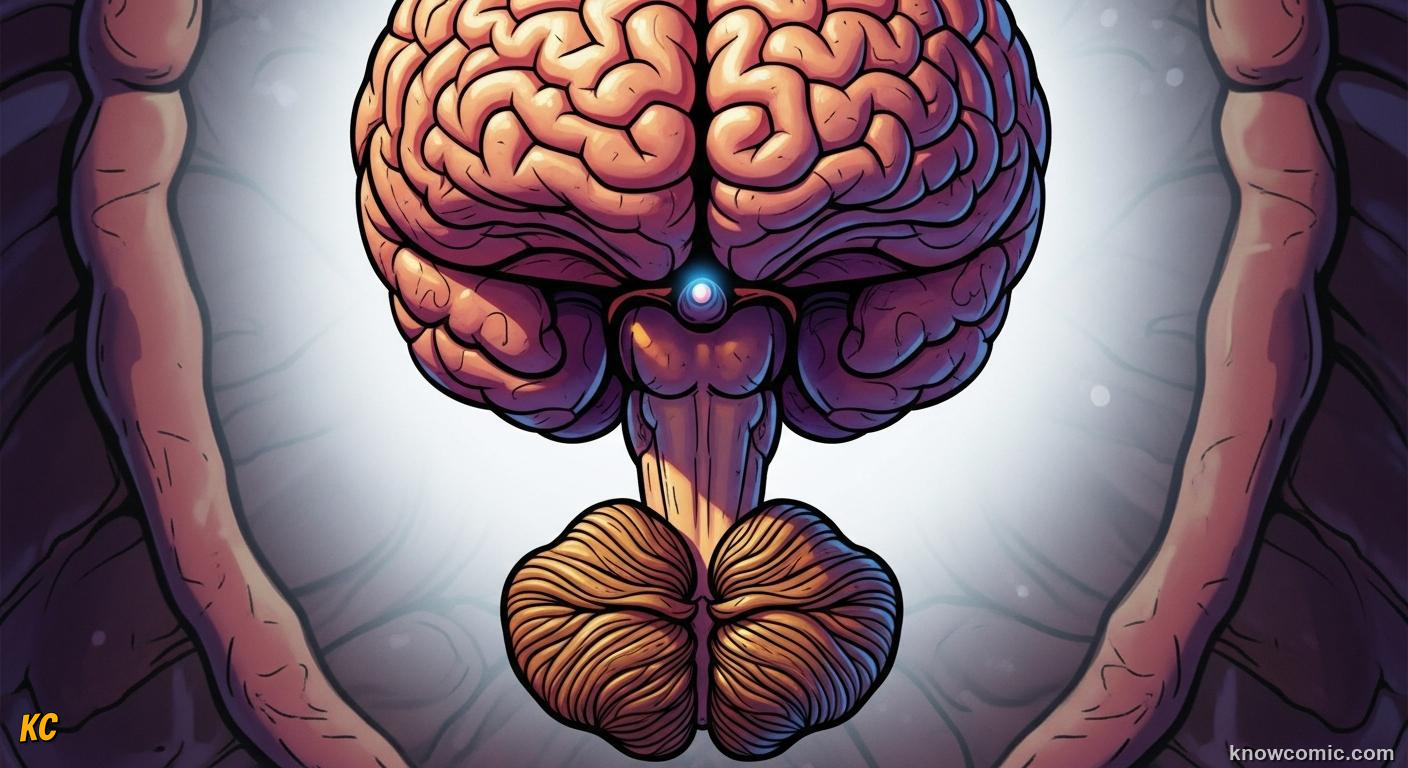
🫁 Brain stem: breathing, heart rate, sleep–wake "chaperones."
BALANCE
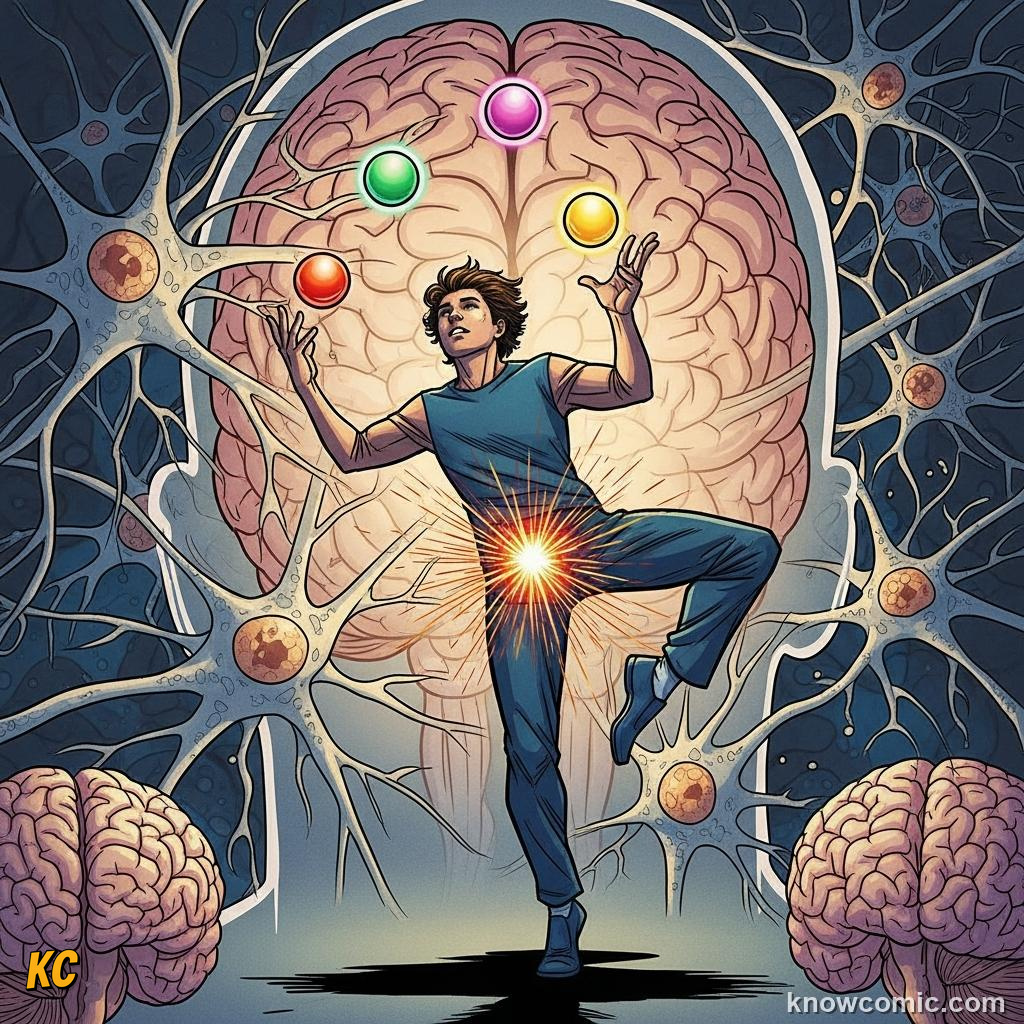
🤸 Cerebellum: smooth skills — bike riding, music, quick coordination.
INSIDE
MORE THAN CORTEX
Beneath the wrinkly cerebral cortex, deeper structures (like the thalamus and limbic partners) relay signals, tag emotions, and help with memory. The hippocampus (often sketched as a seahorse shape) is famous for helping form new long-term memories. The amygdala is alert for what feels important or scary. They do not work alone — the whole organ is a jam session, not a solo.
TEAM!
PAGE 4 OF 5 · WIRES THAT REWIRE
PLASTIC
ALWAYS A WORK IN PROGRESS
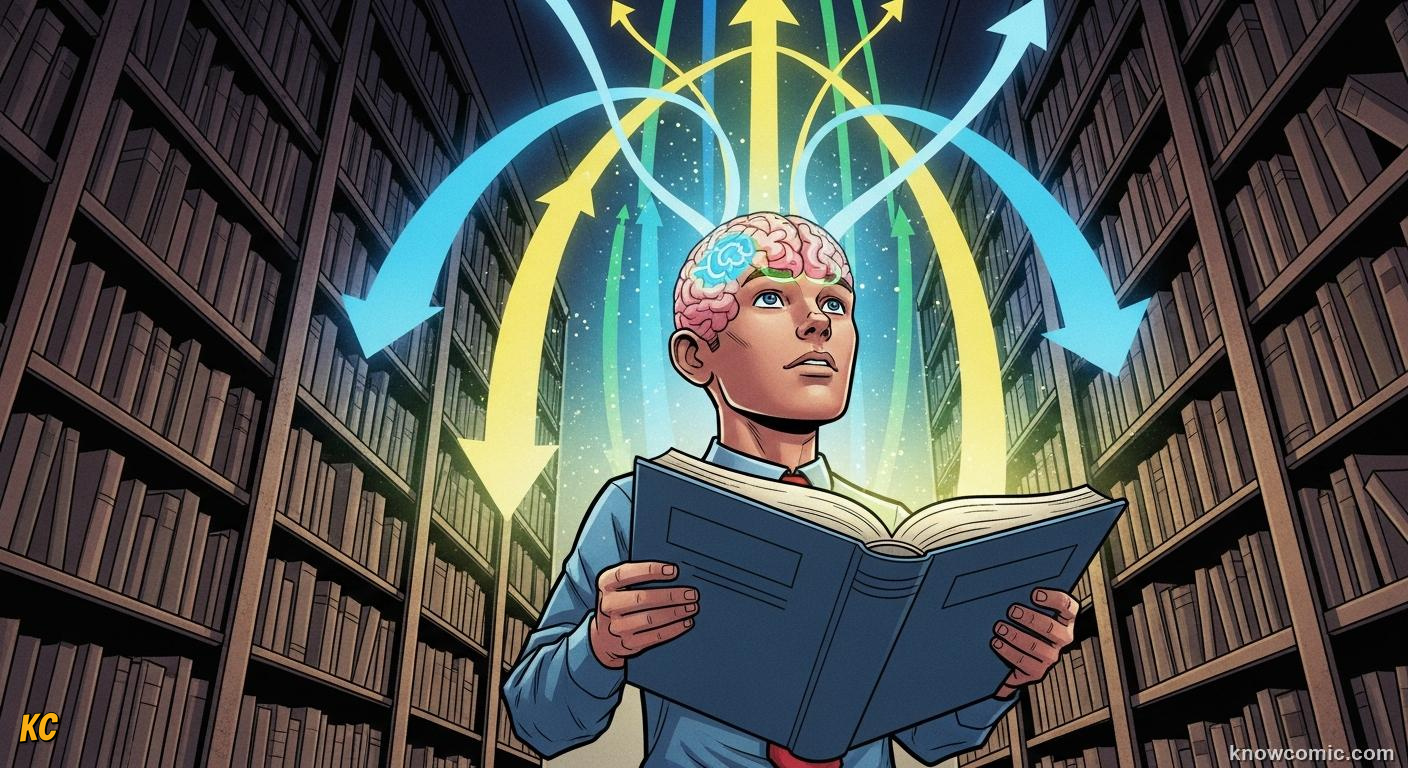
Your brain changes with practice — that is neuroplasticity. New connections can strengthen; unused routes can grow quieter. Sleep helps the brain file what mattered in the day. The old myth "left brain = creative, right brain = logic" is a cartoon: both sides work together, though some language networks lean left in most people. Talent still needs reps; labels should not cap your story.
GROW!
REPEAT
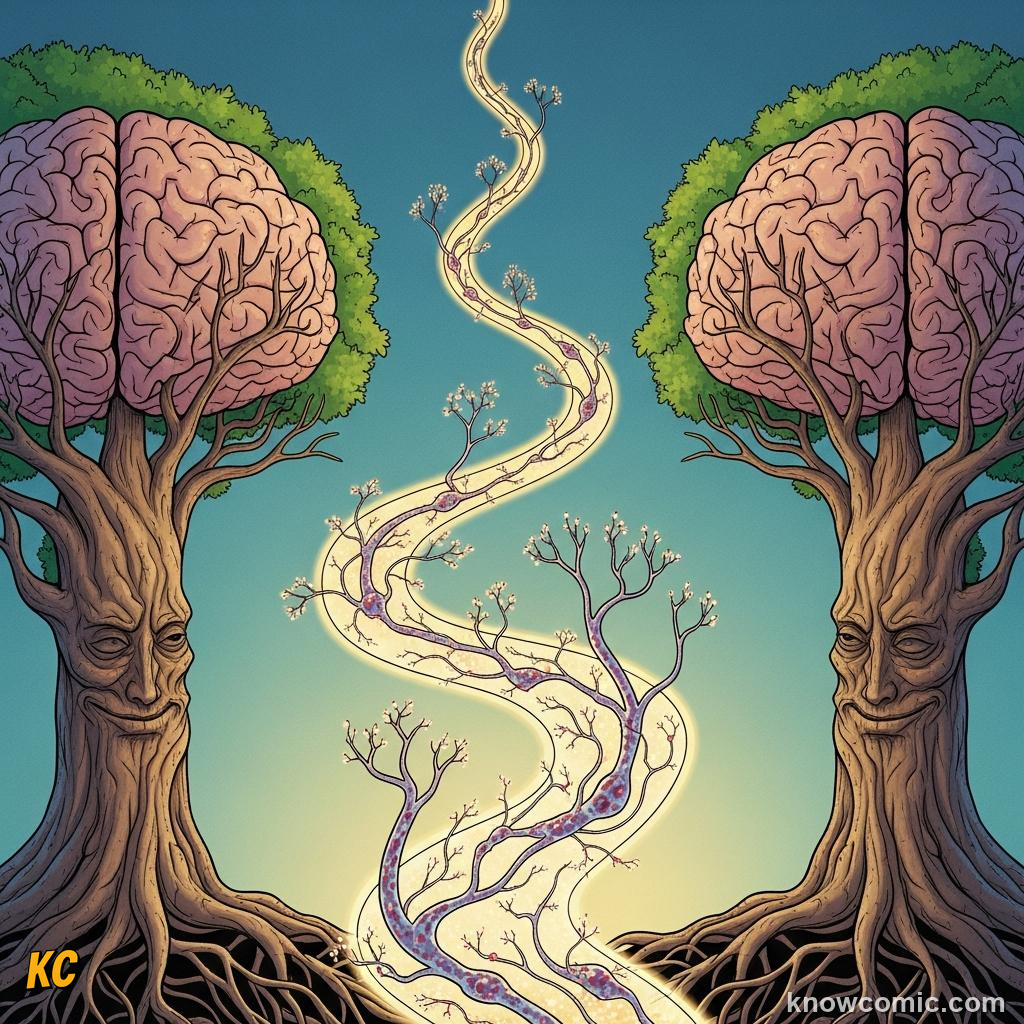
🔁 Neurons that fire together can wire together — practice is physical.
SLEEP
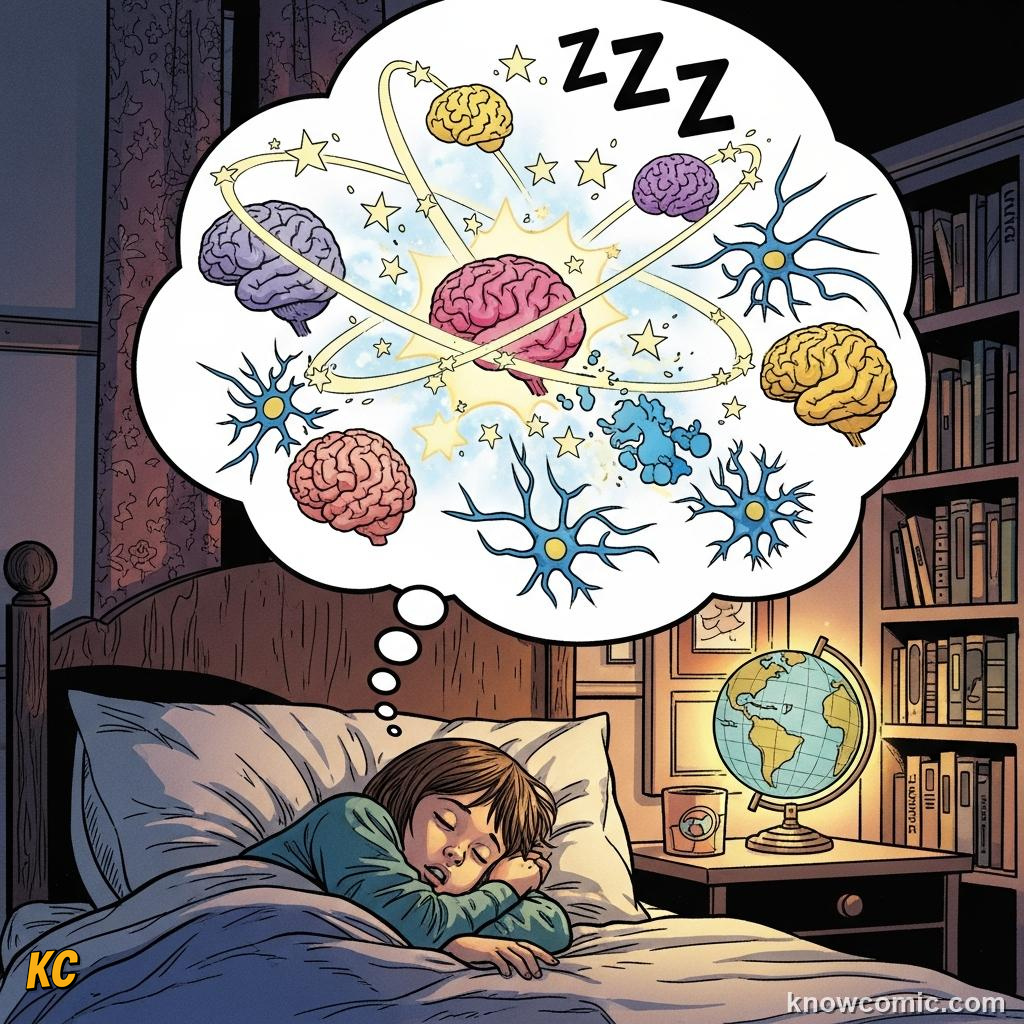
🌙 Memory consolidation leans on rest — not optional fluff.
BOTH
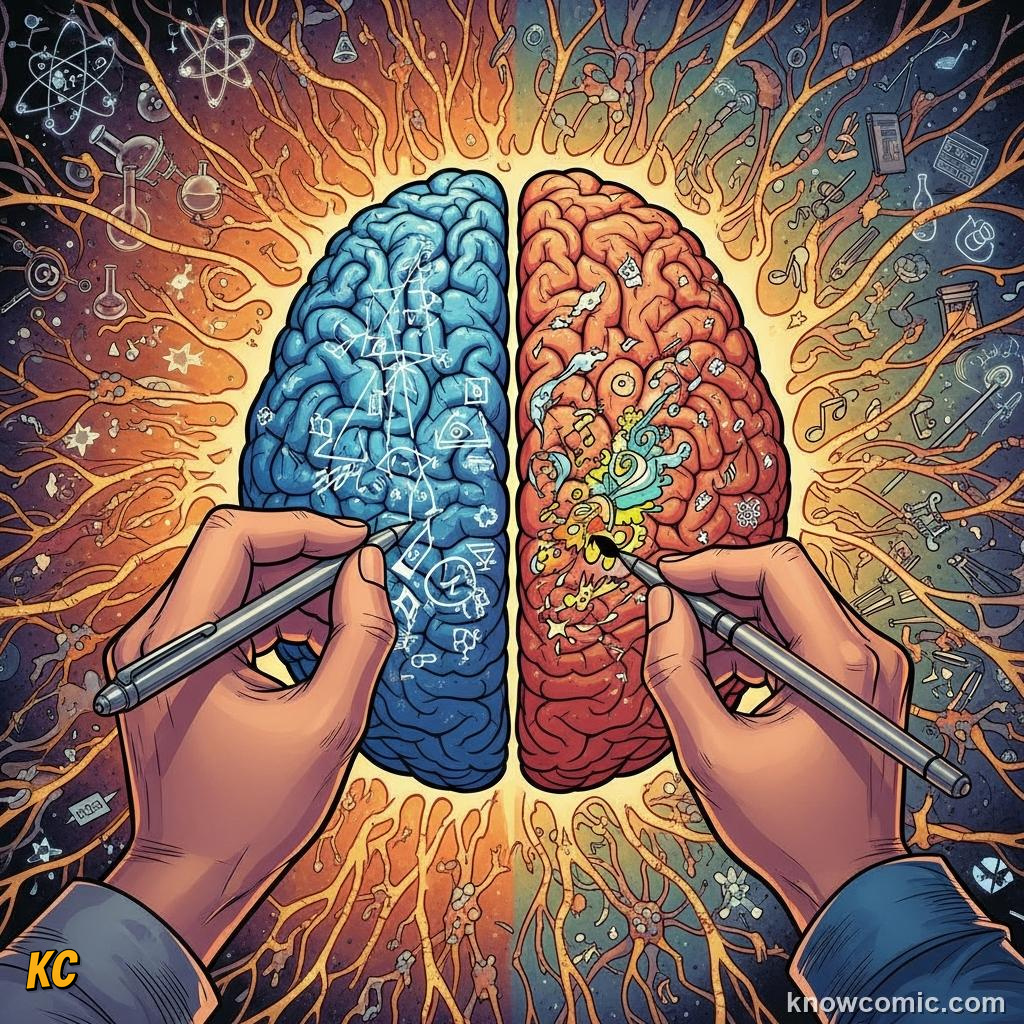
🤝 Hemispheres partner — you are a whole-brain thinker.
PAGE 5 OF 5 · KEEP THE BOSS HAPPY
CARE
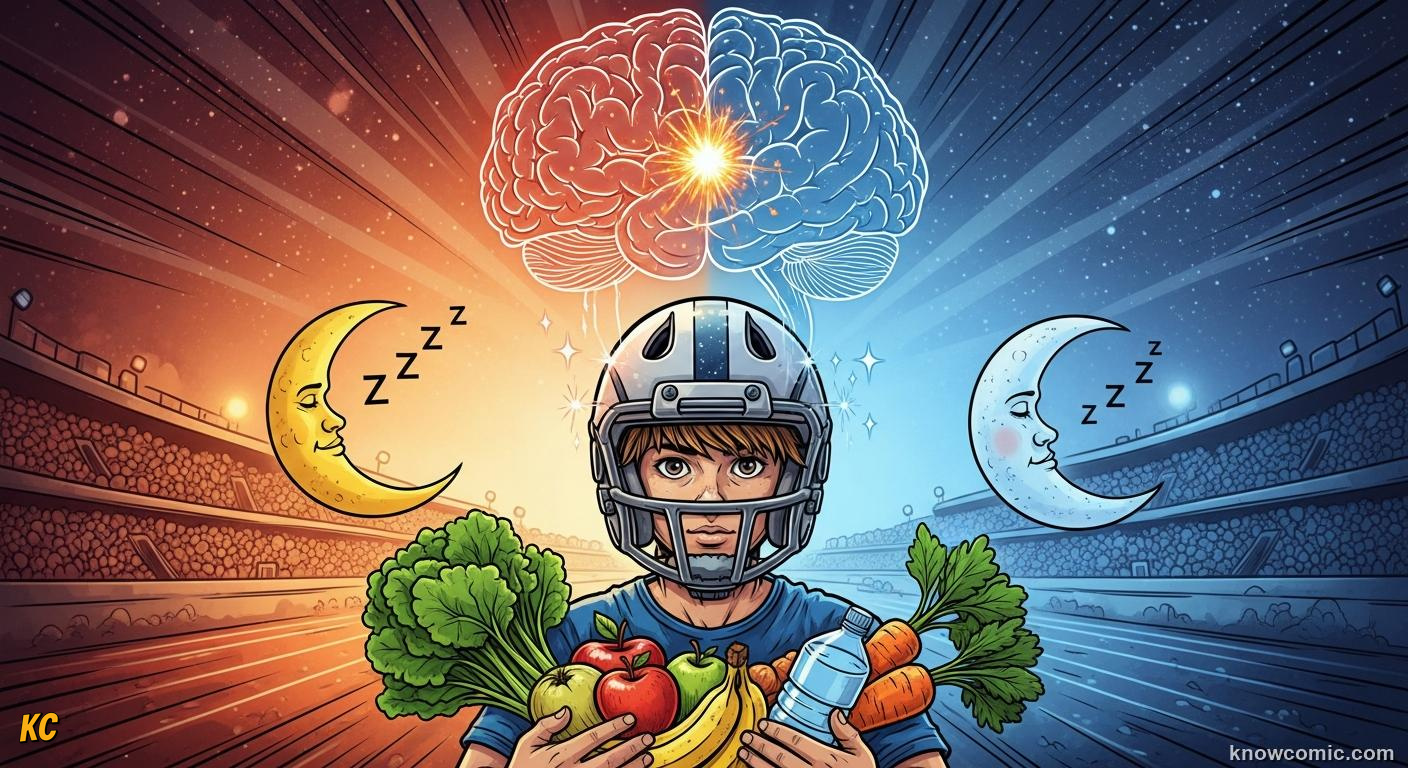
HELMETS, SLEEP, KINDNESS
A concussion is a real injury: rest and medical advice matter. Daily wins include enough water, sleep, movement, and learning you enjoy. If headaches, fainting, or sudden confusion appear — get help. Science still maps this galaxy between your ears; the best strategy is to treat your brain as precious hardware that loves curiosity, safety, and people who want you to thrive.
GUARD!
DAILY
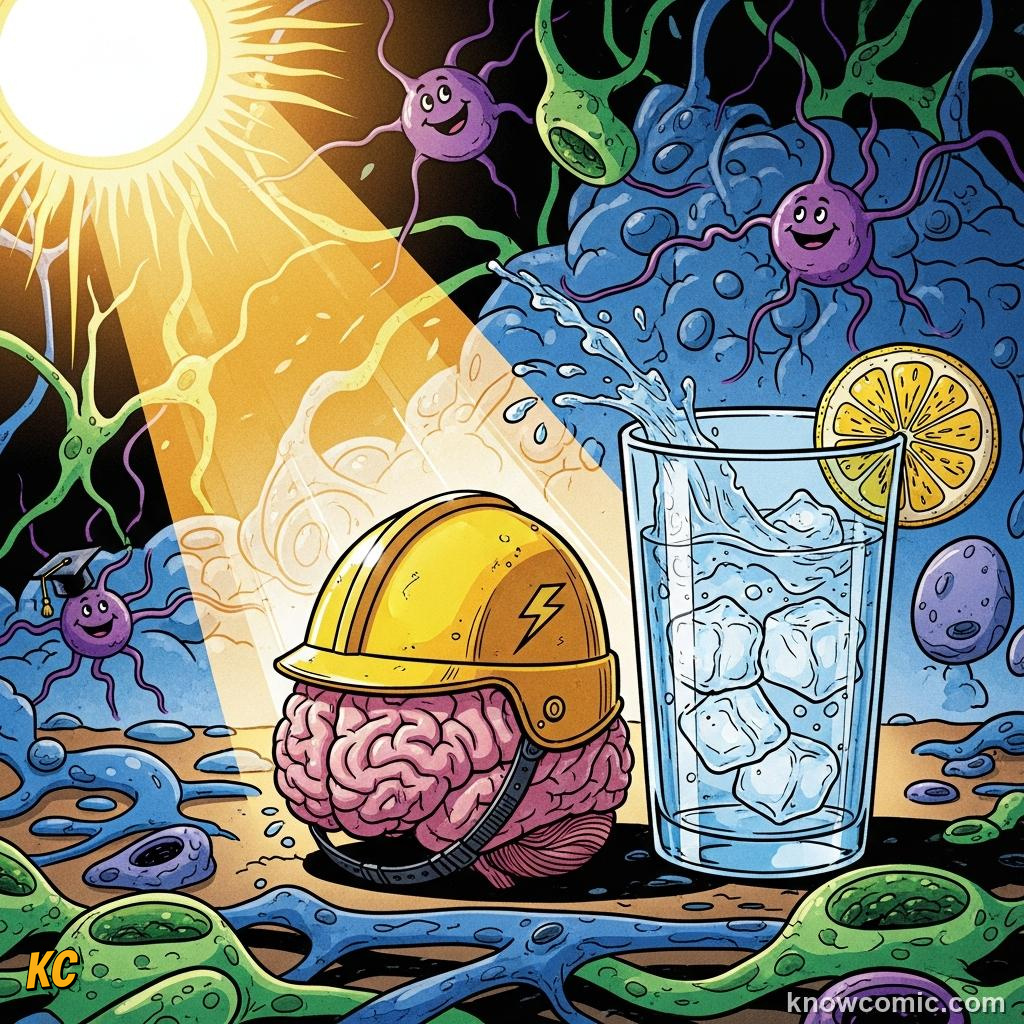
🍎 Fuel + H₂O + sun breaks
⛑️ Use gear for bikes & sports
📵 Screen breaks to rest eyes
⛑️ Use gear for bikes & sports
📵 Screen breaks to rest eyes
RECAP
🧠 KEY FACTS
~86B neurons, four lobes with distinct "home bases," brain stem and cerebellum for life and skill, deep circuits for memory and emotion, plasticity + sleep, protect and challenge your mind.
✅ Map ≠ myth — regions cooperate.
✅ You can get better at new things.
✅ If hurt or odd symptoms — talk to a pro.
✅ You can get better at new things.
✅ If hurt or odd symptoms — talk to a pro.
🧠 QUIZ TIME!
BRAIN: COMMAND CENTRE · 5 QUESTIONS
QUESTION 01
The human brain has roughly how many neurons?
QUESTION 02
The occipital lobe (toward the back) is most linked with which sense pipeline?
QUESTION 03
The cerebellum (the "small brain" at the back base) is especially famous for:
QUESTION 04
The brain's outer wrinkly "gray matter" sheet is best known as the:
QUESTION 05
The brain stem is critical for many automatic "must stay alive" functions, such as:
0/5
LOADING...