🍽️ THE DIGESTIVE SYSTEM
PAGE 1 OF 5 · WHERE DIGESTION BEGINS
START
MOUTH & ESOPHAGUS
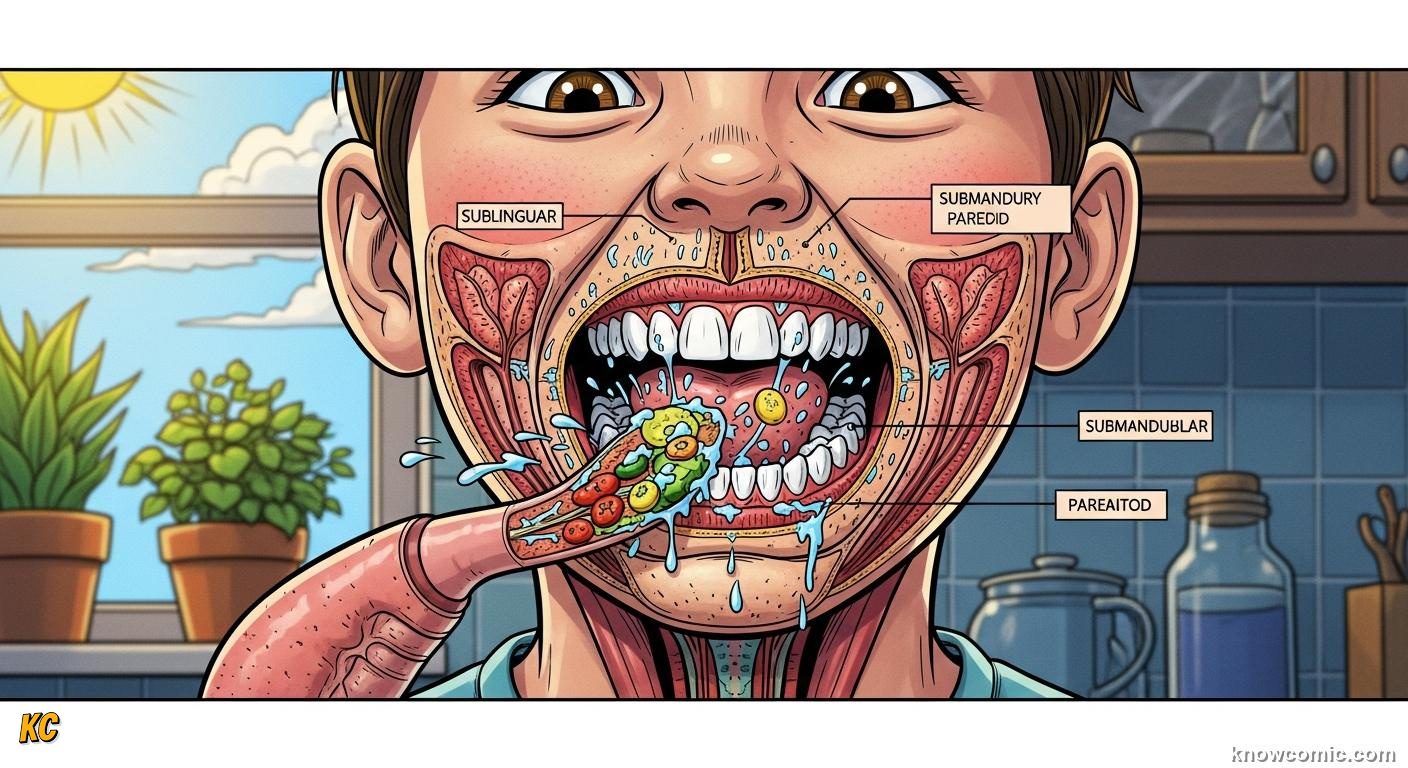
Digestion starts before food reaches your stomach. Teeth tear and grind while saliva wets everything and begins breaking down starch. When you swallow, a muscular tube called the esophagus squeezes in waves — peristalsis — pushing the bolus toward your stomach. You do not choose those waves; smooth muscle handles the commute.
⚡ DID YOU KNOW?
Adults produce about one litre of saliva per day — it protects teeth, begins starch digestion, and makes food slippery enough to swallow safely.
CHEW!
MECHANICAL
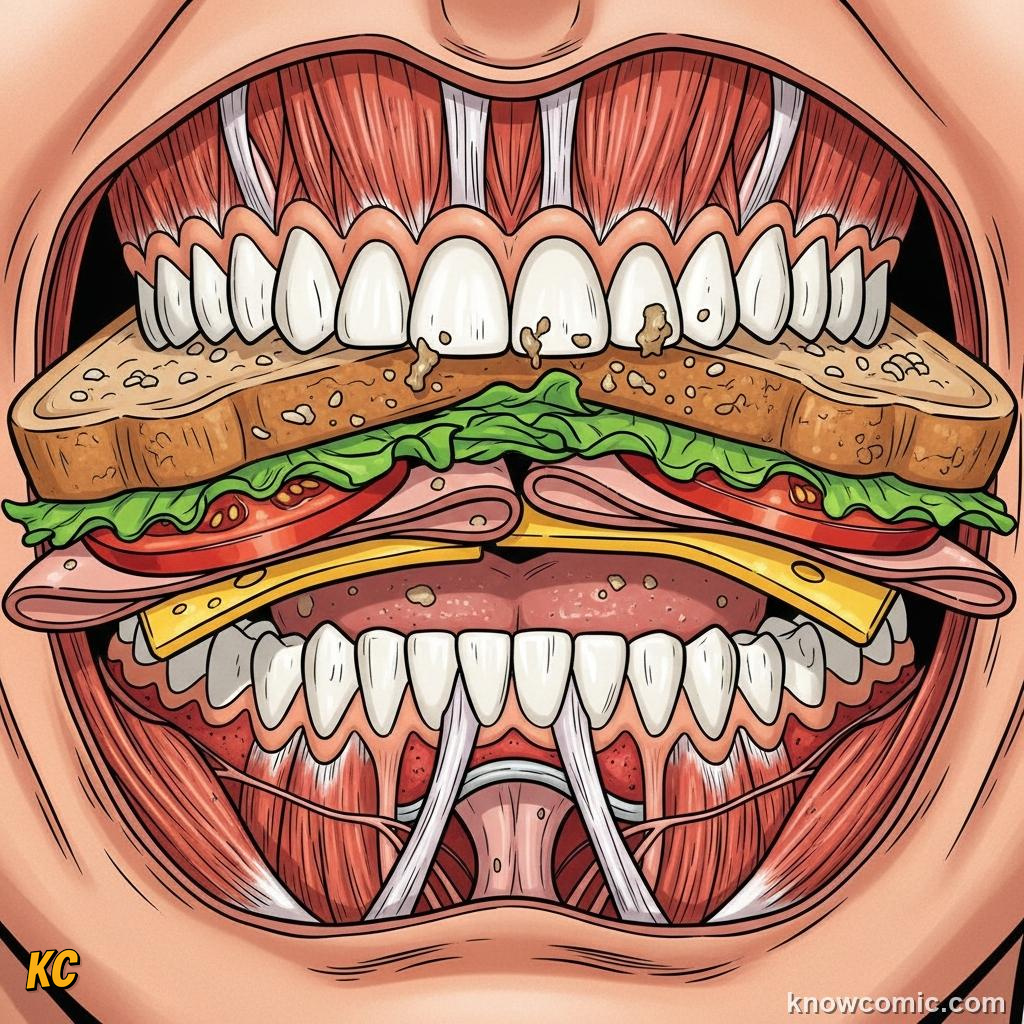
🦷 Molars crush; incisors slice.
💧 Saliva carries enzyme amylase for starch.
💧 Saliva carries enzyme amylase for starch.
TUBE RIDE
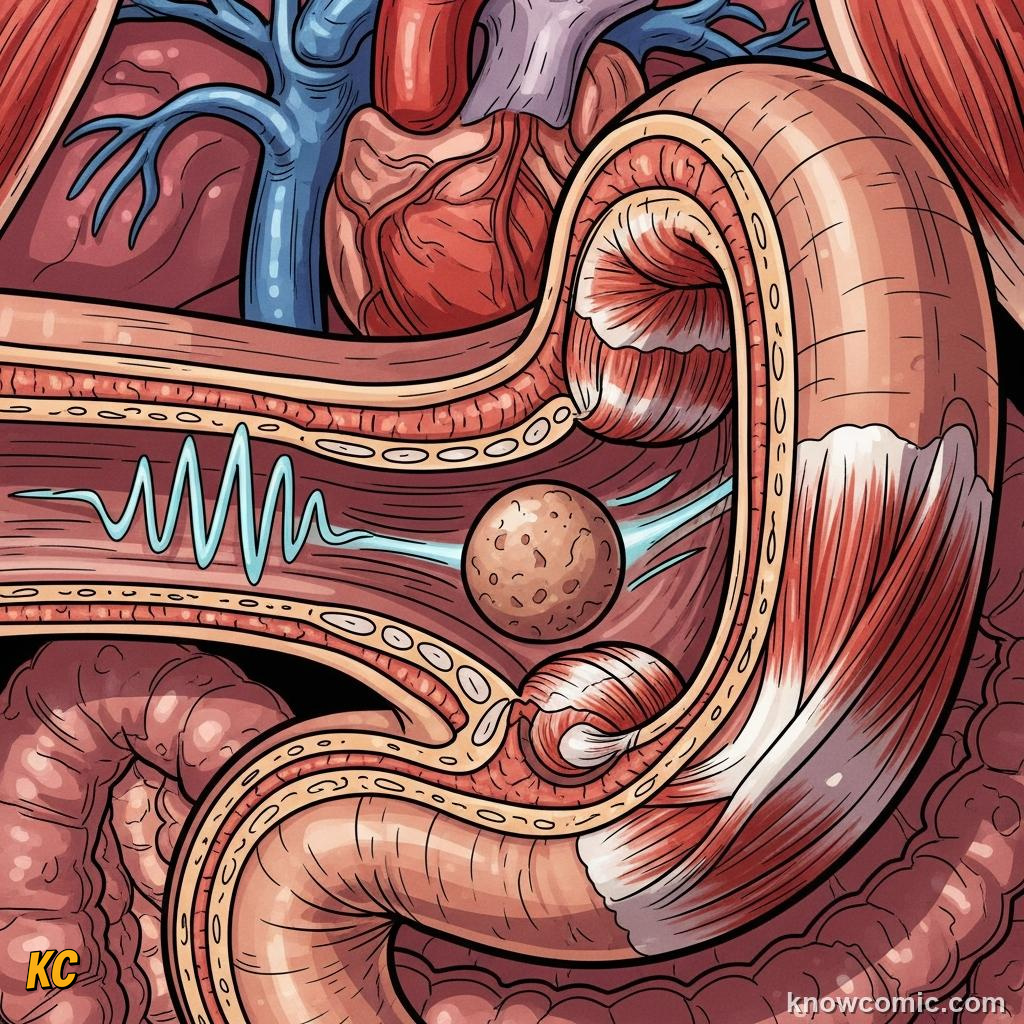
↕️ Peristalsis moves food in one direction.
🔒 A flap seals your windpipe when you swallow.
🔒 A flap seals your windpipe when you swallow.
PAGE 2 OF 5 · THE STOMACH'S ACID BATH
CHURN
STRONG STOMACH, SMART LINING
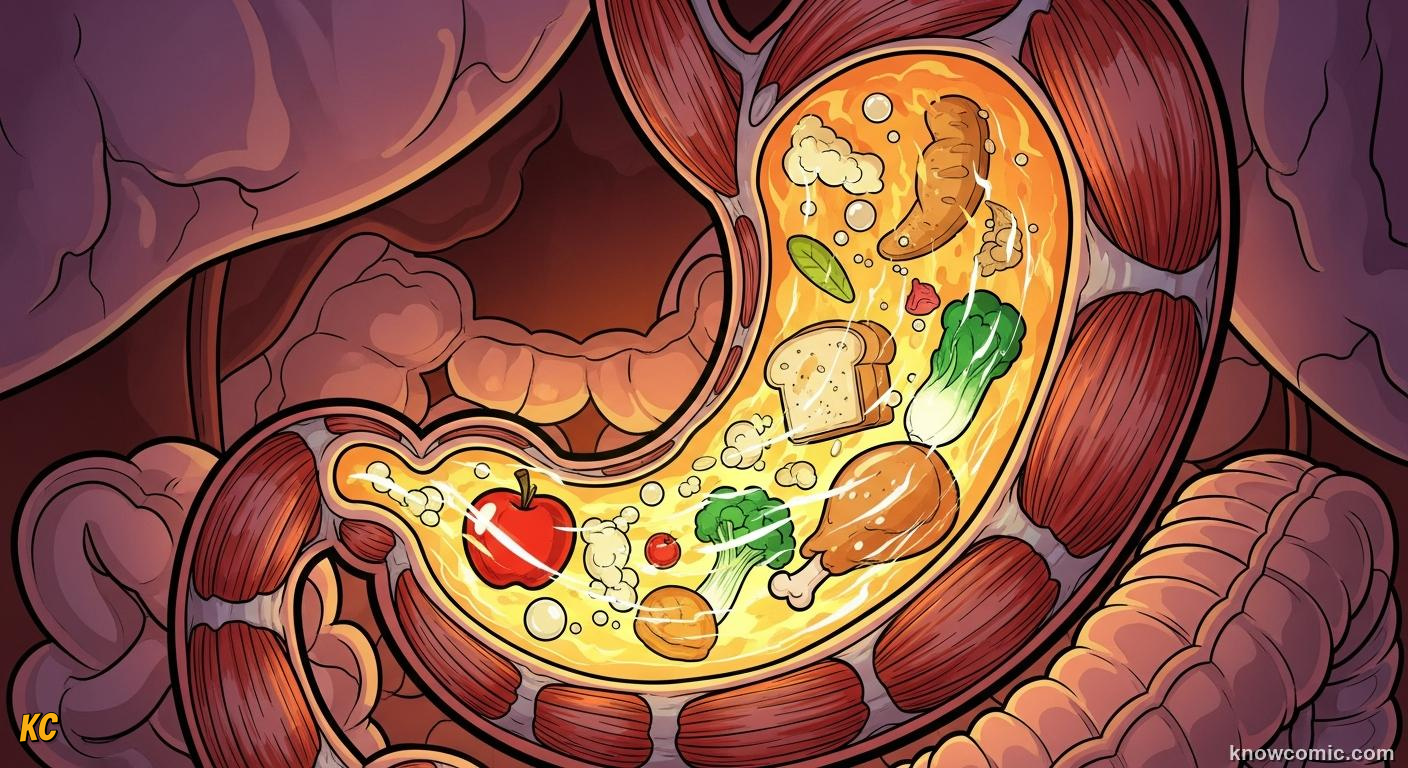
Your stomach is a muscular bag that mixes food with gastric juice — including hydrochloric acid strong enough to help unfold proteins and kill many germs. Mucus coats the wall so the acid digests lunch, not you. After a few hours of churning, the partly digested soup called chyme drips into the small intestine a little at a time.
ACID!
MUCUS SHIELD
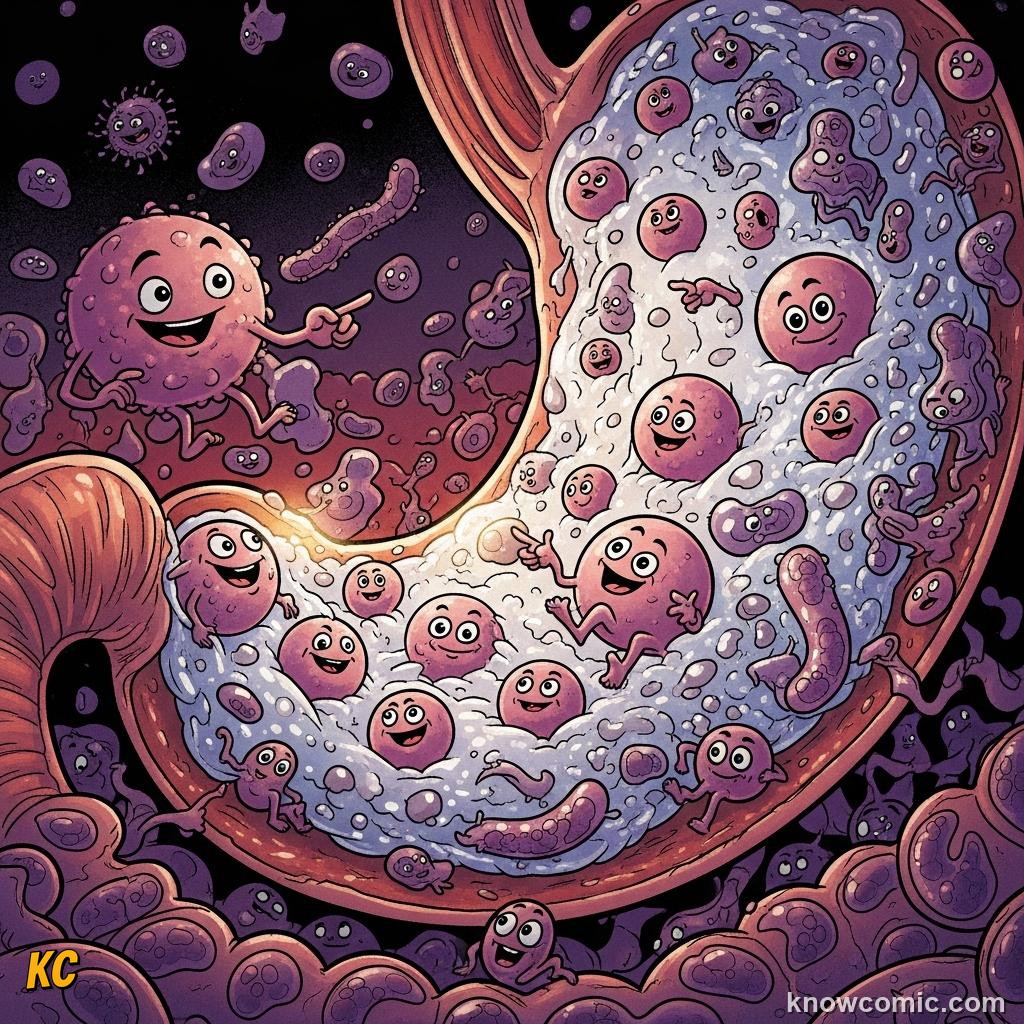
🛡️ Thick mucus protects stomach cells from acid.
LOW PH
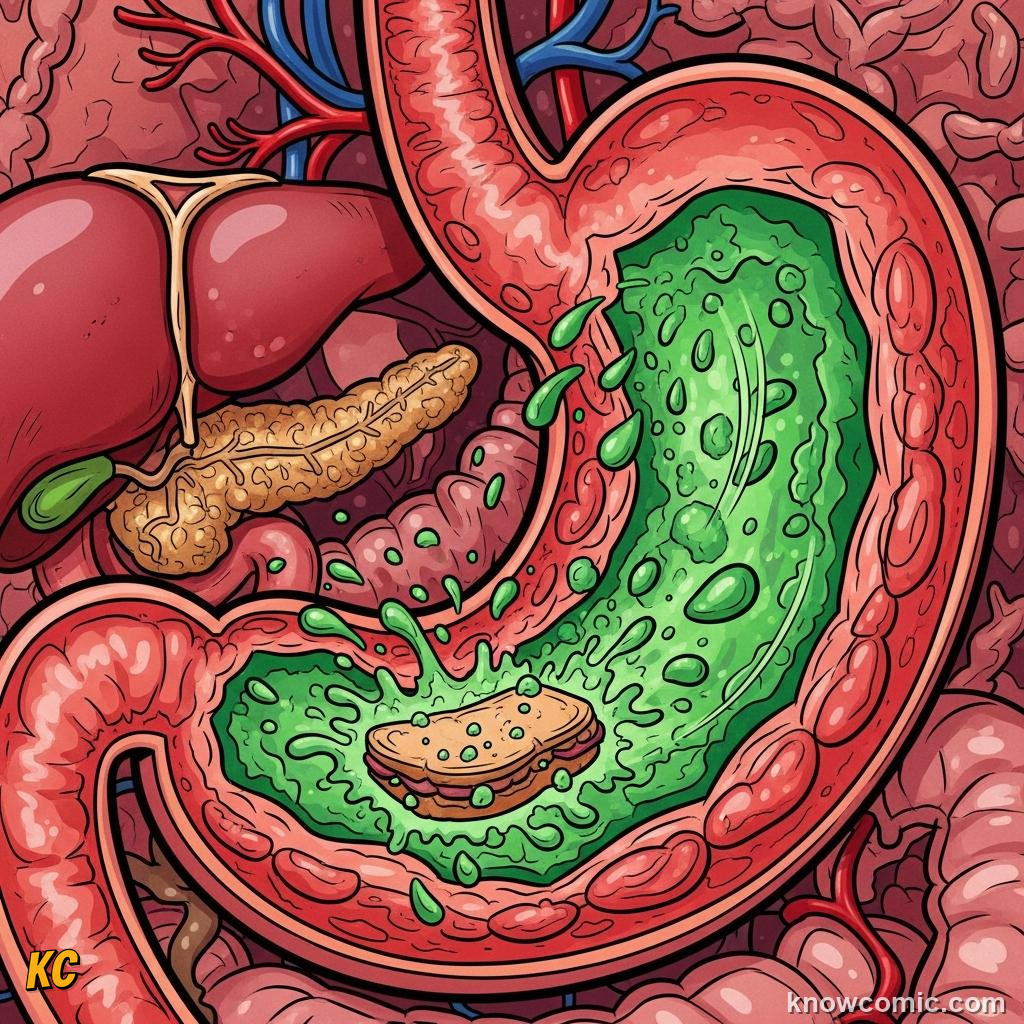
🧪 Very acidic juice activates protein-cutting enzymes.
CHYME
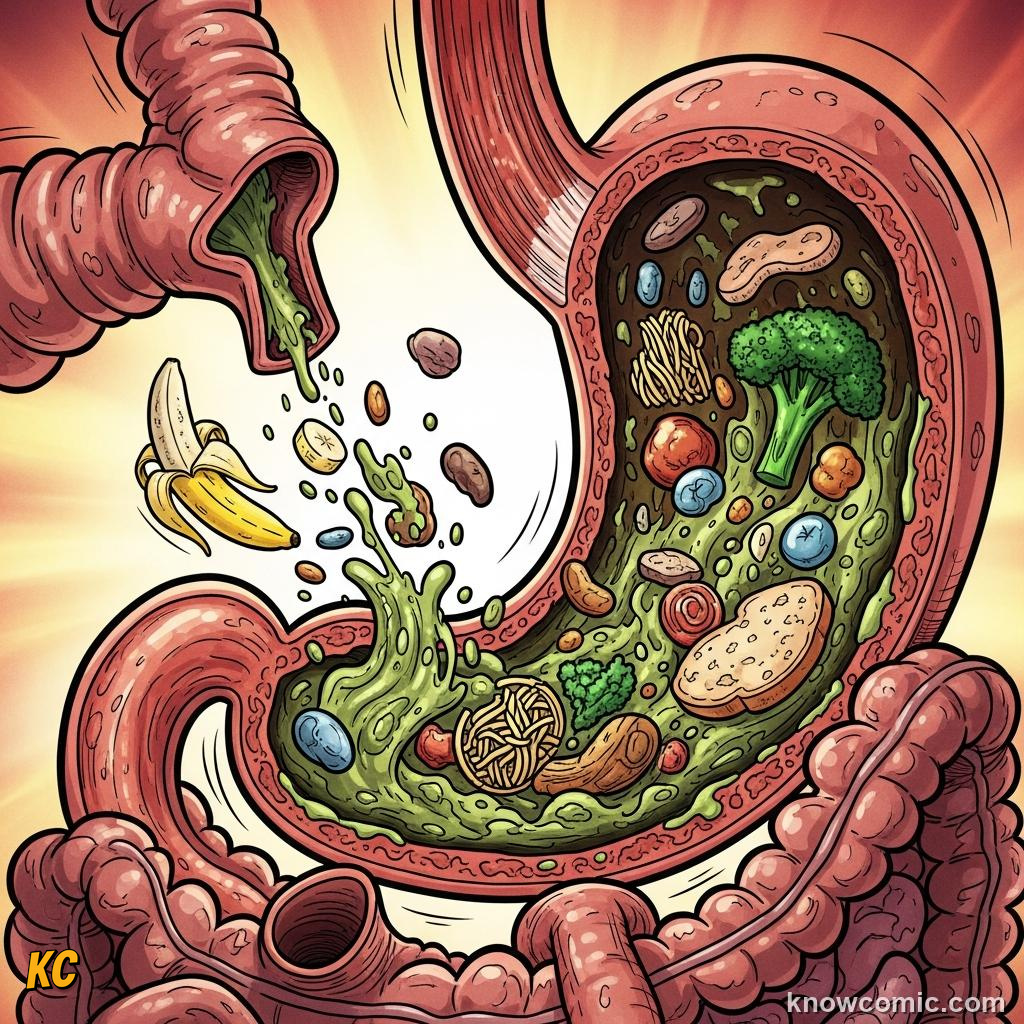
🥣 Liquid mix exits slowly through the pyloric valve.
PAGE 3 OF 5 · ABSORPTION CENTRAL
LIVER
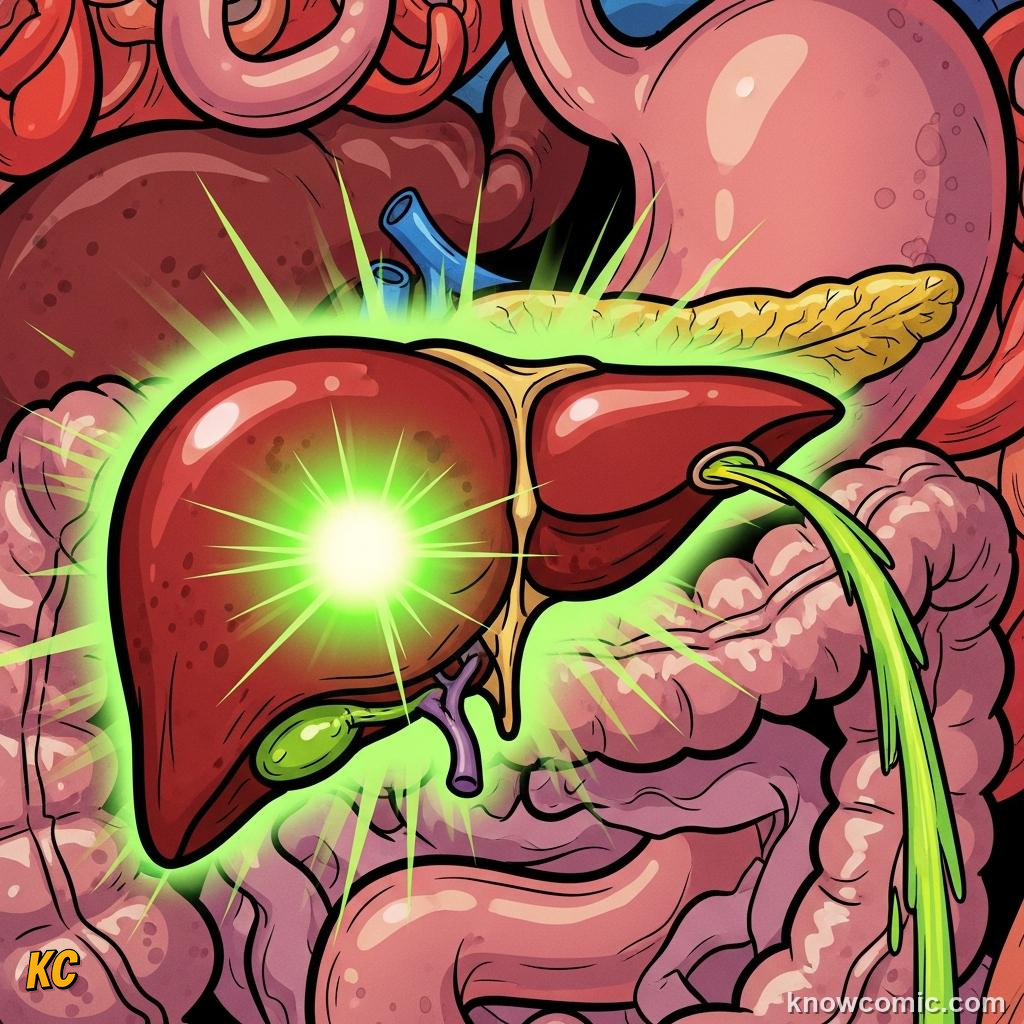
🟡 Makes bile to emulsify fats like detergent on grease.
📦 Stores and tweaks nutrients after absorption.
📦 Stores and tweaks nutrients after absorption.
PANCREAS
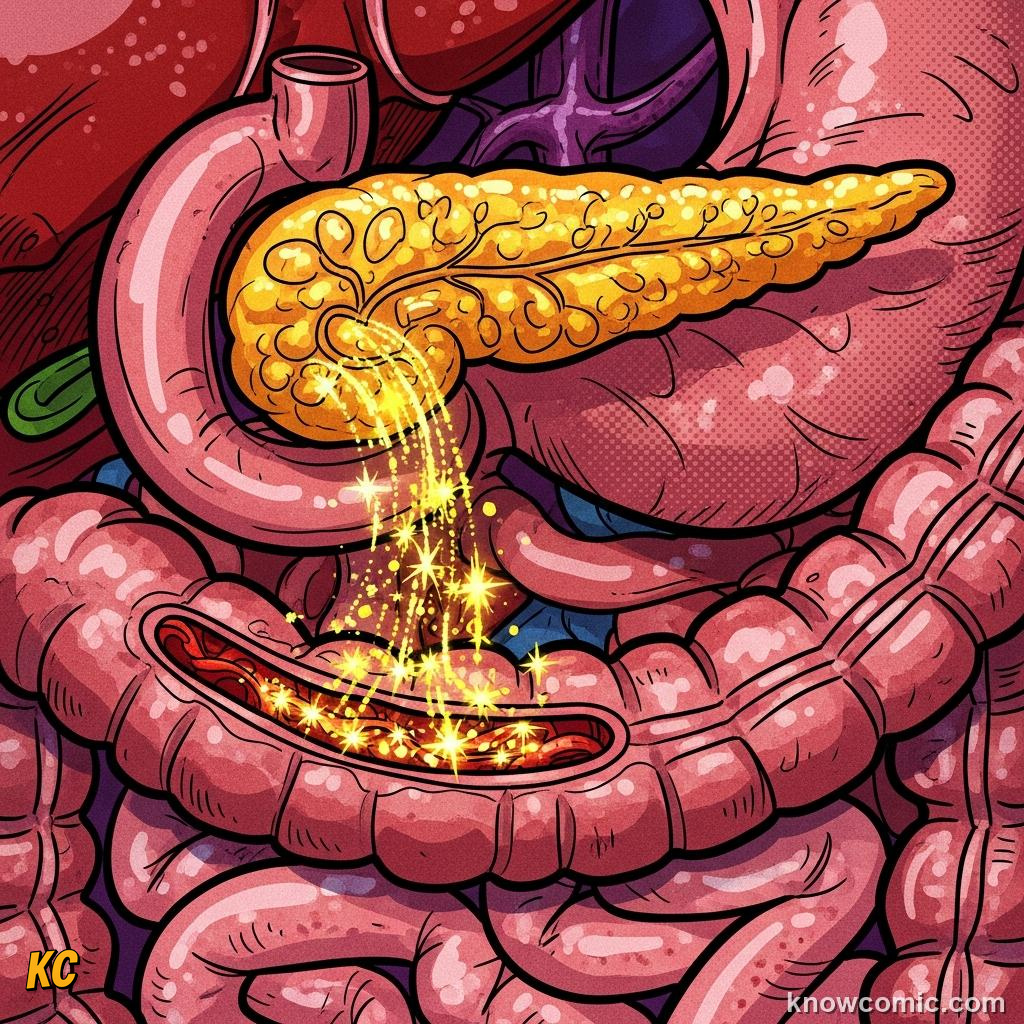
🧬 Ships digestive enzymes through one shared duct.
⚖️ Also makes hormones like insulin for blood sugar.
⚖️ Also makes hormones like insulin for blood sugar.
VILLI
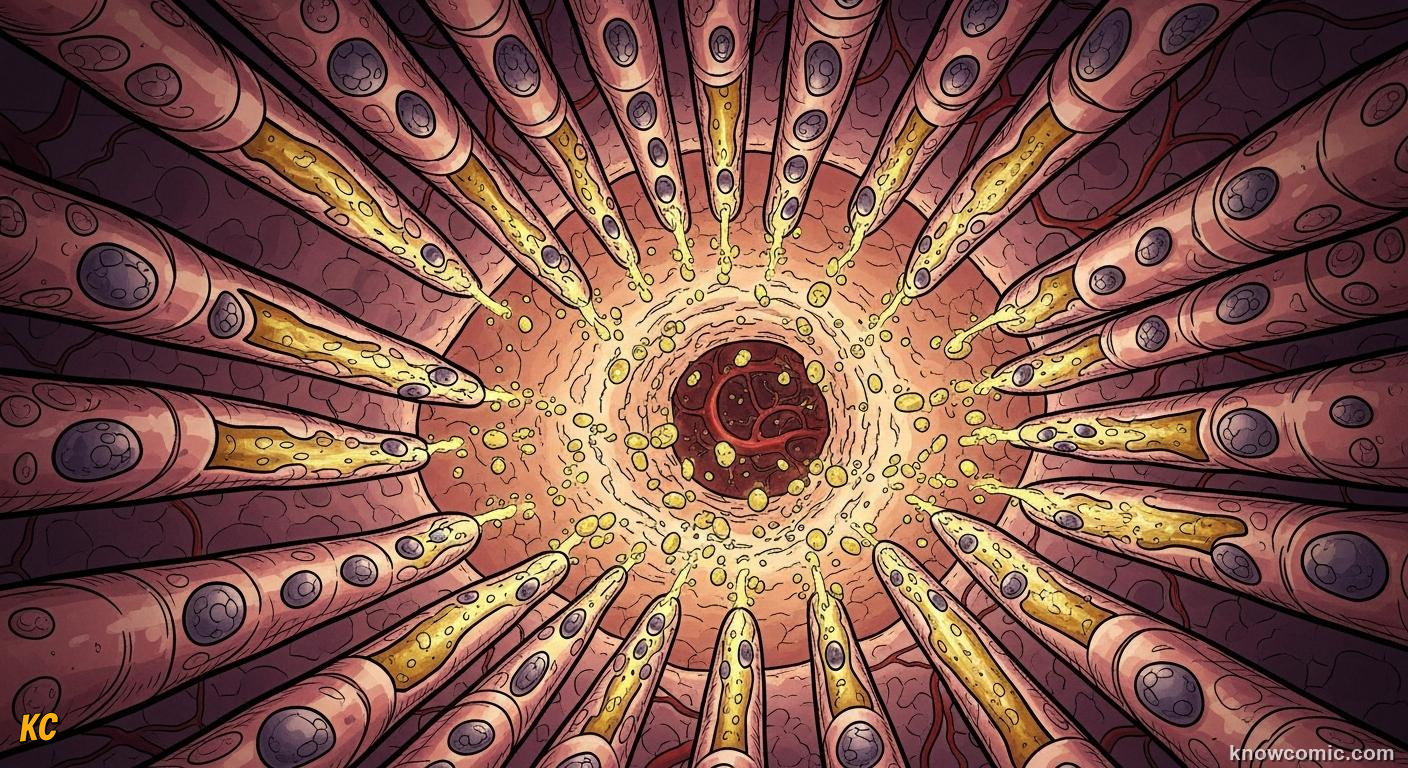
SMALL INTESTINE WINS
Most nutrient absorption happens here. The lining is folded and covered in tiny finger-like villi (and even tinier microvilli on each cell). That huge surface area lets sugars, amino acids, minerals, and fats slip into blood or lymph. Without this stage, you could eat plenty and still starve.
ABSORB!
PAGE 4 OF 5 · WATER, BACTERIA, FINISH LINE
COLON
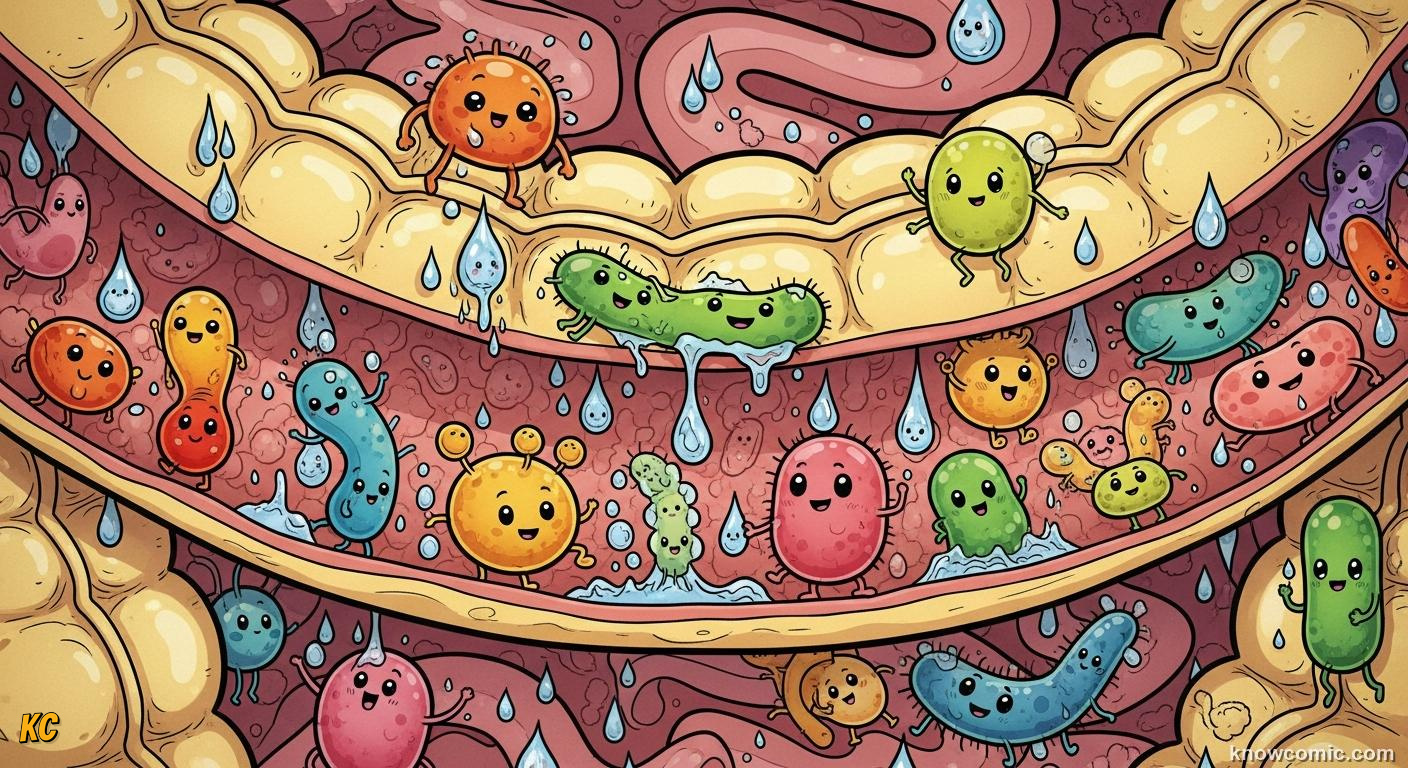
LARGE INTESTINE JOB
What is left is mostly fibre, some water, and indigestible bits. The colon reabsorbs water and salts so you do not dehydrate. Trillions of friendly bacteria ferment some fibre, make vitamins you can reuse, and crowd out nastier germs. Finally, waste compacts and moves toward exit — the end of a journey that began with a bite.
WATER!
REABSORB
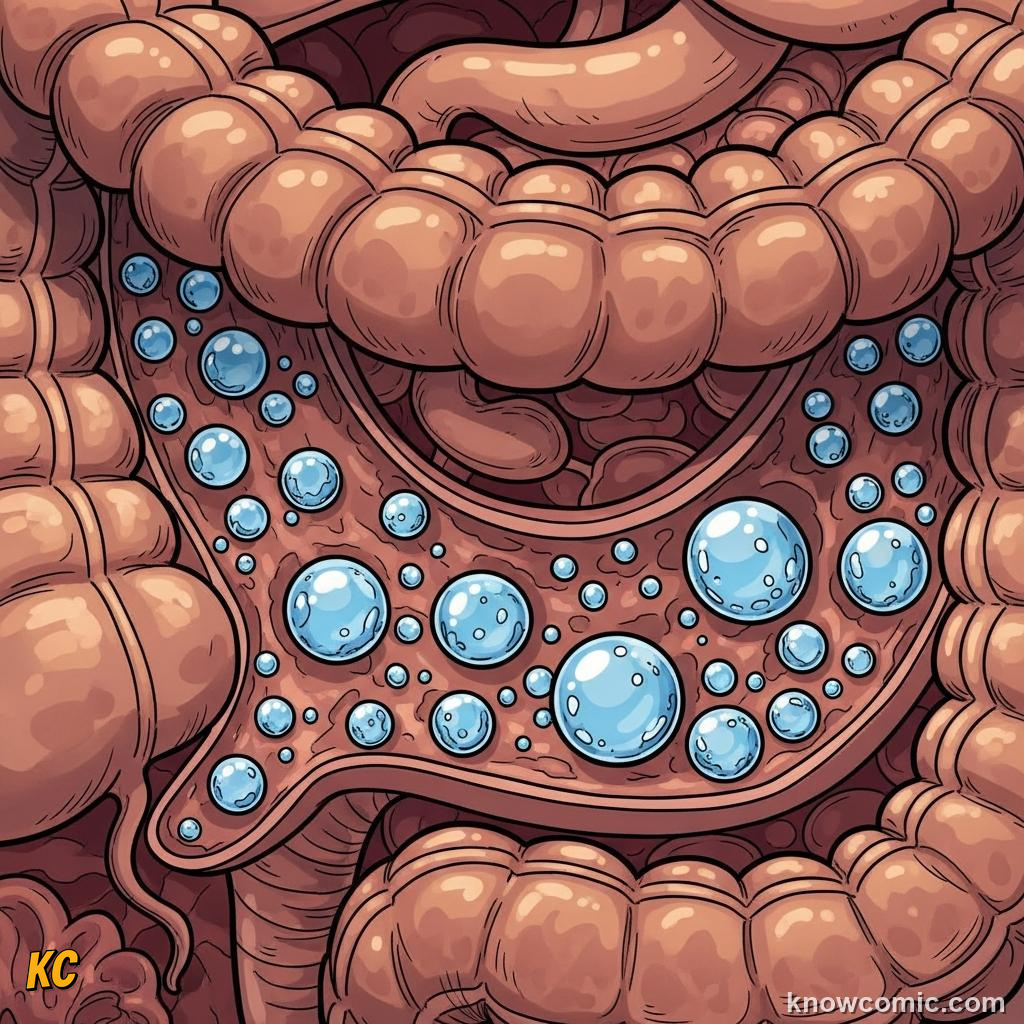
💧 Hours of slow water recycling.
MICROBIOME
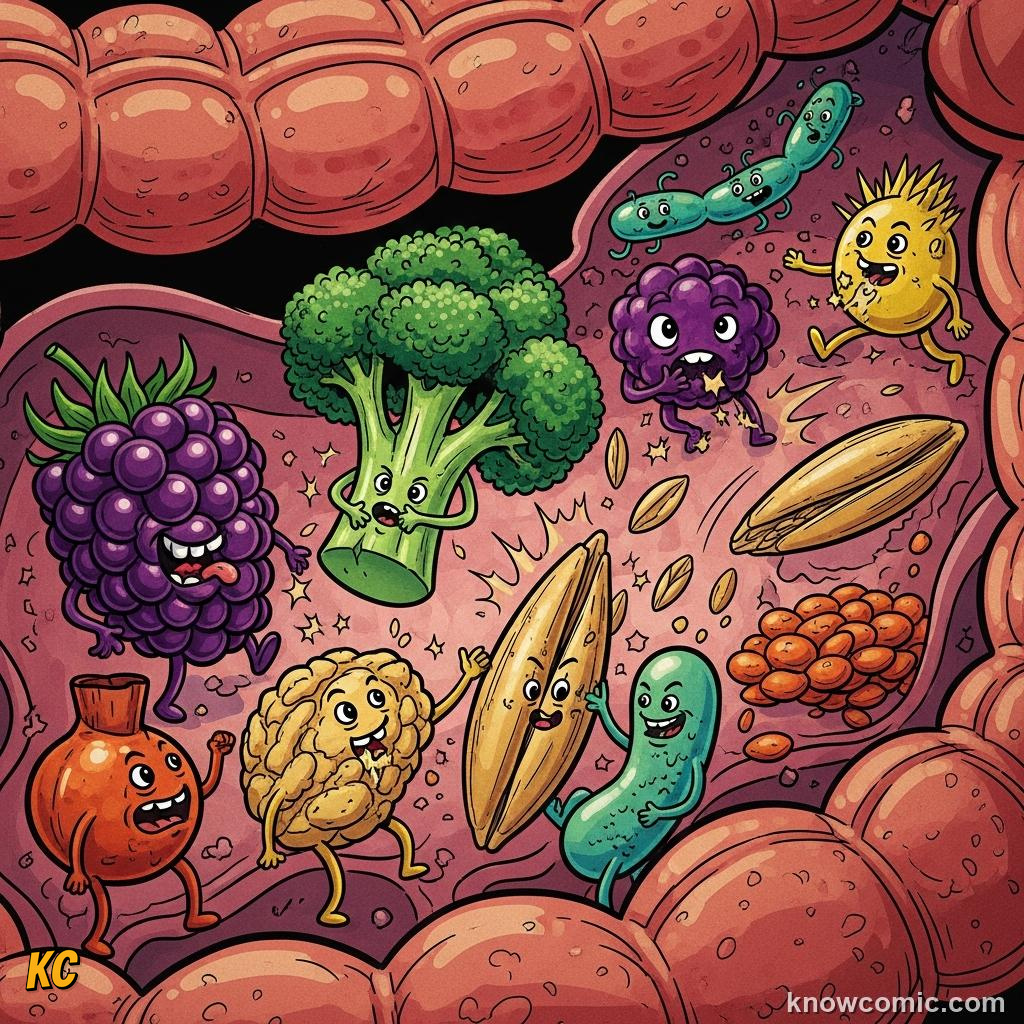
🦠 Good germs train immunity and digest fibre.
EXIT
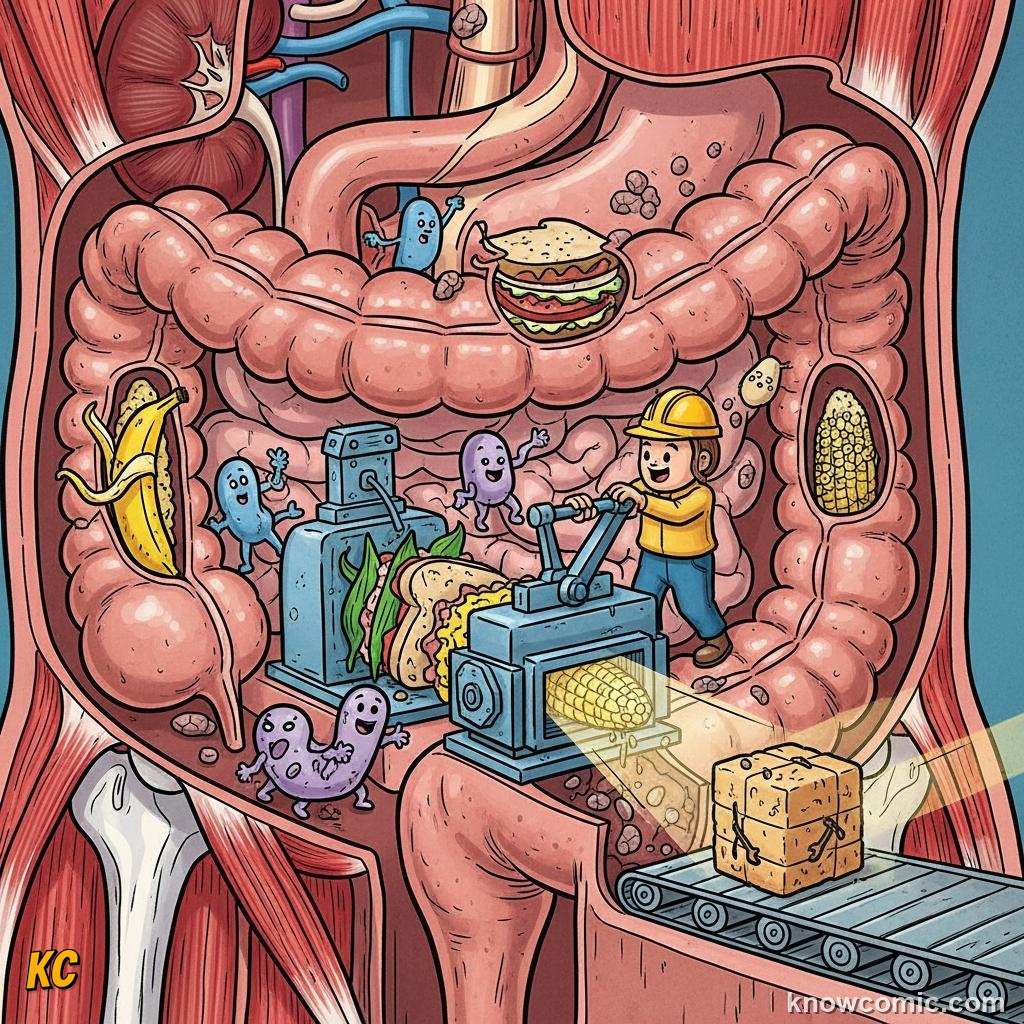
✅ Waste leaves; nutrients already shipped.
PAGE 5 OF 5 · CARE FOR YOUR TUBE
HABITS
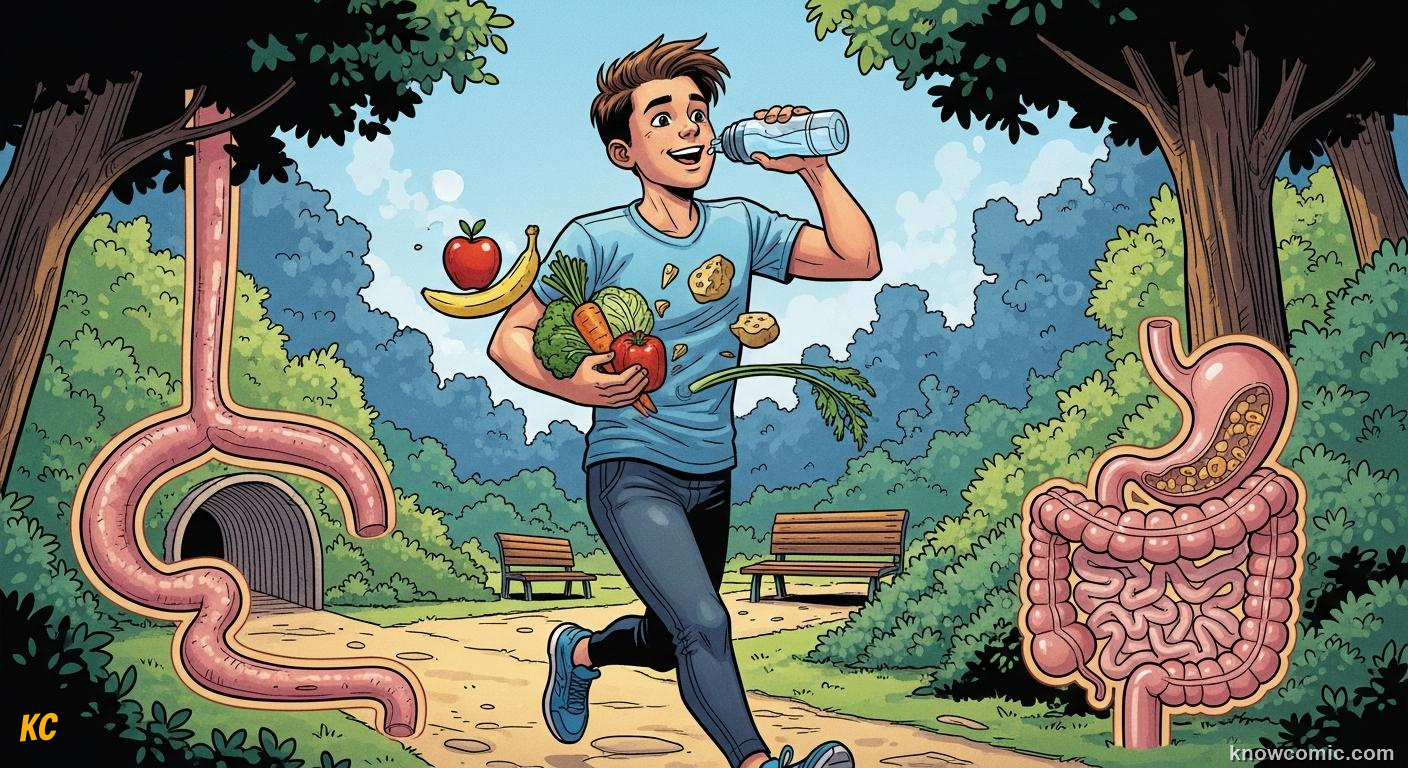
FUEL THE PIPELINE
Fibre feeds helpful bacteria and keeps waste moving. Water keeps chyme sliding. Balanced meals spread nutrients so absorption stays steady. Chewing well gives enzymes more surface area. Regular movement nudges peristalsis along. Small daily choices keep the whole nine-metre team humming.
FLOW!
CHECKLIST
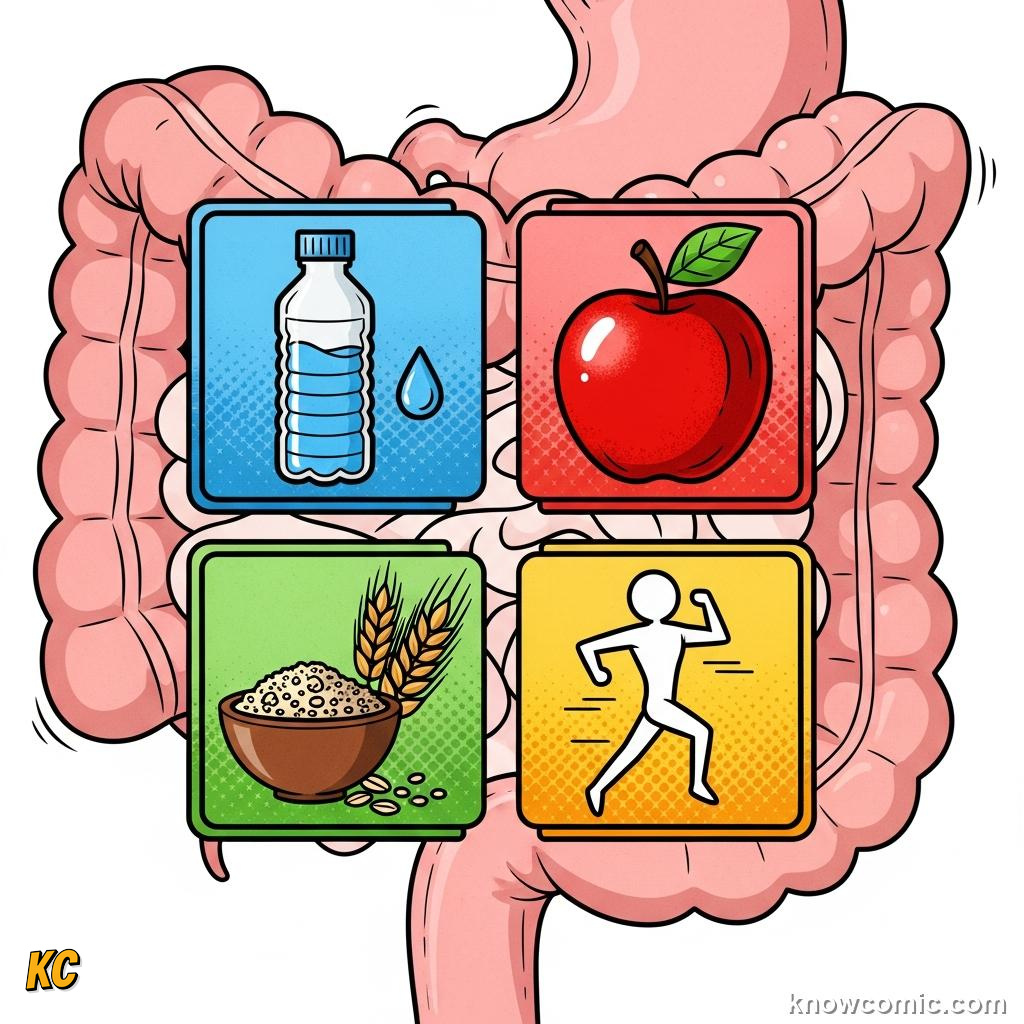
🥦 Plants & whole grains
💧 Sip water often
🏃 Move every day
😌 Eat slowly & chew
💧 Sip water often
🏃 Move every day
😌 Eat slowly & chew
RECAP
🍽️ KEY FACTS
Mouth → esophagus → stomach acid → small intestine villi + liver bile + pancreatic enzymes → colon water & bacteria → waste out. Surface area and teamwork turn food into you.
✅ Digestion is a conveyor belt.
✅ Most absorption = small intestine.
✅ Hydration & fibre matter end to end.
✅ Most absorption = small intestine.
✅ Hydration & fibre matter end to end.
🧠 QUIZ TIME!
THE DIGESTIVE SYSTEM · 5 QUESTIONS
QUESTION 01
Where does most nutrient absorption into the body happen?
QUESTION 02
Which organ produces bile to help break down fats?
QUESTION 03
What is peristalsis?
QUESTION 04
Finger-like projections on the small intestine lining that boost absorption are called:
QUESTION 05
A major job of the large intestine is to:
0/5
LOADING...