🌱 FROM SPORES TO SEEDS: A REVOLUTION
PAGE 1 OF 5, THE AGE OF SPORES
100 MILLION YEARS TRAPPED
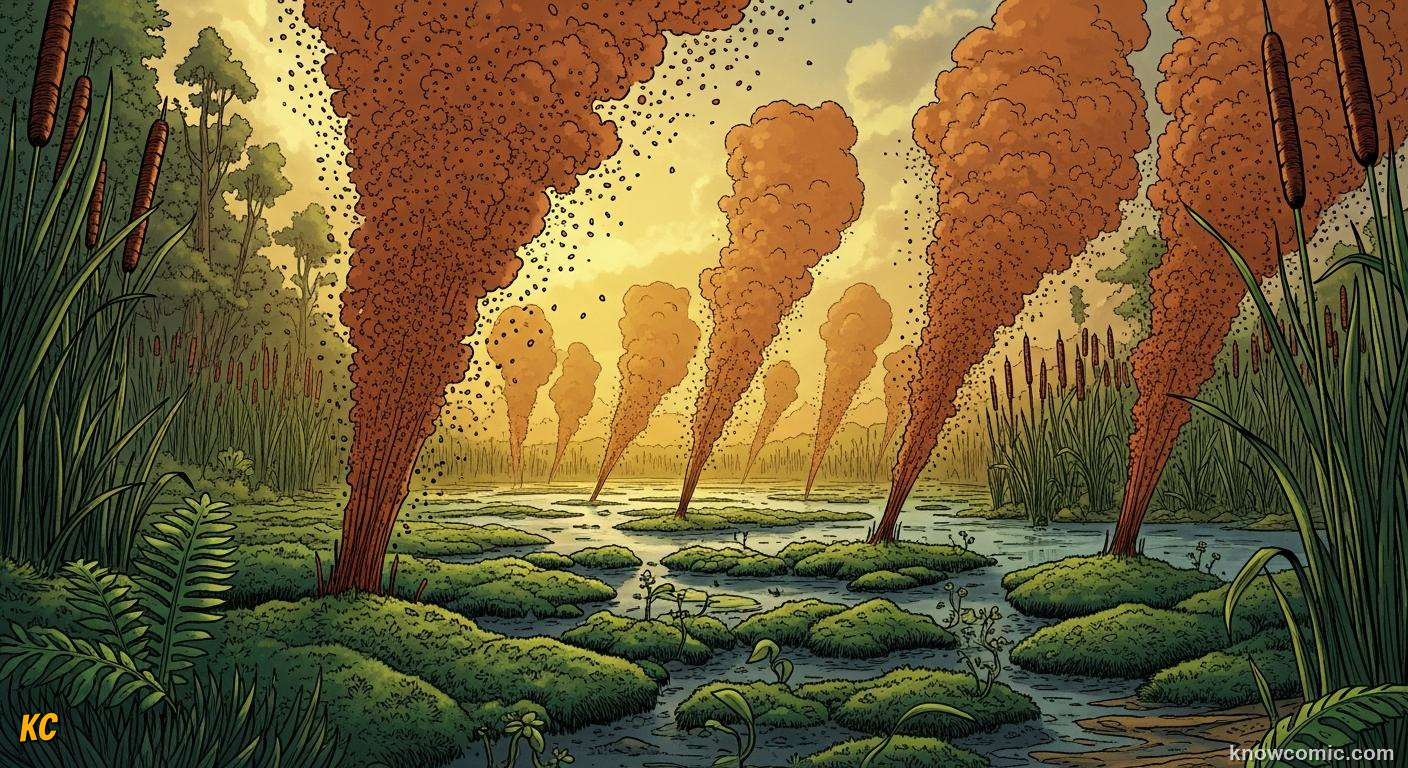
FOR 100 MILLION YEARS, EVERY PLANT WAS A PRISONER OF WATER
For over 100 million years, every plant on land reproduced the same way, releasing clouds of microscopic spores into the wind and hoping for the best. Mosses, liverworts, and ferns blanketed the earth in green, but they were prisoners of water. To fertilise, a sperm cell had to swim through liquid water to reach an egg. No water nearby? No reproduction. This one limitation kept plants tied to swamps, riverbanks, and wet forests, unable to conquer the vast dry interior of continents. Then everything changed.
SPORES!
THE COMPARISON
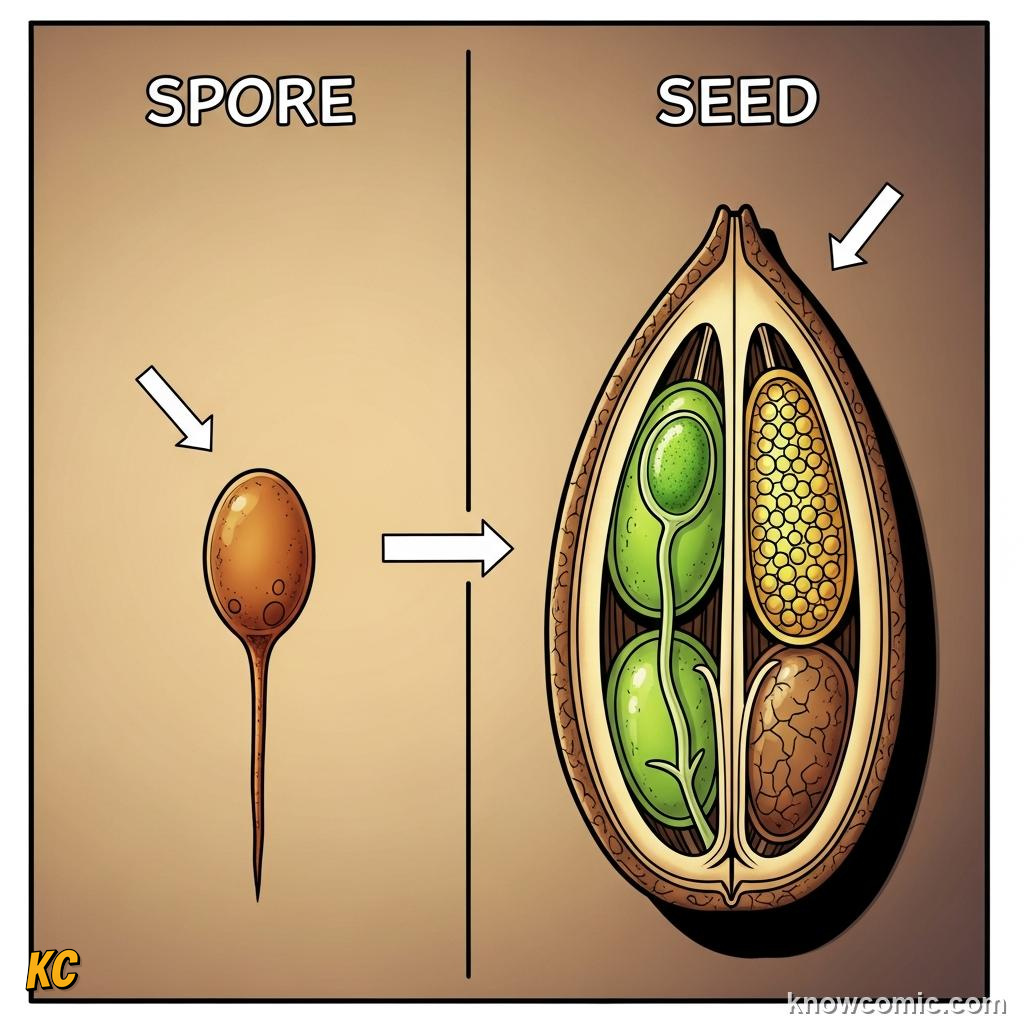
🌿 Spore: single cell, no food, no embryo, no protection
🌱 Seed: embryo + food store + tough protective coat
🌱 Seed: embryo + food store + tough protective coat
THE WATER TRAP
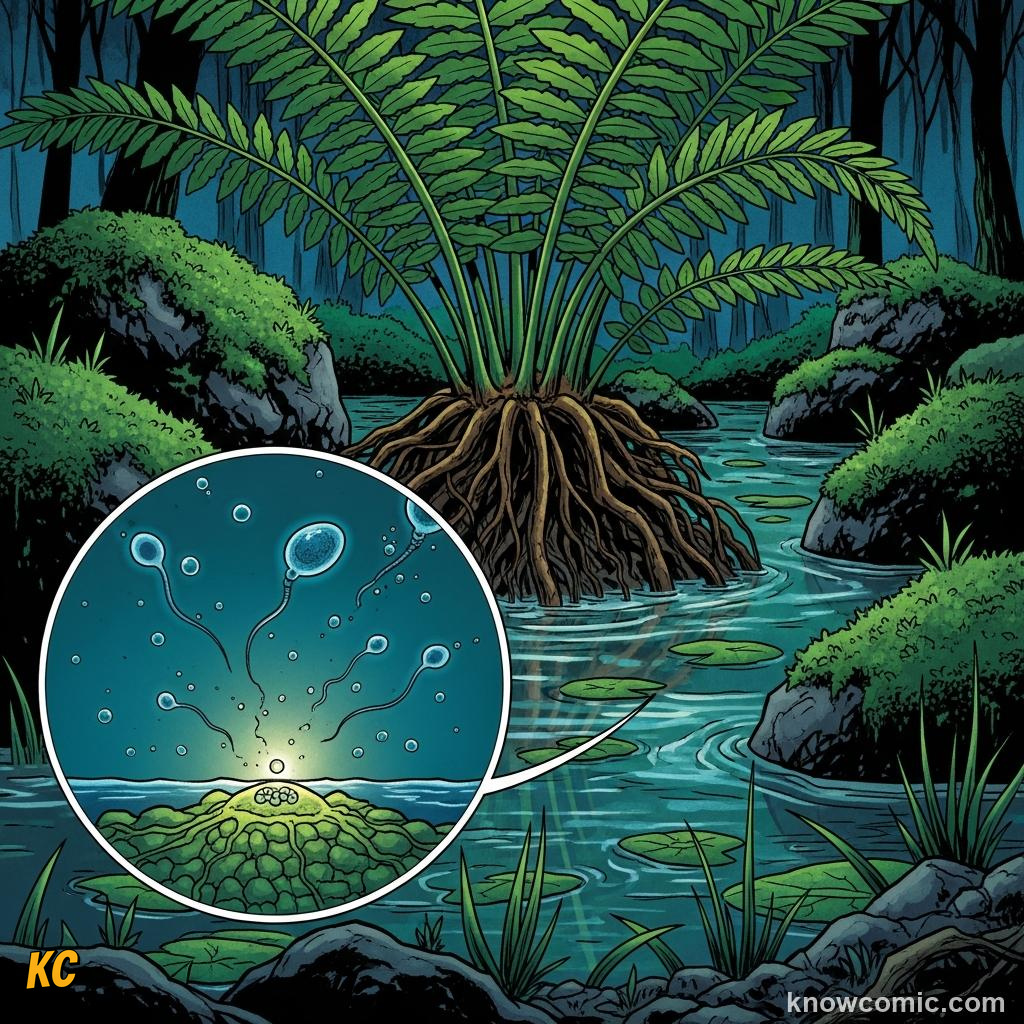
💧 Fern sperm must swim through water to fertilise
🏜️ Dry land = no reproduction for spore plants
🏜️ Dry land = no reproduction for spore plants
PAGE 2 OF 5, THE FIRST SEEDS APPEAR
365 MILLION YEARS AGO, THE DEVONIAN
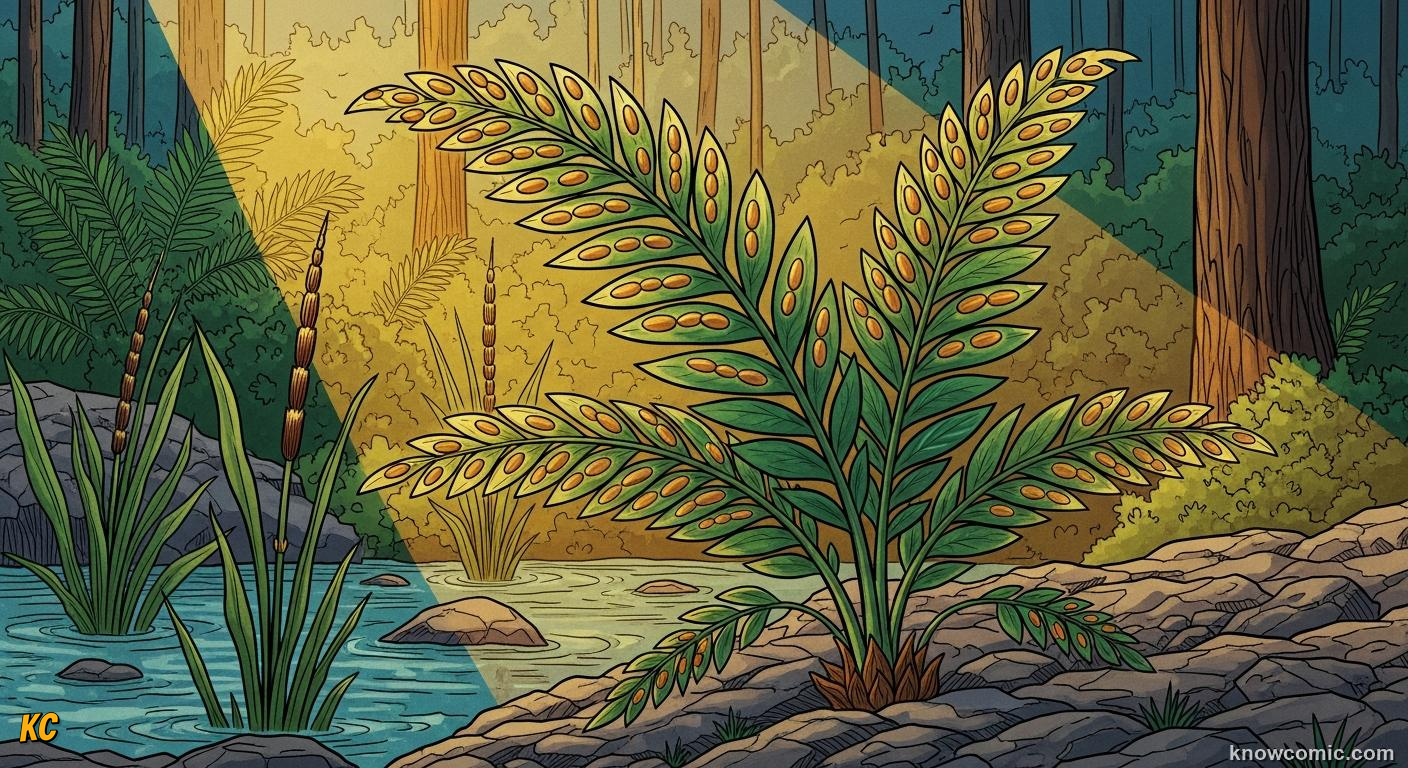
THE MOST IMPORTANT PLANT IN HISTORY
Then, 365 million years ago, a group of plants called pteridosperms, the "seed ferns", did something no plant had ever done. They kept the fertilised egg inside the parent plant, surrounded it with rich nutritious tissue, and wrapped it in a tough protective coat. The seed was born. This wasn't a minor tweak, it was one of the most important evolutionary leaps in the history of life on Earth. For the first time, reproduction did not require standing water. A seed could survive drought, travel vast distances, and germinate months or even years later when conditions were right. The interior of continents, previously a green-free desert, was now open for conquest.
REVOLUTION!
FOSSIL PROOF
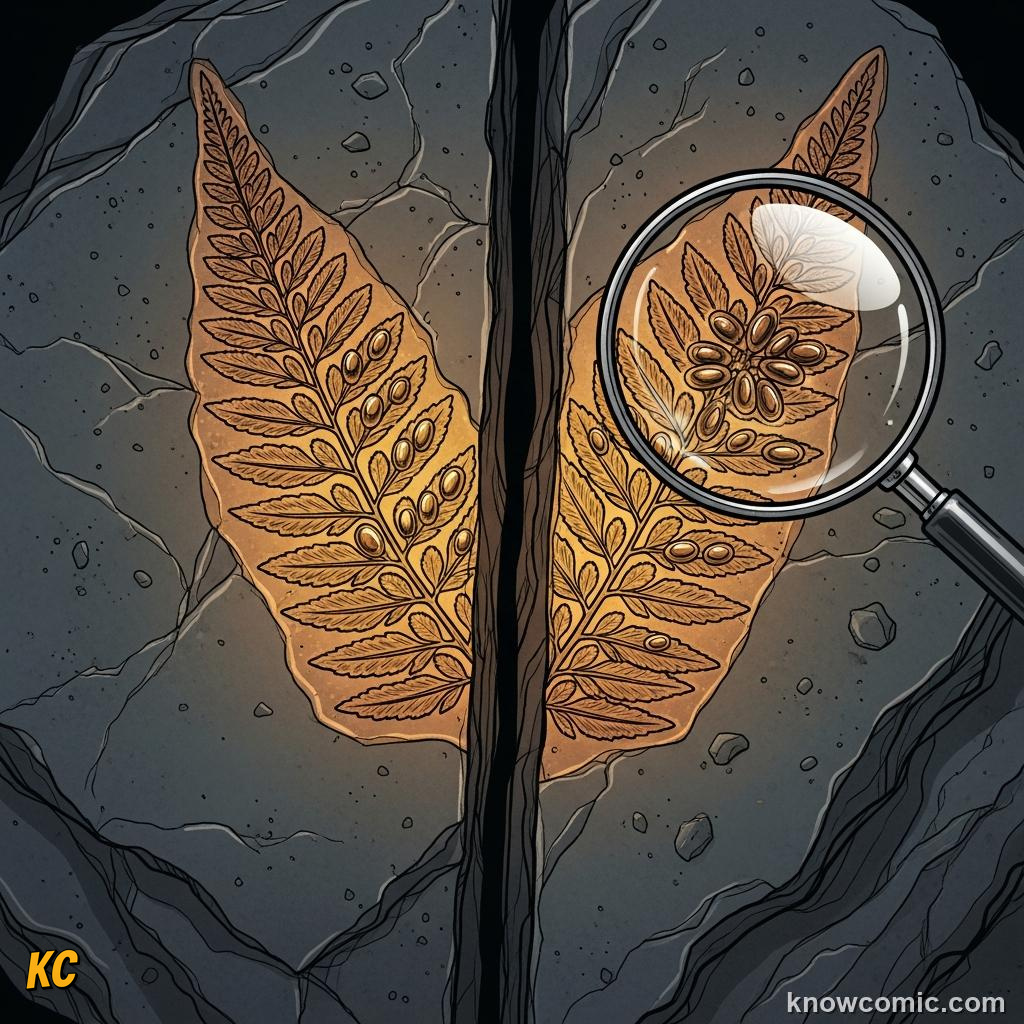
🪨 Seed fern fossils found in Carboniferous coal
🌿 Frond-like leaves but seeds on the frond edges
🌿 Frond-like leaves but seeds on the frond edges
EARLY CONIFERS
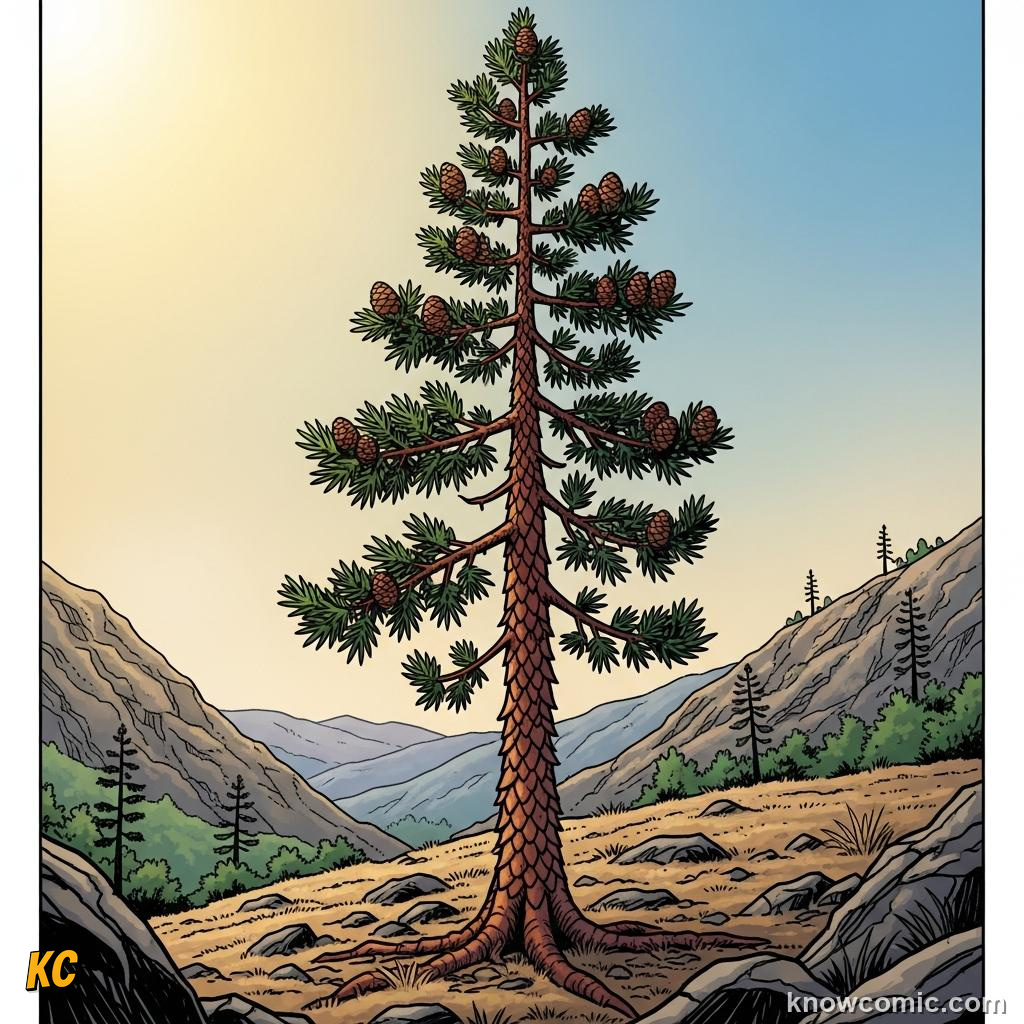
🌲 Early conifers pushed into dry upland habitats
🌰 Needle leaves + woody cones = designed for drought
🌰 Needle leaves + woody cones = designed for drought
HOW SEEDS EVOLVED
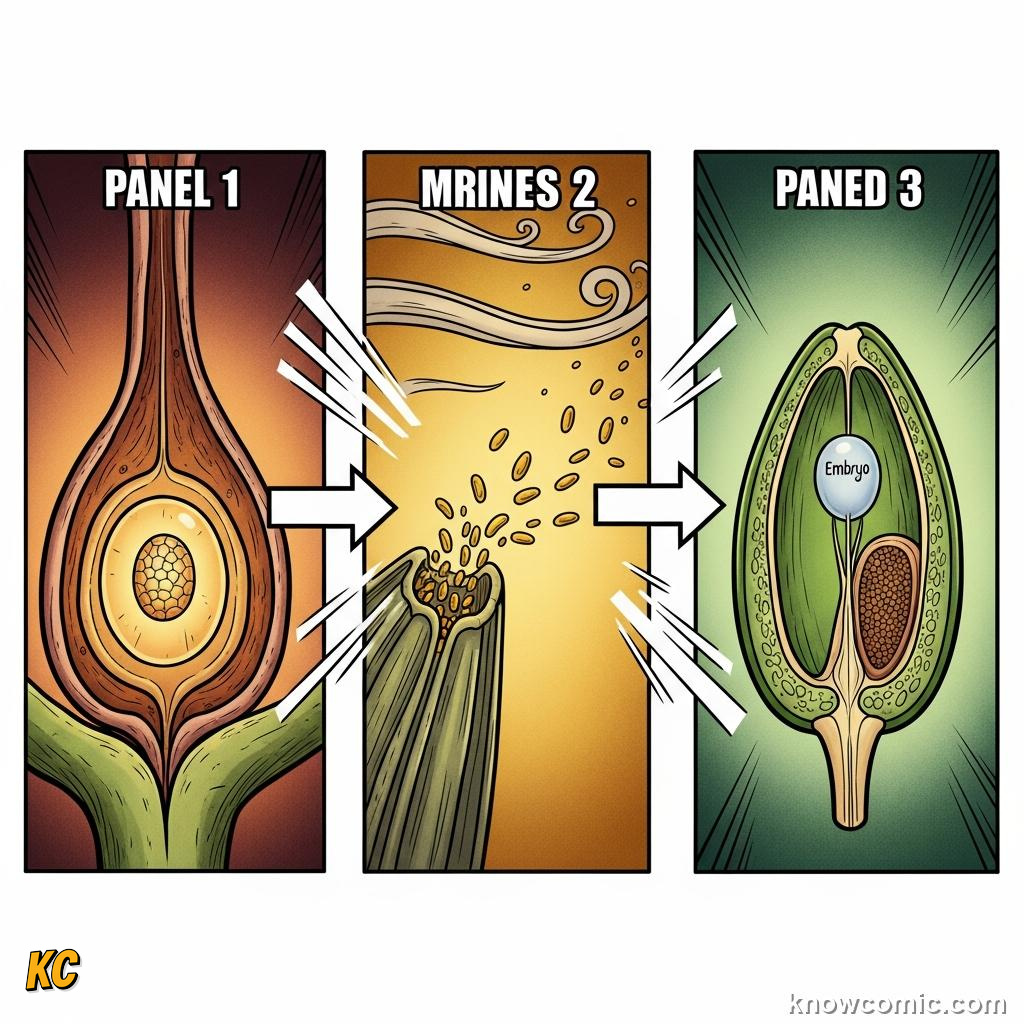
🔬 Step 1: Egg enclosed in protective tissue
💨 Step 2: Pollen carries sperm without water
💨 Step 2: Pollen carries sperm without water
PAGE 3 OF 5, GYMNOSPERMS CONQUER THE CONTINENTS
INTO THE UPLANDS
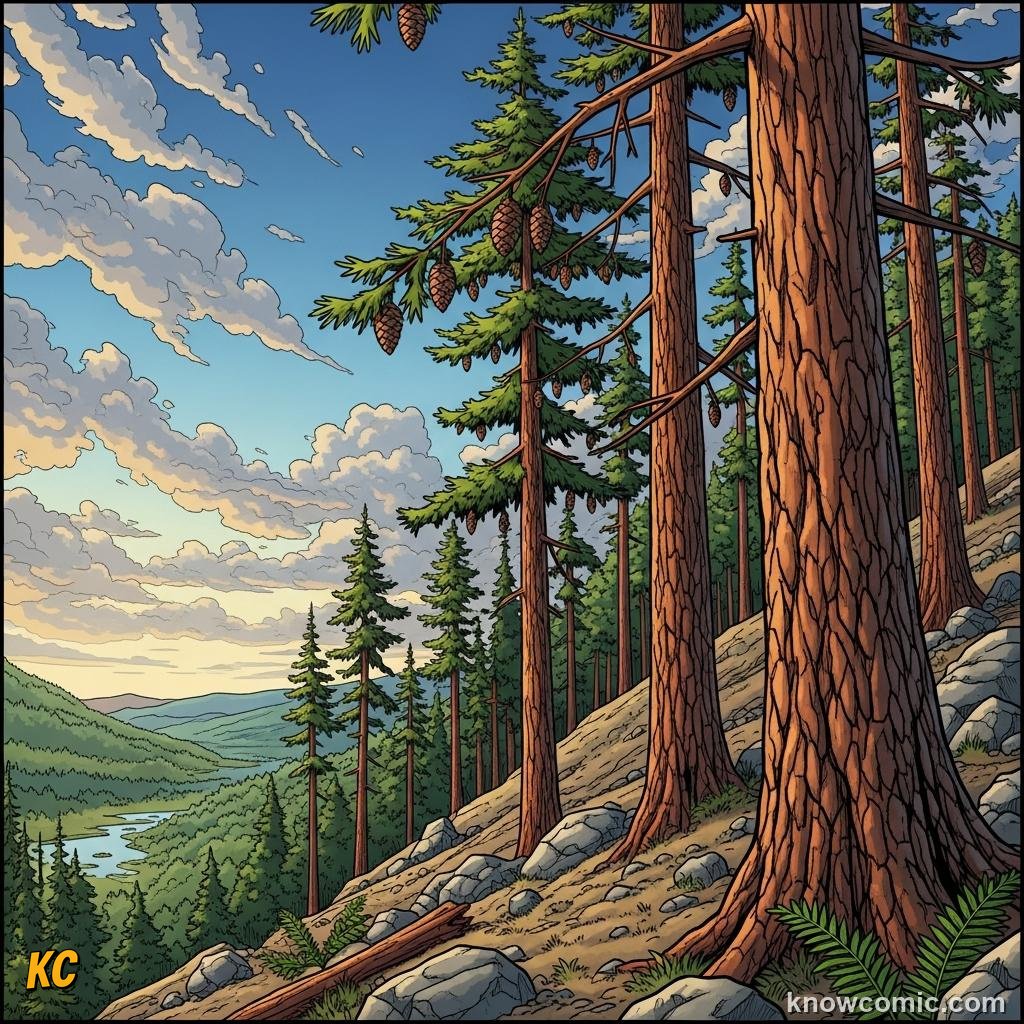
🌲 Conifers marched uphill into dry rocky territory
🌱 No standing water needed, seeds germinate anywhere
🌱 No standing water needed, seeds germinate anywhere
LIVING FOSSILS
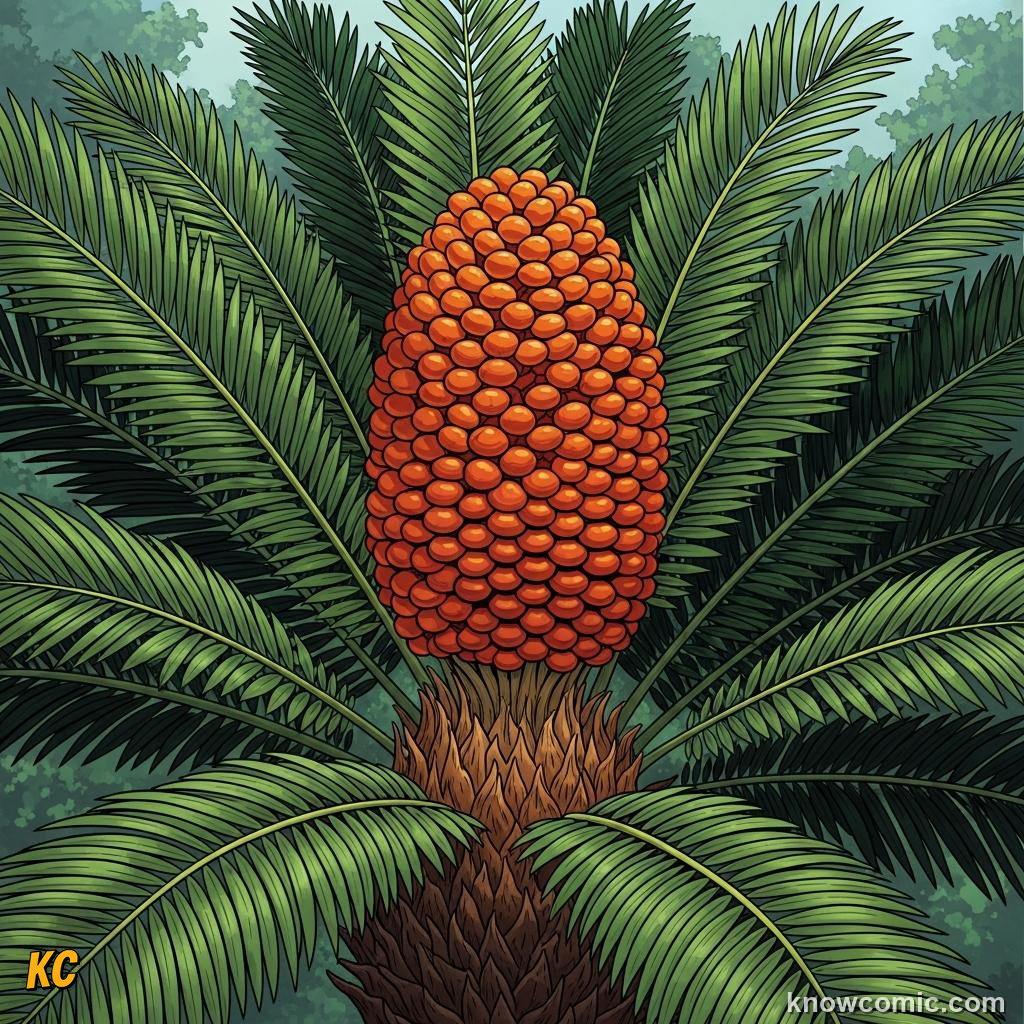
🌴 Cycad cones can weigh over 40 kg
🌰 Barely changed in 250 million years, living fossils
🌰 Barely changed in 250 million years, living fossils
THE GREAT CONQUEST
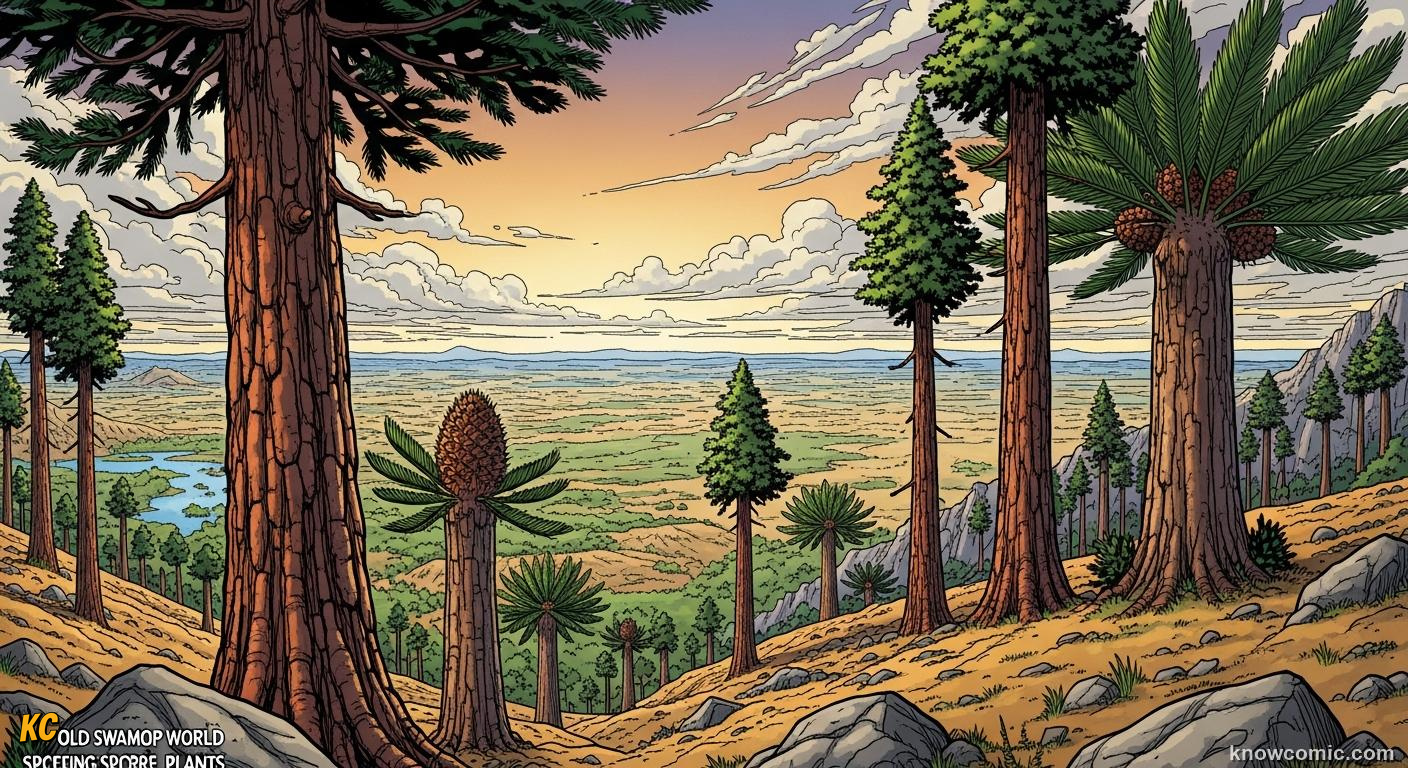
200 MILLION YEARS AS EARTH'S DOMINANT PLANTS
As the Carboniferous gave way to the Permian, the climate dried and the great swamp fern forests collapsed. It was catastrophe for spore plants, but total triumph for seed plants. Gymnosperms, conifers, cycads, and ginkgos, exploded across the newly drying continents. They filled every habitat that spore plants had vacated. Vast conifer forests stretched across Pangaea. Cycads lined the shores where dinosaurs later fed. Ginkgo trees spread from pole to pole. For 200 million years, from the Permian through the entire age of dinosaurs, gymnosperms dominated Earth's vegetation. When you walk through a pine forest today, you are walking through the world the seed revolution built.
CONQUER!
PAGE 4 OF 5, THE SEED'S THREE SECRET WEAPONS
INSIDE EVERY SEED
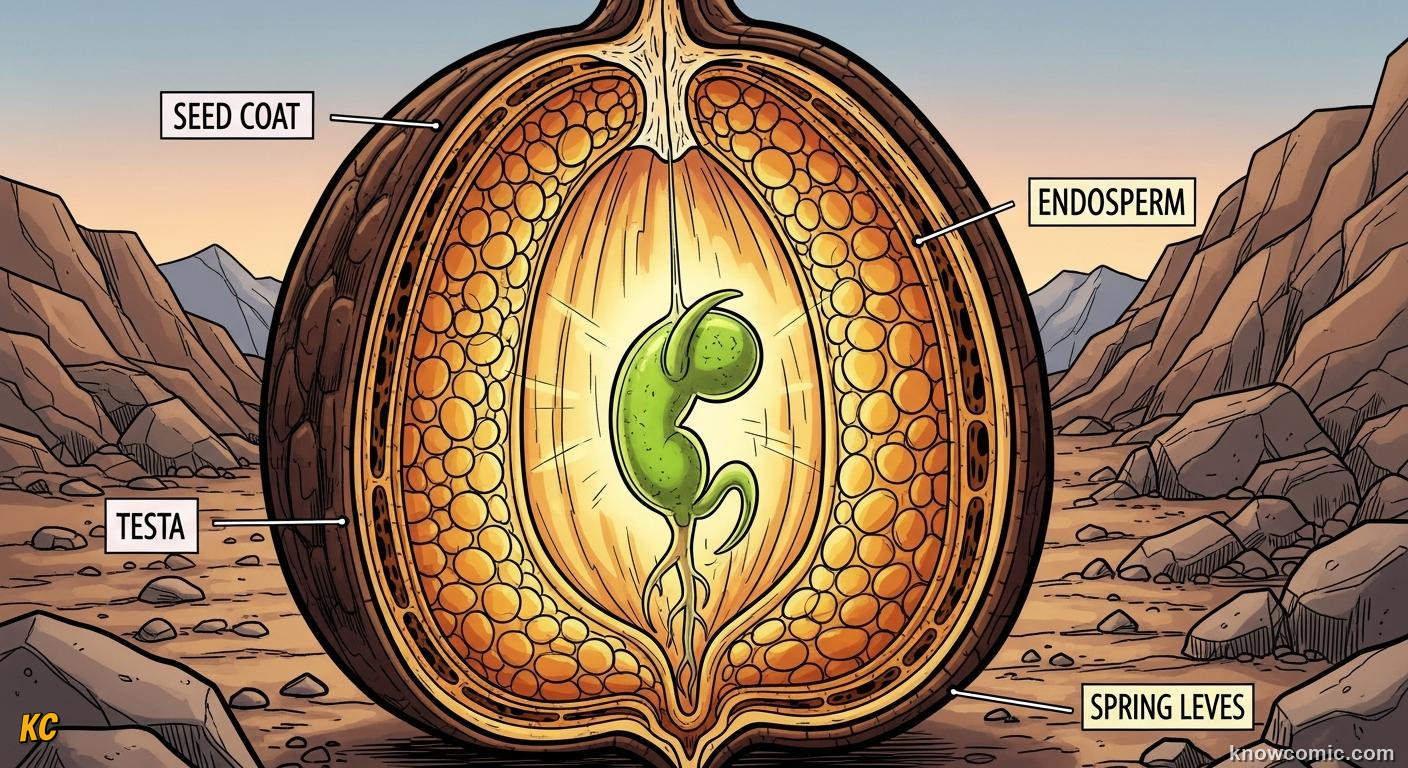
THREE PARTS. ONE REVOLUTION. 365 MILLION YEARS OF SUCCESS.
Every seed is a miracle of packaging. Inside its tough outer coat lie three essential components. The embryo, a tiny complete plant already formed, root, shoot, and first leaves paused and waiting. The endosperm, a dense food store packed with starch, proteins, and oils to power germination before the seedling can photosynthesise. The seed coat (testa), a tough waterproof armour protecting the embryo from drought, physical damage, and digestion by animals. Together these three innovations made the seed the most successful reproductive structure in the history of land plants. Every grain of rice, every wheat kernel, every bean, the same three-part structure that evolved 365 million years ago.
SURVIVAL!
WEAPON 1: THE COAT
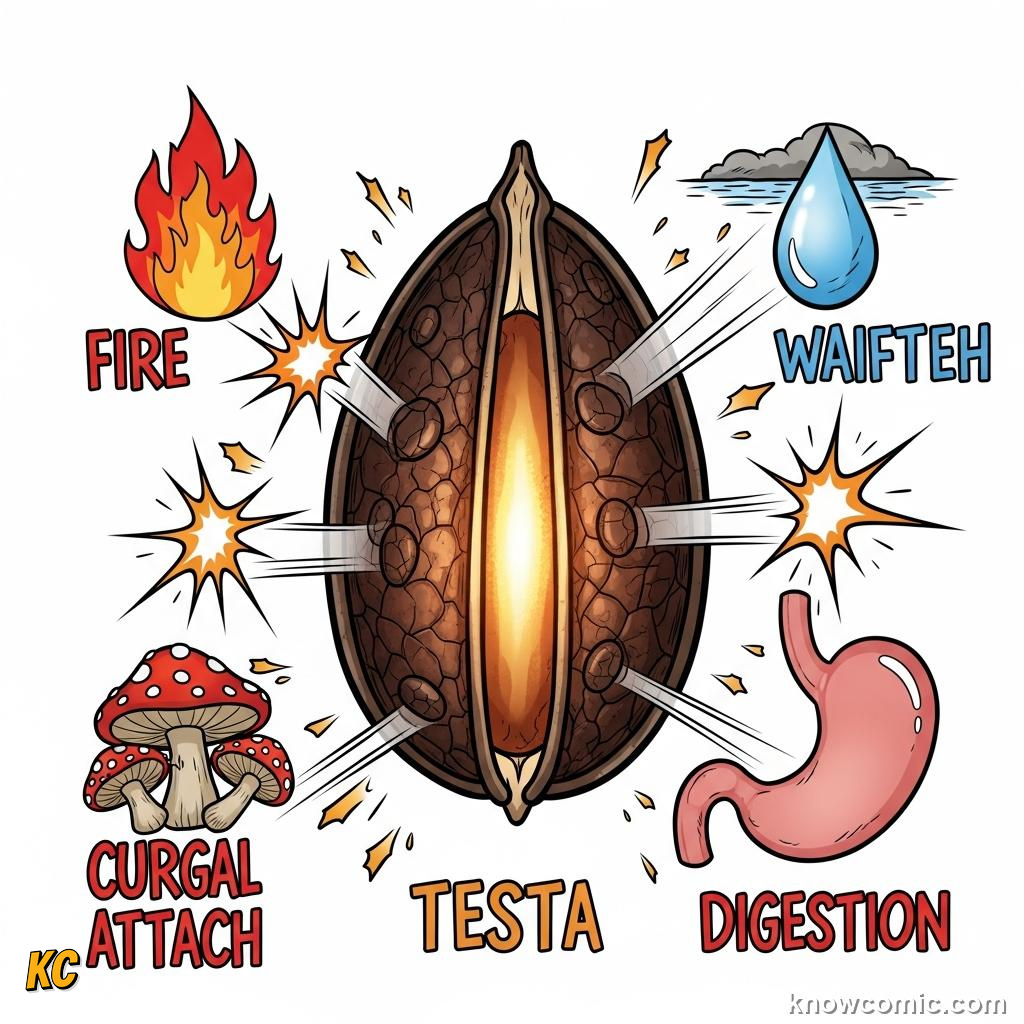
🛡️ Resists drought, fungal attack, digestive acids
🐦 Some seeds pass through guts intact and germinate
🐦 Some seeds pass through guts intact and germinate
WEAPON 2: DORMANCY
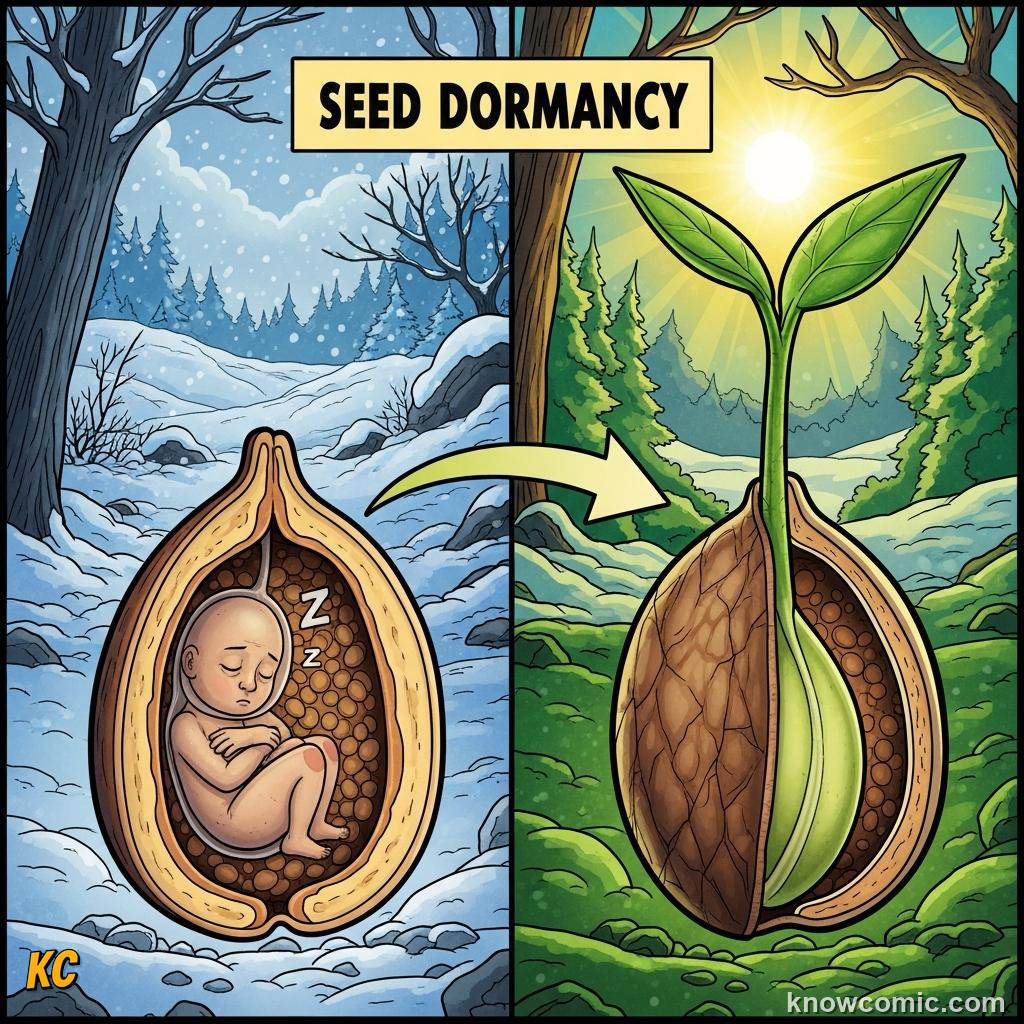
😴 Arctic lupine seeds 10,000 years old, still viable
🌸 Lotus seed 1,300 years old germinated in China
🌸 Lotus seed 1,300 years old germinated in China
WEAPON 3: DISPERSAL
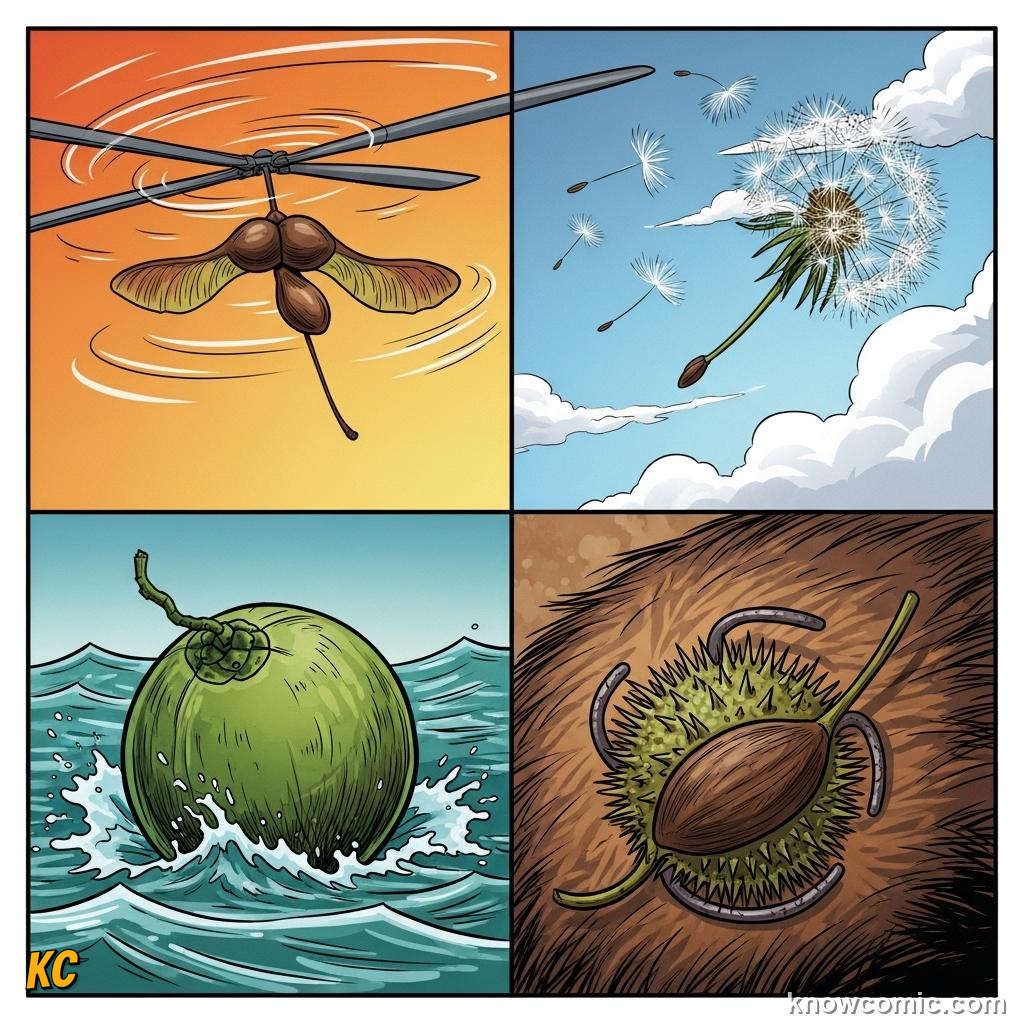
🍁 Wind: maple helicopters, dandelion parachutes
🥥 Water: coconuts cross entire oceans unaided
🥥 Water: coconuts cross entire oceans unaided
PAGE 5 OF 5, SEEDS FEED THE WORLD
TODAY
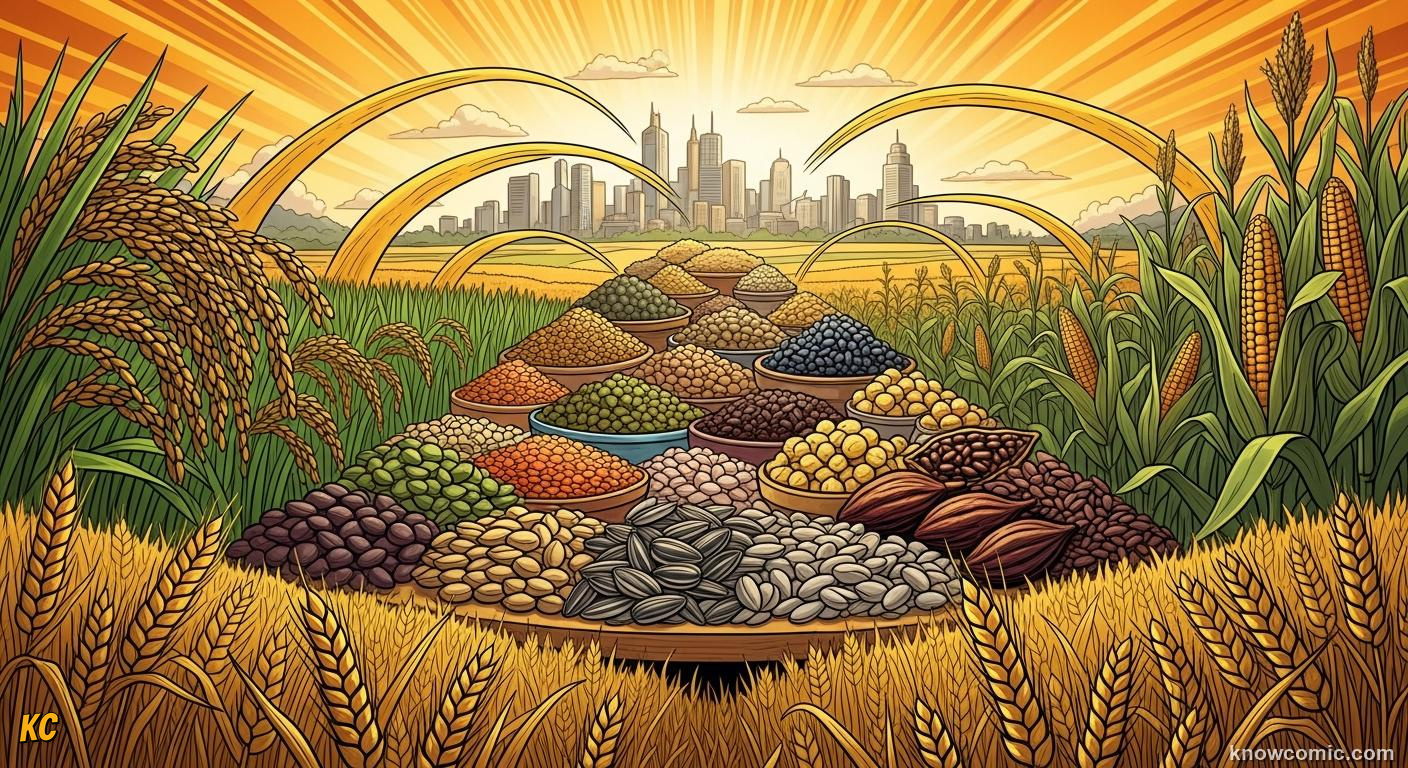
THE REVOLUTION THAT STILL FEEDS 8 BILLION PEOPLE
Today, approximately 70% of all human calories come from seeds. Rice, wheat, maize, barley, oats, the grains that built every civilisation on Earth. Soybeans, lentils, and chickpeas provide protein. Coffee beans, cocoa beans, and spices flavour our food and drink. The agricultural revolution, which began 10,000 years ago and made modern human civilisation possible, was entirely built on seeds. When our ancestors stopped wandering and started farming, the crop they planted was always a seed plant. Wheat feeds 2.5 billion people. Rice feeds 3.5 billion. Maize is the world's largest crop by weight, over a billion tonnes per year. The evolutionary revolution that began in a Devonian forest 365 million years ago still feeds every person on Earth today.
FEEDS THE WORLD!
THE BIG THREE GRAINS
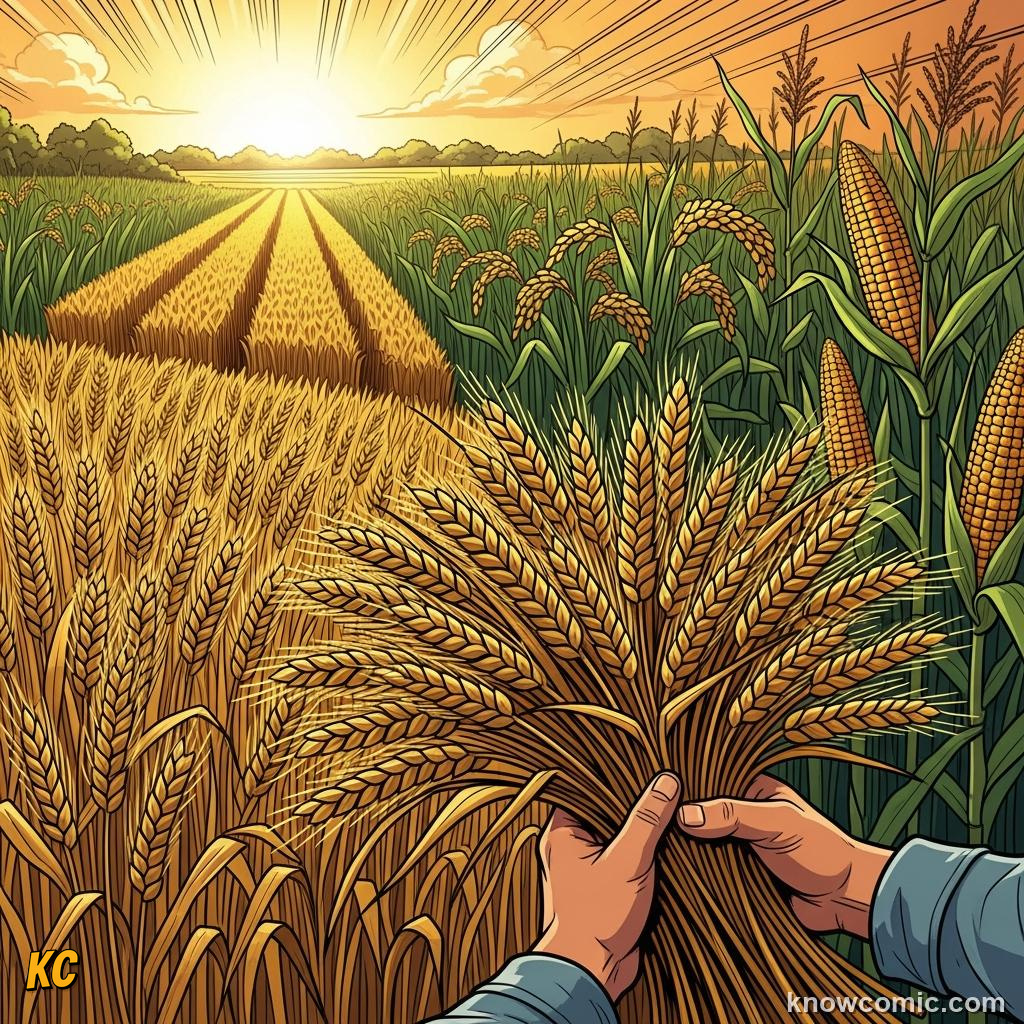
🌾 Wheat + Rice + Maize = over half of all human calories
🌽 Maize alone: 1.1 billion tonnes harvested per year
🌽 Maize alone: 1.1 billion tonnes harvested per year
REMEMBER
🌱 KEY FACTS
First seeds evolved 365 million years ago. Gymnosperms dominated Earth for 200 million years. A seed has 3 parts: embryo + food store + coat. Seeds don't need water to reproduce. ~70% of human calories come from seeds. Oldest viable seed ever: 32,000 years old.
🌿 Spore → needs water to reproduce
🌰 Seed → carries everything it needs
🌍 Result → plants conquer the world
🌰 Seed → carries everything it needs
🌍 Result → plants conquer the world
🧠 QUIZ TIME!
FROM SPORES TO SEEDS · 5 QUESTIONS
QUESTION 01
What do spores need to reproduce that seeds do NOT require?
QUESTION 02
Approximately when did the first seed plants evolve on Earth?
QUESTION 03
Which of these is found inside a seed but NOT inside a spore?
QUESTION 04
Seeds were able to colonise dry land because they:
QUESTION 05
Approximately what percentage of human calories today comes from seeds?
0/5
LOADING...