🌸 THE FIRST FLOWER: 130 MILLION YEARS AGO
PAGE 1 OF 5, A WORLD WITHOUT FLOWERS
130 MILLION YEARS AGO
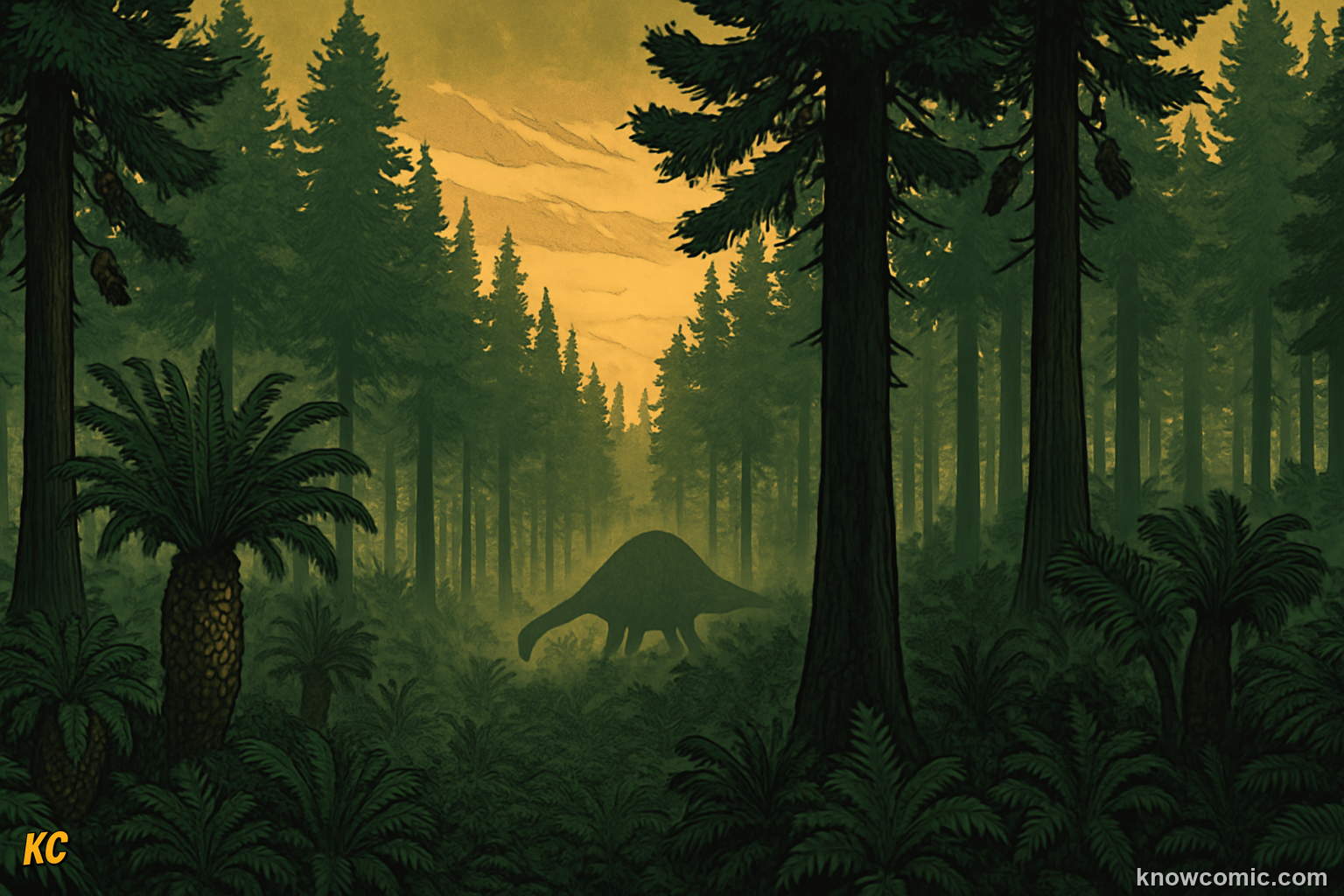
EARTH BEFORE THE FIRST FLOWER
For hundreds of millions of years, Earth's forests had no flowers at all. No roses, no daisies, no fruit trees. Vast forests of dark ferns, towering conifers, and ancient cycads covered the land. The world was green, but silent. No bees buzzed. No butterflies danced. The flower had not yet been invented.
SILENCE...
GYMNOSPERMS
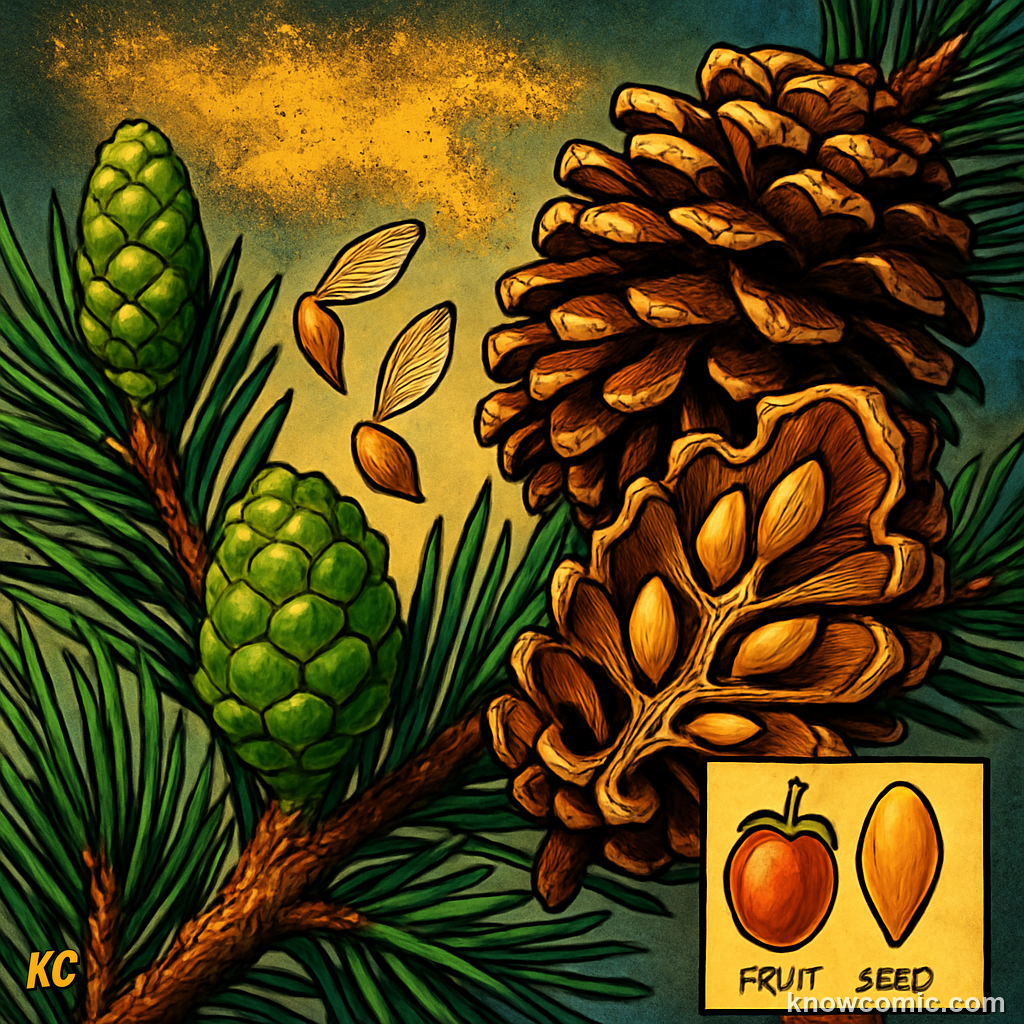
🌲 Conifers: naked seeds in woody cones
💨 Wind-pollinated, no need for insects
💨 Wind-pollinated, no need for insects
CYCADS
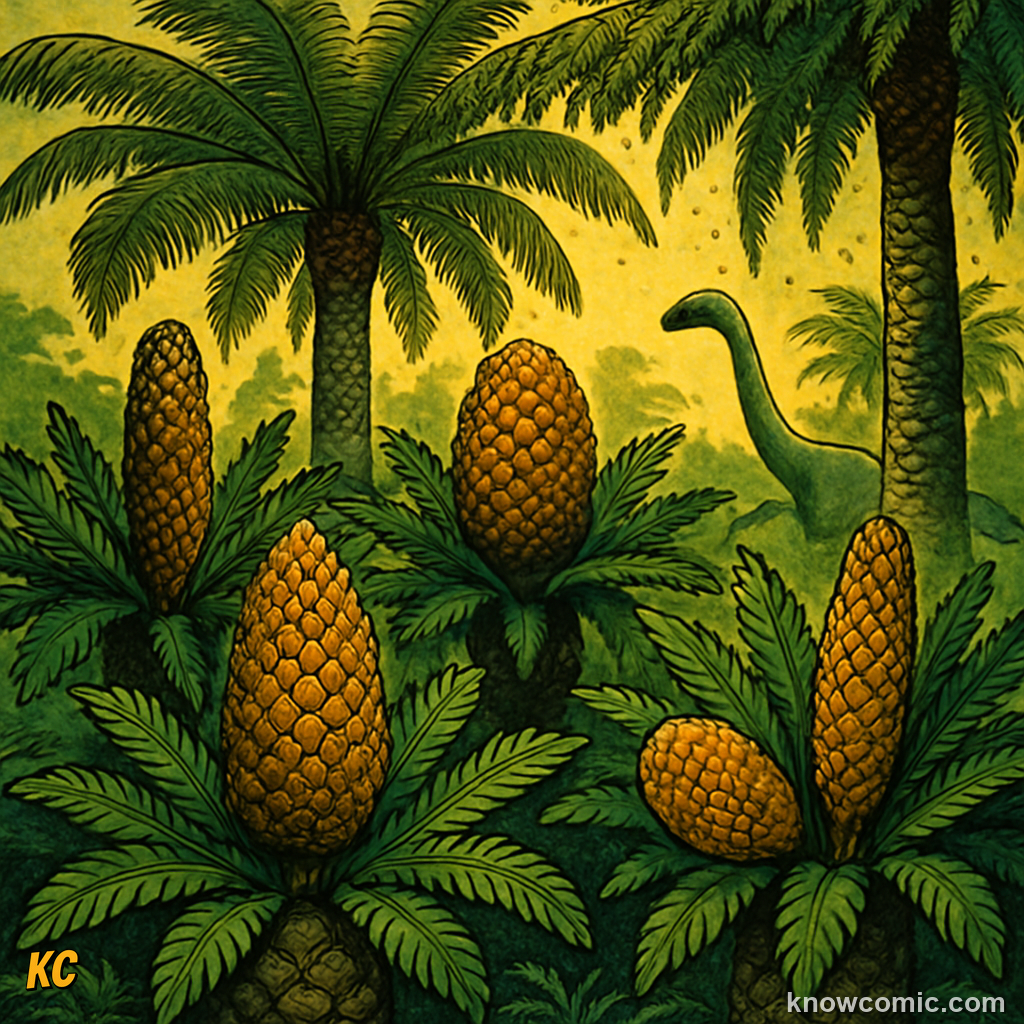
🌴 Cycads and tree ferns dominated
🦕 Dinosaurs ate these, no fruit existed
🦕 Dinosaurs ate these, no fruit existed
PAGE 2 OF 5, THE FIRST FLOWER APPEARS
CRETACEOUS PERIOD
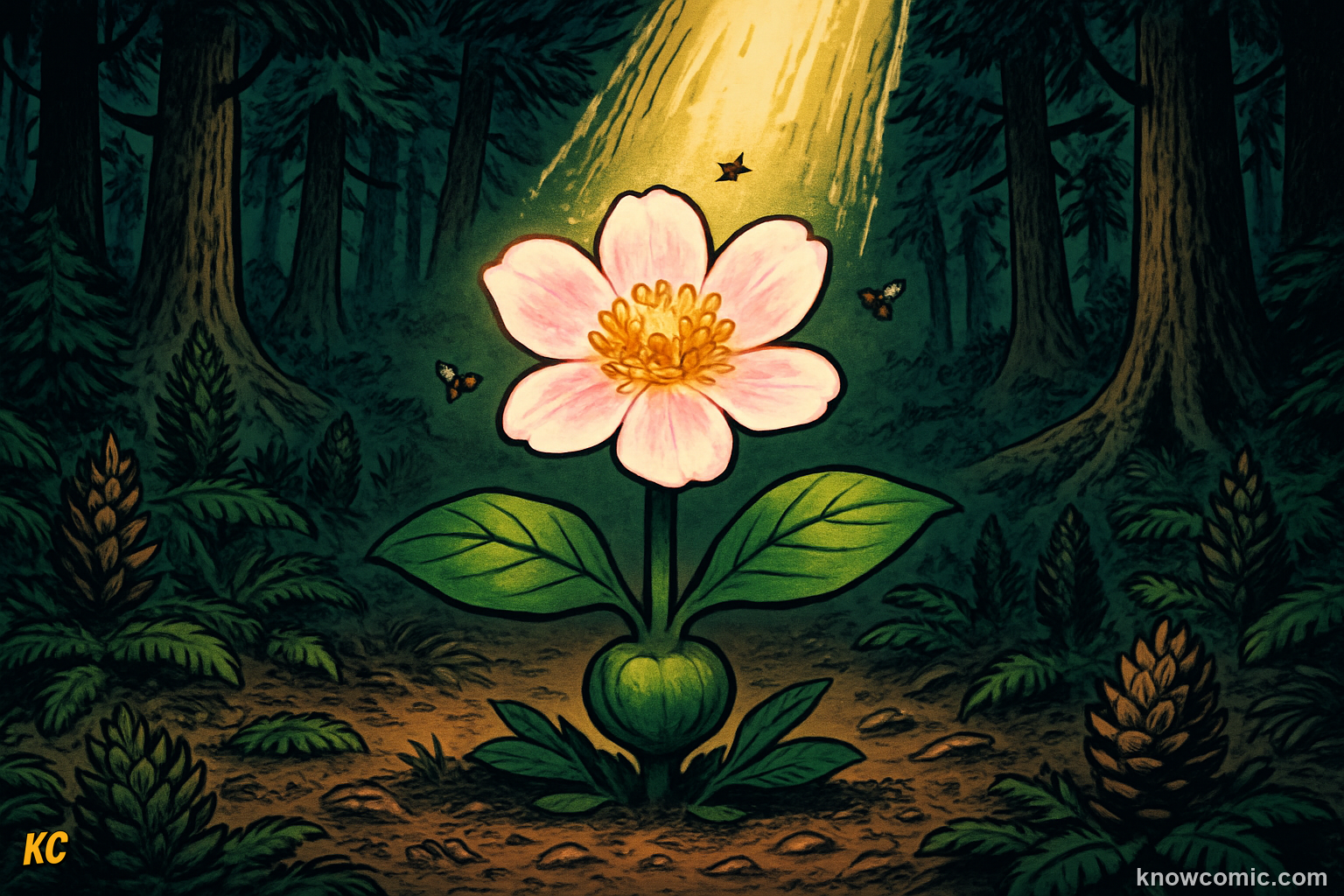
THE ANGIOSPERM REVOLUTION
Around 130 million years ago, a new kind of plant appeared, one that wrapped its seeds inside a protective case. That case became a fruit. And to attract animals to carry its seeds and pollen, this plant evolved something spectacular: the FLOWER. Petals, colour, nectar, a signal broadcasting across the forest: "Come here. Eat this. Take my pollen."
BLOOM!
PETALS
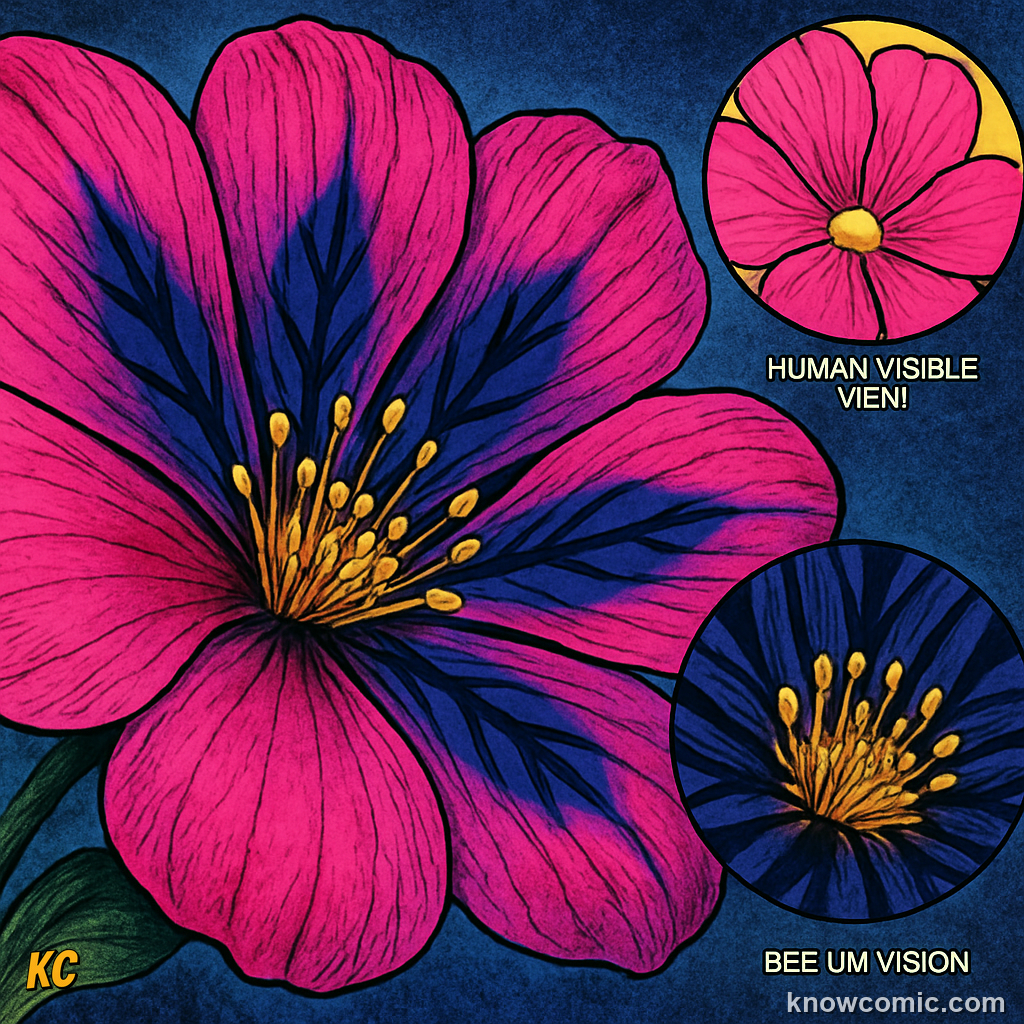
🌸 Petals: vivid colours attract pollinators
👁️ Bees see UV patterns invisible to humans
👁️ Bees see UV patterns invisible to humans
NECTAR
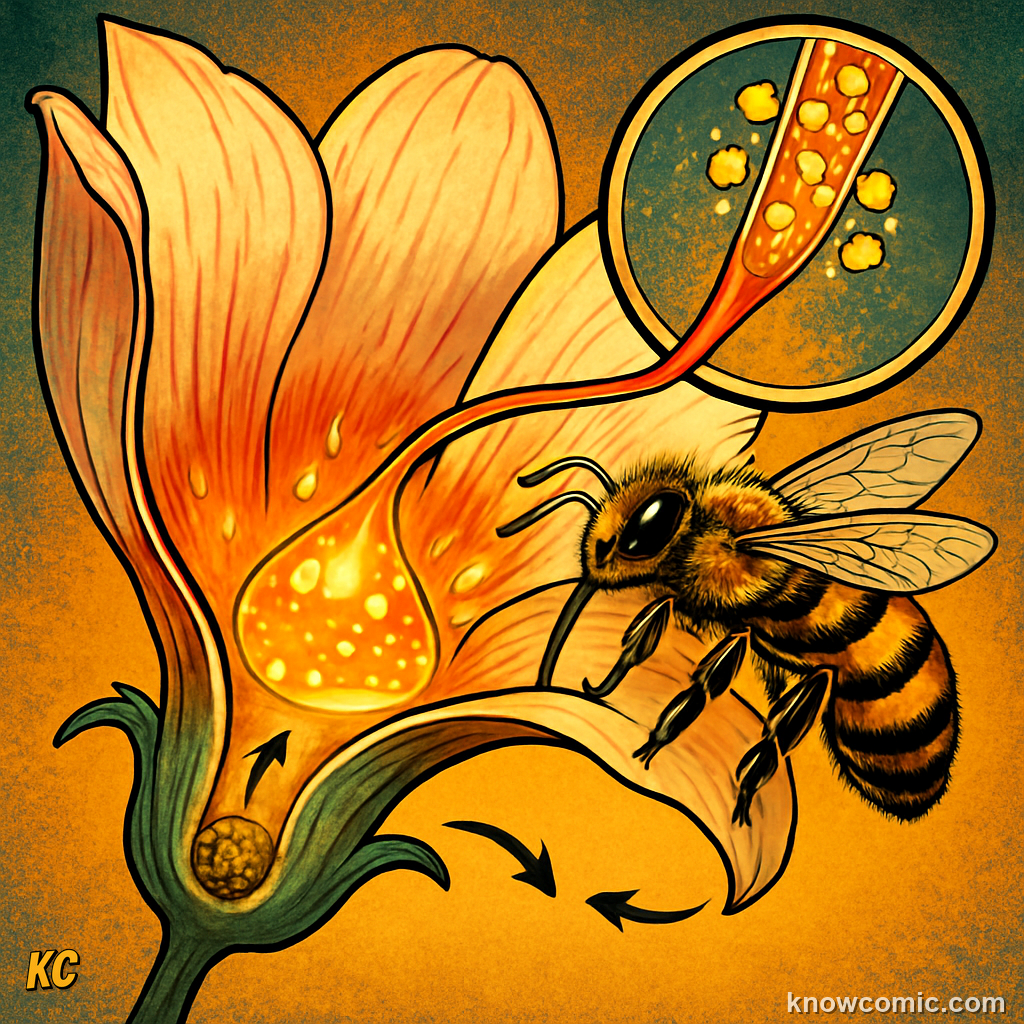
🍯 Nectar: sugary reward for visitors
🐝 The deal, food for pollination service
🐝 The deal, food for pollination service
FRUIT
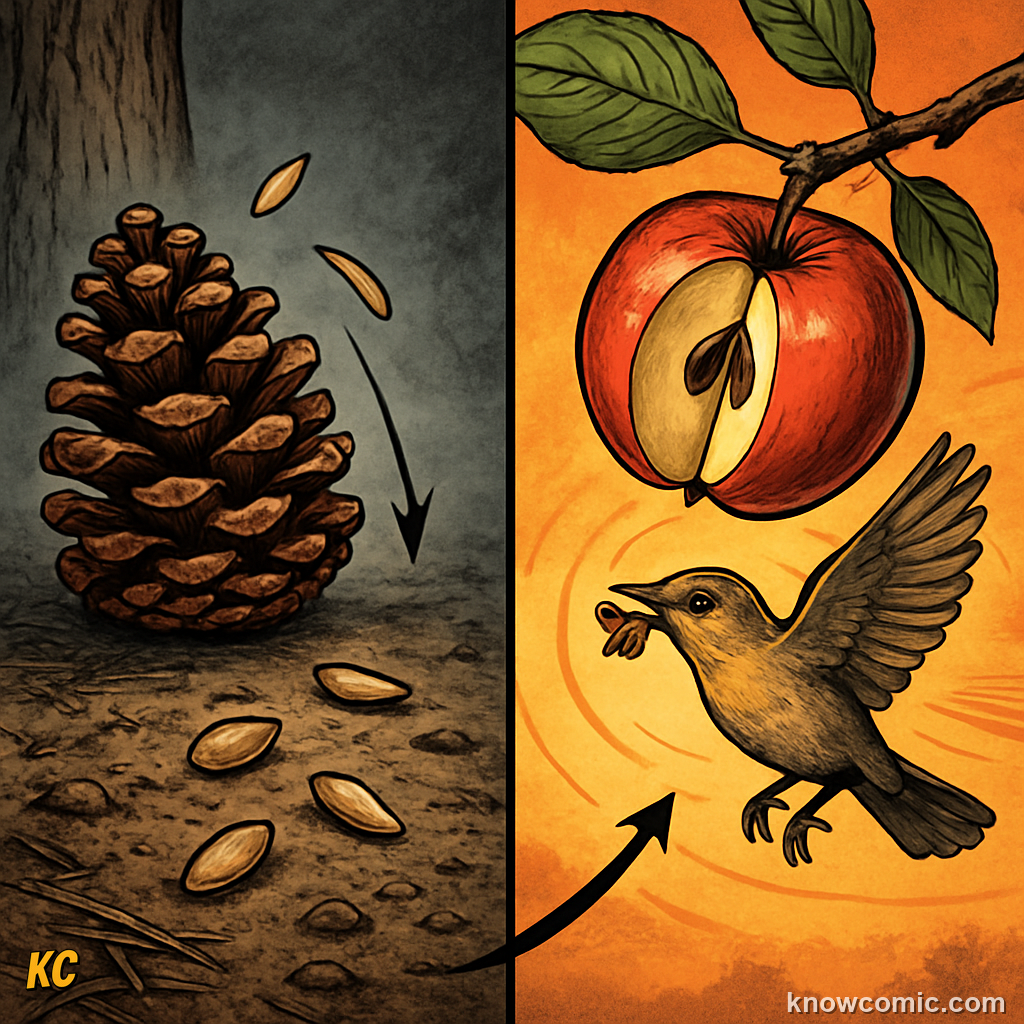
🍎 Fruit: seeds wrapped in tasty flesh
🐦 Animals eat fruit, seeds travel far
🐦 Animals eat fruit, seeds travel far
PAGE 3 OF 5, HOW POLLINATION WORKS
STEP 1
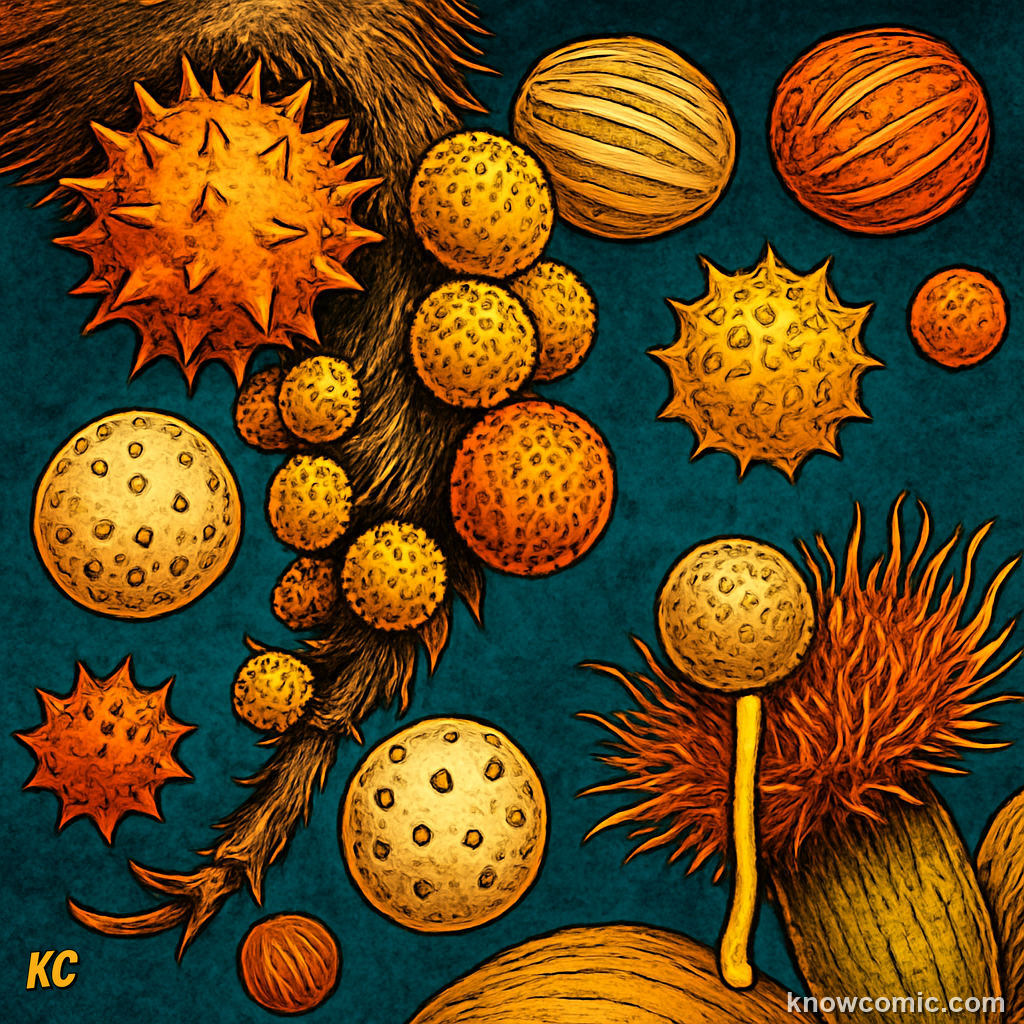
🌼 Bee visits flower A, pollen sticks to fur
🔶 Pollen grains: the plant's male sex cells
🔶 Pollen grains: the plant's male sex cells
STEP 2
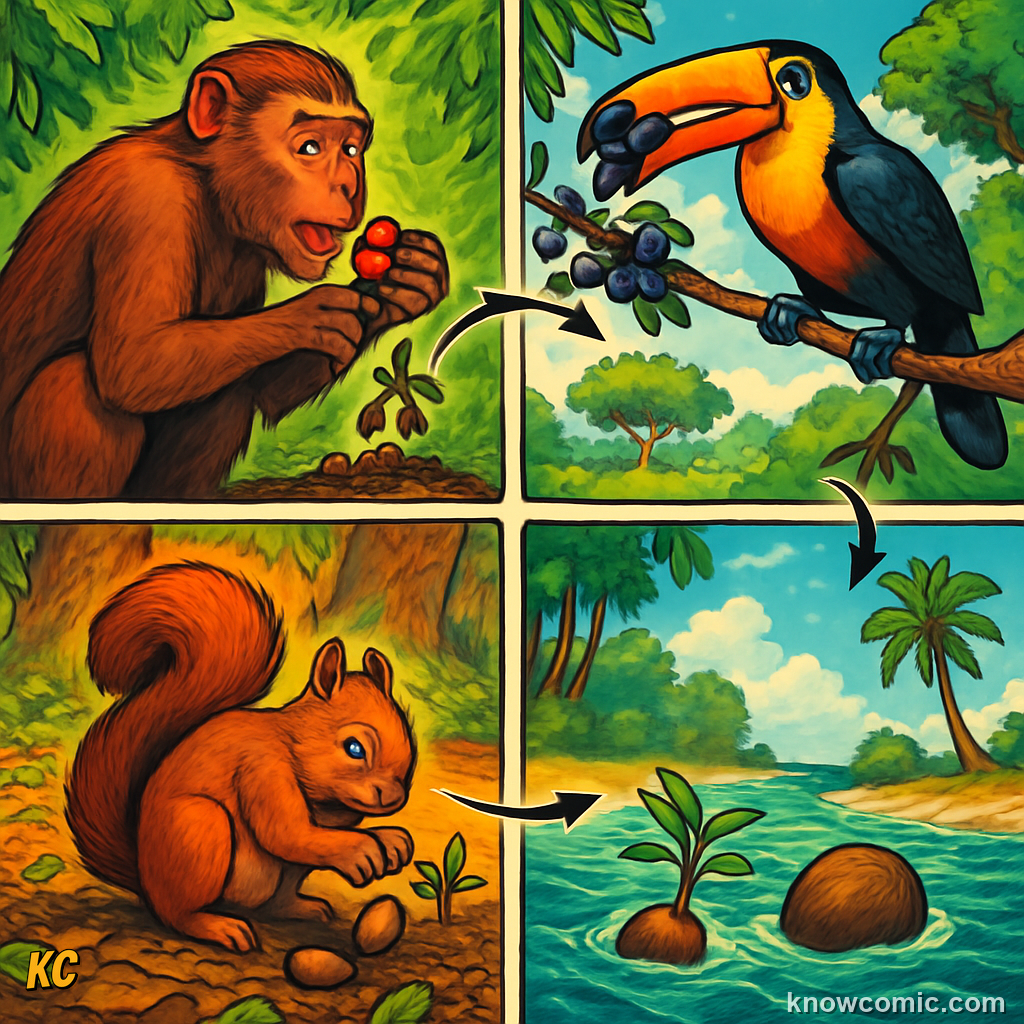
🍇 Fertilised flower becomes fruit
🐦 Animals spread seeds far from the parent
🐦 Animals spread seeds far from the parent
THE PARTNERSHIP
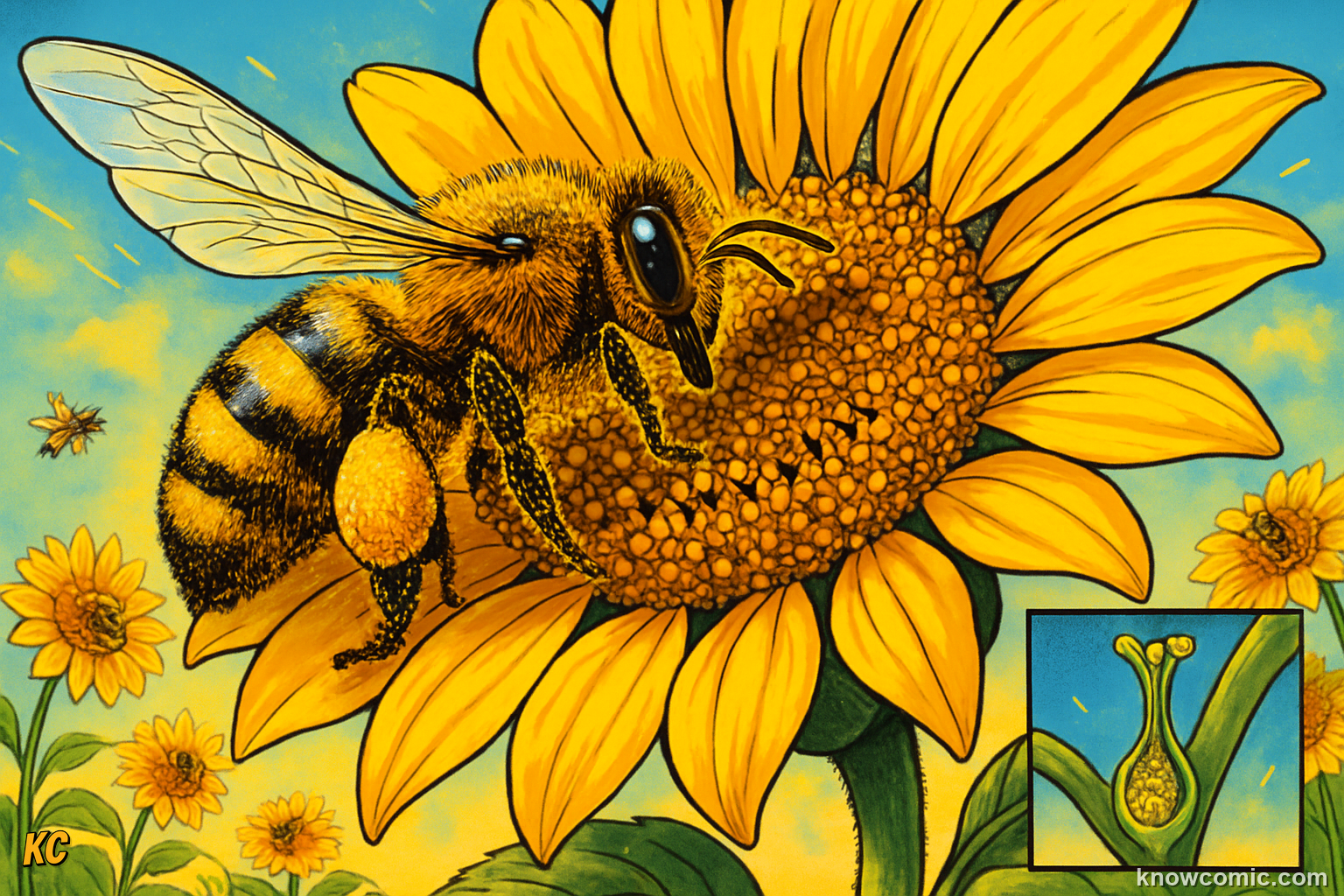
THE BEE AND THE FLOWER
The bee lands on the flower seeking nectar. As it feeds, pollen sticks to its fuzzy body. When it visits the next flower of the same species, that pollen rubs off onto the stigma, fertilising the plant. The bee gets food. The plant gets its pollen delivered precisely and efficiently. This is one of the greatest partnerships in the history of life.
ZOOM!
PAGE 4 OF 5, THE CO-EVOLUTION EXPLOSION
90 MILLION YEARS AGO
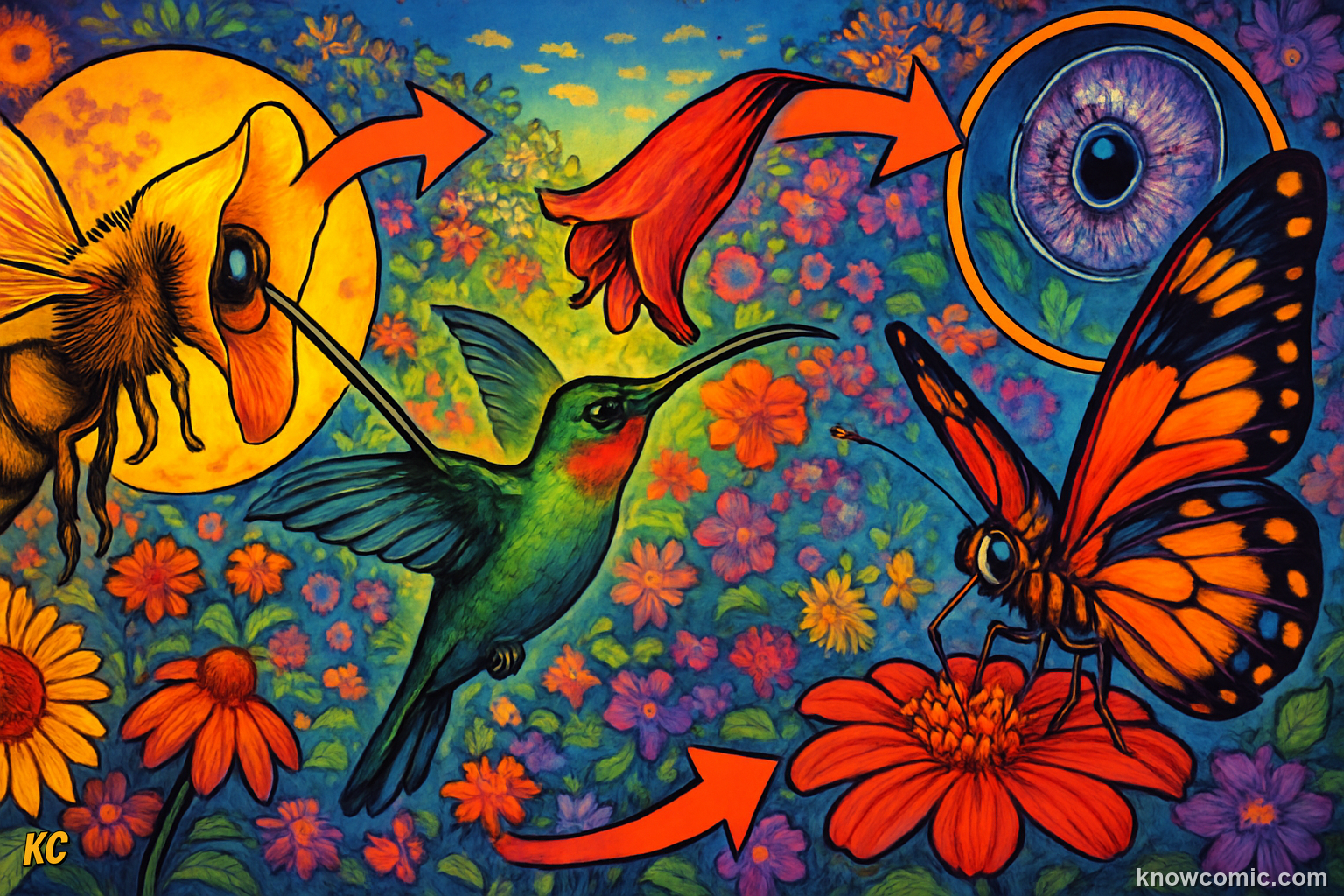
FLOWERS AND ANIMALS EVOLVE TOGETHER
As flowers spread, animals evolved alongside them in a spectacular feedback loop. Bees evolved longer tongues to reach deeper nectar. Flowers evolved deeper tubes to match. Butterflies evolved colour vision tuned to flower pigments. Flowers evolved the exact colours butterflies see. Hummingbirds evolved long curved beaks, and their flowers evolved matching curved tubes. This is co-evolution: two species shaping each other across millions of years.
EVOLVE!
BEES
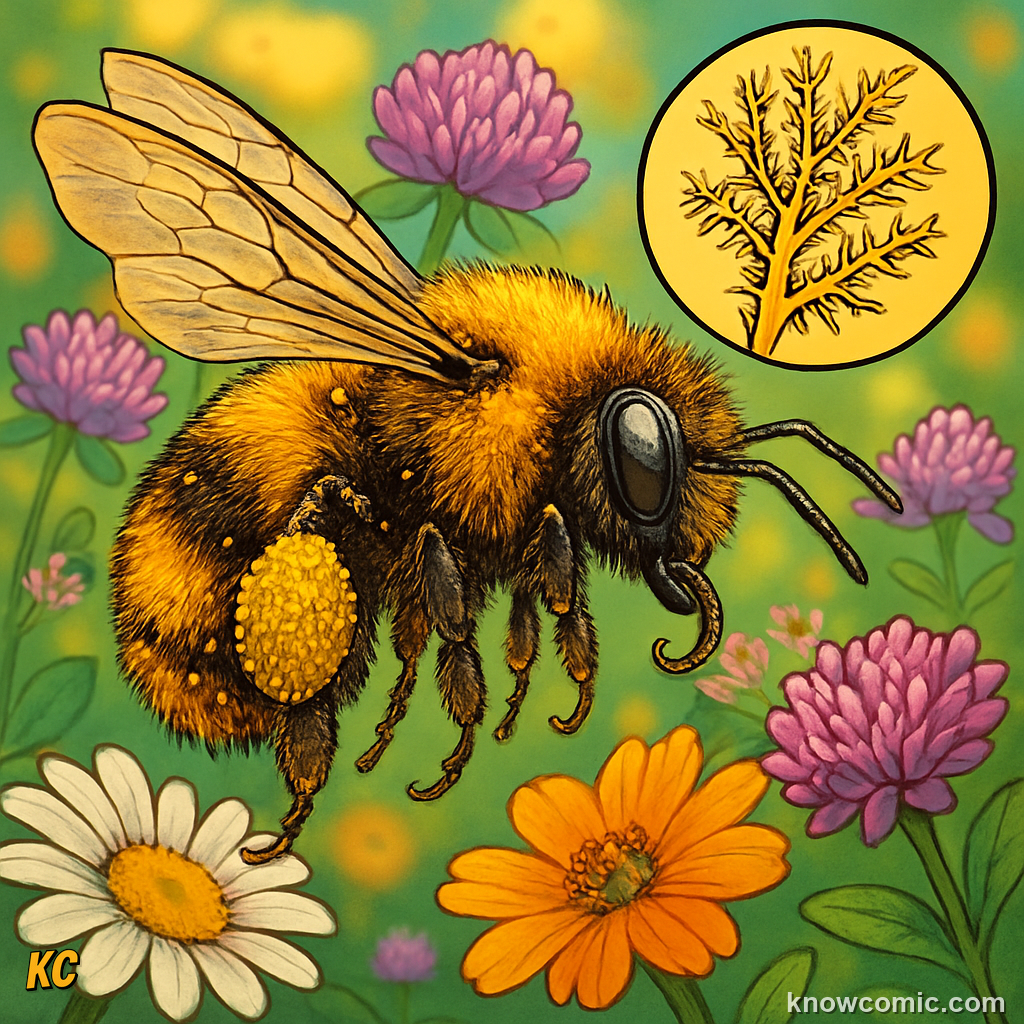
🐝 80% of flowering plants need bees
🍯 Bees evolved alongside flowers for 100M years
🍯 Bees evolved alongside flowers for 100M years
BUTTERFLIES
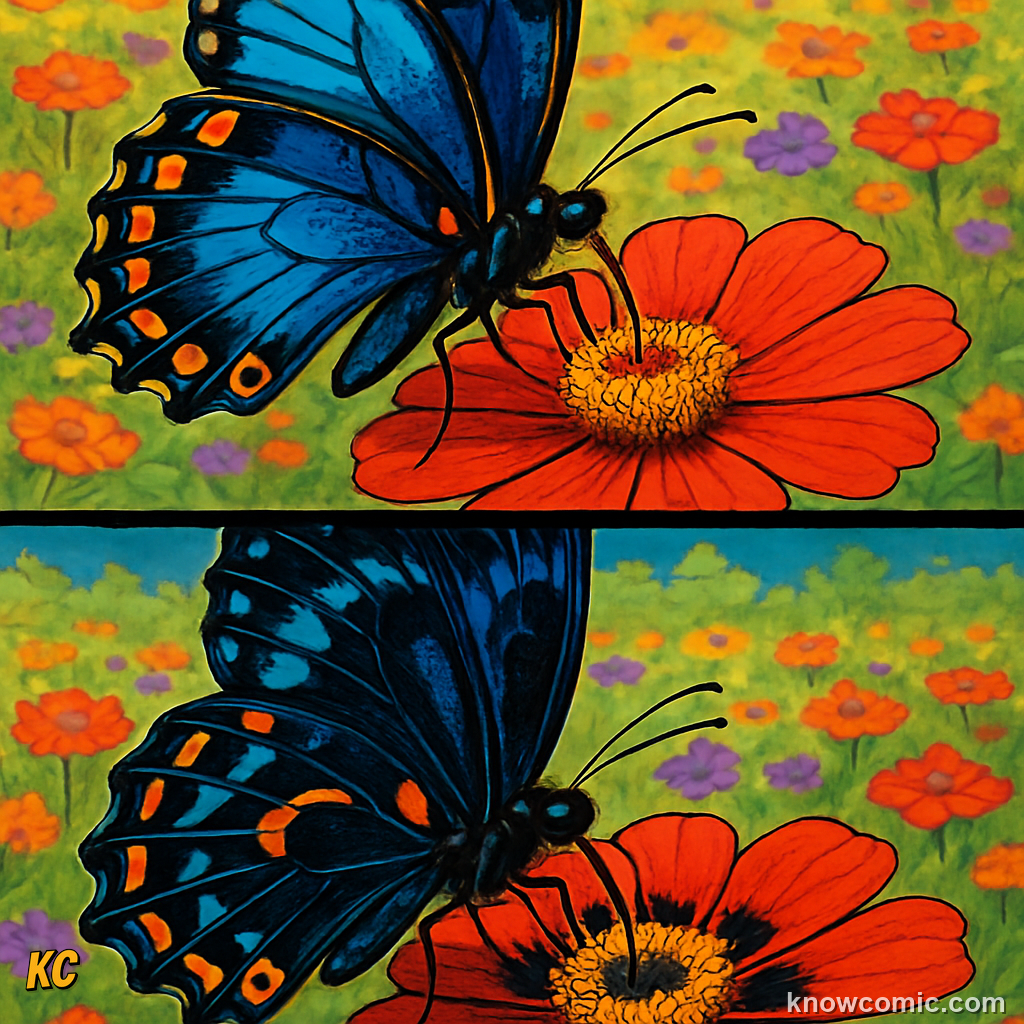
🦋 See red, bees cannot
🌺 Red flowers evolved specifically for them
🌺 Red flowers evolved specifically for them
BIRDS
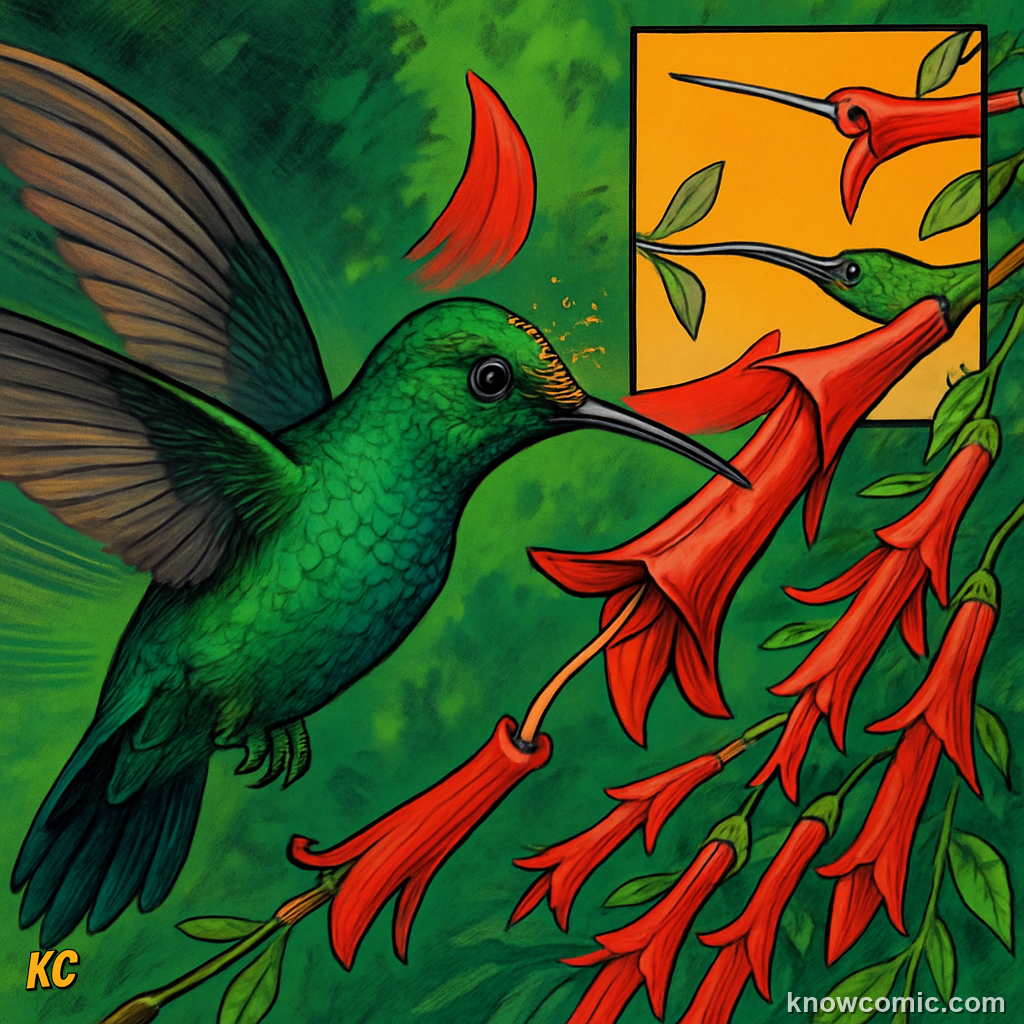
🐦 Hummingbirds: beaks match flower tubes
🌺 Tubular red flowers evolved for birds
🌺 Tubular red flowers evolved for birds
PAGE 5 OF 5, THE FLOWERING WORLD
THE LEGACY
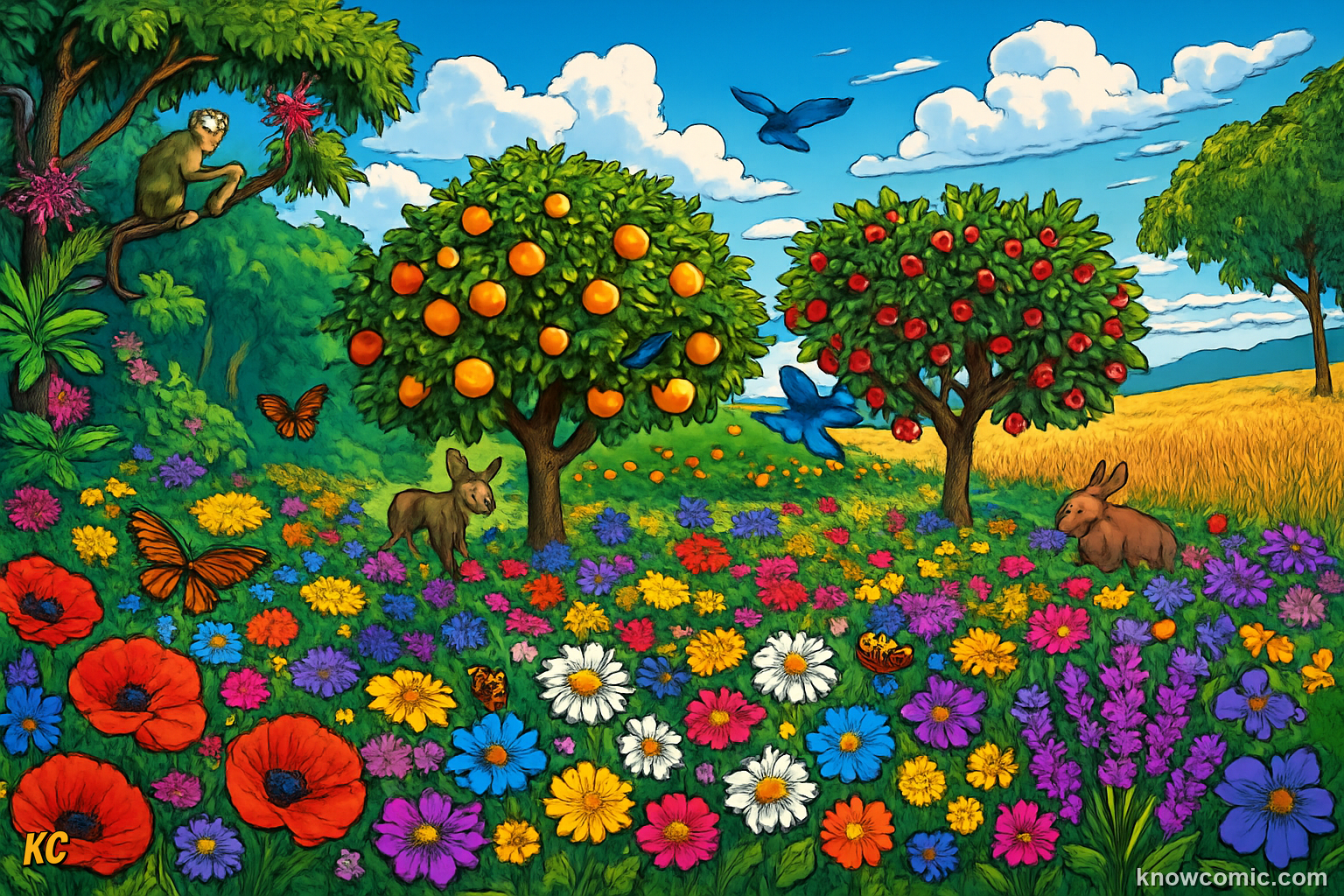
90% OF ALL PLANTS ARE FLOWERING PLANTS
Today, angiosperms, flowering plants, dominate every habitat on Earth. 90% of all plant species are flowering plants. Every fruit you eat, every vegetable, every grain of wheat and rice, every cotton thread, all came from this one revolutionary invention 130 million years ago. The flower didn't just change plants. It changed what animals ate, where they lived, and ultimately, it helped make intelligent life possible.
AMAZING!
TODAY
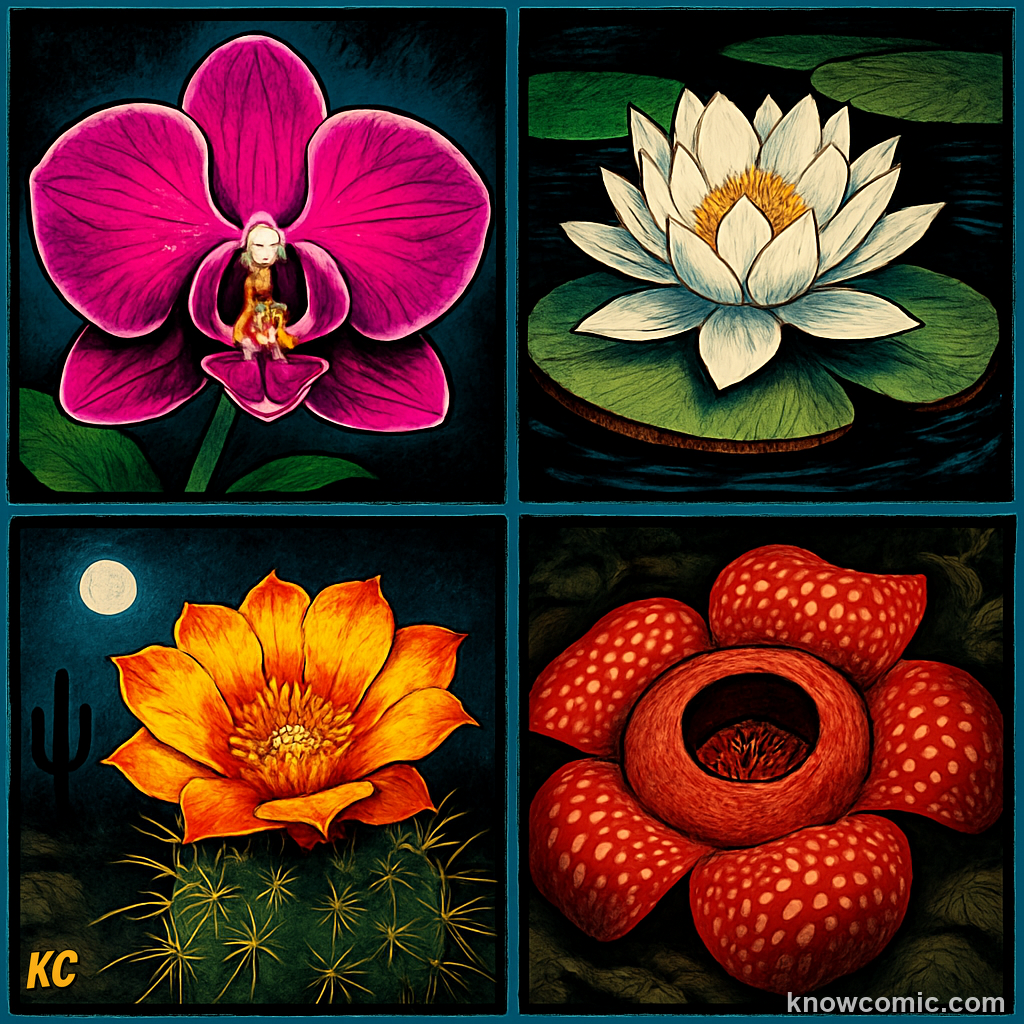
🌸 350,000+ species of flowering plants
🌍 Found on every continent including Antarctica
🌍 Found on every continent including Antarctica
REMEMBER
🌸 KEY FACTS
The first flower appeared ~130 million years ago. Angiosperms now make up 90% of all plant species. Every fruit, vegetable, grain, nut, and spice comes from a flowering plant. Without flowers, modern animal life, including humans, could not exist as it does today.
🌸 Flower → Fruit
🍎 Fruit → Animals
🌍 Animals → Civilisation
🍎 Fruit → Animals
🌍 Animals → Civilisation
🧠 QUIZ TIME!
THE FIRST FLOWER: 130 MILLION YEARS AGO · 5 QUESTIONS
QUESTION 01
What makes an angiosperm different from a gymnosperm like a pine tree?
QUESTION 02
Why did flowers evolve bright colours, sweet nectar, and strong scents?
QUESTION 03
What is co-evolution and which example best shows it between flowers and animals?
QUESTION 04
Approximately what percentage of all plant species today are flowering plants?
QUESTION 05
Which of these foods comes from a flowering plant?
0/5
LOADING...