☀️ THE SOLAR SYSTEM
PAGE 1 OF 5 — OUR COSMIC NEIGHBOURHOOD
THE BIG PICTURE
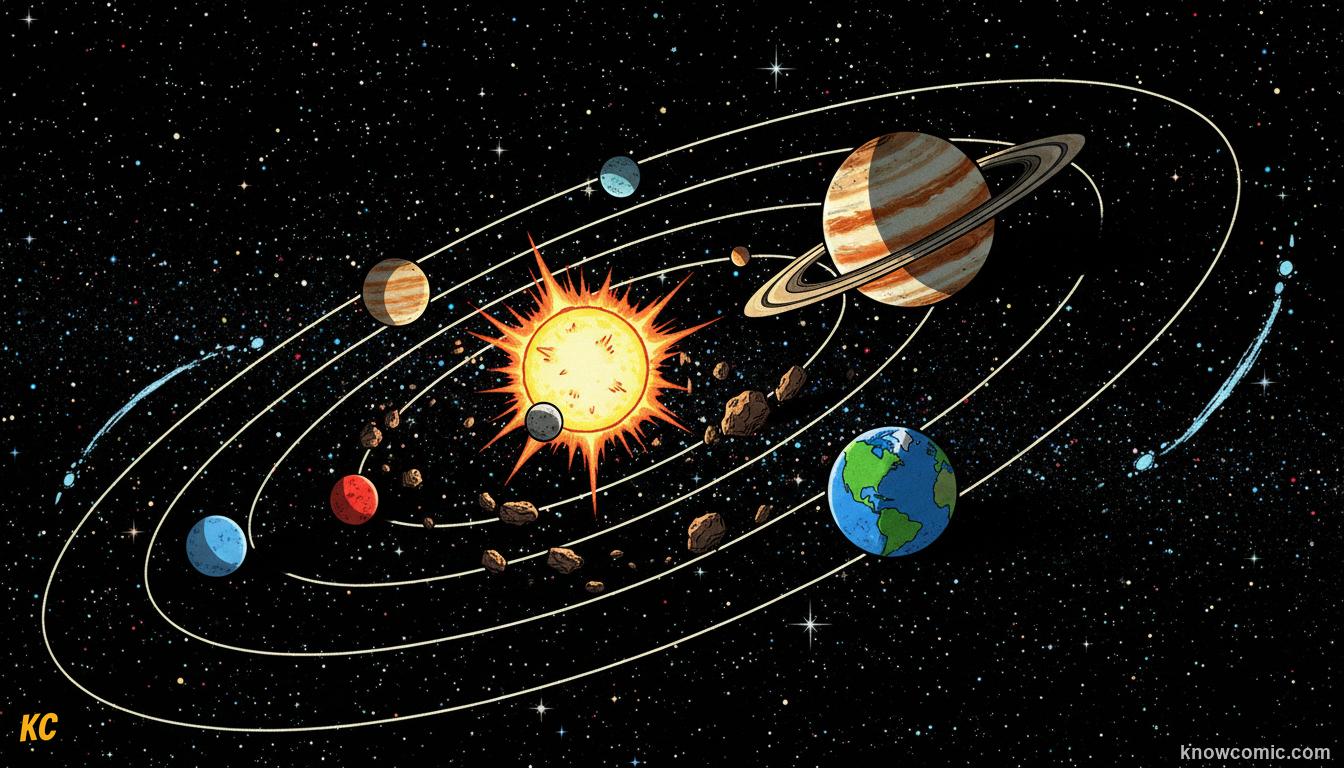
OUR COSMIC NEIGHBOURHOOD
Our solar system formed 4.5 billion years ago from a giant spinning cloud of gas and dust called a nebula. At the centre burns our Sun — a star so massive that its gravity holds everything in orbit for billions of kilometres. Orbiting around it are 8 planets, hundreds of moons, millions of asteroids, and billions of comets — all circling endlessly through the darkness of space.
⚡ STAGGERING SCALE
Light from the Sun takes just 8 minutes to reach Earth — but over 5 hours to reach Neptune, the most distant planet!
COSMIC!
HOW IT FORMED
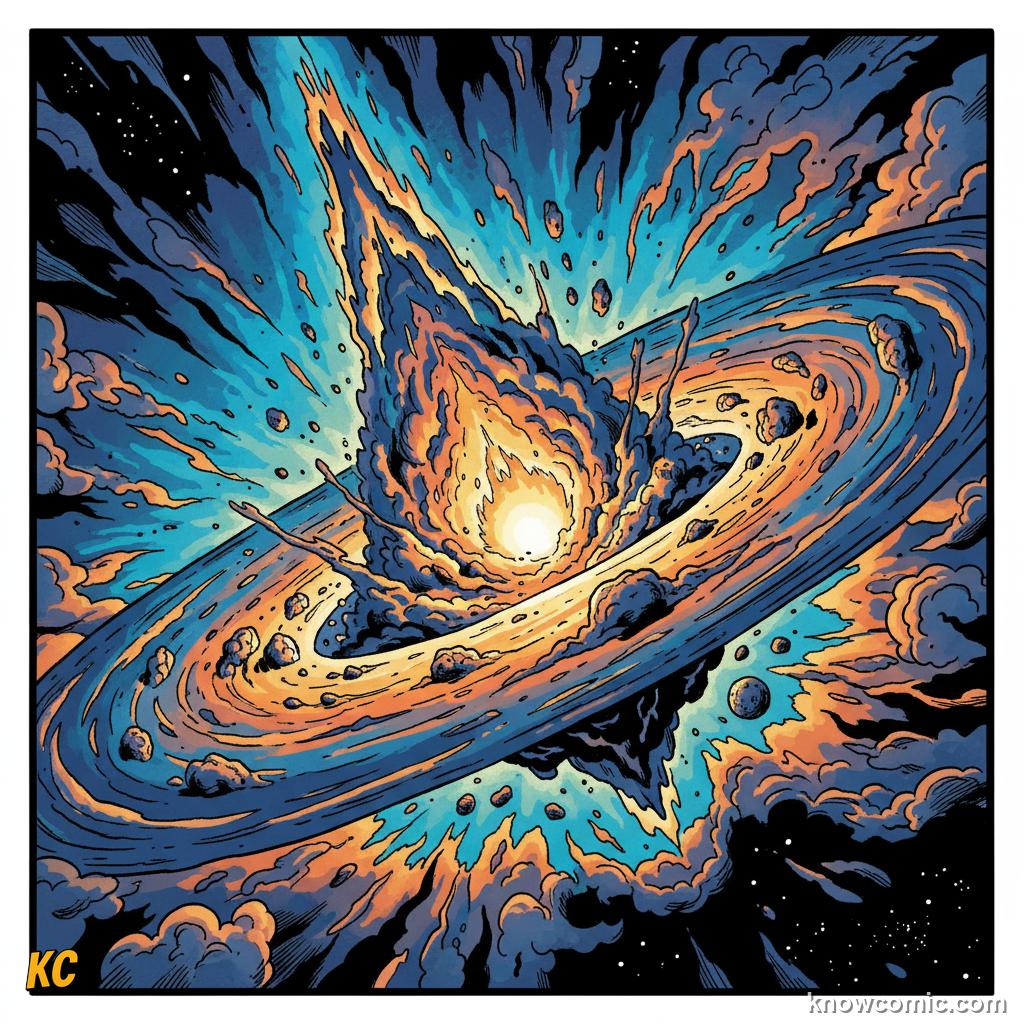
💫 A nebula collapsed under gravity 4.6 billion years ago
🌍 Dust and gas clumped together to form all the planets
🌍 Dust and gas clumped together to form all the planets
THE NUMBERS
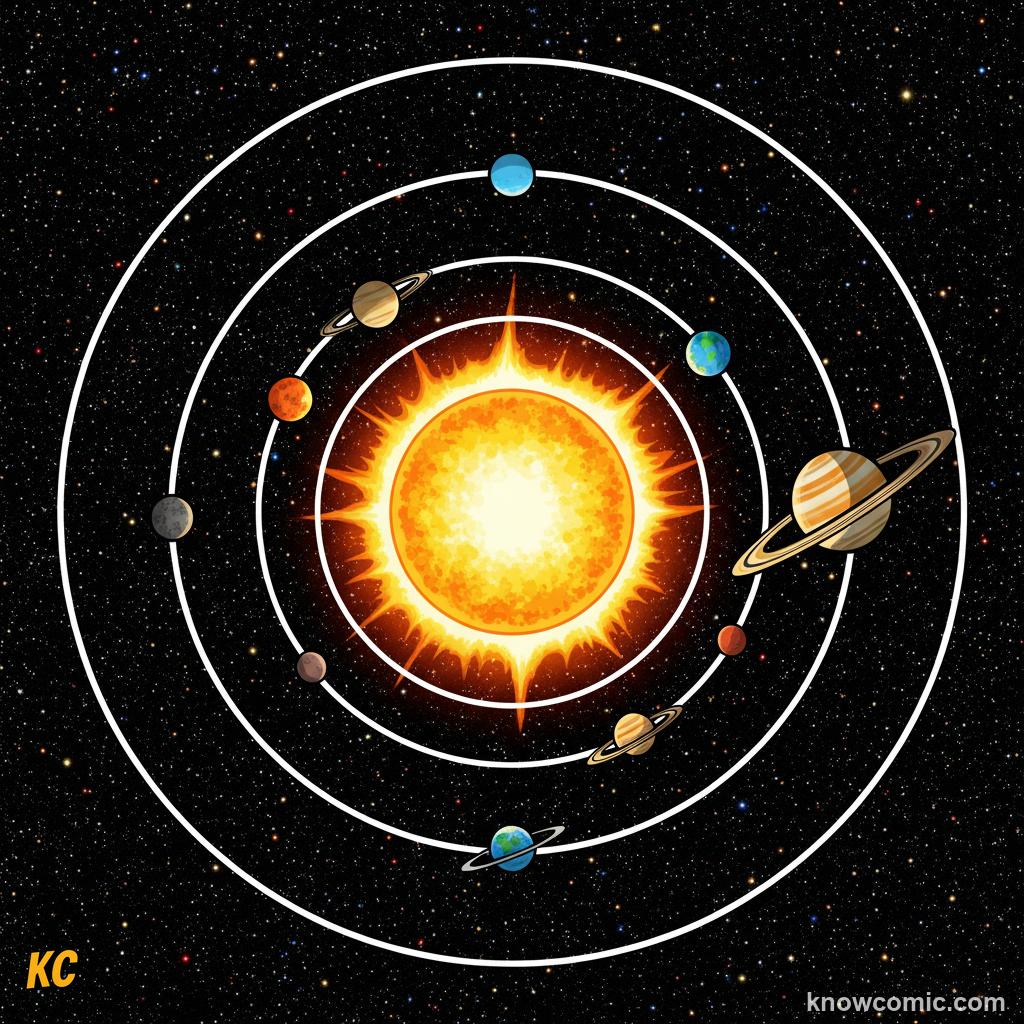
🪐 8 planets orbit the Sun in our solar system
🌙 Over 200 moons orbit the various planets
🌙 Over 200 moons orbit the various planets
PAGE 2 OF 5 — THE SUN: HEART OF THE SOLAR SYSTEM
OUR STAR
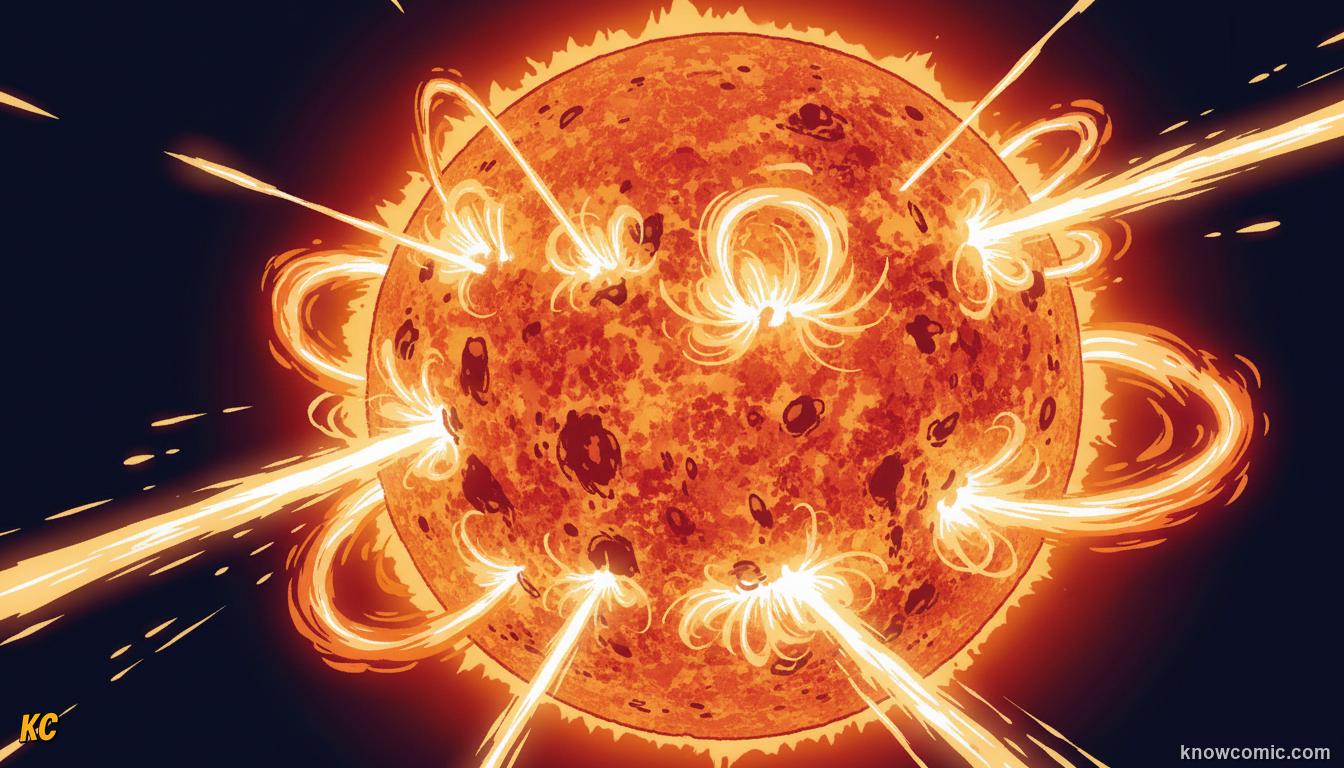
THE ENGINE OF OUR SOLAR SYSTEM
The Sun is not just a star — it is the mighty engine of our entire solar system. This enormous ball of hot plasma contains 99.8% of all the mass in the solar system. Every single second, the Sun fuses 600 million tonnes of hydrogen into helium in its scorching core — releasing energy that has lit and warmed our solar system for 4.5 billion years, and will continue for another 5 billion years to come.
FUSING!
NUCLEAR FUSION
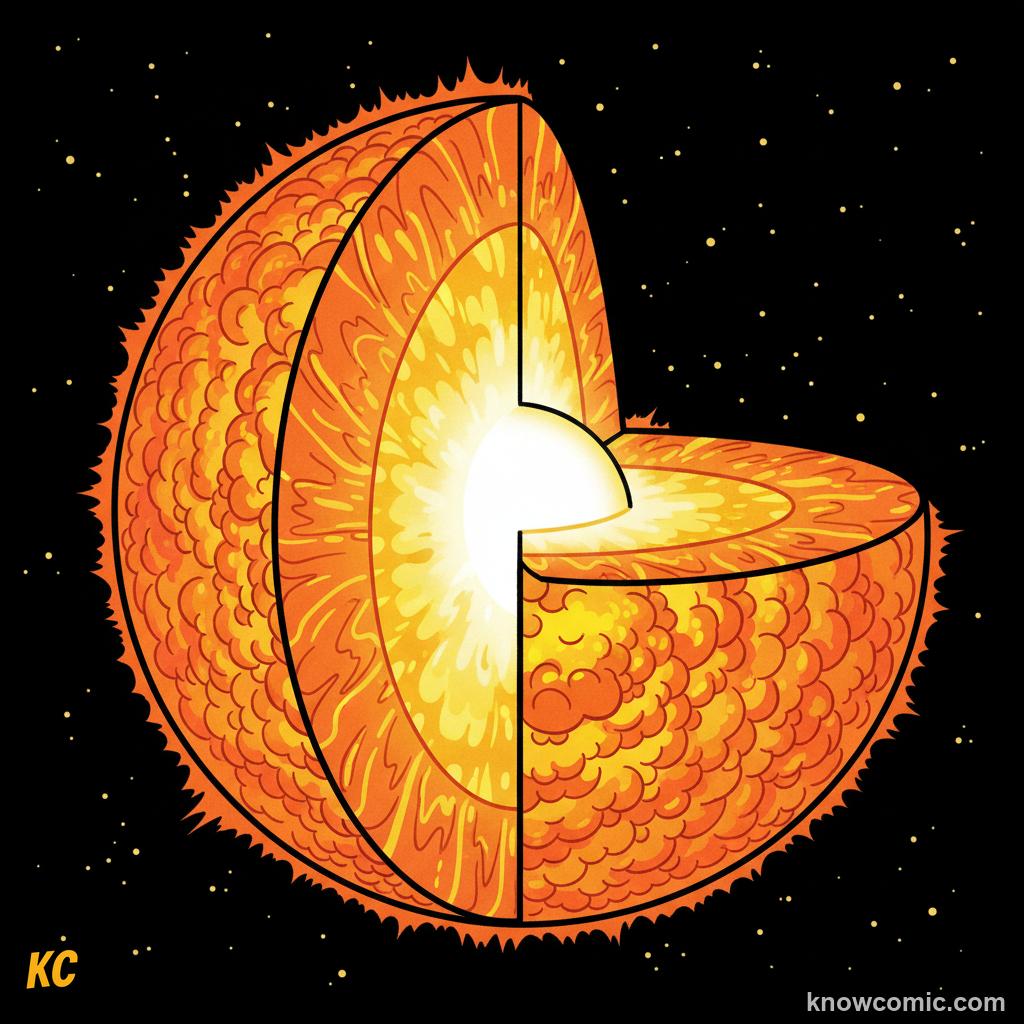
⚛️ Hydrogen atoms fuse into helium in the Sun's core
🔥 Core temperature reaches 15 million degrees Celsius
🔥 Core temperature reaches 15 million degrees Celsius
SOLAR WIND
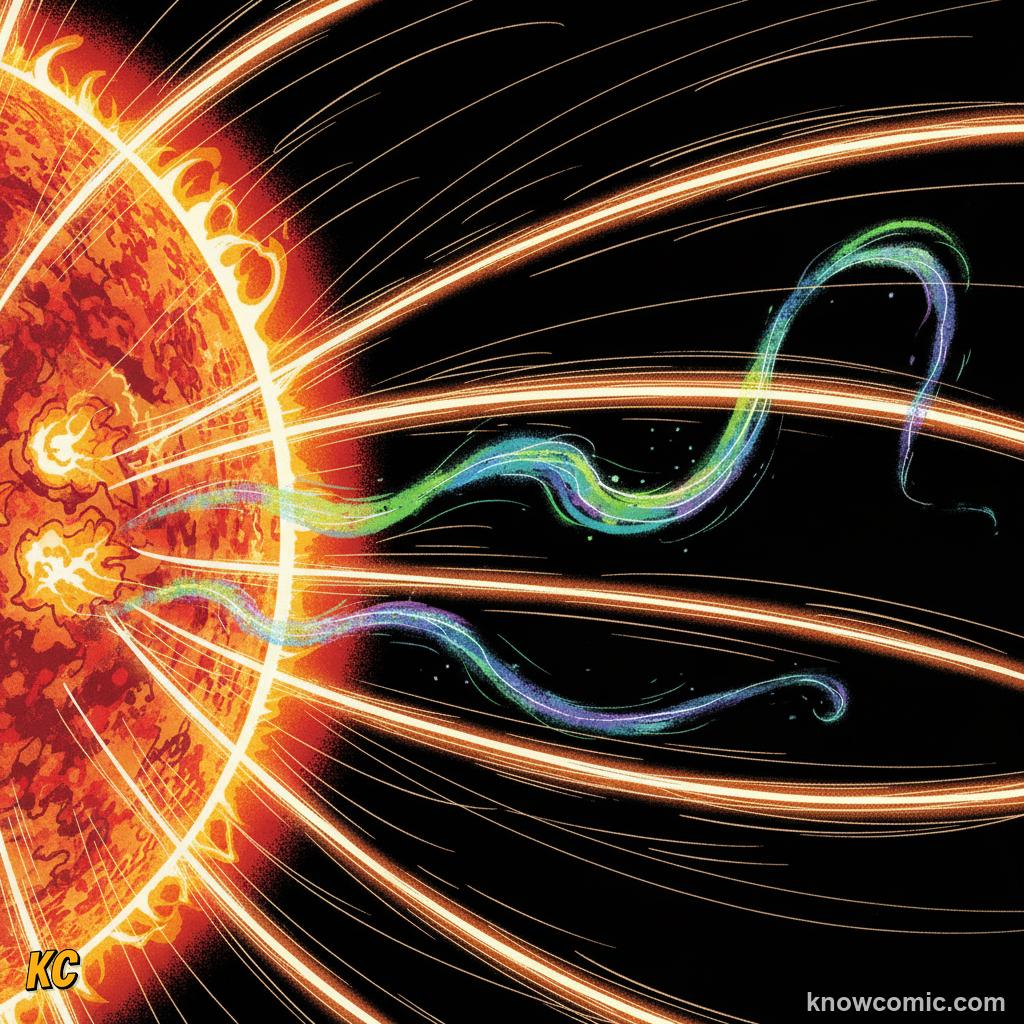
💨 Streams of charged particles blast outward from the Sun
🌌 Creates the dazzling Northern and Southern Lights on Earth
🌌 Creates the dazzling Northern and Southern Lights on Earth
SOLAR FLARES
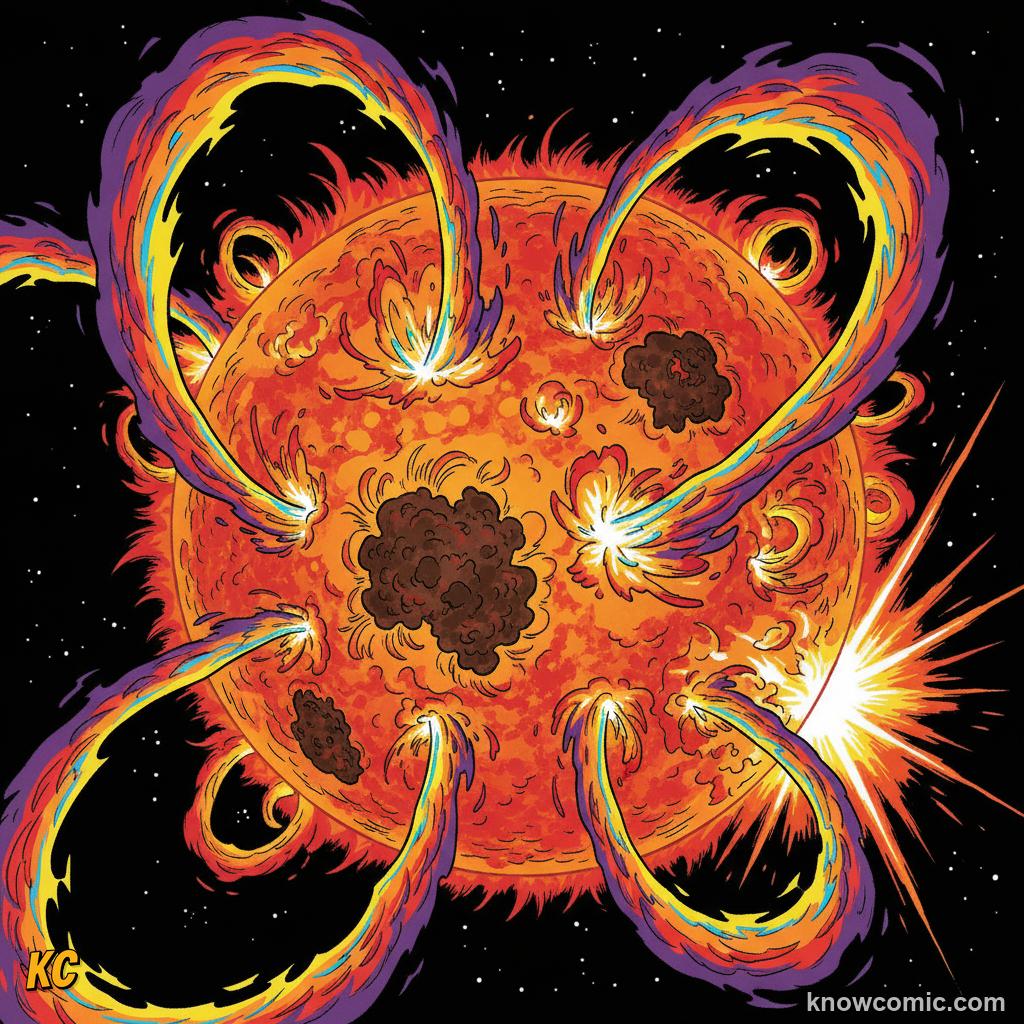
🔴 Dark sunspots and explosive flares erupt from the surface
⚡ Giant solar flares can knock out satellites and power grids on Earth
⚡ Giant solar flares can knock out satellites and power grids on Earth
PAGE 3 OF 5 — THE INNER PLANETS: ROCKY WORLDS
MERCURY
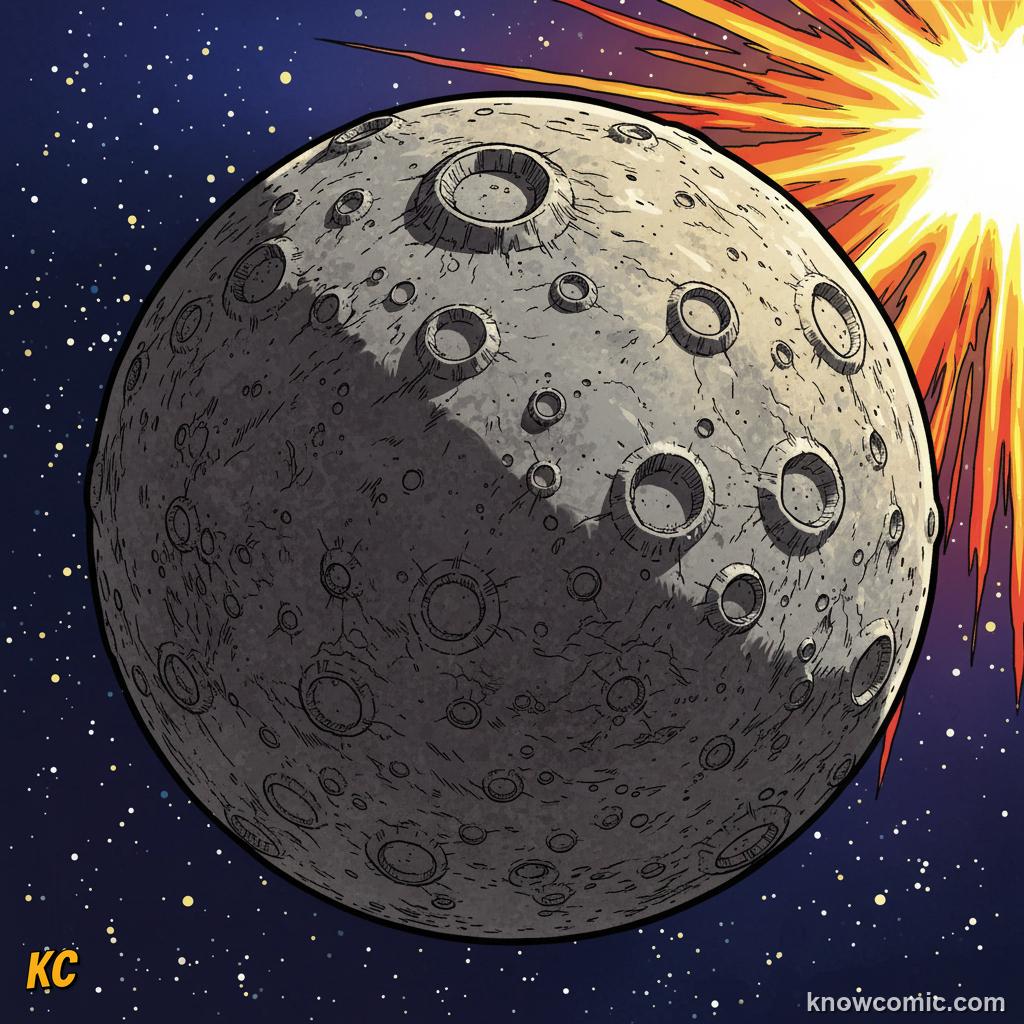
🪨 Closest planet to the Sun — a scarred, cratered rocky world
🌡️ Wild swings: −180°C at night to +430°C in sunlight
🌡️ Wild swings: −180°C at night to +430°C in sunlight
VENUS
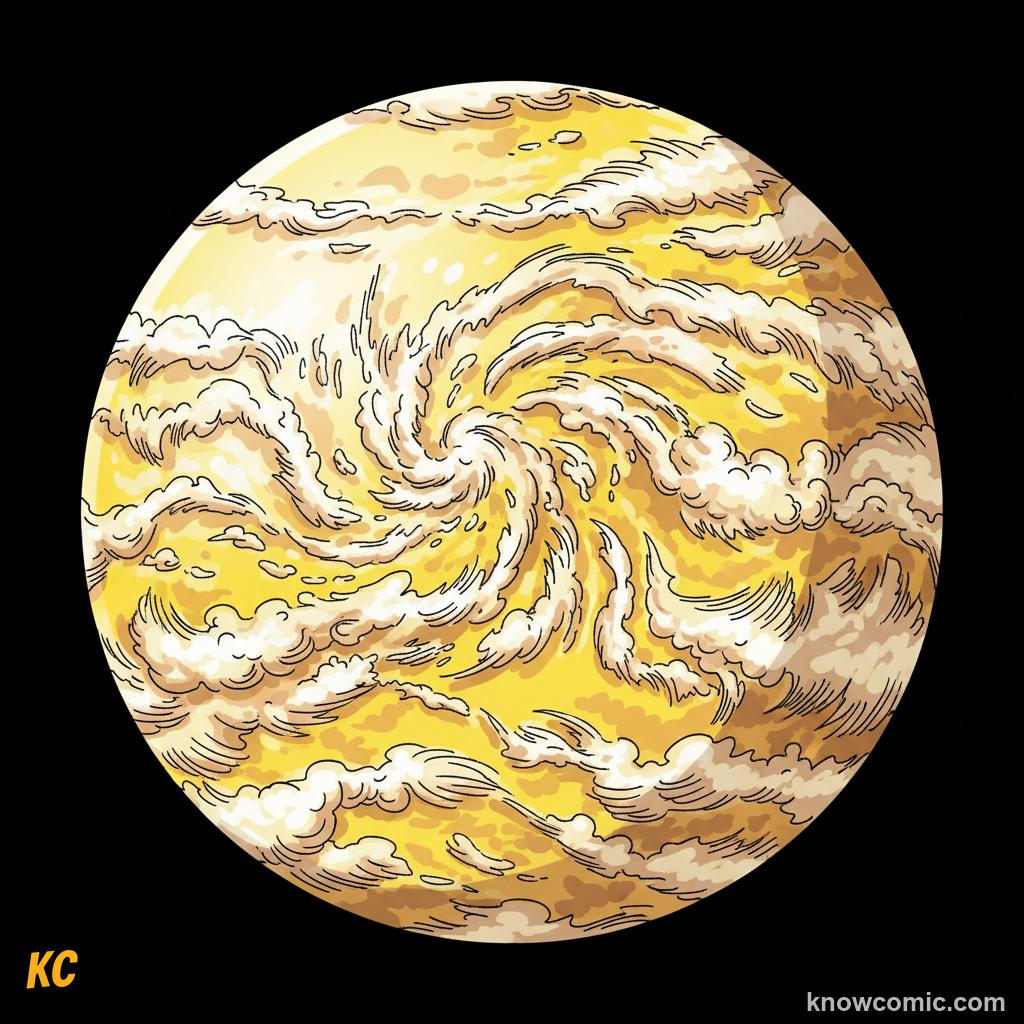
🔥 The hottest planet — even hotter than Mercury!
☁️ Thick toxic atmosphere traps all heat like a pressure cooker
☁️ Thick toxic atmosphere traps all heat like a pressure cooker
THE RED PLANET
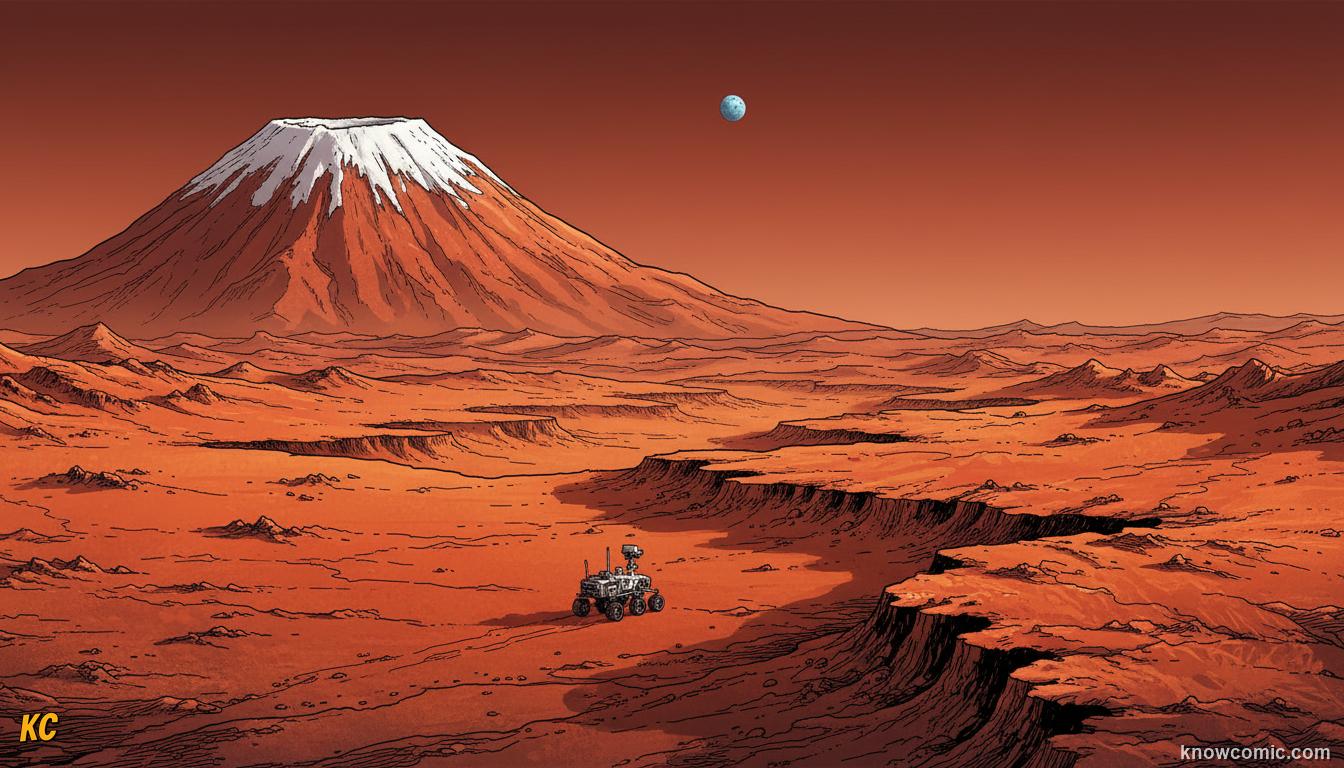
MARS: OUR NEXT HOME?
Mars is the most Earth-like planet in our solar system. It has seasons, polar ice caps, and the tallest volcano anywhere — Olympus Mons, three times taller than Mount Everest. Evidence shows liquid water once flowed across its surface billions of years ago. Today, several robotic rovers are crawling across its dusty red landscape, searching for signs of ancient microscopic life that may have once existed there.
🚀 MARS MISSIONS
NASA's Perseverance rover is collecting Martian rock samples that may one day be returned to Earth for scientists to study!
ROVERS!
PAGE 4 OF 5 — THE OUTER PLANETS: GAS & ICE GIANTS
THE GIANTS
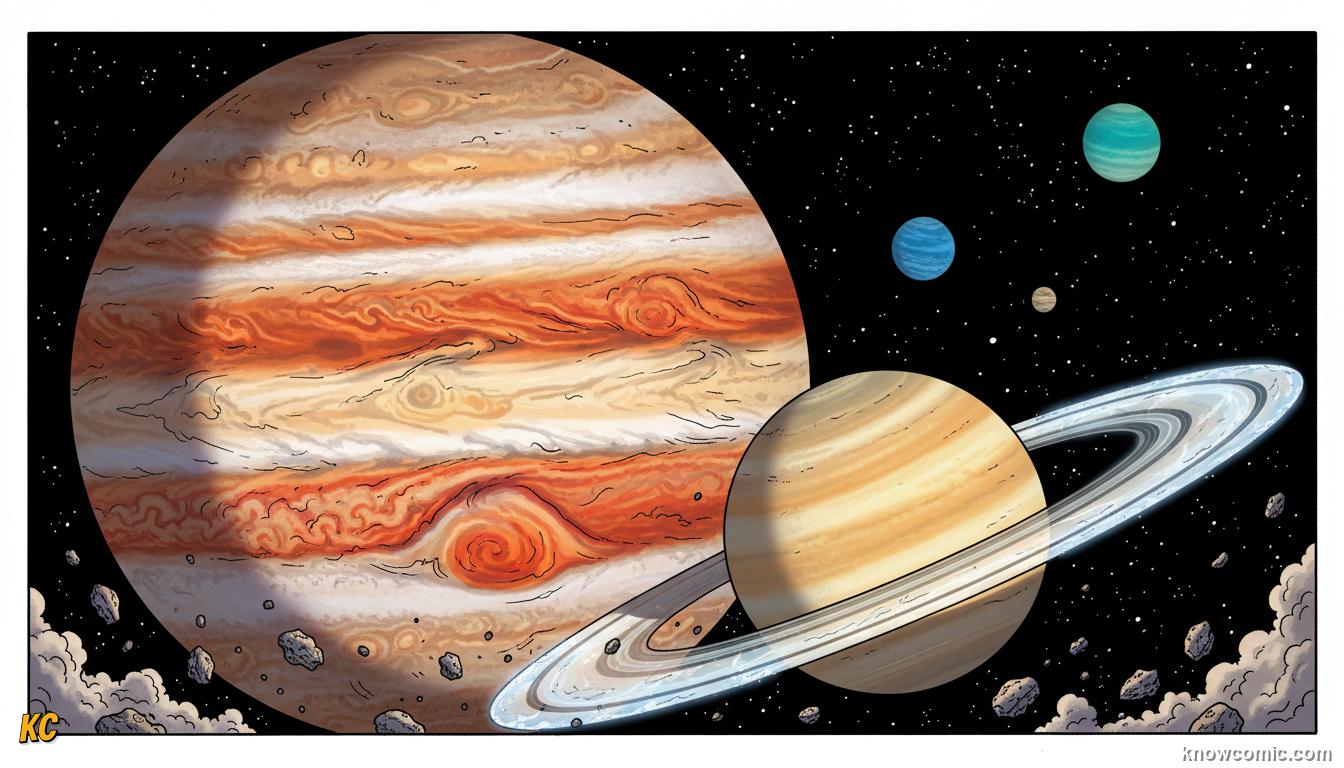
GIANT WORLDS BEYOND THE ASTEROID BELT
Beyond the asteroid belt lie four enormous planets — Jupiter, Saturn, Uranus, and Neptune. Jupiter alone is so colossal it could swallow every other planet combined. Saturn's magnificent rings stretch 282,000 km wide yet are less than a kilometre thick. Uranus and Neptune are ice giants — not truly frozen, but composed of super-hot dense fluid mixed with ice and rock in their interiors.
GIANTS!
JUPITER
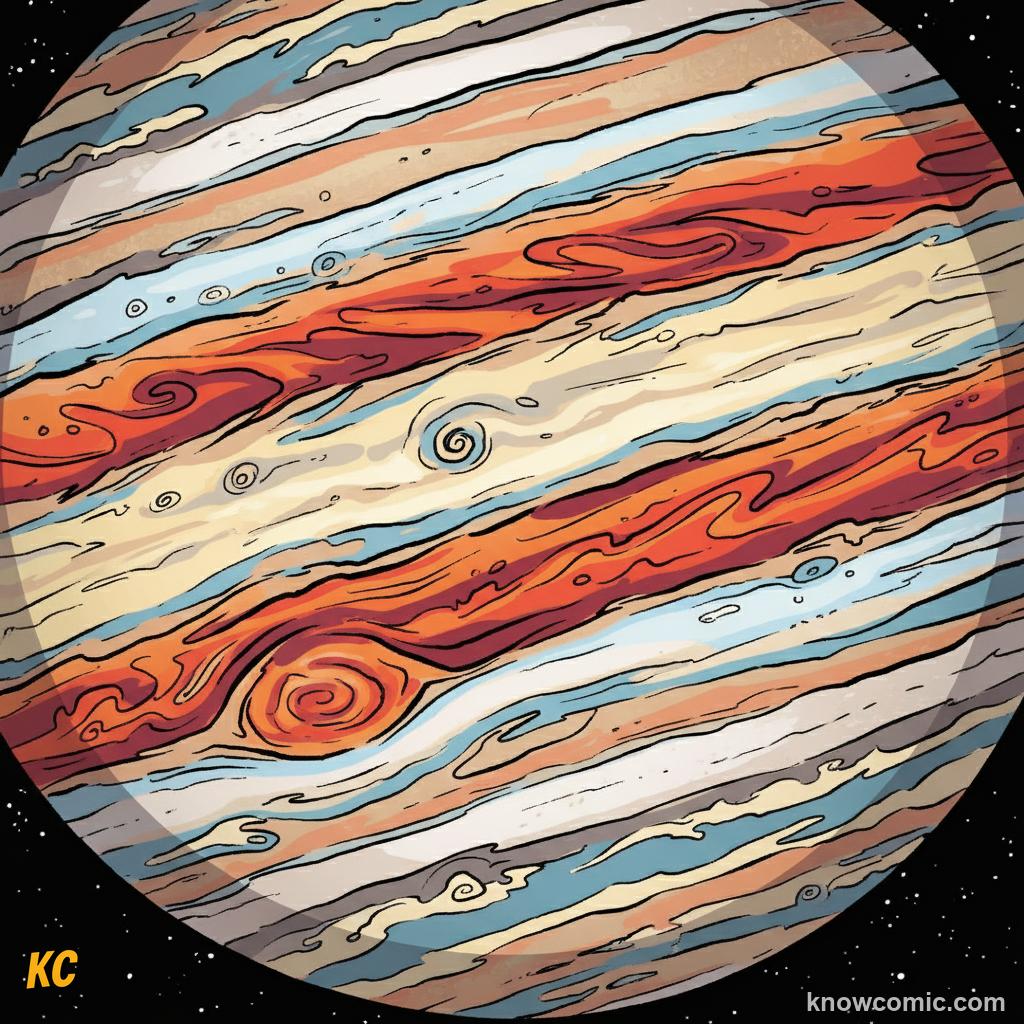
🌀 The Great Red Spot — a raging storm wider than planet Earth, ongoing for 350+ years
🌙 Jupiter has 95 known moons, including Europa with a hidden liquid ocean beneath its ice
🌙 Jupiter has 95 known moons, including Europa with a hidden liquid ocean beneath its ice
SATURN
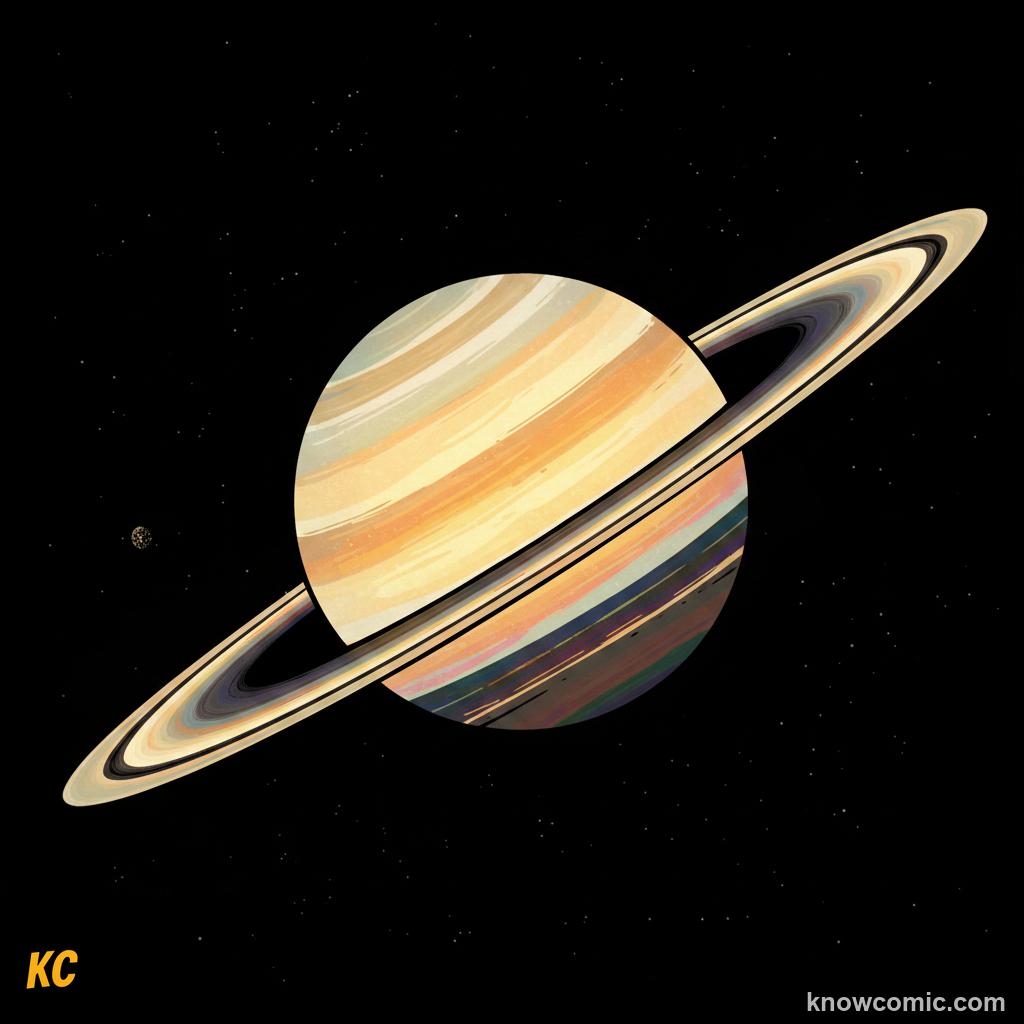
💍 Stunning rings made of billions of chunks of ice and rock
🪐 The rings stretch 282,000 km wide but are less than 1 km thick
🪐 The rings stretch 282,000 km wide but are less than 1 km thick
ICE GIANTS
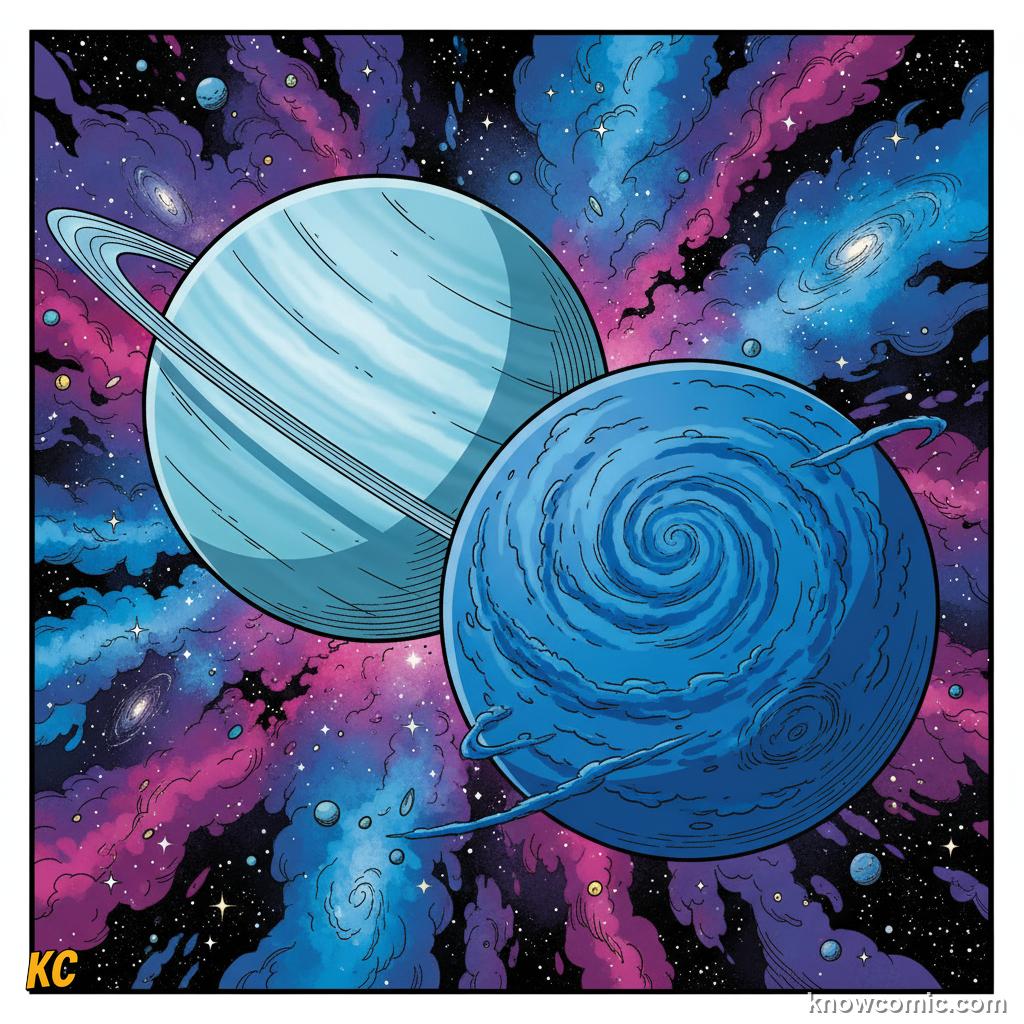
💎 Uranus spins on its side — knocked over by a massive collision long ago
🌊 Neptune has the fastest winds in the solar system — 2,100 km per hour!
🌊 Neptune has the fastest winds in the solar system — 2,100 km per hour!
PAGE 5 OF 5 — THE EDGE OF THE SOLAR SYSTEM
THE FRONTIER
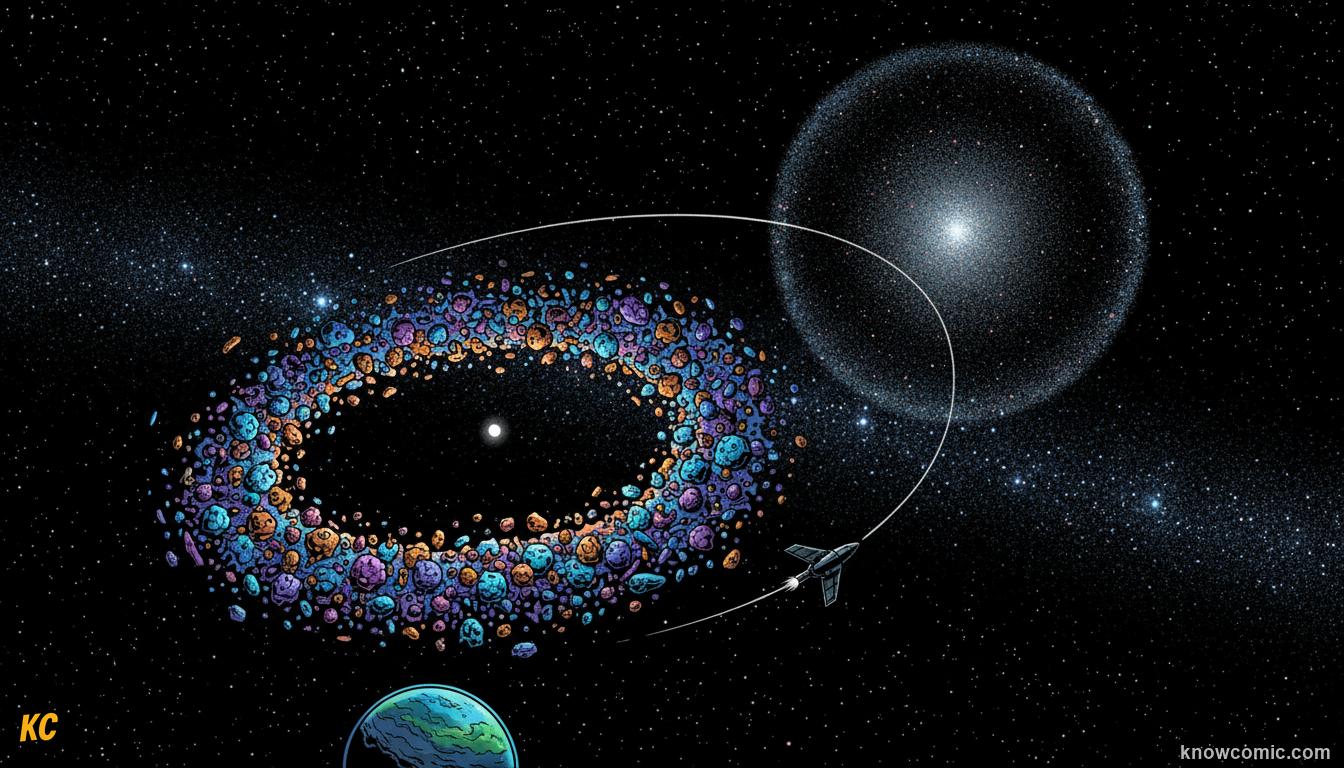
BEYOND NEPTUNE: THE WILD FRONTIER
Beyond Neptune lies the Kuiper Belt — a vast ring of icy worlds including Pluto, now classified as a dwarf planet. Even further out is the Oort Cloud, a distant shell of billions of comets that forms the true outer boundary of our solar system. Two Voyager spacecraft, launched in 1977, have crossed beyond all of this and are now drifting through interstellar space — humanity's most distant explorers ever built.
🚀 VOYAGER 1
Voyager 1 is over 23 billion kilometres from Earth. A signal from it takes over 22 hours to reach us — and it's still sending data!
VOYAGER!
ASTEROID BELT
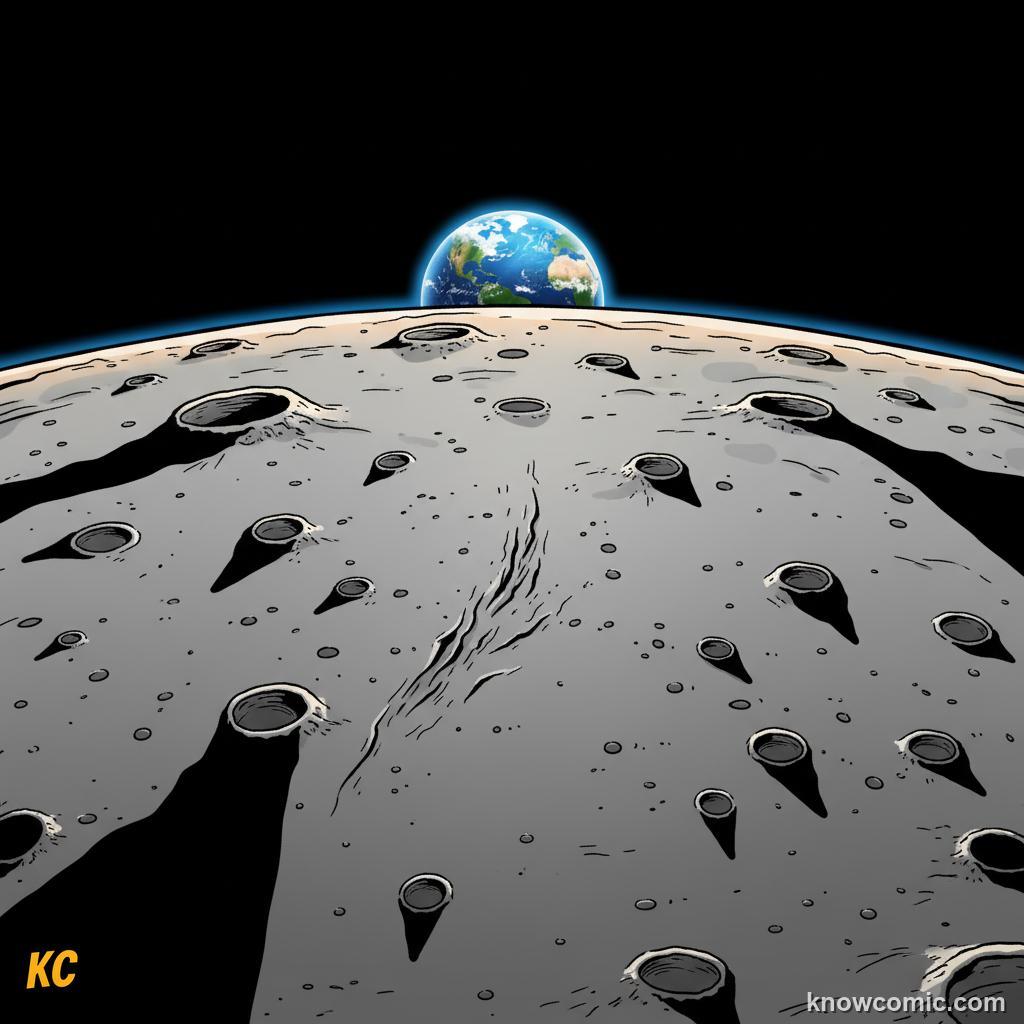
🪨 Millions of rocky chunks orbit between Mars and Jupiter
🚀 Despite the movies, spacecraft pass through easily — mostly empty space
🚀 Despite the movies, spacecraft pass through easily — mostly empty space
REMEMBER
☀️ KEY FACTS
Our solar system is 4.5 billion years old, has 8 planets, 200+ moons, and the Sun holds 99.8% of all mass. Voyager 1 has left the solar system entirely!
☀️ Sun = 99.8% of all solar system mass
🪐 8 planets — Mercury to Neptune
🚀 Voyager 1 is now in interstellar space
🪐 8 planets — Mercury to Neptune
🚀 Voyager 1 is now in interstellar space
🧠 QUIZ TIME!
THE SOLAR SYSTEM · 5 QUESTIONS
QUESTION 01
How many planets are in our solar system?
QUESTION 02
Which planet is closest to the Sun?
QUESTION 03
What percentage of the solar system's mass does the Sun contain?
QUESTION 04
Which is the largest planet in our solar system?
QUESTION 05
Where is the Asteroid Belt located?
0/5
LOADING...