👑 ANCIENT EGYPT: PHARAOHS
PAGE 1 OF 5, THE GIFT OF THE NILE
WHERE EGYPT WAS BORN
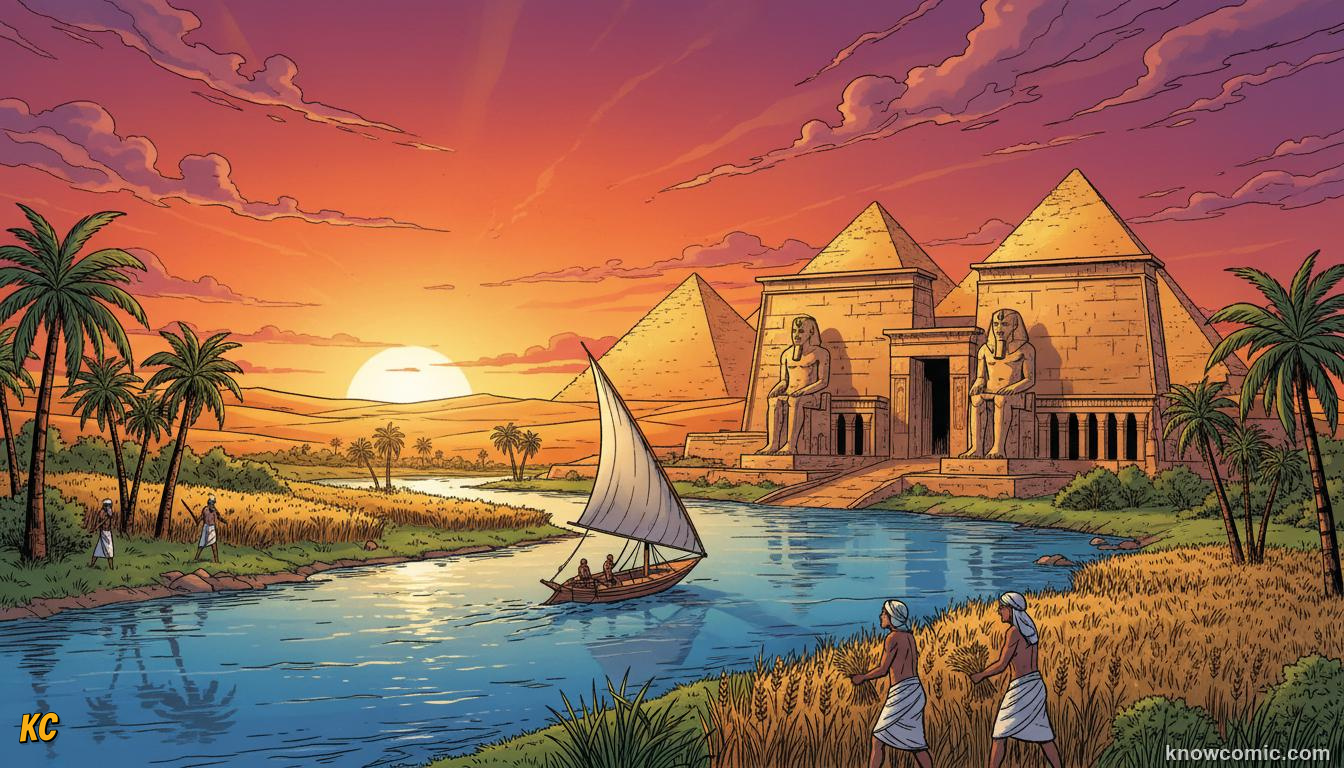
A CIVILISATION BUILT BY A RIVER
Egypt sits in the middle of the Sahara Desert, one of the driest places on Earth. Yet for 3,000 years it was also the richest, most powerful civilisation in the ancient world. The secret was a single river. Every summer the Nile flooded, spilling over its banks and dropping a layer of thick, rich, black silt all along the valley. When the water pulled back, the mud was perfect for growing wheat, barley, flax and vegetables. Farmers harvested so much food that Egyptians had time left over to build temples, study the stars, carve statues, write poetry and bury their kings inside mountains of stone. The Greek historian Herodotus called Egypt "the gift of the Nile", and he was right.
⚡ DID YOU KNOW?
Egyptians called their land "Kemet", the Black Land, because of the dark fertile soil left by the flood. The red desert beyond was "Deshret", the Red Land. Our word "chemistry" comes from Kemet!
NILE!
3100 BCE
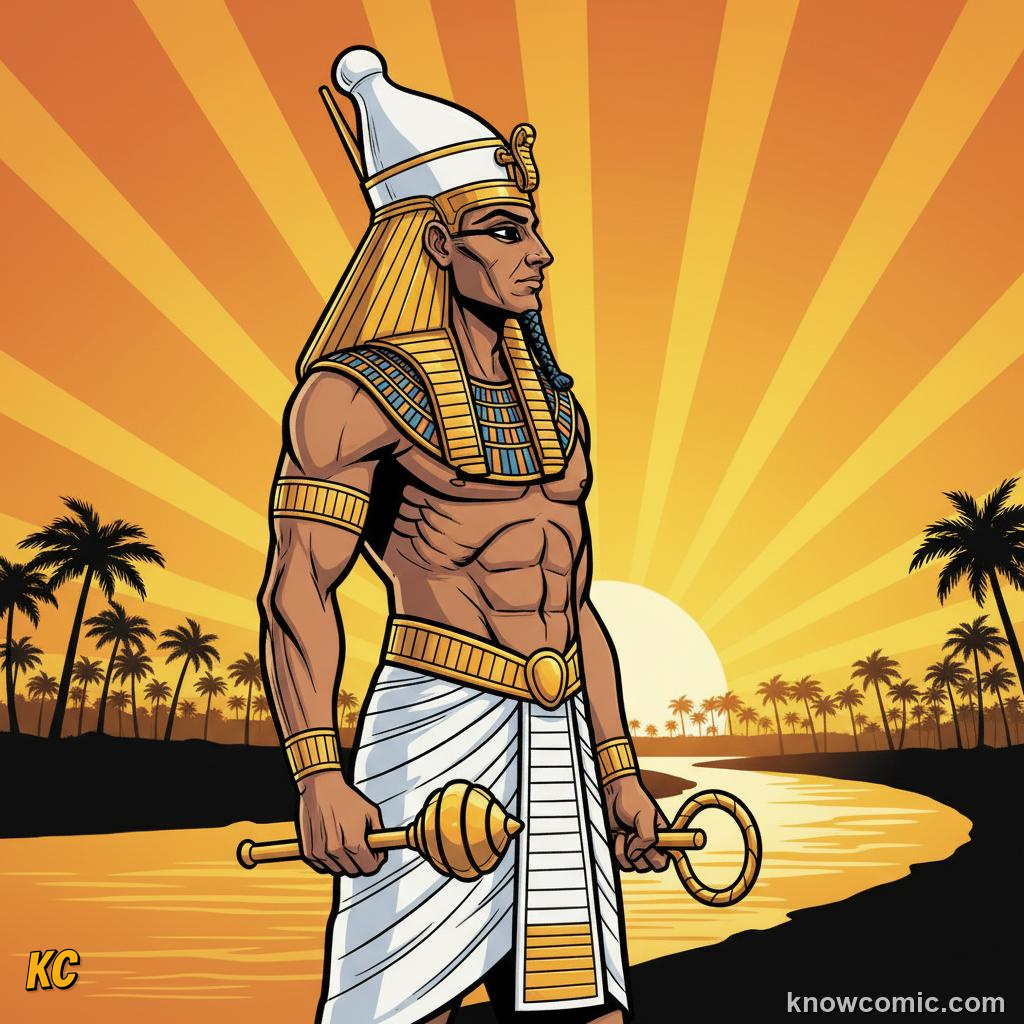
👑 King Narmer unites Egypt
⚪ White crown of Upper Egypt
🔴 Red crown of Lower Egypt
⚪ White crown of Upper Egypt
🔴 Red crown of Lower Egypt
LIVING GODS
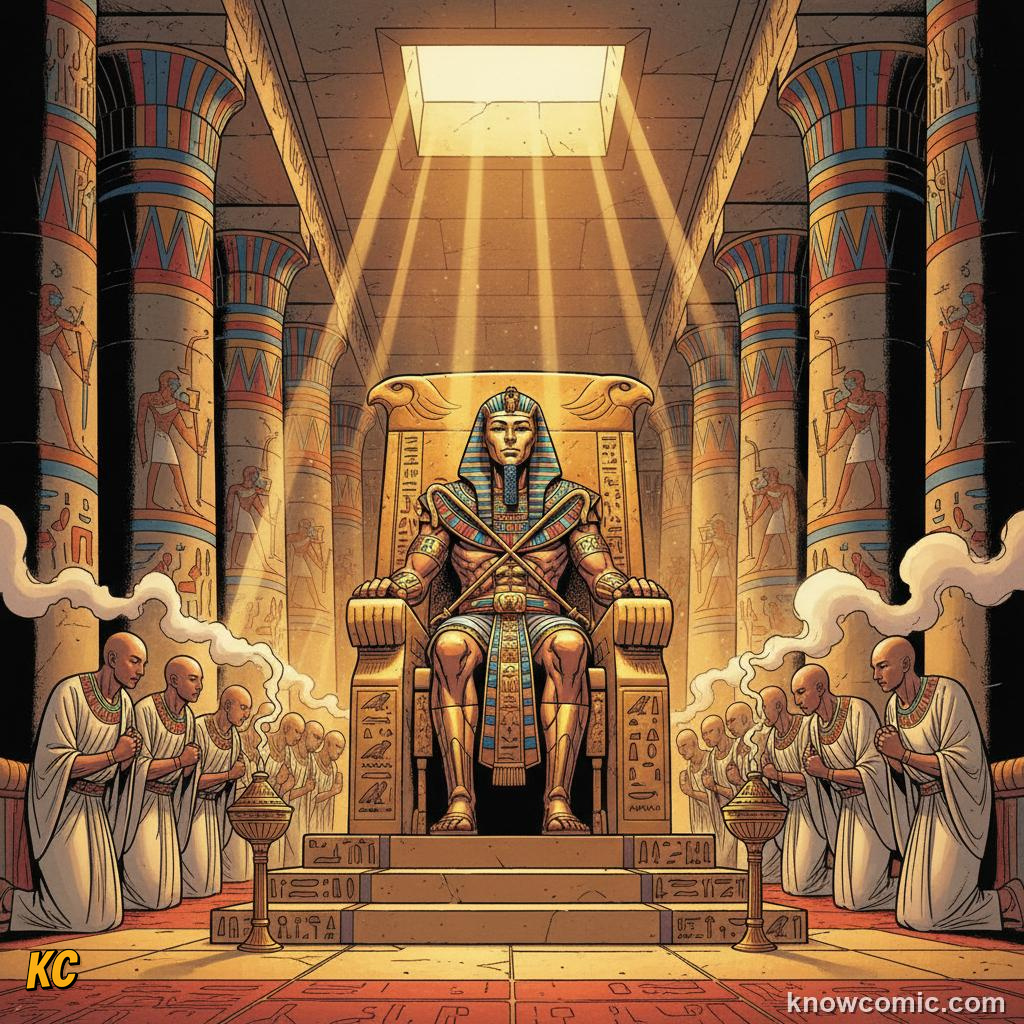
☀️ Pharaohs were seen as gods
🌾 They commanded the Nile flood
⚖️ They kept order (ma'at) on Earth
🌾 They commanded the Nile flood
⚖️ They kept order (ma'at) on Earth
PAGE 2 OF 5, MOUNTAINS OF STONE: THE PYRAMIDS
C. 2560 BCE · GIZA PLATEAU
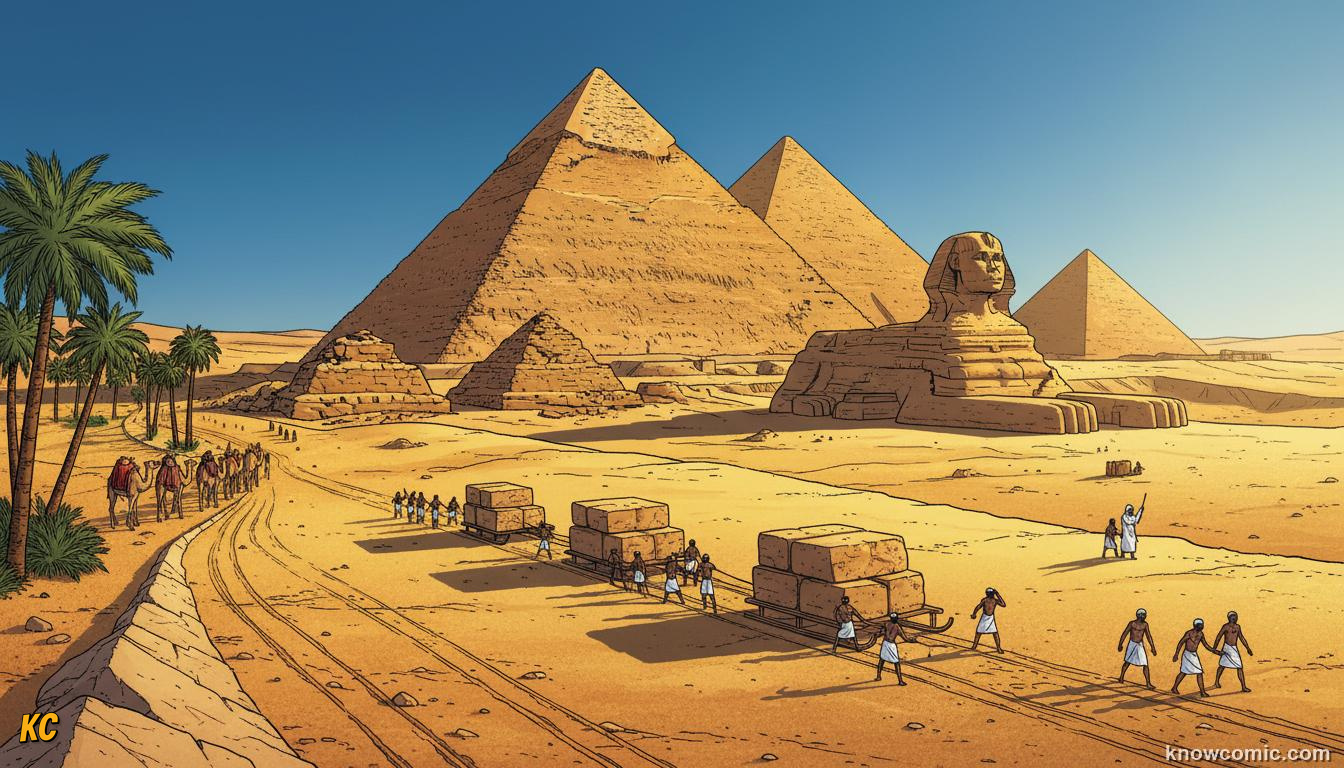
THE GREAT PYRAMID, AN ARTIFICIAL MOUNTAIN
Around 2560 BCE, Pharaoh Khufu ordered workers to build him the largest tomb the world had ever seen. For twenty years around 20,000 labourers shaped, dragged and stacked more than 2.3 million limestone blocks, each one as heavy as a family car. The finished Great Pyramid rose 147 metres into the sky, making it the tallest building on Earth for the next 3,800 years. Next to it, his son Khafre built a slightly smaller pyramid guarded by a lion-bodied statue, the Great Sphinx, with a human face believed to be Khafre's own. A third, smaller pyramid was raised by his grandson Menkaure. Together these three tombs form the famous Pyramids of Giza, the only Seven Wonders of the Ancient World still standing today.
🔺 PYRAMID MATHS
The Great Pyramid contains about 2,300,000 blocks with an average weight of 2.5 tonnes each. If you cut it into one-cubic-metre cubes you could build a wall 30 cm high around the entire country of France!
PYRAMID!
KHUFU · GREAT PYRAMID
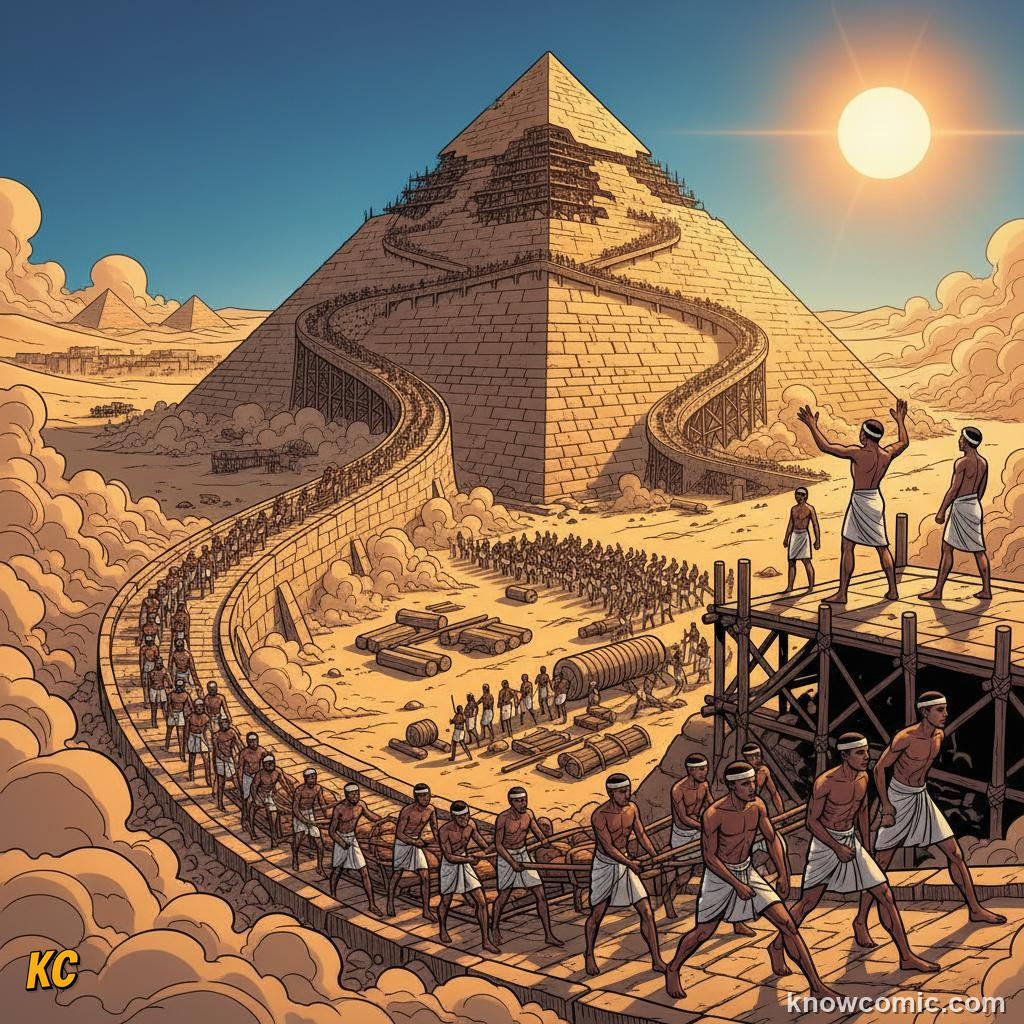
🔺 Tallest pyramid ever built
📏 Originally 147 metres high
⏳ Took 20 years to complete
📏 Originally 147 metres high
⏳ Took 20 years to complete
KHAFRE · THE SPHINX
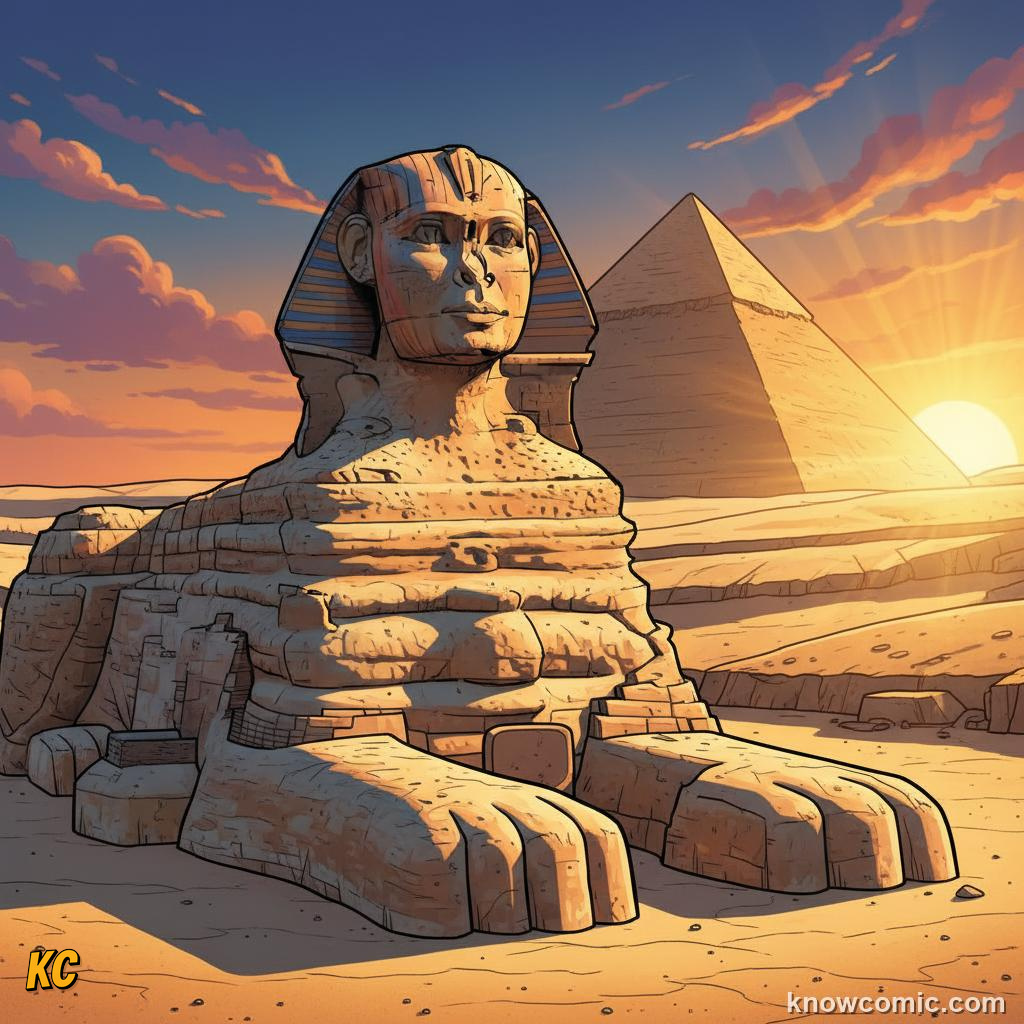
🦁 Lion body, human head
🗿 Carved from one block of rock
👤 Face of Pharaoh Khafre
🗿 Carved from one block of rock
👤 Face of Pharaoh Khafre
MENKAURE · SMALLEST
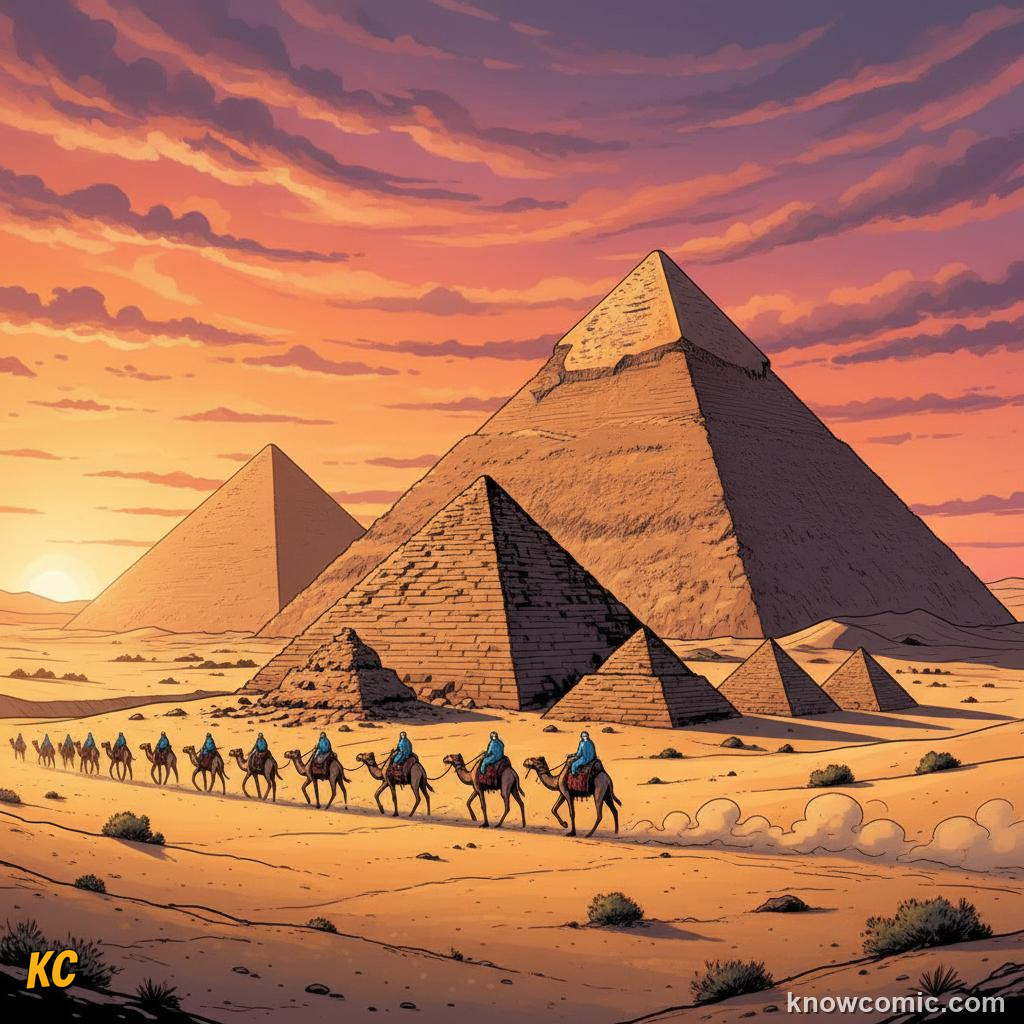
👨👦 Khufu's grandson
🔺 Only 65 metres tall
🏜️ Completes the Giza trio
🔺 Only 65 metres tall
🏜️ Completes the Giza trio
PAGE 3 OF 5, WRITING, GODS & THE AFTERLIFE
HIEROGLYPHS
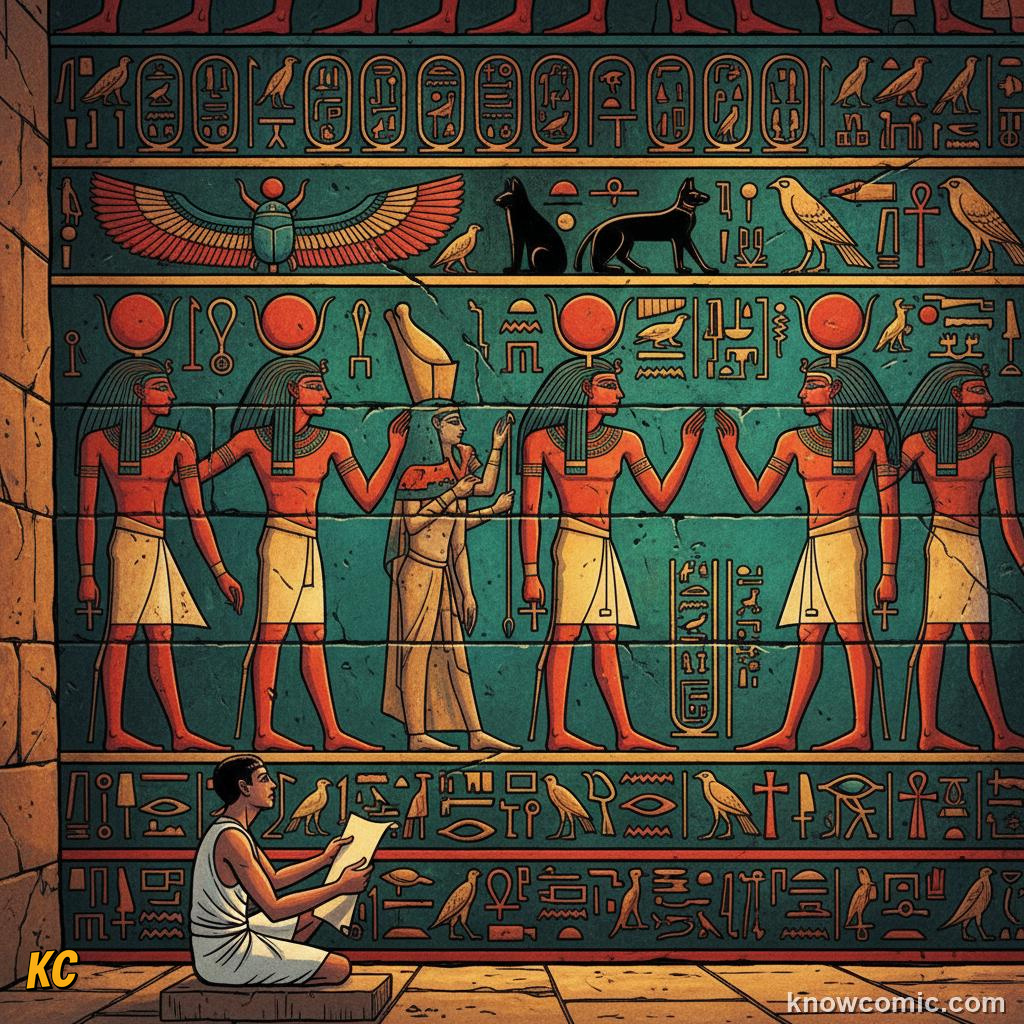
📝 Picture-writing on temple walls
🔣 Over 700 symbols in the script
🗿 Decoded with the Rosetta Stone
🔣 Over 700 symbols in the script
🗿 Decoded with the Rosetta Stone
MUMMIFICATION
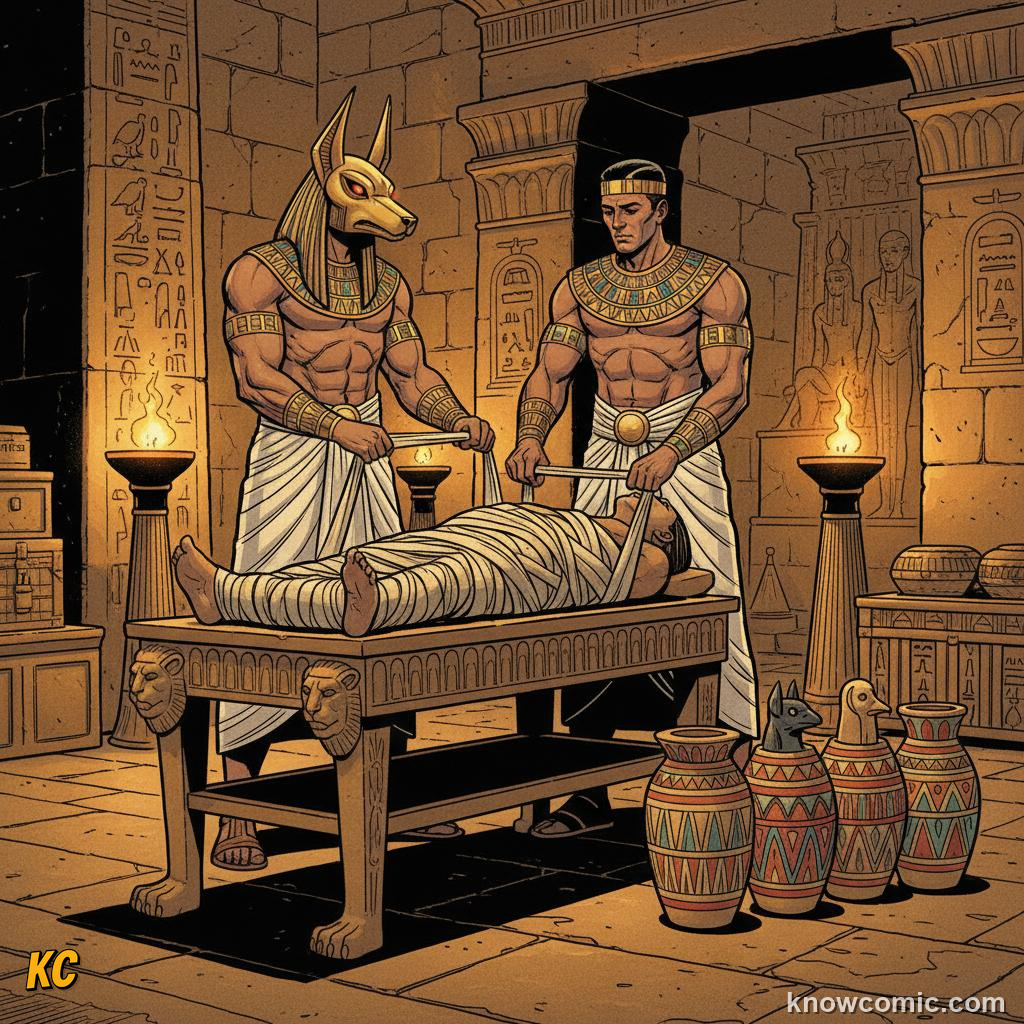
🧂 Body dried in natron salt
🧻 Wrapped in linen bandages
🏺 Organs stored in canopic jars
🧻 Wrapped in linen bandages
🏺 Organs stored in canopic jars
THE JUDGEMENT OF THE DEAD
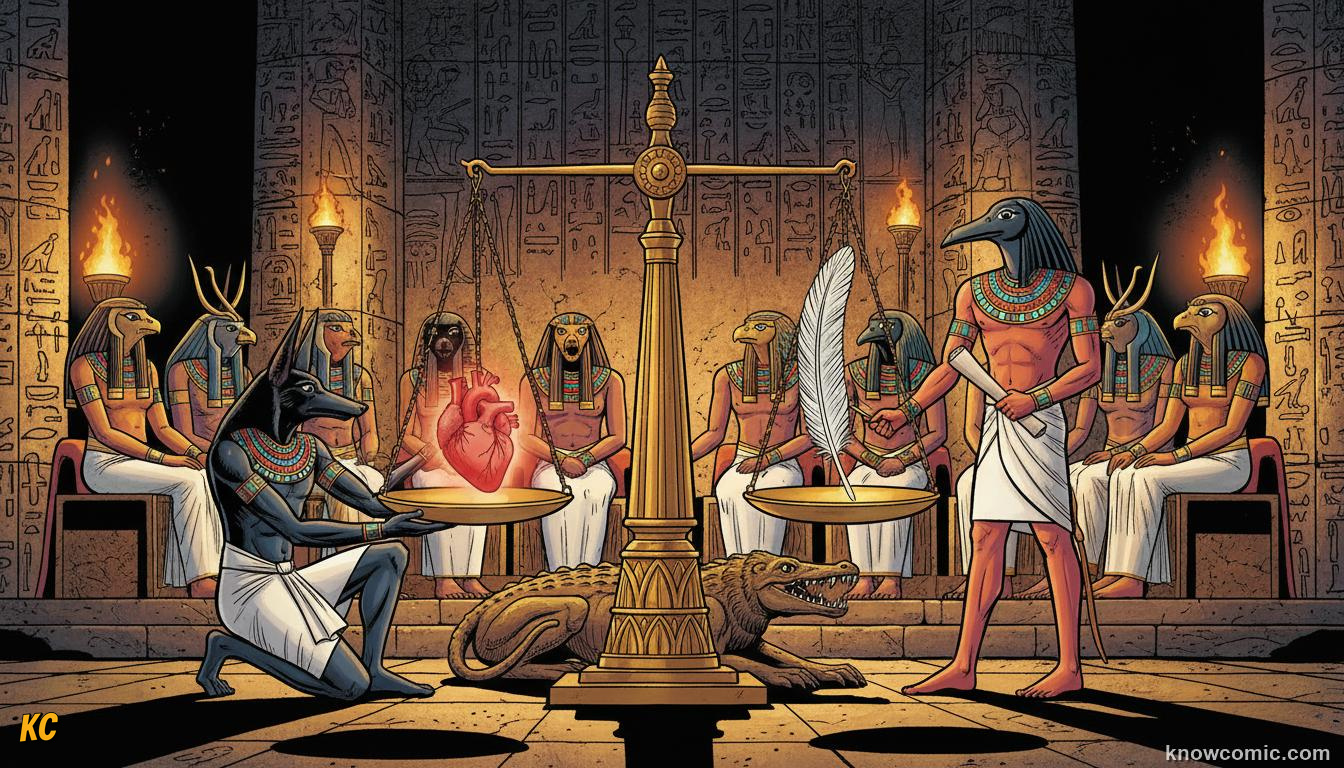
WEIGHING THE HEART AGAINST A FEATHER
Egyptians believed that death was not the end, it was only a doorway. After you died, the jackal-headed god Anubis led your soul into the Hall of Judgement. There your heart, where the Egyptians thought your mind and memories lived, was placed on one side of a golden scale. On the other side sat a single ostrich feather, the feather of truth belonging to the goddess Ma'at. If your heart was lighter than the feather, you had lived a good life and were sent to the Field of Reeds, an eternal paradise version of Egypt. If your heart was heavier, weighed down by lies and cruelty, it was gobbled up by the monster Ammit and you vanished for ever. That is why pharaohs were buried with golden masks, food, chariots, servants and spell books like the Book of the Dead.
⚖️ MA'AT
"Ma'at" meant truth, balance, and order, the cosmic rule that even pharaohs had to obey. A pharaoh's main job was to keep ma'at strong, so the sun rose, the Nile flooded, and Egypt lived another year.
ANUBIS!
PAGE 4 OF 5, THE FAMOUS PHARAOHS
1323 BCE · VALLEY OF THE KINGS
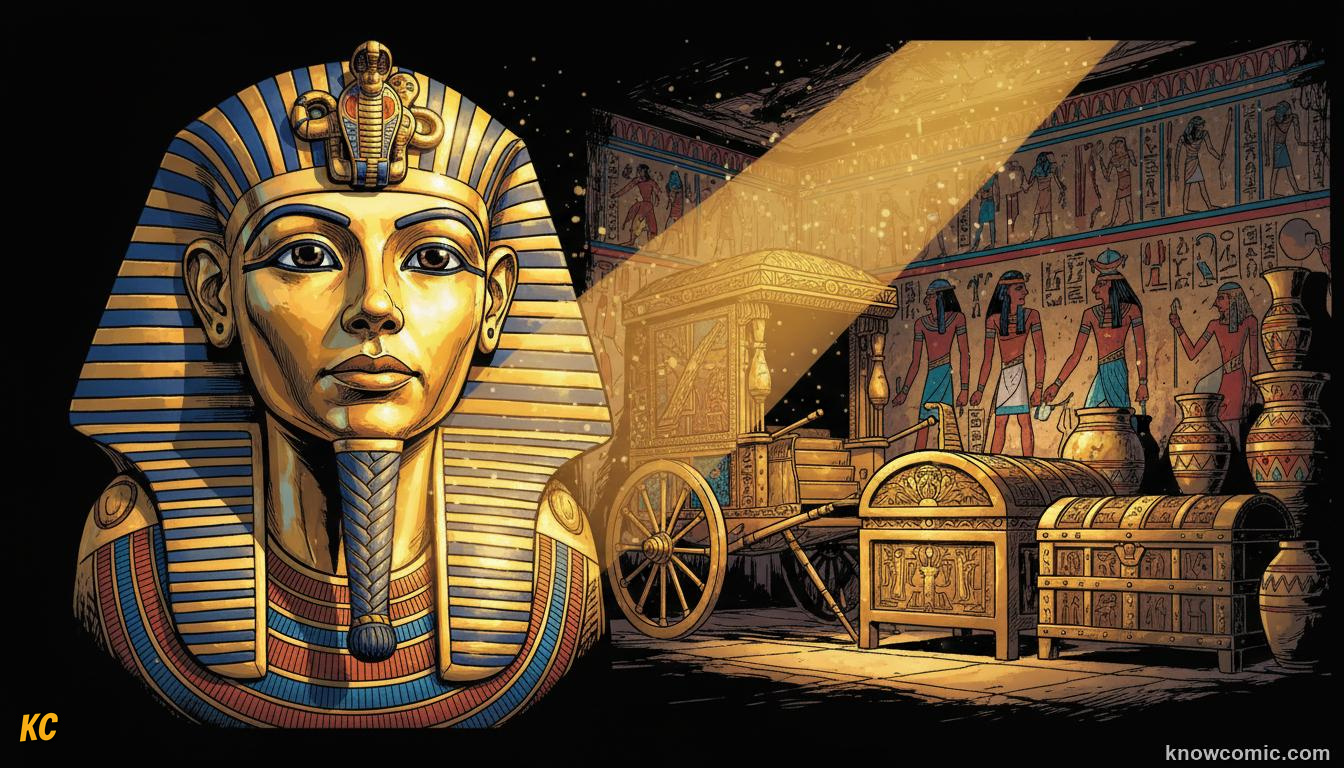
TUTANKHAMUN, THE GOLDEN BOY KING
Tutankhamun became pharaoh when he was only nine years old and died around the age of eighteen, nobody is sure whether from illness, an infected broken leg, or even malaria. For over 3,000 years he was almost forgotten. Then in November 1922, British archaeologist Howard Carter stepped into a hidden tomb in the Valley of the Kings and held up his candle. "Can you see anything?" asked the man behind him. Carter answered: "Yes, wonderful things." The tomb was packed with more than 5,000 treasures, golden chariots, a throne, jewelled daggers, and a solid-gold death mask weighing 11 kilograms. It was the only royal Egyptian tomb ever discovered almost untouched. Suddenly a minor pharaoh, who had ruled for barely ten years, became the most famous name from Ancient Egypt, known simply as "King Tut".
🏆 CARTER'S DISCOVERY
Carter spent six years carefully cataloguing the treasures, so long that his photographer documented every single object in place before it was moved. Many items are still on display today in the Grand Egyptian Museum in Cairo.
GOLD!
RAMSES THE GREAT
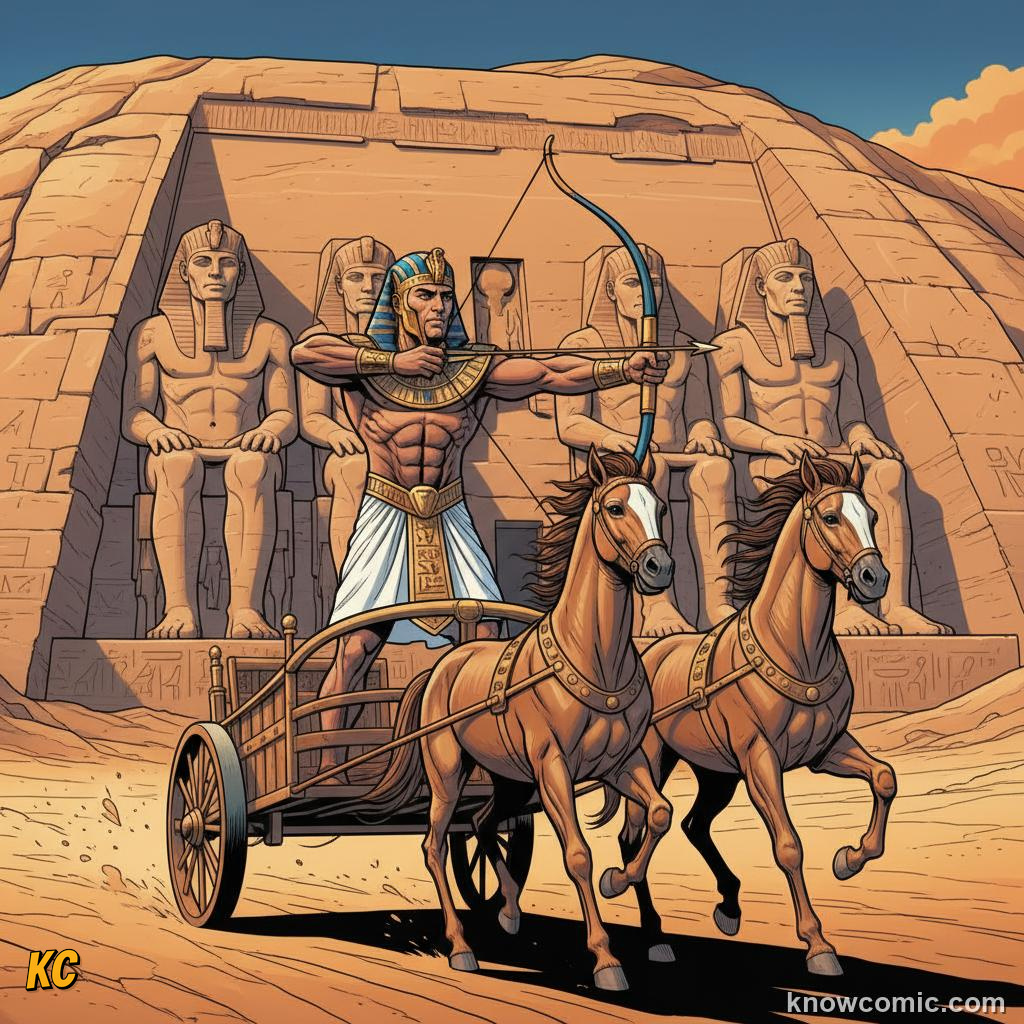
⚔️ Ruled 67 years (1279–1213 BCE)
🏛️ Built Abu Simbel temples
👨👦 Father of around 100 children
🏛️ Built Abu Simbel temples
👨👦 Father of around 100 children
HATSHEPSUT
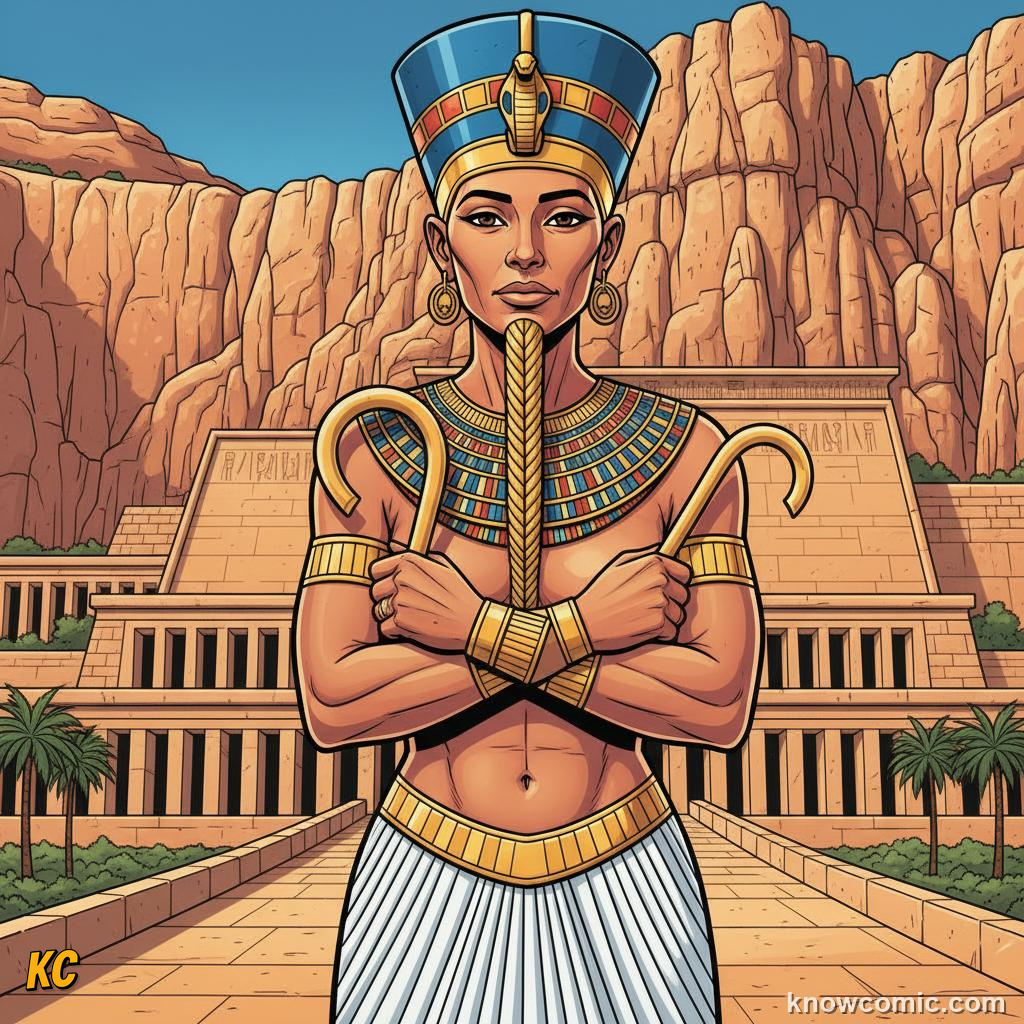
👸 One of the first female pharaohs
🏜️ Peaceful 21-year reign
🛕 Built Djeser-Djeseru temple
🏜️ Peaceful 21-year reign
🛕 Built Djeser-Djeseru temple
CLEOPATRA VII
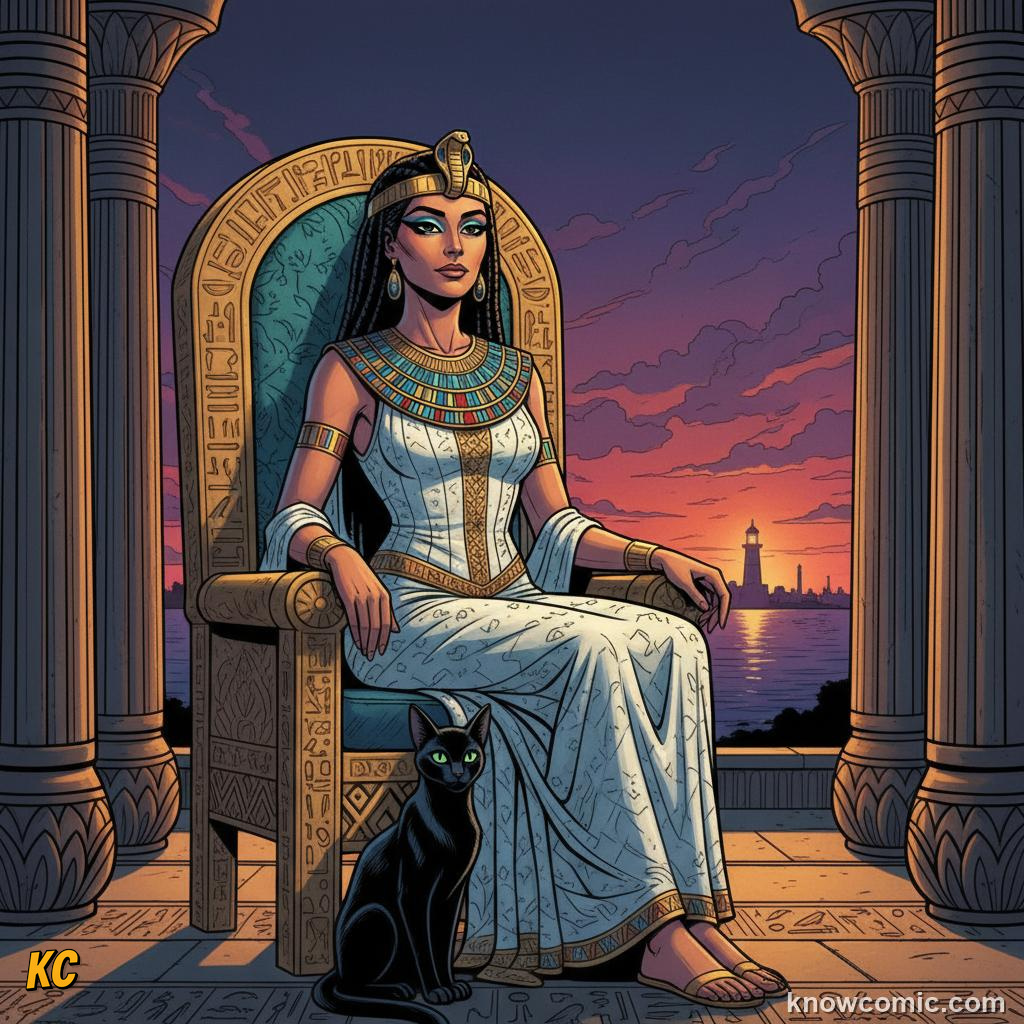
👑 Last pharaoh of Egypt
🗣️ Spoke nine languages
🐍 Died 30 BCE, Rome takes over
🗣️ Spoke nine languages
🐍 Died 30 BCE, Rome takes over
PAGE 5 OF 5, THE LEGACY THAT NEVER DIED
3,000 YEARS LATER · EGYPT STILL SPEAKS
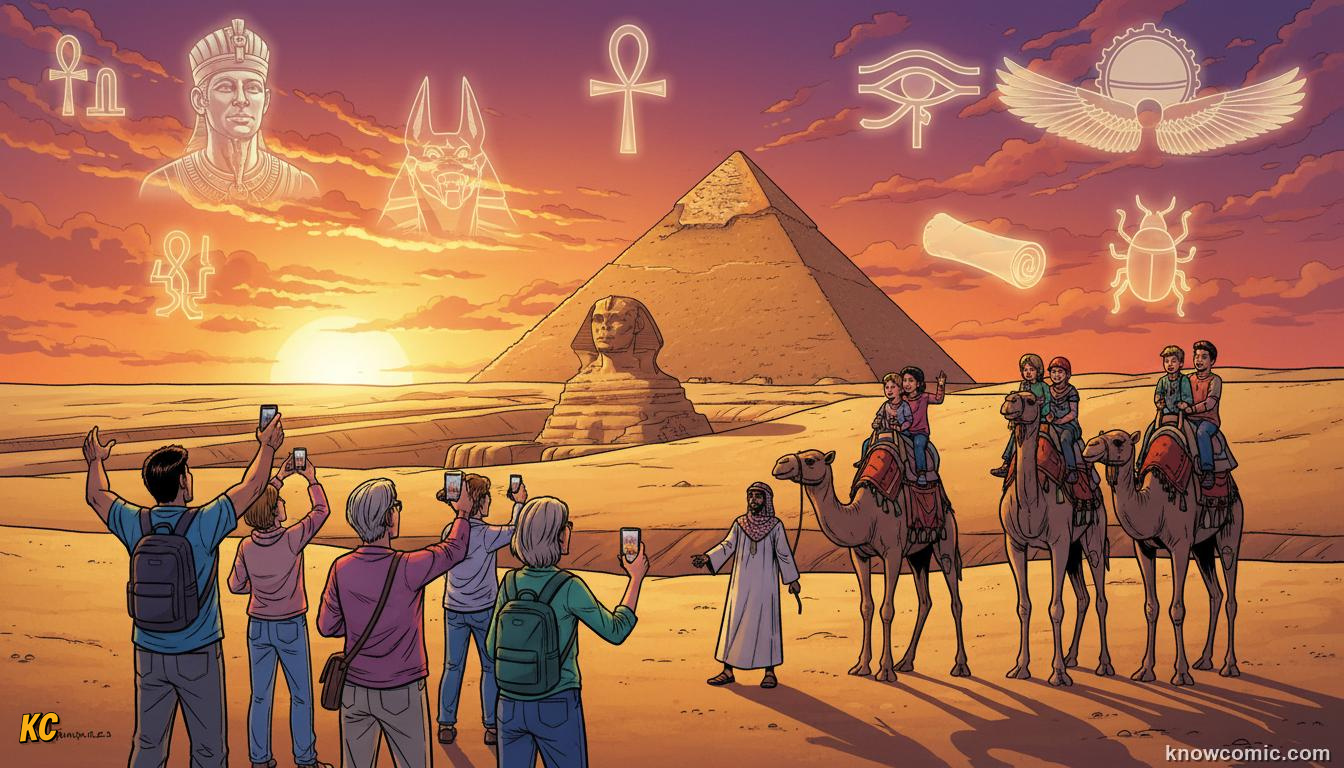
WHY ANCIENT EGYPT STILL MATTERS TODAY
Ancient Egyptian civilisation lasted more than 3,000 years, longer than the time from the building of the pyramids to Cleopatra herself. Along the way Egyptians gave the world the 365-day solar calendar, paper made from the papyrus plant, eye make-up, early medicine and surgery, written contracts, geometry for land surveying after each Nile flood, toothpaste, locks and keys, and the first organised police. Their obelisks stand in Paris, London, New York and Rome. Their star charts helped later astronomers, and their careful mummies gave modern scientists the oldest human DNA samples we can study. Every time you check a calendar, write on paper, or read an alphabet descended from their symbols, you are using a piece of Ancient Egypt. The pharaohs are gone, but their ideas, their monuments, and their golden mystery still rule the imagination.
🌍 EGYPT'S GIFTS TO US
365-day calendar · papyrus (paper) · solar clocks · geometry · surgical tools · cosmetics · locks & keys · written contracts · obelisks · hieroglyphic origins of the alphabet.
LEGACY!
🔭 REDISCOVERY TIMELINE
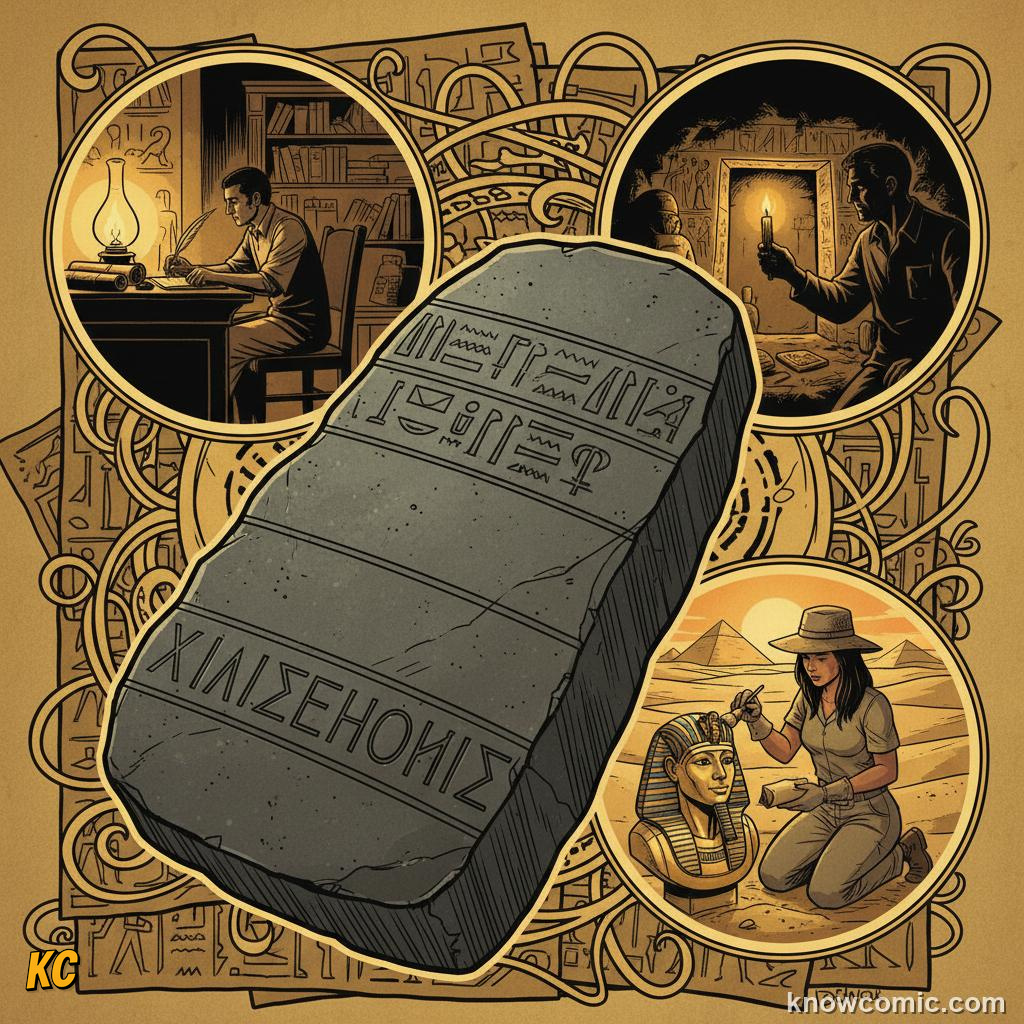
1799 Rosetta Stone found
1822 Champollion cracks hieroglyphs
1922 Tutankhamun's tomb opened
TODAY New tombs still being dug!
1822 Champollion cracks hieroglyphs
1922 Tutankhamun's tomb opened
TODAY New tombs still being dug!
REMEMBER
👑 KEY FACTS
Egypt lasted 3,000 years. The Nile made farming possible in the desert. Pharaohs were seen as gods. Pyramids were royal tombs. Hieroglyphs were the written language. The afterlife was central to Egyptian life.
✅ 3100 BCE, Narmer unites Egypt
✅ 2560 BCE, Great Pyramid built
✅ 1279 BCE, Ramses the Great
✅ 30 BCE, Cleopatra, last pharaoh
✅ 2560 BCE, Great Pyramid built
✅ 1279 BCE, Ramses the Great
✅ 30 BCE, Cleopatra, last pharaoh
🧠 QUIZ TIME!
ANCIENT EGYPT: PHARAOHS · 5 QUESTIONS
QUESTION 01
Which river made Ancient Egyptian civilisation possible?
QUESTION 02
Who built the Great Pyramid of Giza, the largest pyramid ever made?
QUESTION 03
In the Egyptian afterlife, what was a person's heart weighed against in the Hall of Judgement?
QUESTION 04
In 1922, Howard Carter discovered the almost-untouched tomb of which pharaoh?
QUESTION 05
Who was the last pharaoh of Ancient Egypt, whose death in 30 BCE ended 3,000 years of Egyptian rule?
0/5
LOADING...