ORIGINS OF THE UNIVERSE
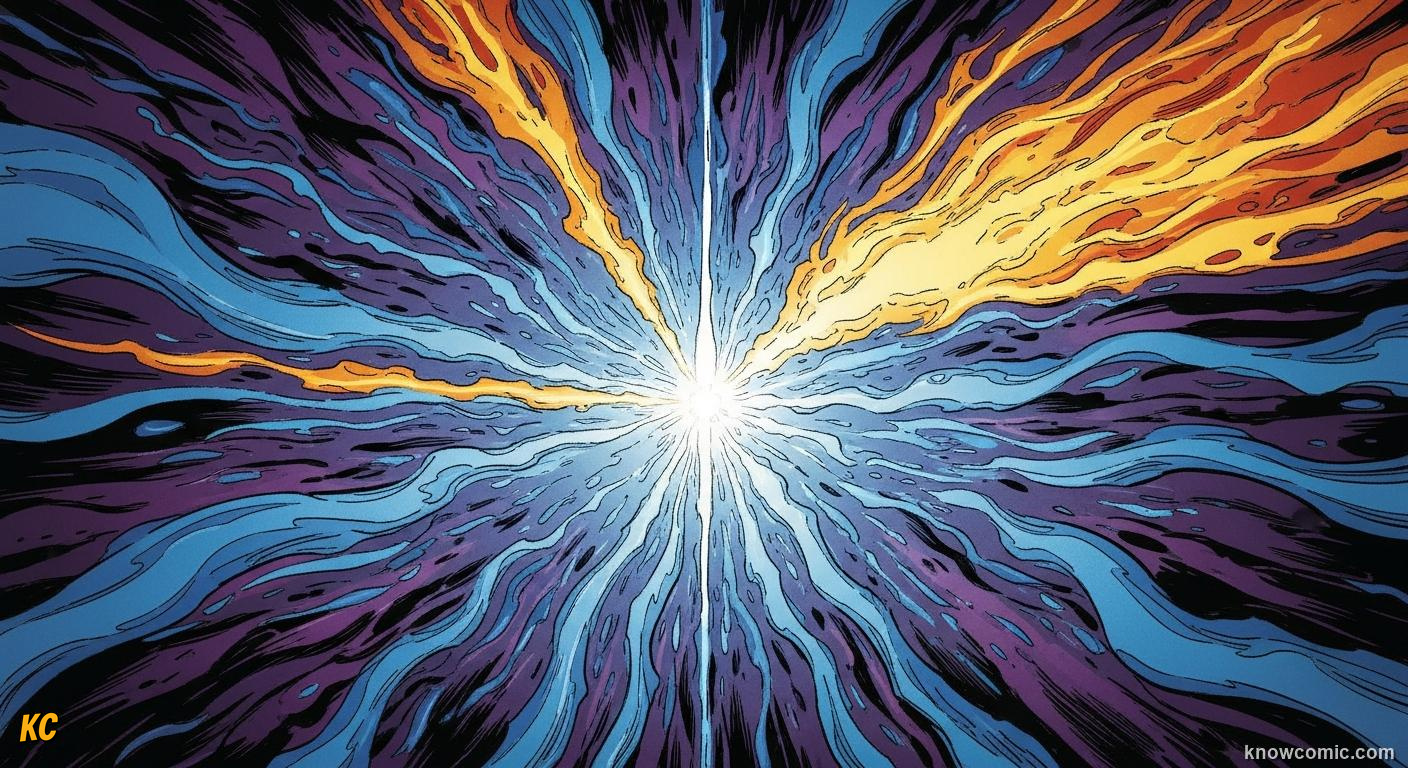
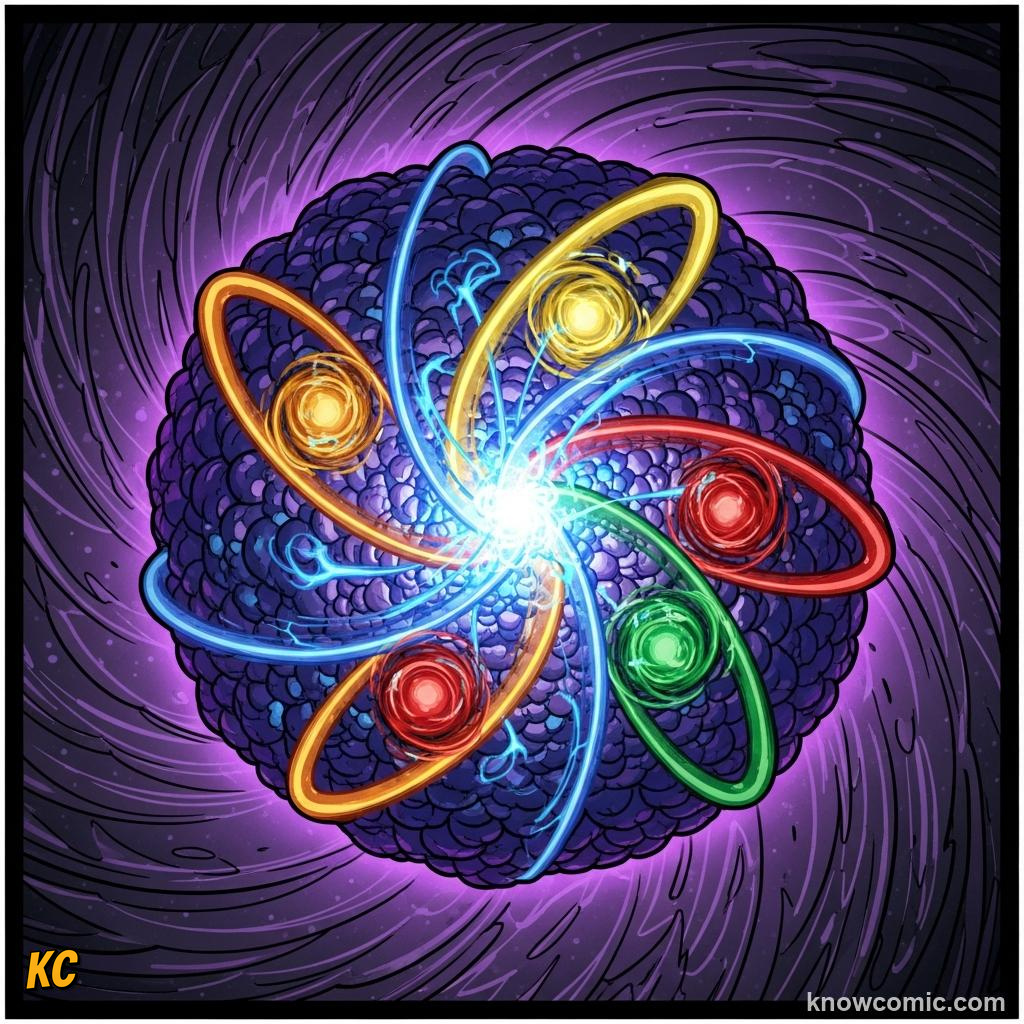
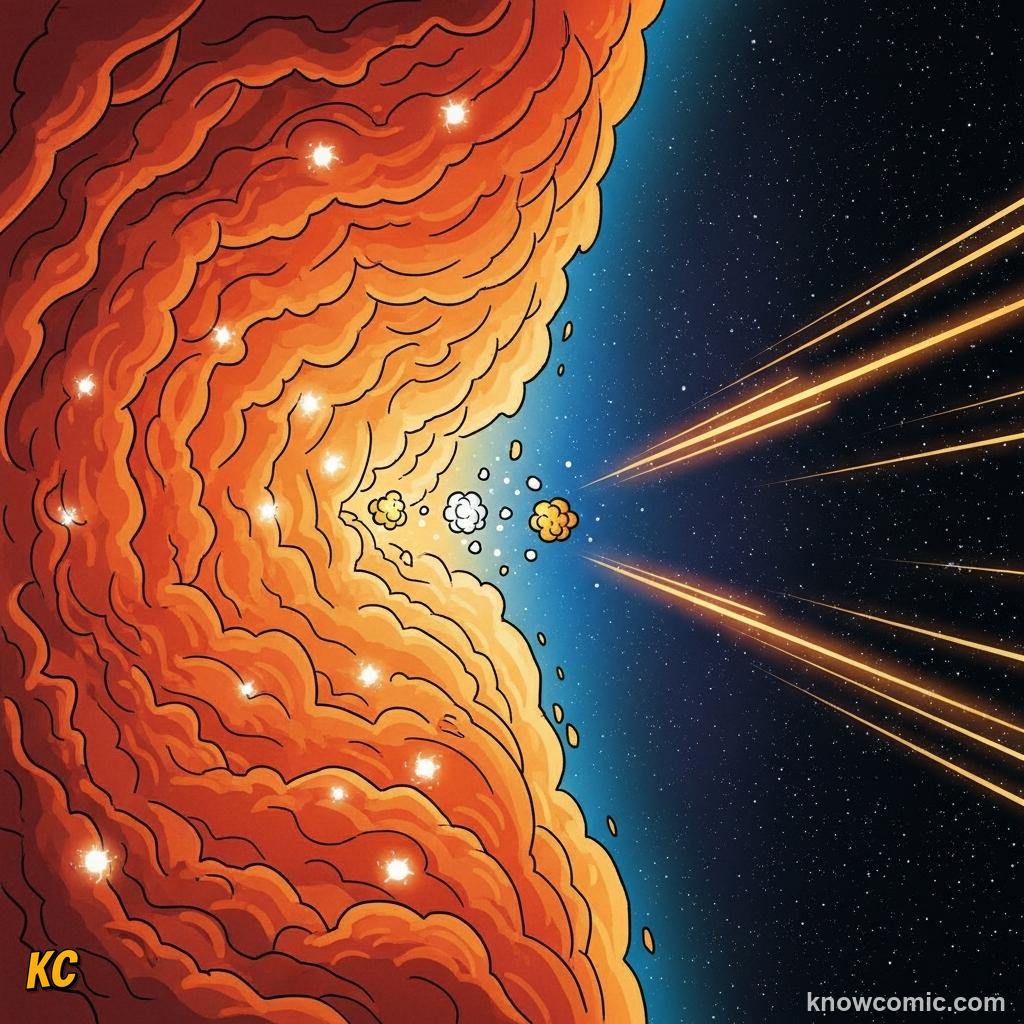
About 13.8 billion years ago, everything that exists burst into being from a single, impossibly tiny point. In a fraction of a second, space itself exploded outward, and the universe has been expanding ever since. Find out what scientists know about this most extraordinary moment in cosmic history!
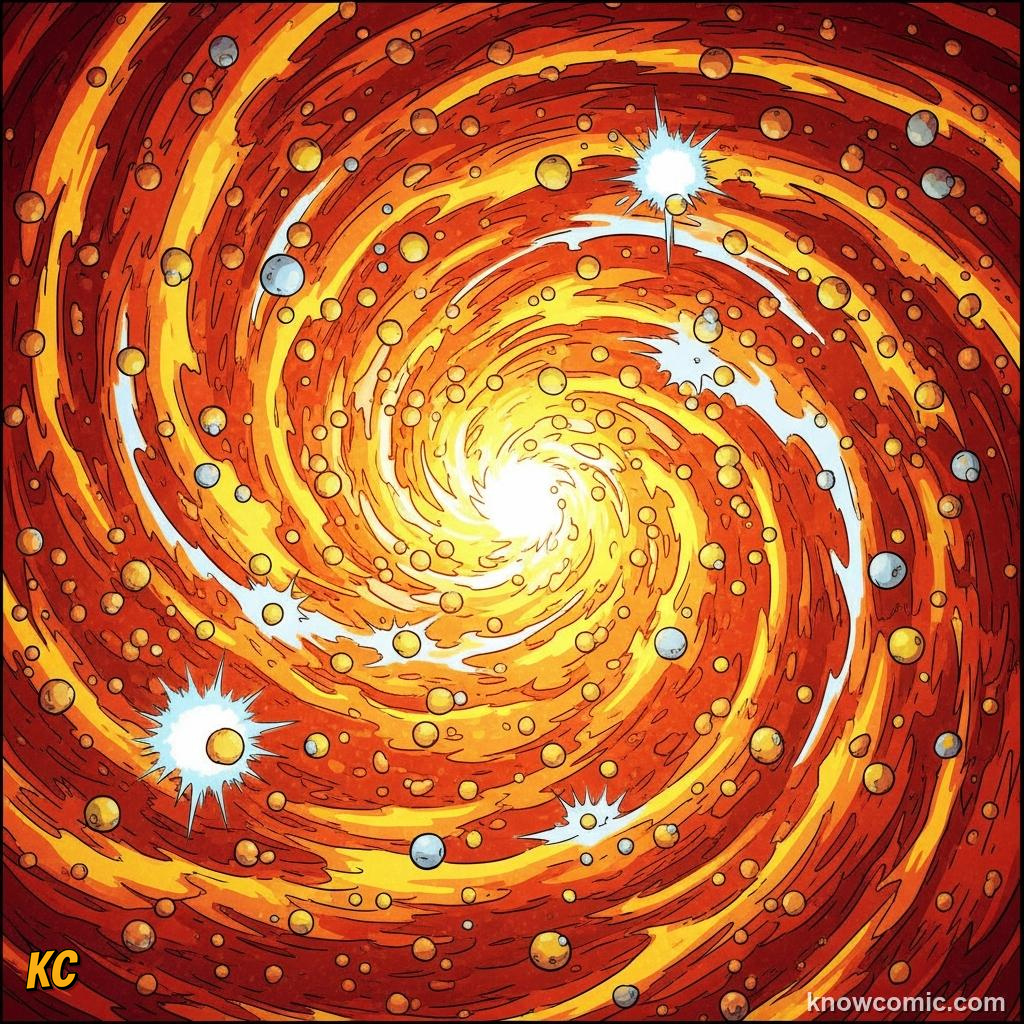
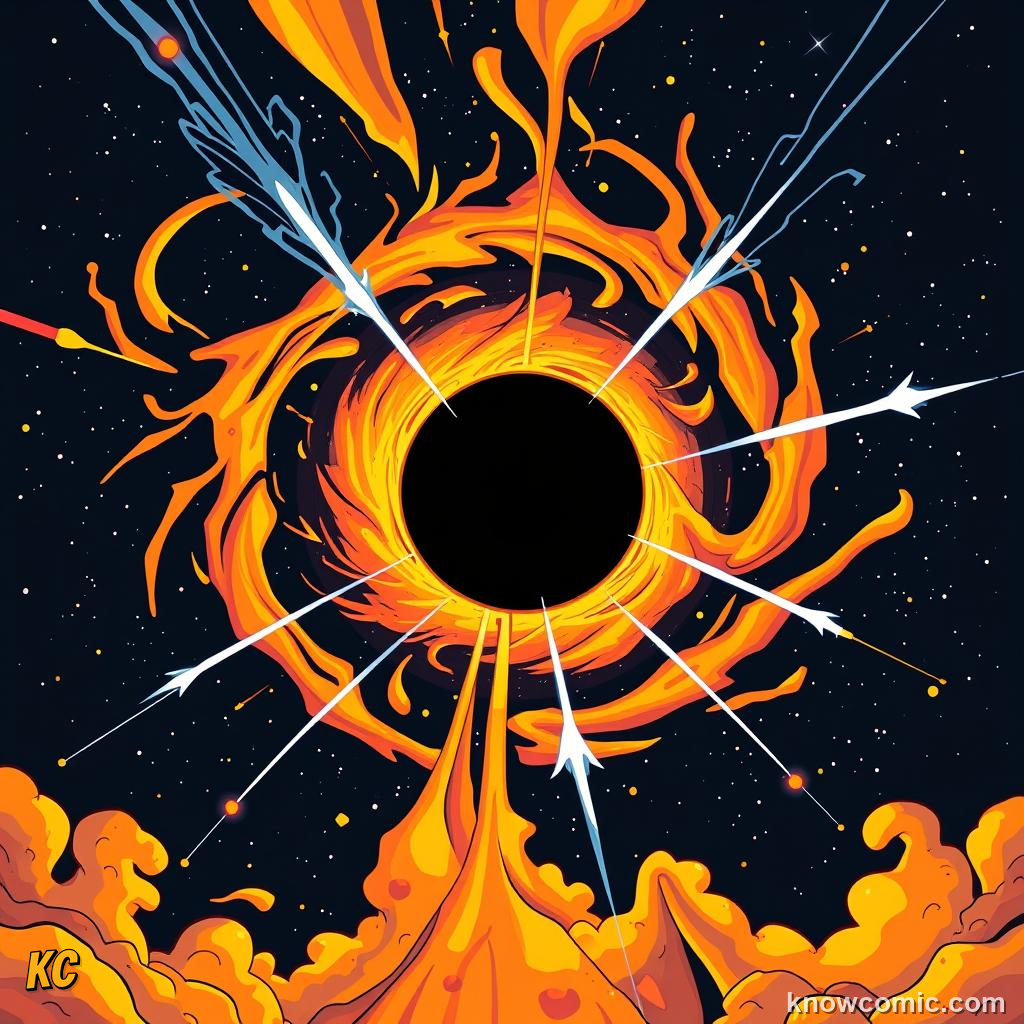
A black hole is a region of space where gravity is so strong that nothing, not even light, can escape. Born from the collapsed cores of massive stars, these cosmic monsters warp space and time around them. Discover what happens at the edge of a black hole and what lies beyond the point of no return!
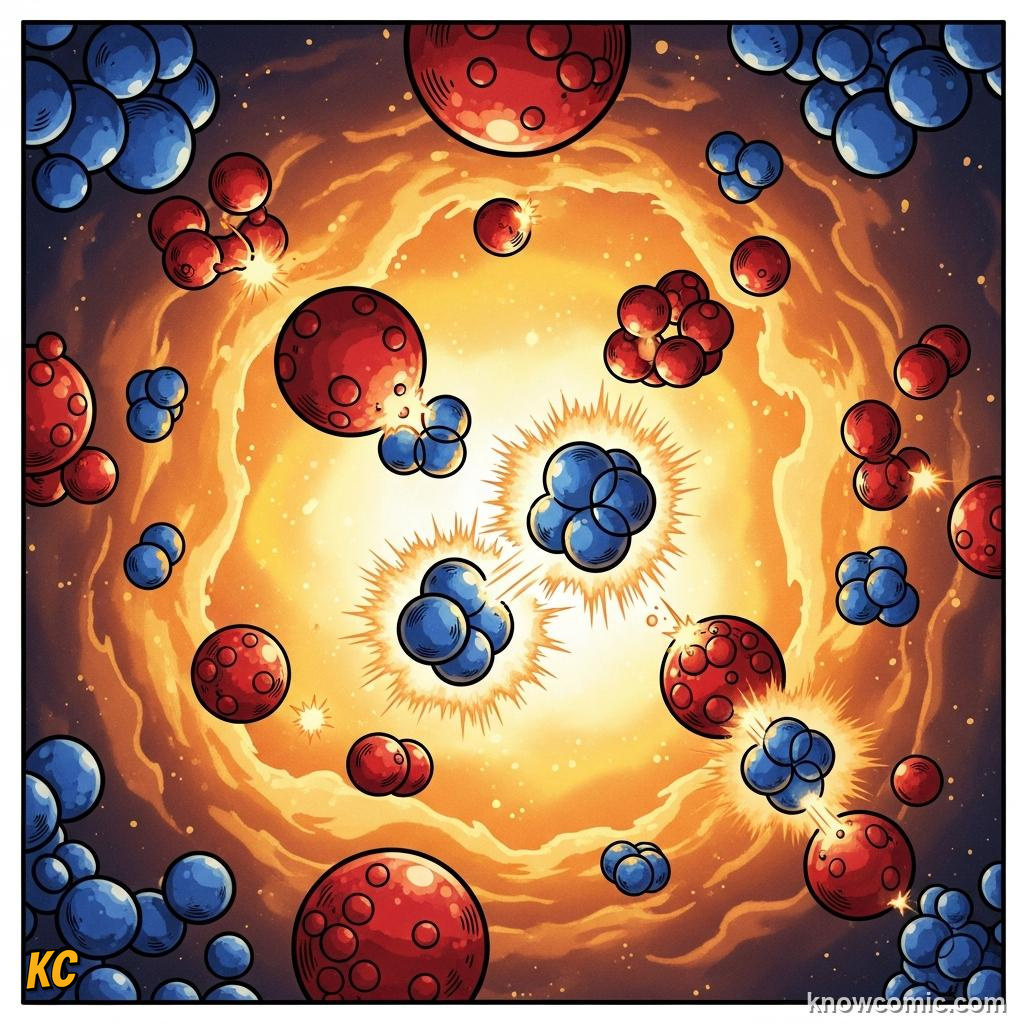
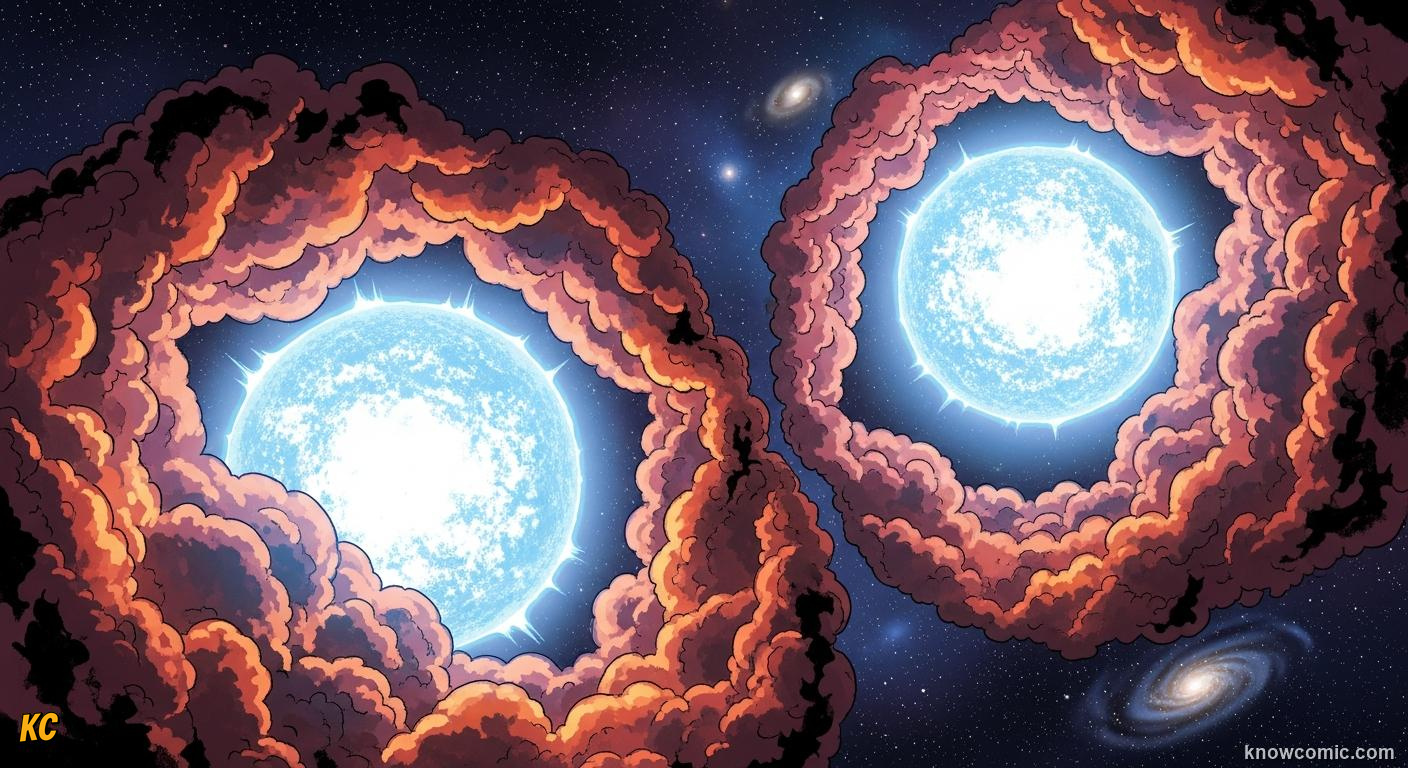
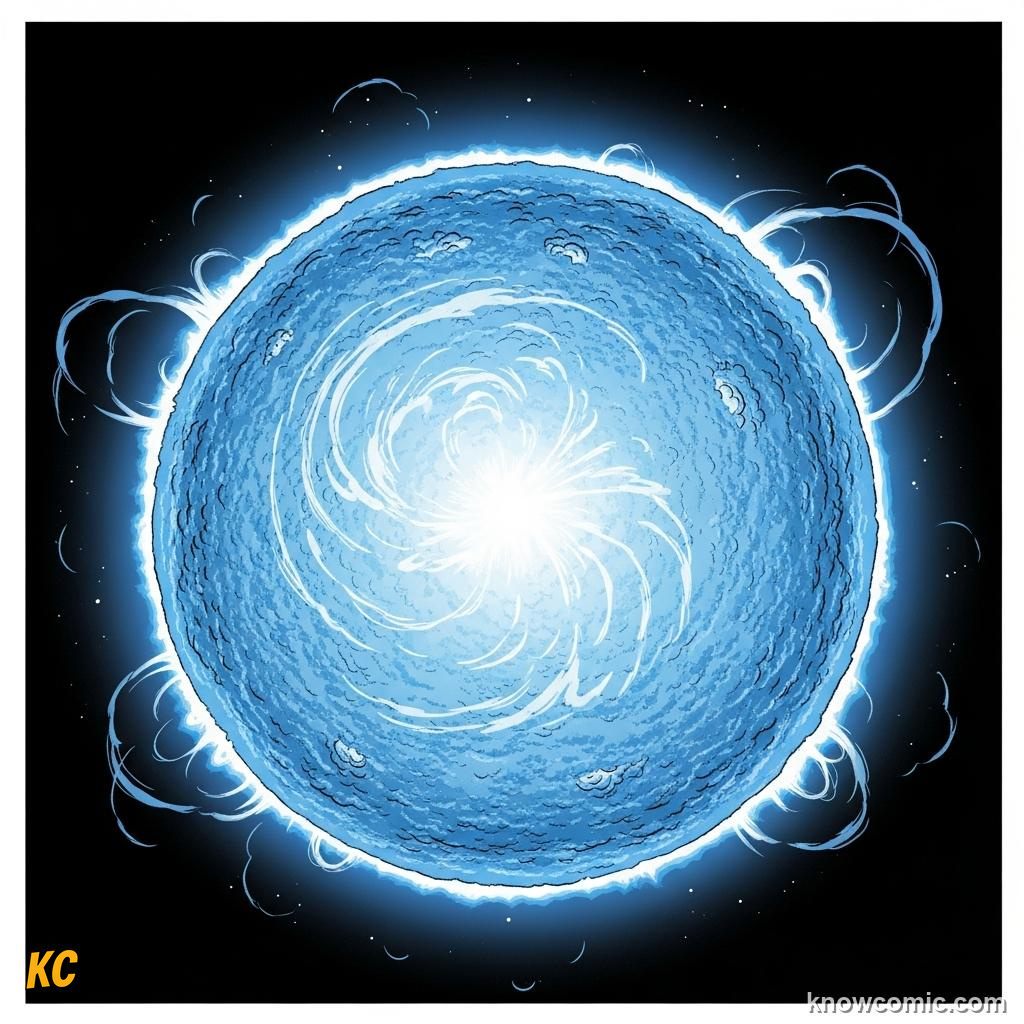
Every star you see in the night sky has a life story: it is born inside a vast cloud of gas and dust, shines for millions or billions of years by fusing hydrogen into helium, and eventually dies in a spectacular explosion or a quiet fade. Follow the incredible journey of a star from birth to death!
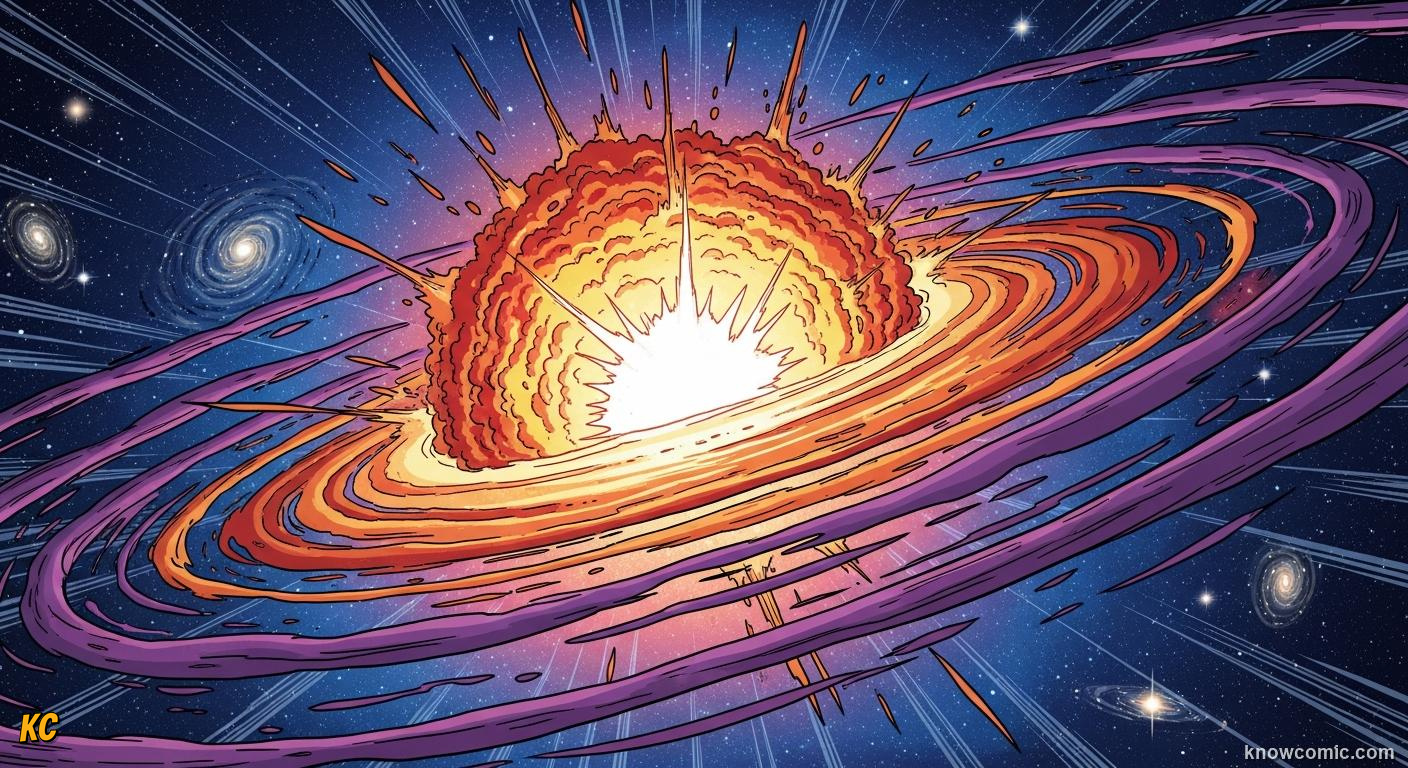
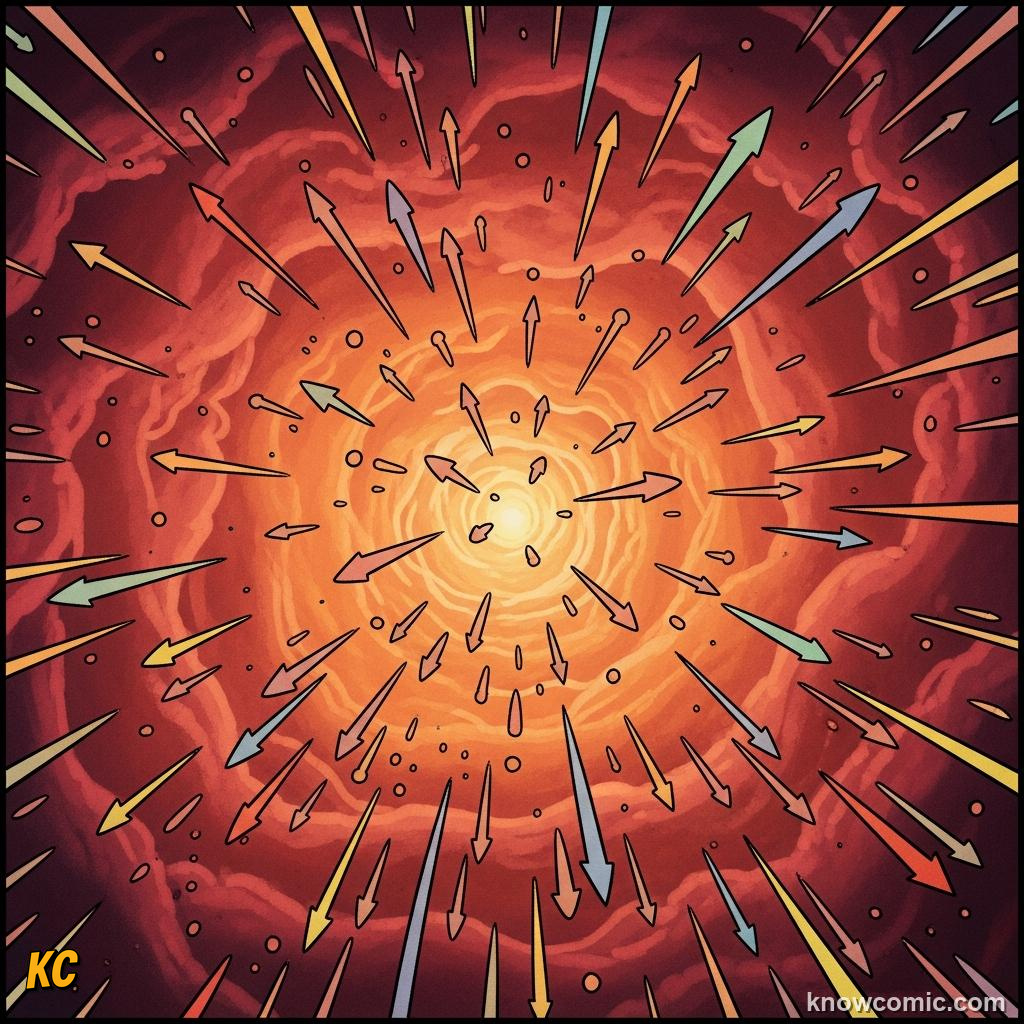
The faint glow of radiation left over from the Big Bang still fills the entire universe today. The CMB is the oldest light we can ever detect, a photograph of the universe when it was just 380,000 years old, holding secrets about the very first moments of creation.
About 27% of the universe is made of something scientists cannot see, touch, or detect directly. Dark matter does not emit light or interact with ordinary matter, yet its gravity holds galaxies together and shapes the entire large-scale structure of the cosmos.
In 1998, astronomers made a shocking discovery: the expansion of the universe is accelerating. Something mysterious is pushing space apart faster and faster. Scientists call it dark energy, and it makes up roughly 68% of the entire universe, yet nobody knows what it is.
In the first tiny fraction of a second after the Big Bang, the universe expanded faster than the speed of light, doubling in size over and over in an instant. Cosmic inflation explains why the universe looks the same in every direction and solved several deep mysteries about the Big Bang.
For every particle of matter created in the Big Bang, a particle of antimatter should have been created too. When matter and antimatter meet, they annihilate each other. So why is the universe made of matter at all? This mystery of the missing antimatter is one of the biggest unsolved puzzles in physics.
The first stars in the universe were giants — hundreds of times more massive than our Sun — forged from pure hydrogen and helium in the darkness after the Big Bang. When they exploded, they scattered the first heavy elements into space, making it possible for planets and life to exist.
About 400 million years after the Big Bang, the first galaxies began to form as gravity pulled gas clouds and early stars together. These ancient galaxies were much smaller and more chaotic than the Milky Way, and astronomers are now using the James Webb Space Telescope to see them for the first time.
In 1929, Edwin Hubble discovered that distant galaxies are moving away from us, and the farther away they are, the faster they recede. The universe is expanding in all directions at once — not into anything, but stretching the very fabric of space itself.
Some theories predict that the universe contains one-dimensional defects called cosmic strings — leftover from the Big Bang — that stretch across the cosmos and are thinner than a proton but almost infinitely long. If they exist, their gravity could bend light and create double images of galaxies.
Could our universe be just one of countless others? Some versions of inflation theory predict that the Big Bang created not just one universe but an infinite number of bubble universes, each with its own laws of physics. The multiverse is one of the most mind-bending ideas in modern cosmology.
Will the universe expand forever, eventually freeze in a cold, dark heat death? Or will dark energy someday tear apart every galaxy, every atom, in a Big Rip? Scientists use observations of distant supernovae and the cosmic microwave background to predict the universe's ultimate fate.
When two black holes or neutron stars collide, they send ripples through the fabric of spacetime itself. In 2015, LIGO detected gravitational waves for the first time, opening a brand new way to listen to the universe. Every collision creates a chirp in spacetime that travels at the speed of light.
At the heart of some distant galaxies, supermassive black holes are swallowing gas at a furious rate, releasing jets of energy so powerful they outshine entire galaxies. These objects — called quasars — are the most luminous things ever observed, shining from the edge of the observable universe.
The observable universe is the sphere of space from which light has had time to reach us in 13.8 billion years. Beyond its edge, space continues — possibly forever — but we can never see or receive information from those distant regions. Everything we know about the cosmos fits inside this cosmic horizon.
Every second, high-energy particles — protons, nuclei, and electrons accelerated to near-light speed by supernova explosions and other violent events — rain down on Earth from all directions. Cosmic rays carry clues about the most energetic events in the universe.
Galaxies are not scattered randomly through space. They cluster into groups, groups merge into clusters, and clusters link into superclusters connected by vast filaments of dark matter — forming the cosmic web, the largest structure that exists. Between the filaments lie enormous voids, nearly empty of galaxies.
Astronomers have measured the age of the universe at 13.8 billion years using three independent methods: the expansion rate of the universe, the age of the oldest stars, and the pattern of temperature fluctuations in the cosmic microwave background. All three methods agree remarkably well.
STARS & STELLAR EVOLUTION
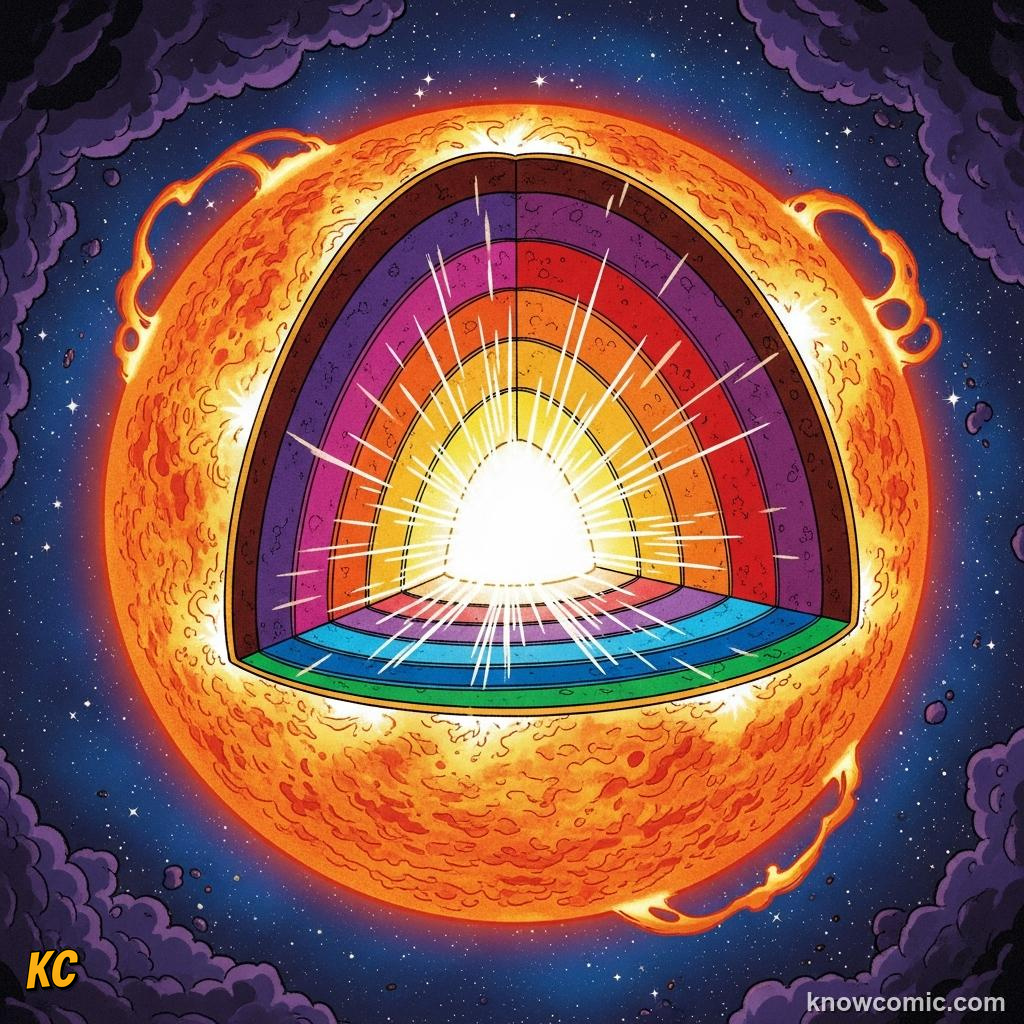
Stars begin their lives deep inside giant molecular clouds — vast, cold regions of hydrogen gas and dust that can span hundreds of light-years. Gravity slowly pulls the gas inward until the pressure and temperature at the core become so extreme that hydrogen nuclei fuse together, igniting a new star.
Not all stars are alike. From red dwarfs — the most common stars in the galaxy, small, cool, and burning for trillions of years — to massive blue giants that live fast and die young in supernova explosions, the universe contains stars of every size, temperature, and colour.
Our Sun is a medium-sized yellow dwarf star, about 4.6 billion years old and roughly halfway through its life. It is so enormous that 1.3 million Earths could fit inside it, yet in stellar terms it is entirely ordinary. Understanding the Sun helps us understand every other star in the universe.
When a star like our Sun runs out of hydrogen fuel in its core, it swells into a red giant hundreds of times its original size. In about 5 billion years, our Sun will expand to engulf Mercury and Venus and possibly Earth. Red giants are common in the night sky — Aldebaran and Arcturus are both red giants.
When a massive star runs out of fuel, its core collapses in milliseconds and then explodes in one of the most energetic events in the universe. A supernova can briefly outshine an entire galaxy of 100 billion stars and scatters heavy elements — iron, gold, uranium — across space to form future planets.
When a massive star explodes as a supernova, its core can collapse into a neutron star — an object just 20 kilometres across but more massive than our Sun. On a neutron star, a teaspoon of material would weigh a billion tonnes. Their surfaces spin at hundreds of times per second.
Some neutron stars emit powerful beams of radio waves from their magnetic poles. As the star spins, these beams sweep across the sky like a lighthouse beam, reaching Earth with such clockwork precision that pulsars are used as the most accurate clocks in the universe.
When a medium-sized star like our Sun exhausts its fuel, it sheds its outer layers as a planetary nebula and its core remains as a white dwarf — a hot, dense stellar ember about the size of Earth. White dwarfs cool slowly over billions of years, eventually becoming cold black dwarfs.
More than half of all stars in the Milky Way have at least one companion star, orbiting each other in a gravitational dance. Binary stars can exchange mass, trigger nova explosions, and even merge to produce gravitational waves and exotic objects. Our single Sun is actually the exception, not the rule.
Some stars are not steady in their brightness — they pulsate, expand and contract over days or weeks, brightening and fading rhythmically. Cepheid variables have a precise relationship between their pulsation period and their true brightness, making them perfect cosmic distance markers.
One of the most important tools in astronomy is a simple graph that plots stars by their brightness against their colour and temperature. Almost all stars fall on a diagonal band called the main sequence, and a star's position on this diagram reveals its age, size, mass, and future.
Almost every atom heavier than hydrogen and helium was forged inside a star. Carbon, oxygen, iron, and most other elements were built up through nuclear fusion reactions in stellar cores or supernova explosions. We are, in a very literal sense, made of stardust from ancient dead stars.
Magnetars are a rare type of neutron star with magnetic fields so intense they would be lethal from a distance of 1,000 kilometres. During a starquake, a magnetar can release more energy in a fraction of a second than our Sun emits in 100,000 years.
Stars are often born in groups from the same molecular cloud. Open clusters like the Pleiades contain hundreds of young stars loosely bound by gravity. Globular clusters, ancient spherical swarms of up to a million stars, orbit the outer halo of the Milky Way like cosmic relics of the early universe.
Every star leaves a remnant behind. Depending on the mass of the original star, it becomes a white dwarf, a neutron star, or a black hole. The Milky Way is filled with these stellar corpses — the galaxy's graveyard tells the entire history of star birth and death over billions of years.
BLACK HOLES & EXTREME OBJECTS
Black holes form when a massive star exhausts its nuclear fuel and its core collapses under gravity. Stellar-mass black holes range from a few to tens of solar masses, but the universe also contains supermassive black holes with masses millions to billions of times that of our Sun at the centres of galaxies.
The event horizon is the boundary around a black hole from which nothing — not even light — can escape. It is not a physical surface but a point of no return, defined entirely by the black hole's gravity. Once anything crosses this boundary, it is lost to the outside universe forever.
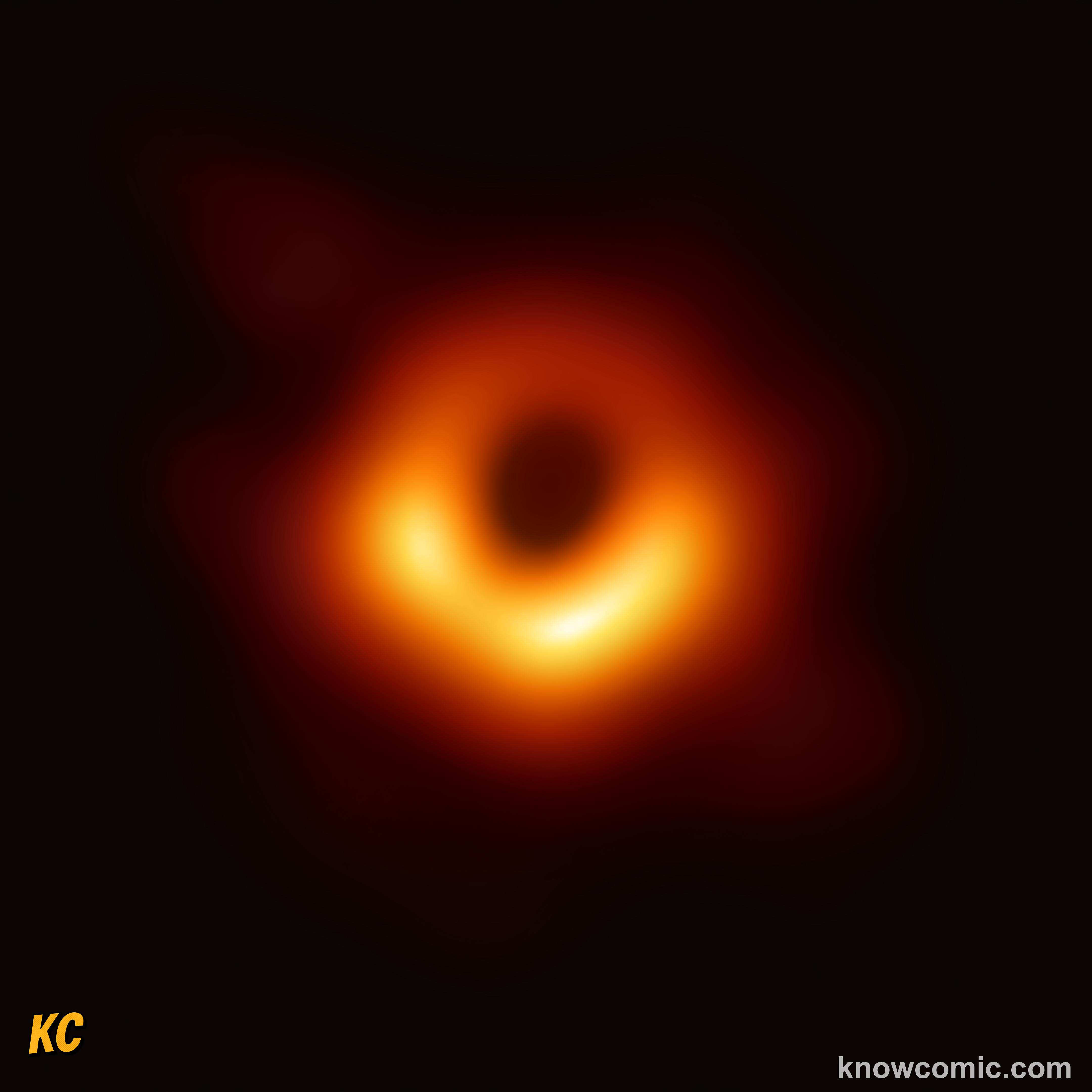
At the centre of almost every large galaxy lurks a supermassive black hole, millions to billions of times more massive than the Sun. The Milky Way's central black hole, Sagittarius A*, weighs about 4 million solar masses. The first image of a black hole's shadow was captured in 2019.
Stephen Hawking showed in 1974 that black holes are not completely black: quantum effects near the event horizon cause them to slowly emit thermal radiation and lose mass. For stellar-mass black holes, this process takes far longer than the current age of the universe, but tiny primordial black holes may have already evaporated.
General relativity allows for theoretical structures called wormholes — tunnels connecting two distant regions of spacetime. While no wormhole has ever been observed, they are a valid mathematical solution to Einstein's equations. Scientists debate whether they could be stabilised and whether they could allow faster-than-light travel.
Near a black hole, the gravitational pull on your feet is so much stronger than on your head that you would be stretched into a thin strand — a process called spaghettification. For stellar-mass black holes this happens outside the event horizon, but for supermassive black holes you could cross the event horizon without noticing.
When gas falls into a supermassive black hole at the centre of a galaxy, it heats up to millions of degrees and releases enormous amounts of radiation. These active galactic nuclei — which include quasars, blazars, and Seyfert galaxies — can outshine their entire host galaxy and shoot jets of plasma across intergalactic space.
One of the deepest unsolved problems in physics is what happens to information when matter falls into a black hole. Quantum mechanics says information cannot be destroyed, but Hawking radiation seems to escape without carrying information. Resolving this paradox may require a new theory that unifies quantum mechanics and gravity.
Some theories predict that the extreme density of the early universe created tiny black holes in the moments after the Big Bang. These primordial black holes could range from microscopic to asteroid-sized and might account for some or all of the mysterious dark matter that holds galaxies together.
When two neutron stars spiral together and collide, they produce a kilonova — an explosion that creates gravitational waves and a burst of gamma rays, and synthesises enormous quantities of heavy elements including gold, platinum, and uranium. All the gold on Earth came from ancient neutron star collisions.
Gamma-ray bursts are the most energetic explosions in the universe. They release more energy in a few seconds than the Sun will emit in its entire 10-billion-year lifetime. Long bursts are caused by collapsing massive stars; short bursts are caused by merging neutron stars.
Sagittarius A* is the supermassive black hole at the heart of our galaxy, 26,000 light-years from Earth. Astronomers tracked stars orbiting within a light-week of the centre for decades, proving the existence of an invisible object of 4 million solar masses. In 2022, the first image of its shadow was released.
Einstein's general relativity predicts that time passes more slowly in strong gravitational fields. Near a black hole, time slows dramatically — an astronaut hovering just outside the event horizon would age just one hour while thousands of years passed for distant observers. Gravity literally warps time itself.
When a black hole has a companion star, it can steal gas from it, forming an accretion disc that glows brightly in X-rays. These X-ray binaries were our first evidence for black holes. Systems like Cygnus X-1, discovered in 1964, helped convince astronomers that black holes are real, not just mathematical curiosities.
Black holes are the most extreme test of Einstein's general theory of relativity. Near the event horizon, spacetime is so curved that the laws of physics operate in ways entirely unlike everyday experience. Every observation of black holes — gravitational waves, X-ray jets, shadow images — confirms Einstein's century-old equations.
GALAXIES & THE COSMIC WEB
Our galaxy is a barred spiral containing 200 to 400 billion stars, stretching 100,000 light-years across. Our Sun sits in the Orion Arm, about 26,000 light-years from the galactic centre. On a clear night, the Milky Way appears as a pale band of light — you are looking along the disc of our own galaxy.
Galaxies come in three main shapes: spirals with sweeping arms of stars, ellipticals that are smooth and featureless collections of older stars, and irregulars shaped by collisions and interactions. Our Milky Way and the nearby Andromeda Galaxy are both spirals, while the giant Virgo Cluster is dominated by ellipticals.
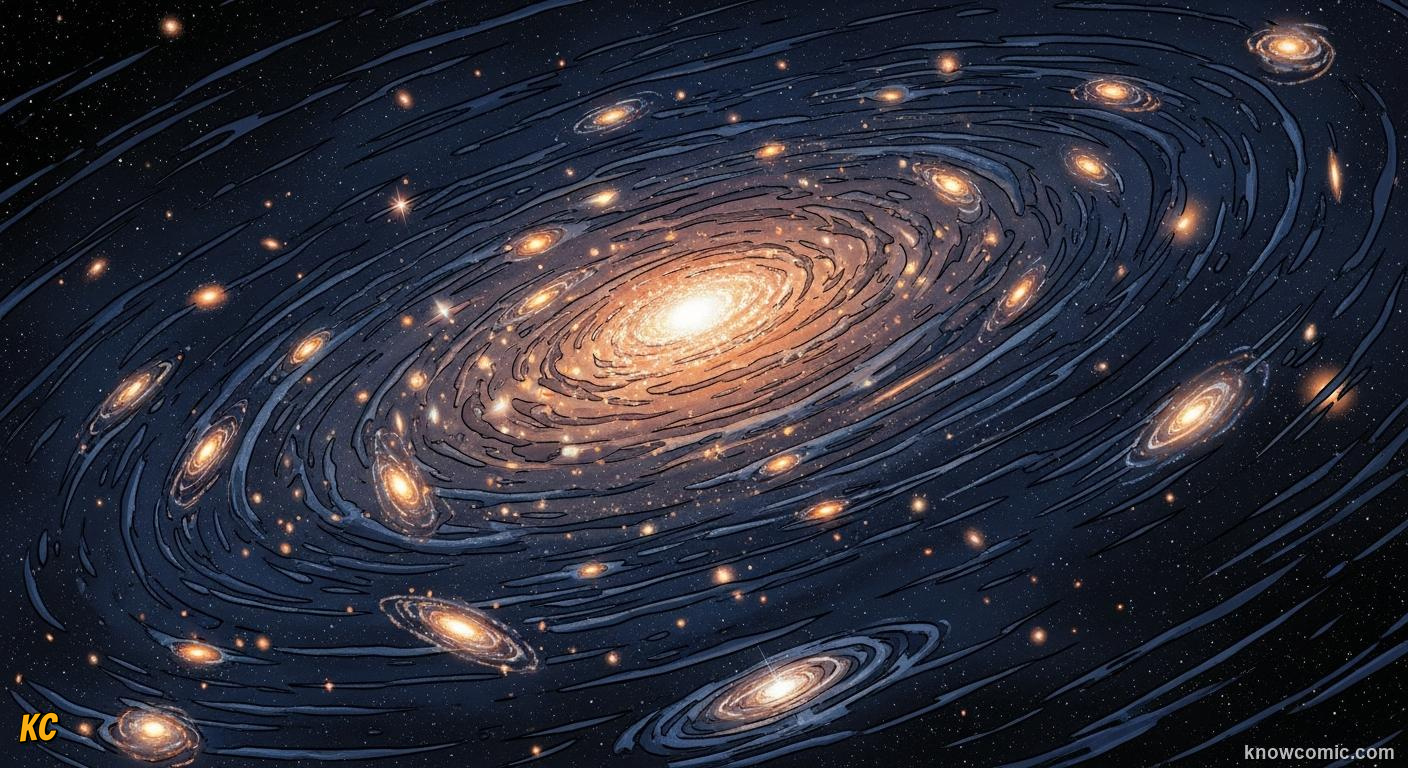
Galaxies are not distributed evenly through the universe. They cluster into groups of a few dozen, then into clusters of hundreds to thousands, and finally into superclusters spanning hundreds of millions of light-years. Our own Local Supercluster — the Laniakea Supercluster — contains over 100,000 galaxies.
The Andromeda Galaxy, 2.5 million light-years away, is moving toward the Milky Way at about 110 kilometres per second. In roughly 4.5 billion years, the two galaxies will collide and merge into a giant elliptical galaxy. Despite the collision, individual stars are so far apart that almost none will actually hit each other.
Surrounding large galaxies like the Milky Way are dozens of small satellite galaxies called dwarf galaxies. The Large and Small Magellanic Clouds — visible from the Southern Hemisphere — are irregular dwarf galaxies being pulled apart by our galaxy's gravity. The Milky Way has already cannibalised many smaller galaxies.
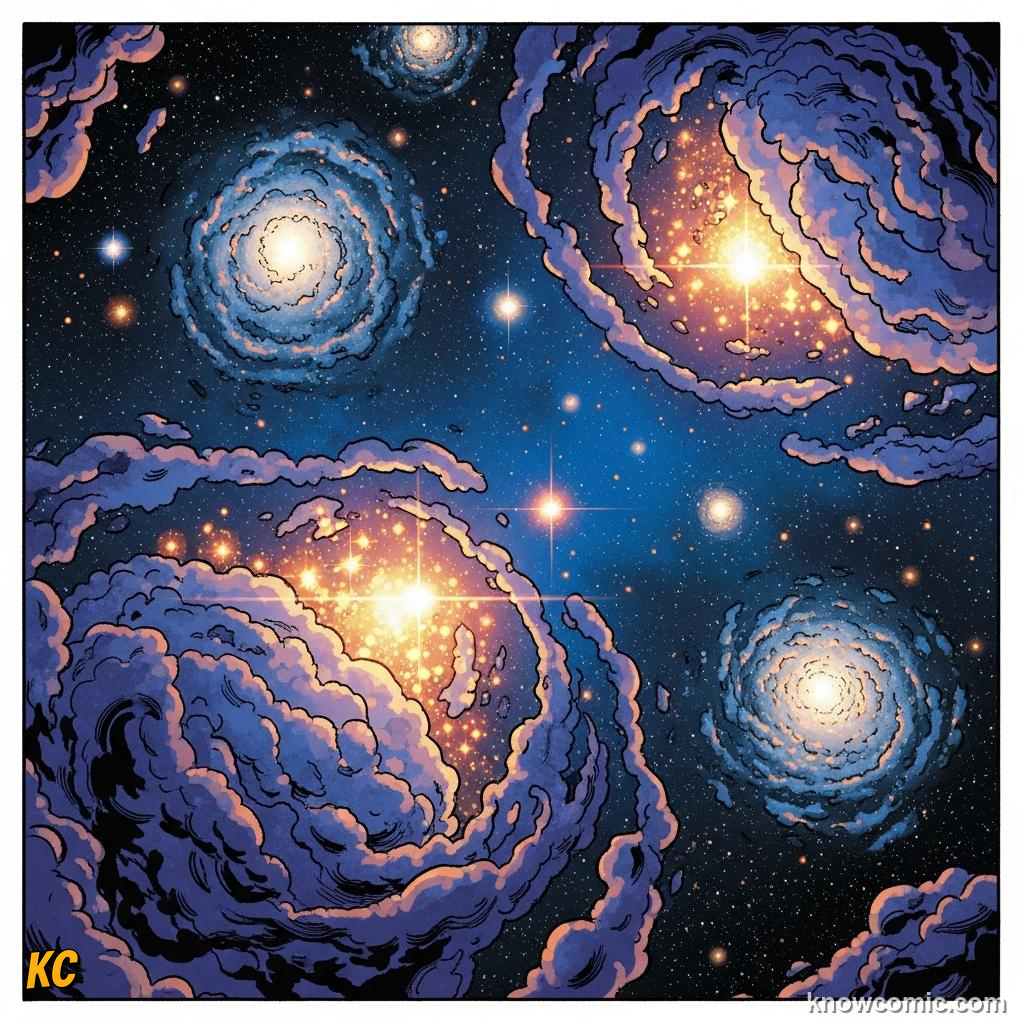
On the very largest scales, matter in the universe forms a cosmic web: a network of filaments and sheets surrounding vast empty voids. Galaxy clusters sit at the nodes where filaments intersect. Computer simulations show that this web-like structure grew naturally from tiny fluctuations in the density of the early universe.
Galaxies are not static objects — they collide and merge on timescales of billions of years. When two spirals collide, their gas clouds smash together, triggering starbursts that create millions of new stars. Over time, repeated mergers build the giant elliptical galaxies seen in the centres of galaxy clusters.
The Milky Way belongs to a small group of about 54 galaxies called the Local Group, spanning about 10 million light-years. The three largest members are the Andromeda Galaxy, the Milky Way, and the Triangulum Galaxy. The rest are a collection of dwarf galaxies, most orbiting the two large spirals.
Massive objects like galaxy clusters bend the light of more distant objects behind them, acting as cosmic magnifying glasses. This gravitational lensing can produce arcs, rings, and multiple images of a single background galaxy. Astronomers use lensing to map the distribution of dark matter and to see galaxies from the early universe.
In some galaxies, a violent event — usually a collision — triggers an episode of intense star formation called a starburst. Stars form at a rate hundreds of times faster than normal, consuming gas so rapidly that the burst lasts only tens of millions of years. Starburst galaxies glow brilliantly in infrared light.
Some galaxies emit powerful jets of plasma from their central black holes, stretching millions of light-years into intergalactic space and creating enormous radio-emitting lobes. These radio galaxies are among the largest structures created by any single object in the universe.
By pointing the Hubble Space Telescope at what appeared to be empty patches of sky for days at a time, astronomers revealed thousands of galaxies in each image — galaxies so distant they are seen as they were billions of years ago. The Hubble Deep Fields transformed our understanding of galaxy formation and the history of the universe.
Galaxies have changed dramatically over the history of the universe. Early galaxies were smaller, bluer, and formed stars much more rapidly than today. As gas is consumed and galaxies merge, they grow larger and redder. The universe today is a quieter, slower-burning place than it was in its turbulent youth.
About 65 million light-years away lies the Virgo Cluster, the nearest large galaxy cluster to the Milky Way and the gravitational heart of our local supercluster. It contains over 1,300 galaxies including the giant elliptical Messier 87, whose supermassive black hole was the first to be directly imaged in 2019.
The space between galaxies is not completely empty. It contains a thin, hot plasma of ionised hydrogen and helium called the intergalactic medium, threaded along the cosmic web's filaments. This diffuse gas contains more ordinary matter than all the stars and galaxies combined, yet it is so sparse it is nearly invisible.
Astronomers use a cosmic distance ladder — a series of overlapping techniques — to measure distances across the universe. Parallax measures nearby stars; Cepheid variables reach nearby galaxies; Type Ia supernovae reach billions of light-years. Each rung of the ladder is calibrated against the one below it.
When galaxies move away from us, their light is stretched to longer, redder wavelengths — a phenomenon called redshift. The greater the redshift, the faster a galaxy is receding and the farther away it is. Measuring redshifts of millions of galaxies has mapped the three-dimensional structure of the observable universe.
Some galaxies exist in the vast empty voids between cosmic filaments, far from any neighbour. These void galaxies evolved in isolation, forming stars more slowly and developing differently from galaxies in dense clusters. Studying them helps astronomers understand how environment shapes galactic evolution.
In the distant past, most large galaxies went through a brilliant active phase powered by their central supermassive black holes. As gas supplies were consumed, these quasars quieted down. Today the Milky Way's central black hole is almost dormant — but faint echoes of its past activity can still be detected.
Our entire Local Supercluster, containing thousands of galaxies including the Milky Way, is being pulled toward a massive concentration of matter 250 million light-years away. This mysterious gravitational anomaly — called the Great Attractor — was hidden for decades behind the dust of the Milky Way's own plane.
NEBULAE & STELLAR NURSERIES
A nebula is a vast cloud of gas and dust in space. Some nebulae are star-forming regions — stellar nurseries where new suns are being born. Others are the remains of dead stars — the ejected outer layers of dying suns or the expanding shockwave of a supernova explosion. They are among the most beautiful objects in the cosmos.
One of the brightest nebulae in the night sky, the Orion Nebula is a stellar nursery 1,344 light-years away, clearly visible to the naked eye below Orion's belt. Inside its glowing gas clouds, thousands of new stars are being born right now. It is our closest large star-forming region and the most studied in the universe.
When a medium-sized star like our Sun dies, it puffs off its outer layers in glowing shells of gas called a planetary nebula. Despite the name, they have nothing to do with planets — early astronomers thought they looked like planet discs through small telescopes. Each one is a unique, often spectacular, sculpture of coloured gas.
After a massive star explodes as a supernova, the expanding shockwave sweeps up surrounding gas and dust, creating a supernova remnant — a glowing, tangled web of hot filaments spreading across light-years of space. The Crab Nebula, created by a supernova observed in 1054 AD, is the best-studied remnant in our galaxy.
Inside the Eagle Nebula, 6,500 light-years away, tower columns of cold gas and dust several light-years tall — the famous Pillars of Creation. At the tips of the pillars, globules of dense gas are condensing into new stars. The columns are being slowly eroded by ultraviolet radiation from nearby young, hot stars.
Not all nebulae glow. Dark nebulae are dense clouds of dust so thick they block the light of stars behind them, appearing as black patches against bright starfields or glowing gas clouds. The Horsehead Nebula in Orion is a famous dark nebula silhouetted against a bright emission nebula.
Emission nebulae glow because ultraviolet radiation from nearby hot young stars ionises the gas, causing it to emit light. Each element emits its own characteristic colour: hydrogen produces red and pink, oxygen glows blue-green, and sulphur emits orange-red. These colours make emission nebulae among the most colourful objects in space.
Some nebulae do not glow on their own — instead they reflect the blue light of nearby stars, much like how fog reflects headlights on Earth. Reflection nebulae are typically blue because dust scatters shorter blue wavelengths more efficiently than red. The Pleiades star cluster is surrounded by a beautiful reflection nebula.
As a young star forms, a disc of gas and dust spirals around it. Over millions of years, dust grains in this protoplanetary disc stick together, grow into pebbles, boulders, and eventually planets. Astronomers can now image these discs directly, watching planetary systems form around other stars in real time.
The Tarantula Nebula in the Large Magellanic Cloud is the largest and most luminous star-forming region in the Local Group of galaxies. It is so energetic that if it were as close as the Orion Nebula, it would cast shadows on Earth at night. Its central cluster, R136, contains several of the most massive stars known.
As a new star forms inside a molecular cloud, it shoots powerful jets of gas from its poles at hundreds of kilometres per second. When these jets slam into surrounding gas, they create bright glowing knots called Herbig-Haro objects. These objects reveal where star formation is actively happening inside opaque dust clouds.
The space between stars is not empty — it is filled with a thin mixture of gas and dust called the interstellar medium. This material cycles between stars: supernovae and stellar winds push it outward, and gravity eventually collapses it back into new stars. Understanding this cycle is key to understanding how galaxies evolve.
Giant molecular clouds are the coldest large objects in the universe — just 10 to 30 degrees above absolute zero — and dense enough to shield molecules from the harsh radiation of space. Inside these clouds, complex organic molecules form, and eventually gravity triggers the collapse that creates new stars.
The Helix Nebula, 650 light-years away, is the nearest planetary nebula to Earth and one of the largest in apparent size in the night sky. Its blue-green inner ring of glowing oxygen and its outer halo of red hydrogen give it an eerie resemblance to a giant eye peering across the cosmos.
Massive stars and supernova explosions carve enormous bubbles and cavities into the interstellar medium, sweeping gas into dense shells where new stars can form. Our Solar System sits inside one such bubble — the Local Bubble — a region of hot, sparse gas carved out by ancient supernovae about 300 light-years across.
EXOPLANETS & THE SEARCH FOR LIFE
An exoplanet is any planet orbiting a star other than our Sun. The first confirmed exoplanet around a Sun-like star was discovered in 1995. Since then, astronomers have found over 5,500 confirmed exoplanets using telescopes like Kepler and TESS, and the true number in our galaxy is likely in the hundreds of billions.
Exoplanets are too faint and small to see directly in most cases. Astronomers instead detect them indirectly: the transit method measures the tiny dip in starlight as a planet passes in front of its star; the radial velocity method detects the slight wobble a planet induces in its star's motion.
Among the first exoplanets discovered were gas giants as massive as Jupiter orbiting their stars in just a few days — far closer than Mercury orbits our Sun. These hot Jupiters were a complete surprise; our own Solar System has no equivalent. They may have formed further out and migrated inward over millions of years.
The most common type of planet in the galaxy appears to be worlds between the size of Earth and Neptune — a category that does not exist in our own Solar System. Some super-Earths may be rocky and potentially habitable; others may have deep global oceans or thick hydrogen atmospheres very different from our world.
The habitable zone is the range of distances from a star where liquid water could exist on a planet's surface. Earth sits comfortably in our Sun's habitable zone. Astronomers search for rocky planets in the habitable zones of other stars as the most promising places to find conditions suitable for life.
The TRAPPIST-1 system, 39 light-years away, contains seven Earth-sized planets orbiting a small red dwarf star. Three of these planets orbit in the habitable zone, making this the most exciting planetary system yet discovered for the search for life beyond Earth. The James Webb Telescope is currently studying their atmospheres.
Not all planets orbit stars. Rogue planets are free-floating worlds ejected from their original solar systems, drifting alone through interstellar space. They may be common — some estimates suggest there are more rogue planets than stars in the galaxy. Surprisingly, some might still harbour life beneath a thick insulating atmosphere.
In a few cases, astronomers have directly photographed exoplanets — capturing actual images of worlds around other stars. This requires blocking out the blinding glare of the host star and detecting the faint infrared glow of the planet itself. Future space coronagraphs will allow direct imaging of Earth-like planets around nearby stars.
When an exoplanet transits its star, starlight filters through its atmosphere, and different molecules absorb specific wavelengths. By analysing this light with spectroscopy, astronomers can detect water vapour, carbon dioxide, methane, and other molecules. Finding oxygen or methane together in an atmosphere could be a strong sign of life.
Before we find life around other stars, we may find it in our own Solar System. Europa, Ganymede, and Callisto around Jupiter, and Enceladus and Titan around Saturn, all have liquid water oceans beneath their icy crusts. Hydrothermal vents on their ocean floors could support life similar to deep-sea ecosystems on Earth.
In 1961, Frank Drake wrote a simple equation estimating the number of detectable intelligent civilisations in the galaxy. It multiplies together the rate of star formation, the fraction with planets, the fraction with habitable planets, and several other factors. The equation does not give a firm answer, but it frames the right questions.
Since the 1960s, astronomers have been scanning the skies for radio signals, laser pulses, or other signs of intelligent life beyond Earth. So far, no confirmed signal has been found — a silence known as the Fermi Paradox. But the search has only just begun: most of the galaxy has never been monitored.
If intelligent life is common in a galaxy of 400 billion stars and billions of years old, where is everybody? This puzzle, called the Fermi Paradox, has no agreed solution. Possible answers range from life being extremely rare to intelligent civilisations destroying themselves before they can communicate across interstellar distances.
Astronomers search for two types of evidence for life beyond Earth: biosignatures — chemical signals of biological activity in an atmosphere — and technosignatures — evidence of technology, such as radio signals, laser beacons, megastructures, or atmospheric industrial pollution. Both searches are now becoming technologically feasible.
The next generation of telescopes — the Extremely Large Telescope, the Habitable Worlds Observatory, and future space missions — will analyse the atmospheres of hundreds of Earth-like planets in the habitable zones of nearby stars. Within decades, we may have our first serious evidence of life beyond Earth.
TELESCOPES & SPACE OBSERVATORIES
A telescope collects and focuses light, allowing us to see distant objects in detail. Refracting telescopes use lenses; reflecting telescopes use mirrors. Larger apertures collect more light and resolve finer details. Modern research telescopes use mirrors metres across and are controlled entirely by computers.
Launched in 1990, the Hubble Space Telescope orbits 547 kilometres above Earth's atmosphere, giving it an unobstructed view of the universe. Despite a flaw in its mirror discovered after launch and corrected by astronauts in 1993, Hubble has produced some of the most important and beautiful astronomical images ever taken.
Launched on Christmas Day 2021, the James Webb Space Telescope is the most powerful space observatory ever built. Its 6.5-metre mirror collects infrared light from the farthest reaches of the universe. Within months of beginning science operations, it revealed galaxies forming just 300 million years after the Big Bang.
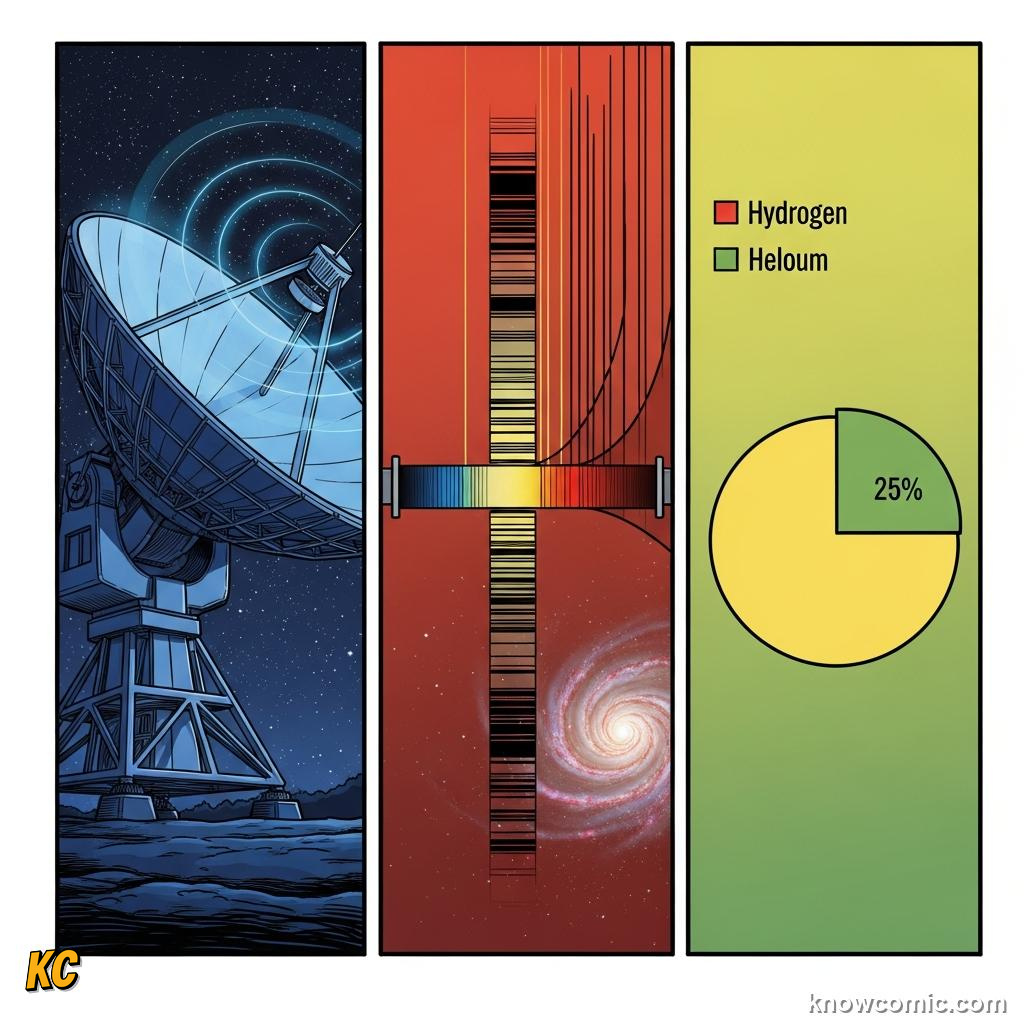
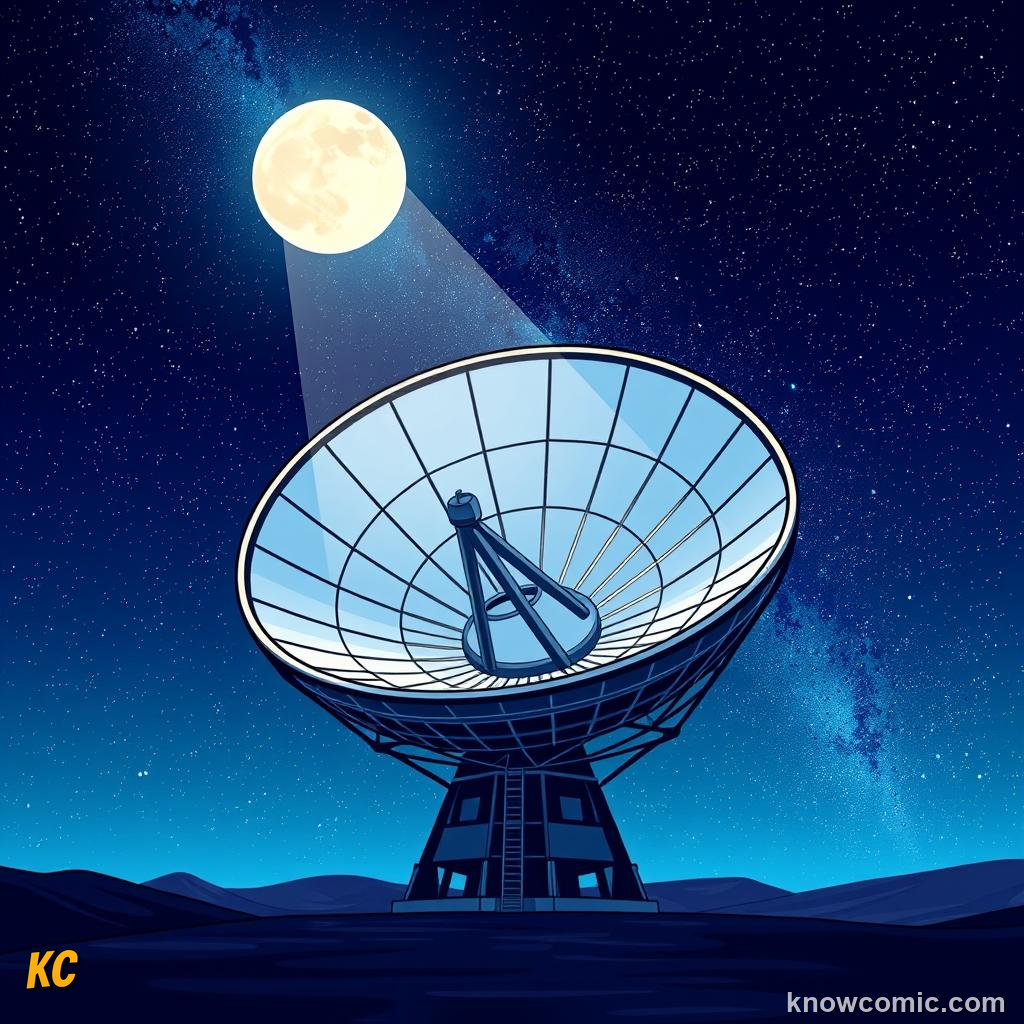
Radio telescopes detect the long-wavelength radio emissions from pulsars, quasars, molecular clouds, and the cosmic microwave background. By linking many radio dishes together across continents or even across the globe, astronomers create a virtual telescope as large as Earth, achieving extraordinary angular resolution.
The Event Horizon Telescope is a planet-scale array of eight radio observatories linked together to form a virtual dish as wide as Earth. In 2019 it produced the first image of a black hole's shadow — the supermassive black hole at the centre of the galaxy M87. In 2022 it imaged our own Milky Way's central black hole.
High-energy X-ray and gamma-ray photons are absorbed by Earth's atmosphere, so they can only be detected from space. Observatories like the Chandra X-ray Observatory and the Fermi Gamma-ray Space Telescope have revealed the hot gas in galaxy clusters, the jets from black holes, and the afterglows of gamma-ray bursts.
Infrared light penetrates dust clouds that block visible light, revealing star-forming regions, the centres of galaxies, and the most distant objects in the universe. The Spitzer Space Telescope and now the James Webb Space Telescope have transformed our understanding of star and galaxy formation through infrared observations.
The world's largest optical telescopes — the Very Large Telescope in Chile, the Keck Observatories in Hawaii — have mirrors 8 to 10 metres across. The next generation of Extremely Large Telescopes will have mirrors 30 to 40 metres in diameter, capable of directly imaging exoplanet atmospheres and seeing the first galaxies.
Atmospheric turbulence blurs images seen through ground-based telescopes. Adaptive optics systems use a laser beam to create an artificial guide star and measure atmospheric distortions hundreds of times per second, then flex a deformable mirror to cancel the blur in real time, giving images as sharp as if taken from space.
Robotic spacecraft have visited every planet in the Solar System and several moons, asteroids, and comets. Voyager 1 and 2, launched in 1977, are now in interstellar space — the first human-made objects to leave the Solar System. Future missions will explore the icy moons Europa and Enceladus in search of life.
The Very Large Array in New Mexico consists of 27 radio dishes, each 25 metres across, arranged in a Y-shaped configuration that can be reconfigured to achieve different resolutions. The VLA has been used to study everything from the jets of distant quasars to the radio emissions of the Sun and planets.
LIGO and Virgo are laser interferometers that detect the tiny stretching and squeezing of spacetime caused by gravitational waves. LIGO's arms are 4 kilometres long and can detect a change in length smaller than a thousandth of the width of a proton. Since 2015, they have detected dozens of black hole and neutron star mergers.
Neutrinos are nearly massless particles that travel at close to the speed of light and interact so rarely with matter that trillions pass through your body every second without touching a single atom. Underground detectors deep in mines or Antarctic ice can capture a handful of neutrinos from supernovae, the Sun, and cosmic accelerators.
The coming decades will bring a new generation of space observatories. The Nancy Grace Roman Space Telescope will survey enormous areas of sky to study dark energy and exoplanets. A future Habitable Worlds Observatory is designed specifically to detect biosignatures in exoplanet atmospheres and search for life.
You do not need a professional telescope to explore the cosmos. With the naked eye you can see thousands of stars, the Milky Way, the Andromeda Galaxy, meteor showers, and planetary conjunctions. A pair of binoculars or a small telescope opens up star clusters, nebulae, and the moons of Jupiter to anyone willing to look up.
THE BIG QUESTIONS
With hundreds of billions of galaxies, each containing hundreds of billions of stars, and most stars having planets, the odds of Earth being the only inhabited world seem astronomically small. Yet we have found no evidence of life anywhere else. This question may be answered within our lifetimes by the next generation of telescopes.
Physics treats time as a dimension — the fourth dimension alongside length, width, and height. Einstein showed that time passes more slowly at high speeds and in strong gravity. But why does time only flow in one direction? Why can we remember the past but not the future? The nature of time remains one of the deepest mysteries in science.
The Big Bang is the beginning of time itself, as we understand it. Asking what happened before the Big Bang may be like asking what is south of the South Pole — the question may not have meaning. Some cosmologists propose that our universe emerged from a previous contraction, or that it is one of many cycling universes.
The observable universe is finite — limited by the distance light has had time to travel since the Big Bang. But the universe itself may extend far beyond what we can ever observe, and it may be infinite. Different models of cosmology and inflation give different answers to this question, and it may be fundamentally unanswerable.
The deepest question in all of philosophy and physics: why does anything exist at all? Quantum mechanics tells us that even a perfect vacuum is not truly empty — virtual particles constantly pop in and out of existence. Some physicists suggest the universe itself arose as a quantum fluctuation from literally nothing.
Are humans special in the cosmos, or is consciousness a natural outcome of complex information processing that could arise independently on other worlds? This question bridges neuroscience, philosophy, and astrobiology. If consciousness is common, the universe may be teeming with minds; if it is rare, we may be alone.
Our nearest stellar neighbour, Proxima Centauri, is 4.2 light-years away. At the fastest speed any spacecraft has ever reached, it would take 70,000 years to get there. Proposed concepts including laser sails, nuclear pulse drives, and antimatter engines might cut that time to decades — but enormous engineering challenges remain.
Life on Earth evolved from chemistry in liquid water powered by the Sun. On other worlds — whether in methane seas like Titan, ice-covered oceans like Europa, or super-Earth rocky worlds — life might use entirely different chemistry, occupy entirely different ecological niches, and look nothing like anything we have ever imagined.
Even if another civilisation exists and is broadcasting signals, the distances involved mean any exchange would take thousands of years. Some researchers propose using mathematics as a universal language; others suggest looking for laser signals or deliberate patterns in starlight. The challenge is enormous but not obviously impossible.
Space is not empty. It contains electromagnetic fields, quantum vacuum fluctuations, dark matter, dark energy, and the occasional particle. The fabric of spacetime itself can stretch, compress, and ripple. At the smallest scales, below the Planck length, our current theories of physics break down entirely.
Physics currently rests on two pillars: quantum mechanics, which governs the very small, and general relativity, which governs the very large. The two theories are mathematically incompatible with each other. A theory of quantum gravity — often called a Theory of Everything — that unifies both remains the greatest unsolved problem in physics.
We experience three dimensions of space and one of time. String theory and other models of quantum gravity require extra dimensions of space, curled up so tightly we cannot detect them directly. Some theories propose that our universe is a three-dimensional membrane floating in a higher-dimensional space.
Statistical analyses of data from the Kepler space telescope suggest that virtually every star in the Milky Way has at least one planet, and many have several. The galaxy likely contains trillions of planets — more planets than grains of sand on all Earth's beaches. Most of them have never been detected.
Giant molecular clouds contain complex organic molecules including amino acids — the building blocks of proteins. Some astrobiologists have proposed that life could form and evolve inside dense nebulae, using chemistry very different from life on Earth. This remains highly speculative but highlights how little we know about where life can arise.
Why do the constants of nature — the strength of gravity, the mass of the electron, the speed of light — have the values they do? If they were even slightly different, atoms, stars, and life could not exist. Some cosmologists invoke the anthropic principle or the multiverse to explain this fine-tuning, but the answer remains deeply mysterious.
Einstein's special relativity shows that as an object approaches the speed of light, its mass increases, time slows relative to outside observers, and it becomes impossible to accelerate further. A spacecraft at 99.9% of light speed would experience only 2 months of travel time to reach a star 45 light-years away — while 45 years pass on Earth.
The observable universe has no edge in the ordinary sense — it is the sphere of space from which light has reached us. Beyond it, the universe continues, but we can never receive information from those regions. If the universe is finite, it may curve back on itself like the surface of a sphere, with no boundary at all.
In 100 trillion years, star formation will cease and the last stars will die. The universe will enter an era of white dwarf cooling, then black hole evaporation, and finally a cold, dark, nearly empty state called the heat death. Whether any form of information processing or consciousness could persist in such a universe is a deep question.
Advanced civilisations might build megastructures to harvest their star's energy, modify their atmosphere with industrial chemicals, or send spacecraft across the galaxy. Astronomers search for anomalous dimming of stars, unusual atmospheric signatures, and unusual radio or laser emission as possible signs of technological activity.
At the smallest scales — the Planck scale, 10 to the power of minus 35 metres — spacetime itself is expected to be grainy and fluctuating rather than smooth. Theories of quantum gravity attempt to describe this regime. Loop quantum gravity and string theory are the two leading candidates, but neither has been confirmed experimentally.
In roughly 5 billion years, our Sun will exhaust its hydrogen and swell into a red giant. Any surviving civilisation would need to move Earth to a safer orbit or migrate to another star system entirely. Proposals for moving planets using gravitational assists from passing asteroids have been worked out mathematically.
At the deepest level, the laws of physics contain many symmetries — invariance under rotation, translation, and time reversal. But the universe itself breaks some symmetries: matter won over antimatter, and the cosmic web is not the same in every direction on the very largest scales. Understanding broken symmetry is central to modern physics.
The Kardashev scale classifies civilisations by their energy use: Type I harnesses all energy of their planet, Type II harnesses their star, Type III harnesses their entire galaxy. A Type III civilisation would be detectable across cosmic distances from the anomalous infrared glow of their star harvesting structures.
Simple microbial life may be common in the universe, but complex multicellular life — animals, intelligence — may be extraordinarily rare. The Rare Earth hypothesis argues that Earth's location in the galaxy, its large Moon, and many other factors are finely tuned for complex life in ways that may be vanishingly uncommon.
General relativity allows time travel into the future through high speed or strong gravity — a real, measurable effect. Backwards time travel would require exotic matter with negative energy density, which may not exist. Closed timelike curves are valid mathematical solutions to Einstein's equations, but whether they are physically realisable is unknown.
Establishing a human presence on Mars would test whether life can survive and reproduce in low gravity and high radiation, and whether a second civilisation can be created beyond Earth. Mars may also still harbour microbial life in subsurface water, and finding it would transform our understanding of life in the universe.
In 2022, NASA's DART mission deliberately crashed a spacecraft into the asteroid Dimorphos and successfully changed its orbit. This planetary defence test proved that humanity has the technology to deflect an asteroid on a collision course with Earth if given enough warning — a real-life application of space science to human survival.
The theory of cosmic inflation proposes that in the first 10 to the power of minus 32 seconds after the Big Bang, the universe expanded exponentially fast. Inflation explains why the universe is so flat and smooth on large scales, and why the cosmic microwave background is so uniform. Physicists are searching for its gravitational wave signature in the CMB.
The next half-century will bring 30-metre ground telescopes, new space observatories, gravitational wave networks, and possibly the first images of exoplanet surfaces. We may detect the first signs of life, map the cosmic web in three dimensions, and observe the first moments after the Big Bang with unprecedented clarity.
Several independent lines of reasoning in physics — eternal inflation, the string theory landscape, and the many-worlds interpretation of quantum mechanics — all suggest the existence of other universes beyond our own. But other universes by definition cannot be observed or tested, making this one of the most controversial topics in cosmology.
Quantum mechanics predicts that empty space is not empty: it seethes with virtual particle pairs popping in and out of existence, giving the vacuum a non-zero energy. This vacuum energy may be the source of dark energy driving the acceleration of the universe. The measured value differs from theoretical predictions by a factor of 10 to the power of 120 — the worst prediction in physics.
Three completely independent lines of evidence converge on the same answer: the expansion rate of the universe measured with standard candles, the ages of the oldest stars in globular clusters, and the pattern of temperature fluctuations in the cosmic microwave background. Their agreement is one of the great triumphs of modern cosmology.
The Hercules-Corona Borealis Great Wall is a filament of galaxy clusters spanning roughly 10 billion light-years — about a tenth of the diameter of the observable universe — making it the largest known structure. Its size challenges cosmological models that predict the universe should be smooth and featureless on scales above 1.2 billion light-years.
Some physicists and philosophers have seriously proposed that our universe might be a computational simulation run by a more advanced civilisation. While this idea is impossible to test with current technology, it raises profound questions about the nature of reality and has attracted serious mathematical analysis from cosmologists.
Every generation of astronomers has made discoveries that the previous generation considered impossible. The next great discovery may be a signal from an alien civilisation, direct evidence for quantum gravity, a new force of nature, or something so unexpected that we do not yet have words for it. The cosmos is still full of surprises.